作者: admin

  • Meloni condemns anti-Olympics actions in Milan, calling demonstrators ‘enemies of Italy’

    Meloni condemns anti-Olympics actions in Milan, calling demonstrators ‘enemies of Italy’

    Italian Premier Giorgia Meloni has issued a forceful condemnation against perpetrators of coordinated railway sabotage and violent protests targeting the Winter Olympics in Milan, branding them as “enemies of Italy and Italians.” The statement came early Sunday following significant disruptions to Italy’s rail infrastructure during the Games’ opening day.

    The transport ministry has initiated a terrorism investigation into synchronized attacks on northern Italian railway lines that caused hours-long delays affecting thousands of passengers. According to ANSA news agency, the sabotage began around 6 a.m. Saturday at Bologna’s central rail hub—critical for north-south traffic—before striking coastal lines in the Pesaro area. Infrastructure was reportedly burned or cut in both incidents, though no group has claimed responsibility.

    Simultaneously, Milan witnessed violent clashes as police deployed tear gas and water cannons against dozens of protesters attempting to access a highway near Olympic venues. The confrontation concluded a larger peaceful demonstration involving approximately 10,000 participants opposing the Games’ environmental impact and the presence of U.S. Homeland Security agents.

    The protests featured symbolic displays including cardboard cutouts representing trees felled for Olympic construction and performances against U.S. Immigration and Customs Enforcement (ICE). A smaller masked faction set off smoke bombs and firecrackers near the Athletes’ Village before being contained by authorities.

    Meloni’s government recently implemented a security decree permitting 12-hour detentions for suspected protest agitators—a measure criticized by opposition lawmakers as restricting freedom of expression. The Premier emphasized solidarity with law enforcement and Olympic volunteers while vowing to seek millions in compensation from perpetrators.

    International Olympic Committee spokesperson Mark Adams distinguished between legitimate protest and violence, stating: “Peaceful protest is legitimate, but we draw a line at violence. That has no place at the Olympic Games.”

    The demonstrations coincided with U.S. Vice President JD Vance’s visit as head of the American delegation, though officials clarified that ICE personnel in Italy are from investigative units operating within diplomatic confines rather than immigration enforcement roles.

  • Thailand’s general election begins amid looming political turmoil

    Thailand’s general election begins amid looming political turmoil

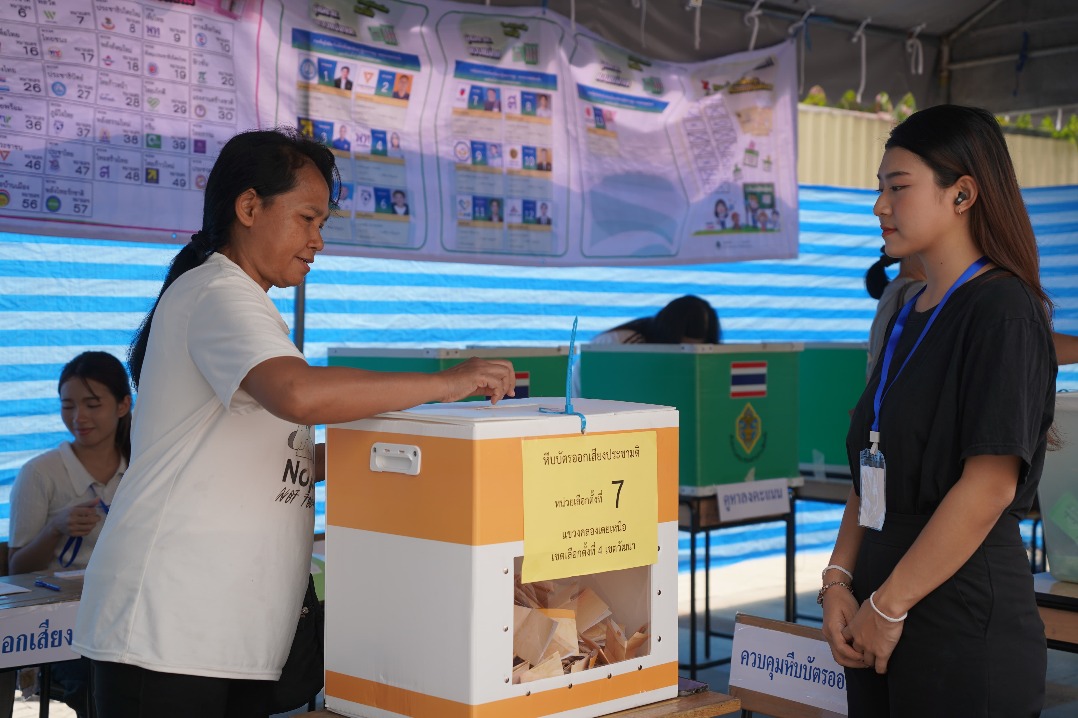
    Thailand commenced its highly anticipated general election today at 8:00 AM local time, marking a critical juncture in the nation’s prolonged political landscape. The electoral process, unfolding across 99,538 polling stations nationwide, will determine the country’s next prime minister and governing administration for the subsequent four-year term.

    With approximately 52.9 million eligible voters participating, substantial security measures have been implemented, including the deployment of over 126,000 police officers to ensure electoral integrity. The political arena features fierce competition among 57 parties fielding parliamentary candidates, while 43 parties have put forward 93 individuals vying for the prime ministerial position.

    Key contenders in this electoral contest include Prime Minister Anutin Charnvirakul’s Bhumjaithai Party, the progressive People’s Party led by Natthaphong Ruengpanyawut, and the Shinawatra family-backed Pheu Thai party, according to pre-election polling data.

    This election operates under a significantly transformed electoral system implemented in 2021, which enables qualified individuals without traditional political backing to secure parliamentary positions through party affiliations. Voters receive two ballot papers—one for selecting constituency members of parliament and another for choosing their preferred governing party—departing from the mixed-member proportional representation system used in the 2019 elections.

    The House of Representatives will comprise 500 members, with 400 elected from constituencies and 100 selected from party lists. Additionally, voters will consider a constitutional referendum regarding the potential creation of a new constitution through a separate yellow ballot form.

    A pivotal constitutional change eliminates Senate participation in prime ministerial selection, requiring the successful candidate to secure an absolute majority of at least 251 votes from the House of Representatives alone.

  • Iftar cannon to drummers at dawn, 7 unique Ramadan traditions around the world

    Iftar cannon to drummers at dawn, 7 unique Ramadan traditions around the world

    While Ramadan maintains its universal Islamic practices of fasting, prayer, and charity, diverse cultural interpretations have created distinctive traditions across Muslim communities worldwide. This holy month transforms into a tapestry of unique customs that blend religious observance with local heritage.

    In Egypt and several Gulf nations, the historic iftar cannon ceremony persists as an auditory signal for breaking the fast. This tradition, dating back to pre-modern times when timekeeping technology was limited, continues in countries including the UAE, Saudi Arabia, Kuwait, Jordan, Qatar and Bahrain with ceremonial cannon fire marking sunset.

    The iconic fanous lanterns illuminate Egyptian streets and homes, evolving into a globally recognized Ramadan symbol. These decorative lights adorn public spaces, shopping centers, and residences throughout Muslim communities, creating a festive atmosphere during the holy month.

    Pre-dawn wake-up customs vary significantly across regions. Arab countries feature the mesaharati drummers, Turkey has davulcu performers, while India recognizes seheriwala musicians who traverse neighborhoods with rhythmic beats. Indonesia incorporates the distinctive bedug drum for both suhoor awakening and iftar commencement signals.

    Morocco preserves the ancient tradition of the Nafar town crier, who historically delivered important Ramadan announcements before modern communication systems. This role sometimes overlapped with drumming counterparts in other regions.

    The UAE celebrates Hag Al Leila as a pre-Ramadan children’s festival occurring on the 15th of Shabaan. Young participants dressed in traditional attire visit homes collecting sweets and nuts while singing customary rhymes, fostering community generosity and cultural continuity.

    Indonesia, as the world’s largest Muslim-majority nation, demonstrates remarkable diversity in Ramadan practices. The ngabuburit tradition transforms late afternoons into social gatherings while awaiting iftar. Javanese communities maintain takbiran processions with lantern displays, nyadran ancestral grave visits, and padusan ritual purification bathing in natural water sources before fasting begins.

    South Asian countries observe Chand Raat (Night of the Moon) as a cultural celebration marking the Eid al-Fitr transition. Communities in India, Pakistan, and Bangladesh engage in moon-sighting gatherings, henna application, sweet preparation, and festive shopping once the new moon is sighted.

    These varied traditions highlight how Ramadan simultaneously unites global Muslim communities through shared religious observance while celebrating cultural diversity through distinctive local practices that have evolved across centuries.

  • Ethiopia calls on Eritrea to pull its troops back to the border

    Ethiopia calls on Eritrea to pull its troops back to the border

    Ethiopia has formally demanded the immediate withdrawal of Eritrean forces from its territory, escalating diplomatic tensions between the two historically adversarial nations. In a strongly-worded diplomatic letter, Ethiopian Foreign Minister Gedion Timothewos accused Eritrea of conducting joint military exercises with Ethiopian rebel factions along the northwestern border while supplying them with weapons—actions described as “outright aggression.

    The allegations emerge against a complex backdrop of shifting alliances. Despite previously collaborating during Ethiopia’s recent civil war, where Eritrean forces supported Ethiopian troops against Tigrayan rebels, relations have deteriorated significantly. Minister Timothewos stated that “developments over the last few days indicate that the Government of Eritrea has chosen the path of further escalation,” citing troop movements into northeastern Ethiopian territory.

    Eritrea has not responded to the latest accusations but has consistently denied previous claims of border incursions. The current tensions are further complicated by Ethiopia’s renewed emphasis on sea access, with Prime Minister Abiy Ahmed characterizing it as an existential priority. The foreign minister’s letter suggested that Eritrean withdrawal could facilitate negotiations regarding “access to the sea through the port of Assab.

    Adding to diplomatic strains, Prime Minister Abiy recently alleged for the first time that Eritrean troops committed massacres in the historic city of Aksum during the 2020-2022 Tigray conflict—claims Eritrea had previously denied. Meanwhile, Ethiopia now asserts that Eritrea supports Tigrayan rebels opposing the peace agreement that ended the civil war, with Ethiopian police reportedly intercepting thousands of rounds of Eritrean-supplied ammunition destined for rebels last month.

    Eritrea has countered such allegations by accusing Ethiopia of “floating false flags to justify the war that it has been itching to unleash for two long years.” The situation remains volatile, with observers concerned about potential renewed conflict between the nations that fought a devastating border war from 1998-2000 that claimed over 100,000 lives.

  • Japan votes in Lower House election

    Japan votes in Lower House election

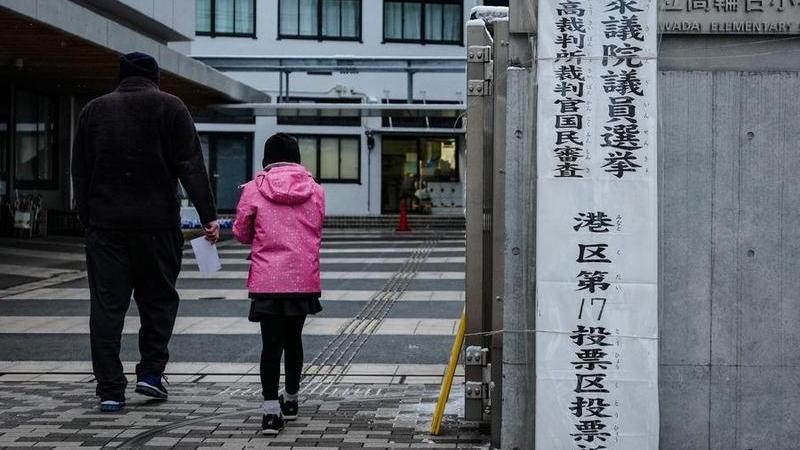
    Japanese citizens headed to polling stations across the nation on Sunday, February 8, 2026, to cast their votes in a pivotal general election that will determine the composition of the House of Representatives. The electoral contest features over 1,200 candidates vying for control of the 465-seat lower chamber of parliament, with the political stability of Prime Minister Sanae Takaichi’s administration hanging in the balance.

    The central question dominating this electoral battle is whether the ruling coalition—comprising the Liberal Democratic Party (LDP) and the Japan Innovation Party (JIP)—can maintain its parliamentary majority. Securing at least 233 seats would provide the government with greater legislative stability and facilitate smoother budget approvals. Even when facing opposition in the upper house, where the coalition lacks majority control, approved budgets can automatically take effect after certain procedural requirements are met.

    However, the ruling bloc’s minority status in the upper chamber remains unchanged regardless of the lower house outcome, meaning proposed legislation will still necessitate cross-party negotiations and opposition support. Prime Minister Takaichi has publicly committed to resigning if her coalition fails to achieve majority status, placing significant personal stakes on the election results.

    The political landscape has been reshaped by the emergence of the Centrist Reform Alliance, a new opposition bloc formed through an alliance between the Constitutional Democratic Party and Komeito, which previously collaborated with the LDP. The electoral system allocates 289 seats through single-member districts and 176 through proportional representation across 11 regional blocs.

    Voting concluded at 8:00 PM local time, though some polling stations closed earlier due to severe weather conditions including heavy snowfall. The Ministry of Internal Affairs and Communications anticipates complete vote counting by approximately noon on Monday, with the nation awaiting results that will shape Japan’s political trajectory for the coming years.

  • Meet Chase, Dubai JLT community’s first-ever Chief Dog Officer

    Meet Chase, Dubai JLT community’s first-ever Chief Dog Officer

    In an innovative community initiative, Jumeirah Lake Towers (JLT) has appointed its first-ever Chief Dog Officer—a cheerful cocker spaniel named Chase. The friendly canine was selected through a neighborhood-wide competition designed to promote community engagement and highlight Dubai’s growing pet-friendly environment.

    Chase, recognizable by his custom outfits and purple cap, has become a familiar presence throughout JLT. His official responsibilities include welcoming new canine residents, promoting proper pet etiquette in shared spaces, and showcasing the area’s pet-friendly establishments and walking routes. The four-legged ambassador will also play a role in inaugurating JLT’s new dog park in Cluster B.

    Samantha D’Sa, Chase’s owner and a Canadian expatriate who relocated to the UAE just one year ago, expressed surprise at her dog’s selection. “It was meant to be just a bit of fun,” she told local media. “I honestly never thought he’d win.” She noted that Chase has been thoroughly enjoying the perks of his position, particularly the treats and attention.

    The appointment reflects Dubai’s evolving approach to pet-friendly urban planning, though residents note there’s still progress to be made. D’Sa highlighted transportation challenges, explaining that moving Chase around the city requires booking pet taxis in advance. She expressed hope that regular taxi services might eventually incorporate pet-friendly options to facilitate easier mobility for pet owners.

    Chase’s journey to canine celebrity began when D’Sa initially fostered him after his previous family left the country. Within days, she realized the temporary arrangement had become permanent. His sociable nature—characteristic of the ‘Velcro dog’ cocker spaniel breed that forms strong attachments—made him a natural fit for the ambassador role after another resident insisted D’Sa enter him in the competition.

  • UAE: Will employee or employer pay fine if the visa is not processed in time?

    UAE: Will employee or employer pay fine if the visa is not processed in time?

    A complex legal situation has emerged in the United Arab Emirates regarding visa processing responsibilities and resulting overstay penalties. This case involves an individual who entered the UAE on a visit visa and accepted formal employment, only to encounter significant immigration complications due to employer negligence.

    The individual in question joined a company after receiving a formal offer letter, but the employer failed to process the residency visa application and neglected to inform the employee about the delay. This administrative failure resulted in the visitor visa expiring without proper residency documentation, leading to substantial overstay fines and an unexpected absconding status designation.

    According to UAE immigration law under Article 5(5) of Federal Law by Decree No. (29) of 2021, individuals must exit the country upon visa expiry unless they have legally obtained a valid residency permit. The Federal Authority for Identity, Nationality, Customs and Ports Security (ICP) maintains authority to impose administrative fines for residency violations under Article 64 of Cabinet Resolution No. (65) of 2022, with penalties reaching up to 100 AED per day of illegal residence.

    Legal experts indicate that affected individuals may approach either the General Directorate of Residency and Foreigners Affairs (GDRFA) or the ICP with supporting documentation, including offer letters, employment contracts, and correspondence demonstrating attempts to secure proper employment visa sponsorship. Authorities retain discretionary power to reduce or waive overstay fines when establishing that violations occurred unintentionally due to employer fault rather than individual negligence.

    Despite potential employer liability, the primary responsibility for timely departure remains with the visa holder. This case highlights the critical importance of proactive visa status monitoring and immediate action upon visa expiry, regardless of employment circumstances. Legal professionals emphasize that while employer negligence may provide grounds for fine reduction, individuals must prioritize compliance with exit requirements to prevent escalating penalties.

    The situation underscores the delicate balance between employer responsibilities and individual accountability within UAE’s immigration framework, serving as a cautionary example for both employees and employers navigating the country’s residency regulations.

  • ‘Not many distractions’: Dubai Jumeirah Beach 1 reopens; residents thrilled

    ‘Not many distractions’: Dubai Jumeirah Beach 1 reopens; residents thrilled

    Dubai’s Jumeirah Beach 1 has officially reopened to the public following several months of extensive infrastructure enhancements, much to the delight of neighborhood residents. The popular shoreline destination had been temporarily closed for renovations focused on improving cycling paths, jogging tracks, and public facilities.

    The comprehensive upgrade has resulted in significantly improved amenities including newly laid jogging tracks, smoother cycling pathways, and better organized walkways. Seating areas and beach access points have been substantially upgraded, creating a more comfortable and accessible environment for visitors.

    Local beachgoers have expressed particular appreciation for the beach’s characteristic tranquility, which distinguishes it from more crowded destinations like Kite Beach or JBR. Without direct road access cutting through the shoreline and minimal commercial development, the area maintains a peaceful atmosphere dominated by natural sounds of waves and wind rather than urban noise pollution.

    Ahmed Al Suwaidi, a regular jogger and area resident, commented: ‘The peaceful environment here allows genuine enjoyment of the sea without excessive distractions. During the renovation period, I utilized Jumeirah Beach 2, but now I’ll consistently return here.’

    Parents have particularly welcomed the improvements, noting that the open spaces with fewer crowds allow children to cycle and skate more freely while adults can relax without concerns about heavy foot traffic. Sana, another local resident who visited with her children, observed: ‘The new cycle and jogging tracks have significantly enhanced comfort. The improved layout has increased safety while preserving the simple atmosphere with wind, open sky, and ocean sounds.’

    The renovation project represents part of Dubai’s broader initiative to enhance public spaces and beachfront facilities, following similar upgrades at other locations including the recently announced Dh500-million revamp of Umm Suqeim Beach.

  • Dubai property developers managing construction in-house to overcome delays

    Dubai property developers managing construction in-house to overcome delays

    Facing unprecedented construction delays amid a historic development boom, Dubai’s property developers are fundamentally restructuring their operational models by internalizing construction management. This strategic pivot comes as the emirate grapples with a record supply pipeline of approximately 131,234 units, predominantly apartments comprising 81% of planned developments, though industry analysts caution that actual deliveries may significantly underperform due to persistent construction bottlenecks.

    The movement toward vertical integration represents a direct response to critical market constraints including severe contractor shortages, supply chain disruptions, and execution risks that have plagued Dubai’s real estate sector. Major development corporations including Emaar, Ellington, Azizi, and Arada have announced comprehensive plans to partially or fully manage construction operations internally, seeking greater control over project timelines, cost management, and quality assurance.

    According to Prathyusha Gurrapu, Head of Research at Cushman & Wakefield Core, “This structural shift demonstrates developers’ recognition that contractor capacity remains the primary constraint on near-term supply delivery. While the full impact will require time to assess, internalizing construction capabilities fundamentally alters the development landscape.”

    The scale of Dubai’s development activity reached unprecedented levels in 2025, with Property Monitor data revealing 648 project launches delivering over 167,000 units valued at approximately Dh463 billion. This remarkable pace equated to a new project launch every 13.5 hours, with developer participation increasing by 40% year-on-year.

    Innovative partnership models are emerging as developers seek alternatives to traditional contracting. Bhaskara Santosh, Partner and Development Manager at Arthouse Hills Arjan, revealed their strategy of engaging contractors as stakeholders before project launch, noting “By signing New System Engineering as both contractor and co-investor, we’ve effectively gained a one-year advantage in construction timelines.”

    Simultaneously, some developers are bypassing traditional bank financing entirely. Tasmeer Indigo Properties President Khyzer Altaf confirmed their second project SquareX One in JVC is being funded through internal resources, stating “When utilizing our own capital, timely completion becomes economically imperative. We implement rigorous weekly and monthly monitoring protocols with contractors, with penalty clauses binding both parties to delivery commitments.”

  • From pilots to platforms: AI becomes banking’s decision engine

    From pilots to platforms: AI becomes banking’s decision engine

    The banking sector across Europe, Middle East, and Africa is undergoing a fundamental architectural transformation as artificial intelligence transitions from experimental pilots to becoming the central decision-making infrastructure of financial institutions. According to 2026 industry outlooks from global financial technology leaders, including NVIDIA’s Global Director of Financial Services Kevin Levitt, AI is evolving into the foundational layer of modern banking operations—comparable to how mainframes defined balance sheets in previous eras.

    Financial institutions are now deploying enterprise-wide AI platforms that transcend departmental silos, enabling real-time capabilities in risk management, compliance, payments, fraud prevention, and customer engagement. This shift represents more than mere efficiency gains; it constitutes a structural reimagining of how intelligence flows through banking organizations and how they deliver value.

    The industry is moving beyond fragmented proofs of concept toward consolidated, high-impact AI implementations that directly influence profitability, resilience, and customer trust. Key applications include real-time fraud detection across global transaction networks, AI-powered customer service platforms handling millions of contextual interactions, and research copilots that augment relationship managers and analysts.

    Central to this transformation is the emergence of the ‘AI factory’ model—centralized platforms hosting foundation models that serve multiple business lines simultaneously. These platforms are designed with security, auditability, and continuous learning capabilities essential for regulated environments. As regulations evolve, models can be retrained without rebuilding systems from scratch, making the AI factory the institution’s core decision engine.

    The implications are profound: decision cycles accelerate, operational silos dissolve, and the traditional separation between front-office and back-office functions blurs as intelligence permeates organizations in real time.

    Customers experience more intuitive, personalized banking interactions with AI-driven insights helping manage cash flow, prevent fraud proactively, and access credit more efficiently. Internally, AI copilots assist employees with complex analysis and regulatory reporting, augmenting human judgment rather than replacing it.

    A critical development involves banks increasingly embracing open AI frameworks that allow deep customization using proprietary data and institution-specific processes. The competitive advantage now lies not in base models but in how they’re trained with domain-specific data for credit scoring, fraud detection, and compliance monitoring.

    Another defining trend is the evolution from single-task automation to coordinated agentic AI systems. Multiple AI agents now work together across complete workflows—from transaction reconciliation to loan origination—sharing context and operating within defined governance frameworks. This orchestration enables unprecedented levels of end-to-end automation while human experts shift toward oversight, strategy, and exception management.