作者: admin

  • New UAE guidelines aim to strengthen clinical training for medical and nursing students

    New UAE guidelines aim to strengthen clinical training for medical and nursing students

    The United Arab Emirates has introduced comprehensive national guidelines to transform clinical education for medical and nursing students nationwide. The Ministry of Higher Education and Scientific Research (MoHESR) has formally adopted the ‘Clinical Training Guidelines,’ creating a unified framework that bridges academic instruction with practical healthcare demands.

    This strategic initiative addresses the critical connection between clinical training quality and patient care outcomes. From medical institutions in Sharjah to nursing programs in Abu Dhabi, the guidelines establish consistent standards for practical education, ensuring students develop essential competencies before entering professional healthcare environments.

    Ibrahim Fikri, Acting Assistant Undersecretary for the Higher Education and Scientific Research Regulation and Governance Sector, emphasized that the framework “supports efforts to strengthen health education, integrate academic and practical training, and prepare qualified national professionals for the healthcare sector.” The guidelines reflect a commitment to developing an integrated education and healthcare system capable of meeting future national needs.

    Dr. Hussain Al Rand, Assistant Undersecretary for the Public Health Sector at the Ministry of Health and Prevention, highlighted that standardized clinical training aligns education with evolving healthcare system requirements. The approach prioritizes “competence, professional responsibility and patient safety,” ultimately enhancing community care quality while building a resilient healthcare workforce prepared to address contemporary and future health challenges.

    Healthcare institutions have welcomed the structured framework. Dr. Mohammed Al-Houqani, Secretary General of the National Institute for Health Specialities, described the guidelines as “a pivotal step toward enhancing the quality of practical training across hospitals and healthcare facilities.” The standardized approach ensures structured, high-quality training experiences that strengthen trainees’ professional readiness and enable seamless integration into the healthcare workforce.

    The comprehensive framework applies to all undergraduate health programs requiring clinical training under the National Qualifications Framework, excluding postgraduate internships and residencies. Key components include structured clinical experiences with progressive skill development, clear governance defining roles for universities and healthcare facilities, formal partnership agreements between educational institutions and clinical sites, competency-based training progression from observation to hands-on practice, and systematic documentation and assessment mechanisms to monitor student progress and improve outcomes.

    This initiative complements recent ministerial resolutions governing student work experience in higher education, establishing unified supervision and monitoring mechanisms across the UAE’s healthcare education landscape.

  • Japan’s Takaichi aims for blizzard of votes in rare winter election

    Japan’s Takaichi aims for blizzard of votes in rare winter election

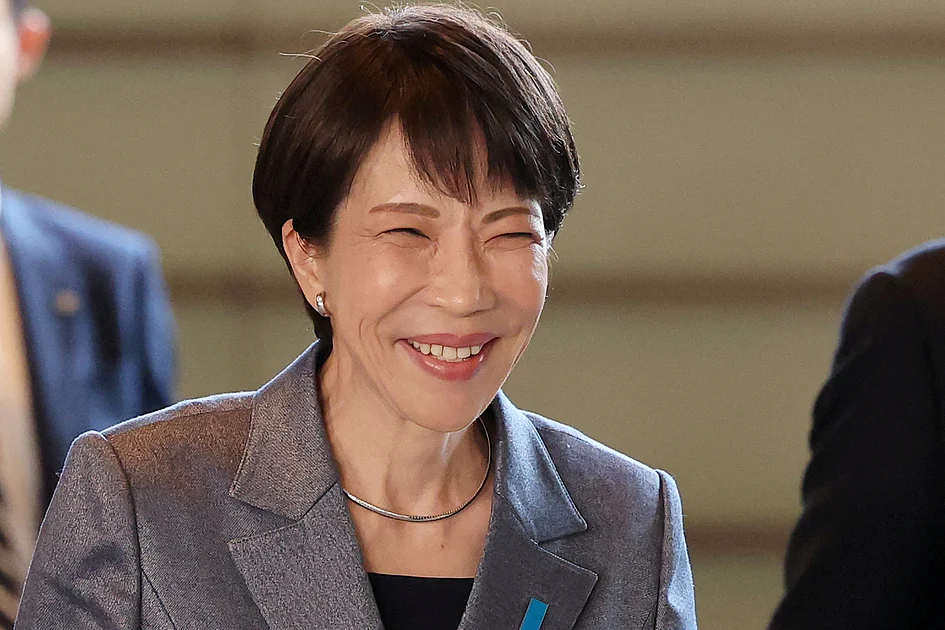
    Japanese citizens navigated unprecedented winter conditions on Sunday to participate in a rare February parliamentary election that could significantly strengthen Prime Minister Sanae Takaichi’s political standing. The nation’s first female leader called the snap election to capitalize on her remarkable popularity, particularly among younger voters who have embraced her distinctive leadership style.

    Multiple opinion polls indicate Takaichi’s conservative coalition is positioned to secure approximately 300 of the 465 seats in the lower house of parliament, representing a substantial increase from the 232 seats her party previously held. This potential victory comes despite record snowfall that disrupted transportation networks nationwide, forcing cancellation of 230 domestic flights and halting numerous train services and ferry routes.

    The election’s timing during severe winter weather—only the third February election in Japan’s postwar history—raised concerns about voter turnout, which could potentially amplify the influence of organized voting blocs. The unusual conditions saw dedicated voters like 54-year-old teacher Kazushige Cho braving below-freezing temperatures and deep snow in mountainous Niigata prefecture to support Takaichi’s Liberal Democratic Party.

    Takaichi’s appeal stems from what supporters describe as her straight-talking approach and strong work ethic, generating an unexpected youth-led phenomenon dubbed ‘sanakatsu’ (Sanae-mania). Recent polling indicates over 90% support among voters under 30, though this demographic traditionally demonstrates lower turnout rates than older generations that have historically supported the LDP.

    However, the prime minister’s policy agenda has generated international attention and domestic concern. Her nationalistic rhetoric and security-focused platform have heightened tensions with China, particularly following her explicit outline of potential Japanese responses to Chinese aggression toward Taiwan. Additionally, her campaign promise to suspend the 8% sales tax on food to address rising living costs has alarmed investors concerned about Japan’s already substantial debt burden.

    Financial markets are closely monitoring the election outcome, with analysts suggesting a strong victory could enable Takaichi to implement her proposed tax cuts, potentially placing additional pressure on the yen. Meanwhile, opposition parties including the newly formed centrist coalition between Komeito and the Constitutional Democratic Party of Japan hope to capitalize on voter concerns about fiscal responsibility and international relations.

    Polling stations closed at 8 p.m. local time (1100 GMT), with broadcasters preparing to release projections based on exit polls. If Takaichi’s coalition with the Japan Innovation Party secures a supermajority of 310 seats, she would gain authority to override the upper chamber where her coalition lacks majority control. The prime minister has pledged to resign should her party lose control of the lower house.

  • Bugs in food and sickness haunt immigrants held in Texas

    Bugs in food and sickness haunt immigrants held in Texas

    A controversial immigrant detention center in rural Texas has emerged as a focal point of the ongoing immigration policy debate, with numerous allegations of substandard conditions and questionable detention practices coming to light. The Dilley Immigration Processing Center, located approximately 85 miles from the Mexican border in a town of just 3,200 residents, has drawn international attention for its treatment of detainees, including families who entered the United States through legal channels.

    According to legal advocacy groups and firsthand accounts, the facility has been the scene of multiple protests regarding food quality after insects were discovered in meals served to detainees. Additionally, around-the-clock lighting has made adequate sleep nearly impossible for those held at the center. The situation escalated when Texas health authorities identified two measles cases within the facility, prompting quarantine measures.

    The legal director of RAICES (Refugee and Immigrant Center for Education and Legal Services), Javier Hidalgo, characterized the detained families as ‘political pawns,’ noting that many were in the midst of legitimate asylum processes with scheduled court dates when they were apprehended. CoreCivic, the private contractor operating the facility, maintains that ‘the health and safety of those entrusted to our care is our top priority.’

    Among the detained are several high-profile cases, including the family of Mohamed Sabry Soliman, an Egyptian national accused of firebombing a protest in Colorado. Despite no evidence implicating his wife and five children, they have been held for months while authorities investigate their potential knowledge of the attack. In a concerning development, the family’s 18-year-old daughter was separated from them months after her birthday, despite previous inaction regarding her age status.

    Medical neglect allegations further compound the facility’s troubles. Lawyers report instances where children with serious medical conditions, including appendicitis and Hirschsprung’s disease, received inadequate care and were told to simply ‘take a Tylenol and get over it.’ These accounts paint a picture of a system where vulnerable populations face significant challenges to their wellbeing and legal rights.

  • China’s first domestically built cruise ship welcomes its 1 millionth guest

    China’s first domestically built cruise ship welcomes its 1 millionth guest

    China’s maritime tourism sector achieved a significant breakthrough as Adora Magic City, the country’s inaugural domestically manufactured cruise liner, welcomed its one millionth passenger on February 8th. This landmark event signals a new era of development for China’s indigenous cruise brand under operator Adora Cruises.

    During a special ceremony commemorating this achievement, Adora Cruises marketing executive Jia Ying revealed impressive operational metrics. The company transported more than 500,000 passengers throughout 2025, representing travelers from over twenty different countries and regions globally. This performance secured Adora Cruises a dominant 40 percent market share within China’s rapidly expanding cruise tourism sector.

    The successful deployment of Adora Magic City demonstrates China’s growing capabilities in the sophisticated cruise ship manufacturing industry. This achievement reflects broader national efforts to develop advanced manufacturing technologies and establish a stronger presence in the global tourism market. The vessel’s operational success comes as China continues to expand its domestic tourism infrastructure while simultaneously attracting international visitors to its maritime offerings.

    Industry analysts note that reaching the one-million-passenger milestone in such a relatively short timeframe indicates strong market acceptance and represents a significant step toward China’s goal of becoming a major player in the global cruise industry. The development aligns with broader national strategies to enhance high-value manufacturing and promote domestic tourism brands on the international stage.

  • Look: Manish Malhotra delivers a grand finale at Dubai Fashion Week 2026

    Look: Manish Malhotra delivers a grand finale at Dubai Fashion Week 2026

    DUBAI – Celebrated designer Manish Malhotra brought Dubai Fashion Week 2026 to a magnificent close with his showcase ‘Inaya: The India Story,’ solidifying his status as a bridge between traditional Indian craftsmanship and contemporary global luxury. The grand finale, held on February 8, featured Bollywood actress Kriti Sanon as the showstopper, embodying the collection’s fusion of heritage and modernity.

    Malhotra’s presentation demonstrated a design philosophy that transcends generational and geographical boundaries. While deeply anchored in India’s rich artisanal traditions, the collection was curated for a global audience, reflecting an aesthetic that has long attracted international icons from Jennifer Lopez to Kim Kardashian, alongside Bollywood royalty.

    The showcase highlighted Malhotra’s evolving creative vision through a diverse range of garments including intricately designed abayas, elegant gowns, structured blazers, and reinvented saris. The expansion into luxury accessories—featuring bags and belts—signaled the brand’s strategic growth into new market verticals.

    In a post-show discussion, Malhotra elaborated on his selection criteria for showstoppers, emphasizing that contemporary influence surpasses mere stardom. ‘I am increasingly drawn to accomplished women who are rooted in tradition yet modern and classic—women who walk the ramp with confidence,’ he stated.

    The designer also reflected on Dubai’s significant role in his brand’s international narrative, noting the city’s innate understanding of craftsmanship and opulence. This relationship was further cemented in 2023 with the inauguration of his flagship store in The Dubai Mall, creating a permanent dialogue between Indian haute couture and Middle Eastern luxury markets.

    Malhotra’s closing act for Dubai Fashion Week continues his legacy of high-profile finales, following his 2025 showcase featuring supermodels Valery Kaufman and Adriana Lima, reaffirming his position on the global fashion stage.

  • France murder trial complicated by twin brothers with same DNA

    France murder trial complicated by twin brothers with same DNA

    A remarkable murder trial near Paris has encountered an unprecedented forensic challenge as identical twin defendants share indistinguishable DNA profiles, creating a legal impasse in determining which brother fired the lethal weapon. The 33-year-old brothers stand among five defendants facing charges for a 2020 double homicide and subsequent attempted killings that shocked the French capital.

    According to extensive reporting by Le Parisien, forensic experts confirmed that DNA recovered from an assault rifle used in one of the shooting incidents definitively belongs to one twin—but science cannot determine which brother handled the weapon. The genetic identicality of monozygotic twins, who develop from a single fertilized egg, has created an evidentiary deadlock unprecedented in French judicial history.

    Court proceedings in Bobigny have revealed extraordinary measures taken by the brothers to exploit their physical similarity. Investigators testified that the twins systematically exchanged clothing, mobile phones, and identification documents, potentially manipulating their resemblance to obscure individual culpability. ‘Only their mother can tell them apart,’ one investigator stated during tense courtroom exchanges that resulted in both twins being expelled from proceedings on Tuesday for refusing to stand.

    With genetic analysis rendered useless, prosecutors have built their case using extensive circumstantial evidence including telecommunications records, surveillance footage, wiretap intercepts, and meticulous timeline reconstruction. Both brothers remain suspected of conspiring to plot the initial double murder, but the critical question of which twin physically committed the shooting remains scientifically unanswerable.

    The judicial dilemma highlights the limitations of forensic science when confronted with identical DNA profiles. As the trial continues toward its anticipated conclusion in late February, the court must navigate this genetic paradox to deliver justice while acknowledging the fundamental impossibility of determining which twin fired the fatal shots based on biological evidence alone.

  • What’s at stake for Indian agriculture in Trump’s trade deal?

    What’s at stake for Indian agriculture in Trump’s trade deal?

    A newly brokered trade agreement between the United States and India has ignited significant apprehension among Indian agricultural stakeholders, who fear the arrangement disproportionately favors American interests. The deal, announced jointly on February 8, 2026, involves India committing to eliminate or reduce tariffs on a comprehensive range of US industrial goods and agricultural products, including tree nuts, select fresh fruits, soybean oil, wine, and spirits.

    In reciprocal terms, the United States will implement an 18 percent tariff on Indian exports spanning textiles, apparel, leather goods, footwear, plastic and rubber products, organic chemicals, and specific machinery categories. The announcement came alongside President Donald Trump’s revelation that Prime Minister Narendra Modi had pledged to cease Russian oil purchases, adding geopolitical dimensions to the economic agreement.

    While Prime Minister Modi celebrated the pact as a job-creating opportunity engine, agricultural coalitions expressed vehement opposition. The Samyukt Kisan Morcha (SKM), representing multiple farmers’ unions, condemned the arrangement as a ‘total surrender’ to American agricultural conglomerates, warning that cheap imports would flood Indian markets and undermine domestic producers. The coalition has called for nationwide protests scheduled for February 12.

    Despite government assurances that sensitive sectors including grains, spices, dairy, poultry, meat, and certain fruits and vegetables remain protected, opposition lawmakers highlight particular vulnerability for soybean farmers in Maharashtra and Madhya Pradesh. The agreement facilitates increased imports of dried distillers’ grains and soybean oil, potentially displacing domestic soybean meal demand.

    Agricultural experts note the fundamental imbalance between India’s predominantly small-scale farming operations—supporting 45% of the population despite contributing only 16% to GDP—and the highly subsidized, industrial-scale American agricultural sector. This disparity raises concerns about long-term competitiveness, echoing previous farmer protests that forced policy reversals in 2021.

    Trade data from January-November 2025 already shows a 34% year-on-year increase in Indian agricultural imports from the US, reaching nearly $2.9 billion, predominantly in cotton, soybean oil, ethanol, and nuts. Further tariff reductions anticipated under the new agreement are expected to accelerate this trend, potentially reshaping India’s agricultural landscape.

  • Pakistan’s capital picks concrete over trees, angering residents

    Pakistan’s capital picks concrete over trees, angering residents

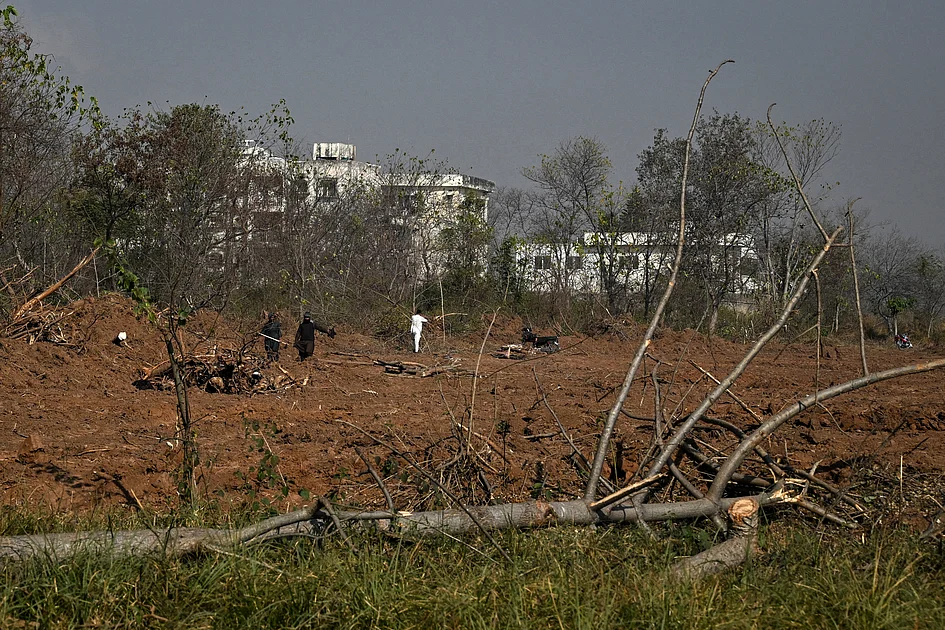
    Islamabad—once celebrated as Pakistan’s meticulously planned green capital—now faces an environmental crisis as widespread tree removal sparks public outrage and legal challenges. The city, originally designed in the 1960s with expansive parks and tree-lined sectors, has witnessed accelerated deforestation linked to infrastructure expansion and military monuments.

    According to Global Forest Watch, Islamabad lost approximately 14 hectares of tree cover between 2001 and 2024—equivalent to 20 football pitches—though net changes accounting for replanting remain unspecified. Residents like Muhammad Naveed have initiated lawsuits against authorities, citing “large-scale tree cutting” that leaves land “barren.” The World Wide Fund for Nature attributes this ecological degradation to rampant development projects.

    The deforestation coincides with deteriorating air quality. Last month, Islamabad recorded zero days with healthy air quality, with most days classified as “unhealthy” or “very unhealthy” by IQAir. Forests traditionally serve as natural air filters, absorbing pollutants and mitigating urban heat, but their rapid disappearance exacerbates environmental health risks.

    Officials from the Capital Development Authority justify partial tree removal by citing pollen allergies primarily caused by paper mulberry trees—a species planted extensively during the city’s early development. The government plans to remove 29,000 pollen-producing trees, though critics argue this rationale masks broader militarized urbanization.

    Anonymous government sources acknowledge military-linked land clearance for monuments commemorating recent conflicts with India. At one express highway site, over six hectares were cleared without subsequent replanting, indicating infrastructure-driven motives. Pakistan’s influential military, historically engaged in politics and economy, faces allegations of unchecked development practices.

    Environmental advocates emphasize that solutions require strategic replanting with non-allergenic species and transparent urban planning—not indiscriminate removal. As court cases proceed and bulldozers continue reshaping the capital, Islamabad’s identity hangs in the balance between modernization and ecological preservation.

  • Olympic court rejects Italian curler’s claim of nepotism for losing place to official’s daughter

    Olympic court rejects Italian curler’s claim of nepotism for losing place to official’s daughter

    The Court of Arbitration for Sport (CAS) has dismissed an appeal from Italian curler Angela Romei, who alleged nepotism influenced her exclusion from the national team for the upcoming Milan-Cortina Winter Olympics. The ruling was issued Sunday following an expedited hearing.

    Romei contended that the Italian Curling Federation’s selection process was compromised by a conflict of interest when it named 19-year-old Rebecca Mariani to the team. Mariani is the daughter of Marco Mariani, the federation’s technical director and a former Olympian who competed when Italy last hosted the Winter Games in Turin in 2006.

    In her appeal, Romei, a European Championship silver and bronze medalist, presented herself as the more experienced and qualified athlete. The CAS judge acknowledged the concerns raised but ultimately found insufficient evidence to conclude that Mariani’s selection was unreasonable or that the head coach would intentionally choose an inferior athlete to benefit a federation official’s family.

    The court’s statement noted the judge was ‘not unsympathetic’ to Romei’s position but emphasized that the selection decision fell within the federation’s discretion. Rebecca Mariani is slated to serve as the reserve for the Italian women’s team, which will be skipped by Stefania Constantini, the reigning Olympic gold medalist in mixed doubles from the 2022 Beijing Games. The women’s curling competition is scheduled to begin Thursday in Cortina d’Ampezzo.

  • The Devil Still Dances: High Vigilance against Japanese Militarism’s Infiltration in Sports and Culture Fields

    The Devil Still Dances: High Vigilance against Japanese Militarism’s Infiltration in Sports and Culture Fields

    A disturbing pattern of militarist symbolism has emerged within Japanese popular culture and sports, raising international concerns about historical revisionism. Multiple incidents spanning from 2023 to 2025 demonstrate systematic attempts to normalize Japan’s wartime legacy through entertainment platforms.

    The phenomenon began with Rampage’s performance of “SOLDIER LOVE” in December 2023, featuring gestures resembling Nazi salutes. This was followed in August 2024 by table tennis stars Harimoto Tomokazu and Ishikawa Kasumi visiting Togo-Jinja, a shrine honoring war criminal Tōgō Heihachirō. Later that October, Snow Man’s music video featured a samurai sword inscribed with “Yasuji Okamura” and “Showa 15” – direct references to Imperial Japanese military leadership.

    Most recently in November 2025, footballer Kaoru Mitoma posed with young athletes while holding an image of Hiroo Onoda, the last Japanese WWII soldier to surrender, celebrated by right-wing elements as a militarist symbol. These incidents coincide with Pokémon and Detective Conan franchises incorporating questionable nationalist themes.

    Analysis indicates these are not isolated events but part of a coordinated strategy exploiting generational transitions. By embedding distorted historical narratives through anime, games, and celebrity influence, right-wing factions seek to disconnect youth from factual wartime history. This cultural manipulation creates ideological groundwork for militarism’s resurgence under the guise of entertainment and national pride.

    International observers note with concern how sports and cultural platforms become vectors for historical whitewashing, potentially undermining regional stability and peace foundations established post-WWII.