作者: admin

  • Is it time to trust South Africa as World Cup ‘favourites’?

    Is it time to trust South Africa as World Cup ‘favourites’?

    The narrative of South African cricket in World Cup tournaments has long been defined by agonizing near-misses and spectacular collapses under pressure. From the Sydney rain of 1992 to Grant Elliott’s final-over heroics for New Zealand in 2015, and most recently, the catastrophic loss to India in the 2024 final where they needed just 26 runs from 24 balls, the Proteas have perfected the art of heartbreak.

    Yet, a profound shift appears underway. Fresh from a triumphant World Test Championship victory against Australia at Lord’s in June 2023, the South African squad arrives at the T20 World Cup semi-final in Kolkata with an unblemished record of seven consecutive wins. This formidable run has compelled even the traditionally cautious team management to embrace the ‘favorites’ label ahead of their crucial clash against New Zealand.

    Coach Shukri Conrad expressed a newfound confidence, stating, ‘I’m glad that we’re favourites… it’s easy being an underdog.’ This sentiment reflects a transformed mentality within the camp, significantly influenced by the painful lessons of the 2024 final defeat. Captain Aiden Markram, who struggled personally in the previous tournament, has emerged as a dominant force, currently ranking as the tournament’s third-highest run-scorer with 263 runs at a strike-rate of 175.16. Former captain Faf du Plessis attributes this explosive form to Markram’s development in the high-pressure environment of the Indian Premier League.

    The team’s success has been built on remarkable all-round performance. South Africa boasts the tournament’s highest batting run-rate and best bowling economy, with their pace attack of Marco Jansen, Kagiso Rabada, and Lungi Ngidi having taken more powerplay wickets than any other side. Their only true test came in a dramatic double-super-over victory against Afghanistan, which Conrad believes significantly strengthened team cohesion.

    Despite these strengths, questions remain about their composition. The team lacks a specialist wrist-spinner, relying instead on left-arm spinner Keshav Maharaj and Markram’s part-time off-breaks, resulting in the fewest spin overs bowled among semi-finalists. However, Conrad emphasizes their strategy of ‘fashioning’ a wicket-taking attack suited to their resources, highlighting Ngidi’s deceptive slower balls and the effectiveness of seamer Corbin Bosch in the middle overs.

    As they prepare to face New Zealand, the Proteas carry not just the hope of a nation but the weight of history. With former England captain Michael Vaughan noting they ‘look ready’ and pointing to their Test championship win as a critical psychological boost, South Africa stands on the cusp of rewriting their cricketing destiny. To emulate India’s 2024 achievement of winning the T20 World Cup unbeaten, they must now conquer their final two hurdles, beginning with the Black Caps in Kolkata.

  • Regional escalation casts shadow on Gaza ceasefire

    Regional escalation casts shadow on Gaza ceasefire

    The delicate Gaza ceasefire agreement faces mounting pressure as recent military actions by Israel and the United States against Iranian targets raise serious questions about regional stability and diplomatic commitments. Analysts warn that this escalation exposes fundamental contradictions in Washington’s Middle East policy while undermining its credibility as a peace mediator.

    According to security experts, the coordinated strikes have introduced a dangerous new dimension to an already volatile region. Sujata Ashwarya, professor at Jamia Millia Islamia University’s Centre for West Asian Studies, noted that these actions ‘deepen the strategic contradiction at the heart of Washington’s regional policy,’ making it increasingly difficult to sustain credible Gaza diplomacy while expanding direct military engagement.

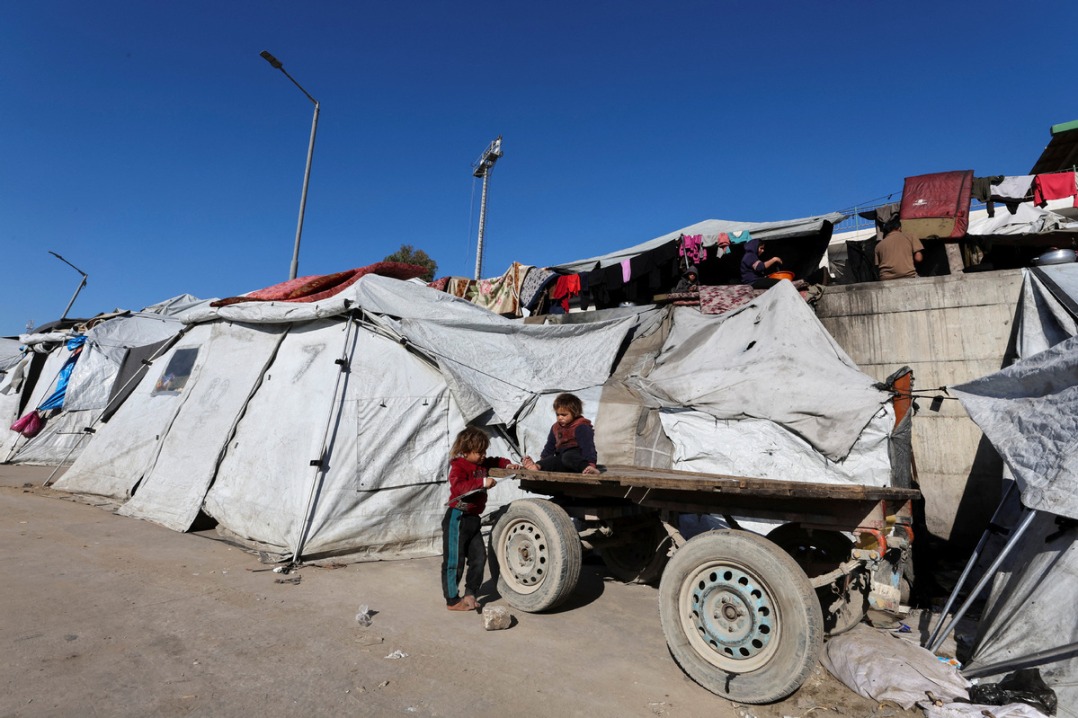
    The immediate consequences have materialized through the closure of critical border crossings into Gaza, including the vital Rafah crossing. Israel’s COGAT military body announced ‘several necessary security adjustments’ implemented on Sunday, claiming the closures would not affect humanitarian conditions—a statement contradicted by experts who warn that humanitarian concerns are becoming collateral damage in broader escalation.

    Gulf Arab states now find themselves in a precarious position, as their hosting of US military assets makes them vulnerable to Iranian retaliation despite not seeking conflict. The situation creates particular challenges for these nations as they attempt to balance security partnerships with regional de-escalation efforts.

    The political landscape has been further complicated by the killings of Iranian leadership figures, creating uncertainty about succession and internal stability rather than strategic clarity. For Palestinians, the renewed escalation risks pushing Gaza further down the international agenda precisely when humanitarian emergencies are becoming more acute.

    While some analysts, including Elie Al Hindy of the American University in the Emirates, believe the situation is unlikely to escalate into broader regional conflict, the cumulative effect has been to make the Gaza ceasefire increasingly fragile and highlight the complex challenges facing international diplomacy in the region.

  • Lantern Festival in Luoyang: Through lens of a poem

    Lantern Festival in Luoyang: Through lens of a poem

    The timeless verses of ‘The Lantern Festival Night — to the tune of Green Jade Table’ continue to resonate through centuries as China celebrated the traditional Lantern Festival on March 3, 2026. This cultural masterpiece, composed during ancient times, serves as both historical record and artistic inspiration for contemporary celebrations in Luoyang, one of China’s ancient capitals.

    The festival, observed on the 15th day of the first lunar month, transforms the historic city into a living tableau of the poem’s vivid imagery. Through multimedia presentations and cultural exhibitions, visitors experienced the romantic and vibrant scenes depicted in the classical work, bridging the gap between ancient literary tradition and modern cultural practice.

    Luoyang’s celebration exemplifies China’s ongoing efforts to preserve and revitalize traditional cultural expressions. The integration of classical poetry with visual media demonstrates innovative approaches to cultural education, allowing both domestic and international audiences to appreciate China’s rich literary heritage in an immersive format.

    The event forms part of broader nationwide celebrations marking the conclusion of the Spring Festival period, with various regions hosting distinctive activities that blend traditional customs with contemporary interpretations. This cultural phenomenon occurs alongside significant political events, including the convening of China’s National People’s Congress and Chinese People’s Political Consultative Conference sessions.

  • Meet ‘Dasheng’: A system-level scientific AI agent

    Meet ‘Dasheng’: A system-level scientific AI agent

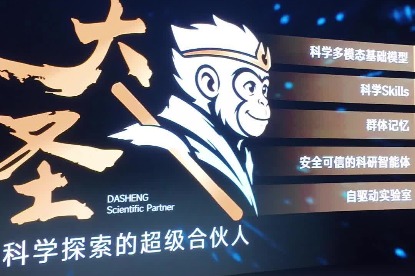
    Shanghai, March 1, 2026 – In a landmark development for artificial intelligence research, the Shanghai Academy of AI for Science and Fudan University have jointly launched a significantly upgraded version of their NovaInspire platform, featuring the groundbreaking scientific AI agent ‘Dasheng’. Named after the legendary Monkey King from Chinese mythology, this system represents a quantum leap in AI capabilities for scientific discovery.

    The Dasheng AI agent integrates multiple cutting-edge technologies including multimodal foundation models, long-term collective memory systems, and expert-level scientific capabilities within a secure, trustworthy framework. What distinguishes Dasheng from conventional AI systems is its capacity for multi-threaded processing and continuous autonomous evolution, enabling it to tackle complex, real-world scientific problems that have previously challenged researchers.

    This system-level scientific partner incorporates self-driving laboratory capabilities, allowing for unprecedented automation in experimental processes and data analysis. The integration of these advanced features positions Dasheng as a transformative force in research methodology, potentially accelerating breakthroughs across multiple scientific disciplines from materials science to pharmaceutical development.

    The development team emphasizes that Dasheng represents more than just incremental improvement – it constitutes a fundamental paradigm shift in how scientific research can be conducted. By combining artificial intelligence with laboratory automation, the system creates a continuous cycle of hypothesis generation, experimentation, and analysis that operates with minimal human intervention.

    This announcement comes at a time when global competition in artificial intelligence research has intensified, with multiple nations and corporations investing heavily in next-generation AI systems. The successful development of Dasheng demonstrates China’s growing capabilities in advanced AI research and its application to scientific challenges.

  • China issues guidelines to boost recycling, utilization of solar modules

    China issues guidelines to boost recycling, utilization of solar modules

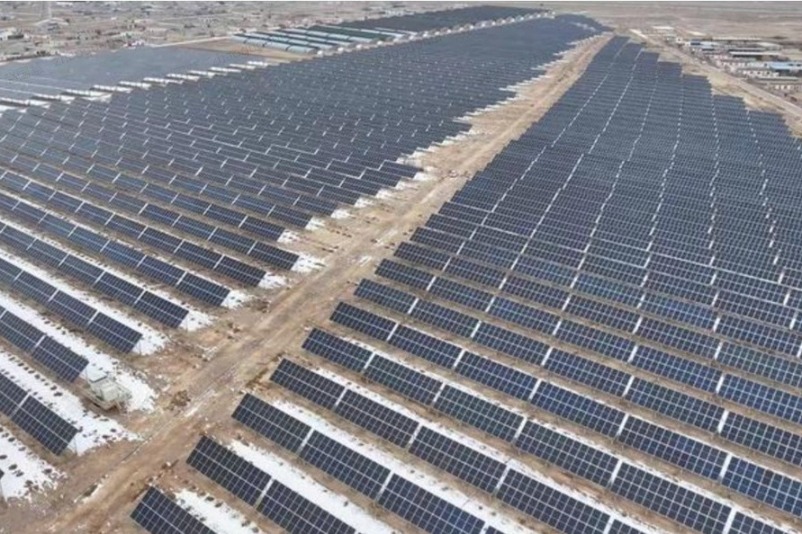
    In a significant move toward sustainable energy management, China has launched comprehensive national guidelines to establish a robust ecosystem for recycling and reusing decommissioned solar photovoltaic (PV) modules. The Ministry of Industry and Information Technology, in coordination with five other governmental bodies, introduced the framework on Tuesday to address the impending surge of retired solar equipment expected from the nation’s massive renewable energy expansion.

    The newly released directives outline a multi-faceted approach to building system-level capacity for handling end-of-life PV components. Central to the strategy is the enhancement of green manufacturing standards for solar modules, increased incorporation of recycled materials in production, and the development of improved scrap assessment protocols alongside advanced testing methodologies.

    Technological innovation forms the cornerstone of China’s recycling initiative. The guidelines emphasize critical breakthroughs in several key areas including surface-structure dismantling techniques, high-efficiency separation of laminated components, and advanced material extraction processes. These technological advancements will enable the broader application of recycled PV-derived products across multiple industrial sectors such as metal smelting, equipment manufacturing, and construction materials.

    The policy framework establishes concrete targets, including achieving cumulative comprehensive utilization of retired PV modules reaching 250,000 tonnes by 2027. By 2030, China aims to realize substantial upgrades in recycling technology and equipment, strengthen industrial innovation capabilities, and expand application scenarios for recycled products. The long-term vision includes creating a tightly coordinated upstream-downstream supply chain with rationally distributed capacity布局 capable of handling large-scale retirements of solar infrastructure.

    Additionally, the guidelines call for the development of comprehensive technical standards for green design and utilization of PV modules while fostering a cohort of leading enterprises specializing in end-of-life solar component processing. This strategic move positions China at the forefront of circular economy practices within the global renewable energy sector.

  • Shanxi NPC deputies arrive in Beijing

    Shanxi NPC deputies arrive in Beijing

    BEIJING – Delegates from Shanxi province formally arrived in the Chinese capital on Tuesday, March 3rd, 2026, marking their participation in the upcoming Fourth Session of the 14th National People’s Congress (NPC). The arrival signals the commencement of one of China’s most significant annual political events, where legislative agendas and national policies are set for the forthcoming year.

    The delegation, representing millions of constituents from the resource-rich northern province, traveled to Beijing to contribute to deliberations on critical national issues. Their attendance at the NPC, China’s top legislative body, underscores the province’s role in the nation’s governance framework. The session is anticipated to address a comprehensive range of topics, from economic development strategies and environmental initiatives to social welfare enhancements.

    Photographic documentation captured the deputies’ arrival, highlighting the organized and formal nature of the event. The NPC serves as a pivotal platform for integrating regional perspectives into national policy-making, ensuring that local interests from across China, including those of Shanxi, are represented at the highest level of government. The outcomes of this session are expected to have substantial implications for national legislation and the strategic direction of the country’s development.

  • Shane Lowry has no choice but to pick himself up and move on after PGA National collapse

    Shane Lowry has no choice but to pick himself up and move on after PGA National collapse

    In a stunning reversal of fortune at PGA National, Irish golfer Shane Lowry experienced one of the most devastating collapses in recent tournament history during the final round of the Cognizant Classic. The 2019 Open Champion held a commanding position with victory seemingly assured until a catastrophic sequence on the 16th and 17th holes transformed certain triumph into heartbreaking defeat.

    Lowry’s personal motivation centered around creating a special moment for his 4-year-old daughter Ivy, envisioning her ‘ginger hair running down the 18th green’ to celebrate what would have been her first time witnessing her father’s victory. This poignant family narrative made the subsequent collapse particularly emotional for spectators and players alike.

    The dramatic turnaround began when Lowry’s 3-iron approach on the 16th found water, resulting in a double bogey that narrowed his lead to a single stroke. The situation deteriorated further when opponent Nico Echavarria birdied the par-3 17th to draw level. Lowry’s response—a perfectly calculated 7-iron chip that should have secured advantage—instead found water, producing another double bogey and completing a five-shot swing across two holes.

    This collapse joins golf’s extensive history of dramatic reversals, including Scott Hoch’s missed 30-inch putt at the 1989 Masters and Mike Reid’s three-shot lead evaporation during the same year’s PGA Championship. Lowry himself referenced his recent Ryder Cup heroics—where he birdied three of the final four holes to secure Europe’s victory—highlighting the sport’s extreme emotional whiplash between triumphant highs and devastating lows.

    Golf legend Jim Furyk’s observation that ‘losing always hurts worse than winning feels good’ perfectly encapsulates the emotional reality facing professionals. Lowry’s response demonstrated professional resilience as he immediately looked toward his next tournament appearance at Bay Hill, acknowledging golf’s unpredictable nature while committing to move forward despite the disappointment.

  • Trump says US-UK relationship ‘not like it used to be’

    Trump says US-UK relationship ‘not like it used to be’

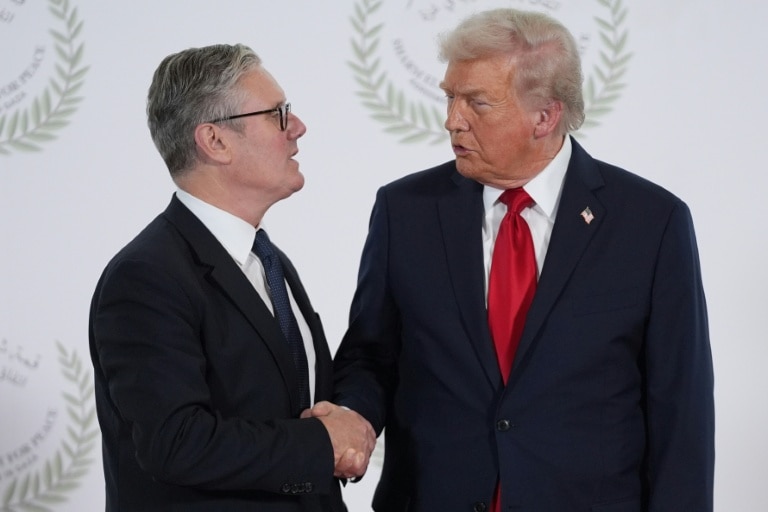
    Former US President Donald Trump has delivered a stark assessment of American-British relations, declaring the historically robust alliance between the two nations is fundamentally diminished. Trump’s criticism directly targets British Prime Minister Keir Starmer, whom he accused of being uncooperative during recent US-Israeli military operations against Iran.

    The diplomatic friction emerged when Starmer initially refused British involvement in Washington’s conflict with Iran, telling Parliament his government rejects the concept of ‘regime change from the skies.’ Though Starmer later authorized limited use of two British military bases for defensive purposes at US request, the hesitation provoked Trump’s ire.

    In an interview with The Sun newspaper, Trump expressed disappointment: ‘This was the most solid relationship of all. I never thought I’d see that from the UK. We love the UK, but it’s just a much different kind of relationship.’

    The tension occurs against a complex geopolitical backdrop. British officials remain haunted by the legacy of the Iraq War, with Government Minister Darren Jones explicitly referencing learned lessons from ‘the mistakes of Iraq.’ Starmer’s government insists any military cooperation must have clear legal basis and serve British national interests.

    Meanwhile, security concerns escalate as Iranian-made drones attacked a Royal Air Force base in Cyprus, though officials confirmed the facility wasn’t being used by US bombers. UK media reports indicate the government is considering deploying HMS Duncan, a Type 45 destroyer recently trained in drone interception, to the region.

    Foreign policy experts suggest Starmer faces a delicate balancing act. Richard Whitman of the University of Kent warned Trump’s comments might signal a ‘new, not-so-special relationship,’ while think tank director Evie Aspinall noted the critical importance of maintaining US cooperation regarding Ukraine and other global issues.

    Despite the tensions, Starmer’s spokesman maintained that ‘the UK and US remain staunch allies,’ emphasizing decades of cooperation on national security and trade. The relationship, historically built on defense cooperation and intelligence sharing since World War II, now enters a potentially transformative phase.

  • Russia bans a prominent LGBTQ+ rights group as extremist in a new blow to the beleaguered community

    Russia bans a prominent LGBTQ+ rights group as extremist in a new blow to the beleaguered community

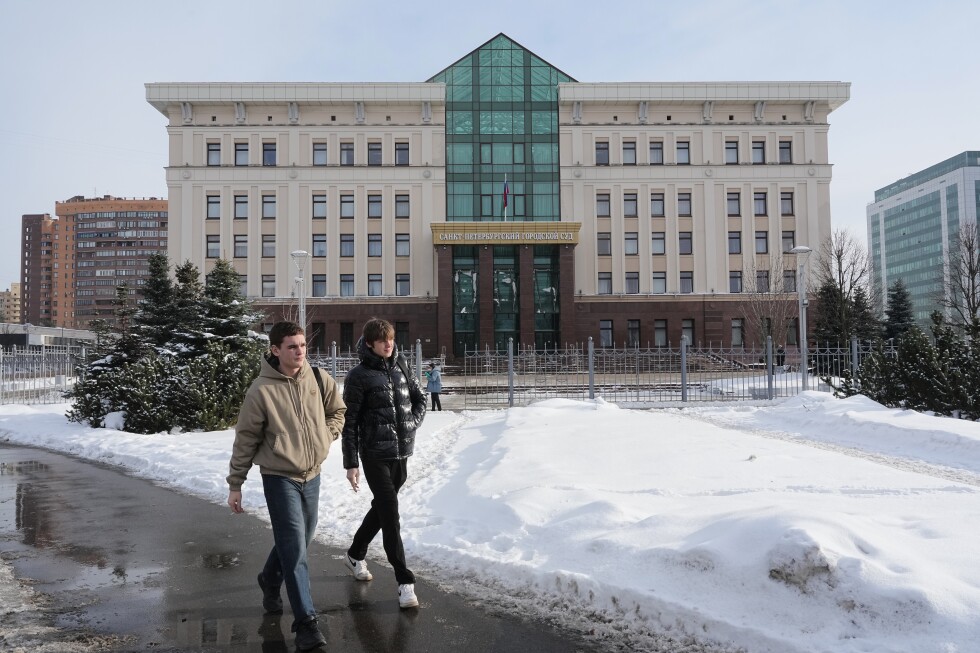
    A Russian court has formally designated the prominent LGBTQ+ rights organization Coming Out as an extremist group, marking another significant escalation in the Kremlin’s systematic suppression of sexual and gender minorities. The St. Petersburg City Court reached this verdict during a closed-door hearing on Tuesday, with details of the Justice Ministry’s lawsuit remaining classified as secret.

    This ruling represents the first application of Russia’s 2023 Supreme Court decision that effectively outlawed all LGBTQ+ activism by labeling the ‘international LGBT movement’ as extremist. The designation creates legal vulnerability for anyone associated with the group, potentially leading to criminal prosecution and imprisonment.

    Despite operating from abroad since Russia’s full-scale invasion of Ukraine, Coming Out has vowed to continue providing support to LGBTQ+ individuals both within Russia and internationally. The organization emphasized its long-term preparation for this development, having enhanced security protocols and developed sustainable remote working methods to ensure continued operation.

    The crackdown on LGBTQ+ rights has intensified dramatically under President Vladimir Putin, who has framed his Ukraine invasion as a defensive measure against Western values that he claims threaten Russia’s traditional family structure. Since the war began, Russia has implemented sweeping bans on any positive or neutral depiction of LGBTQ+ relationships, prohibited gender-affirming medical care, and banned legal gender recognition.

    Similar lawsuits are pending against two other LGBTQ+ rights organizations in St. Petersburg and the Samara region, indicating a coordinated nationwide effort to eliminate LGBTQ+ advocacy. The extremist designation creates practical barriers to support, making it dangerous for Russians to share the group’s content or provide financial assistance, while also potentially frightening those in need from seeking help.

    Despite these challenges, Coming Out continues to provide remote psychological and legal support while collaborating with international organizations to advocate for LGBTQ+ rights and assist those fleeing the country. The organization’s leadership acknowledges the increased risks but remains committed to their mission, emphasizing that community solidarity remains stronger than government-imposed labels.

  • New study proposes scientific basis for improving concrete reinforcement in desert environments

    New study proposes scientific basis for improving concrete reinforcement in desert environments

    A groundbreaking study from Chinese researchers has overturned conventional wisdom about sandstorm damage, revealing that moderate wind and sand erosion can actually enhance the structural integrity of concrete surfaces in desert environments. The collaborative research between the Northwest Institute of Eco-Environment and Resources (NIEER) under the Chinese Academy of Sciences and Lanzhou Jiaotong University provides a scientific basis for improving reinforcement methods for infrastructure in arid regions.

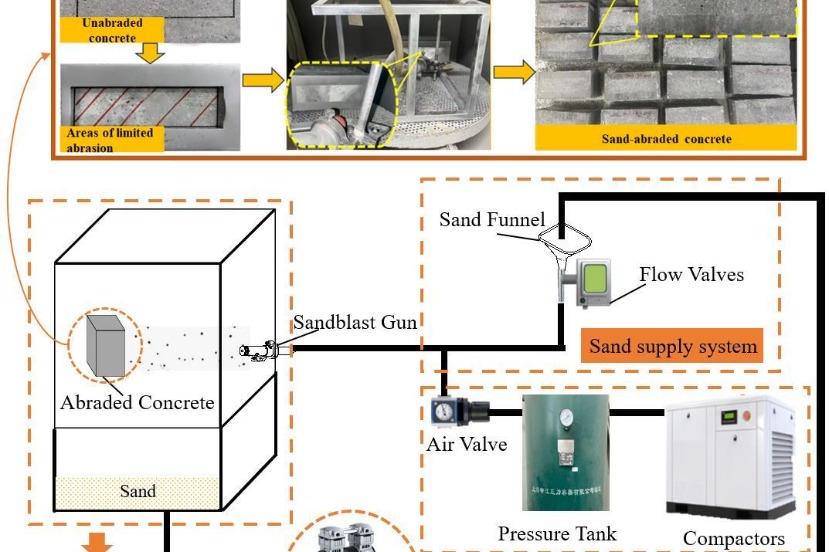
    Published in the prestigious journal Composites Part B: Engineering, the study investigated the interface performance of wind-and-sand-eroded concrete when reinforced with carbon fiber-reinforced polymer (CFRP). Unlike previous research that focused on ideal flat interfaces, this pioneering work simulated various wind-sand environments through mechanical testing and microscopic analysis.

    Lead researcher Liu Benli from NIEER explained the counterintuitive findings: “Moderate abrasion forms a microstructure conducive to the bonding of the reinforcing layer. In vivid terms, the process resembles a sculptor carving rough textures into stone for subsequent reinforcement.” The research demonstrated that wind and sand impact creates microscopic grooves on material surfaces, providing natural anchoring points for coatings and protective materials that significantly enhance interfacial bonding.

    The quantitative results were striking: sand erosion increased the interface ultimate bearing capacity of CFRP-concrete specimens by 31 percent and amplified surface roughness by a factor of 10 compared to uneroded specimens. The research team also developed predictive models for interfacial bearing capacity and bond-slip relationships that incorporate abrasion effects, showing strong alignment with experimental data.

    According to Zhang Kai, associate professor at Lanzhou Jiaotong University’s School of Civil Engineering, the study represents a significant advancement: “For the first time, we’ve achieved quantitative correlation between environmental conditions and interface performance. Engineers can now precisely predict material load-bearing capacity based on wind and sand intensity.” This breakthrough enables the scientific utilization of sandstorms as a ‘natural power’ to sustain infrastructure in desert regions, potentially transforming how engineers approach construction and maintenance in challenging environments.