作者: admin

  • Gold prices set for best monthly gain in 50 years after hitting record high

    Gold prices set for best monthly gain in 50 years after hitting record high

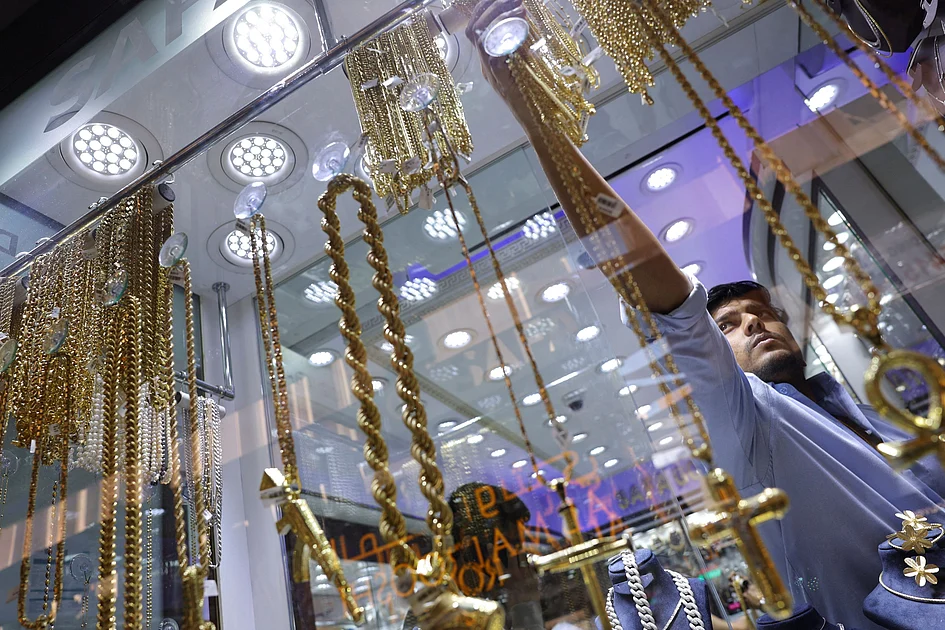
    Global gold markets witnessed an unprecedented surge on Thursday, January 29, 2026, as the precious metal shattered previous records by breaching the $5,500 per ounce threshold for the first time in history. This remarkable rally positions gold for its most substantial monthly appreciation in half a century, driven primarily by escalating geopolitical tensions and shifting economic indicators.

    In Dubai’s vibrant gold market, 24K gold reached an extraordinary peak of Dh666 per gram during daytime trading before settling at Dh664.5 per gram by evening. This represents a staggering year-to-date increase of Dh144.5 per gram, demonstrating the metal’s sustained upward trajectory. The phenomenon extended beyond pure gold, with 22K variants momentarily crossing the Dh600 barrier for the first time ever, achieving an unprecedented high of Dh616.75 per gram before moderating to Dh615.25.

    Financial experts attribute this historic surge to multiple converging factors. Vijay Valecha, Chief Investment Officer at Century Financial, identified deteriorating US-Iran relations as a primary catalyst. ‘The breakdown in nuclear negotiations between Washington and Tehran, coupled with President Trump’s暗示 of potential military intervention in the Middle East, has created substantial market uncertainty,’ Valecha explained. The strategic deployment of a US aircraft carrier strike group, bringing total American warships in the region to ten, has significantly heightened geopolitical anxieties.

    Concurrently, the weakening US dollar index has prompted investors to seek refuge in traditional safe-haven assets, further accelerating gold’s ascent. From a technical perspective, Valecha noted that gold approached $5,604 during early trading sessions before experiencing a slight correction to $5,549. Critical resistance is currently identified at $5,604, with a potential breakthrough potentially propelling prices toward $5,700. Conversely, support levels stand firm at $5,438 on hourly charts, with a breach possibly triggering a decline to $5,317.

    This extraordinary market performance underscores gold’s enduring role as a financial sanctuary during periods of international instability and economic uncertainty.

  • Rugby Australia trumpets another big win over NRL after signing Max Jorgensen on mega new deal

    Rugby Australia trumpets another big win over NRL after signing Max Jorgensen on mega new deal

    In a significant coup for the sport, Rugby Australia has successfully retained one of its most promising talents, Max Jorgensen, who has rejected substantial interest from the National Rugby League’s Sydney Roosters. The 21-year-old outside back has committed to a monumental five-year contract extension, ensuring his presence in Australian rugby through the conclusion of the 2031 season.

    This development represents a strategic victory for Rugby Australia, coming shortly after the code secured Angus Crichton’s transition from rugby league beginning in 2027, alongside Mark Nawaqanitawase’s impending return to union later this year. Jorgensen’s decision delivers a substantial blow to the Roosters’ recruitment efforts while providing stability to Australian rugby’s talent pipeline.

    The groundbreaking agreement includes provisions for sabbatical seasons in 2028 and 2030, enabling Jorgensen to potentially pursue lucrative opportunities in international competitions—a privilege previously extended only to Wallabies legends Michael Hooper and Lote Tuqiri. This structure ensures Jorgensen’s availability for both the 2027 home World Cup in Australia and the subsequent 2031 global tournament.

    Jorgensen expressed profound connection to his rugby roots, stating: ‘Having grown up in Sydney with junior rugby at Balmain Wolves and education at St. Joseph’s College, representing my state in the blue jersey carries immense significance for my family and me. Achieving Wallabies selection stands as my career highlight thus far, and I’m determined to contribute to a successful home World Cup campaign next year.’

    With 20 international appearances already showcasing his exceptional abilities, Jorgensen has demonstrated potential to emerge as one of rugby’s contemporary greats. Rugby Australia’s director of high performance, Peter Horne, emphasized the strategic importance of this retention: ‘At just 21, Max has evolved into a formidable Test player with considerable development potential. His long-term commitment reflects positively on our program’s direction, and we anticipate his continued contributions to team performance and culture.’

    The secured future allows Jorgensen to focus immediately on forthcoming campaigns with the Waratahs and Wallabies as Australia builds toward hosting rugby’s premier global event in 2027.

  • Imran Khan not the only one silenced as Pakistan military stifles dissent

    Imran Khan not the only one silenced as Pakistan military stifles dissent

    Pakistan’s political landscape is witnessing an unprecedented contraction of democratic freedoms as former Prime Minister Imran Khan remains in complete isolation at Rawalpindi’s Adiala Jail. According to his political party, Khan has been denied visitation rights for over five weeks, with his last family visit occurring more than eight weeks ago and legal consultations limited to a mere eight-minute session.

    The government attributes this isolation to Khan’s violation of prison regulations prohibiting political discussions, while his family alleges a deliberate attempt to silence his criticism of military leadership. Khan’s sister, Aleema Khanum, asserts that Field Marshal Asim Munir, Pakistan’s military chief, is personally orchestrating this information blockade—an accusation the government vehemently denies.

    This suppression extends far beyond Khan’s case. Recent developments reveal a systematic crackdown on dissent across multiple sectors. Human rights lawyer Imaan Mazari and her husband received ten-year prison sentences for allegedly sharing ‘anti-state’ social media content, drawing condemnation from Amnesty International regarding Pakistan’s use of coercive tactics against human rights defenders.

    Media freedom has suffered significantly under new regulations. Television networks operate under strict directives prohibiting any coverage of Khan, including visual representations, audio recordings, or even mentioning his name. Journalists report escalating self-censorship and intimidation tactics, with even tangential coverage of military-related topics triggering warnings from unidentified callers.

    The legal framework itself has been weaponized against free expression. The 2025 amendments to Pakistan’s Prevention of Electronic Crimes Act introduced vague definitions of ‘national interest’ and established severe penalties for criticizing state institutions. Media analyst Adnan Rehmat notes that these changes have created ‘forever shifting boundaries’ that make legitimate journalism increasingly perilous.

    Historical context reveals this repression represents both continuity and escalation. While Pakistan has experienced media restrictions under previous administrations, current measures demonstrate increased institutionalization of suppression. The military’s influence has reached new heights following constitutional amendments granting Field Marshal Munir lifetime immunity from prosecution and oversight of all defense forces.

    International observers express growing concern. Michael Kugelman of the Atlantic Council notes that ‘Pakistan is coming quite close to authoritarian rule,’ with current repression levels exceeding any previous period of civilian governance. The situation illustrates the delicate balance between state security concerns and fundamental democratic rights, with Pakistan’s authorities insisting their actions represent necessary measures against ‘digital terrorism’ rather than suppression of legitimate dissent.

  • Why China moved so quickly to execute 11 members of a notorious mafia family

    Why China moved so quickly to execute 11 members of a notorious mafia family

    In a decisive move against transnational organized crime, China has carried out the execution of 11 principal members of the Ming criminal syndicate originating from Myanmar’s northern Shan State. The sentences, initially handed down in September, mark the culmination of an extensive cross-border operation targeting sophisticated cyber fraud operations that had ensnared thousands of Chinese citizens.

    The Ming family, alongside the Bau, Wei, and Liu clans, had established a formidable criminal empire in the remote border town of Laukkaing since 2009. Their rise to power followed a military operation led by General Min Aung Hlaing that displaced the Myanmar National Democratic Alliance Army (MNDAA), the ethnic insurgent group previously controlling the region.

    These criminal networks transitioned from traditional narcotics production to establishing large-scale casino operations and ultimately sophisticated cyber fraud compounds. The most notorious facility, known as Crouching Tiger Villa operated by the Ming family, became synonymous with human rights abuses where torture was routinely employed against workers forced to participate in elaborate ‘pig-butchering’ romance scams targeting predominantly Chinese victims.

    The turning point emerged in October 2023 when guards at these compounds killed several Chinese nationals during an attempted escape. This incident prompted China to collaborate with the MNDAA, which subsequently launched an offensive recapturing Laukkaing and detaining the crime family leaders. Ming Xuechang, the family patriarch, committed suicide following capture, while over 60 associates were transferred to Chinese authorities.

    China’s Ministry of Public Security has publicized interrogation details revealing the extreme brutality of these operations, including reports of random killings intended to demonstrate power. The comprehensive crackdown has extended beyond Myanmar, with China securing extraditions of key figures like She Zhijiang from Thailand and Chen Zhi from Cambodia, both accused of operating massive scam empires across Southeast Asia.

    Despite these efforts, the cyber fraud industry has demonstrated remarkable resilience, adapting and relocating to new regions within Myanmar while maintaining significant presence in Cambodia. The executions represent China’s most severe response to date against cross-border criminal enterprises threatening its citizens and financial security.

  • Are you a parent in the UAE? You now have a legal duty to supervise your children’s digital lives

    Are you a parent in the UAE? You now have a legal duty to supervise your children’s digital lives

    The United Arab Emirates has implemented a groundbreaking Child Digital Safety Law that fundamentally reshapes parental responsibilities in the digital realm. This legislation marks a significant shift from reactive measures to proactive prevention, establishing clear legal expectations for both digital platforms and families.

    Under the new regulatory framework, parents now carry a legal obligation to provide reasonable supervision of their children’s digital interactions. This mandate encompasses knowing which applications and platforms children use, ensuring age-appropriate content, implementing basic parental controls, and maintaining open communication about online safety practices. Crucially, the law distinguishes between reasonable supervision and constant surveillance, emphasizing guidance over invasive monitoring.

    Legal experts clarify that the legislation primarily targets service providers rather than families. Sarah Greenstreet, technology and data protection lawyer at Addleshaw Goddard, explains: “This law signals the UAE government’s serious commitment to children’s online safety, recognizing that digital spaces require the same protection standards as physical environments.”

    The law broadly defines harmful content as any material negatively affecting a child’s moral, psychological, or social wellbeing. This expanded definition includes content promoting unhealthy body standards, encouraging excessive screen time, subtly pressuring information sharing, or normalizing risky behaviors. The legislation also addresses harmful behaviors including harassment, grooming, and exploitation.

    Practical implementation recommendations include establishing separate, age-appropriate accounts for children rather than sharing adult accounts, which could be interpreted as failing to meet supervision requirements. For younger children, experts recommend maintaining direct parental control over messaging platforms accessed through parental devices.

    Digital security professionals emphasize that effective supervision doesn’t require technical expertise. Morey Haber, Chief Security Advisor at BeyondTrust, notes: “Parents have numerous tools at their disposal—operating system controls, browser filters, antivirus solutions, and router-level protections.”

    Psychological experts stress that successful implementation relies on supportive communication rather than punitive measures. Rema Menon Vellat of Counselling Point Training and Development advises: “Supervision works best when children feel comfortable sharing concerns without fear of punishment or device confiscation.”

    The law represents a cultural shift toward recognizing digital access as an ongoing responsibility rather than a one-time permission. It positions parents as guides in the digital landscape while creating safer default environments through platform-level protections and stricter data handling requirements for children under 13.

  • The unspoken truth of the ‘Sandwich Generation’: How to parent your parents

    The unspoken truth of the ‘Sandwich Generation’: How to parent your parents

    A profound generational challenge is emerging as millions of middle-aged adults find themselves simultaneously parenting young children while caring for aging parents, creating what sociologists term the ‘Sandwich Generation’ phenomenon. This dual caregiving role presents unique psychological and physical demands that society remains largely unprepared to address.

    The experience of parenting young children, while exhausting, carries the inherent promise of future independence and developmental milestones. In stark contrast, caring for declining parents represents a degenerative process with diminishing returns on emotional investment. The biological rewards of nurturing children differ fundamentally from the emotional toll of witnessing parental deterioration.

    This convergence of responsibilities at midlife creates unprecedented psychological strain. Caregivers must reconcile the joyful anticipation of their children’s futures with the grief of their parents’ mortality, often within the same emotional space and time. The emotional whiplash of comforting a crying child moments after confronting parental decline represents a modern psychological challenge without established coping mechanisms.

    Through extensive interviews with those experiencing this dual caregiving reality, a consistent pattern emerges: the path forward involves acceptance rather than resolution. Veteran caregivers emphasize that surrendering to the inevitable cycle of life and death provides the only sustainable framework for navigating these competing demands.

    The psychological landscape of this experience involves constant confrontation with mortality while maintaining life-affirming responsibilities. Caregivers describe developing a heightened appreciation for life’s transient beauty—the warmth of a child’s embrace, the comfort of partnership, the persistence of love beyond grief. This perspective transforms the caregiving journey from burden to privilege, recognizing that profound grief necessarily follows profound love.

    While solutions remain elusive, the collective nature of this experience provides comfort. Millions worldwide are navigating similar challenges, creating silent solidarity among those balancing generational responsibilities. This shared experience represents an unspoken rite of passage for contemporary adults, redefining family dynamics across modern societies.

  • Big challenges lurk behind India’s world-beating growth

    Big challenges lurk behind India’s world-beating growth

    As Finance Minister Nirmala Sitharaman prepares to unveil India’s annual budget this Sunday, the nation presents a complex economic portrait of surface-level prosperity overshadowing persistent structural vulnerabilities. Official metrics indicate remarkable progress: GDP growth racing toward 7.3%, inflation reined below 2%, and agricultural output strengthening rural livelihoods. The economy is poised to surpass $4 trillion, eclipsing Japan as Asia’s second-largest economy.

    This apparent golden era—described by the Reserve Bank of India as a ‘Goldilocks phase’ of ideal expansion—has been fueled by strategic fiscal measures. Last year’s income tax reductions and rationalized Goods and Services Tax structure stimulated consumer spending, particularly during festive seasons, injecting vitality into domestic markets.

    Beneath these impressive headlines, however, lurk substantial challenges. India’s celebrated growth narrative conceals alarming labor market weaknesses. The technology sector—long the engine of middle-class creation—has witnessed catastrophic hiring stagnation, with the five largest IT firms adding merely 17 net employees through three quarters of 2025. This paralysis reflects AI’s disruptive impact on India’s back-office economy and signals broader white-collar employment concerns.

    Trade dynamics present additional complications. While the government has pursued aggressive trade diversification through recently signed agreements with the European Union and other partners, the persistent shadow of Trump’s 50% tariffs continues to constrain exports. HSBC Research notes weakening US-bound shipments with only marginal recovery in other markets, raising questions about India’s competitiveness against manufacturing hubs like Vietnam and Bangladesh.

    Most critically, private investment has remained stagnant at approximately 12% of GDP since 2012—a thirteen-year plateau that economists identify as fundamentally alarming. JP Morgan’s Jehangir Aziz attributes this investment freeze to persistent factory overcapacity and insufficient demand, creating a self-reinforcing cycle that inhibits new capital formation.

    Foreign direct investment tells another troubling story. Despite rapid growth, India has never achieved the 4%+ FDI-to-GDP ratios that propelled China and Vietnam’s economic miracles, currently languishing at just 0.1%. Rockefeller International’s Ruchir Sharma cites the lingering ‘Licence Raj’ bureaucracy and restrictive labor regulations as primary deterrents to international capital.

    In response, the budget is expected to emphasize fiscal restraint alongside targeted reforms. Analysts anticipate expanded production-linked incentives, support for small exporters, defense capital allocations, and customs duty reductions. While infrastructure investment—exceeding $100 billion annually—will likely continue at 3% of GDP, the government faces constrained fiscal space following last year’s tax cuts. The overarching priority remains deficit reduction, with Nuvama Securities forecasting continued deleveraging rather than stimulus measures.

  • Myanmar’s USDP wins majority of seats in Union Parliament

    Myanmar’s USDP wins majority of seats in Union Parliament

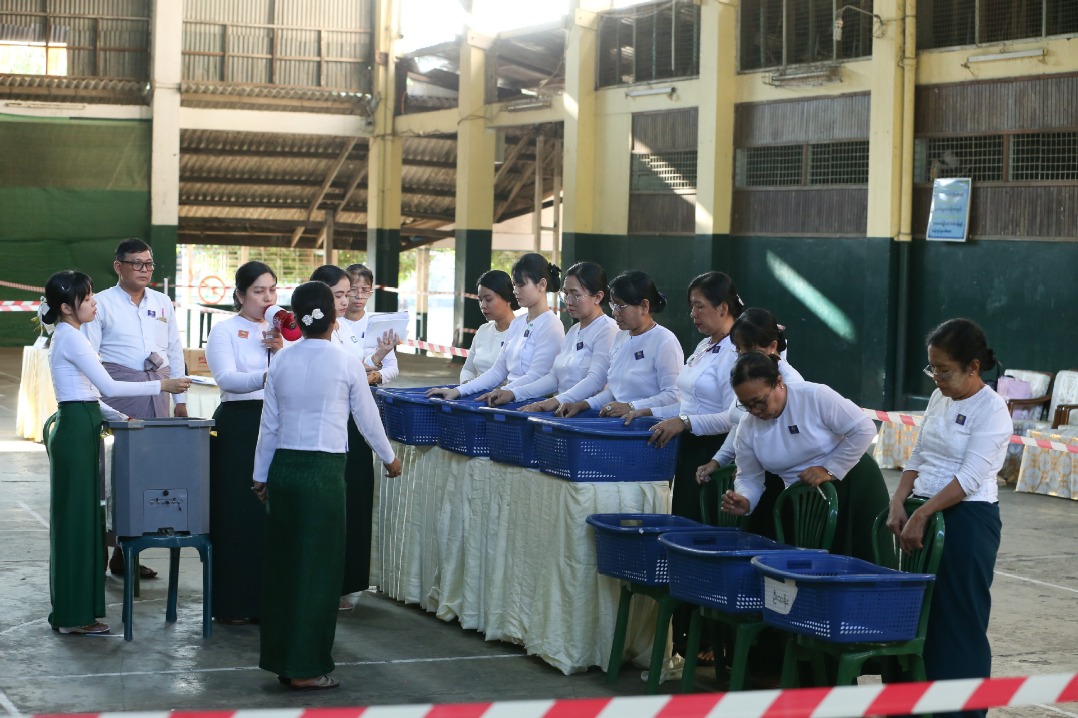
    YANGON – Myanmar’s Union Solidarity and Development Party (USDP) has achieved a decisive parliamentary majority following the nation’s meticulously organized general election, according to official results published by the Union Election Commission (UEC) on Thursday.

    The comprehensive electoral process, conducted across three distinct phases between December 2025 and January 2026, culminated in the USDP securing 339 parliamentary seats. The party obtained 231 seats in the Pyithu Hluttaw (Lower House) and 108 seats in the Amyotha Hluttaw (Upper House), representing a commanding position within the 664-seat Union Parliament structure.

    Electoral authorities reported that 420 contested seats were available nationwide during this democratic exercise. The election administration demonstrated considerable logistical complexity, with voting occurring in 263 townships across the designated phases: December 28, 2025 (102 townships), January 11, 2026 (100 townships), and January 25, 2026 (61 townships).

    The parliamentary framework consists of a bicameral system with the 440-seat Lower House and 224-seat Upper House forming the complete legislative body. This electoral outcome positions the USDP with significant influence over Myanmar’s legislative agenda and policy direction for the forthcoming parliamentary session.

  • EU to put Iran Guards on ‘terrorist list’, same level as Al Qaeda, Daesh

    EU to put Iran Guards on ‘terrorist list’, same level as Al Qaeda, Daesh

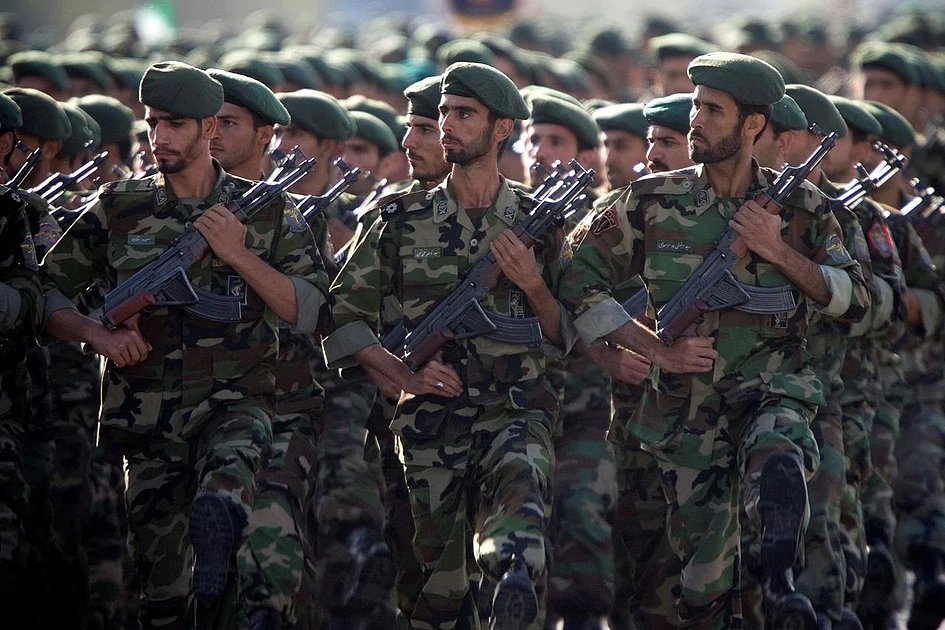
    In a landmark decision with profound diplomatic implications, European Union foreign ministers convened in Brussels on Thursday to formally designate Iran’s Islamic Revolutionary Guard Corps (IRGC) as a terrorist organization. This historic move places the elite Iranian military force on the EU’s terror blacklist alongside notorious jihadist groups including Al-Qaeda and Daesh.

    The decisive action comes in response to Tehran’s brutal crackdown on nationwide protests, during which thousands of civilian demonstrators were reportedly killed by security forces. EU foreign policy chief Kaja Kallas declared to journalists that “those who operate as terrorists must be treated accordingly,” signaling a fundamental shift in Europe’s approach to the Iranian regime.

    Concurrently, the 27-nation bloc implemented additional punitive measures including visa bans and asset freezes targeting 21 Iranian state entities and senior officials. Among those sanctioned are Iran’s Interior Minister, Prosecutor General, and regional IRGC commanders directly implicated in the suppression of dissent.

    While Iranian authorities acknowledge approximately 3,000 fatalities during the unrest, they claim most casualties were security personnel or bystanders killed by rioters. However, international human rights organizations contend the actual death toll reaches potentially tens of thousands, with evidence indicating IRGC forces directly fired upon peaceful protesters.

    The EU’s designation follows significant policy reversals from key member states France and Italy, both of which recently endorsed the terrorist classification. This alignment brings European policy in concert with existing designations by the United States, Canada, and Australia.

    French Foreign Minister Jean-Noel Barrot emphasized that “there can be no impunity for the crimes committed” and called for the immediate release of thousands of political prisoners. He further urged Tehran to restore internet access and “enable the Iranian people to determine their own future.”

    Despite its primarily symbolic nature—as the IRGC and its commanders already faced extensive EU sanctions—the terrorist designation represents the bloc’s strongest condemnation yet of Iran’s human rights abuses. The move preserves diplomatic channels while delivering an unequivocal message regarding the EU’s position on state-sponsored violence and repression.

  • Burkina Faso’s junta dissolves all of country’s political parties, saying they cause divisions

    Burkina Faso’s junta dissolves all of country’s political parties, saying they cause divisions

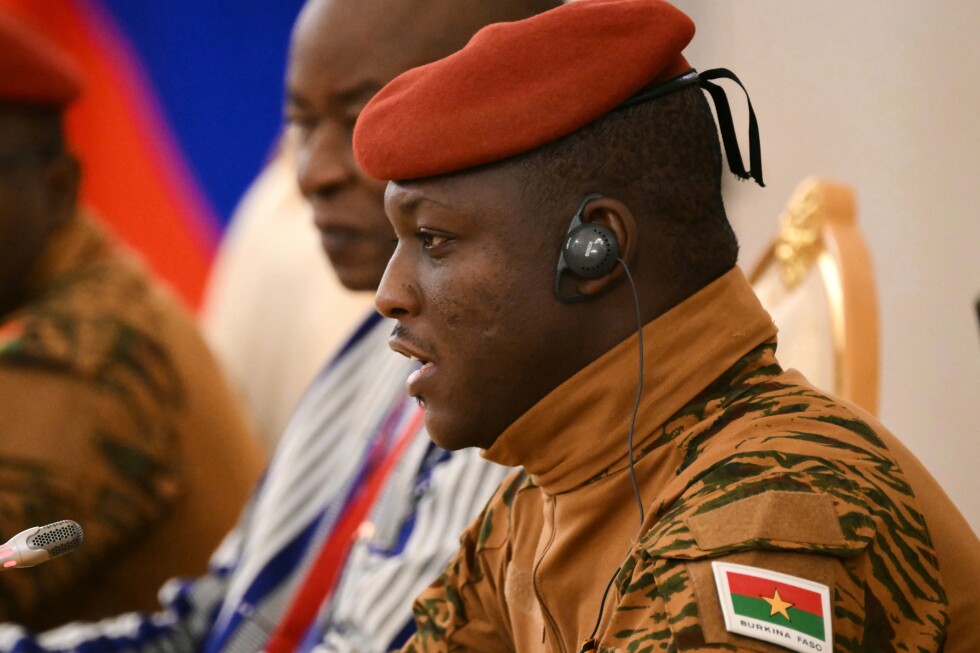
    OUAGADOUGOU, Burkina Faso — In a dramatic consolidation of power, Burkina Faso’s military government has officially dissolved all political parties and nullified the legislation that governed them through a decree ratified during Thursday’s Council of Ministers meeting.

    The decision represents the most severe measure yet in a series of actions that civil society advocates characterize as systematically dismantling democratic institutions and suppressing opposition voices since the 2022 coup brought the junta to power. While political activities had remained suspended under military rule, the new mandate goes further by requiring the immediate transfer of all party assets to state control, as confirmed by the government-operated news agency.

    Emile Zerbo, Minister of Territorial Administration, justified the sweeping dissolution by asserting that political organizations had strayed from their foundational principles. “The administration concludes that the excessive proliferation of political parties has precipitated abuses, exacerbating societal divisions and undermining national cohesion,” Zerbo stated following the ministerial council’s approval.

    The military regime, which seized control two years ago, has implemented extensive reforms including the indefinite postponement of elections originally intended to reestablish civilian governance and the disbandment of the autonomous electoral commission. Officials indicated that new legislation outlining the framework for future political organizations will be presented to the legislative body promptly.

    Burkina Faso joins several West and Central African nations experiencing a wave of military takeovers and deferred transitions to democratic governance, reflecting broader regional instability and challenges to constitutional order.