作者: admin

  • Hebei eyes stronger regional integration

    Hebei eyes stronger regional integration

    Hebei Province has announced comprehensive strategies to accelerate regional integration within the Beijing-Tianjin-Hebei metropolitan cluster during China’s 15th Five-Year Plan period (2026-2030). The development blueprint focuses on infrastructure connectivity, industrial relocation, and sustainable growth initiatives.

    Provincial leadership revealed that Hebei will systematically absorb non-capital functions relocated from Beijing while actively cultivating new quality productive forces. This coordinated approach aims to transform the region into a demonstration zone for Chinese modernization, leveraging Hebei’s strategic position between two major municipalities.

    Ni Yuefeng, Secretary of the CPC Hebei Provincial Committee, highlighted the province’s remarkable economic performance with 5.6% GDP growth in 2025, exceeding national averages. Environmental progress accompanied economic development, with renewable energy constituting over 70% of installed power capacity and significant air quality improvements.

    The integration strategy already shows tangible benefits: Hebei supplies agricultural products to Beijing’s markets while providing workforce resources, substantially increasing per capita incomes for provincial residents. This symbiotic relationship enhances regional living standards while optimizing resource distribution.

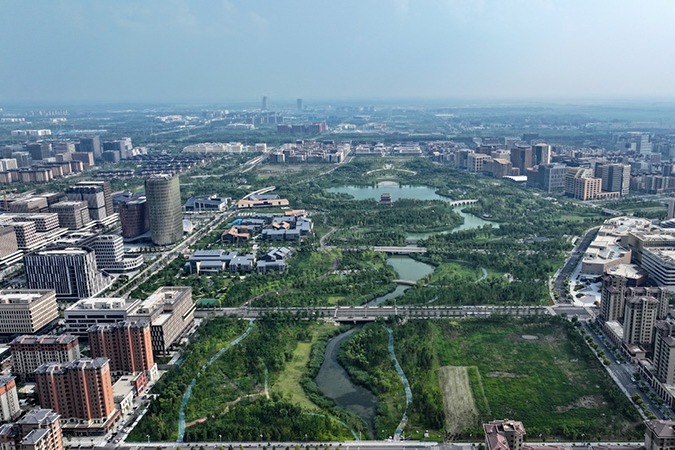
    Xiong’an New Area emerges as a cornerstone of this development vision, having attracted annual investments exceeding 200 billion yuan ($28.98 billion) with cumulative investment surpassing 1 trillion yuan. The area has developed 215 square kilometers as a centralized hub for Beijing’s relocated functions.

    Zhang Guohua, Secretary of Xiong’an New Area Working Committee, outlined ambitious targets to enhance the area’s economic strength, technological innovation capabilities, and international profile. The development plan emphasizes infrastructure modernization, talent attraction, and improved public services.

    Educational integration forms another critical component, with Hebei University of Technology Party Secretary Han Xu advocating for deepened collaboration with Beijing and Tianjin institutions. The province will implement digital education strategies to create an open, intelligent educational ecosystem, cultivating high-caliber talent to drive innovation and sustainable development.

  • Belarus leader pardons 18 prisoners in an effort to improve ties with US

    Belarus leader pardons 18 prisoners in an effort to improve ties with US

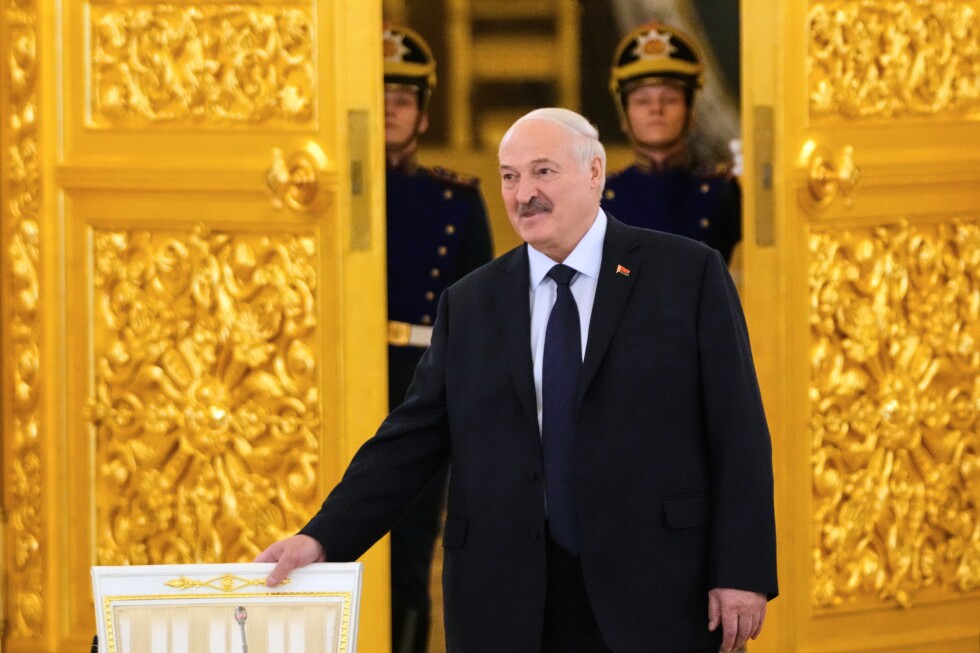
    In a significant diplomatic development, Belarusian President Alexander Lukashenko has issued pardons for 18 additional prisoners, marking the latest gesture in his administration’s ongoing efforts to normalize relations with the United States. The presidential decree, announced Thursday, primarily benefits individuals convicted on extremism charges—a classification frequently employed against political dissidents in the Eastern European nation.

    Notably, 11 of the newly pardoned prisoners are women, according to official statements released through government channels. This action represents the most recent chapter in a carefully orchestrated prisoner release initiative that has gained momentum since August, when direct communication occurred between Lukashenko and former U.S. President Donald Trump.

    The current wave of releases has seen 123 detainees regain freedom since summer, including Nobel Peace Prize recipient Ales Bialiatski and opposition leaders Maria Kolesnikova and Viktar Babaryka. Washington has responded with tangible concessions, including the lifting of economic sanctions targeting Belarus’ vital potash fertilizer industry and its national carrier, Belavia Airlines.

    U.S. Special Envoy for Belarus John Coale publicly applauded the developments on social media platform X, characterizing the pardons as ‘another notable step in the relationship between the U.S. and Belarus’ while acknowledging his mandate from President Trump to secure the release of all political prisoners.

    Despite these diplomatic overtures, human rights organizations report that 1,140 political prisoners remain incarcerated in Belarusian correctional facilities. The Viasna Human Rights Center documents ongoing repression, noting that new arrests and convictions continue unabated even as some detainees are released.

    This paradoxical situation manifested clearly this week as authorities sentenced prominent musician and poet Aleh Khamenka to three years imprisonment plus substantial fines for alleged extremist activities related to his collaboration with a banned radio station. Simultaneously, Belarus designated the PEN Belarus writers’ association as an extremist organization—a move that potentially criminalizes its 100+ members, including Nobel literature laureate Svetlana Alexievich and recently freed peace prize winner Bialiatski.

    Tatsyana Nyadbay, head of PEN Belarus, condemned the government’s classification as ‘horrendous,’ warning that it deliberately endangers writers who remain within the country’s borders.

  • US releases Epstein files with uncorroborated Trump allegations

    US releases Epstein files with uncorroborated Trump allegations

    The U.S. Justice Department has unveiled additional investigative files concerning convicted sex offender Jeffrey Epstein, releasing previously withheld FBI interview summaries that contain unverified allegations against former President Donald Trump. The documents, made public on Thursday, include three FBI 302 reports from 2019 featuring a woman’s claims that Epstein introduced her to Trump during the 1980s when she was reportedly between 13 and 15 years old.

    According to the interview summaries, the woman alleged that Trump attempted to force her into non-consensual sexual acts during an encounter arranged by Epstein. She further claimed to investigators that she resisted by biting Trump, who then allegedly struck her before having her removed from the room. The documents explicitly note that these allegations remain uncorroborated, and investigators did not indicate whether they found her account credible. Trump has consistently denied any wrongdoing.

    The release forms part of a congressional mandate to publicize millions of pages of Epstein-related records. Justice Department officials explained that these particular documents were initially withheld from earlier releases due to being mistakenly coded as duplicates during the review process.

    The newly published material includes summaries of four FBI interviews conducted with the woman between July and October 2019, following Epstein’s arrest. In these interviews, she detailed multiple instances of sexual abuse by Epstein and claimed he arranged encounters with other prominent men. However, when agents pressed for additional details about the alleged interaction with Trump in later interviews, she declined to elaborate and eventually severed contact with investigators.

    The White House has vehemently denied the allegations, with Press Secretary Karoline Leavitt stating: ‘These are completely baseless accusations, backed by zero credible evidence, from a sadly disturbed woman who has an extensive criminal history.’ Leavitt further emphasized that the Justice Department had known about these allegations for four years without taking action, suggesting this demonstrated their lack of credibility.

    The document release has intensified scrutiny of the government’s handling of Epstein records, with critics accusing the Justice Department of improperly withholding or redacting information. Democrats on the House Oversight Committee have initiated an inquiry, arguing that key records may have been improperly withheld. In a rare bipartisan move, the committee recently voted to subpoena Attorney General Pam Bondi to testify about the department’s handling of the Epstein files.

  • Islamic militants abduct more than 300 people in northeastern Nigeria, officials say

    Islamic militants abduct more than 300 people in northeastern Nigeria, officials say

    ABUJA, Nigeria — Islamic extremist groups launched a series of coordinated attacks across northeastern Nigeria this week, culminating in the mass abduction of more than 300 civilians from the town of Ngoshe in Borno state on Friday. Local officials confirmed the large-scale kidnapping targeting women and children, marking one of the most significant security breaches in recent months.

    According to Bulama Sawa, an official from the Gwoza area, the Ngoshe assault appears to be retaliatory action following a Nigerian military operation that eliminated three high-ranking Boko Haram commanders. The attack demonstrates the militants’ continued operational capability despite sustained counterinsurgency efforts.

    Military spokesperson Uba Sani reported simultaneous assaults on multiple communities—Konduga, Marte, Jakana, and Mainok—between Wednesday and Friday. While Nigerian forces successfully repelled these attacks, Sani acknowledged significant military casualties, including the death of a senior officer and “a number of brave soldiers [who] paid the supreme price in the line of duty.”

    Security analysts point to evolving tactical capabilities among jihadist groups operating in the region. Ulf Laessing of the Konrad Adenauer Foundation noted increased cross-border coordination between militant factions and their adoption of drone technology for reconnaissance missions. “The army is fighting a ghost—fighters descending with motorbikes on villages and disappearing into the bush before the army can respond in time,” Laessing observed.

    The security landscape has grown increasingly complex with the convergence of multiple extremist organizations, including Boko Haram, its Islamic State-affiliated breakaway faction (Islamic State West Africa Province), and IS-linked Lakurawa. Additionally, the crisis has expanded to include Sahel-based militants from Jama’at Nusrat al-Islam wal-Muslimin, which conducted its first Nigerian attack last year.

    United Nations data indicates several thousand fatalities resulting from Nigeria’s security crisis, with analysts criticizing the government’s inadequate protection of civilians. The United States has deployed military advisors to assist Nigerian forces, but the persistent violence underscores the challenges in containing the multifaceted insurgency.

  • Volunteer crawls through mud to rescue trapped gull in Qingdao

    Volunteer crawls through mud to rescue trapped gull in Qingdao

    In a remarkable display of dedication to wildlife preservation, a volunteer conservationist in Qingdao undertook a treacherous mud-crawl rescue operation to save a distressed seabird trapped in coastal wetlands. The incident, which occurred on February 22 at the Baisha-Moshui River estuary in Chengyang district, saw Huang Qiang, a 44-year-old truck driver and veteran wildlife protector, employing extraordinary measures to reach the imperiled bird.

    Responding to an emergency report, Huang and his colleague Lan Jizhen from the Chengyang Wildlife Protection Society initially attempted a drone-assisted rescue. However, powerful coastal winds rendered technological assistance impossible, forcing a hands-on approach. With rising tides threatening to drown the immobilized gull, Huang embarked on a physically demanding mission across 100 meters of unstable mudflat.

    Secured only by a safety harness, Huang progressed horizontally across the viscous terrain using a painstaking crawling technique. The black-headed gull remained pinned by balloon strings entangled around its wings and body—a common hazard resulting from environmental pollution. After thirty minutes of exhaustive effort, Huang successfully reached the exhausted bird, carefully freeing it from the restrictive bindings.

    The rescued gull, showing signs of severe fatigue but no visible injuries, was transported to a specialized animal care facility for observation and recovery. Following several days of rehabilitation, the fully recovered seabird was successfully returned to its natural habitat on Sunday, marking another conservation victory for the volunteer network.

    Huang, honored as a Model Citizen in 2022 for his sustained conservation efforts since 2016, characterized the rescue as simply fulfilling his volunteer duties. “Every rescue presents unique challenges,” Huang remarked. “We must continuously adapt and devise solutions regardless of difficulty—that’s our commitment to wildlife protection.”

  • Japan, Canada sign strategic agreement in defense and energy as war in Mideast fuels oil concerns

    Japan, Canada sign strategic agreement in defense and energy as war in Mideast fuels oil concerns

    In a significant diplomatic move, Japan and Canada solidified a comprehensive strategic agreement on Friday designed to enhance bilateral cooperation across defense, economic security, and energy diversification. The pact arrives amidst escalating global anxieties over Middle Eastern instability and its potential to disrupt international energy markets.

    The meeting in Tokyo between Japanese Prime Minister Sanae Takaichi and Canadian Prime Minister Mark Carney culminated in a shared roadmap emphasizing collaborative efforts to stabilize energy supply chains and broaden trade and investment avenues. Both leaders explicitly highlighted the critical need for energy security during a period of profound ‘geopolitical uncertainty,’ a clear reference to recent military strikes involving Iran.

    Prime Minister Carney, during his inaugural visit to Japan since assuming office, addressed the pressing concerns regarding crude oil shipments transiting the volatile Strait of Hormuz. Echoing his earlier statements in Australia, Carney reiterated the urgent necessity for de-escalation in the region.

    Beyond energy, the agreement mandates the initiation of new bilateral dialogues focused on economic security and cyber policies. This strategic alignment is widely perceived as a coordinated response to counter China’s expanding influence and assertive military posturing in the Indo-Pacific theater.

    A cornerstone of the enhanced partnership involves commencing negotiations for a reciprocal defense access agreement. This prospective pact would streamline military cooperation, simplifying procedures for joint exercises, personnel visits, and operational coordination. Furthermore, the two nations pledged to intensify collaboration between their defense industries, aligning with Japan’s ambitions to revitalize its arms manufacturing sector under Prime Minister Takaichi’s policy to bolster national military capabilities and foster deeper security ties with allied nations.

    In a parallel development signaling a historic policy shift, Japan’s ruling Liberal Democratic Party and its coalition partner submitted a proposal to abolish long-standing restrictions on lethal weapons exports. This initiative, expected to gain formal government endorsement, marks a decisive departure from the nation’s post-war pacifist constitution principles.

  • US economy unexpectedly sheds 92,000 jobs in February

    US economy unexpectedly sheds 92,000 jobs in February

    The U.S. labor market delivered an unexpected setback last month as payrolls contracted by 92,000 positions, marking the most significant monthly decline since October’s government shutdown. According to the Labor Department’s latest figures, the national unemployment rate edged upward to 4.4%, contradicting analyst projections that had anticipated stable hiring conditions.

    This concerning development emerged against a backdrop of escalating geopolitical tensions, particularly the U.S.-Israel conflict in Iran, which has triggered a surge in oil prices that economists fear could undermine economic growth. The employment contraction proved remarkably widespread, affecting nearly every sector including typically resilient healthcare—which faced substantial strike activity—and federal government agencies, which shed 10,000 positions. Federal employment has now declined by 330,000 jobs (11%) since its October 2024 peak.

    The report contained additional sobering revisions, indicating that previously reported job gains for December and January were less robust than initially estimated. Samuel Tombs, Chief U.S. Economist at Pantheon Macroeconomics, noted these figures dashed hopes for labor market stabilization following 2025’s pandemic-era worst performance. ‘What stabilization?’ Tombs questioned in an analytical note. ‘The idea the labor market has turned a corner implodes with this report.’

    The immediate financial market reaction saw Wall Street shares retreat as investors processed the implications. Politically, the numbers intensified pressure on President Donald Trump, who had built his campaign around economic improvement promises. Democratic lawmakers, including Senator Elizabeth Warren, quickly characterized the report as evidence the administration was ‘tanking the job market,’ while White House officials downplayed its significance.

    Kevin Hassett, Director of the National Economic Council, maintained an optimistic outlook in a CNBC interview, predicting strong growth would fuel job creation in coming months: ‘There will be so much activity that everybody is going to be able to find a job that wants one.’

    The mixed economic signals present a complex challenge for Federal Reserve policymakers, who typically respond to labor market softening with interest rate cuts. However, analysts note that rising oil prices creating inflationary pressures may complicate this calculus. Ellen Zentner, Chief Economic Strategist for Morgan Stanley Wealth Management, observed: ‘Today’s numbers may have put the Fed between a rock and a hard place.’

  • Ugandan students who fled Iran air strikes recall ‘ground trembling’

    Ugandan students who fled Iran air strikes recall ‘ground trembling’

    Emotional reunions unfolded at Uganda’s Entebbe International Airport as 43 students evacuated from conflict-ridden Iran returned home safely. The evacuation followed coordinated U.S. and Israeli airstrikes on Iranian targets on Saturday, which triggered retaliatory attacks by Iran against Israeli and U.S. allies throughout the Gulf region, creating widespread disruption across the Middle East.

    Uganda’s diplomatic mission in Tehran orchestrated the complex evacuation operation, arranging for students to travel by bus to the Turkish border before continuing to Istanbul for their flight home. The returning students provided harrowing accounts of their experiences during the bombardment. Oscar Nyegyema described to AFP the terrifying moments of the attacks: “We could hear the ground trembling, we could hear the ground shake. We really did not know whether we could make it out.”

    Nyegyema revealed that his university had been directly hit by an airstrike, leaving students “scared and devastated.” Despite the trauma, he expressed determination to return and complete his academic program as soon as conditions permit. Not all Ugandan students chose evacuation, however. According to Ugandan State Minister Balaam Barugahara, eight students voluntarily remained behind despite government offers of repatriation.

    Aloisius Ssegawa, one of the evacuated students, explained the financial concerns motivating those who stayed: “The truth is for these students, they believe that if they return home, the two years spent in their four-year degree study may go to waste because they may not be able to afford the ticket back to the university.”

    The personal costs of the conflict varied significantly among students. Jonan Gumushabe told Reuters he was merely days away from completing his degree when forced to evacuate. Sharon Twiine, who had been studying international relations at Ahlul Bayt International University in Tehran, described the experience as “scary, traumatizing” and indicated she would require psychological therapy before considering a return to her studies.

  • Aussies edge India on day one of Healy’s last Test

    Aussies edge India on day one of Healy’s last Test

    On an eventful opening day of the historic day-night Test at Perth’s Waca ground, Australia’s bowling attack dominated proceedings, skittling India for a modest total of 198 runs. The occasion carried special significance as it marked captain Alyssa Healy’s final appearance leading the hosts before her retirement from all formats.

    Australia’s response with the bat saw them reach 96-3 at stumps, trailing by 102 runs, with the experienced Ellyse Perry remaining unbeaten on a solid 43. The day belonged primarily to Australia’s bowlers, with all-rounder Annabel Sutherland delivering a standout performance of 4-46. Making her Test debut particularly memorable, left-arm fast bowler Lucy Hamilton impressed with figures of 3-31.

    India’s innings encountered early turbulence after losing the toss, slumping to 107-5 before Jemimah Rodrigues provided resistance with a determined 52-run contribution that prevented a complete collapse. The visitors’ bowling response saw Sayali Satghare claim 2-24, including the prized wicket of Healy for 13 runs during her final Test innings.

    The match narrative took an emotional turn when Healy, walking out to bat amidst applause recognizing her distinguished career spanning 162 T20s and 126 ODIs, was dismissed after beginning to rebuild the innings alongside Perry. Australia will resume day two with Perry (43*) and Sutherland (20*) at the crease, positioned to build a potentially decisive first-innings lead in this four-day contest.

  • Chinese researchers develop advanced flexible material for wearable power generation

    Chinese researchers develop advanced flexible material for wearable power generation

    A groundbreaking advancement in energy technology has emerged from China, where scientists have developed a revolutionary flexible polymer material capable of generating electricity from waste heat. Published in the prestigious journal Science, this innovation represents a significant leap forward in thermoelectric material performance.

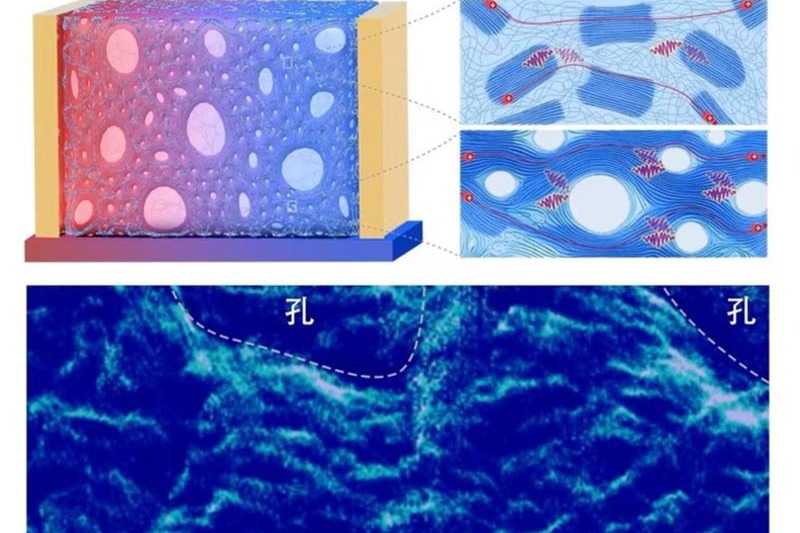
    The research team from the Chinese Academy of Sciences’ Institute of Chemistry, led by Professors Zhu Daoben and Di Chong’an, has created what they term an Irregular Hierarchical-Porous Thermoelectric Polymer (IHP-TEP). This novel material achieves an unprecedented thermoelectric figure of merit (ZT value) of 1.64 at 343 Kelvin (approximately 70°C), establishing a new performance standard for flexible thermoelectric materials in this temperature range.

    Thermoelectric technology enables direct conversion between thermal and electrical energy, offering both power generation and cooling capabilities without fuel consumption or pollution. With global energy systems losing over 60% of generated energy as waste heat, this technology holds immense potential for energy conservation and emission reduction efforts worldwide.

    The IHP-TEP’s unique architecture represents a engineering marvel, featuring an irregular porous structure that effectively suppresses heat conduction while maintaining exceptional electrical conductivity. This creates charge-transport channels that approach the theoretical ideal for thermoelectric materials. The material’s compatibility with spray-coating technology enables large-scale, cost-effective manufacturing processes comparable to newspaper printing.

    This flexibility allows the material to conform to various curved surfaces, opening vast application possibilities in wearable technology, adhesive refrigeration systems, and Internet of Things sensors. The technology promises to revolutionize power supply solutions for distributed sensors, enabling continuous operation wherever temperature differentials exist – whether on human skin, building exteriors, or in field environments.

    The development addresses critical limitations of existing thermoelectric materials, where flexible inorganic variants typically achieve ZT values around 1.4 and organic materials reach approximately 1.2, both hampered by complex manufacturing processes. This breakthrough effectively eliminates previous performance bottlenecks while simplifying production methods.