作者: admin

  • Bangladesh’s first post-uprising election is a test for democratic norms and minority rights

    Bangladesh’s first post-uprising election is a test for democratic norms and minority rights

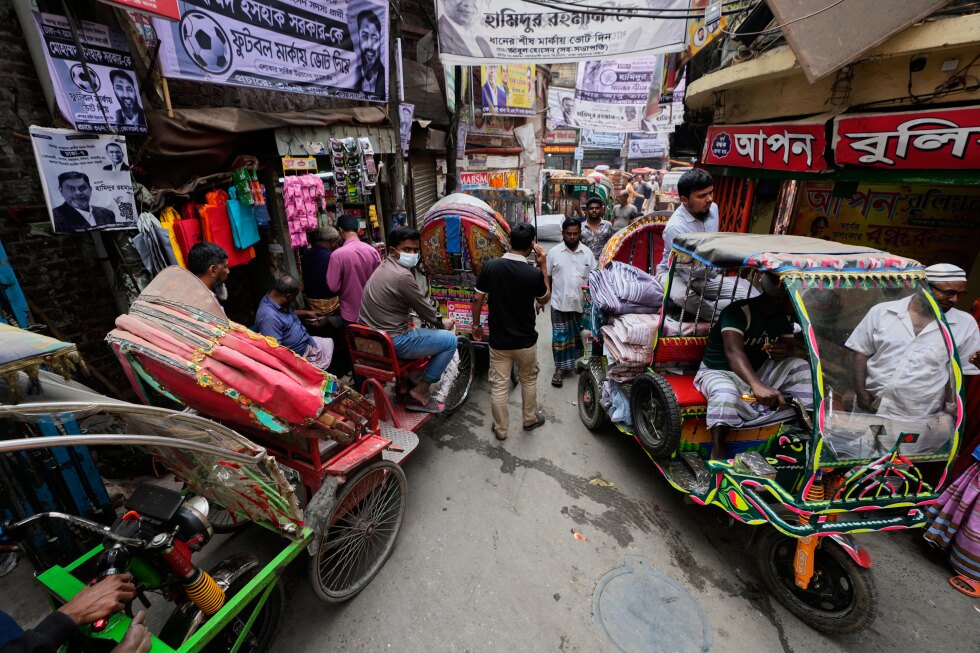
    DHAKA, Bangladesh — Bangladesh stands at a historic crossroads as millions of citizens prepare to participate in Thursday’s pivotal parliamentary elections. This electoral event marks the first national vote since the 2024 mass uprising that ended former Prime Minister Sheikh Hasina’s 15-year administration, generating unprecedented public anticipation for democratic restoration after years of contested elections and constricted political freedoms.

    Under the supervision of an interim government led by Nobel Peace Prize recipient Muhammad Yunus, the electoral process has committed to ensuring transparency and fairness. The administration has implemented substantial procedural innovations, including the inaugural introduction of postal voting for Bangladesh’s extensive expatriate community—a transformative step toward inclusive democratic participation.

    With 127 million eligible voters selecting representatives from 1,981 candidates across 300 directly elected constituencies, the electoral mechanics reflect Bangladesh’s constitutional framework. The 350-seat Parliament includes 50 seats reserved for female representatives, operating under a first-past-the-post system for five-year terms.

    International scrutiny intensifies as approximately 500 foreign observers from organizations including the European Union and Commonwealth monitor proceedings. Concurrently, citizens will consider referendum proposals establishing prime ministerial term limits, enhanced executive checks and balances, and safeguards against parliamentary power consolidation.

    This election represents a critical examination of Bangladesh’s democratic institutions, which have oscillated between military governance and fragile civilian rule since the 1971 independence from Pakistan. Catherine Cooper, staff attorney at the Robert & Ethel Kennedy Human Rights Center, emphasized that “the future of Bangladesh rests with its citizens and elected leaders to ensure stability as a rights-respecting democracy.”

    The political landscape witnesses a dramatic reconfiguration with the absence of Hasina’s banned Awami League. The Bangladesh Nationalist Party (BNP), led by Tarique Rahman—son of former Prime Minister Khaleda Zia—has emerged as the frontrunner following Rahman’s return from 17 years of self-exile. His platform promises institutional rebuilding, rule of law restoration, and economic revitalization.

    Opposing the BNP, an 11-party coalition led by the recently legalized Jamaat-e-Islami seeks expanded political influence. This alliance incorporates the newly established National Citizen Party, founded by leaders of the 2024 uprising that precipitated the current political transition.

    Concerns persist regarding rising religious tensions, particularly affecting Bangladesh’s Hindu minority (approximately 8% of the population). Reports of increased intimidation and violence against religious minorities have raised alarms about potential exploitation of sectarian divisions for political gain.

    The election additionally serves as a measure of youth activism’s capacity to institutionalize democratic change, with nearly 5 million first-time voters participating. Their engagement will test whether protest movements can translate into enduring structural reforms.

  • Anti-drug activist campaigns in French election despite threats, 2 brothers lost to gang violence

    Anti-drug activist campaigns in French election despite threats, 2 brothers lost to gang violence

    In the gritty housing projects of Marseille, a 22-year-old activist is challenging the narcotics empires that control his community while mourning the loss of two brothers to drug-related violence. Amine Kessaci, son of Algerian immigrants, has become the face of resistance against organized crime in France’s second-largest city, where he’s running in municipal elections on an uncompromising anti-drug platform.

    Kessaci’s personal tragedy fuels his political mission: his older brother Brahim was found burned in a car in 2020, and his younger brother Mehdi was killed just three months ago in what authorities believe was a targeted hit to intimidate the activist. Despite receiving death threats and requiring constant police protection—including wearing a bulletproof vest at his brother’s funeral—Kessaci refuses to be silenced.

    The Frais Vallon housing project where Kessaci grew up exemplifies Marseille’s struggle: 6,000 residents living in 1960s-era concrete towers controlled by drug gangs, representing some of France’s most crime-ridden neighborhoods. Here, Kessaci founded the nonprofit ‘Conscience’ at age 17 to support families affected by drug violence.

    France faces escalating narcotics problems, with cocaine trafficking at historic highs and 110 drug-related homicides recorded in 2024 alone. Particularly alarming is the recruitment of minors—19% of drug trafficking suspects were teenagers in 2023, some as young as 12. The Interior Ministry reports teenagers constituted a quarter of murder and attempted murder arrests in 2024.

    Kessaci, now a law student, advocates a dual approach: strengthening police presence while addressing root causes through education, job training, and urban renewal. He proposes doubling Marseille’s police force to 1,600 officers and establishing local precincts in every district. His platform also includes practical improvements like replacing mobile dumpsters with fixed bins to eliminate barriers drug gangs use to block access.

    Running on outgoing left-wing mayor Benoît Payan’s ticket, Kessaci distinguishes his grassroots approach from far-right solutions, focusing on community empowerment rather than mere enforcement. He aims to dismantle what he calls ‘narcocracy’—the systemic power drug traffickers wield over neighborhoods through intimidation and economic coercion.

    Despite recent security improvements (homicides dropped from 49 to 24 between 2023-2024), Kessaci remains determined: ‘In this campaign, my only enemy is drug trafficking.’ His candidacy represents a new generation’s attempt to reclaim their communities from the violent grip of organized crime.

  • Argentina’s monthly inflation ticks up as Milei faces backlash over an outdated index

    Argentina’s monthly inflation ticks up as Milei faces backlash over an outdated index

    Argentina’s statistical agency INDEC reported an unexpected acceleration of inflation for the fifth consecutive month in January, recording a 2.9% monthly increase primarily driven by rising food costs, restaurant prices, hotel rates, and utility bills. The announcement comes amid intense scrutiny of the agency’s outdated measurement methodology, which continues to utilize consumption patterns from 2004—a formula that includes obsolete items like DVDs, newspapers, and landline phones while excluding modern essentials such as streaming services and smartphones.

    The controversy deepened when President Javier Milei’s administration abruptly reversed plans to implement an updated inflation index, prompting the resignation of Argentina’s national statistics chief and triggering significant market reactions. The decision revived painful memories of previous governments’ manipulation of economic data, particularly during the Cristina Fernández de Kirchner administration when INDEC was accused of systematically underreporting inflation figures.

    Economists argue the current methodology substantially underestimines actual price increases, especially regarding public services that have seen dramatic cost surges following Milei’s austerity measures and subsidy reductions. The political fallout has rattled investor confidence and sparked widespread public debate in a nation particularly sensitive to inflation reporting due to its history of economic instability.

    Despite the statistical controversy, Milei’s government has achieved notable progress in reducing annual inflation from over 211% in late 2023 to 31% last year through aggressive spending cuts, increased Chinese imports, and controversial exchange rate policies. However, recent months have shown inflation trending upward again from its low of 1.5%, raising questions about the sustainability of these gains amid stagnant wages and ongoing economic challenges.

    Paradoxically, the higher-than-expected January inflation figure provided some reassurance that the current administration isn’t manipulating data, as the 2.9% rate exceeded most private sector estimates and demonstrated statistical transparency despite methodological shortcomings.

  • Stage set for season-opening Dubai 2026 Para Athletics GP

    Stage set for season-opening Dubai 2026 Para Athletics GP

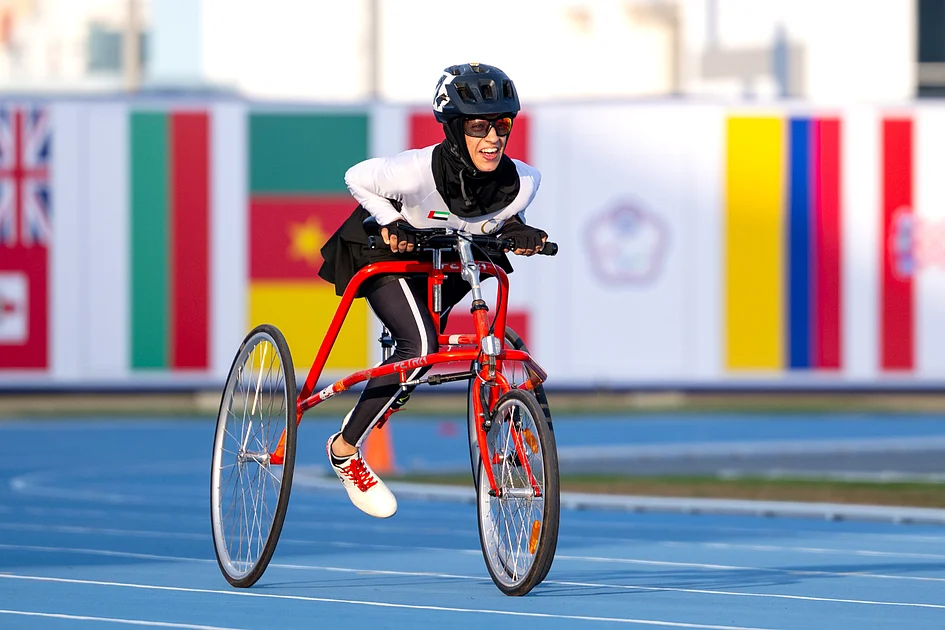
    Dubai has become the epicenter of elite para athletics as the 17th Fazza International Para Athletics Championships commences, marking the inaugural Grand Prix event of the 2026 season. Under the esteemed patronage of Sheikh Mansoor bin Mohammed bin Rashid Al Maktoum, this prestigious competition brings together 500 elite athletes representing 56 nations at the Dubai Club for People of Determination grounds from February 10-13, 2026.

    The championship serves as a critical qualifying platform for major international events throughout the 2026 athletic calendar, including the Glasgow Commonwealth Games in July and the Aichi-Nagoya 2026 Asian Para Games in October. Athletes are competing to achieve minimum qualification standards that will secure their participation in these premier competitions.

    India has deployed its strongest contingent featuring 50 elite competitors, including reigning Paris 2024 Paralympic champions Sumit Antil (F64 javelin) and Navdeep (F41 javelin), alongside two-time Paris 2024 medalist Preeti Pal and Simran, bronze medalist in women’s 200m T12.

    European representation is highlighted by Belgium’s Maxime Carabin, a two-time Paris 2024 Paralympic champion and five-time world champion who secured three gold medals at the Kobe 2024 World Championships. Canada’s Austin Smeenk, gold medalist in men’s 800m T34 and bronze medalist in men’s 100m T34 at the Paris 2024 Paralympics, adds further international star power to the competition.

    The host nation UAE fields 65 athletes, including several Paralympic medalists. Young standout Mohammed Youssef Othman, bronze medalist at the New Delhi World Championships, leads the home team’s track events. The women’s campaign features Rio 2016 medalists Sara Aljeneibi (women’s shot put F33), Noura Alktebi (women’s shot put F32), and Kobe 2024 world champion Maryam Alzeyoudi (women’s shot put F40).

    Othman expressed his aspirations ahead of the competition: ‘My preparations have been optimal for the new season. I aim to deliver a powerful performance at our home event and maintain momentum throughout the competitive season, with the Asian Para Games representing my primary objective.’

    The championship will be streamed live globally through the Dubai Club for People of Determination’s official YouTube and Facebook channels, ensuring worldwide accessibility to these elite athletic performances.

  • US stocks flirt with a record after the unemployment rate unexpectedly improves

    US stocks flirt with a record after the unemployment rate unexpectedly improves

    Wall Street witnessed a significant rally on Wednesday as major indices climbed toward record territory, propelled by unexpectedly robust employment figures that alleviated concerns about economic momentum. The S&P 500 advanced 0.5%, hovering near its all-time peak established late last month, while the Dow Jones Industrial Average gained 222 points (0.4%) and the Nasdaq composite rose 0.5% during morning trading.

    The market upswing followed a Labor Department report revealing U.S. employers added 130,000 positions in the previous month—substantially exceeding economists’ projections of 75,000 jobs. This development helped counterbalance prior anxieties triggered by disappointing consumer spending data that had suggested potential economic stagnation.

    However, the economic landscape revealed complexities upon deeper examination. The report contained significant downward revisions indicating employers created merely 181,000 jobs throughout the entire previous year, dramatically lower than the initially reported 584,000. This represents the weakest annual job growth since 2020, when COVID-19 pandemic restrictions paralyzed economic activity.

    Sector performance reflected economic sensitivities, with energy and industrial stocks leading gains. Caterpillar surged 3.9% and Exxon Mobil climbed 2.4%, both companies whose profitability correlates closely with economic health.

    The session witnessed several notable decliners. Moderna plummeted 10.5% after the FDA declined to review its application for a novel mRNA-based flu vaccine. Robinhood Markets dropped 11% despite exceeding profit expectations, as revenue shortfalls and concerns about sustained cryptocurrency trading declines weighed on investor sentiment. Kraft Heinz fell 4.1% as CEO Steve Cahillane announced a pause in planned business separation plans alongside a $600 million strategic investment.

    Bond markets responded to the strengthened employment picture, with the 10-year Treasury yield rising to 4.17% and the more Fed-sensitive 2-year yield jumping to 3.51%. The data prompted traders to scale back expectations for Federal Reserve interest rate cuts this year, though markets still anticipate at least two reductions according to CME Group data.

    Internationally, stock indexes demonstrated broad strength across Asian and European markets, with South Korea’s Kospi gaining 1% and the UK’s FTSE 100 advancing 0.9%.

  • Father of US-based Hong Kong activist convicted under national security law

    Father of US-based Hong Kong activist convicted under national security law

    In a groundbreaking legal proceeding under Hong Kong’s domestic security legislation, a 69-year-old man was convicted Wednesday for attempting to access financial assets belonging to his daughter, a U.S.-based activist designated as an absconder by local authorities.

    Kwok Yin-sang became the first individual prosecuted under Article 23 legislation for allegedly trying to withdraw funds from an insurance policy under his daughter’s name. His daughter, Anna Kwok, serves as executive director of the Washington-based Hong Kong Democracy Council and has been subject to an HK$1 million (approximately $127,900) bounty offered by Hong Kong authorities in 2023 for information leading to her arrest.

    The prosecution argued that Kwok knowingly attempted to handle assets of a designated absconder, despite his not guilty plea. Acting Principal Magistrate Cheng Lim-chi determined that Kwok must have been aware of his daughter’s status when he sought to cancel the insurance policy originally purchased during her childhood.

    Defense attorney Steven Kwan contended there was no evidence indicating the funds were intended for transfer to Anna Kwok and requested a minimal 14-day imprisonment sentence. While the charge carries a maximum seven-year penalty, the case was heard in magistrates’ courts where sentences are capped at two years. Sentencing is scheduled for February 26.

    International human rights organization Amnesty International condemned the conviction as politically motivated. Spokesperson Joey Siu warned the verdict “sets a dangerous precedent, designed to terrify and silence others who continue to speak out about Hong Kong issues from overseas.”

    The case emerges within broader geopolitical tensions surrounding Hong Kong’s national security laws. United States officials previously sanctioned six Chinese and Hong Kong officials in 2025, alleging involvement in “transnational repression” through extraterritorial application of security laws. China responded with counter-sanctions against U.S. officials and NGO leaders.

    Both Chinese and Hong Kong governments maintain that the security laws are essential for maintaining stability in the former British colony, which returned to Chinese sovereignty in 1997. The legislation followed massive anti-government protests in 2019 and has resulted in numerous activist arrests, silencing, or overseas exile.

  • UK doubles troops in Norway to counter Russian ‘threat to Arctic’

    UK doubles troops in Norway to counter Russian ‘threat to Arctic’

    In a significant strategic shift, the United Kingdom will double its military footprint in Norway over the next three years, elevating troop numbers from approximately 1,000 to 2,000 personnel. This decision comes amid growing NATO apprehension regarding Russia’s escalating military activities in the High North region.

    Defence Secretary John Healey characterized the move as a direct response to mounting security concerns, stating, ‘Demands on defence are rising and Russia poses the greatest threat to Arctic and High North security that we have witnessed since the Cold War.’ The announcement follows observations of Russia reopening Cold War-era installations and substantially increasing its military presence throughout the Arctic sphere.

    The enhanced deployment forms part of the newly proposed ‘Arctic Sentry’ initiative championed by Foreign Secretary Yvette Cooper, who recently conducted diplomatic visits to Norway. This security framework, inspired by existing NATO alliances including the Baltic Sentry and Eastern Sentry programs, aims to strengthen regional surveillance capabilities and collective defense mechanisms.

    Operational enhancements will feature prominently in upcoming multinational exercises. In March, 1,500 Royal Marine Commandos will participate in NATO’s Exercise Cold Response, a large-scale drill spanning Norway, Finland, and Sweden designed to test allied forces in extreme Arctic conditions. Subsequently, September will see the UK-led Joint Expeditionary Force execute Operation Lion Protector, integrating air, land, and naval components from multiple European nations to practice critical infrastructure defense strategies across Norway, Iceland, and the Danish straits.

    These developments reflect deepening concerns among NATO members regarding Russia’s potential threat to subsea infrastructure, particularly underwater cables and pipelines. Tensions have remained elevated since Russia’s invasion of Ukraine, prompting enhanced cooperative measures. Last year, the UK and Norway formalized a defensive pact specifically addressing undersea security, establishing a combined naval fleet to monitor Russian submarine activities.

    According to Ministry of Defence statistics, Russian submarine presence in UK waters has surged by 30% over the past two years, with current activity levels in the North Atlantic matching those recorded during the Cold War period. Defence Secretary Healey is scheduled to discuss these strategic proposals with NATO counterparts at the alliance’s Brussels headquarters on Thursday.

  • Britney Spears sells rights to entire music catalogue

    Britney Spears sells rights to entire music catalogue

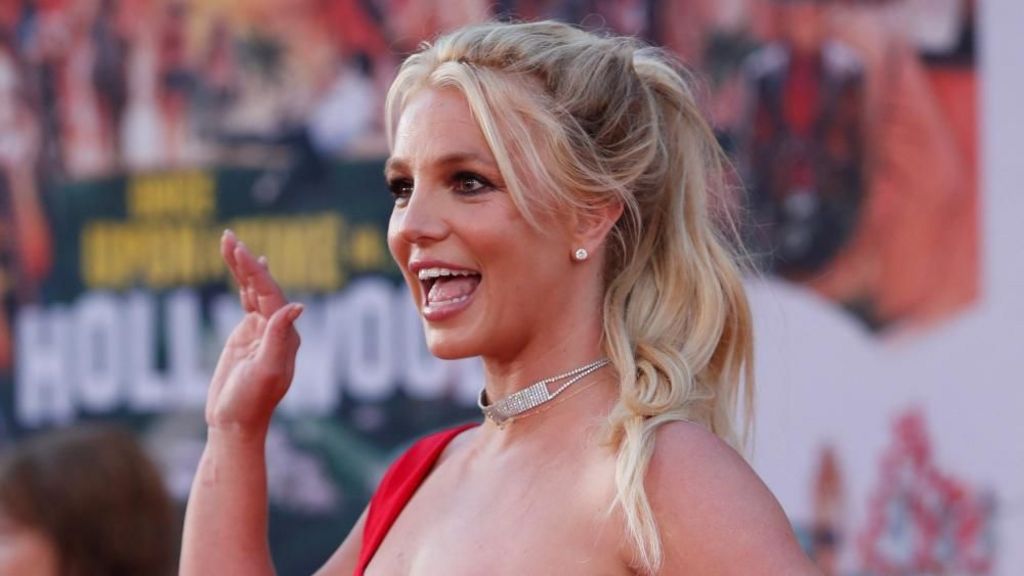
    In a monumental transaction reshaping the music industry’s financial landscape, pop icon Britney Spears has transferred ownership of her complete music catalog to independent publishing powerhouse Primary Wave. The BBC reports this strategic acquisition, valued at approximately $200 million (£146 million), was formally executed on December 30th.

    This deal encompasses the entire spectrum of Spears’ legendary discography, featuring generational anthems like “…Baby One More Time,” “Oops!… I Did It Again,” “Toxic,” and “Gimme More.” The sale aligns with a growing trend among elite artists seeking to monetize their life’s work through catalog divestment.

    Primary Wave, founded two decades ago by industry veteran Lawrence Mestel following his acquisition of a significant stake in Nirvana’s catalog, has established itself as a major player in music rights management. The company’s portfolio already includes prestigious rights to estates of music legends Prince, Whitney Houston, and The Notorious B.I.G.

    This transaction follows Spears’ January 2024 declaration that she would “never return to the music industry,” with her final recording being a 2022 collaborative single with Sir Elton John. The artist’s catalog represents an extraordinary commercial legacy, with over 150 million records sold globally across nine studio albums since her 1999 debut.

    The catalog sale represents another significant chapter in Spears’ journey toward professional and personal autonomy following the November 2021 termination of her 13-year conservatorship. This legal arrangement had previously governed both her financial affairs and personal decisions. Her subsequent 2023 memoir, “The Woman in Me,” provided profound insights into her experiences during this period.

    Neither Primary Wave nor representatives for Spears have offered official comments regarding the transaction specifics, which remain undisclosed to the public. This movement of iconic music catalogs continues to transform industry economics, with recent high-profile deals involving Bruce Springsteen’s $500 million Sony agreement and Justin Bieber’s reported $200 million arrangement with Hipgnosis Songs Capital.

  • UAE lobbied pro-Israel groups to level antisemitism charges against Saudi Arabia

    UAE lobbied pro-Israel groups to level antisemitism charges against Saudi Arabia

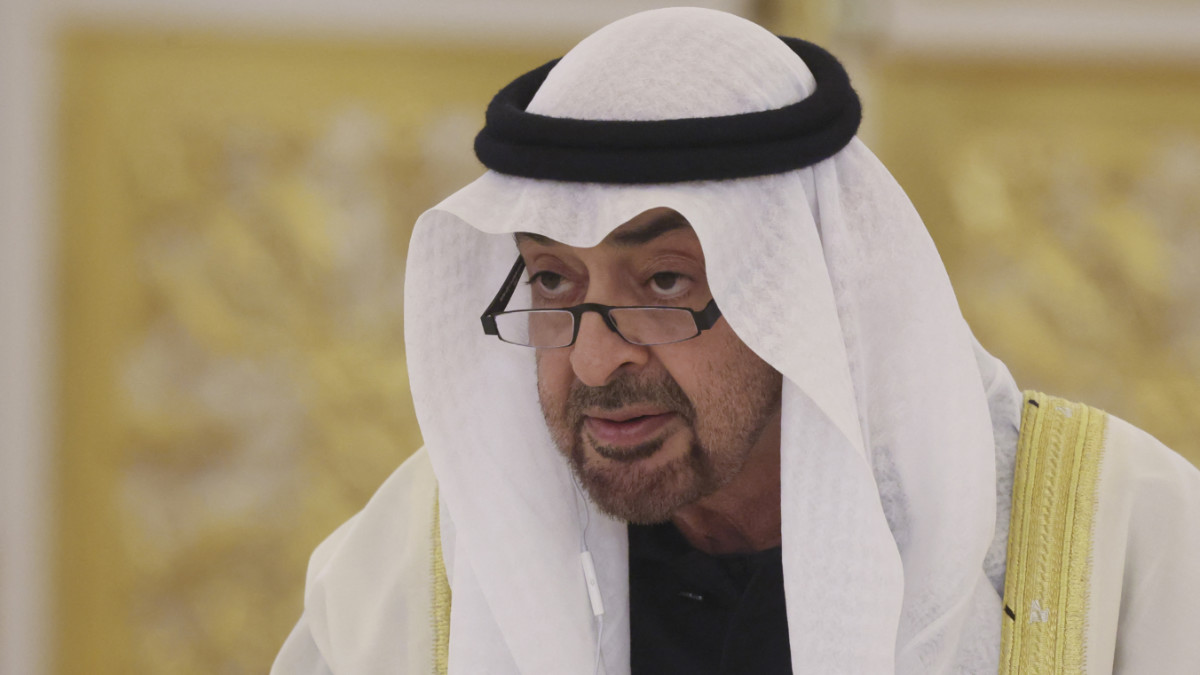
    According to disclosures from current and former U.S. officials to Middle East Eye, the United Arab Emirates has attempted to enlist pro-Israel lobbying organizations in Washington to amplify its ongoing diplomatic dispute with Saudi Arabia. The effort represents a strategic maneuver by Abu Dhabi to capitalize on relationships forged through the 2021 Abraham Accords, which normalized UAE-Israel relations.

    The American Jewish Committee (AJC), a prominent pro-Israel group with significant Washington influence led by former Democratic Congressman Ted Deutch, reportedly faced Emirati pressure to issue statements expressing concern about alleged antisemitic rhetoric emanating from Saudi Arabia. While AJC maintained public neutrality in the Gulf dispute, the Anti-Defamation League (ADL) published a January statement criticizing what it described as ‘openly antisemitic dog whistles’ from Saudi voices opposing the Abraham Accords.

    This lobbying campaign occurs against the backdrop of deteriorating UAE-Saudi relations, once close allies whose partnership has fractured over conflicting geopolitical interests in Yemen, Sudan, and the Horn of Africa. The rivalry has extended into social media warfare, with Saudi commentators accusing the UAE of regional destabilization while Emirati supporters label Saudi Arabia as harboring extremists.

    The diplomatic tensions complicate U.S.-brokered normalization efforts between Saudi Arabia and Israel, which had advanced under both Trump and Biden administrations before being derailed by the Gaza conflict. Crown Prince Mohammed bin Salman, who previously entertained normalization talks, has since condemned Israel’s military actions in Gaza as genocidal and insisted on Palestinian statehood as a precondition for any diplomatic agreement.

  • India–Pakistan feud casts shadow over cricket’s Olympic ambitions

    India–Pakistan feud casts shadow over cricket’s Olympic ambitions

    Cricket’s anticipated return to the Olympic stage at Los Angeles 2028 faces significant challenges beyond the upcoming Games, as persistent geopolitical tensions between India and Pakistan cast doubt on the sport’s long-term Olympic aspirations. The recent T20 World Cup impasse, which saw Pakistan initially boycott their marquee match against India, highlights deeper structural issues within cricket’s governance that could undermine its global expansion ambitions.

    The International Cricket Council (ICC) successfully mediated a temporary resolution to the crisis through emergency talks with the Pakistan and Bangladesh cricket boards. However, sports analysts characterize this solution as merely addressing symptoms rather than curing the underlying disease of political interference in sporting decisions.

    Veteran Indian journalist Chander Shekhar Luthra emphasizes that substantial structural reforms within the ICC are imperative if cricket genuinely seeks permanent Olympic inclusion. ‘The governing body must liberate itself from political pressures exerted by powerful cricket boards, particularly the Indian board which operates under political compulsions,’ Luthra stated.

    The timing of these tensions carries additional significance as India contemplates bidding for the 2036 Olympic Games. Pakistani commentator Nauman Niaz warns that the International Olympic Committee’s commitment to neutrality and impartiality might view recent politicization incidents unfavorably. ‘The IOC operates very differently from cricket’s governing bodies,’ Niaz noted. ‘As India prepares an Olympic bid, such incidents will inevitably come under scrutiny.’

    Despite these challenges, both commentators acknowledge India’s remarkable transformation as a sporting nation and its deserving credentials to host the Olympics. The paradox remains that the same nation driving cricket’s commercial success might inadvertently hinder its Olympic aspirations through political interventions that contradict the Olympic movement’s fundamental principles.