作者: admin

  • American flag raised at US Embassy in Venezuela for the 1st time since 2019

    American flag raised at US Embassy in Venezuela for the 1st time since 2019

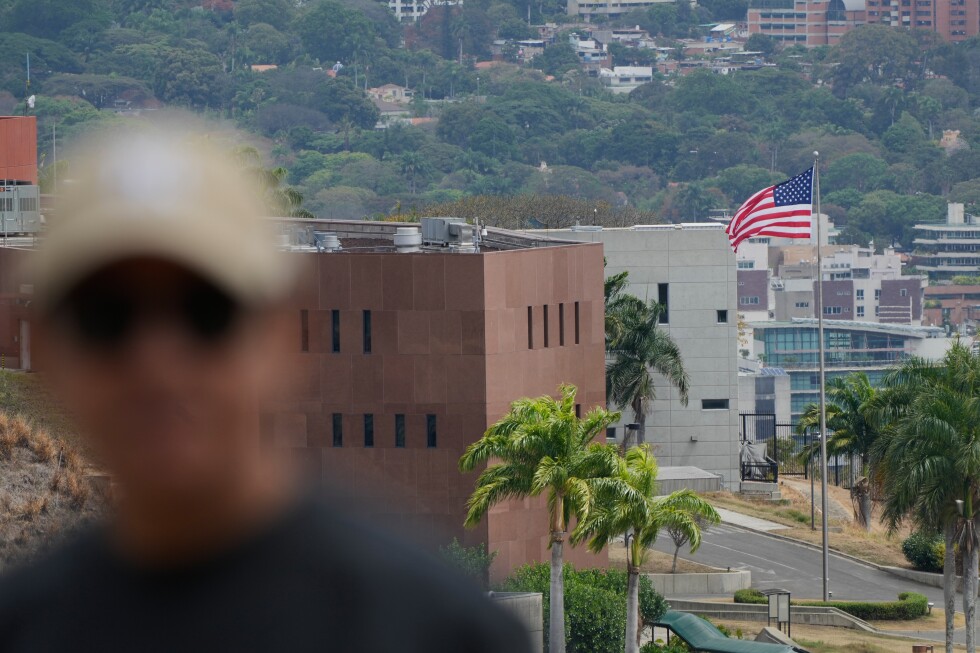
    CARACAS, Venezuela — In a significant diplomatic development, the United States officially reopened its embassy in Caracas on Saturday, marking the first time the American flag has flown over the compound since 2019. The ceremony signals a notable warming in bilateral relations following the dramatic capture of former President Nicolás Maduro by U.S. forces in January.

    The embassy reopening follows multiple supportive statements from U.S. President Donald Trump toward acting President Delcy Rodríguez, Maduro’s successor, who has actively pursued continued dialogue with the American administration. U.S. Embassy officials emphasized the historical significance of the moment, noting the flag raising occurred “exactly seven years after it was taken down” in a social media statement.

    The event attracted immediate attention from local residents, many expressing optimism about the development. “It’s a good thing, really, what a joy,” said Caracas resident Luz Verónica López. “Other countries must come back too because that’s what we need; progress, to move forward with good relations with the rest of the world, as it should be.”

    Another witness, Alessandro Di Benedetto, described the positive atmosphere among those observing the ceremony: “I found several people here surprised and happy because today they raised the U.S. flag at the embassy. This is positive; this is another step.”

    Despite this diplomatic progress, substantial segments of Venezuelan society and political leadership maintain strong criticism of Trump’s administration. Concerns persist regarding the forceful removal and subsequent imprisonment of Maduro and his wife in New York, alongside growing American influence in Venezuela’s crucial oil industry.
  • Fatal shooting near Sawgrass delays fan entry

    Fatal shooting near Sawgrass delays fan entry

    A deadly shooting incident near TPC Sawgrass golf course disrupted spectator access during the third day of the prestigious Players Championship tournament in Florida. According to St Johns County Sheriff’s Office, two individuals were fatally shot at approximately 10:30 PM local time on Friday, with the violent incident occurring less than one mile from the championship venue.

    The alleged perpetrator, identified as Christian Barrios, reportedly fled onto the golf course premises following the shooting. After an extensive manhunt, law enforcement authorities apprehended Barrios in Nassau County at around 8:00 AM on Saturday following a vehicle pursuit.

    Sheriff Robert Hardwick provided details of the suspect’s movements, indicating that Barrios had “made contact” with PGA Tour staff members during his attempted escape. “We believe he picked up a radio belonging to the PGA Tour, not one of our radios, and we know he dropped it after that,” Hardwick stated. “Our canines used it as a scent when they came in there.”

    The scheduled 7:30 AM gate opening for spectators was consequently delayed until 9:00 AM due to what tournament organizers described as “operational considerations” related to the security situation. Despite the access restrictions for fans, third-round competition at the PGA Tour’s flagship event commenced according to the original timetable.

    Meanwhile, Swedish golfer Ludvig Aberg maintained his tournament leadership position after two rounds, having delivered an impressive nine-under-par 63 performance on Friday prior to the security incident.

  • Russian sports minister defends return of flag, anthem to Paralympics

    Russian sports minister defends return of flag, anthem to Paralympics

    The reinstatement of Russian national symbols at the Paralympic Games has ignited significant diplomatic tensions, with Sports Minister Mikhail Degtyarev vigorously defending the decision to allow Russian athletes to compete under their flag and anthem for the first time since 2014. This development comes despite strong opposition from Ukraine and several European nations amid ongoing military conflict between Russia and Ukraine.

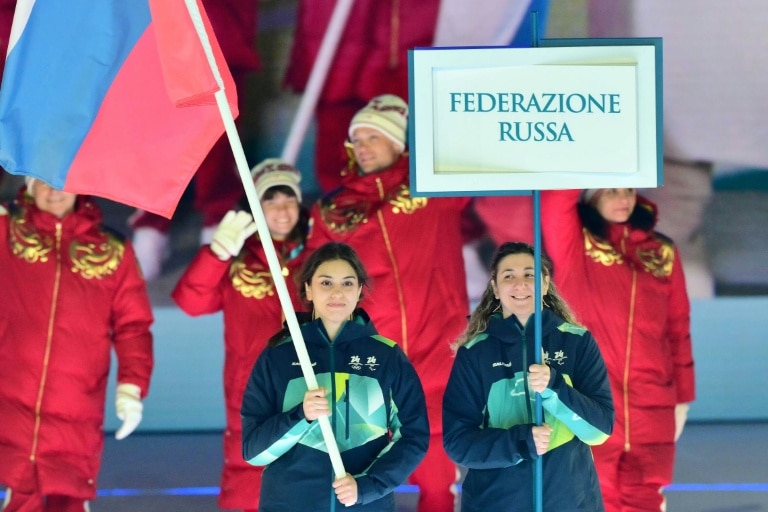
    Six Russian athletes are participating under their national insignia at the Milan-Cortina Winter Paralympics, marking a notable shift in the International Paralympic Committee’s stance. Minister Degtyarev, who also leads Russia’s Olympic committee, asserted in an official statement that Russian competitors have experienced overwhelming support at international events. He emphasized that the display of national symbols provokes no negative reactions among spectators and participants.

    The Russian official condemned recent incidents of protest, specifically referencing German athletes who turned their backs during medal ceremonies involving Russian winners. Degtyarev characterized such behavior as ‘appalling’ and ‘unsportsmanlike,’ while maintaining that these actions represent isolated occurrences from a vocal minority.

    Despite diplomatic boycotts and audible spectator disapproval during the opening ceremony, Russian athletes have demonstrated competitive success, securing nine medals including five golds and climbing to fifth position in the overall medal standings. The controversy emerges against the backdrop of Russia’s previous exclusion from international competitions, initially due to doping violations and subsequently reinforced following the 2022 offensive in Ukraine.

    Ukraine’s delegation has vehemently criticized the IPC’s decision, labeling it as ‘disappointing and outrageous’ and asserting that the reinstatement effectively amplifies Russian war propaganda. The Paralympics conclude Sunday with closing ceremonies amid ongoing geopolitical tensions surrounding Russian participation.

  • Royal College of Art center launched in Shanghai

    Royal College of Art center launched in Shanghai

    Shanghai has cemented its position as a global design education hub with the inauguration of the RCA Shanghai Centre, a groundbreaking collaborative initiative between Donghua University and the United Kingdom’s prestigious Royal College of Art. The launch ceremony on March 14, 2026, marked a significant advancement in international educational cooperation within China’s design sector.

    This strategic platform represents the first of its kind in China, establishing a comprehensive framework for cross-border design education innovation. The center will leverage world-class educational resources to cultivate exceptional talent, directly supporting Shanghai’s ambitious development as an international ‘City of Design’ and fashion capital.

    Donghua University President Xiang Yanxun emphasized the center’s transformative potential, stating it would ‘inject new momentum’ into Shanghai’s creative industries through superior educational resources and innovative approaches. The initiative aligns with China’s broader educational opening policies and international collaboration strategies.

    Royal College of Art President Christoph Lindner recognized Shanghai’s emerging status as a major global hub for creative education and cutting-edge industries. ‘Building on a shared vision for development,’ Lindner noted, ‘our institutions will jointly address environmental challenges and navigate the AI era through creative thinking.’

    The partnership extends beyond traditional design education, incorporating sustainability considerations and technological adaptation strategies. The center will serve as a nexus for academic exchange, research collaboration, and industry innovation, positioning Shanghai at the forefront of global design education evolution.

  • Kennedy Center head steps down after tumultuous year

    Kennedy Center head steps down after tumultuous year

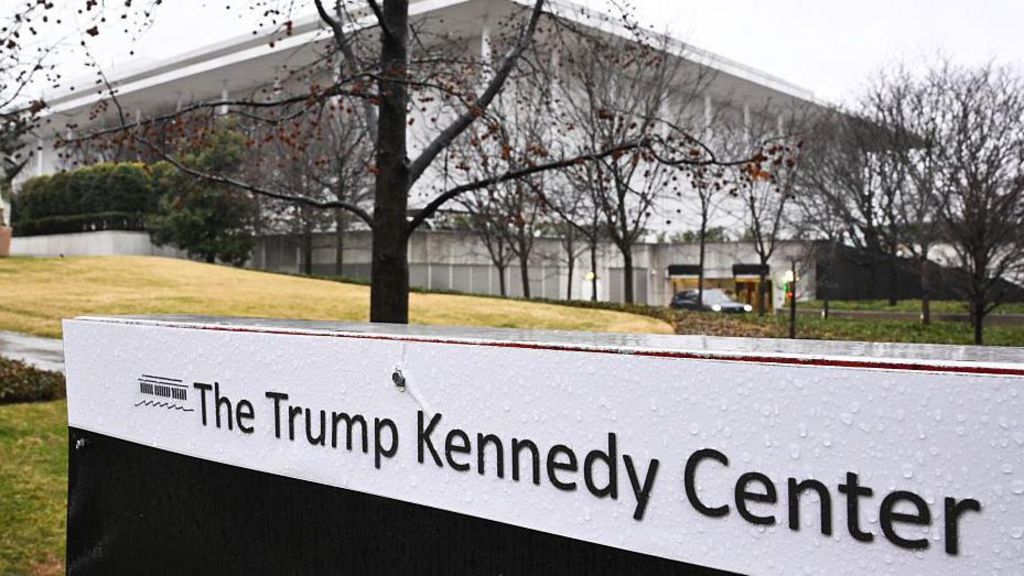
    In a significant leadership shakeup at one of America’s premier cultural institutions, Richard Grenell has resigned from his position as head of the recently renamed Donald J Trump and John F Kennedy Memorial Center for the Performing Arts. The former U.S. ambassador to Germany, known for his close affiliation with President Donald Trump, departs after a year marked by substantial organizational changes, artist withdrawals, and declining attendance figures.

    President Trump announced the transition via his Truth Social platform, revealing that Matt Floca, the center’s current vice-president of facilities operations, would assume leadership responsibilities. Floca, who joined the institution in January 2024 during the Biden administration, brings extensive experience in facilities and construction management to the role.

    The leadership change occurs as the iconic performing arts venue prepares for an extensive two-year renovation project commencing in July. President Trump has secured over $250 million in funding for the reconstruction, frequently criticizing the center’s physical condition while promising to create “the finest facility of its kind anywhere in the World.”

    The administration’s relationship with the cultural institution has been complex since Trump’s return to the White House. Shortly beginning his second term, the president installed himself as chairman of the center after replacing several board members with political allies. This reconstituted board subsequently approved the institution’s controversial renaming in December, despite legal questions regarding the necessity of congressional approval for such changes.

    Under Grenell’s tenure, the center experienced significant programming shifts, with Trump criticizing previous offerings as excessively “woke.” This stance led to performance cancellations by prominent artists including the cast of Hamilton, composer Stephen Schwartz of Wicked fame, and Doug Varone and the Dancers.

    Once confirmed by the center’s board of directors, Floca will oversee the massive renovation project while managing the institution’s ongoing operational challenges during this transitional period.

  • Jürgen Habermas, influential German philosopher, dies at 96

    Jürgen Habermas, influential German philosopher, dies at 96

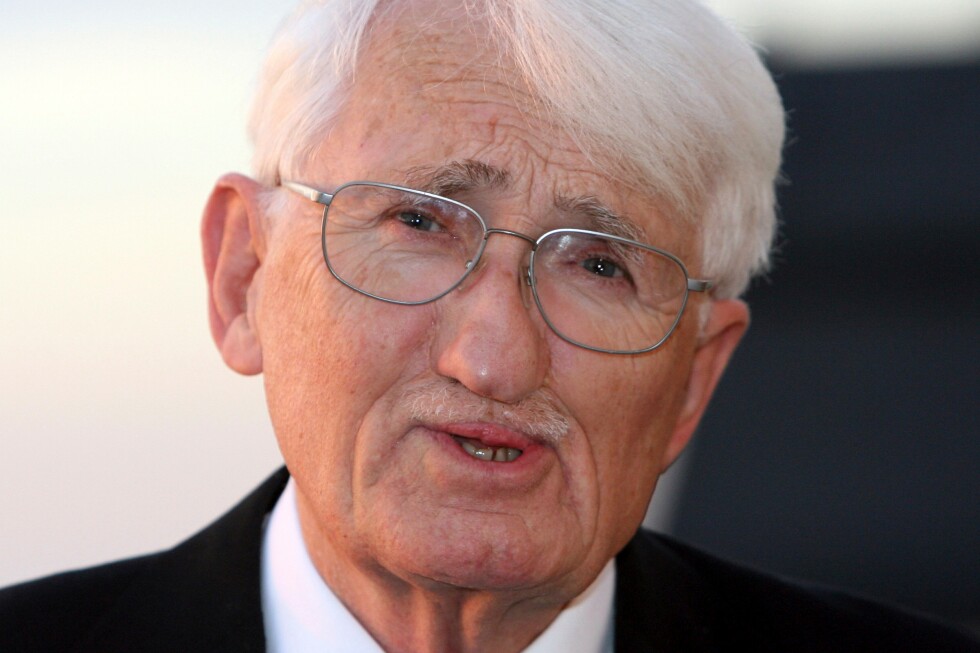
    BERLIN — Jürgen Habermas, the preeminent German philosopher whose groundbreaking theories on communication and rationality reshaped modern sociological thought, has passed away at age 96. His publisher, Suhrkamp Verlag, confirmed his death on Saturday in Starnberg, a tranquil town near Munich.

    Habermas emerged as one of the most consequential intellectual figures of the postwar era, developing comprehensive frameworks that bridged philosophy, sociology, and political theory. His seminal two-volume masterpiece, “Theory of Communicative Action,” established revolutionary concepts about how human interaction and discourse form the foundation of modern society.

    The philosopher’s intellectual journey was profoundly shaped by Germany’s historical reckoning with Nazism. Born in 1929 in Duesseldorf, Habermas was 15 when the Nazi regime collapsed—an experience he described as catalytic to his philosophical awakening. He later reflected on the profound shock of recognizing the “politically criminal system” in which he had been raised, a realization that propelled his examination of societal structures.

    Throughout his career, Habermas maintained vigorous engagement with political discourse while navigating complex relationships with various movements. During the left-wing student protests of the late 1960s, he adopted a characteristically nuanced position—engaging with activists while cautioning against what he termed “left-wing fascism,” a phrase he later acknowledged might have been “slightly out of place.” Despite initial tensions, he ultimately recognized the movement’s role in driving Germany’s “fundamental liberalization.”

    In the 1980s, Habermas became a central figure in the Historians’ Dispute (Historikerstreit), vigorously challenging conservative historians like Ernst Nolte who sought to contextualize Nazi atrocities through comparative analysis with Soviet crimes. Habermas argued persuasively that such comparisons risked diminishing the unique horror of the Holocaust and undermining Germany’s ethical reckoning.

    The philosopher remained politically active throughout his life, supporting Chancellor Gerhard Schröder’s center-left government in 1998 while offering pointed criticism of Angela Merkel’s leadership. He characterized her administration as “technocratic” and lamented its “paralyzing effects on public opinion,” describing her policies as creating a “foam blanket” that sent citizens into political slumber.

    A passionate advocate for European integration, Habermas frequently criticized German leaders for their “limited interest” in building “a politically effective Europe.” He enthusiastically endorsed French President Emmanuel Macron’s reform vision in 2017, praising his distinctive approach to European discourse.

    Habermas’s personal experiences profoundly informed his philosophical work. Born with a cleft palate that required multiple childhood surgeries, he developed unique insights into language’s essential role in human connection. He described spoken language as “a layer of commonality without which we as individuals cannot exist,” while simultaneously recognizing “the superiority of the written word” in concealing oral imperfections.

    Habermas is survived by two of his three children, Tilmann and Judith, following the passing of his wife Ute Habermas-Wesselhoeft last year and daughter Rebekka in 2023. His intellectual legacy endures as a towering contribution to contemporary thought, having fundamentally transformed our understanding of communication, democracy, and modern society.

  • 9.41 billion cross-regional trips made during 2026 Spring Festival travel rush

    9.41 billion cross-regional trips made during 2026 Spring Festival travel rush

    China’s transportation networks witnessed unprecedented activity during the 2026 Spring Festival travel period, with official data revealing a staggering 9.41 billion cross-regional journeys completed nationwide. This remarkable figure establishes a new benchmark in the history of China’s seasonal migration patterns, demonstrating both the massive scale of domestic mobility and the recovery of travel enthusiasm following recent global challenges.

    The Spring Festival travel rush, known locally as ‘Chunyun,’ represents the world’s largest annual human migration event. The 2026 iteration saw hundreds of millions of Chinese citizens traversing the country to reunite with families for the Lunar New Year celebrations. Transportation hubs across China operated at maximum capacity, with railways, highways, airways, and waterways all experiencing substantial passenger volume increases compared to previous years.

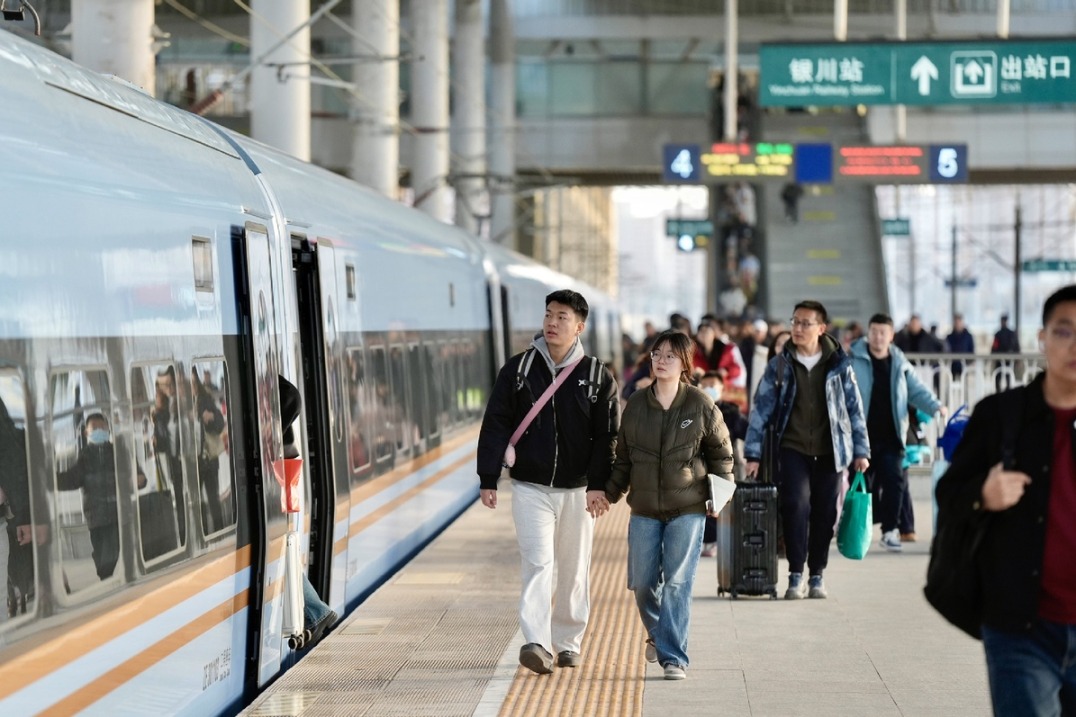
    Photographic evidence from Yinchuan Railway Station in Northwest China’s Ningxia Hui autonomous region captured the immense crowds on February 23, 2026, as travelers hurried to board trains. The scene represented a microcosm of the nationwide phenomenon, with similar congestion observed at major transportation centers throughout China.

    The record-breaking travel numbers reflect several underlying developments: significant infrastructure investments in China’s transportation networks, growing economic prosperity enabling more citizens to travel long distances, and the cultural importance of family reunification during traditional holidays. Authorities implemented comprehensive crowd management strategies and deployed additional transportation resources to accommodate the massive surge in passenger movement.

    This transportation milestone occurred alongside other significant spring developments across China, including early blooming kapok flowers in Guangzhou, the premature return of migratory birds to Xingkai Lake, and the inauguration of Beijing E-Town’s pioneering smart elderly care robotics station.

  • Rapeseed festival boosts rural vitalization in Sichuan

    Rapeseed festival boosts rural vitalization in Sichuan

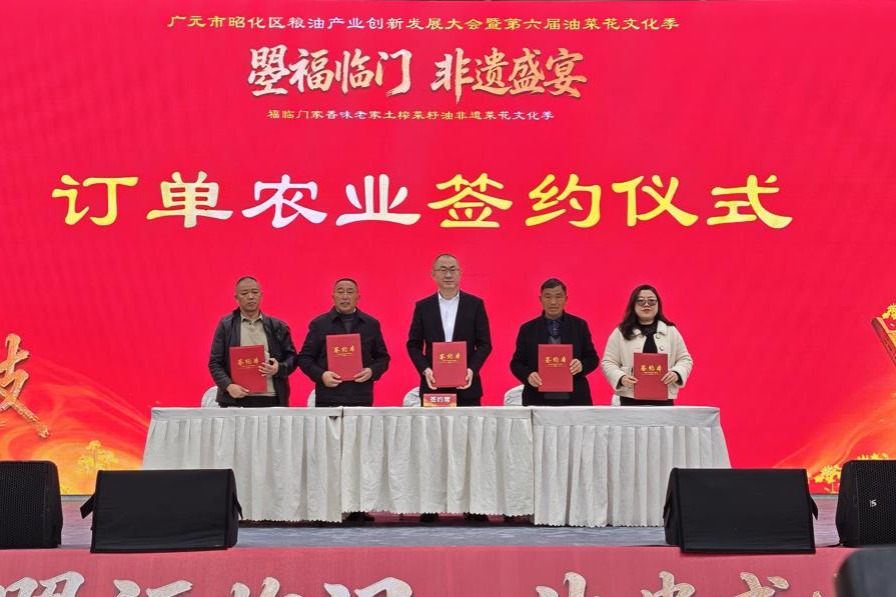
    The sixth annual Rapeseed Flower Cultural Festival commenced on Friday in Zhaohua district, Guangyuan, Sichuan province, marking a significant development in China’s rural revitalization strategy. This innovative event transcends traditional agricultural exhibitions by creating an integrated platform that combines contract farming agreements, cultural heritage presentations, immersive field experiences, and digital commerce initiatives.

    During the opening ceremony, COFCO Oils & Oilseeds (Guangyuan) Co Ltd solidified procurement partnerships with multiple regional suppliers, establishing a strengthened framework for local rapeseed production and distribution. Unlike conventional tourism-focused festivals, the Zhaohua event strategically leverages the region’s agricultural resources to build a comprehensive industrial chain around rapeseed cultivation and processing.

    The festival’s multidimensional approach demonstrates how rural communities can effectively merge cultural preservation with economic development. By incorporating livestream e-commerce capabilities alongside traditional farming practices, organizers have created a sustainable model that benefits local farmers while promoting regional specialty products to broader markets. This initiative represents a sophisticated evolution in how agricultural regions can harness their natural and cultural assets to drive meaningful economic transformation.

  • Iranians grapple with whether to flee the country because of the war

    Iranians grapple with whether to flee the country because of the war

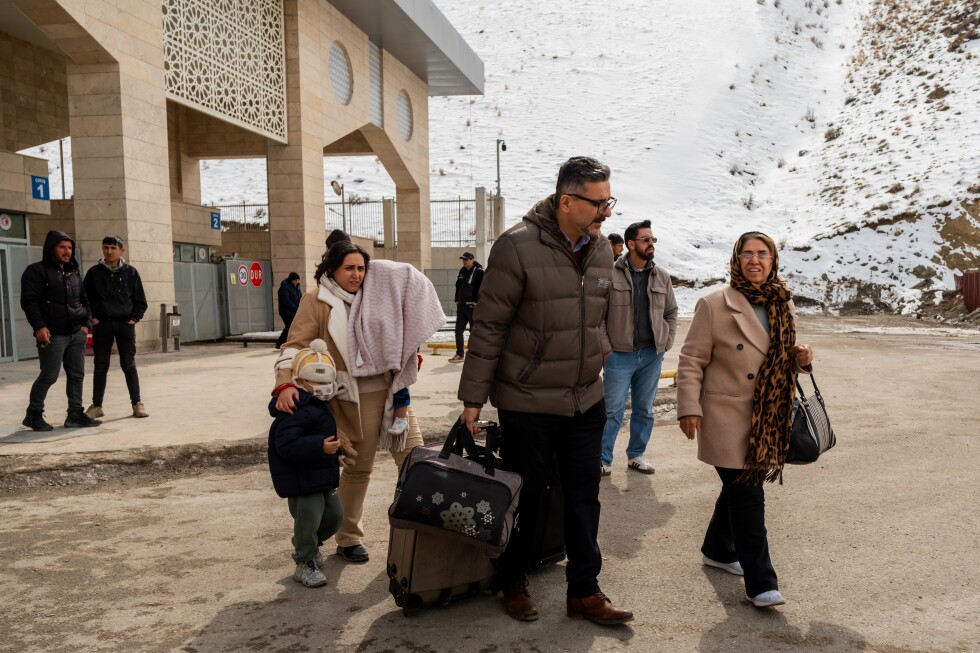
    KAPIKOY BORDER CROSSING, Turkey — Merve Pourkaz, a 32-year-old hairdresser from Iran’s eastern city of Golestan, made the arduous 1,500-kilometer journey to this alpine border crossing after explosions rocked her neighborhood. Her destination: the relative safety of Van, Turkey. ‘If they permit me, I’ll remain in Van until the war concludes,’ she told The Associated Press. ‘Otherwise, I may return home to face whatever fate awaits.’

    Pourkaz represents one of approximately 3.2 million Iranians internally displaced since the outbreak of the U.S.-Israel conflict with Iran, according to UN estimates. While many seek refuge within Iran’s borders or in neighboring nations, a counter-movement sees citizens returning from abroad to protect familial homes and loved ones.

    Current migration patterns reveal complexity: UN data indicates only about 1,300 Iranians cross into Turkey daily, with some days witnessing more returnees than departures. However, neighboring countries and European nations are developing contingency plans amid concerns that prolonged conflict could trigger a full-scale migration crisis.

    This duality of movement is embodied by individuals like Leila Rabetnezhadfard, 45, who abandoned wedding preparations in Istanbul to return to her family in Shiraz, southern Iran. ‘How could I feel secure in Istanbul while my family endures wartime conditions?’ she questioned, citing practical constraints including limited housing space, medical needs, and high costs.

    The International Organization for Migration reports that while large-scale exodus hasn’t materialized, significant internal displacement continues toward rural areas near the Caspian Sea. Salvador Gutierrez, IOM’s mission chief in Iran, attributes this to ‘people prioritizing family unity, safety concerns, and logistical limitations.’

    Experts warn that infrastructure collapse could change this calculus dramatically. ‘If Tehran, a metropolis of 10 million, loses water supply, population movement becomes inevitable,’ noted Alex Vatanka of the Middle East Institute. Such development could strain borders with Pakistan, Afghanistan, Turkmenistan, Azerbaijan, Armenia, Turkey, and Iraq.

    Turkey, having absorbed millions during Syria’s civil war under its previous open-door policy, has adopted a different approach. Reports indicate preparations for border ‘buffer zones’ and temporary settlements, complemented by enhanced border security including 380 kilometers of concrete barriers and numerous observation posts.

    European officials simultaneously grapple with the potential renewal of the 2016 EU-Turkey migration agreement, which provided €6 billion for refugee support in exchange for border control. This comes amid rising anti-immigrant sentiment in Europe and fresh displacement crises elsewhere in the region, including over 800,000 displaced in Lebanon.

    Humanitarian organizations express alarm over dwindling resources. ‘We face potential grave humanitarian consequences precisely when funding has been severely reduced,’ stated Ninette Kelley of the World Refugee & Migration Council, highlighting concerns about global readiness for another large-scale displacement event.

  • Indigenous women tour Ecuador oil field as warning against Amazon drilling expansion

    Indigenous women tour Ecuador oil field as warning against Amazon drilling expansion

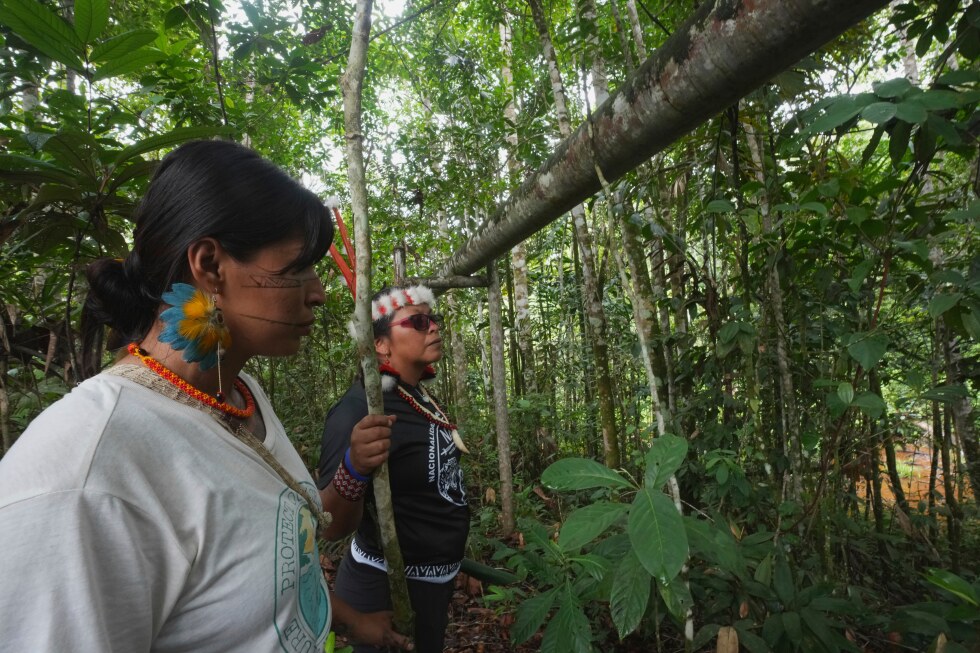
    In Ecuador’s northern Amazon region, a delegation of approximately 30 Indigenous women embarked on an educational journey dubbed a ‘toxitour’ to witness the environmental consequences of decades of hydrocarbon extraction. The women, representing seven distinct Indigenous communities from across Ecuador’s Amazon basin, gathered in Nueva Loja (historically known as Lago Agrio) from March 6-8, 2026, to share experiences and document the ecological damage.

    Julia Catalina Chumbi, a 76-year-old Shuar leader from Pastaza province, expressed profound dismay upon encountering oil-contaminated streams and gas flares burning above the rainforest canopy. ‘Everything is contaminated, even the air,’ she observed quietly, noting that local communities can no longer safely drink from rivers and must purchase bottled water due to pollution concerns.

    The tour included visits to operational oil fields, including the Libertador field operated by state-owned Petroecuador, where participants observed polluted waterways, compromised vegetation, and absent wildlife. Salome Aranda, a 43-year-old Kichwa woman from Morete Cocha, noted that while access restrictions prevent such observations in her own territory, the tour confirmed her concerns about disappearing animals and failing crops near extraction sites.

    This initiative occurred against the backdrop of Ecuador’s proposed ‘hydrocarbon road map,’ a $47 billion expansion plan that would open new Amazon regions to oil and gas development. Many proposed concessions overlap with Indigenous territories in Pastaza and Napo provinces, raising concerns about further environmental degradation and violations of Indigenous rights to free, prior, and informed consent.

    Following the tour, participants developed strategies to resist potential new oil concessions in their territories. Dayuma Nango, vice president of the Association of Waorani Women, affirmed her commitment to protecting Waorani lands, stating: ‘Our forest is our mother. That’s why we protect it.’ The experience culminated in International Women’s Day demonstrations in Puyo, where participants highlighted environmental rights violations and declared their determination to resist oil expansion ‘even if it costs us our lives.’