作者: admin

  • France praised for retaining the Six Nations crown but leaky defense is a worry

    France praised for retaining the Six Nations crown but leaky defense is a worry

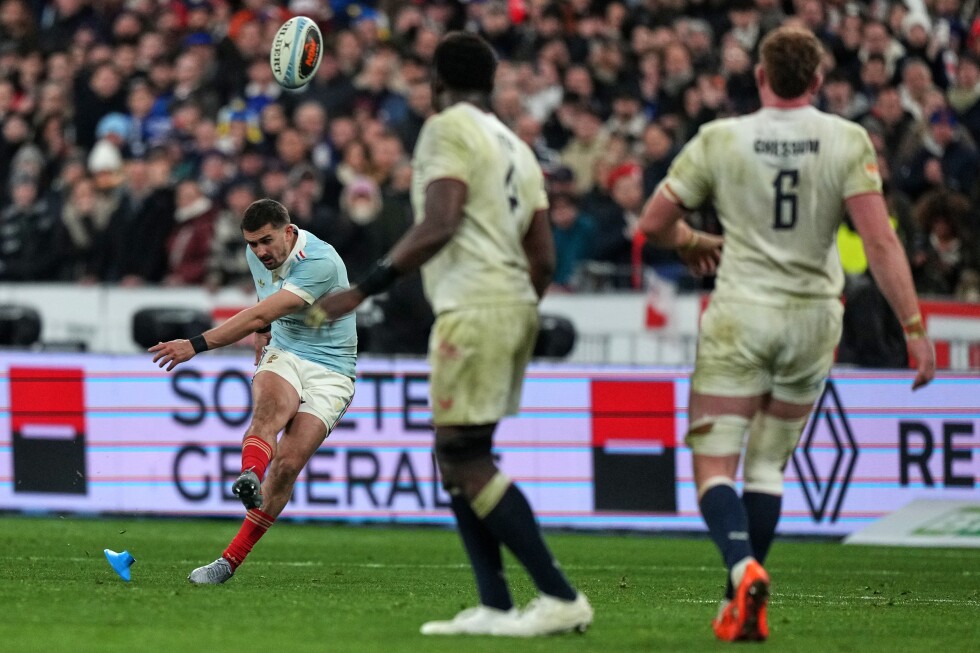
    In a breathtaking conclusion to the Six Nations tournament, France secured back-to-back championships with a heart-stopping 48-46 victory over England on Saturday. The match, played before an electrified crowd at Stade de France, was decided by a last-second penalty kick from fullback Thomas Ramos, cementing France’s record eighth title in the Six Nations era.

    The victory marks France’s first consecutive championship win since 2006-07, though it comes with significant defensive concerns. Despite conceding 96 points and 14 tries in their final two matches against Scotland and England, the French team managed to clinch the title through offensive brilliance and resilience.

    England delivered an impressive performance, scoring seven of the game’s 13 tries and securing a bonus-point fourth try by the 35th minute. The match represented a dramatic turnaround from France’s previous outing, where Scotland had similarly exploited defensive weaknesses in a 50-40 victory that ended France’s Grand Slam aspirations.

    French players acknowledged the mixed emotions surrounding their championship. Flyhalf Matthieu Jalibert fought back tears after the final whistle, recognizing that while “everything wasn’t perfect,” the team had “given everything we could.” Lock Thibaud Flament described the contest as a “crazy match” that tested their composure against an English side that “would give everything.”

    A critical turning point occurred when England prop Ellis Genge received a sin-bin penalty for collapsing a maul just before halftime. France capitalized with a penalty try and rallied from a 27-17 deficit to establish a 38-27 lead during Genge’s absence.

    Despite the defensive vulnerabilities, defense coach Shaun Edwards remained philosophical, noting that high-scoring games have become commonplace in modern rugby. “Rugby at the moment, particularly the Six Nations, is just phenomenal,” Edwards remarked, contrasting current trends with past defensive achievements.

    The championship provides crucial momentum for France as they continue rebuilding a youthful squad with ambitions of claiming their first Rugby World Cup title in Australia next year.

  • Why Trump emphasizes US Kharg attack preserved Iran oil lifeline

    Why Trump emphasizes US Kharg attack preserved Iran oil lifeline

    Amid escalating military operations against Iran, the Trump administration continues its assertive rhetoric claiming devastating impacts on Iranian capabilities. Defense Secretary Pete Hegseth described March 10 as witnessing the “most intense” day of strikes, while President Trump asserted the conflict would conclude rapidly due to diminishing targets.

    The White House frames this campaign as systematically dismantling Iran’s capacity to threaten American interests and global security. While previous strikes focused primarily on military and nuclear installations, recent operations have expanded to include critical civilian infrastructure. Israeli forces targeted two oil refineries and storage facilities near Tehran on March 8, with Iran additionally accusing the US of attacking a desalination plant.

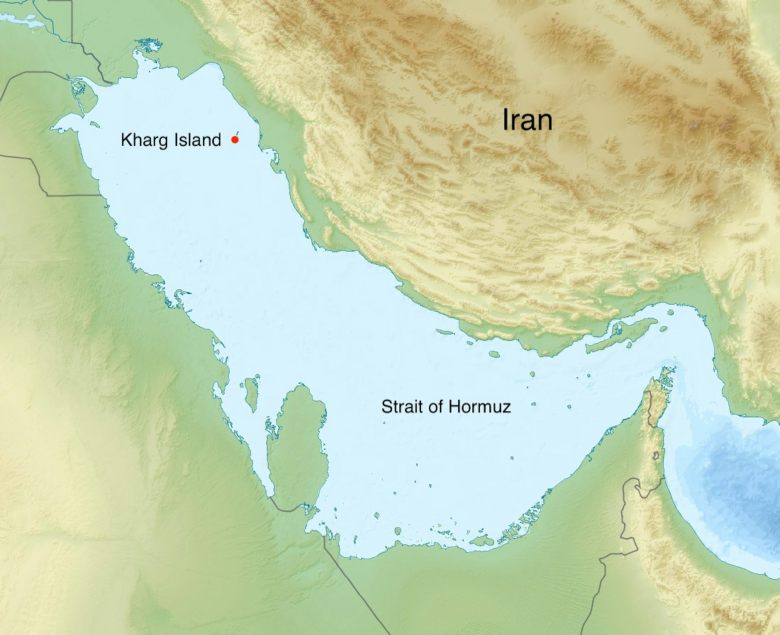
    However, Kharg Island—Iran’s paramount oil export terminal handling approximately 90% of crude exports—remained conspicuously untouched until limited strikes on Friday. Notably, Trump emphasized through Truth Social that the operation exclusively targeted military assets on the island, specifically avoiding damage to oil infrastructure.

    US Central Command corroborated this approach, stating their precision strike destroyed naval mine storage facilities, missile bunkers, and over 90 military targets while deliberately preserving oil operations.

    Kharg’s strategic significance cannot be overstated. This coral island processes millions of barrels daily through subsea pipelines from Iranian oil fields, predominantly supplying China. The terminal generates tens of billions in annual government revenue, making it irreplaceable to Iran’s economy.

    Unlike other major oil producers that diversify export capabilities, Iran concentrates virtually all export capacity at this single location. Historical factors including post-revolution self-reliance policies and geographical advantages (deep-water access for supertankers) cemented Kharg’s dominance since its modern development began in 1958.

    Paradoxically, the very vulnerability that makes Kharg an obvious target also protects it. Comprehensive destruction would cripple Iran’s economy for years, potentially triggering global oil prices reaching $150 per barrel—compared to the $100+ levels during the Ukraine invasion that contributed significantly to inflation crises. With American voters prioritizing cost-of-living concerns ahead of midterm elections, Trump faces balancing military objectives against economic stability.

    Additional complicating factors include avoiding actions that would undermine claims of acting in the Iranian people’s interests, as any successor government would inherit a devastated economy. For now, strategic economic considerations appear to outweigh military advantage in preserving Kharg’s operational capacity.

  • ‘Gruesome’ war bets fuel calls for crackdown on prediction markets

    ‘Gruesome’ war bets fuel calls for crackdown on prediction markets

    The rapid expansion of prediction markets in the United States has triggered intense regulatory debates and ethical concerns as platforms enable betting on sensitive geopolitical events, including potential assassinations and military actions. These digital platforms, which function similarly to stock exchanges, have witnessed explosive growth with over $44 billion in trades despite operating in a legal gray area.

    Recent controversial wagers include markets speculating on the removal of Iran’s Ayatollah Ali Khamenei, nuclear detonation probabilities, and military operations involving Venezuela and Israel. Such bets directly challenge US financial regulations that explicitly prohibit trading on contracts involving war, terrorism, assassination, or other illegal activities.

    The regulatory landscape became increasingly complex after a legal victory allowed prediction markets to accept election bets during the 2024 presidential campaign. This development prompted firms like Polymarket and Kalshi to expand their offerings, though both companies have since removed particularly sensitive markets following public scrutiny. Polymarket alone facilitated an estimated $500 million in bets related to potential Iran conflict scenarios before withdrawing nuclear-related markets.

    Critics including Public Citizen and Better Markets argue these platforms enable war profiteering, create national security risks, and facilitate insider trading opportunities. The controversy has sparked multiple legal battles across states, with traditional gaming firms intensifying lobbying efforts to subject prediction markets to similar regulations and taxation.

    The regulatory approach has shifted significantly following the 2024 election. The Commodities Futures Trading Commission (CFTC) under the Trump administration has withdrawn proposed bans on sports and politics-related event contracts, taking the side of prediction market firms in ongoing legal challenges. CFTC Chairman Michael Selig contends these contracts serve ‘legitimate economic functions’ by allowing businesses to hedge against event-driven risks.

    In response to mounting pressure, major platforms have implemented stricter self-regulation measures. Kalshi, advertising itself as a ‘regulated exchange,’ has publicly disclosed insider trading investigations and punishments, while Polymarket has enhanced monitoring of suspicious activity. Both companies now face the challenge of balancing market freedom with ethical considerations and regulatory compliance in an increasingly scrutinized industry.

  • Oscars 2026: What to expect, how to watch and who will win

    Oscars 2026: What to expect, how to watch and who will win

    The 98th Academy Awards ceremony promises an evening of suspense and glamour as Hollywood’s elite gather for cinema’s most prestigious night. With several categories featuring neck-and-neck competitions, this year’s Oscars present one of the most unpredictable award seasons in recent memory.

    The best picture race has narrowed to a dramatic showdown between two exceptional films: the political thriller ‘One Battle After Another’ and the genre-defying vampire horror ‘Sinners,’ which made history by securing 16 nominations—the highest tally ever recorded. While ‘One Battle After Another’ enters as the statistical favorite following its dominant performance during precursor ceremonies, industry insiders acknowledge the passionate support for ‘Sinners’ within the Academy membership.

    In the acting categories, Irish actress Jessie Buckley stands as the undeniable frontrunner for best actress following her critically acclaimed performance in ‘Hamnet,’ having dominated the category throughout awards season. The best actor race, however, remains remarkably fluid with Michael B. Jordan (‘Sinners’) and Timothée Chalamet (‘Marty Supreme’) emerging as the leading contenders after a season of surprising outcomes across various award ceremonies.

    The supporting acting categories demonstrate even greater volatility. Sean Penn’s transformative portrayal of a white supremacist in ‘One Battle After Another’ has gained significant momentum following his wins at both the BAFTA and Actor Awards. The supporting actress competition features three legitimate contenders: Teyana Taylor (‘One Battle After Another’), Wunmi Mosaku (‘Sinners’), and Amy Madigan (‘Weapons’), each having claimed major precursor awards.

    Television personality Conan O’Brien returns to host the ceremony following his widely praised performance in 2025. The production will feature numerous presenting appearances by acclaimed actors including Nicole Kidman, Robert Downey Jr., and last year’s acting winners. Only two of the five best original song nominees will be performed during the broadcast: ‘I Lied to You’ from ‘Sinners’ and ‘Golden’ from ‘KPop Demon Hunters,’ performed by the virtual girl group Huntr/x.

    The ceremony will be broadcast on ITV in the UK beginning with red carpet coverage at 22:15 GMT, while American viewers can watch on ABC starting at 16:00 PT/19:00 ET. This year’s slightly later date reflects the Academy’s traditional scheduling around major international events like the Winter Olympics.

  • Will Trump help or hinder Zimbabwe’s white farmers in their compensation battle?

    Will Trump help or hinder Zimbabwe’s white farmers in their compensation battle?

    Aging white farmers displaced during Zimbabwe’s controversial land reforms two decades ago are pinning their hopes on former US President Donald Trump to secure billions in unpaid compensation from the government. This development comes as Zimbabwe struggles with a massive $23 billion debt burden that has hampered its ability to fulfill a $3.5 billion compensation agreement reached in 2020.

    The land redistribution program under former President Robert Mugabe in the early 2000s saw approximately 4,500 predominantly white-owned farms seized and redistributed to black Zimbabweans. While intended to address colonial-era land imbalances, the program triggered economic collapse and international sanctions that crippled the nation’s agricultural sector.

    Current President Emmerson Mnangagwa, seeking to repair Zimbabwe’s international standing, committed to compensating farmers for infrastructure improvements on the seized lands. However, the government’s financial constraints led to a compromise offering affected farmers just 1% of their total compensation upfront, with the remainder issued as 10-year treasury bonds paying 2% interest semi-annually.

    With many original farmers now elderly and skeptical about the government’s long-term payment capabilities, only 17% have accepted this arrangement. This has prompted some factions to seek international intervention through Washington-based lobby group Mercury Public Affairs LLC, which has connections to the Trump administration.

    The lobbying effort, coordinated through South African consultancy OB Projects Management, aims to persuade US officials to support debt clearance and new financing arrangements through international institutions like the World Bank. This approach gains significance amid potential legislative changes, as a new congressional bill proposes repealing the Zimbabwe Democracy and Economic Recovery Act of 2001, which currently restricts international funding to Zimbabwe.

    The situation has divided the farming community, with the Commercial Farmers Union distancing itself from the US lobbying efforts while other groups explore alternative solutions. Some farmers have even reached out to tech billionaire Elon Musk regarding potential financing arrangements.

    Underpinning these efforts is Zimbabwe’s vast mineral wealth, particularly its significant lithium, chromium, cobalt, and rare earth deposits. The mineral resources are seen as potential leverage for attracting US investment in exchange for debt settlement commitments.

    Zimbabwe’s Finance Minister Mthuli Ncube has expressed openness to external intervention, stating the government remains committed to compensation payments but lacks the financial capacity for immediate settlement. As the situation develops, farmers remain caught between government promises, international politics, and the pressing reality of advancing age and financial uncertainty.

  • Iran hits UAE oil hub, vows retaliation for US strike on Kharg Island

    Iran hits UAE oil hub, vows retaliation for US strike on Kharg Island

    The strategic Persian Gulf region faces escalating military and economic turmoil as Iran issued direct threats against United States interests within the United Arab Emirates. This development follows a disruptive drone attack on a major Emirati energy installation this Saturday, marking the conflict’s entry into its third consequential week.

    Military escalation intensified when US forces executed precision strikes on Iran’s critical Kharg Island oil export terminal this past Friday. Former President Donald Trump characterized these operations as having ‘obliterated every MILITARY target’ while deliberately preserving energy infrastructure.

    Tehran issued stark warnings through official channels that US-associated energy facilities would be reduced to ‘a pile of ashes’ if Iranian oil infrastructure faced additional attacks. Iranian authorities subsequently identified several UAE locations as legitimate military targets, asserting these sites facilitated operations against Kharg Island.

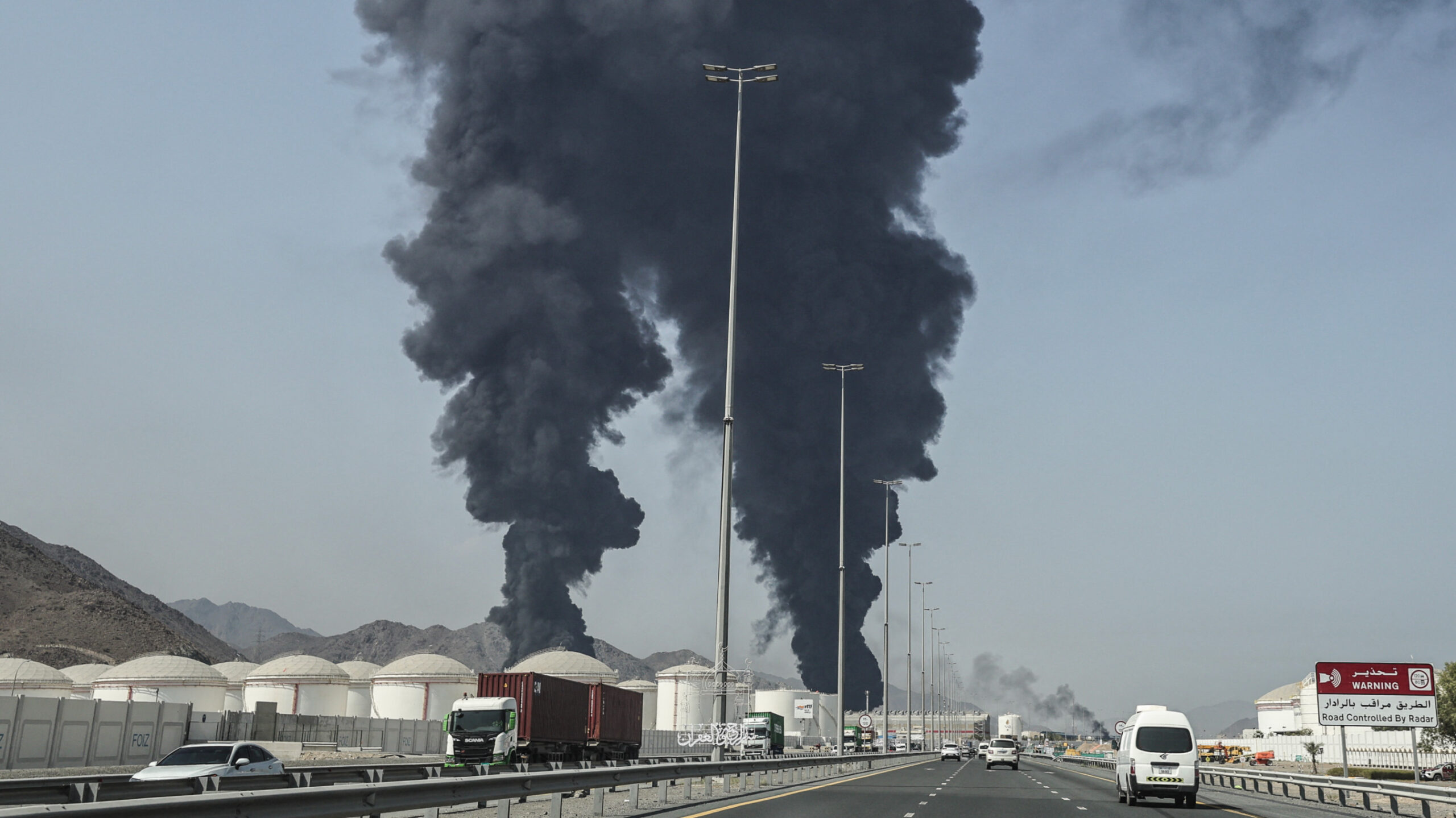
    The Iranian military issued unprecedented evacuation advisories for civilian populations near key maritime facilities, specifically naming Jebel Ali port in Dubai (the Middle East’s busiest container terminal), Abu Dhabi’s Khalifa port, and Fujairah’s crucial oil storage and export complex. This warning manifested in tangible form as plumes of black smoke ascended over Fujairah shortly after the evacuation notice, coinciding with the suspension of oil-loading operations according to industry sources.

    The broader conflict has precipitated the most significant oil supply disruption in recorded history, with crude prices skyrocketing by 40%. Iran’s strategic blockade of the Strait of Hormuz – a maritime passage handling 20% of global oil shipments – has compounded attacks on Gulf energy infrastructure, creating unprecedented energy security concerns.

    Former President Trump utilized his Truth Social platform to advocate for international naval cooperation, urging multiple nations to deploy warships for securing the vital Strait of Hormuz. While specifically mentioning China, France, Japan, South Korea, and Britain as potential contributors, Trump simultaneously confirmed continued US bombing campaigns along Iran’s coastline targeting naval assets.

    The regional violence extended beyond the Persian Gulf as the US Embassy in Iraq sustained drone damage – the second such incident since hostilities began. Additional attacks targeted the Emirati consulate in Iraqi Kurdistan, while Qatar implemented emergency downtown evacuations following missile interceptions. Kuwait reported casualties and property damage from drone strikes on a base housing US military personnel.

    Civilian casualties mounted with reports confirming at least 15 fatalities from a US-Israeli strike on a civilian manufacturing facility in Isfahan, central Iran, that produced heaters and refrigerators, underscoring the conflict’s expanding humanitarian impact.

  • Aussie mortgage holders face double whammy as rates set to surge

    Aussie mortgage holders face double whammy as rates set to surge

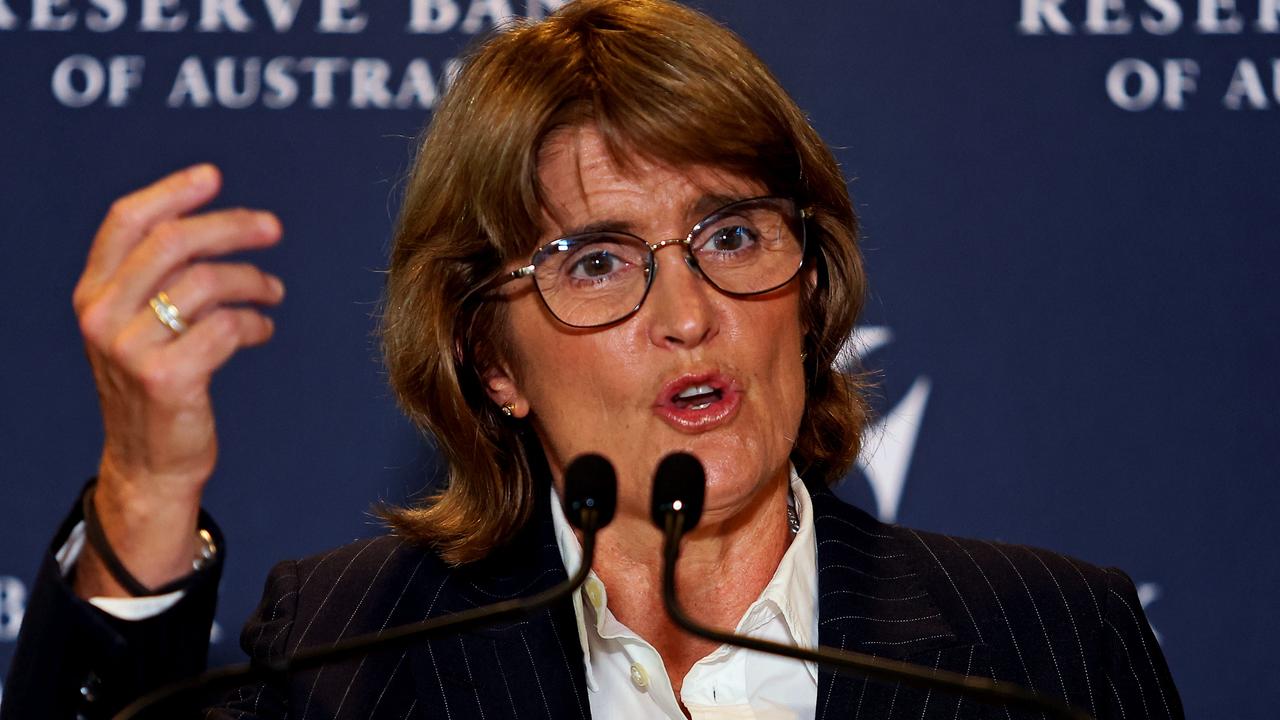
    Australia’s economic landscape faces severe turbulence as geopolitical tensions in the Middle East create compounding domestic pressures. With the Reserve Bank of Australia poised to implement consecutive interest rate hikes in March and May, households confront an unprecedented convergence of monetary tightening and energy-driven inflation.

    The blockade of the Strait of Hormuz—a critical maritime passage handling approximately 19% of global oil shipments—has precipitated a 30% surge in worldwide crude prices. This development has reignited concerns about stagflation, an economic phenomenon characterized by stagnant growth coupled with rampant inflation last witnessed during the 1970s oil crisis.

    Financial institutions uniformly anticipate the official cash rate reaching 4.30% by May, potentially climbing to 4.60% by year’s end—the highest level since October 2011. Treasurer Jim Chalmers acknowledges Treasury projections indicating inflation could spike into the high 4% range, significantly exceeding January’s 3.8% figure.

    Energy economists note that while advanced economies have reduced oil dependency since the 1970s, prolonged closure of the Strait would severely impact emerging markets through fertilizer and food price inflation. Domestically, AMP chief economist Shane Oliver warns consumers face a ‘double whammy’ of elevated mortgage costs and soaring fuel expenses, likely triggering reduced discretionary spending.

    The RBA’s dilemma centers on whether to counteract energy-driven inflation through rate hikes despite the consequent suppression of household spending power. Market analysts observe that bond markets are pricing in additional rate increases through 2026, reflecting persistent anxiety over combined geopolitical instability and domestic inflationary pressures.

  • Italy’s unbeaten WBC run rolls on with an 8-6 win over Puerto Rico and semifinal berth

    Italy’s unbeaten WBC run rolls on with an 8-6 win over Puerto Rico and semifinal berth

    In a stunning display of resilience and offensive firepower, Italy’s national baseball team secured an historic 8-6 victory over Puerto Rico in the World Baseball Classic quarterfinals on Saturday. The undefeated Azzurri (5-0) have now advanced to their first-ever semifinal appearance in tournament history, where they will face either defending champion Japan or Venezuela in Miami on Monday.

    The game began dramatically with Puerto Rico’s Willi Castro launching a leadoff home run into left field’s Crawford Boxes off Italian starter Sam Aldegheri. However, Italy responded explosively in the bottom of the first inning, scoring four runs to seize control. The offensive surge featured RBI singles from Dominic Canzone and Jac Caglianone, along with a game-tying single from Vinnie Pasquantino—who had set a WBC record with three home runs in Italy’s previous contest.

    Italy expanded their lead through strategic hitting and fortunate circumstances. In the fourth inning, Andrew Fischer was credited with a controversial double on fan interference when a spectator reached over the right-field fence, resulting in two RBIs. J.J. D’Orazio immediately followed with a ground-rule double that drove in two additional runs, finishing with three RBIs total.

    Puerto Rico mounted a formidable comeback attempt in the eighth inning, scoring four runs through Eddie Rosario’s run-scoring forceout, a wild pitch from Joe La Sorsa, and Christian Vázquez’s two-run single. However, reliever Greg Weissert entered to secure a five-out save, allowing just one hit while closing the game with a clutch inning-ending groundout from Nolan Arenado.

    This defeat marks another disappointing quarterfinal exit for Puerto Rico, who now hold a 1-2 record against Italy in World Baseball Classic competition. The Italian squad continues their remarkable tournament performance, combining timely hitting with determined pitching to extend their magical run in international baseball’s premier event.

  • Israeli strike in south Lebanon kills 17 medical staff

    Israeli strike in south Lebanon kills 17 medical staff

    A direct Israeli military strike on a primary healthcare center in the southern Lebanese village of Burj Qalawiyeh has resulted in the deaths of 17 medical personnel, according to statements from Lebanese health authorities on Saturday. The attack, which occurred late Friday in the Bint Jbeil district, claimed the lives of doctors, nurses, and paramedics performing critical medical duties.

    Lebanon’s Health Ministry has formally accused Israel of systematically targeting emergency medical teams during rescue operations, reporting that 31 paramedics have been killed since hostilities began on March 2. The ministry’s statement condemned what it characterized as repeated attacks on healthcare infrastructure and personnel.

    The Israeli military, through its Arabic-language spokesperson Avichay Adraee, countered these allegations by asserting that Hezbollah has been utilizing ambulances for military purposes. Adraee issued warnings that Israel would continue to target any medical facilities or vehicles believed to be supporting Hezbollah’s military operations.

    This incident represents the most significant single loss of medical life since the conflict erupted following Hezbollah’s rocket attacks against Israel, which the group stated were in retaliation for the killing of Iran’s supreme leader. The ongoing violence has triggered massive displacement, with approximately one million people forced from their homes across southern Lebanon and parts of Beirut according to the Norwegian Refugee Council, affecting roughly 14% of Lebanon’s territory.

    The humanitarian crisis continues to deepen with Lebanon’s Health Ministry reporting 826 fatalities, including 65 women and 106 children, and 2,009 wounded since the conflict’s inception. In a separate incident Friday night, a family of six including four children were killed in an airstrike on their home in Nabatieh.

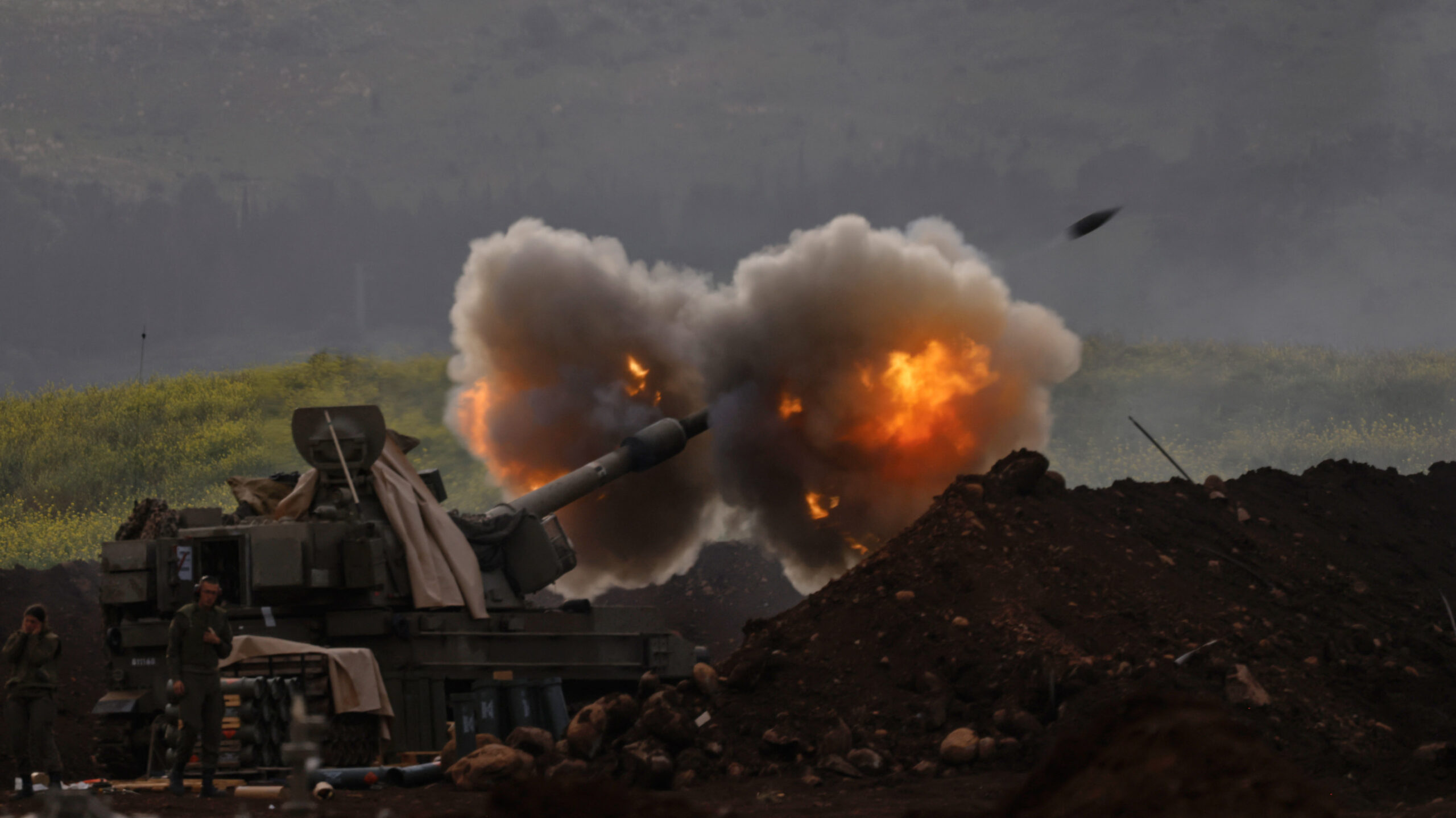
    In a significant escalation, Israeli forces destroyed a bridge over the Litani River, describing it as a “key crossing” for Hezbollah operations despite providing no concrete evidence. This marks the first acknowledged attack on Lebanese public infrastructure since the conflict began. Simultaneously, Israel distributed leaflets over Beirut threatening “Gaza-scale devastation” and further infrastructure attacks unless Hezbollah is disarmed, with Defense Minister Israel Katz warning that Lebanon’s government would “pay increasing costs through damage to infrastructure and loss of territory.”

  • F1 races in Bahrain, Saudi cancelled due to Iran war

    F1 races in Bahrain, Saudi cancelled due to Iran war

    In a significant disruption to the 2023 Formula One calendar, motorsport’s governing body has officially canceled the Grands Prix in Bahrain and Saudi Arabia. The International Automobile Federation (FIA) announced the decision on Saturday following extensive consultations with Formula One Group, regional promoters, and member clubs.

    The Bahrain Grand Prix, originally scheduled for April 10-12 as the season’s fourth race, and the subsequent Saudi Arabian event have been called off due to escalating regional security concerns. The Middle East has experienced sustained military actions, including Iranian drone and missile attacks over the past two weeks, following the initiation of hostilities by the United States and Israel against Iran.

    Bahrain, located just across the Gulf from Iran, has suffered repeated attacks affecting infrastructure including buildings, refineries, and its substantial US military installation. Similarly, Saudi Arabia has endured multiple strikes targeting its crucial oil infrastructure, posing significant security challenges for international events.

    FIA President Mohammed Ben Sulayem emphasized that community safety remained the paramount consideration in reaching this difficult decision. ‘The FIA will always place the safety and wellbeing of our community and colleagues first,’ Sulayem stated. ‘After careful consideration, we have taken this decision with that responsibility firmly in mind.’

    The cancellation extends beyond Formula One to include Formula 2, Formula 3, and F1 Academy events that were scheduled during the same period. Additionally, the World Endurance Championship’s opening round in Qatar, initially set for March 26-28, has been postponed until October.

    Despite evaluating several alternatives, organizers determined that no substitute events would be arranged for April. The championship will now proceed directly from the Japanese Grand Prix (March 27-29) to the Miami Grand Prix in early May, creating an extended gap in the racing calendar.

    Mercedes driver Kimi Antonelli, who secured pole position for Sunday’s Chinese Grand Prix, expressed solidarity with those affected by the conflict, acknowledging that F1 authorities would prioritize safety in their decision-making process.