作者: admin

  • China lends support to major Ethiopian fertilizer project

    China lends support to major Ethiopian fertilizer project

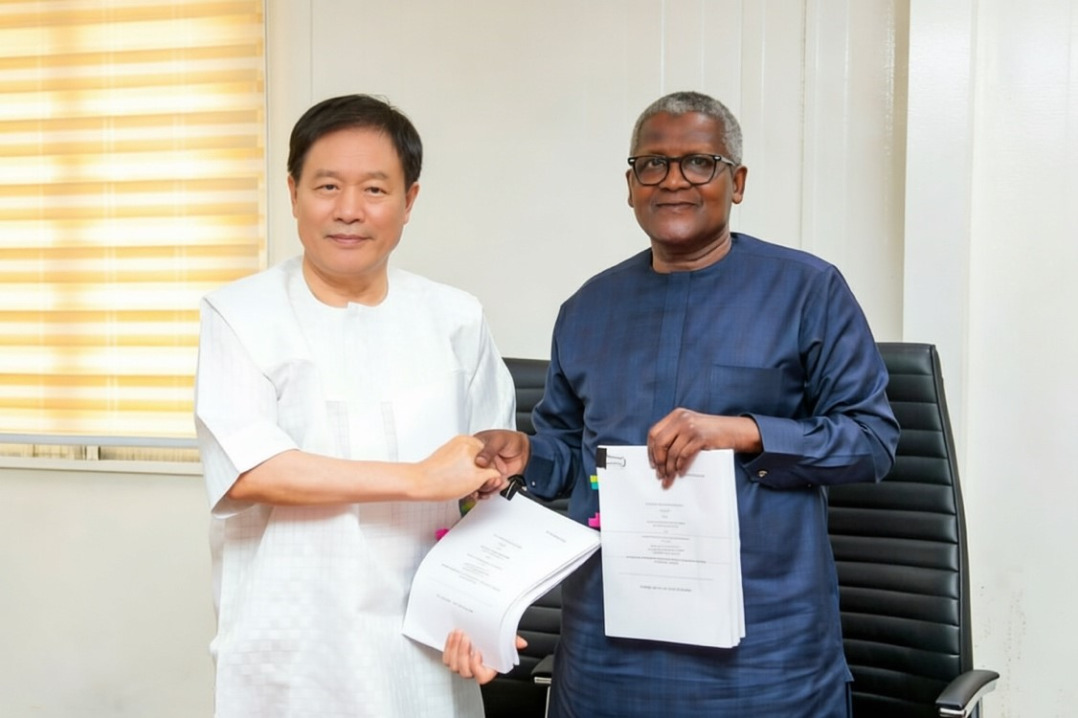
    In a landmark move for African industrialization, Chinese energy conglomerate GCL Group has entered into a comprehensive 25-year natural gas supply agreement valued at approximately $4.2 billion with Nigeria’s Dangote Group. This strategic partnership will fuel a transformative fertilizer manufacturing project in Ethiopia that promises to reshape agricultural production across East Africa.

    The agreement, finalized during recent ceremonies in Lagos, establishes an integrated energy-to-agriculture value chain connecting Ethiopia’s Ogaden Basin gas reserves with industrial manufacturing capabilities. GCL will extract and supply natural gas from the Calub Gas Field, transporting it via a dedicated 108-kilometer pipeline to Dangote’s state-of-the-art urea fertilizer complex in the Somali Region. With operations scheduled to commence in 2029, the facility will boast an annual production capacity of 3 million tons, positioning it as East Africa’s premier modern fertilizer production center.

    The $2.5 billion project features an equity structure with Dangote Group controlling 60% ownership while Ethiopian Investment Holdings maintains a 40% stake. This arrangement reflects a collaborative approach to African industrial development that combines international expertise with local investment participation.

    Aliko Dangote, founder of the eponymous conglomerate, emphasized the strategic significance of breaking Africa’s cycle of exporting raw materials while importing finished goods. “This partnership establishes an efficient value chain from natural gas extraction to fertilizer production,” Dangote stated, “ultimately strengthening Africa’s capacity to secure its own food supply through agricultural self-sufficiency.”

    GCL Chairman Zhu Gongshan characterized the agreement as a milestone in China-Africa industrial cooperation, highlighting how the partnership merges Chinese energy infrastructure expertise with Dangote’s extensive manufacturing footprint across the continent. The project represents an evolution in China-Ethiopia relations, which have deepened through practical cooperation across infrastructure, manufacturing, and energy sectors in recent years.

    Industry analysts project substantial market impacts, noting that East African nations currently depend heavily on imported fertilizers to meet agricultural demands. Upon completion, the complex is expected to fully satisfy Ethiopia’s domestic urea requirements while generating surplus for regional export markets.

    Beyond fertilizer production, the initiative promises broad economic benefits including thousands of local employment opportunities, infrastructure development enhancements, and strengthened energy security. The integrated model—connecting upstream gas production, midstream transportation, and downstream manufacturing—establishes a new paradigm for large-scale China-Africa industrial collaboration while advancing low-carbon industrial production through natural gas utilization.

  • African soccer confederation strips Senegal of Africa Cup title and declares Morocco the champion

    African soccer confederation strips Senegal of Africa Cup title and declares Morocco the champion

    In an unprecedented decision that has sent shockwaves through African football, the Confederation of African Football (CAF) has stripped Senegal of its Africa Cup of Nations victory and awarded the title to Morocco. The dramatic reversal comes months after Senegal’s contentious 1-0 extra-time victory in the January 18 final held in Rabat.

    The governing body’s appeals board ruled that Senegal must forfeit the final due to their players leaving the field during stoppage time in protest of a controversial penalty awarded to Morocco. According to tournament regulations, this constitutes an abandonment, resulting in an automatic 3-0 default victory for the host nation.

    The chaotic final match saw tensions escalate when Moroccan forward Brahim Diaz attempted a Panenka-style penalty kick after Senegal’s players had temporarily walked off the pitch. Goalkeeper Édouard Mendy’s crucial save preserved the deadlock until extra time, where Senegal eventually scored the decisive goal. However, the match was already marred by controversy after officials disallowed an apparent Senegal goal minutes earlier for a questionable foul.

    Senegal’s football federation has vehemently denounced the decision, with Secretary General Abdoulaye Seydou Sow calling it ‘a shame for Africa’ and vowing to appeal to the Court of Arbitration for Sport (CAS). The federation maintains that the ruling lacks legal foundation and represents a ‘travesty of justice.’

    The outcome grants Morocco its first African championship since 1976, while denying Senegal what would have been their second title in three years. Both teams are scheduled to compete in the 2026 World Cup, with any potential CAS appeal unlikely to be resolved before the tournament begins.

    The controversy has exposed deep divisions within African football governance, raising questions about the application of tournament regulations versus referee authority on field decisions. The case represents one of the most significant administrative interventions in the history of the continental championship.

  • UN investigates strike on Iranian girls’ school

    UN investigates strike on Iranian girls’ school

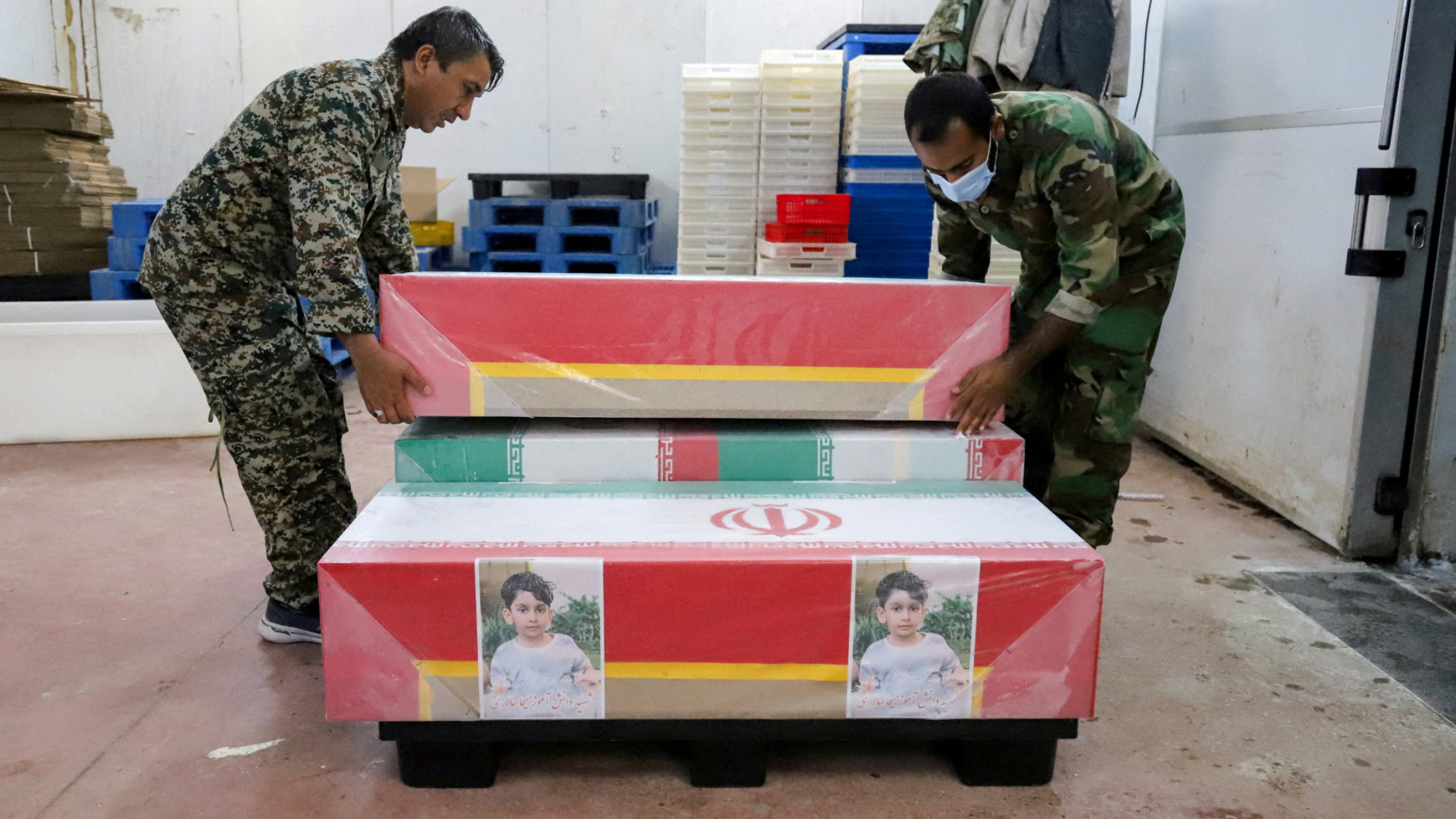
    A United Nations fact-finding mission has initiated a formal inquiry into a devastating airstrike on the Shajareh Tayyebeh primary school in Minab, southern Iran. The attack, which occurred on February 28th during the initial phase of a US-Israeli military operation, resulted in the deaths of at least 175 individuals, the vast majority of whom were schoolchildren.

    Concurrent investigations by US military authorities have yielded preliminary findings indicating American responsibility for the strike. According to reports from Reuters and The New York Times, officers at US Central Command allegedly utilized outdated intelligence data provided by the Defense Intelligence Agency to establish the target coordinates. The strike on the educational facility was executed simultaneously with missile attacks on nearby Iranian naval installations.

    The Iranian government has formally accused the United States of perpetrating what it characterizes as an ‘unforgivable war crime.’ UN investigator Max du Plessis emphasized the critical importance of an independent investigation during a press conference in Geneva, stating, ‘Given the innocent lives that have been lost, there is a critical need for such an investigation to be done.’

    Multiple eyewitness accounts and medical personnel from the Iranian Red Crescent describe a ‘double-tap’ strike pattern, where a second missile targeted survivors who had sought shelter after the initial explosion. Iranian foreign ministry spokesperson Esmaeil Baqaei specifically identified the weapon used as an ‘American Tomahawk missile’ that ‘slaughtered 168 Iranian little angels.’

    This incident represents one of the most severe civilian casualty events in decades of US military operations in the Middle East. Human rights organizations including Amnesty International have already attributed responsibility to US forces, while the Trump administration maintains its denial of intentionally targeting civilians.

    The UN mission is concurrently investigating a separate Israeli strike on Tehran’s Evin prison during June’s conflict, which it has preliminarily classified as a war crime.

  • Watch: Sean Penn receives ‘Oscar’ in Ukraine after skipping US ceremony

    Watch: Sean Penn receives ‘Oscar’ in Ukraine after skipping US ceremony

    In a poignant ceremony held in Kyiv, American actor and filmmaker Sean Penn was presented with a specially crafted statuette by Ukrainian officials, recognizing his unwavering humanitarian support since the onset of Russia’s full-scale invasion. The presentation occurred just one day after the 95th Academy Awards in Los Angeles, which Penn opted to forgo in favor of his ongoing advocacy work in the war-torn nation.

    The two-time Oscar winner was honored with a trophy resembling the iconic Academy Award, but engraved with a Ukrainian trident emblem—the nation’s coat of arms—symbolizing gratitude for his efforts. Ukrainian President Volodymyr Zelenskyy personally thanked Penn for his dedication, stating that the actor’s documentary work has been crucial in showcasing the reality of Ukraine’s struggle to global audiences.

    Penn’s involvement extends beyond filmmaking; he has actively engaged in humanitarian missions, met with military personnel, and consistently used his international platform to advocate for increased military and financial aid to Ukraine. His presence in the country during critical moments of the conflict has positioned him as a significant celebrity ally in Ukraine’s diplomatic and informational campaign.

  • Palestinian Islamic leader issues fatwa calling for Eid prayers outside Al-Aqsa Mosque

    Palestinian Islamic leader issues fatwa calling for Eid prayers outside Al-Aqsa Mosque

    In an unprecedented religious decree, prominent Palestinian Islamic cleric Ekrima Sa’id Sabri has issued a fatwa calling for Eid al-Fitr prayers to be conducted outside Jerusalem’s Al-Aqsa Mosque complex after Israeli authorities implemented a comprehensive closure of the sacred site. The influential preacher and member of the Islamic Waqf Department urged all Muslims to gather near the mosque on Friday, emphasizing that prayers conducted in proximity to the holy site would hold equivalent religious significance to those performed within its walls.

    The closure of Islam’s third holiest site marks the first time since the 1967 Six-Day War that Palestinians have been prevented from performing Ramadan Friday prayers at the mosque. Israeli authorities justified the restrictions citing security concerns during regional tensions, but Palestinian leadership condemns the move as politically motivated. Khaled Zabarqa, legal representative for Sheikh Sabri, asserted that ‘the Israeli occupation’s pretext of security reasons is a false and fabricated excuse designed to advance Judaization plans for Al-Aqsa.’

    This sacred compound, known to Jews as the Temple Mount and representing Judaism’s most revered site, has long been the epicenter of Israeli-Palestinian religious tensions. While mainstream Jewish religious authorities prohibit Jewish prayer at the site pending messianic redemption, certain activist groups have increasingly demanded access for Jewish worship, fueling Palestinian concerns about potential alterations to the status quo.

    The current closure has drawn international condemnation, with eight Muslim-majority nations recently denouncing the restrictions as ‘unjustified’ and asserting that Israel holds ‘no sovereignty’ over the holy site. Despite these objections, Israeli forces maintain a heavy presence throughout Jerusalem’s Old City, preventing Palestinian access while permitting limited Waqf administrative staff to enter the compound.

    Middle East Eye reported that Israeli authorities formally notified the Islamic Waqf administration of their decision to close the site during Eid celebrations, a move expected to provoke widespread outrage among Muslim worshippers. Since the implementation of restrictions earlier this month, nightly attempts by Palestinians to pray near the barriers have frequently resulted in confrontations with Israeli security forces.

    The issuance of this religious ruling represents a significant development in the ongoing struggle over sacred space in Jerusalem, transforming the geographical limitations into a spiritual opportunity for believers seeking divine reward during Islam’s holiest days.

  • Moment suspected meteor is spotted over Ohio and Pennsylvania

    Moment suspected meteor is spotted over Ohio and Pennsylvania

    Residents across Ohio and Pennsylvania witnessed a breathtaking astronomical event as a brilliant fireball, suspected to be a meteor, streaked across the night sky. The spectacular display culminated in a sonic boom that reverberated through the region, startling witnesses and drawing immediate scientific attention.

    NASA officials have confirmed the extraterrestrial origin of the phenomenon, verifying that the space rock descended through Earth’s atmosphere and landed in the vicinity of Cleveland. The agency’s meteor tracking systems recorded the object’s trajectory and impact data, providing valuable information for further analysis.

    The atmospheric entry created both visual and auditory sensations, with the meteor breaking the sound barrier during its descent. This sonic event resulted in the characteristic ‘kaboom’ reported by numerous observers across multiple states, demonstrating the substantial energy released during the object’s interaction with Earth’s atmosphere.

    Such events, while dramatic, represent natural occurrences as space debris regularly enters Earth’s atmosphere. NASA and other scientific organizations continuously monitor these phenomena to better understand the composition of objects in our solar system and to assess potential risks from larger celestial bodies.

    The event has sparked renewed public interest in astronomy and space science, with many witnesses sharing their experiences and footage of the extraordinary sight. Scientific institutions are now conducting further analysis of the event data to determine the meteor’s composition, origin, and any potential recoverable fragments.

  • Beijing internet court stresses need for stronger oversight in online food and drug sectors

    Beijing internet court stresses need for stronger oversight in online food and drug sectors

    The Beijing Internet Court has issued a compelling call for intensified regulatory supervision within China’s rapidly expanding online food and pharmaceutical sectors. Vice-President Yi Jun emphasized the critical intersection of digital commerce and consumer safety during a recent address, highlighting both the tremendous growth and emerging challenges in these vital industries.

    Statistical projections reveal remarkable expansion in China’s food e-commerce market, with transaction volumes anticipated to surge from 2.4 trillion yuan ($328 billion) in 2023 to an estimated 3.3 trillion yuan by 2025. This digital transformation has fundamentally altered consumption patterns, making online platforms primary distribution channels for food and pharmaceutical products.

    However, this exponential growth has been accompanied by significant consumer protection concerns. Judicial data from 2023 to 2025 documents 2,061 cases related to online food and drug consumption, exposing pervasive issues including deceptive marketing practices, unauthorized sales operations, and counterfeit merchandise. Particularly alarming are instances of manufacturers improperly utilizing additives and prohibited substances to maximize profits, coupled with inadequate verification processes by digital marketplaces regarding seller credentials.

    The court has responded by enhancing judicial scrutiny of such cases, implementing punitive damages in severe violations to safeguard consumer interests. Approximately 65% of adjudicated cases resulted in full or partial support for consumer claims, with nearly 40% culminating in financial penalties against negligent sellers or producers.

    Judicial recommendations include mandatory accurate labeling information disclosure to ensure consumer awareness, strengthened oversight of merchant qualifications on digital platforms, and simplified reporting mechanisms for problematic products. The court further advocates immediate removal of violative items and store suspensions upon violation detection, alongside mandatory reporting to regulatory authorities.

  • China sees steady rise in copyright registrations

    China sees steady rise in copyright registrations

    China has demonstrated remarkable growth in intellectual property protection, with national copyright registrations exceeding 10 million works throughout 2025. According to official statistics released by the National Copyright Administration, this represents a modest yet significant year-on-year increase of 0.44 percent, underscoring the nation’s continuing commitment to creative rights protection.

    The data reveals striking regional variations, with Liaoning province experiencing an extraordinary surge of over 100 percent in copyright registrations compared to 2024 figures. Meanwhile, Tianjin, Shanxi, Henan, and Hainan all recorded impressive growth rates surpassing 50 percent, indicating a broadening geographical distribution of creative activity across China.

    Artistic works dominated the registration landscape, constituting more than 60 percent of all copyrighted material. Photography, literary works, and film/television programming followed in descending order of prevalence, painting a diverse picture of China’s creative output.

    In parallel developments, computer software copyright registrations reached a substantial milestone with over 3 million applications processed nationwide. This segment experienced robust growth of 12.58 percent year-on-year, significantly outpacing the overall copyright expansion. Geographically, these technological copyrights remained concentrated in China’s eastern regions, which accounted for 57 percent of all software registrations.

    The comprehensive data illustrates China’s evolving intellectual property ecosystem, where traditional creative works and digital innovations continue to flourish under enhanced protection frameworks. These trends reflect both increasing public awareness of copyright importance and the administration’s effective implementation of intellectual property rights policies across diverse regions and sectors.

  • 2026 WIC Asia-Pacific Summit to focus on digital technologies in Hong Kong

    2026 WIC Asia-Pacific Summit to focus on digital technologies in Hong Kong

    Hong Kong will serve as the host city for the prestigious 2026 World Internet Conference Asia-Pacific Summit scheduled for April 13-14. The event will concentrate on harnessing digital technologies to stimulate regional economic growth and establish inclusive governance frameworks for cyberspace.

    Ren Xianliang, Secretary-General of the WIC, announced during a Beijing press conference that this year’s gathering will emphasize ensuring artificial intelligence benefits are equitably distributed across humanity. Particular attention will be given to amplifying the representation of developing nations within global AI governance structures.

    The summit, operating under the theme “Digital Empowerment and Innovative Development: Joining Hands to Build a Community in Cyberspace,” will convene ministerial-level officials, international organization delegates, and executives from leading internet corporations worldwide. A notable first for the conference will be the introduction of ministerial-level discussions alongside six specialized sub-forums addressing intelligent agent innovation, digital finance, AI safety governance, smart public services, digital well-being, and classical text digitization.

    This marks the second consecutive year Hong Kong hosts this significant event, following last year’s successful inaugural summit that attracted over 1,000 participants from more than 50 countries.

    Sun Dong, Hong Kong’s Secretary for Innovation, Technology and Industry, confirmed the city’s alignment with China’s 15th Five-Year Plan (2026-30) science and technology innovation strategy. The government will intensify efforts to position AI as a cornerstone industry, advancing both AI industrialization and cross-sector AI integration. Supporting this initiative, the Hong Kong Artificial Intelligence Research and Development Institute is slated to commence operations in the latter half of 2026, facilitating AI project development, research commercialization, and governance framework guidance.

  • Gansu vice-governor under investigation for suspected Party discipline violations

    Gansu vice-governor under investigation for suspected Party discipline violations

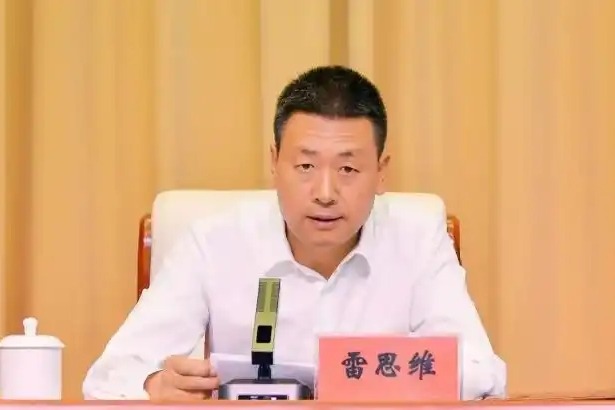
    China’s top anti-corruption authorities have launched a formal investigation into Lei Siwei, the sitting vice-governor of northwestern Gansu Province, for suspected serious violations of Party discipline and laws. The Central Commission for Discipline Inspection (CCDI) and National Commission of Supervision announced the probe on Tuesday, marking another high-profile case in China’s ongoing anti-graft campaign.

    Lei, 59, a lifelong Gansu native who began his political career in June 1989, is currently undergoing comprehensive disciplinary review and supervisory investigation. The veteran official has spent his entire career within the province, ascending through various senior positions including leadership roles in state-owned enterprises and provincial departments.

    His professional trajectory includes serving as director and general manager of Baiyin Nonferrous Group before transitioning to government service. In 2018, Lei assumed directorship of Gansu’s Ecology and Environment Department, followed by leadership of the Provincial Natural Resources Department in 2020. His political advancement continued with his appointment as Party chief of Jiayuguan City in July 2021, culminating in his promotion to vice-governor in 2023 and elevation to the Standing Committee of the Communist Party of China Gansu Provincial Committee in June 2025.

    The investigation represents another demonstration of China’s intensified anti-corruption efforts targeting senior officials, particularly those serving in strategic provincial-level positions. The case continues Beijing’s consistent approach of investigating sitting officials regardless of their administrative rank or tenure.