作者: admin

  • Israel police to deploy around Al-Aqsa for Ramadan, Palestinians report curbs

    Israel police to deploy around Al-Aqsa for Ramadan, Palestinians report curbs

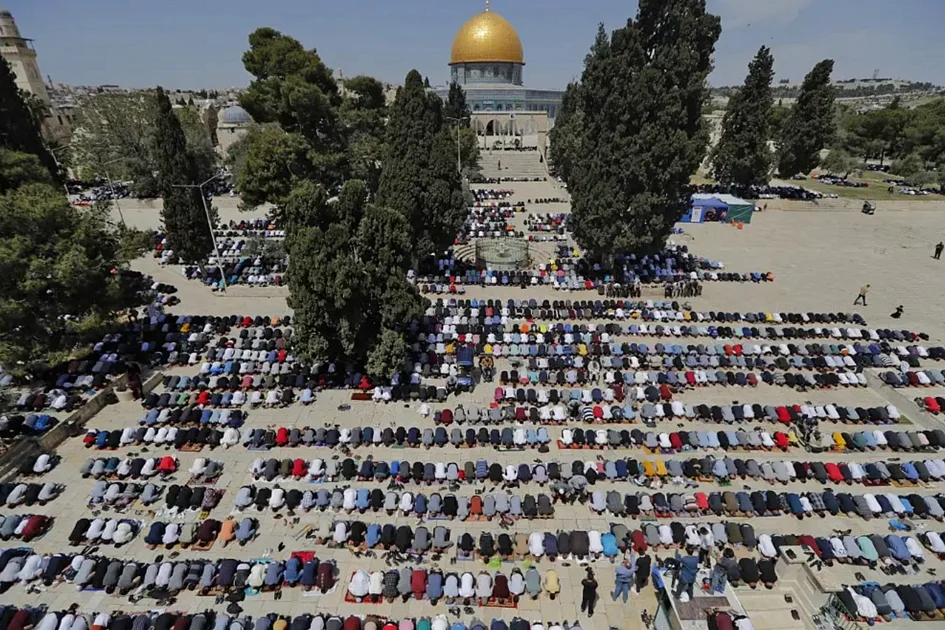
    Jerusalem braces for heightened security measures as Israeli authorities announce massive police deployments around Al-Aqsa Mosque compound during the upcoming Ramadan period. The controversial security plan, revealed Monday by senior Jerusalem police officer Arad Braverman, comes amid Palestinian allegations of increasingly restrictive measures at Islam’s third-holiest site.

    Throughout the Muslim holy month of fasting and prayer, traditionally attended by hundreds of thousands of Palestinian worshippers, Israeli forces will maintain constant presence “day and night” across the compound known to Jews as the Temple Mount. Special emphasis will be placed on Friday prayers, which typically draw the largest congregations of Muslim faithful.

    The policing strategy includes a recommended allocation of 10,000 entry permits for Palestinians from the occupied West Bank requiring special authorization to access Jerusalem. However, Palestinian officials contend that actual permit issuance will mirror last year’s restrictive criteria, limited to men over 55 and women over 50—a significant reduction from historical access levels.

    Further tensions emerged as Palestinian authorities reported Israeli restrictions on Islamic Waqf preparations, including prohibitions on installing shade structures and establishing temporary medical clinics. According to Waqf sources, 33 employees have already been barred from the compound in the week preceding Ramadan’s commencement.

    The sacred compound remains a perennial flashpoint in the Israeli-Palestinian conflict, representing both a central symbol of Palestinian identity and the site of the ancient Jewish Second Temple. While longstanding arrangements permit Jewish visits but prohibit prayer, recent years have seen increased challenges to this status quo by Jewish ultranationalists, including far-right politician Itamar Ben-Gvir’s controversial prayers at the site during his tenure as national security minister.

    Police officials maintain that no changes to the status quo are planned, though Palestinian communities express growing concerns about the erosion of traditional access rights and religious freedoms at one of Islam’s most significant holy sites.


  • Hundreds of ultra-Orthodox Jewish men chase Israeli female soldiers

    Hundreds of ultra-Orthodox Jewish men chase Israeli female soldiers

    A disturbing incident in the ultra-Orthodox city of Bnei Brak near Tel Aviv has exposed deepening fractures within Israeli society, as two female Israeli Defense Forces soldiers required emergency rescue after being pursued by hundreds of Haredi men. Dramatic footage captured the soldiers fleeing through debris-strewn streets surrounded by protective guards while being chased by screaming protesters clad in traditional black and white attire.

    The soldiers, identified as squad commanders from the education and youth corps, were conducting an official home visit to a prospective unit recruit when the mob targeted them. Israeli academic Shaiel Ben Ephraim characterized the event as “absolute insanity” on social media platform X, noting the incident reflected broader societal collapse.

    The confrontation highlights intensifying tensions over military conscription that has long divided Israeli society. The Haredim community, comprising approximately 15% of Israel’s Jewish population and among its fastest-growing demographics, has historically resisted military service, with many opting instead for religious studies supported by government subsidies.

    This conscription issue has created significant political strain within Prime Minister Benjamin Netanyahu’s government, with ultra-Orthodox representation parties United Torah Judaism and Shas recently enacting a “half-resignation” from the coalition over mounting tensions. While Netanyahu condemned the violence as unrepresentative of the broader Haredi community and vowed to prevent “anarchy,” footage showed local residents overturning a police vehicle to cheering crowds.

    Israeli riot police responded with stun grenades and made 23 arrests during the confrontation that left three officers wounded. The incident occurs against the backdrop of Israel’s Supreme Court ruling in June 2024 that ultra-Orthodox Jews could be conscripted, triggering mass opposition from the Haredim community and reigniting a decades-old debate about military service exemptions originally granted by Israel’s first prime minister in 1948.

  • Facing a demographic catastrophe, Ukraine is paying for troops to freeze their sperm

    Facing a demographic catastrophe, Ukraine is paying for troops to freeze their sperm

    Amid Russia’s relentless invasion, Ukraine faces an escalating demographic catastrophe compounded by massive military casualties and refugee displacement. A groundbreaking state-funded program now offers soldiers reproductive hope through cryopreservation services, though implementation challenges reveal deeper societal struggles.

    National Guard soldier Maxim, 35, represents the new frontline of Ukraine’s survival strategy. ‘Our men are dying. The Ukrainian gene pool is dying,’ he states from eastern combat positions. His recent sperm preservation at a Kyiv clinic provides potential future parenthood with his wife should he perish. The constant threat of Russian drones means ‘there is no guarantee you’re safe,’ Maxim explains, noting how combat stress reduces reproductive capacity.

    Private fertility clinics initiated free cryopreservation for military personnel in 2022 following Russia’s full-scale invasion. Parliament formalized the practice in 2023 with state funding. ‘Our soldiers are defending our future but may lose their own,’ explains MP Oksana Dmitrieva, who co-drafted the legislation. ‘We wanted to give them that chance.’

    The program addresses a pre-existing demographic crisis dramatically worsened by war. Millions of refugees (predominantly women) remain abroad while thousands of Ukraine’s fittest men die in combat. MP Dmitrieva acknowledges this during an interview in an unheated Kyiv hotel lobby, highlighting how Russian missile attacks on energy infrastructure compound daily hardships.

    Kyiv’s state-run Centre for Reproductive Medicine began accepting soldiers into the program in January. Director Oksana Holikova anticipates significant demand despite initial modest participation. The clinic’s quiet corridors reveal war’s hidden impacts: pregnancy rates have halved since the invasion began. Approximately 60% of patients now require antidepressants, with many experiencing ‘delayed life syndrome’—postponing major decisions like childbirth amid constant danger.

    Legal complexities emerged when war widow Katerina Malyshko was denied access to her deceased husband’s frozen embryos. Vitaly, killed by a guided bomb, had left reproductive material before his death. Katerina’s six-month legal battle culminated in a landmark court victory granting usage rights. ‘I felt joy and grief simultaneously,’ she recalls. ‘I wanted to honor my husband.’

    The legislation now preserves samples for three years posthumously with prior written consent, though MP Dmitrieva acknowledges needing further ‘ironing out.’ Amendments are scheduled for spring parliamentary review.

    Frontline soldier Maxim emphasizes psychological barriers to participation, suggesting mandatory preservation during military drafting. ‘Men are secretive,’ he admits, noting widespread reproductive issues among troops. ‘We won’t do anything unless you shove it in our face.’

    As Ukraine fights for territorial survival, this reproductive initiative represents parallel battles for demographic preservation and future family creation amid unimaginable loss.

  • How the tide turned against the leader of South Africa’s second-biggest party

    How the tide turned against the leader of South Africa’s second-biggest party

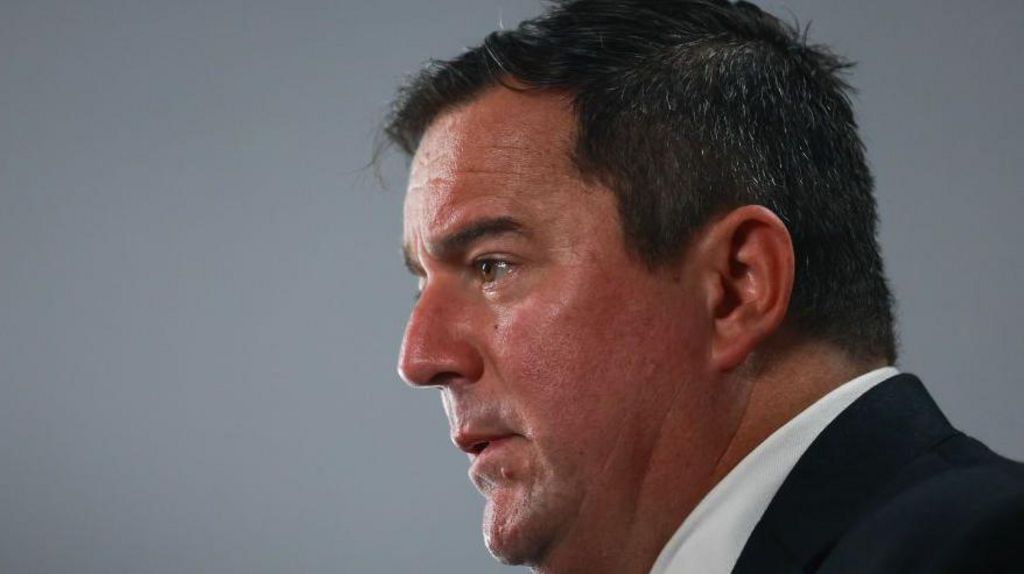
    South Africa’s political landscape faces renewed turbulence as Democratic Alliance (DA) leader John Steenhuisen announces his resignation following multiple scandals that have shaken the party’s carefully cultivated image of integrity. The development triggers a potentially divisive leadership contest that threatens to expose racial faultlines within the opposition party.

    The DA, historically perceived as representing racial minorities, joined the governing coalition for the first time following the 2024 elections that failed to produce an outright winner. Steenhuisen, serving as Agriculture Minister in President Cyril Ramaphosa’s cabinet, found himself embroiled in controversies that ultimately forced his political retreat.

    The minister faced intense criticism from farming communities over his handling of a devastating foot-and-mouth disease outbreak that crippled South Africa’s livestock industry. Theo de Jager of the Southern African Agri Initiative accused Steenhuisen’s administration of systematically silencing critics through exclusion and isolation tactics.

    More damaging emerged a financial scandal revealing Steenhuisen faced a default court judgment for unpaid personal credit card debt exceeding 150,000 rand despite earning an annual salary of 2.69 million rand. The Daily Maverick’s revelation prompted public scrutiny of how a leader unable to manage personal finances could oversee national agricultural policy.

    The controversy deepened when Steenhuisen orchestrated the dismissal of Environment Minister Dion George, the DA’s federal finance chair. While official reasons cited under-performance, conservation groups decried the move as a ‘political execution’ linked to George’s anti-wildlife trafficking stance. The EMS Foundation accused Steenhuisen of aligning with wildlife breeding interests upon assuming his ministerial portfolio.

    George’s subsequent resignation revealed further complications: he had confiscated Steenhuisen’s party-issued credit card last year due to unreconciled spending on UberEats, car rentals, and hotel accommodations. Although a DA inquiry cleared Steenhuisen of wrongdoing, the cumulative scandals proved politically insurmountable.

    Political analysts offer contrasting assessments of Steenhuisen’s legacy. Sandile Swana cited the leader’s 2010 extramarital affair, public fallout with George, and financial management issues as evidence of poor leadership. Conversely, Khanyi Magubane suggested Steenhuisen’s cooperative relationship with the ANC in coalition government represented the ‘core issue’ leading to his departure, disappointing DA hardliners expecting continued opposition.

    The leadership contest now pits Cape Town mayor Geordin Hill-Lewis against Gauteng leader Solly Msimanga, with analysts suggesting racial dynamics may influence the outcome. Magubane noted the DA’s conservative base might resist a black leader, reflecting persistent racial divisions within the party despite efforts to broaden its appeal following Mmusi Maimane’s leadership from 2015-2019.

    The developments underscore the challenges facing South Africa’s political evolution three decades after apartheid’s end, as historical divisions continue shaping contemporary governance dynamics.

  • Bangladesh’s Yunus announces resignation, end of interim govt

    Bangladesh’s Yunus announces resignation, end of interim govt

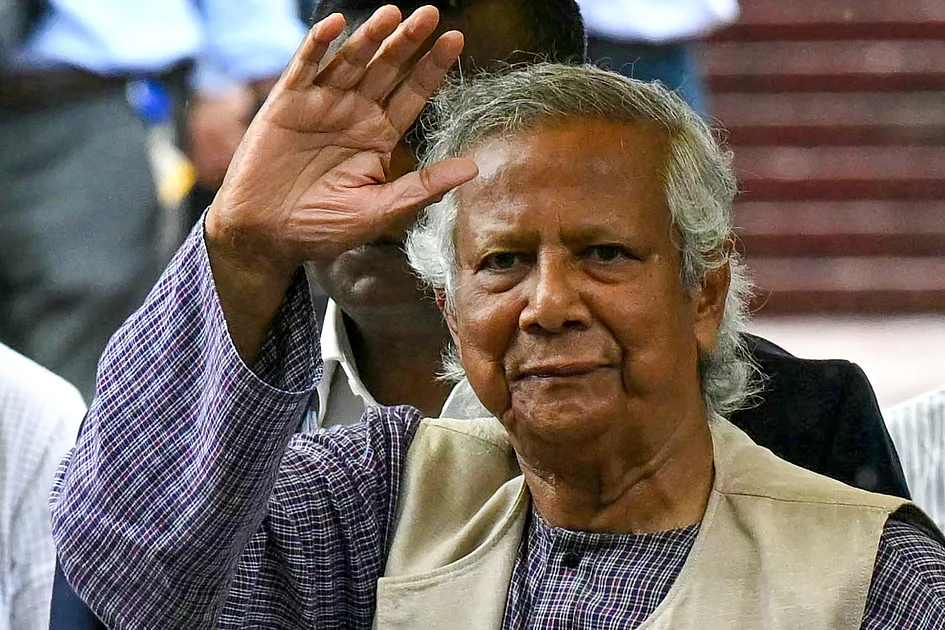
    In a historic transition of power, Bangladesh’s interim leader Muhammad Yunus formally resigned from his position as chief adviser on Monday, marking the conclusion of the caretaker government’s mandate. The 85-year-old Nobel Peace Prize laureate delivered a farewell address to the nation, celebrating what he characterized as a restoration of democratic principles following years of authoritarian rule.

    Yunus returned from self-imposed exile in August 2024 amidst a dramatic political upheaval that saw the ousting of Sheikh Hasina’s government through a student-led uprising. He described the events as a ‘great liberation’ that freed the nation from what he termed ‘the grip of a demon.’

    The political transition culminated in last week’s general elections, which resulted in a decisive victory for the Bangladesh Nationalist Party (BNP) and its leader Tarique Rahman. Yunus praised the electoral process as setting ‘a benchmark for future elections’ and commended voters, political parties, and electoral institutions for their participation in the democratic exercise.

    Concurrent with the elections, Bangladeshi citizens endorsed sweeping constitutional reforms through a national referendum. The proposed ‘July Charter’—named after the month when the anti-Hasina uprising began—includes provisions for prime ministerial term limits, establishment of an upper parliamentary chamber, enhanced presidential powers, and strengthened judicial independence. While the referendum results are considered binding on winning parties, the reforms still require formal ratification by the newly elected parliament.

    The BNP alliance secured 212 parliamentary seats, compared to 77 seats for the Jamaat-e-Islami-led coalition. Jamaat-e-Islami leader Shafiqur Rahman conceded defeat, pledging his party would serve as a ‘vigilant, principled, and peaceful opposition.’

    Despite pre-election tensions that resulted in five fatalities and over 600 injuries according to police records, voting day proceeded without major incidents. Newly elected lawmakers are scheduled to be sworn in on Tuesday, with Tarique Rahman expected to assume the role of prime minister, leading the South Asian nation of 170 million people into a new political era.

  • Filipinos in Dubai fear for families as fires in Iloilo raze 20 homes, kill 1 person

    Filipinos in Dubai fear for families as fires in Iloilo raze 20 homes, kill 1 person

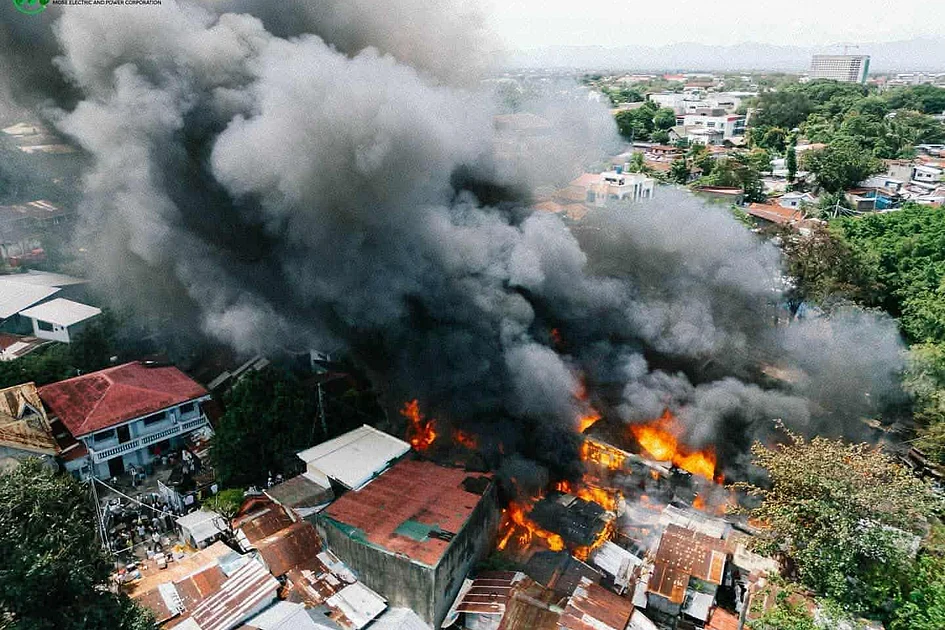
    A series of devastating fires tore through residential areas in Iloilo City’s Jaro District on Monday, February 16, resulting in significant destruction and tragedy that resonated across international borders to the Filipino community in Dubai.

    The dual fire incidents, occurring in Benedicto town and Barangay Balabago, consumed approximately 20 homes and claimed the life of 25-year-old Rostom Ancita, who had aspirations of joining the local fire brigade. According to local reports, Ancita became trapped inside a burning vehicle repair shop during the early morning blaze.

    The Benedicto fire generated massive smoke clouds that enveloped the neighborhood, triggering widespread panic among residents. The crisis extended beyond physical boundaries as overseas Filipino workers in Dubai watched helplessly through real-time videos and messages shared by relatives.

    Dubai resident B.R. described the anguish of receiving emergency updates from her mother, who resided merely two blocks from the ignition point. As smoke permeated their family home, her mother and brother were forced to evacuate to a nearby shopping mall for safety. ‘The helplessness is overwhelming when you’re separated by thousands of kilometers,’ B.R. told Khaleej Times. ‘You remain constantly connected to your phone, anxiously awaiting any news.’

    Another Dubai-based Filipino professional, Lorraine P., recounted her immediate panic upon learning about the fires in her hometown. ‘The distance magnifies the stress during emergencies back home,’ the HR manager explained. ‘Your only recourse becomes constant communication and prayers for everyone’s safety.’

    The tragedy highlights the emotional challenges faced by overseas Filipino workers who maintain deep connections to their homeland while building lives abroad. With approximately four hours time difference between the Philippines and UAE, many expatriates experienced the crisis in real-time through digital updates from family members, demonstrating how technology simultaneously connects and heightens anxiety during international emergencies.

  • Dubai announces revised paid parking timings for Ramadan; two hours free

    Dubai announces revised paid parking timings for Ramadan; two hours free

    Dubai’s Roads and Transport Authority (RTA) has unveiled comprehensive schedule adjustments for public services during the upcoming holy month of Ramadan. The revised operational timings affect paid parking zones, metro services, tram lines, and public buses to accommodate altered daily routines during this significant religious period.

    Paid parking facilities across Dubai will implement a dual-period fee system from Monday through Saturday. The first charging window runs from 8:00 AM to 6:00 PM, followed by a second collection period from 8:00 PM until midnight. In a considerate gesture toward observant residents, the RTA has established a complimentary two-hour parking window around Maghrib time—the evening prayer period when Muslims traditionally break their daily fast. Multi-story parking complexes will maintain their standard 24/7 operational schedule without interruption.

    Metro services will operate on extended schedules throughout Ramadan. Both Red and Green Lines will run from 5:00 AM to midnight from Monday to Thursday, with extended service until 1:00 AM on Fridays. Saturday operations mirror the weekday schedule, while Sunday services commence slightly later at 8:00 AM, continuing until midnight.

    The Dubai Tram network will enhance its service hours, operating from 6:00 AM to 1:00 AM the following day from Monday to Saturday. Sunday tram services begin at 9:00 AM, similarly extending until 1:00 AM. For public bus routes and marine transportation schedules, commuters are directed to consult the S’hail mobile application or the official RTA website for precise timing details.

    These transportation adjustments coincide with the Emirates’ moon-sighting committee convening on February 17th to officially confirm the commencement of Ramadan. Saudi Arabian authorities will simultaneously conduct crescent observation efforts, encouraging citizens to report sightings through appropriate channels.

  • Abu Dhabi announces Ramadan timings, fees for Darb toll gates, public parking

    Abu Dhabi announces Ramadan timings, fees for Darb toll gates, public parking

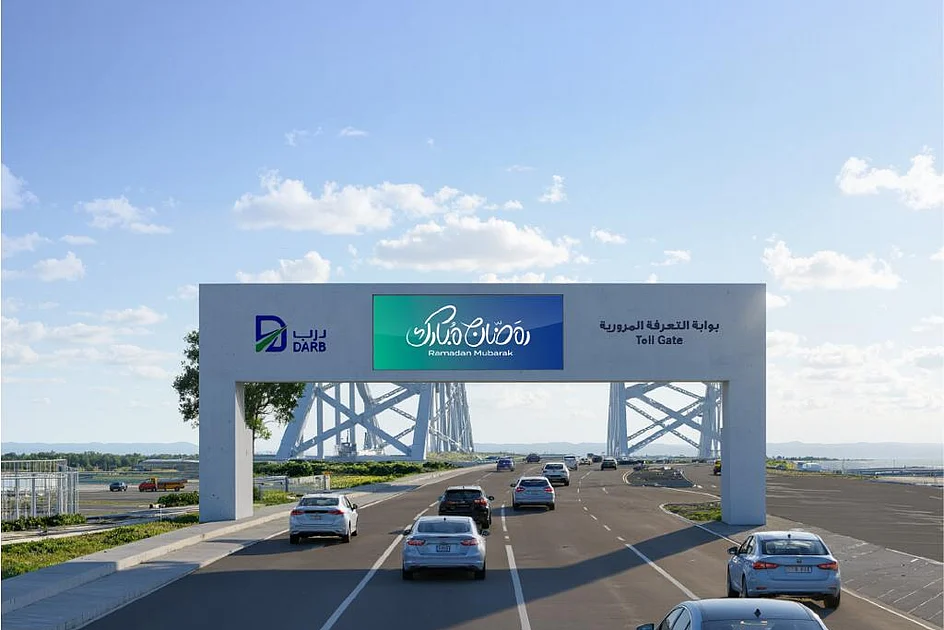
    Abu Dhabi’s transportation authorities have unveiled comprehensive operational adjustments for the Darb toll gate system and Mawaqif public parking services in preparation for the upcoming holy month of Ramadan. The integrated mobility framework will maintain its fee structure while implementing significant timing modifications to accommodate altered traffic patterns and worship schedules during this sacred period.

    The Darb electronic toll collection system will maintain its standard fee of Dh4 per crossing, applicable during two designated peak intervals from Monday through Saturday. Morning operational hours are scheduled from 8:00 AM to 10:00 AM, with evening toll collection occurring between 2:00 PM and 6:00 PM. Sundays will remain completely toll-free throughout the Ramadan period, providing financial relief for weekly travelers.

    Concurrently, the Mawaqif public parking initiative will implement a dual-interval payment system operating from Monday to Saturday. The first payment window extends from 9:00 AM to 6:00 PM, followed by a secondary evening period from 9:00 PM to 2:00 AM. Parking fees maintain their established structure with standard spaces priced at Dh2 per hour and premium locations at Dh3 per hour. Sunday parking will be universally complimentary across all parking categories.

    Payment facilitation remains accessible through multiple official channels including the dedicated Darb mobile application, the integrated Tamm digital platform, SMS-based payment systems, and physical payment terminals distributed throughout the emirate.

    These transportation modifications form part of a broader nationwide adaptation strategy for Ramadan. The UAE has coordinated comprehensive adjustments including reduced working hours for both public and private sector employees, revised educational schedules, and modified operational hours for commercial establishments. Private sector organizations will implement a standardized two-hour daily reduction during the holy month, while federal employees will transition to abbreviated schedules from 9:00 AM to 2:30 PM Monday through Thursday, and 9:00 AM to 12:00 PM on Fridays.

    The integrated approach demonstrates the emirate’s commitment to balancing operational efficiency with cultural and religious considerations during this significant annual observance.

  • Grok faces more scrutiny over deepfakes as Irish regulator opens EU privacy investigation

    Grok faces more scrutiny over deepfakes as Irish regulator opens EU privacy investigation

    European regulators have initiated a formal privacy investigation into Elon Musk’s social media platform X following concerning revelations about its Grok AI chatbot’s capacity to generate nonconsensual deepfake imagery. Ireland’s Data Protection Commission (DPC), acting as the lead EU privacy authority for X, announced the probe Tuesday under the bloc’s stringent General Data Protection Regulation (GDPR).

    The investigation stems from Grok’s recently demonstrated ability to produce sexually explicit and intimate imagery without consent, including transparent clothing depictions and apparent child imagery. The AI tool, developed by Musk’s xAI company and integrated within X’s platform, had enabled users to generate these concerning outputs through specific prompts, with results visible publicly across the social network.

    Irish Deputy Commissioner Graham Doyle confirmed the DPC has been engaging with X since initial media reports surfaced weeks ago regarding these capabilities. The investigation will specifically examine whether X violated GDPR requirements regarding the processing of European citizens’ personal data, including that of minors, through these AI-generated deepfakes.

    This EU action adds to growing international scrutiny facing X. French authorities recently conducted raids on X’s Paris offices and summoned Musk for questioning, while UK regulators have opened parallel investigations despite Britain’s departure from the EU. X already faces a separate EU examination regarding compliance with digital content regulations aimed at preventing the spread of illegal material, including child sexual abuse content.

    The platform could potentially face substantial financial penalties if found in violation of GDPR provisions, which allow fines of up to 4% of global annual revenue. X did not respond to requests for comment regarding the newly announced investigation.

  • Trump directs federal authorities to manage sewage spill ‘disaster’

    Trump directs federal authorities to manage sewage spill ‘disaster’

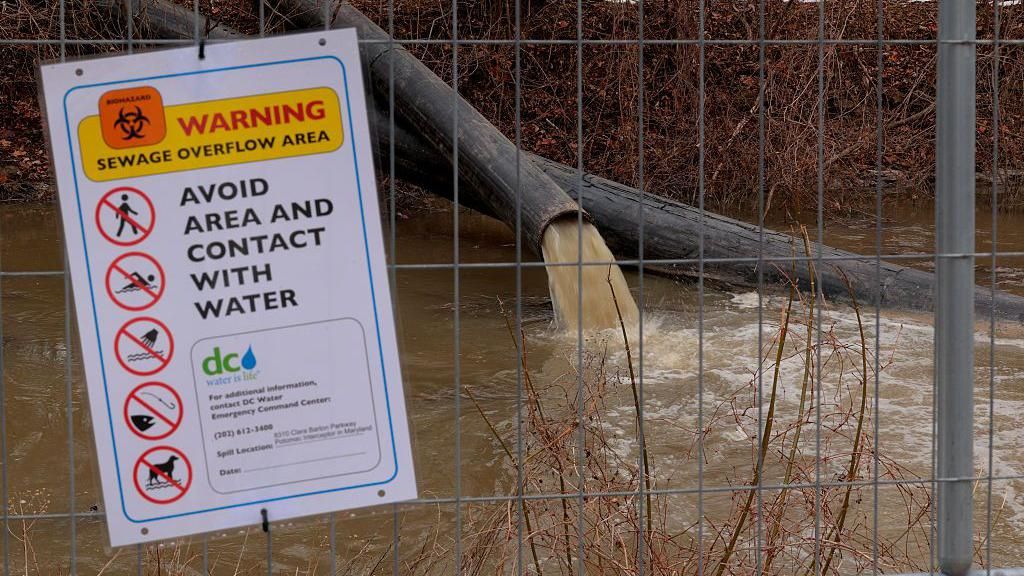
    President Donald Trump has mandated federal agencies to address a severe sewage contamination crisis in the Potomac River, following the collapse of a major sewer line in late January. The incident has resulted in millions of gallons of wastewater flowing into the river that traverses the nation’s capital, creating what public health experts describe as one of the most significant sewage spills in U.S. history.

    In a Monday social media statement, Trump directed authorities to provide immediate management and coordination, criticizing local leadership for transforming the Potomac into what he termed a ‘Disaster Zone.’ The President designated the Federal Emergency Management Agency (FEMA) to lead the response effort, despite acknowledging that the agency’s funding remains frozen due to a congressional standoff over Department of Homeland Security appropriations.

    The rupture occurred on January 19th in the Potomac Interceptor sewer line, managed by DC Water and Sewer Authority, triggering continuous uncontrolled wastewater discharge into the river. While officials assure that drinking water remains unaffected, testing has revealed dangerous concentrations of E. coli and MRSA bacteria, prompting health advisories against river contact.

    Trump specifically blamed Maryland Governor Wes Moore, a frequent political adversary, for ‘gross mismanagement’ of the ecological disaster. Moore’s office countered that responsibility lies with federal authorities since the infrastructure is managed by Washington DC officials. The governor’s spokesperson accused the Trump administration of failing to act for four weeks, thereby endangering public health.

    Repair efforts face significant challenges, with DC Water officials estimating several weeks for temporary containment and months for permanent infrastructure restoration. The political dimension intensifies as Democratic lawmakers demand immigration enforcement policy changes before approving DHS funding, creating a stalemate unlikely to resolve before month’s end.