作者: admin

  • Lunar New Year 2026: Celebrations around the world

    Lunar New Year 2026: Celebrations around the world

    The 2026 Lunar New Year has ignited worldwide celebrations, demonstrating the remarkable cultural permeation of this ancient tradition across continents. From the neon-lit skyscrapers of Hong Kong to the vibrant barrios of Buenos Aires, diverse communities have embraced the Spring Festival with distinctive local interpretations while preserving its core symbolism.

    In Asia, the epicenter of celebrations, traditional practices dominated with families gathering for reunion dinners featuring symbolic dishes like fish for abundance and dumplings for wealth. Hong Kong’s famous night parade returned with elaborate floats and international performance troupes, while Seoul witnessed thousands of handwritten wishes hanging at ancient temples.

    The Western Hemisphere showcased innovative adaptations of the tradition. Buenos Aires’ Chinese community collaborated with local tango dancers for a unique cultural fusion performance in the city’s iconic streets. North American cities from Vancouver to New York hosted spectacular lantern festivals featuring both traditional designs and contemporary artistic interpretations.

    European celebrations highlighted growing intercultural engagement, with London’s Trafalgar Square hosting its largest ever dragon dance performance and Paris incorporating the festival into its official cultural calendar for the first time. The global spread reflects both diaspora communities maintaining traditions and increasing mainstream appreciation for lunar calendar-based festivities.

    Digital technology played an unprecedented role in connecting celebrations worldwide, with virtual reality temple visits and AI-generated zodiac predictions gaining popularity alongside traditional customs. The 2026 observances particularly emphasized environmental consciousness, with many cities implementing eco-friendly firecracker alternatives and sustainable decoration initiatives.

  • Majority of Canadians concerned over US threat to sovereignty: survey

    Majority of Canadians concerned over US threat to sovereignty: survey

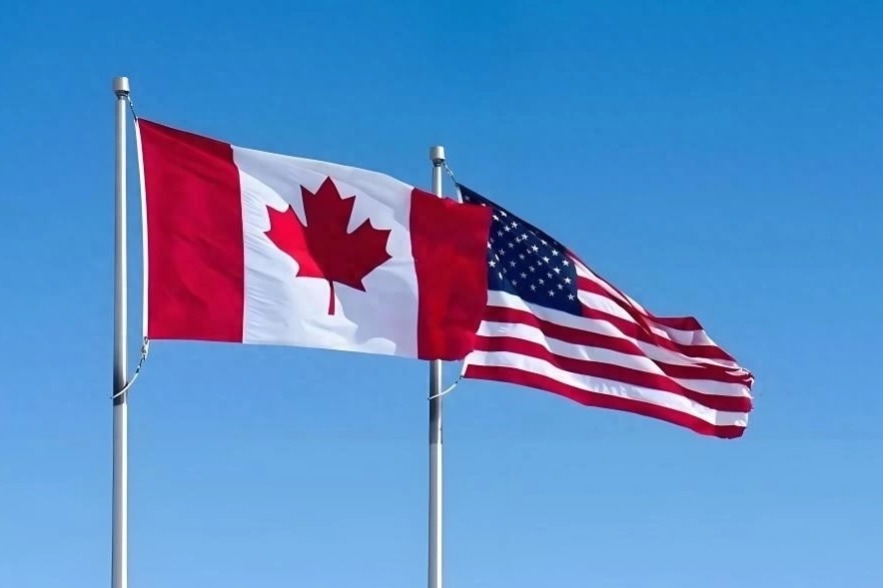
    A comprehensive national survey conducted by Nanos Research has uncovered significant Canadian apprehension regarding potential threats to national sovereignty emanating from the United States. The study, reported by CTV News, indicates that nearly two-thirds of Canadians express substantive concerns about American influence over their nation’s autonomous decision-making capabilities.

    The research data demonstrates that 64% of surveyed Canadians maintain active concerns about US impacts on Canadian sovereignty, while only 19% explicitly denied such concerns. A notable 17% of respondents adopted a neutral stance on the matter, reflecting the complex nature of Canada-US relations.

    Demographic analysis reveals distinctive patterns in sovereignty concerns across population segments. Senior citizens aged 55 and above demonstrate the most pronounced levels of apprehension, suggesting generational differences in perceptions of American influence. The survey further identified a significant gender disparity, with 69.3% of female respondents expressing concerns compared to 57.9% of male participants.

    This comprehensive study illuminates the evolving dynamics within the Canada-United States relationship, traditionally characterized as one of the world’s most stable bilateral partnerships. The findings suggest underlying tensions in how Canadians perceive their nation’s independence within the North American geopolitical framework, potentially influencing future diplomatic engagements and policy decisions between the two neighboring nations.

  • 3 dead, 3 critically injured in shooting at US Rhode Island arena

    3 dead, 3 critically injured in shooting at US Rhode Island arena

    A horrific shooting incident shattered the afternoon calm at a Rhode Island ice skating arena on Monday, resulting in three fatalities and three individuals fighting for their lives with critical injuries. The tragedy unfolded at the Dennis M. Lynch Arena in Pawtucket during a youth hockey event that had drawn students and parents from multiple schools, creating a typically festive atmosphere that turned to chaos.

    According to Pawtucket Police Chief Tina Goncalves, law enforcement officers rushed to the scene following multiple reports of active gunfire. Preliminary investigations suggest the gunman may have specifically targeted members of his own family during the assault. Among the deceased victims was identified as a young girl, though names have not been officially released pending family notifications.

    The suspected shooter died from an apparent self-inflicted gunshot wound following the attack, adding to the death toll. Three other victims sustained serious gunshot wounds and were transported to area hospitals where they remain in critical condition, according to official statements.

    The arena, typically home to community sports and recreational activities, became the latest site of American gun violence that has increasingly plagued public spaces. The incident has sent shockwaves through the Pawtucket community and beyond, raising renewed concerns about public safety at youth sporting events and family gatherings.

    Local authorities have launched a comprehensive investigation into the circumstances surrounding the shooting, including the suspect’s motives, acquisition of firearms, and any potential warning signs that might have preceded the tragedy. Counseling services are being made available to witnesses and affected community members as the small New England city grapples with the aftermath of this devastating event.

  • What do Iran, US seek from upcoming new round of talks?

    What do Iran, US seek from upcoming new round of talks?

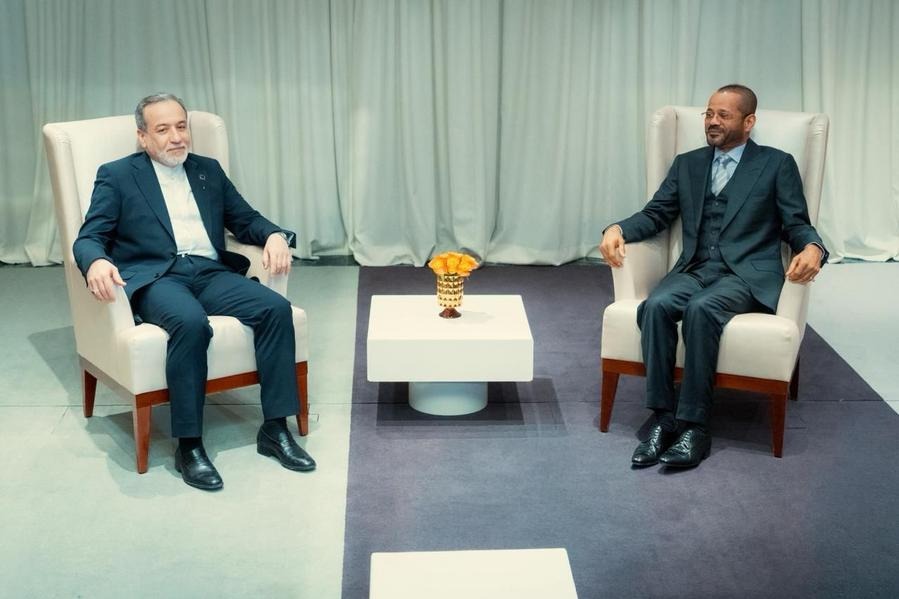
    Geneva has become the focal point for renewed diplomatic efforts as an Iranian delegation, headed by Foreign Minister Seyed Abbas Araghchi, arrives for a second round of indirect nuclear negotiations with the United States. Scheduled for Tuesday, these critical discussions are being facilitated by Omani mediators, continuing the dialogue initiated in Muscat on February 6th.

    The American contingent is led by President Donald Trump’s special envoy Steve Witkoff alongside senior advisor Jared Kushner. This meeting occurs against a backdrop of escalating military posturing and fundamental disagreements that have plagued US-Iranian relations since the collapse of the 2015 nuclear accord.

    The core positions of both nations remain substantially divergent. Washington maintains that any viable agreement must encompass a complete prohibition on uranium enrichment, disposal of existing enriched material, constraints on long-range missile development, and cessation of support for regional proxy forces. These demands have found vocal support from Israeli Prime Minister Benjamin Netanyahu, who has expressed skepticism about potential diplomatic breakthroughs.

    Tehran, while expressing willingness to reach a “fair and equitable” arrangement that would provide sanctions relief, has firmly established two non-negotiable boundaries: preservation of its right to peaceful nuclear energy and maintenance of its defensive missile capabilities. Iranian President Masoud Pezeshkian has repeatedly emphasized that Iran does not pursue nuclear weapons and is prepared to undergo verification processes, while simultaneously rejecting what he characterizes as excessive demands and aggression.

    The current impasse originates from the disintegration of the Joint Comprehensive Plan of Action (JCPOA), which began when the Trump administration unilaterally withdrew from the agreement in 2018 and reinstated comprehensive sanctions. Iran responded by incrementally reducing its compliance, eventually enriching uranium to 60% purity—far exceeding the JCPOA’s 3.67% limit—while maintaining the peaceful nature of its nuclear program.

    The diplomatic landscape further deteriorated following Israel’s surprise strikes on Iranian facilities in June 2025 and subsequent military engagements, during which American forces targeted Iranian nuclear installations. The International Atomic Energy Agency had previously documented Iran’s possession of 440.9 kg of uranium enriched to 60%, a stockpile deemed unacceptable by American and Israeli authorities.

    Military tensions have intensified considerably in recent weeks, with the United States deploying the USS Abraham Lincoln carrier strike group to waters near Iran and President Trump confirming the dispatch of the USS Gerald R. Ford, the world’s largest aircraft carrier, to the region. Anonymous American officials have revealed preparations for potential military operations against Iran, while reports indicate Trump’s commitment to support Israeli strikes on Iranian missile facilities should negotiations fail.

    Iran has responded with unequivocal warnings of forceful retaliation against any aggression, specifically highlighting the vulnerability of American military bases throughout the Middle East. The Islamic Revolution Guard Corps commenced live-fire exercises in the strategically vital Strait of Hormuz, demonstrating combat readiness and the capability to leverage Iran’s geopolitical position to protect its national interests.

  • China celebrates Spring Festival with fusion of tradition, technology

    China celebrates Spring Festival with fusion of tradition, technology

    As China welcomed the Year of the Horse in 2026, the nation’s Spring Festival celebrations showcased a remarkable synthesis of centuries-old cultural traditions and advanced technological innovations, creating a uniquely modern expression of ancient customs.

    In Chun’an county, Zhejiang province, over 200 performers revived the Southern Song Dynasty (1127-1279) tradition of Bamboo Horse Dancing, a National Intangible Cultural Heritage item since 2014. The vibrant spectacle featured dancers adorned in traditional attire with colorful cloth-covered bamboo steeds fastened around their waists, symbolizing the horse’s attributes of speed, endurance, and enterprising spirit in Chinese zodiac symbolism.

    Pan Yongxia, director of the Chun’an County Cultural Center, explained that this year’s celebration marked the largest-ever gathering of bamboo horse dancers from across the county. ‘Performances have evolved from small groups into large-scale square dances with hundreds of participants,’ Pan noted. ‘By incorporating modern elements like street dance, we’ve made this traditional art more accessible and appealing to younger generations.’

    Eighty-six-year-old Fang Bingkun, a former representative inheritor of the art form, emphasized the importance of balancing preservation with innovation. Over seven decades, he has documented traditional techniques while streamlining formations for contemporary audiences.

    Simultaneously, in Shenzhen—China’s southern technology hub—a spectacular drone show captivated approximately 200,000 spectators at the Window of the World theme park. Thousands of drones achieved centimeter-level precision to form a magnificent ‘ten thousand horses galloping’ display, complete with flowing manes, hoof prints, and the Chinese character for ‘horse,’ all synchronized with traditional drumbeats and hoof sound effects.

    Huang Xing, brand manager of Shenzhen DAMODA Intelligent Control Technology, explained their technological breakthrough: ‘Upgraded algorithms calculate and compensate for any missing parts of the image in real time, allowing perfect synchronization across tens of thousands of drones.’

    The technological celebration resonated across generations. Younger audiences praised the 3D dynamic effects as more visually stunning and environmentally friendly than traditional fireworks, while elderly viewers appreciated the clear, noise-free spectacle that still incorporated familiar cultural symbols like lion dances and the character ‘Fu’ (blessing).

    This fusion of tradition and technology is spreading globally, with DAMODA’s drone shows reaching over 100 Chinese cities and more than 50 countries worldwide. The company continues to enhance image clarity, variety, and duration while integrating drone technology with cultural tourism and night economy initiatives.

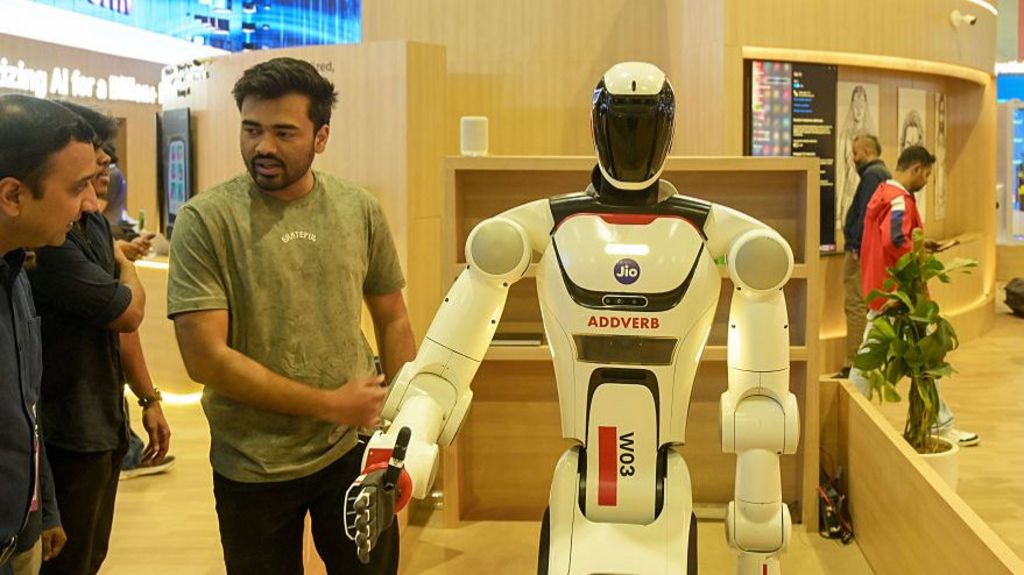
    China’s Spring Festival now represents a harmonious coexistence of millennium-old agricultural-era customs—such as posting couplets and solving lantern riddles—with AI-enhanced festivities including robot New Year greetings and robotic arms brewing coffee at temple fairs, collectively carrying the spirit of the horse into a new technological era.

  • Long queues and confusion mar first day of India’s landmark AI summit

    Long queues and confusion mar first day of India’s landmark AI summit

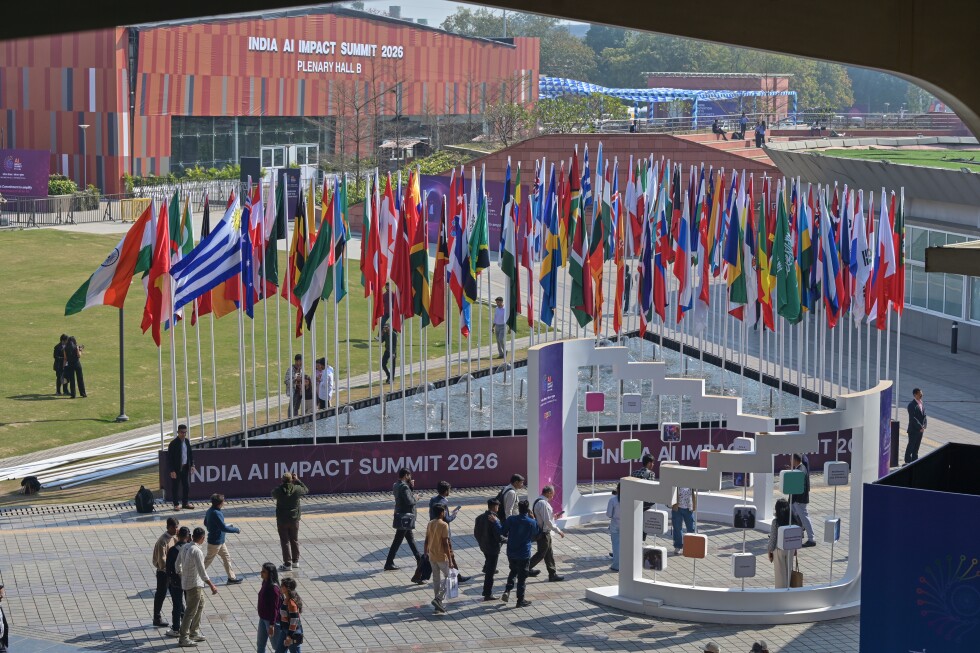
    India’s highly anticipated AI Impact Summit, inaugurated by Prime Minister Narendra Modi as a groundbreaking gathering for the Global South, descended into operational disarray on its opening day in Delhi. The event, touted as a historic convergence of global technology leaders including OpenAI’s Sam Altman and Alphabet’s Sundar Pichai, instead became characterized by widespread complaints of organizational failure.

    Attendees faced extreme logistical challenges including hours-long security queues, venue overcrowding, and abrupt session closures that left delegates stranded outside exhibition halls. Multiple startup founders reported significant losses, with NeoSapiens founder Dhananjay Yadav alleging theft of proprietary wearable technology from their secured exhibition stall. The situation was compounded by inadequate facilities, with food vendors accepting only cash payments—particularly problematic for international visitors accustomed to digital transactions.

    Prime Minister Modi’s opening address emphasized India’s ambition to showcase “extraordinary AI potential and innovation” and develop solutions “not just for India but for the world.” Information Technology Minister Ashwini Vaishnaw similarly highlighted the summit’s mission to evaluate AI’s dual potential for benefit and harm on human society.

    However, these aspirations contrasted sharply with on-ground realities. Security sweeps preceding Modi’s appearance triggered full evacuations, while last-minute scheduling changes left speakers uncertain about their session timings. Healthcare AI founder Soumya Sharma noted that despite some excellent technical discussions, operational failures undermined India’s opportunity to present itself as a mature AI ecosystem, observing that “unless we get the basics right, we cannot claim to be utilizing AI to its fullest.”

    The disorganization raised questions about India’s capacity to host international technology events of this scale, with many participants expressing frustration over substantial investments in travel and exhibition space that were compromised by poor management. As of reporting time, summit organizers and government authorities had not issued any public response to the widespread criticisms.

  • To aficionados, fungi are freaky, mystical and overlooked. They’re helping scientists learn more

    To aficionados, fungi are freaky, mystical and overlooked. They’re helping scientists learn more

    Beneath the canopy of California’s Manzanita trees, mycologist Jessica Allen embarked on a scientific treasure hunt—searching for the elusive Manzanita butter clump, a rare yellow mushroom last documented in Napa County two years prior. Yet within moments, her attention diverted to a dazzling microcosm thriving on nearby rocks: intricate lichens bursting with otherworldly shapes and colors.

    This scene at UC Davis’ McLaughlin Reserve exemplifies a growing movement where professional scientists and amateur naturalists collaborate to protect Earth’s most overlooked kingdom—fungi. Despite comprising an estimated 2.5 million species and contributing $54 trillion annually to the global economy through medicine, food, and ecosystem services, fungi remain the neglected orphans of conservation efforts.

    “It’s a pretty exciting time in fungal conservation,” stated Allen, who serves as mycologist for NatureServe, a biodiversity data hub. While Europe has prioritized fungal protection for decades, the United States trails significantly—only two fungal species (both lichens) currently receive federal Endangered Species Act protection.

    The conservation challenge stems from fungi’s enigmatic nature. Most species exist primarily as hidden mycelial networks, emerging as mushrooms only under precise conditions. Scientists have documented merely 155,000 species—approximately 6% of estimated diversity—leaving vast knowledge gaps regarding distribution, threats, and conservation needs.

    Citizen scientists bridge this critical information void. Organizations like the California Lichen Society conduct field excursions where enthusiasts document specimens through platforms like iNaturalist and Mushroom Observer. These amateur researchers, including retired mechanic Ken Kellman and chemist Larry Cool, provide invaluable data that helps professionals track biodiversity and identify at-risk species.

    Threats to fungal diversity are multifaceted: climate change alters temperature and precipitation patterns; development and logging destroy habitats; pollution degrades air and soil quality; and overharvesting depletes medicinal species like Europe’s endangered quinine conk.

    Gregory Mueller, co-chair of the IUCN’s fungal conservation committee, notes that 411 of 1,300 evaluated fungi species globally face extinction risk. “The U.S. is still far behind,” he acknowledged, “but community science initiatives are driving change.”

    Though Allen’s group didn’t locate their target species that day, the expedition exemplified conservation’s incremental progress—each documented lichen and mushroom contributing to understanding Earth’s essential yet underappreciated fungal networks.

  • Chinese researchers create advanced transistor with ultralow power consumption

    Chinese researchers create advanced transistor with ultralow power consumption

    A groundbreaking advancement in semiconductor technology has emerged from China, where researchers have successfully developed the world’s smallest ferroelectric transistor operating at ultralow power consumption levels. This innovation, detailed in a recent publication in Science Advances, addresses one of the most persistent challenges in modern computing architecture.

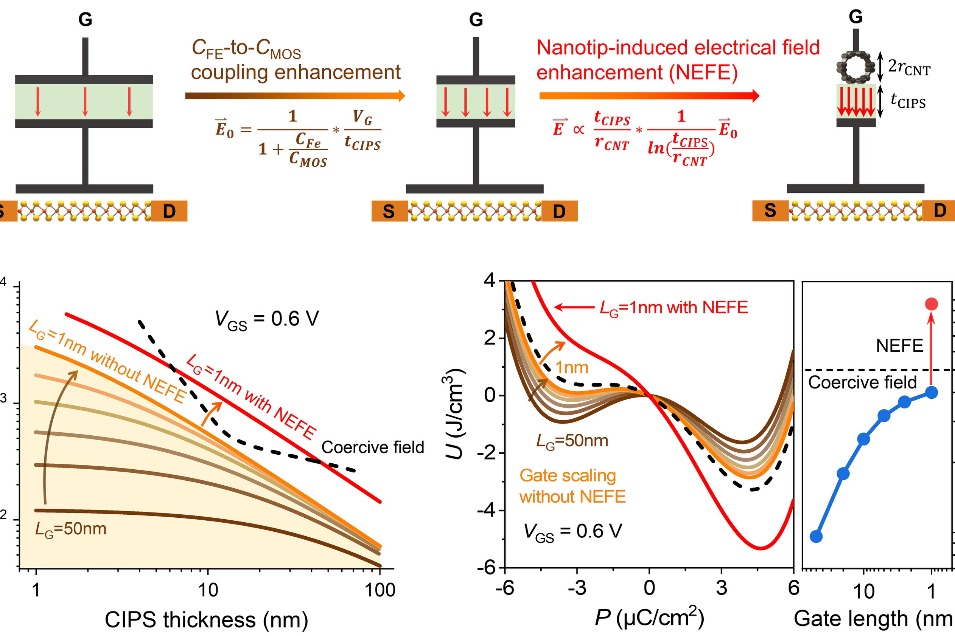
    The research team from Peking University, under the leadership of Senior Researcher Qiu Chenguang and Academician Peng Lianmao of the Chinese Academy of Sciences, has engineered nano-gate ferroelectric transistors that operate at a remarkably low voltage of just 0.6 volts. This achievement is particularly significant as it bridges the critical voltage compatibility gap between logic chips, which typically operate at 0.7 volts, and mainstream non-volatile memory components like NAND flash that previously required 5 volts or higher for write operations.

    This voltage disparity has long forced chip designers to incorporate complex voltage conversion circuits, resulting in substantial power wastage, increased space requirements, and significant data transfer bottlenecks. In contemporary AI chips, this incompatibility consumes 60-90% of total power allocation solely for data transfer rather than computational processes.

    The newly developed technology shrinks the physical gate size to an unprecedented 1 nanometer while demonstrating exceptional memory performance. Science Advances reviewers have recognized that this breakthrough represents the first successful harmonization of voltage requirements between ferroelectric memory devices and logic transistors.

    According to Qiu Chenguang, this innovation enables seamless data transfer between memory and computing units at identical low voltages, eliminating previous barriers while maintaining ultra-low power consumption during high-speed interactions. The underlying technological principle demonstrates universal applicability across mainstream ferroelectric materials and compatibility with standard industrial manufacturing processes.

    The technology holds particular promise for applications in large model inference, edge intelligence systems, wearable devices, and Internet of Things terminals, potentially revolutionizing energy efficiency across multiple technology sectors.

  • India eyes $200B in data center investments as it ramps up its AI hub ambitions

    India eyes $200B in data center investments as it ramps up its AI hub ambitions

    India has unveiled ambitious plans to attract approximately $200 billion in data center investments within the coming years, positioning itself as a pivotal global artificial intelligence hub. Electronics and Information Technology Minister Ashwini Vaishnaw announced this strategic initiative during New Delhi’s AI Impact Summit, which has gathered over 20 global leaders and technology industry executives.

    The substantial investment drive underscores India’s emerging role as a critical technology and talent base in the international competition for AI supremacy. This infrastructure expansion promises to deliver high-value digital assets and foreign capital at an unprecedented scale, potentially accelerating the nation’s digital transformation objectives.

    This development occurs amid worldwide governmental efforts to leverage AI’s economic potential while addressing challenges including workforce disruption, regulatory frameworks, and the concentration of computational resources among wealthy nations and corporations.

    Minister Vaishnaw emphasized India’s growing reputation as “a trusted AI partner to Global South nations seeking open, affordable and development-focused solutions.” The approach prioritizes measurable real-world impacts over elite technological experimentation, with the government recently implementing long-term tax incentives for data centers to ensure policy stability and attract international investment.

    Major technology corporations have already demonstrated confidence in India’s AI ecosystem. Google committed $15 billion over five years to establish its inaugural AI hub within the country, while Microsoft announced its largest Asian investment totaling $17.5 billion to advance cloud and AI infrastructure. Amazon has similarly pledged $35 billion by 2030 to expand AI-driven digitization initiatives.

    Infrastructure development forms the cornerstone of India’s strategy, with the government operationalizing a shared computing facility featuring over 38,000 graphics processing units. This resource enables startups, researchers, and public institutions to access advanced computing capabilities without substantial initial investments.

    Concurrently, India is advancing sovereign foundational AI models trained on indigenous languages and local contexts. Some models already meet global benchmarks and compete with established large language models in specific applications, according to Vaishnaw.

    The nation aims to actively participate in global AI governance rather than merely accepting external regulations, seeking to establish practical, implementable norms while expanding its international AI services presence. The minister described India’s approach as “self-reliant yet globally integrated” across applications, models, semiconductors, infrastructure, and energy systems.

    Workforce development represents another critical component, with the government implementing AI education programs across universities, skill development initiatives, and digital platforms to create an AI-ready talent pool. Widespread 5G connectivity and a technologically adept young population are expected to accelerate AI adoption rates.

    Despite the optimistic outlook, balancing innovation with appropriate safeguards remains challenging as AI permeates sensitive sectors including governance, healthcare, and finance. Vaishnaw outlined a comprehensive strategy involving implementable global frameworks, trusted AI infrastructure, misinformation regulation, and enhanced human and technical capabilities.

    “The future of AI should be inclusive, distributed and development-focused,” Vaishnaw concluded, envisioning India as a major global provider of AI services in the near future.

  • Will Israel and Trump force the ICC to drop the Netanyahu arrest warrant?

    Will Israel and Trump force the ICC to drop the Netanyahu arrest warrant?

    The International Criminal Court (ICC) confronts an unprecedented institutional crisis following its 2024 issuance of arrest warrants for Israeli Prime Minister Benjamin Netanyahu and Defense Minister Yoav Gallant. This judicial action triggered a coordinated campaign of financial sanctions and visa restrictions from both Israel and the United States, targeting the court’s leadership and personnel in what experts describe as an existential threat to international justice mechanisms.

    According to ICC specialist Professor Kevin Jon Heller of the University of Copenhagen’s Centre for Military Studies, the current sanctions represent the most severe challenge in the court’s history. Since February 2025, the Trump administration has imposed sanctions against Chief Prosecutor Karim Khan, his deputies, nine judges, the UN’s Palestine rapporteur, and three Palestinian NGOs connected to the investigation.

    The legal pathway to these warrants spanned 15 years of complex jurisdictional battles, beginning with Palestine’s 2015 accession to the Rome Statute. Heller detailed how successive prosecutors navigated political pressures and legal hurdles, with current prosecutor Khan inheriting an investigation with zero dedicated staff or budget in 2021. Despite these constraints, Khan prioritized the Palestine investigation years before the October 7 attacks, reallocating resources from other cases to advance the inquiry.

    The investigation employed groundbreaking methodologies including artificial intelligence analysis of open-source evidence, satellite imagery, encrypted witness submissions, and incriminating statements from suspects themselves. An unprecedented external expert panel provided independent validation of evidence, strengthening the warrant applications that ultimately received unanimous judicial approval for approximately 95% of requested charges.

    Israel has mounted three legal challenges attempting to invalidate the warrants, including jurisdictional arguments and claims of prosecutor bias. Heller characterizes these as legally weak, particularly the attempt to disqualify Khan, noting the prosecutor had already voluntarily stepped aside months earlier pending unrelated misconduct investigations.

    The current crisis echoes historical tensions between the US and ICC, which Heller attributes to American unwillingness to subject its citizens to international jurisdiction. While the US supported court actions against adversaries like Sudan’s Omar al-Bashir and Russia’s Vladimir Putin, investigations involving American allies or potential US personnel triggers aggressive opposition.

    The prospect of institutional sanctions against the court itself represents a “doomsday scenario” that could cripple basic operations including electricity, water, and internet services. Heller suggests the ICC’s survival would depend on member states providing extraordinary support, though he maintains that domestic courts using universal jurisdiction represent the future of international criminal justice rather than the politically constrained international system.