作者: admin

  • Cross-Strait bonds shine in Spring Festival fireworks show

    Cross-Strait bonds shine in Spring Festival fireworks show

    A spectacular pyrotechnic spectacle illuminated the night sky on Tuesday as the coastal city of Xiamen in Fujian province and neighboring Kinmen island jointly hosted their annual Spring Festival fireworks display. The 30-minute exhibition, synchronized across both locations separated by less than two kilometers at their closest point, marked the commencement of the Year of the Horse with brilliant bursts of color reflected on the waters between them.

    This cross-Strait tradition, established in 1987, has evolved into a powerful symbol of cultural connectivity between mainland China and Taiwan. Waterfront areas on both sides attracted substantial crowds who gathered to witness the dazzling show accompanied by festive musical arrangements. Kinmen residents further enriched the celebrations with traditional lion dances, believed to usher in prosperity and good fortune for the lunar new year.

    The event held profound significance for attendees from both communities. Chang Yang-yang, a Kinmen native attending for the third time, emphasized the familial symbolism: “When both sides set off fireworks together, it shows we are one family.” This sentiment was echoed by Han Ying-huan, a Taiwanese entrepreneur based in Xiamen, who noted the shared aspirations for cross-Strait integration and national rejuvenation.

    Parallel celebrations occurred between Fuzhou, Fujian’s capital, and Matsu island, where communities exhibited lanterns demonstrating common folk traditions for the 24th consecutive year. These cultural exchanges coincide with revitalized cross-Strait tourism, with 2025 recording over 5 million mutual visits—a six-year peak. Fujian resumed group tours to Kinmen and Matsu in 2024, with Shanghai recently announcing similar initiatives.

    The event aligns with Beijing’s commitment to enhancing cross-Strait travel facilitation and promoting grassroots cultural exchanges. Peng O-ya, a Taipei native residing in Xiamen for three decades, shared the experience with Taiwanese relatives via video call, expressing hope for continued collaboration: “I hope that compatriots across the Strait can work hand in hand, strive together in this promising era, and jointly fulfill their beautiful aspirations.”

  • Australia bans citizen trying to return from IS camp in Syria

    Australia bans citizen trying to return from IS camp in Syria

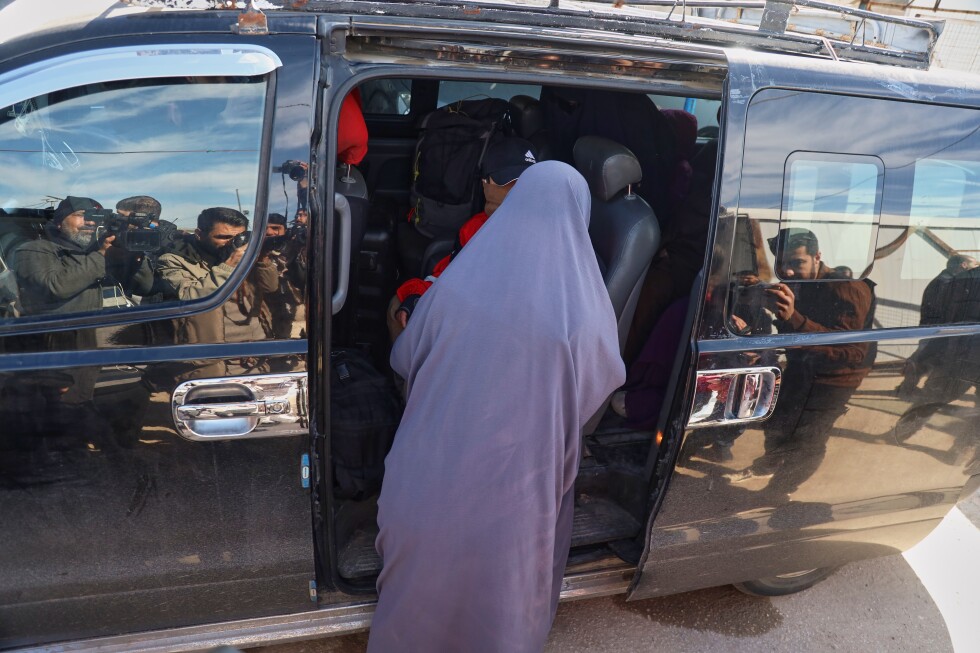
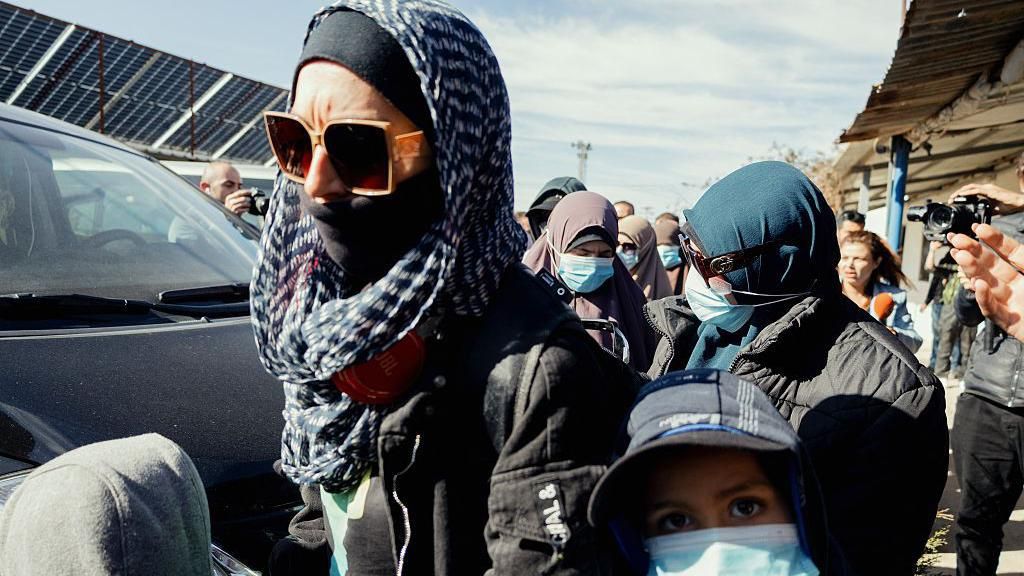
    In a decisive national security move, Australian authorities have imposed a two-year entry ban on a citizen allegedly associated with the Islamic State (IS) militant group. This individual was among 34 Australian women and children attempting to return home after their release from a Syrian detention camp earlier this week, only to be denied passage by Syrian officials citing unspecified technical complications.

    Home Affairs Minister Tony Burke confirmed the exclusion order on Wednesday, stating it was enacted based on security agency recommendations. He clarified that the remaining 33 individuals in the group—comprising 23 children and their guardians, believed to be wives and widows of IS combatants—did not meet the legal thresholds for similar bans.

    The Australian government maintains its firm stance against facilitating the repatriation of these citizens. Prime Minister Anthony Albanese emphasized this position during a press conference, asserting that those who voluntarily aligned themselves with a brutal ideology seeking to destroy Australia’s way of life must accept the consequences of their choices. “You make your bed, you lie in it,” he stated unequivocally.

    This stance has sparked legal concerns, with experts warning that Australia may be violating international obligations regarding citizens’ right to return. When questioned about reports that group members hold valid Australian passports, Albanese committed to not breaching domestic law but provided no further clarity on repatriation plans.

    The detainees from al-Roj camp in northern Syria represent part of a larger contingent of Australians held in Syrian detention facilities since IS’s territorial defeat in 2019. Opposition politicians have amplified security concerns, with Liberal Party Senator Jonno Duniam questioning the apparent inconsistency in risk assessment and offering legislative support to expand exclusion powers.

    Al-Roj camp, housing over 2,000 detainees from 40 nations including controversial figure Shamima Begum (whose British citizenship was revoked in 2019), continues to draw international attention. Camp director Hakmiyeh Ibrahim appealed via ABC to all nations with citizens in limbo, warning that children are being exposed to dangerous ideologies amid deteriorating conditions characterized by malnutrition and resource deprivation.

    Australia’s position aligns with several Western nations including France, the Netherlands, and the UK, which have similarly resisted large-scale repatriation of citizens from Syrian camps.

  • Is VAR any better in the rest of Europe’s top leagues?

    Is VAR any better in the rest of Europe’s top leagues?

    A continent-wide crisis is unfolding across European football as Video Assistant Referee (VAR) technology faces unprecedented criticism from fans, clubs, and officials alike. UEFA’s referees’ chief Roberto Rosetti has issued a stark warning against the trend of “microscopic” interventions that has fundamentally altered the game’s emotional landscape.

    Germany’s Bundesliga showcases the most visible fan resistance, where stadiums regularly display banners demanding “Videobeweis abschaffen” (Eliminate VAR). Augsburg supporters recently created a sea of protest messages, with one banner declaring “Football with VAR is like horse racing with donkeys.” Official data reveals Germany experiences more frequent VAR interventions than England, with error rates nearly identical—one mistake every 15.66 games compared to England’s 16.

    In Spain, structural changes including a dedicated team of 15 VAR specialists have failed to prevent controversy. Real Madrid’s television channel produces weekly referee criticism videos, while Barcelona recently issued formal complaints about “repeated damaging refereeing decisions.” The semi-automated offside technology has repeatedly malfunctioned, including one incident where it failed to identify an offside position, leading to the entire VAR team being temporarily stood down.

    Italy presents a unique case where stakeholders want more VAR intervention rather than less. Serie A advocates for expanding VAR’s scope to include corner reviews and second yellow cards. However, frustration grows as fans demand clearer guidelines and transparency, with Lazio supporters protesting what they call “audio justifications without logic or sense.”

    France’s Ligue 1 demonstrates the most frequent VAR involvement with interventions occurring in nearly every other match. The financial burden has become a significant concern, with the system costing €25 million per season amid collapsing TV rights deals. Club presidents have become the most vocal critics, with Lille’s Olivier Letang describing a “breakdown of trust” with officials.

    The common thread across all leagues is the fundamental question identified by UEFA’s Rosetti: football has forgotten why VAR was originally introduced. The technology designed to eliminate clear errors has instead created a culture of microscopic analysis, bureaucratic delays, and widespread confusion that distances supporters from the emotional core of the sport.

  • Trump appointee bans US states from regulating prediction markets

    Trump appointee bans US states from regulating prediction markets

    In a significant escalation of federal regulatory authority, the U.S. Commodity Futures Trading Commission (CFTC) has announced it will actively challenge state-level attempts to regulate prediction markets. Chairman Mike Selig, in a Wall Street Journal op-ed published Tuesday, declared his agency possesses exclusive jurisdiction over these markets and will support Crypto.com’s legal appeal against state regulations.

    Appointed by former President Donald Trump, Selig argued that prediction markets face ‘an onslaught of state-driven litigation’ with numerous states classifying them as gambling operations subject to local restrictions. ‘The CFTC will no longer sit idly by while overzealous state governments undermine the agency’s exclusive jurisdiction,’ Selig stated, characterizing prediction markets as ‘exciting products’ rather than gambling ventures.

    The commissioner grounded his position in the 1936 Commodity Exchange Act, asserting prediction markets constitute derivative instruments falling squarely within federal purview. Selig emphasized these platforms operate as ‘self-regulatory organizations examined and supervised by experienced CFTC staff,’ contrasting with critics who describe them as unregulated ‘Wild West’ operations.

    The announcement triggered immediate backlash from consumer protection advocates and state officials. Emily Peterson-Cassin of the Demand Progress Education Fund warned the move echoes regulatory failures preceding the 2008 financial crisis: ‘The CFTC is trying to let gamblers gamble on every aspect of life.’ Utah Governor Spencer Cox, a Republican, vowed to deploy ‘every resource’ to challenge the federal position, asserting prediction markets ‘are gambling – pure and simple’ that destroy lives.

    Critics highlighted potential conflicts of interest, noting Donald Trump Jr.’s advisory roles with major prediction market platforms Polymarket and Kalshi. The controversy sets the stage for a legal battle pitting federal regulatory authority against states’ traditional control over gambling regulation.

  • Australia bans a citizen with alleged links to militant IS group from returning from Syria

    Australia bans a citizen with alleged links to militant IS group from returning from Syria

    MELBOURNE, Australia — The Australian government has formally prohibited an Australian national with suspected affiliations to the Islamic State militant group from re-entering the country from a Syrian detention facility. This individual was part of a 34-member group comprising women and children who faced repatriation setbacks earlier this week.

    The group’s planned Monday flight from Damascus to Australia was abruptly halted by Syrian authorities due to procedural complications, forcing their return to the Roj detention camp. These camps have housed former IS combatants from various nations along with their families since the organization’s territorial defeat in Syria back in 2019. Despite this defeat, IS continues to pose security threats through sleeper cells executing attacks in both Syria and Iraq.

    Home Affairs Minister Tony Burke confirmed that security assessments identified one individual within the group as meeting the risk criteria for entry prohibition, notwithstanding their Australian citizenship. The minister refrained from disclosing the person’s identity or the duration of the exclusion order.

    “I can confirm that one individual in this cohort has been issued a temporary exclusion order, which was made on advice from security agencies,” Burke stated, while noting that other group members currently don’t meet the threshold for similar orders.

    Under Australian legislation, the Home Affairs Minister holds authority to impose temporary exclusion orders preventing high-risk citizens from returning for periods up to two years. This development occurs amid previous government-assisted repatriations of Australian women and children from Syrian camps, though some have returned through independent means.

    Prime Minister Anthony Albanese reinforced the government’s stance, emphasizing that individuals who voluntarily allied with IS’s brutal ideology would receive no repatriation assistance. “These are people who chose to go overseas to align themselves with an ideology which is the caliphate, which is a brutal, reactionary ideology that seeks to undermine and destroy our way of life,” Albanese told journalists.

    The Prime Minister acknowledged the unfortunate situation of children involved while maintaining the government’s position against assisting those who joined the so-called caliphate that once controlled extensive territories across Syria and Iraq.

  • Sierra Leone officials facilitated illegal mansion-building in a key national park

    Sierra Leone officials facilitated illegal mansion-building in a key national park

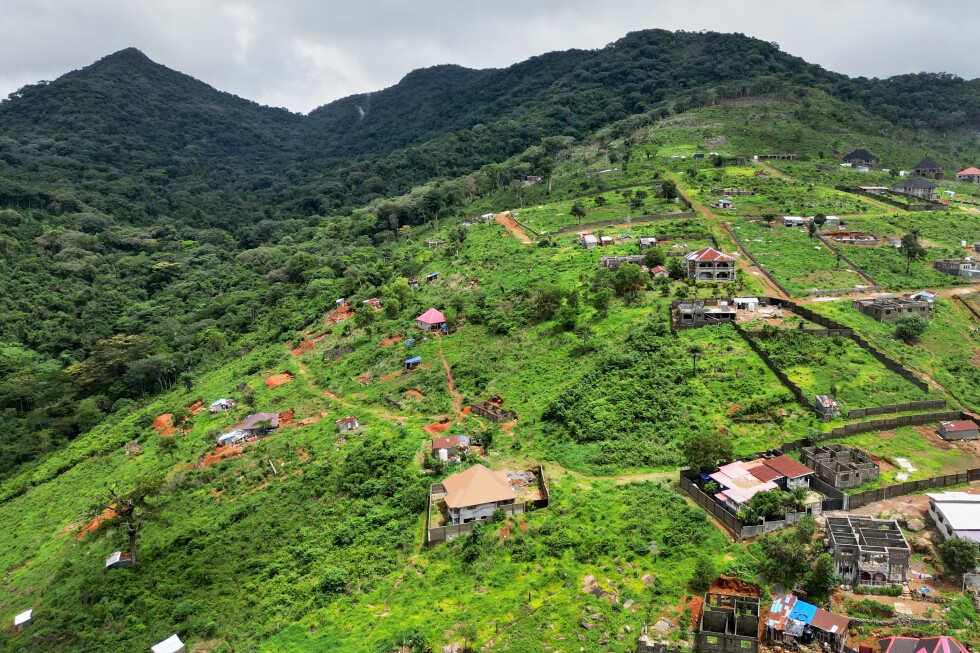
    FREETOWN, Sierra Leone — An explosive government investigation obtained exclusively by The Associated Press and The Gecko Project reveals systematic illegal construction of luxury mansions within Sierra Leone’s Western Area Peninsula National Park, with evidence indicating complicity by senior government officials. Nearly four years after President Julius Maada Bio commissioned the probe, its findings remain concealed from the public despite identifying an “environmental time bomb” threatening the capital’s water supply and ecosystem.

    The investigation uncovered that at least 50 extravagant homes have been constructed or are underway within the park boundaries in the Bio Barray neighborhood, where rainforest stood as recently as 2019. Satellite imagery analysis confirms ongoing construction despite legal prohibitions against development in protected areas.

    Critical findings indicate that former Lands Minister Denis Sandy signed approximately 175 documents granting land leases to private individuals—a move described as “flagrant violation” of environmental protections. The committee recommended punitive measures against Sandy and 16 other named officials, but no substantive action has been taken.

    The environmental implications are severe: the threatened national park serves as both a vital watershed for Freetown—providing 90% of the city’s water through an adjacent reservoir—and a proposed UNESCO World Heritage Site. Deforestation increases risks of catastrophic landslides and water shortage crises, reminiscent of a 2017 landslide that killed over 1,000 people.

    Freetown Mayor Yvonne Aki-Sawyerr, an environmentalist and presidential aspirant, stated unequivocally that the government is “fully aware of what is going on,” alleging that powerful residents receive explicit permission to ignore environmental laws.

    Despite President Bio’s public commitment that “nobody is above the law” and promises to act on the findings, current Chief Minister David Sengeh provided vague responses regarding implementation. Meanwhile, the Anti-Corruption Commission claims it never received the report, and the National Protected Area Authority’s former director asserted all encroachment had ceased—contradicted by AP’s on-the-ground observations.

    The investigation identified 876 landowners within park boundaries, with AP verification confirming 46 villas inside protected territory. At least 14 property owners hold government positions, including within the presidential office, land ministry, and Environment Protection Agency, raising serious questions about institutional corruption and environmental governance.

  • Witkoff says ‘meaningful progress’ made as Ukraine talks enter second day

    Witkoff says ‘meaningful progress’ made as Ukraine talks enter second day

    GENEVA – U.S. Special Envoy Steve Witkoff has reported ‘meaningful progress’ in trilateral negotiations between Ukrainian and Russian delegations during ongoing peace talks in Switzerland. The discussions, mediated by Witkoff and Jared Kushner, President Trump’s son-in-law, entered their second day on Wednesday amid cautious optimism from American officials despite fundamentally opposing positions from both conflict parties.

    Witkoff publicly credited President Trump’s diplomatic influence for bringing the warring nations to the negotiation table. ‘President Trump’s success in bringing both sides of this war together has brought about meaningful progress,’ Witkoff stated on social media platform X, emphasizing the administration’s commitment to ‘stop the killing in this terrible conflict.’

    The negotiations, occurring just one week before the fourth anniversary of Russia’s full-scale invasion, face significant hurdles due to Moscow’s unwavering territorial demands. The Kremlin maintains its maximalist position seeking Ukrainian cession of additional territories beyond the approximately 20% of the country it currently occupies, including complete control of the eastern Donbas region – conditions Ukraine has categorically rejected.

    Ukrainian President Volodymyr Zelensky expressed concerns about the negotiation dynamics, telling Axios that ‘it’s not fair’ that Trump consistently pressures Ukraine to broker a deal without equivalent demands on Russia. Zelensky warned that lasting peace cannot be achieved by simply ‘handing victory to Russia,’ while cautiously hoping the American approach represents ‘just his tactics and not the decision.’

    Top Ukrainian negotiator Rustem Umerov reported that initial discussions focused on ‘practical issues and the mechanics of possible solutions’ during six hours of tense negotiations that utilized both bilateral and trilateral formats. Zelensky subsequently indicated Ukraine’s willingness to refrain from military strikes as proposed by U.S. mediators, asserting that ‘We don’t need war’ but are ‘defending our state, our independence.’

    The talks proceed against a backdrop of continued violence, with Russia’s Defense Ministry reporting the destruction of 43 Ukrainian drones over Russian territory and Crimea overnight. This followed a massive combined aerial assault by Russia against Ukraine the previous night, involving approximately 400 drones and nearly 30 missiles across 12 regions that resulted in at least three Ukrainian fatalities according to officials in Kyiv.

  • Olives, opera and a climate-neutral goal: How a mural in Greece won ‘Best in the World’

    Olives, opera and a climate-neutral goal: How a mural in Greece won ‘Best in the World’

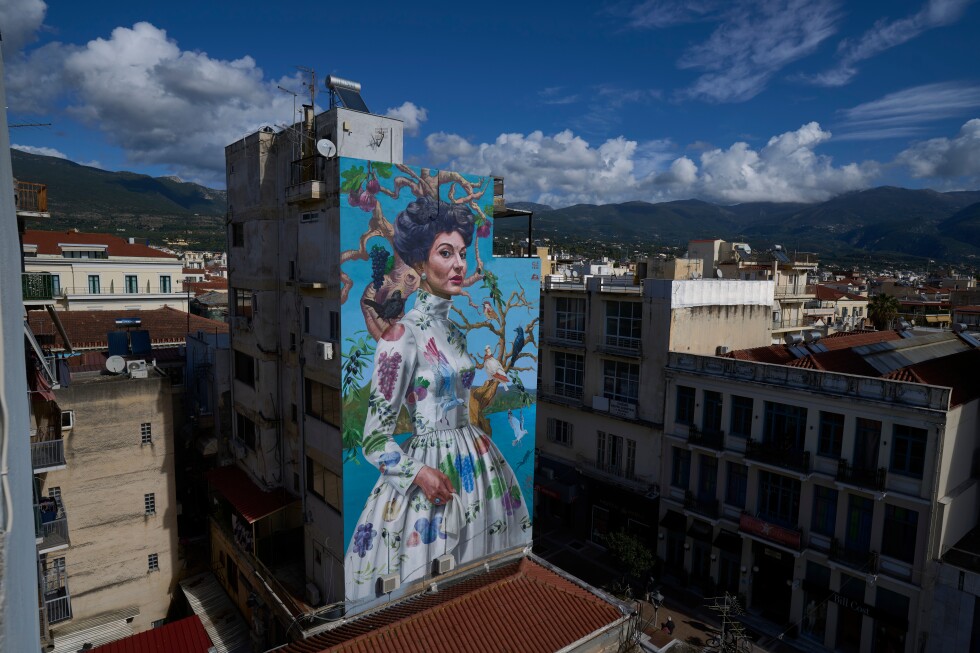
    The southern Greek city of Kalamata, historically celebrated for its premium olives and Mediterranean allure, has achieved global artistic recognition. A monumental mural transforming opera legend Maria Callas into a powerful allegory for the city has been honored as the 2025 “Best Mural of the World” by Street Art Cities, an international platform dedicated to urban art.

    This distinction emerges from a deliberate urban strategy rather than mere artistic coincidence. City officials, led by Deputy Mayor Vassilis Papaefstathiou for strategic planning and climate neutrality, conceived the mural as a visual manifesto for Kalamata’s ambitious goal to become climate-neutral by 2030. The artwork serves as an accessible representation of complex initiatives including sustainable development, agricultural innovation, and local economic resilience for its 73,000 residents.

    Artist Kleomenis Kostopoulos, 52, executed the visionary piece, explaining that the mural titled ‘Kalamata’ uses Callas allegorically rather than literally. Instead of a conventional operatic portrait, he created an earthy, grounded depiction connecting people to their land through symbolic elements: native birds, agricultural products, and tree branches representing both roots and growth. Her dress embodies the “bloom and fruition” of Kalamata’s blessed terrain.

    The creation process presented significant challenges, requiring approximately two weeks of intensive work spread across a month due to weather interruptions. Kostopoulos employed brushes, spray paint, and a cherry-picker to complete the massive installation.

    Beyond aesthetic achievement, the mural has become a civic focal point generating multiple benefits. It has enhanced tourism promotion and stimulated discussions about public art’s role in urban spaces, with additional building owners expressing interest in hosting similar works. The artwork also strengthens local identity at a critical time, as southern Greece faces increasing climate pressures including heatwaves, droughts, and wildfires that threaten the olive groves central to the regional economy.

    The Callas connection resonates deeply with locals—though born in New York to Greek immigrants, her father originated from a village south of Kalamata, making her a beloved native daughter. This bond is institutionally recognized through the Maria Callas-named alumni association at the local music school and a dedicated exhibition at the cultural center.

    Community response reflects profound pride, with tourism educator Dimitra Kourmouli expressing “immense pride” in the recognition. Officials and the artist hope the award will catalyze broader appreciation for public art’s cultural, social, and economic benefits throughout Greece, serving as a springboard for meaningful conversations about art in public spaces.

  • Philippine Vice President Duterte will seek presidency in 2028 but faces impeachment bids

    Philippine Vice President Duterte will seek presidency in 2028 but faces impeachment bids

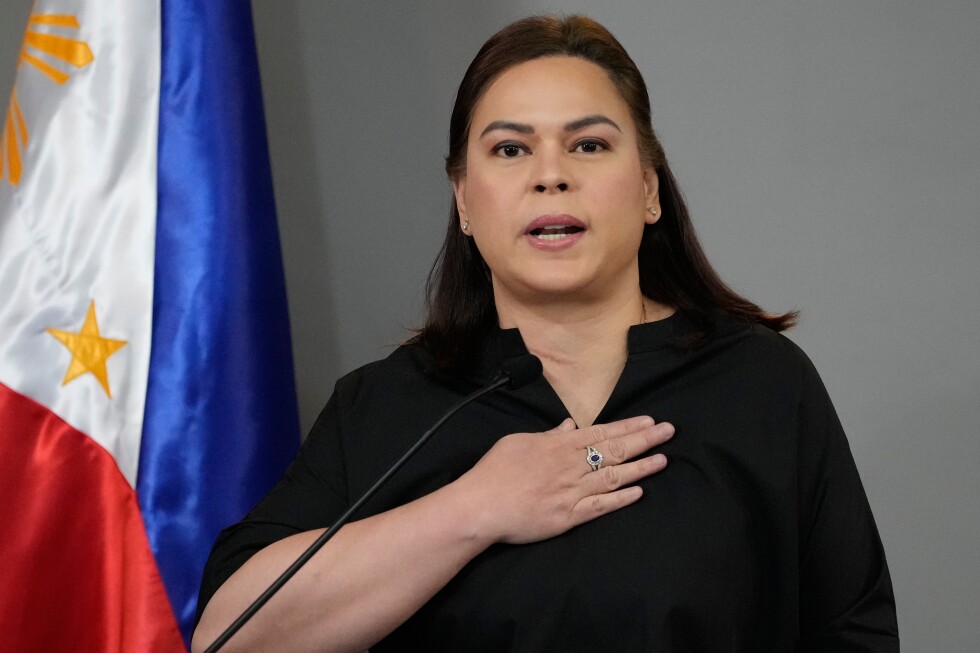
    MANILA, Philippines — In a dramatic political declaration, Philippine Vice President Sara Duterte has formally announced her intention to seek the presidency in the 2028 elections, setting the stage for a contentious political battle amid ongoing impeachment proceedings and criminal investigations that could potentially disqualify her from public office.

    The announcement came during a televised address on Wednesday where Duterte launched scathing criticisms against President Ferdinand Marcos Jr., her former electoral ally in the 2022 elections. The vice president accused Marcos of betraying campaign promises and presiding over governmental mismanagement, while simultaneously requesting public forgiveness for systemic issues including corruption, security concerns, and economic inflation.

    Duterte’s presidential ambitions face significant legal hurdles. Multiple impeachment complaints have been filed against her in Congress, focusing on allegations of mishandling $10.3 million in confidential funds during her tenure as both vice president and education secretary. Additional accusations include unexplained wealth in personal bank accounts, currently under investigation by anti-graft prosecutors.

    Perhaps most strikingly, one impeachment complaint cites Duterte’s 2024 threat against President Marcos, First Lady Liza Araneta-Marcos, and House Speaker Martin Romualdez, in which she suggested they would be killed if she were assassinated.

    The political rift between Duterte and Marcos represents a complete breakdown of their previous alliance. Duterte and her family have directly blamed Marcos for the detention of her father, former President Rodrigo Duterte, who faces potential trial at the International Criminal Court in the Netherlands for crimes against humanity related to his deadly anti-drug campaign.

    Presidential spokesperson Claire Castro responded by suggesting Duterte should apologize for her own alleged irregularities and frequent international travels rather than attacking others. Meanwhile, Duterte’s legal representative, Michael Poa, maintains that the vice president is prepared to confront all allegations and expects a fair review will demonstrate their lack of factual and legal foundation.

    The Supreme Court previously intervened in an earlier impeachment attempt, ruling that the House of Representatives violated constitutional procedures by processing multiple cases against a single official within one year.

  • Pakistan grabs Super 8 spot at T20 World Cup. India wins toss and bats against the Netherlands

    Pakistan grabs Super 8 spot at T20 World Cup. India wins toss and bats against the Netherlands

    Pakistan cemented their place in the Super 8 stage of cricket’s Twenty20 World Cup with an emphatic 102-run triumph against Namibia in Colombo on Wednesday. The victory was powered by Sahibzada Farhan’s spectacular maiden T20 century and Usman Tariq’s mesmerizing spin bowling performance.

    Opening batsman Farhan delivered a masterclass in aggressive yet controlled batting, remaining unbeaten on 100 from just 58 deliveries. His innings featured 11 boundaries and four massive sixes, with his second fifty coming off a mere 20 balls. Captain Salman Ali Agha contributed a solid 38, while Shadab Khan provided late fireworks with an unbeaten 36 that included three sixes, propelling Pakistan to a formidable total of 199-3.

    The bowling attack, led by the unorthodox spinner Usman Tariq, dismantled Namibia’s batting lineup with clinical precision. Tariq’s distinctive pause-and-bowl action proved particularly devastating, earning him figures of 4-16, including a remarkable double-wicket maiden over. Shadab Khan complemented with 3-19 as Namibia collapsed from 79-4 to be all out for 97 in 17.3 overs, suffering their fourth consecutive group stage defeat.

    In concurrent Group D action, South Africa completed their group stage campaign undefeated, comfortably chasing down 123 against United Arab Emirates with 40 balls to spare. The Proteas’ comprehensive performance sets them up strongly for the Super 8 phase, alongside New Zealand who also advanced from Group D.

    The victory ensures Pakistan, the 2009 champions, progress to the next round while eliminating any remaining hopes for the United States team. Pakistan’s spinners demonstrated complete dominance, with only Namibia’s Louren Steenkamp (23) and Alexander Busing-Volschenk (20) offering meaningful resistance in an otherwise one-sided contest.