作者: admin

  • UN experts say destruction by Sudan’s rebels in el-Fasher in October bears ‘hallmarks of genocide’

    UN experts say destruction by Sudan’s rebels in el-Fasher in October bears ‘hallmarks of genocide’

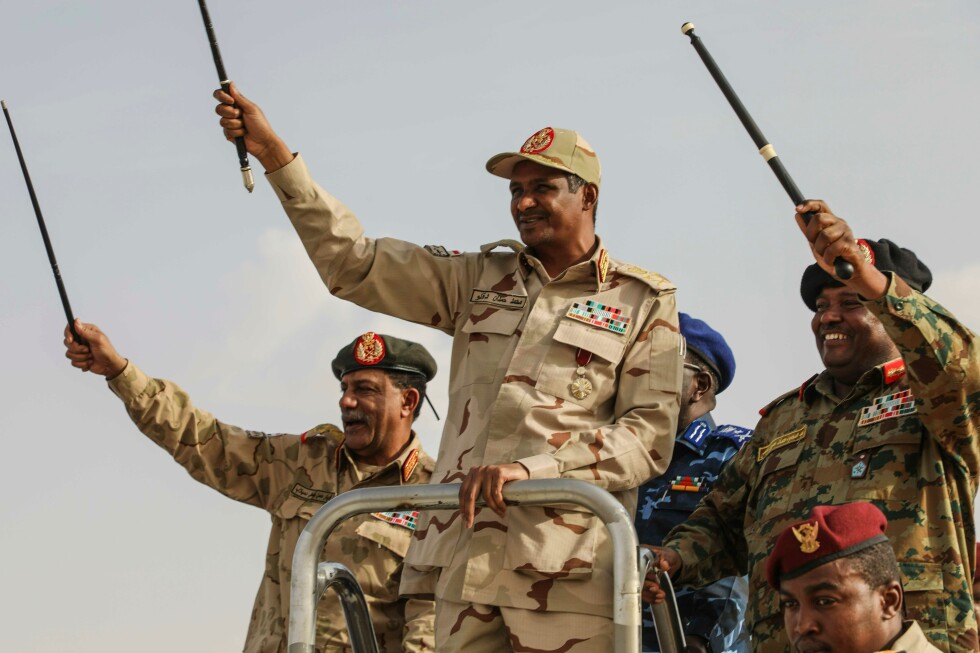
    A United Nations-backed human rights mission has issued a damning report concluding that Sudanese paramilitary forces executed a systematic “campaign of destruction” against non-Arab communities in Darfur, exhibiting clear indicators of genocide. The investigation focused on the Rapid Support Forces (RSF) takeover of el-Fasher in late October, following an 18-month siege that crippled the city.

    According to the independent fact-finding mission, the RSF and allied Arab militias, historically known as Janjaweed, perpetrated mass killings, summary executions, widespread sexual violence, torture, and abductions. UN officials estimate several thousand civilians were killed during the city’s fall, with only 40% of its 260,000 residents managing to escape alive. The report documents a deliberate pattern of ethnically targeted violence, particularly against the Zaghawa and Fur communities.

    The expert team applied the legal framework of the 1948 Genocide Convention, finding the RSF’s actions met at least three of the five criteria for genocide. These included killing members of a protected group, causing serious bodily and mental harm, and deliberately inflicting conditions calculated to bring about the group’s physical destruction. The report cited public statements by fighters explicitly calling for the elimination of non-Arab communities as evidence of genocidal intent.

    Team chair Mohamed Chande Othman, former Chief Justice of Tanzania, emphasized these were not “random excesses of war” but a planned, organized operation. The conflict, which erupted in April 2023 between military and paramilitary forces, has killed over 40,000 people according to UN figures, though aid groups believe the actual toll is significantly higher. The mission called for urgent accountability measures and warned of expanding violence across Sudan.
  • Modi pitches India as global artificial intelligence hub at AI summit

    Modi pitches India as global artificial intelligence hub at AI summit

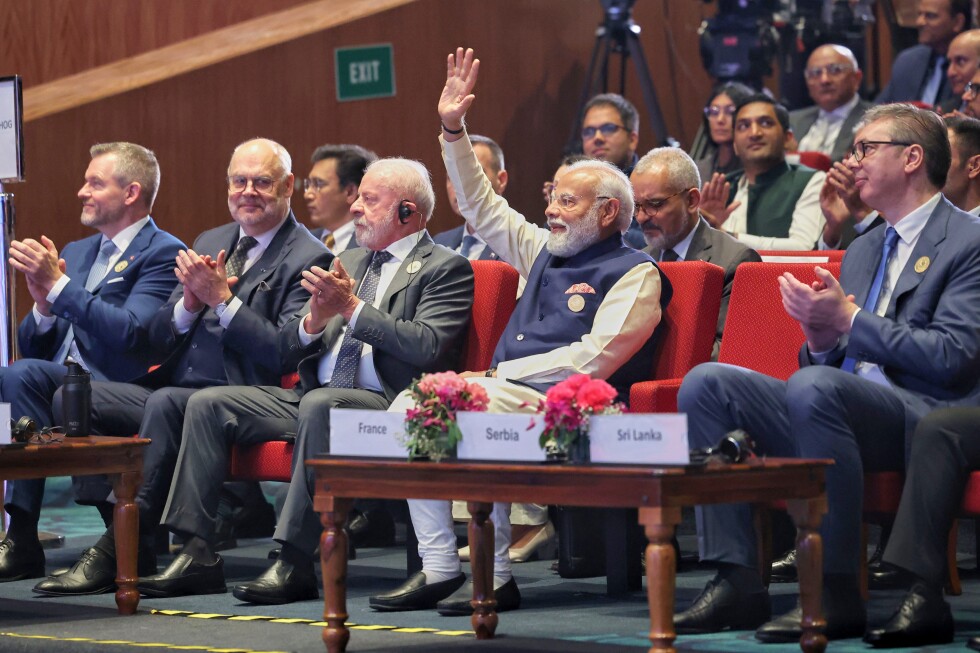
    Indian Prime Minister Narendra Modi has declared India’s ambition to become a pivotal force in the worldwide artificial intelligence landscape, emphasizing a strategy of domestic development coupled with global implementation. Addressing the India AI Impact Summit in New Delhi on Thursday, Modi articulated his vision before an assembly of international leaders, technology executives, and policy makers with the mantra: “Design and develop in India. Deliver to the world. Deliver to humanity.

    This declaration comes as the rapidly expanding digital market seeks to capitalize on its extensive experience in constructing large-scale digital public infrastructure. India aims to establish itself as an economically viable center for AI innovation, leveraging successful models like its digital identification and online payment systems as templates for affordable AI deployment, especially in developing nations.

    The high-profile gathering featured addresses from French President Emmanuel Macron, Google CEO Sundar Pichai, and UN Secretary-General António Guterres, who proposed a $3 billion international fund to enhance AI capabilities in less affluent countries. Guterres emphasized that AI development must not be dominated by a limited number of nations or wealthy individuals, asserting that the technology should “belong to everyone.”

    India is strategically positioning itself as a connecting link between advanced economies and the Global South, with Modi stressing the necessity to “democratize AI” and transform it into an instrument for inclusion and empowerment. The country’s nearly one billion internet users make it an essential market for international tech corporations expanding their AI operations.

    Significant investments have been announced, including Microsoft’s $17.5 billion commitment over four years to enhance cloud and AI infrastructure, Google’s $15 billion five-year investment featuring plans for India’s first AI hub, and Amazon’s $35 billion pledge by 2030 focused on AI-driven digitization.

    Despite these ambitions, India faces substantial challenges in developing its own large-scale AI models comparable to U.S.-based OpenAI or China’s DeepSeek. Obstacles include restricted access to advanced semiconductor chips, insufficient data center infrastructure, and the complexity of training AI systems on hundreds of local languages.

    The summit encountered organizational difficulties throughout the week, beginning with logistical problems that resulted in extended waiting times and reports of stolen items, though organizers later confirmed recovery of the missing property. Further complications emerged when a private Indian university was removed from the event after presenting a commercially available Chinese robotic dog as their own innovation. The setbacks continued with the unexpected withdrawal of Microsoft co-founder Bill Gates from his scheduled keynote address, with the Gates Foundation citing a desire to maintain focus on the summit’s primary objectives, amid ongoing questions regarding Gates’ associations with the late financier and convicted sex offender Jeffrey Epstein.

  • Bill Gates pulls out of India’s AI summit amid Epstein files controversy

    Bill Gates pulls out of India’s AI summit amid Epstein files controversy

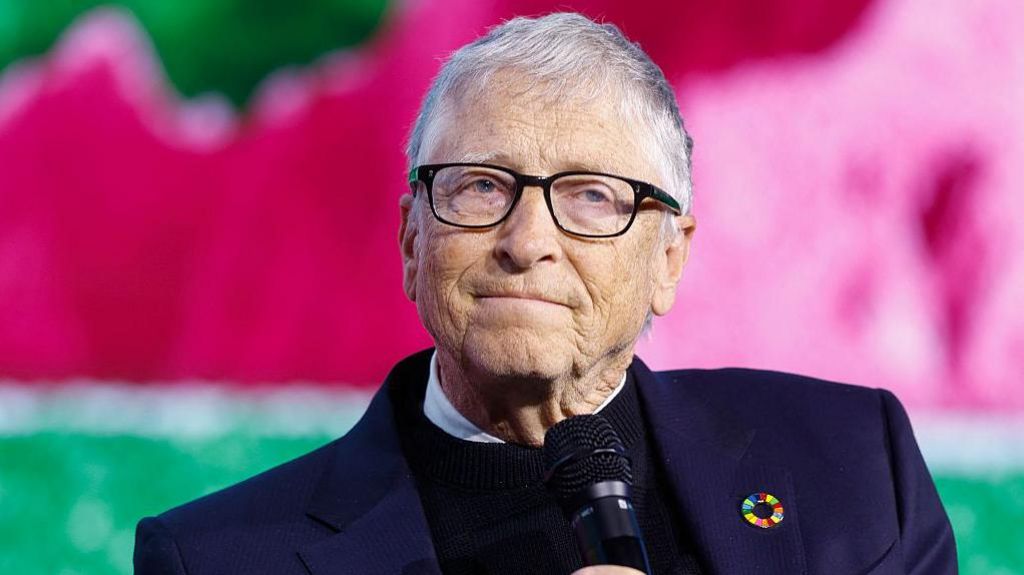
    Microsoft co-founder Bill Gates has unexpectedly canceled his scheduled keynote address at the India AI Impact Summit in New Delhi, creating a significant disruption to the event’s programming. The Gates Foundation announced the decision hours before his appearance, stating it came after “careful consideration” to maintain focus on the summit’s core objectives, though providing no specific reasons for the withdrawal.

    This development occurs against the backdrop of renewed scrutiny regarding Gates’ associations with the convicted sex offender Jeffrey Epstein. Recently unsealed court documents from the U.S. Department of Justice have referenced Gates, though he faces no allegations of misconduct from Epstein’s victims, and the documents imply no criminal activity.

    A Gates Foundation representative has characterized the claims within these documents as “absolutely absurd and completely false.” Gates himself has previously expressed regret for his interactions with Epstein.

    Despite this last-minute change, the summit continues with substantial industry participation. Ankur Vora, president of the Gates Foundation’s Africa and India offices, will deliver the address in Gates’ place. The foundation reaffirmed its “full commitment” to its collaborative health and development initiatives within India.

    The cancellation follows days of uncertainty about Gates’ attendance. Currently in India, he recently visited Andhra Pradesh to discuss projects in health, agriculture, education, and technology. Initial reports suggested he would honor his speaking commitment.

    This withdrawal represents a setback for India’s ambition to position itself as a global AI leader through this flagship event. Nevertheless, the summit features other prominent speakers, including Google CEO Sundar Pichai, OpenAI CEO Sam Altman, and Anthropic CEO Dario Amodei.

    Prime Minister Narendra Modi, in his opening address, emphasized India’s pivotal role in the AI-driven future and urged Western nations to democratize AI technology. “AI must become a tool for inclusion and empowerment, particularly for the Global South,” Modi stated, while also highlighting the urgent need for global standards to counter deepfakes and misinformation.

    The event, attended by delegates from over 100 countries and several heads of state, has faced its share of controversies, including reports of initial mismanagement and a disputed claim by an Indian university about developing a robot dog that was allegedly manufactured in China.

    Over its five-day duration, the summit will host policy discussions, startup demonstrations, and private meetings focused on AI governance and innovation. Major companies, including Microsoft, have already announced investment pledges aimed at expanding AI infrastructure and access in India and similar markets.

  • Watch: Thai police go undercover as lion dancers to catch thief

    Watch: Thai police go undercover as lion dancers to catch thief

    In an inventive approach to law enforcement, officers from the Thai police force successfully apprehended a serial theft suspect by utilizing an unexpected disguise: traditional lion dance costumes. The operation culminated outside a temple on the outskirts of Bangkok, where the individual, wanted in connection with multiple counts of theft, was taken into custody.

    The strategic deployment of this cultural camouflage allowed police to blend seamlessly into the local environment, capitalizing on the vibrant and common sight of lion dance performances, particularly in the vicinity of temples. This method enabled close surveillance without alerting the suspect, demonstrating a significant departure from conventional police tactics.

    Authorities have highlighted the operation as a testament to adaptive policing, merging cultural understanding with crime-fighting initiatives. The suspect’s arrest marks a critical development in a series of investigations targeting theft rings in the Bangkok metropolitan area, potentially signaling a new era of innovative law enforcement strategies within the region.

  • The travertine quarries that built ancient Rome are carving rock for a new generation of temples

    The travertine quarries that built ancient Rome are carving rock for a new generation of temples

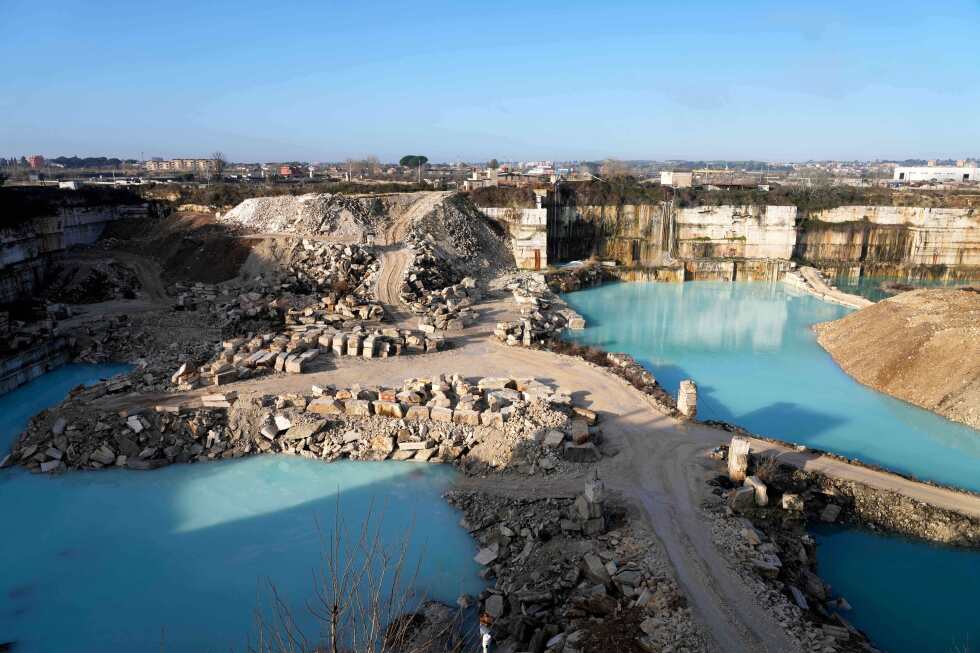
    For two millennia, the subterranean quarries of Tivoli, Italy have supplied the distinctive pock-marked stone that built Rome’s architectural marvels and now graces contemporary structures worldwide. This porous limestone, known scientifically as lapis tiburtinus and commonly as travertine, formed through mineral deposits from sulfuric springs over hundreds of thousands of years, capturing regional volcanic history within its striated layers.

    From the Colosseum constructed in 70-80 AD to Bernini’s magnificent St. Peter’s Square colonnade completed in 1667, travertine has demonstrated exceptional durability against environmental challenges. The stone’s unique composition of calcium carbonate minerals provides both structural integrity and aesthetic versatility, appearing in finishes ranging from rough-textured to polished sleek, with color variations from warm white with black voids to veined beige with gray, brown, or greenish tones.

    The Mariotti Carlo SpA stonecutting firm, operating for four generations, continues this ancient tradition by fulfilling prestigious international commissions. Their current projects include supplying travertine for the reconstruction of a Latter-day Saint temple in Manhattan and major developments in Riyadh and Shenzhen. Fabrizio Mariotti, head of the family enterprise, describes travertine as “carrying the light of Rome everywhere” due to its distinctive reflective qualities.

    At the Degemar quarries, where Baroque master Bernini once maintained a residence to personally select materials, extraction continues 30 meters below sea level. Vincenzo De Gennaro, current quarry director, notes that the stone’s 2,000-year performance in Roman structures provides undeniable proof of its longevity. Professor Marco Ferrero of La Sapienza University adds that travertine embodies Rome’s spirit—solid and noble without marble’s ostentation—comparing it to “Roman dialect” versus marble’s “literary Italian.”

  • A beloved teacher in Morocco unmasked: Frenchman investigated over abuse of 89 boys

    A beloved teacher in Morocco unmasked: Frenchman investigated over abuse of 89 boys

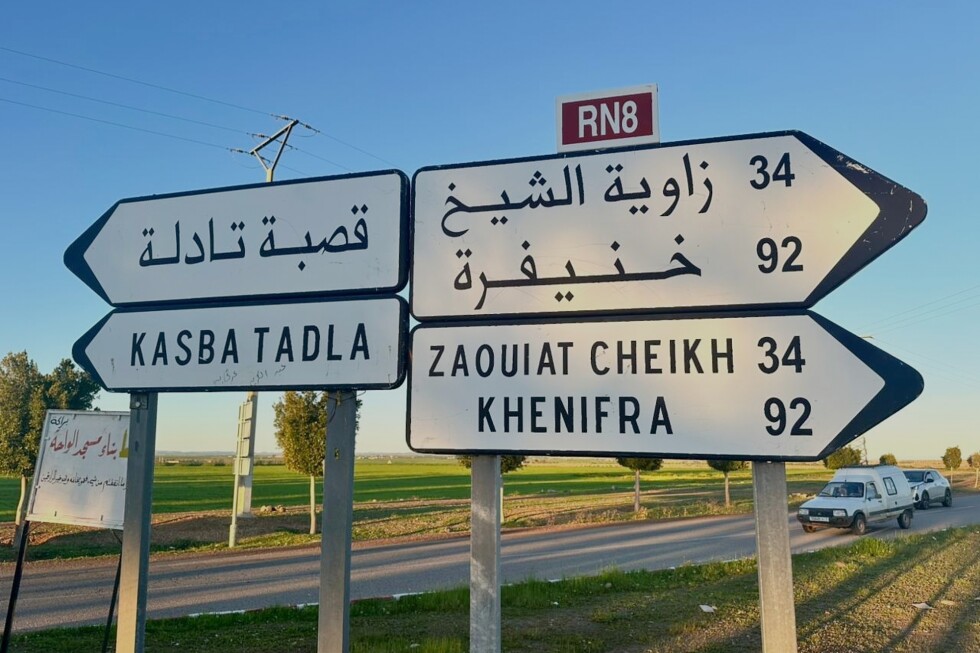
    The quiet Moroccan town of Khenifra faces an existential crisis following the shocking arrest of Jacques Leveugle, a 79-year-old French national who embedded himself deeply within the community over decades. Previously celebrated as a benevolent figure who swept streets at dawn, offered free language instruction, and organized children’s excursions, Leveugle now stands formally investigated in France for the systematic rape and sexual assault of 89 minors across a 55-year span in multiple nations.

  • ‘We’re still on edge’: Toy firms look to US Supreme Court as tariffs hit profits

    ‘We’re still on edge’: Toy firms look to US Supreme Court as tariffs hit profits

    NEW YORK — At the recent annual Toy Fair convention, industry executives gathered under the shadow of persistent trade policy anxieties, with one figure drawing particular attention: Rick Woldenberg, CEO of educational toy firm Learning Resources. His legal confrontation with the Trump administration has positioned him as an unlikely champion for manufacturers grappling with import tariffs.

    Woldenberg’s lawsuit challenges the sweeping global tariffs imposed by former President Donald Trump, which at one point reached 145% on Chinese goods. The Supreme Court is poised to issue a ruling on the case imminently, a decision that could force the government to refund billions of dollars collected from businesses and potentially reshape U.S. trade policy.

    The toy industry, heavily reliant on Chinese manufacturing, found itself disproportionately vulnerable to these import taxes. Many firms absorbed significant profit losses and were compelled to implement price increases—a move Learning Resources and others hope might be reversible should the court rule against the administration.

    Despite initial fears, the overall consumer impact has been more moderate than anticipated. Harvard Business School Professor Alberto Cavallo, who tracks tariff effects on pricing, notes that while cheaper items have seen noticeable increases, the measures have had “little impact” on overall toy prices. The average tariff on Chinese imports has stabilized around 20%, partly due to White House exemptions and rate adjustments.

    Interviews with numerous executives at the Toy Fair revealed a sector cautiously optimistic about avoiding further price hikes in 2026, yet few are complacent. Jay Foreman, CEO of Basic Fun—which suffered a 65% profit drop last year—expressed industry-wide apprehension: “We’re still on edge. We’ll be on edge for at least another three years.” His company raised the price of its iconic Tonka truck from $30 to $35, a level he expects to maintain.

    Sensory toy company Glo Pals implemented its first price increase in six years last April, raising its bestselling light-up cubes by 20% to $12.99. Co-founder Anna Barker described the economic landscape as “completely temperamental,” emphasizing that “all that uncertainty is still omnipresent for us.”

    The White House has indicated it will pursue alternative mechanisms to impose tariffs should the Supreme Court invalidate the current measures. For international manufacturers like Tim Hislop of UK-based Floss & Rock, whose majority revenue comes from the U.S. market, a favorable ruling could lower future costs even if refunds remain unlikely. “I have a little prayer every night,” Hislop remarked wryly.

    As the industry awaits the judicial decision, Woldenberg’s legal stand represents both a specific challenge to presidential trade authority and a symbol of the broader business community’s struggle to adapt to an era of unpredictable economic policy.

  • White House presses Iran to make deal, while ramping up military presence

    White House presses Iran to make deal, while ramping up military presence

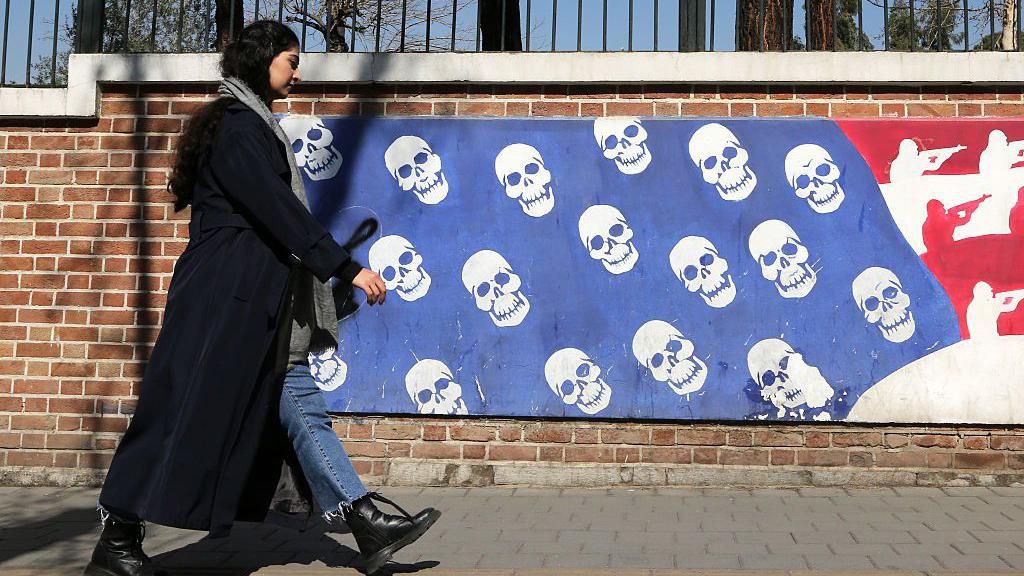
    The White House has delivered a pointed admonition to Tehran, asserting it would be “very wise” for Iran to secure a diplomatic agreement with the United States. This warning emerges amidst escalating military posturing and reports that the Trump administration is actively considering renewed offensive actions against the Islamic Republic.

    White House Press Secretary Karoline Leavitt, addressing journalists, emphasized that President Trump continues to prioritize a negotiated settlement concerning Iran’s contentious nuclear program. Her statements coincide with the strategic deployment of a second U.S. battleship to the Middle Eastern theater and follow a recent round of talks in Geneva, Switzerland, where both nations reported incremental progress.

    According to intelligence sourced from U.S. media and CBS News, President Trump has engaged in high-level consultations with security advisors to evaluate potential strike options, with one scenario allegedly planned for execution as early as the coming weekend. These deliberations were characterized as highly fluid, with no definitive decision yet reached. This echoes the precedent set last summer when U.S. forces targeted three Iranian nuclear facilities.

    Leavitt substantiated the rationale for military action, stating there exist “many reasons and arguments that one could make for a strike against Iran,” while simultaneously urging Tehran to return to the bargaining table.

    The recent indirect negotiations in Geneva, mediated by Oman, yielded no definitive breakthrough. However, participants from both camps acknowledged constructive movement. Iranian Foreign Minister Abbas Araghchi confirmed an understanding on core “guiding principles” for future dialogue, though he conceded significant work remains. Omani Foreign Minister Badr Albusaidi similarly reported “good progress” on mutual objectives and technical matters.

    Contrasting this cautiously optimistic tone, the White House maintained that Washington and Tehran remain “far apart” on several pivotal issues. Leavitt indicated that Iran is anticipated to provide more detailed proposals in the coming weeks, which will critically inform the President’s subsequent decisions.

    The rhetorical and diplomatic friction is matched by a tangible military buildup. BBC Verify has geolocated the USS Abraham Lincoln carrier strike group—comprising guided missile destroyers and fighter jet squadrons—near Iranian territorial waters. Furthermore, the USS Gerald R. Ford, the world’s largest warship, is reportedly en route to the region, with a full U.S. military contingent expected to be operational by mid-March.

    Iran has responded with defiant rhetoric and military exercises. Supreme Leader Ayatollah Ali Khamenei disseminated an AI-generated image depicting the sunken USS Ford, accompanied by a statement proclaiming that the capability to sink a warship is more formidable than the warship itself. Concurrently, the Islamic Revolutionary Guard Corps initiated maritime drills in the strategically critical Strait of Hormuz, a vital global oil transit corridor.

    The escalating standoff is further complicated by divergent negotiation priorities. Iran seeks to center discussions on its nuclear activities and the alleviation of crippling economic sanctions, whereas the U.S. has historically insisted on including Iran’s ballistic missile program in any comprehensive agreement. The fundamental distrust underpinning the crisis persists, with Western nations suspecting Iran of pursuing nuclear weapons capability—an allegation Tehran consistently denies.

  • Tokyo’s strategic US investment surge puts China on edge

    Tokyo’s strategic US investment surge puts China on edge

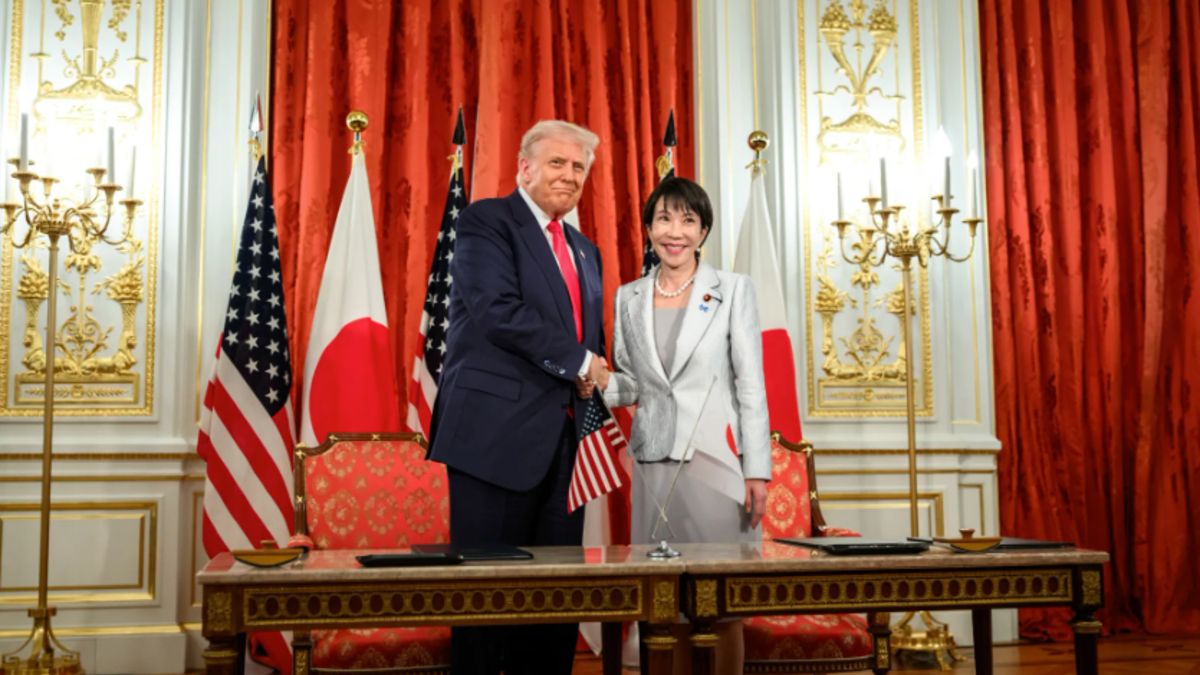
    Japan has initiated the first phase of a monumental investment initiative into the United States, marking a significant milestone in international economic relations. This development follows the decisive electoral triumph of Prime Minister Sanae Takaichi’s Liberal Democratic Party, which has paved the way for strengthened bilateral cooperation.

    The initial investment tranche, valued at approximately $36 billion, represents merely the beginning of a comprehensive commitment that could ultimately reach $550 billion. This massive financial undertaking stems from a trade agreement finalized in July, wherein Japan secured reduced US tariffs on its exports. In September, Washington lowered its reciprocal tariffs on Japanese goods from 25% to 15%, creating favorable conditions for enhanced economic collaboration.

    US President Donald Trump celebrated the development through social media, proclaiming: “Our massive trade deal with Japan has just launched! Japan is now officially, and financially, moving forward with the first set of investments under its $550 billion commitment to invest in the United States of America.” The President emphasized that this agreement would revitalize American industry, generate hundreds of thousands of jobs, and bolster national economic security.

    The initial investment portfolio includes three strategic projects: oil and gas infrastructure in Texas, power generation facilities in Ohio, and critical minerals processing in Georgia. The Ohio power plant is projected to become the largest gas-powered facility in history, while the LNG export terminal aims to strengthen America’s energy dominance. The critical minerals initiative seeks to reduce foreign dependency, though China’s global rare earth dominance remained unmentioned in official statements.

    Chinese analysts perceive this economic shift as potentially detrimental to China’s interests. Commentator Xu Sanlang argues that strengthened US-Japan ties could accelerate supply chain diversification away from China toward American allies. Since 2010, Japan has systematically reduced its reliance on Chinese manufacturing, redirecting investments toward Southeast Asia, the United States, and Europe.

    The tariff structure further incentivizes this realignment, with US tariffs on Chinese goods averaging 53.6% compared to approximately 15% on Japanese products. This differential approach appears designed to economically isolate China while strengthening alliances.

    The agreement mandates Japan to immediately increase US rice imports by 75%, purchase $8 billion in American goods including agricultural products and energy exports, acquire Boeing aircraft and defense equipment, and lift restrictions on US automotive imports.

    Geopolitical tensions have concurrently escalated, particularly following Prime Minister Takaichi’s November statement regarding Taiwan potentially constituting a “survival-threatening situation” for Japan. Beijing responded with tightened export controls on dual-use items to Japan, though recent approvals suggest possible diplomatic thaw following February discussions between Trump and Chinese President Xi Jinping.

    Analysts recommend measured response from China, emphasizing the country’s strengths in renewable energy, artificial intelligence, and quantum computing as counterbalancing factors. The evolving situation represents a complex interplay of economic strategy, geopolitical positioning, and global supply chain restructuring that will likely define international relations for years to come.

  • Italy wins the toss and elects to field against West Indies in its last T20 World Cup game

    Italy wins the toss and elects to field against West Indies in its last T20 World Cup game

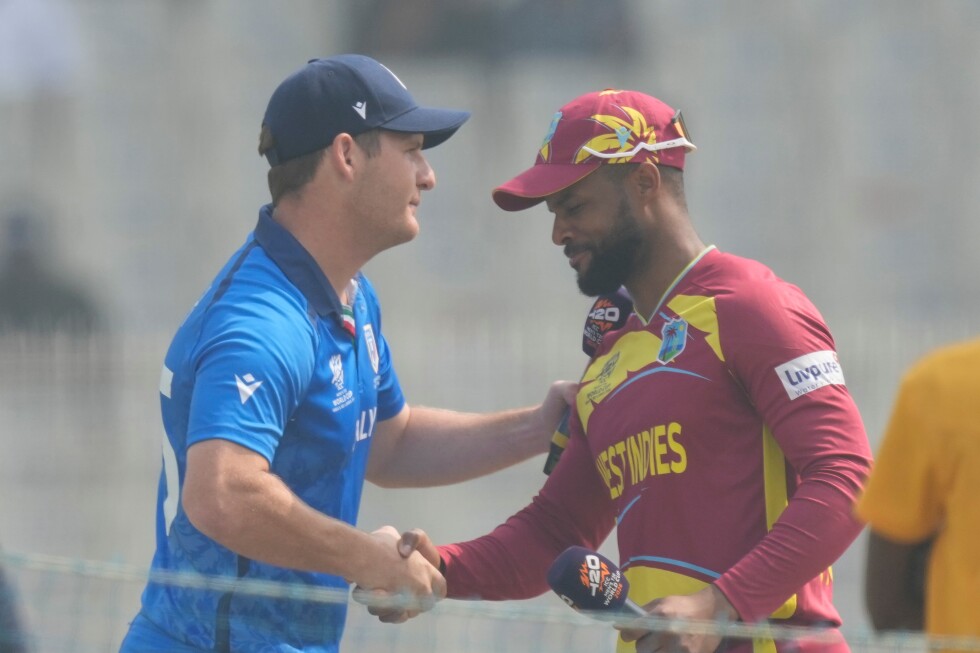
    KOLKATA, India — In their concluding Group C match of the T20 World Cup on Thursday, the West Indies, having already secured their advancement to the Super 8s, faced an Italian squad seeking to conclude its inaugural ICC global tournament on a high note. Italy’s captain, Harry Manenti, won the toss and elected to field first, hoping his bowlers could exploit any early swing in the daytime conditions at the venue.

    Manenti continues to lead the Italian side after a tournament-ending shoulder injury to regular captain Wayne Madsen during their opening fixture. Despite losses to Scotland and England, the team garnered significant confidence from a stunning 10-wicket victory over Nepal. “We take some confidence from the England game and West Indies is another powerful team,” Manenti stated at the toss, expressing hope for early breakthroughs.

    The West Indies, entering the match with an unchanged lineup from their dominant nine-wicket win over Nepal, boast a formidable top order. Captain Shai Hope, along with Shimron Hetmyer and Sherfane Rutherford, have all recorded half-centuries throughout the group stage, demonstrating aggressive and powerful batting form. Hope expressed a philosophical view on losing the toss, noting, “it’s not in our hands.”

    In other tournament developments, Zimbabwe—the team responsible for eliminating Australia—was set to conclude its group stage against Sri Lanka in Colombo. Meanwhile, Afghanistan, fresh from a narrow double tiebreaker defeat to South Africa, prepared to meet Canada in its final Group D match.