作者: admin

  • The Africans to watch at the World Athletics Championships

    The Africans to watch at the World Athletics Championships

    The 2025 World Athletics Championships in Tokyo are set to be a spectacular showcase of talent, with over 2,200 athletes from across the globe competing for glory. Among them, a host of African stars are poised to make their mark on the world stage. The event, scheduled from September 13 to 21, will feature some of the most celebrated names in track and field, including Kenya’s Faith Kipyegon, Botswana’s Letsile Tebogo, and South Africa’s Prudence Sekgodiso.

    Faith Kipyegon, the reigning world champion in the 1500m and 5000m, is one of the most decorated athletes in Kenyan history. With three Olympic gold medals and four world titles to her name, Kipyegon is aiming to defend her titles and make history by becoming the first athlete to win gold in both distance events at more than one World Championships. Despite a recent setback in her attempt to break the four-minute mile barrier, Kipyegon shattered her own 1500m world record earlier this year, proving her dominance in the sport.

    Prudence Sekgodiso, the 23-year-old South African middle-distance runner, is on a mission to break one of the oldest world records in athletics. After becoming the World Indoor champion in Nanjing earlier this year, Sekgodiso has set her sights on surpassing Caster Semenya’s national record of 1:54.25 and Czech runner Jarmila Kratochvilova’s long-standing world record of 1:53.28. ‘I just have to believe and know what I want and train hard for it,’ Sekgodiso told the BBC World Service. ‘It’s doable, but it’s a long-term goal for me.’

    Letsile Tebogo, the 22-year-old Botswanan sprinter, made history at the Paris Olympics by winning the 200m gold medal. Despite a mixed season marred by a recurring hamstring injury, Tebogo remains optimistic about his chances in Tokyo. ‘I feel there is still a lot more in the tank that people need to see,’ he said. Tebogo, who claimed silver in the 200m and bronze in the 100m at the last World Championships in Budapest, will compete in both events again, aiming to showcase his true potential.

    Other notable African athletes include Kenya’s Beatrice Chebet, who completed the Olympic double in the 5000m and 10,000m in Paris last year, and Ethiopia’s Tadese Takele, who clocked the fastest marathon time this year in Tokyo. With such a stellar lineup, the 2025 World Athletics Championships promise to be an unforgettable event, showcasing the best of African talent on the global stage.


  • Could protests lead to Vuelta being abandoned?

    Could protests lead to Vuelta being abandoned?

    The 2025 Vuelta a España, one of cycling’s most prestigious Grand Tours, has been marred by repeated disruptions caused by pro-Palestinian protesters, raising serious safety concerns for riders and organizers alike. The race, which is scheduled to conclude in Madrid this Sunday, has seen multiple stages shortened or altered due to protests, with one rider forced to abandon the competition after a crash caused by demonstrators running onto the course.

  • Gulf states seeking growth still hostage to regional chaos

    Gulf states seeking growth still hostage to regional chaos

    The oil-rich Gulf states of Qatar, Saudi Arabia, and the United Arab Emirates (UAE) have long enjoyed significant advantages, including immense wealth, domestic stability, and growing global influence. In recent months, these nations have moved closer to securing robust and uncritical support from the United States, a development that coincides with the decline of Iranian power in the region. Under President Donald Trump, Gulf monarchs found an ally in Washington who prioritized strategic interests over concerns for democracy and human rights. Trump’s first international trip of his second term to Saudi Arabia, Qatar, and the UAE underscored their rising international clout. The overthrow of the Assad government in Syria and Israel’s military actions against Iran and its allies in Lebanon and Yemen have further weakened Tehran’s regional threat. However, Gulf Arab states face a precarious political landscape, as evidenced by Israel’s targeted strike on Hamas leaders in Qatar in September 2025. This incident highlights the unpredictable nature of regional dynamics and the challenges Gulf leaders must navigate. Four key uncertainties will shape their future: managing post-civil war Syria, balancing regional politics, monitoring Iran’s trajectory, and addressing Israel’s military assertiveness. In Syria, Gulf states have shifted from opposing the Assad regime to supporting new President Ahmed al-Sharaa, lobbying the US to lift sanctions and seeking stability to address the refugee crisis. Yet, ongoing Israeli attacks and internal conflicts in Syria underscore the region’s fragility. Regionally, Gulf states face the dilemma of supporting authoritarian governments while avoiding the risks of popular unrest and civil wars, as seen in Yemen and Sudan. Iran remains a central concern, with its diminished power potentially leading to instability or a shift in its political system, both of which could disrupt Gulf interests. Meanwhile, Gulf leaders must balance their strategic alignment with Israel against domestic and regional pressures to support Palestinian rights. The Gulf Cooperation Council (GCC) remains a critical platform for regional unity, though internal rivalries persist. As Gulf states strive to expand their influence, they remain vulnerable to external events that could derail their plans.

  • China’s dual-use asteroid-collision research threatens satellites

    China’s dual-use asteroid-collision research threatens satellites

    China has announced a groundbreaking mission to deliberately impact a near-Earth asteroid by 2030, marking a significant leap in its planetary defense and asteroid resource utilization capabilities. This initiative, revealed by Wu Weiren, chief designer of China’s lunar exploration program, underscores the nation’s growing ambitions in space exploration and its intent to lead in planetary defense technologies. The mission involves deploying two spacecraft: one as a kinetic impactor and another as an observer to monitor the collision and its effects. This dual approach aims to validate asteroid deflection techniques and assess their feasibility for planetary defense. The announcement comes three years after NASA’s successful Double Asteroid Redirection Test (DART) in 2022, which demonstrated the potential of kinetic impactors to alter asteroid trajectories. China’s plan, however, goes beyond defense, signaling a strategic vision for deep-space resource extraction and economic exploitation. The mission’s dual-use nature has sparked discussions about its potential military applications, particularly in anti-satellite operations. Despite these concerns, China has invited over 40 countries and organizations to collaborate on joint monitoring and research efforts, emphasizing international cooperation. The mission’s complexity lies in its precision and unpredictability, as scientists grapple with the unknown internal composition of asteroids. China’s long-term strategy includes achieving kinetic impact milestones by 2030, propulsion-based deflection tests by 2035, and mastering full-scale asteroid orbit technology by 2045. This ambitious timeline aligns with the anticipated maturity of asteroid resource utilization, positioning China as a key player in the emerging trillion-dollar space economy.

  • Fatal dam collapse: ‘How do you restart from nothing?’

    Fatal dam collapse: ‘How do you restart from nothing?’

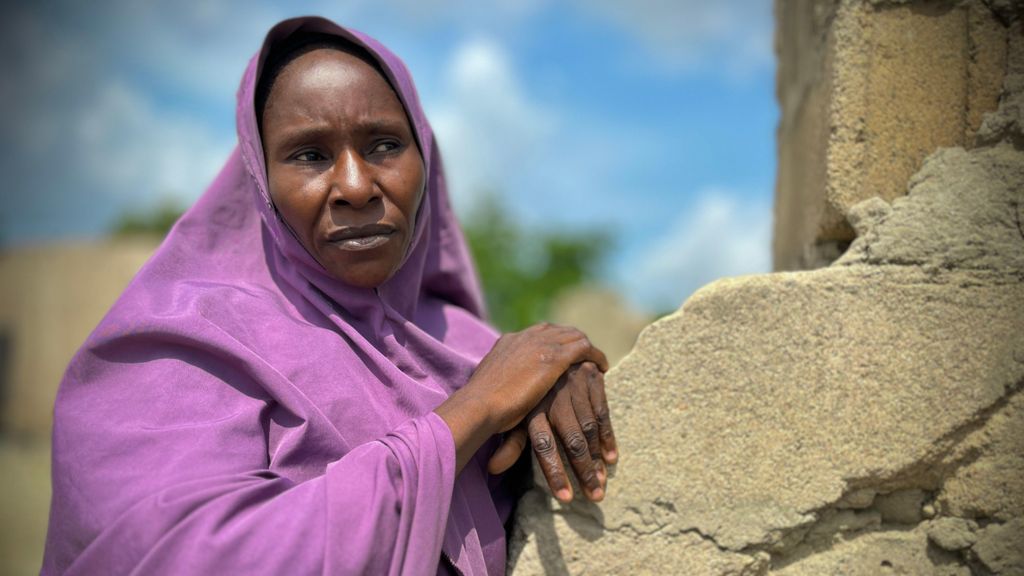
    The city of Maiduguri in northeastern Nigeria remains haunted by the devastating floods that struck a year ago, leaving a trail of destruction, loss, and ongoing suffering. Torrential rains and the collapse of the Alau dam submerged entire neighborhoods, claiming at least 37 lives and displacing two million people. For many residents, the scars of the disaster are still fresh, and the looming threat of another flood season has heightened anxiety. Among the victims is Sa’adatu Dahiru, a 42-year-old mother who lost her two-year-old son to hunger and fever during the crisis. ‘We had no proper food, no medicine, and no safe place to stay,’ she recounted, describing how her family fled in the middle of the night with only a few belongings. Despite receiving 10,000 naira ($7) in state aid initially, Dahiru claims that further government promises remain unfulfilled, leaving her family in continued hardship. The Borno state government asserts that it has provided relief camps, food aid, and cash handouts to affected communities. Reconstruction of the dam and dyke system at Alau, which caused the flooding, is also underway. However, the region’s long-standing insurgency by the Boko Haram group has complicated maintenance efforts, according to Mohammed Shettima, head of the Chad Basin Development Authority’s engineering department. The dam’s proximity to the Sambisa forest, a known jihadist stronghold, has made it vulnerable to neglect and attacks. The floods have compounded the struggles of residents already displaced by Islamist violence. Maryam Jidda, a 72-year-old grandmother, fled her hometown of Damboa after a Boko Haram attack four years ago, only to face the floods in Maiduguri. ‘I stood in waist-deep water, crying,’ she recalled, describing the moment her home was overwhelmed. Now living in temporary shelter with scarce food and unclean water, Jidda mourns the loss of her family’s memories, including cherished photographs. Young people like Ali Kadau, 21, have also been severely impacted. Kadau, who once worked at a mechanic shop, lost his livelihood and possessions in the flood. ‘Now, I just sit around. No job. No school. No money to start anything,’ he lamented. The Borno state government, led by Governor Babagana Umara Zulum, has described the flood response as a daunting task, particularly given the region’s ongoing conflict with violent extremism. Efforts to address the crisis have included desilting rivers, constructing new drainage systems, and distributing 28.2 billion naira ($18 million) in aid to over 100,000 households. However, the need for additional funding to rebuild infrastructure remains critical. As the rainy season peaks, residents like Dahiru and Jidda face an uncertain future, grappling with the question of how to rebuild their lives from nothing.

  • Mystery of dancing spiders’ DNA could explain how they develop into new species

    Mystery of dancing spiders’ DNA could explain how they develop into new species

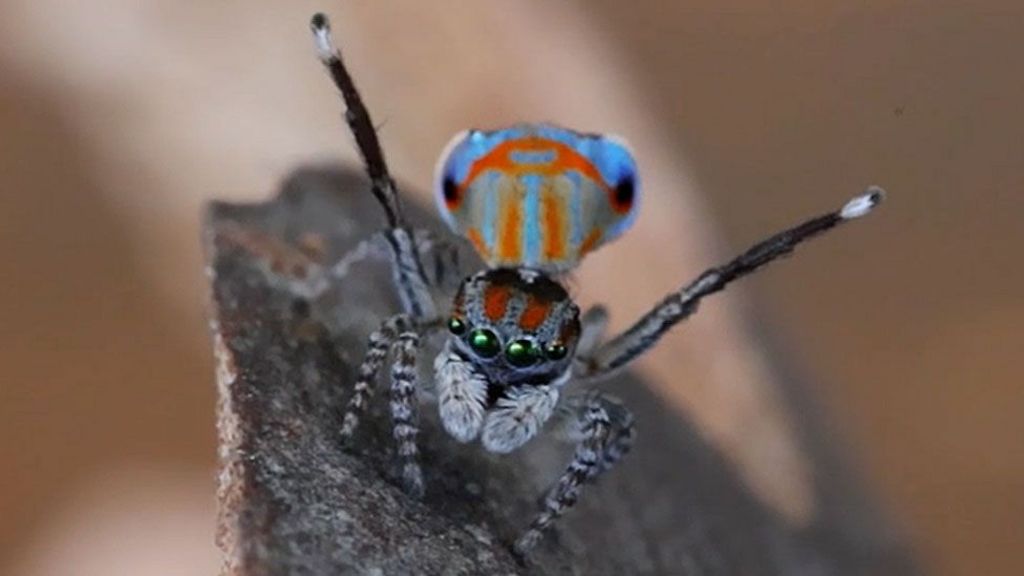
    Australia’s peacock spiders, known for their dazzling colors and intricate mating dances, are more than just a visual spectacle. With over 100 distinct species, these tiny arachnids, each no larger than a pinhead, exhibit an extraordinary level of diversity that has captivated scientists. Researchers are now delving into the genetic mysteries behind this phenomenon, focusing on a little-understood component of their DNA known as ‘dark DNA.’ This enigmatic part of the genetic code, which makes up a significant portion of the spiders’ genome, may hold the key to their rapid adaptation and speciation. Jonah Walker, a researcher at the Sanger Institute, explains that studying these spiders could shed light on the broader processes that drive variation in the natural world. ‘Peacock spiders are at the extreme end of diversity,’ he says. ‘By studying them, we can understand the mechanisms that produce such variation in general.’ The spiders’ unique mating rituals, which include rhythmic drumming sounds and vibrant abdominal displays, vary widely across species. Walker, who overcame his own arachnophobia to study these creatures, collaborated with Dr. Joana Meier and an international team to catalog each species’ behavior, movement, and songs. By cross-referencing this data with their DNA, the team aims to identify the genetic factors responsible for their traits. Early findings suggest that ‘dark DNA,’ which is three times more abundant in peacock spiders than in humans, may play a crucial role in their evolution. This research is part of the broader Earth BioGenome Project, which aims to decode the genetic sequences of all 1.8 million known species within the next decade. Dr. Meier emphasizes that understanding the DNA of diverse organisms, including spiders, butterflies, and moths, will provide unprecedented insights into the principles of genetics and evolution. ‘By studying the DNA of all living things, we not only learn about them but also about ourselves,’ she says. The project has already decoded 3,000 species, with plans to complete 10,000 more next year. The ultimate goal is to unravel the intricate web of life, offering a deeper understanding of how all organisms are interconnected.

  • Childhood obesity: The South African campaigners fighting for healthy food

    Childhood obesity: The South African campaigners fighting for healthy food

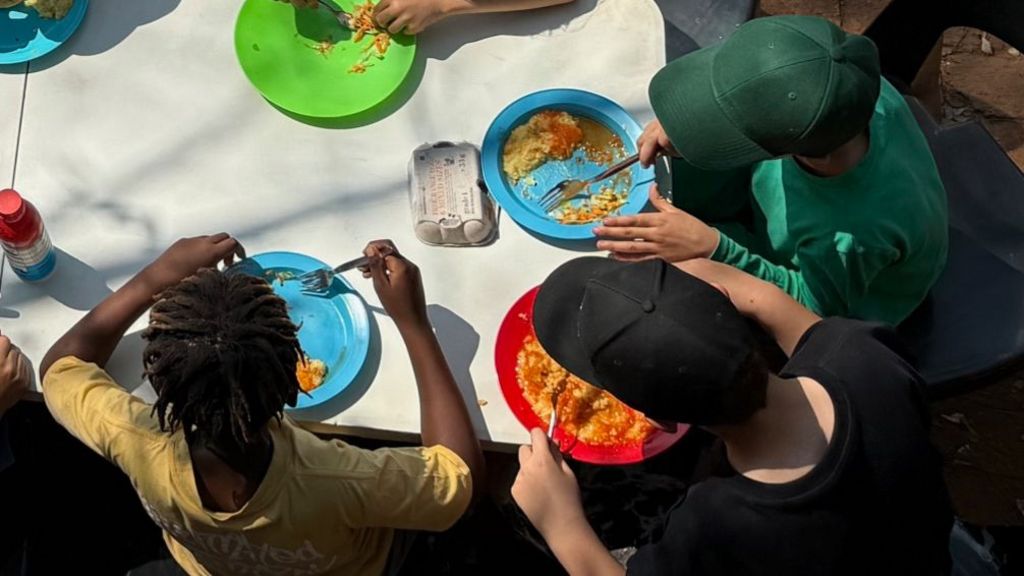
    In the heart of Randburg, South Africa, the Kairos School of Inquiry is making waves with its innovative approach to combating childhood obesity. At lunchtime, students eagerly line up for a meal that’s not only nutritious but also predominantly vegetarian. The menu features dishes like kitchari—a blend of daal and rice—accompanied by tomato chutney, halloumi, and fresh salad. This initiative is part of the school’s broader strategy to address a global health crisis: the alarming rise in childhood obesity, which has now surpassed undernutrition in prevalence. Headteacher Marc Loon has implemented a strict healthy food policy, emphasizing the importance of mindful eating. ‘If all schools adopted our approach, children’s health would significantly improve,’ he asserts. The United Nations reports that the number of overweight and obese adolescents has nearly tripled in the past two decades, with South Africa being one of the hardest-hit countries. Unicef highlights the role of convenience foods in this surge, particularly in low- and middle-income nations. Mamkhabela Mthembu, a 23-year-old trainee lawyer, shared her personal struggle with weight gain during university, attributing it to her reliance on fast food. ‘I never saw junk food as unhealthy; it was a symbol of aspiration,’ she recalls. Now an advocate for Unicef, Mthembu is raising awareness about the long-term health impacts of poor dietary choices. The South African government has taken steps to curb obesity, such as taxing sugary drinks, but challenges remain. Unicef’s Gilbert Tshitaudzi stresses the need for systemic changes, including restricting the marketing of unhealthy foods to children. Meanwhile, parents like Memory Padi face daily battles to keep their children healthy. Her eight-year-old daughter, Sophia, struggles with weight issues linked to steroid treatments for a rare autoimmune disease. Despite efforts to maintain a low-carb diet, Sophia’s weight remains a concern. The Kairos School’s initiative serves as a beacon of hope, demonstrating how institutions can play a pivotal role in fostering healthier futures for the next generation.

  • Sri Lanka & Zimbabwe in Pakistan 2025

    Sri Lanka & Zimbabwe in Pakistan 2025

    In a thrilling display of cricketing prowess, Pakistan has emerged victorious in the ongoing One Day International (ODI) series against Zimbabwe and Sri Lanka. The series, which began on November 11, 2025, has seen Pakistan secure multiple wins, showcasing their dominance on the field. The matches, originally scheduled to be held in Lahore, were relocated to Rawalpindi due to unforeseen circumstances. Zimbabwe stepped in to replace Afghanistan, who withdrew from the series following an air strike incident in October that tragically claimed the lives of three players during a local tournament. Despite the challenges, the series has been a testament to Pakistan’s cricketing strength. Key highlights include Pakistan’s six-run victory in the 1st ODI, an eight-wicket win in the 2nd ODI, and a six-wicket triumph in the 3rd ODI. The series continues with more matches scheduled, including a final on November 29. Cricket enthusiasts can stay updated with live scorecards and match details as the action unfolds.

  • US influencer investigated over wild croc wrestling videos

    US influencer investigated over wild croc wrestling videos

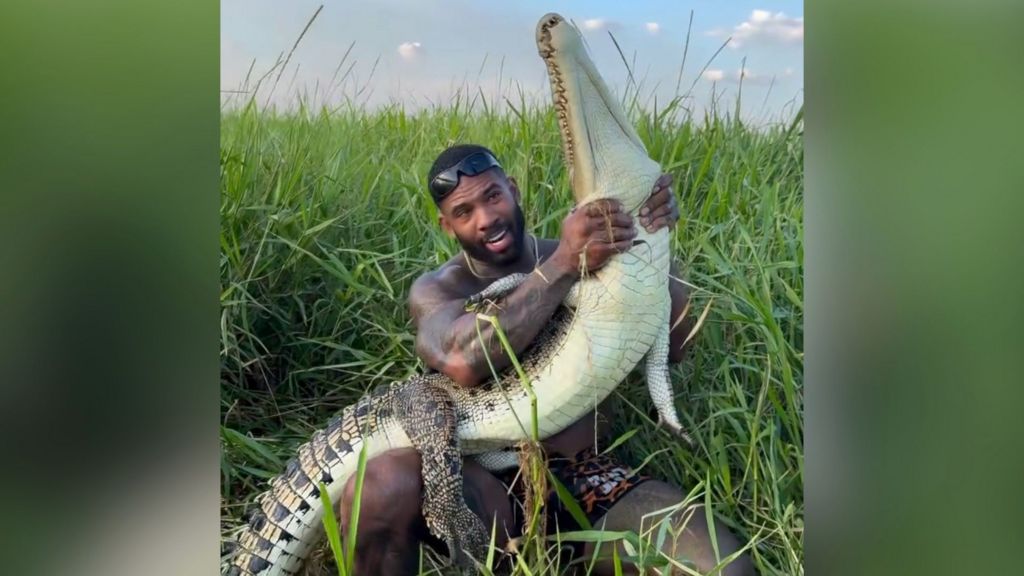
    Australian authorities are investigating US influencer Mike Holston, known as ‘The Real Tarzann,’ after he posted controversial videos of himself capturing wild crocodiles in Queensland. The footage, which has sparked widespread condemnation, shows Holston wrestling a freshwater crocodile and manhandling a juvenile saltwater crocodile, one of the world’s most aggressive reptiles. While Holston claims the videos were made for ‘educational purposes,’ wildlife experts and government officials have labeled his actions as ‘extremely dangerous and illegal.’

    In one video, Holston is seen jumping into shallow water to chase a freshwater crocodile, which draws blood before he secures it. In another, he captures a seemingly limp saltwater crocodile in marshland. Both animals were later released, but experts have raised concerns about the stress and potential harm caused to the reptiles. Queensland officials have warned that such actions can result in fines of up to A$37,500, with on-the-spot penalties of A$8,345 for interfering with saltwater crocodiles.

    The state government has also introduced new legislation to crack down on dangerous wildlife interactions, including penalties for unintentionally feeding crocodiles. Holston’s videos, while popular online, have drawn criticism from figures like Bob Irwin, father of the late naturalist Steve Irwin, who called for stricter penalties and condemned the influencer’s behavior. Irwin emphasized that handling crocodiles requires specialized skills to avoid causing stress or harm, and criticized social media for glorifying harmful wildlife interactions.

    Holston has defended his actions, stating that the animals were released unharmed and that he does not encourage others to replicate his videos. This incident follows another controversy earlier this year involving a US influencer who was widely condemned for taking a baby wombat from the roadside. Prime Minister Anthony Albanese weighed in on that case, suggesting the influencer try the same with more dangerous animals. The ongoing backlash highlights growing concerns about the impact of social media on wildlife and the need for stricter enforcement of wildlife protection laws.

  • Vaccine to curb chlamydia epidemic devastating koalas approved

    Vaccine to curb chlamydia epidemic devastating koalas approved

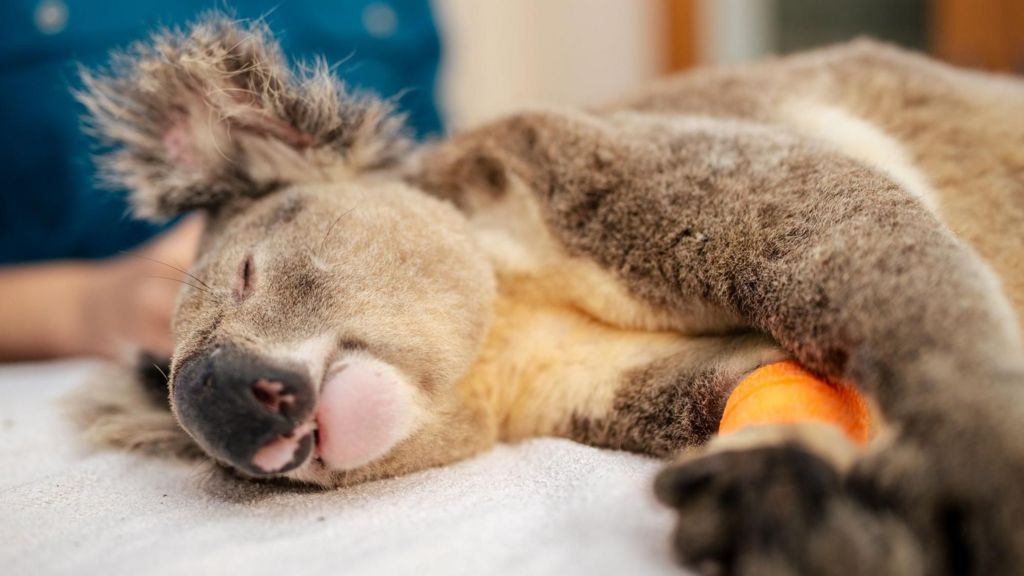
    In a groundbreaking development, a vaccine designed to combat the devastating chlamydia epidemic threatening Australia’s koala population has received regulatory approval. Scientists at the University of the Sunshine Coast (UniSC) have spent over a decade developing this single-dose vaccine, which has shown promising results in reducing symptoms and mortality rates among wild koalas. Chlamydia, a disease transmitted through close contact or mating, has been a leading cause of koala deaths, accounting for up to 50% of fatalities in some regions. The disease causes severe health issues, including blindness, infertility, and often proves fatal. Traditional treatments, such as antibiotics, can be equally harmful, as they destroy the gut bacteria essential for digesting eucalyptus leaves, leading to starvation. The vaccine, tested on hundreds of wild koalas, has demonstrated a 65% reduction in mortality rates and a significant decrease in symptom development during breeding age. Despite the breakthrough, challenges remain. The rollout, slated to begin as early as January 2024, requires substantial funding to distribute the vaccine to wildlife hospitals, vet clinics, and at-risk populations. UniSC researchers hope to provide the vaccine for free but acknowledge the high costs associated with locating and inoculating wild koalas. Dr. Peter Timms, a microbiologist involved in the project, emphasized that while the vaccine is a critical step, it is not a standalone solution. Habitat loss, driven by land clearing, urbanization, and natural disasters, remains the most significant threat to koala survival. The Australian government has also taken steps to address habitat loss, with the New South Wales government recently announcing the creation of the Great Koala National Park, which will protect over 12,000 koalas and other threatened species. Environment Minister Murray Watt highlighted the vaccine’s role in ensuring future generations can still see koalas in the wild, while also focusing on species monitoring and habitat restoration. This milestone offers a glimmer of hope for the endangered koala population, but sustained efforts are needed to secure their long-term survival.