作者: admin

  • A North Korean women’s soccer team is set to play in a tournament in South Korea

    A North Korean women’s soccer team is set to play in a tournament in South Korea

    Six years after the last official visit by North Korean athletes to South Korean soil, a historic moment of cross-border sports exchange is set to take place later this month, offering a rare flash of engagement between two nations technically divided by a decades-long armed conflict.

    North Korea’s Pyongyang-based Naegohyang Women’s Football Club has qualified for the semifinal round of the Asian Football Confederation (AFC) Women’s Champions League, which will be hosted in the South Korean city of Suwon, located roughly 30 kilometers south of Seoul. The match is scheduled for May 20, where Naegohyang will face a rematch against South Korea’s Suwon FC Women, who they defeated 3-0 during the group stage of the continental tournament in Myanmar last November.

    South Korea’s Unification Ministry, the government body responsible for managing inter-Korean relations, confirmed the upcoming visit in an official statement released to reporters on Monday. South Korea’s national governing body for the sport, the Korea Football Association (KFA), added that the AFC has formally communicated that North Korean officials have submitted the required roster of players and support staff traveling to Suwon for the competition. According to the KFA, AFC rules mandate that North Korea will face significant financial penalties from the confederation if the team fails to appear for the scheduled semifinal. The other semifinal fixture will match Australia’s Melbourne City FC against Japan’s Tokyo Verdy Beleza, with the final scheduled to take place just three days after the semifinal round, also in Suwon. Naegohyang earned its spot in the final four after defeating a Vietnamese club in the quarterfinal round held in March this year.

    As of Monday, North Korean state media has not yet made any public announcement of the club’s upcoming trip to South Korea.

    This upcoming match marks the first time that any North Korean athletic delegation has traveled to South Korea since December 2018, when a North Korean table tennis team crossed the border for a friendly competition. That visit came months after North Korean athletes marched alongside a high-level diplomatic delegation during the opening ceremony of the 2018 Pyeongchang Winter Olympics hosted in South Korea, a high point of diplomatic detente between the two neighbors. The last time North Korean female soccer players competed on South Korean territory was during the 2014 Incheon Asian Games, when the North Korean national women’s team participated in the continental multi-sport event.

    Beyond club competition, North Korean women’s soccer has established itself as a global powerhouse in youth international competition in recent years. The country currently holds both the FIFA Under-17 Women’s World Cup and FIFA Under-20 Women’s World Cup titles, defending its status as the top-ranked program in both age groups.

    Despite this moment of cross-border sports engagement, broader inter-Korean relations have remained frozen for years, following the collapse of landmark nuclear diplomacy between North Korean leader Kim Jong Un and then-U.S. President Donald Trump in 2019. Talks between Pyongyang, Seoul and Washington broke down after the two sides failed to reach agreement on the easing of sweeping U.S.-led sanctions imposed on North Korea over its illegal nuclear and ballistic missile programs. In recent months, tensions have escalated sharply, as Kim has accelerated development of North Korea’s nuclear and missile arsenals, with multiple tests targeting both U.S. military allies in Asia and the U.S. mainland. Kim has formally labeled South Korea as Pyongyang’s “most hostile adversary,” and has waged an aggressive campaign to block the spread of South Korean popular culture and language within North Korean borders, cracking down on unapproved outside cultural influence.

    While inter-Korean sports exchanges were once a key confidence-building measure during periods of warmer relations — with the two sides fielding combined teams and marching together under a single unified flag at multiple Olympic Games — all official cross-border athletic activities have ground to a halt in recent years amid the ongoing diplomatic freeze.

  • North Korean club to play rare football match in South

    North Korean club to play rare football match in South

    In a groundbreaking moment for inter-Korean sporting exchange, South Korea’s unification ministry confirmed Monday that a North Korean women’s football club will travel to the South this month to compete, marking the first visit by a North Korean sports delegation to the country in seven years. Decades after the Korean War concluded with an armistice rather than a formal peace treaty, the two neighboring states remain technically at war, making cross-border cultural and athletic exchanges extremely uncommon.

    Naegohyang Women’s Football Club, a Pyongyang-based side founded in 2012, is set to face South Korea’s Suwon FC Women in an Asian Women’s Champions League semi-final clash at the Suwon Sports Complex on May 20. The North Korean traveling party will comprise 27 players and 12 club officials, who are scheduled to arrive at Incheon International Airport on May 17 via an Air China flight routed through Beijing, according to a senior unification ministry official. The semi-final loser will return to North Korea just one day after the match on May 21, as no third-place playoff is planned for the competition. The winner will advance to the continental club final on May 23, where they will face either Australia’s Melbourne City or Japan’s Tokyo Verdy Beleza for the continental title.

    This upcoming fixture is the first appearance by a North Korean sports team on South Korean soil since mixed delegations for shooting, youth football and table tennis visited in 2018. The last time a North Korean women’s football side competed in the South was a decade ago, when the North Korean national team took part in the 2014 Asian Games hosted in Incheon. Observers note that most of Naegohyang’s roster is made up of current and former North Korean national team players, a squad drawn from one of Asia’s most dominant women’s football programs. North Korea’s national women’s sides have claimed multiple major international titles in recent years, most recently winning the 2024 U-17 Women’s World Cup with a dominant 3-0 victory over the Netherlands in the final.

    Beyond the pitch, the match carries major geopolitical weight, coming as South Korea’s new dovish administration under President Lee Jae Myung pursues rapprochement with Pyongyang after years of escalating cross-border tensions. Lee has repeatedly called for unconditional talks with North Korea, framing the two Koreas as being destined to “make the flowers of peace bloom” through dialogue. To date, Pyongyang has not responded to Lee’s outreach, and has continued to label Seoul its “most hostile” adversary. Even so, regional analysts see the club’s visit as a small but meaningful opening for inter-Korean engagement.

    For the South Korean government, the fixture represents an opportunity to establish at minimum a basic line of communication between the two governments, according to Lim Eul-chul, a leading North Korea researcher at Kyungnam University. “It could become a chance to test peaceful coexistence,” Lim told Agence France-Presse. The historic match comes amid heightened international concerns over Pyongyang’s military activities: North Korean leader Kim Jong Un has publicly committed to expanding the country’s nuclear arsenal, and Pyongyang conducted four intercontinental missile tests in April, the highest number of tests recorded in a single month in more than two years. Pyongyang has also deepened its military and economic alignment with Moscow in recent months, with widespread international reports indicating it has sent artillery shells and troop deployments to support Russia’s full-scale invasion of Ukraine. Western defense observers broadly expect Pyongyang to receive advanced military technology from Russia in exchange for its military support.

  • What to know about hantavirus, the illness suspected in a cruise ship outbreak

    What to know about hantavirus, the illness suspected in a cruise ship outbreak

    A rare rodent-borne hantavirus outbreak is suspected to have occurred aboard an Atlantic cruise ship, leaving three people dead and multiple others ill, international health authorities confirmed recently. As investigations into the source and spread of the outbreak continue, public health officials are reminding communities of the core risks and prevention measures for this little-understood pathogen.

    Hantaviruses have circulated among animal populations for centuries, with early recorded outbreaks documented across Asia and Europe. In the Eastern Hemisphere, the virus is most commonly associated with hemorrhagic fever with renal syndrome, a condition marked by kidney failure and internal bleeding. It was not until the early 1990s that a new strain of hantavirus was identified in the southwestern United States, where it causes a severe respiratory illness now named hantavirus pulmonary syndrome.

    This virus re-entered public focus last year following the death of Betsy Arakawa, wife of the late legendary actor Gene Hackman, who contracted a hantavirus infection in New Mexico.

    In a formal statement released Sunday, the World Health Organization confirmed that comprehensive investigations into the cruise ship outbreak are still ongoing. The process includes expanded laboratory testing, full epidemiological tracing to identify the origin of the infection, and ongoing genetic sequencing of the virus to confirm its strain.

    As a zoonotic disease, hantavirus is primarily transmitted to humans through direct contact with rodents, or contact with their urine, saliva, and feces. The highest infection risk occurs when infected organic material is disturbed, releasing viral particles into the air that people can inhale. Most human exposures occur in enclosed, low-ventilation spaces such as rural cabins, outbuildings, or infrequently cleaned homes where rodent populations have established nests. While extremely rare, the WHO confirms that limited person-to-person transmission of hantavirus has been documented in past outbreaks.

    The U.S. Centers for Disease Control and Prevention established formal national tracking for hantavirus after a major 1993 outbreak in the Four Corners region, the intersection of Arizona, Colorado, New Mexico and Utah. The outbreak was first identified by a sharp Indian Health Service physician who noticed an unusual cluster of unexplained deaths among otherwise healthy young patients, a pattern that had gone unrecognized by larger health systems at the time.

    Today, most confirmed hantavirus cases in the U.S. are concentrated in Western states, with New Mexico and Arizona longstanding hotspots for infection. Michelle Harkins, a pulmonologist at the University of New Mexico Health Sciences Center who has spent decades researching hantavirus and treating infected patients, explains the higher case rate is tied to increased interactions between humans and wild rodent populations in rural areas of these states.

    Early hantavirus infection presents with generic flu-like symptoms, including fever, chills, muscle aches and headaches, making early diagnosis extremely difficult. “Early in the illness, you really may not be able to tell the difference between hantavirus and having the flu,” explained Dr. Sonja Bartolome, an infectious disease specialist at UT Southwestern Medical Center in Dallas.

    Symptoms of hantavirus pulmonary syndrome typically develop between one and eight weeks after exposure to an infected rodent. As the infection progresses, it causes fluid to build up in the lungs, leading to severe chest tightness and respiratory failure. The alternate form of the disease, hemorrhagic fever with renal syndrome, develops much more quickly, with symptoms appearing within one to two weeks of exposure.

    Mortality rates for hantavirus infection vary widely based on the strain. According to CDC data, hantavirus pulmonary syndrome kills approximately 35% of all people it infects, while hemorrhagic fever with renal syndrome has a mortality rate ranging between 1% and 15%.

    Decades of research have yet to resolve many critical questions about hantavirus, and no targeted antiviral treatment or cure currently exists for infection. Even so, experts emphasize that early supportive medical care significantly improves a patient’s chance of survival. Harkins notes that core gaps in knowledge remain, including why the virus causes mild, asymptomatic infection in some people and life-threatening illness in others, as well as how the human body develops protective antibodies after exposure. She and her team have conducted long-term cohort studies of recovered patients to uncover insights that could lead to new treatments. “A lot of mysteries,” Harkins said, adding that the one clear takeaway from existing research is that limiting exposure to rodents is the single most effective way to prevent infection.

    Public health officials advise that the core prevention step is to minimize contact with rodents and their waste. When cleaning up areas with rodent droppings, people must wear disposable protective gloves and use a bleach solution to decontaminate surfaces. Experts strongly warn against sweeping or vacuuming droppings, as these actions stir viral particles into the air, drastically increasing inhalation risk.

  • Australia housing approvals plunge as nation misses key target

    Australia housing approvals plunge as nation misses key target

    Australia is steadily falling further off track from its ambitious national housing construction goals, after new official data revealed a sharp double-digit drop in building approvals during March that has deepened concerns over ongoing supply shortages and affordability crises across the country.

    Data published by the Australian Bureau of Statistics (ABS) shows that just 17,300 new dwellings — including standalone homes, apartments, semi-detached properties and townhouses — received planning approval across the nation in March. This marks a 10.5% decline from February’s revised figure, which hit a more-than-four-year high of 19,339 approved projects. Over the 12-month period ending in March, national total dwelling approvals reached 198,396, a figure that remains well short of the annual benchmarks laid out in the federal government’s key housing policy.

    Under the National Housing Accord, all Australian state and territorial governments have committed to delivering 1.2 million new homes over five years, which translates to an annual target of 240,000 new constructions by June 2029. Economists warn that the latest approvals data confirms the nation is not on course to hit this goal, with a cascade of economic and geopolitical headwinds piling relentless pressure on the domestic construction sector.

    AMP senior economist My Bui identified multiple overlapping factors dragging on the sector: the ongoing conflict in the Middle East, which has disrupted global energy markets, combined with persistent domestic labour shortages, rising construction material costs, and elevated interest rates have all created significant barriers to ramping up new home construction. “With these ongoing headwinds hitting the construction sector, from rising material and labour costs to tighter financing conditions, it’s increasingly likely that we will keep slipping further and further away from the National Housing Accord’s annual housing targets,” Bui explained.

    Lucinda Jerogin, associate economist at Commonwealth Bank, echoed these concerns, noting that the drop in approvals itself creates an additional layer of pressure for construction firms operating in the already strained market. “Headwinds are continuing to build, as higher interest rates and rising input costs weigh heavily on sector profitability and project pipeline,” Jerogin said. “We expect new dwelling cost inflation to accelerate in the coming months, following a series of recently announced price hikes for core construction materials.”

    The latest housing data comes amid a broader resurgence of inflationary pressure across Australia. Last Wednesday, ABS data confirmed that the national Consumer Price Index rose 4.6% in the 12 months to March 2026, hitting the highest annual inflation rate since September 2023, when the Australian economy was still in its post-COVID-19 rebound phase. Fuel prices have been the single largest driver of this recent inflation surge: petrol prices jumped 32.8% in March alone, pushing up overall transport costs by 9.2% over the 30-day period.

    This spike in global energy prices can be traced directly to escalating geopolitical tensions in the Middle East. Since the outbreak of open conflict between Israel and Iran that began at the end of February, oil markets have seen extreme volatility. Tensions have also disrupted shipping through the Strait of Hormuz, the critical global chokepoint through which roughly 20% of the world’s daily oil supplies pass, pushing up global crude prices significantly and raising transport and production costs for industries across Australia, including construction.

    Breaking down the approvals data at the state level, Victoria outperformed all other Australian jurisdictions in March, recording 5,102 total dwelling approvals, including 2,853 approvals for standalone houses. New South Wales followed closely behind with 4,445 total approvals, 2,351 of which were for houses — marking the strongest monthly growth in house approvals for the state since 2024. Queensland came in third with 3,910 total approvals and 2,258 house approvals.

    Western Australia recorded 2,158 total dwelling approvals (1,632 houses), while South Australia logged 1,632 total approvals and 816 house approvals for the month. The Australian Capital Territory recorded 337 approvals, Tasmania recorded 209, and the Northern Territory recorded just 46 new dwelling approvals in March.

    The ongoing shortfall in new housing supply continues to worsen Australia’s long-running housing affordability crisis, pushing up rental and property purchase prices and putting home ownership out of reach for many aspiring Australian buyers, particularly young couples and first-time entrants to the property market.

  • RBA set to hike interest rates as 100,000 homeowners face default

    RBA set to hike interest rates as 100,000 homeowners face default

    Australia’s central bank is gearing up to deliver another aggressive interest rate increase this Tuesday, with a fresh surge in persistent inflation leaving policymakers with little choice but to squeeze the national economy. Financial and economic analysts widely expect the Reserve Bank of Australia (RBA) to raise the official cash rate by 25 basis points at its 2:30 pm board meeting, marking the third consecutive rate hike in 2026. If the forecast holds true, the benchmark cash rate will climb back to 4.35 percent, completely erasing the three rate cuts implemented to support the economy in 2025 and piling fresh financial stress on roughly 3.6 million Australian mortgage holders.

  • Wildfire tears through hundreds of acres in Arizona

    Wildfire tears through hundreds of acres in Arizona

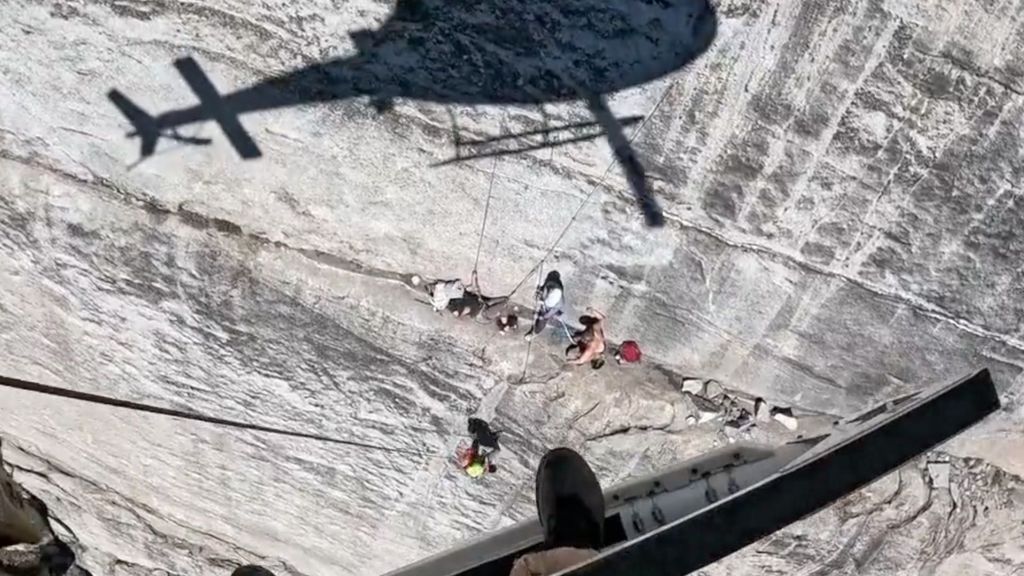
    A fast-moving wildfire has swept across hundreds of acres of land in Arizona, triggering an urgent firefighting response from local emergency crews. Local authorities have conducted rapid aerial and ground assessments of the blaze, putting the total burned area at 558 acres, equal to roughly 2.3 square kilometers of terrain. At the time of reporting, firefighting teams were already on the ground working aggressively to contain the spread of the fire, clear affected boundaries, and prevent the blaze from extending into nearby populated areas or ecologically sensitive zones. While details on the cause of the wildfire and any reported injuries or structural damage have not yet been released, local emergency management departments have activated their standard wildfire response protocols to coordinate resource deployment across the affected region. Firefighters are expected to remain on site for coming days to fully extinguish hot spots and secure the burned area.

  • World shares are mixed, with sharp gains for tech stocks, while oil prices bounce back

    World shares are mixed, with sharp gains for tech stocks, while oil prices bounce back

    Global equity markets kicked off the trading week with a split performance Monday, as a wave of bullish momentum for semiconductor and technology stocks, carried over from last Friday’s record-breaking rally on Wall Street, offset ongoing uncertainty stemming from escalating tensions in the Strait of Hormuz. Following the U.S. military’s launch of a new operation early Monday to escort commercial vessels through the strategic shipping chokepoint, global oil prices staged a sharp rebound, with international benchmark Brent crude climbing more than $2 per barrel.

    Iran has formally rejected the U.S. escort plan, but Foreign Ministry spokesman Esmail Baghaei confirmed Sunday in comments reported by Iran’s state-run judiciary Mizan News Agency that Tehran is currently reviewing the U.S. response to its latest diplomatic proposal to de-escalate the ongoing war. By mid-trading Monday, U.S. West Texas Intermediate crude had risen $1.80 to settle at $103.73 per barrel, while Brent crude jumped $2.23 to hit $110.40 per barrel.

    In European trading, indexes ended the day with minor moves after a volatile session. Germany’s DAX index inched up 0.1% to close at 24,303.77, while Paris’s CAC 40 slipped 0.5% to 8,072.91. U.K. markets remained closed for a public holiday, leaving trading volumes thin across much of the continent. U.S. equity futures pointed to a muted open, with S&P 500 futures trading almost flat and Dow Jones Industrial Average futures down 0.3% heading into the New York trading session.

    Across Asian markets, performance was far more dynamic, driven by broad buying of technology and semiconductor shares following last week’s strong U.S. earnings. Hong Kong’s Hang Seng Index gained 1.2% to close at 26,095.88, while South Korea’s Kospi surged 5.1% to end at 6,936.99, led by a 5.4% jump in shares of tech giant Samsung Electronics. In Taiwan, the Taiex index rallied 4.6%, propelled by a 6.6% gain in market heavyweight Taiwan Semiconductor Manufacturing Company (TSMC), the world’s leading contract chipmaker. Australia’s S&P/ASX 200 bucked the upward trend, slipping 0.4% to 8,697.10, while markets in mainland China and Japan remained closed for Golden Week national holidays.

    Analysts note that much of the near-term trajectory for global markets will depend on diplomatic progress to end the war in Iran and resolve the shipping backlog that has choked the Strait of Hormuz, a chokepoint through which roughly 20% of global oil supplies pass daily. In a Monday market commentary, Stephen Innes of SPI Asset Management noted that the oil market “remains the fulcrum” of global market volatility, with hundreds of tankers, bulk carriers, and cargo ships still stranded across the Persian Gulf. Idle vessels have created widespread storage constraints that have forced energy producers to curb production, as there is no available capacity to hold newly extracted crude.

    Thousands of seafarers have been stuck onboard stranded vessels in the Gulf since the outbreak of the war. Multiple crew members told the Associated Press they have witnessed intercepted drones and missiles explode over nearby waters, while their ships face growing shortages of drinking water, food, and other critical supplies.

    The U.S. military operation, dubbed “Project Freedom” by former President Trump, launched early Monday morning. U.S. Central Command confirmed the mission involves guided-missile destroyers, more than 100 aircraft, and 15,000 active service members, though the Pentagon has not yet responded to questions about the operational deployment of these forces.

    Last Friday, Wall Street closed out its fifth consecutive winning week with fresh record highs for major indexes. The S&P 500 gained 0.3% to hit an all-time closing high of 7,230.12, while the Nasdaq Composite added 0.9% to close at a record 25,114.44. The Dow Jones Industrial Average dipped 0.3% to 49,499.27. Tech giant Apple led the rally after reporting better-than-expected quarterly profits, with its share price climbing 3.3% to provide the single biggest boost to the broad S&P 500.

    Long-term market performance has continued to track corporate earnings, and U.S. companies have broadly outperformed profit expectations through the first quarter of 2026. This resilience has held up even amid the ongoing Iran war and elevated oil prices that have eroded consumer confidence for many U.S. households.

    In currency markets Monday, the U.S. dollar edged up slightly to 156.92 Japanese yen, up from 156.80 yen in prior trading. The dollar dipped as low as 155.75 yen at one point, with thin trading volumes amplifying volatility due to the closure of Japanese markets. The euro fell to $1.1717, down from $1.1746 in the previous session.

  • ‘That’s where you’ll see sides struggle’: Blues legend reveals doubts over Nathan Cleary and Mitch Moses as halves for Origin

    ‘That’s where you’ll see sides struggle’: Blues legend reveals doubts over Nathan Cleary and Mitch Moses as halves for Origin

    As the New South Wales Blues ramp up preparations for the 2025 State of Origin series opener on May 27, one of the program’s most celebrated former winners is casting doubt on a potential star halves combination that has dominated recent selection discussion. Trent Hodkinson, the playmaker who steered NSW to a historic 2014 series victory that ended Queensland’s eight-year winning streak, says Penrith Panthers star Nathan Cleary is a guaranteed selection at the number seven halfback jersey – but he is not convinced pairing Cleary with another specialist halfback, Parramatta Eels’ Mitchell Moses, will deliver success at the highest level of rugby league’s toughest representative arena.

    The NSW selection panel is set to name its starting side for the opening match in exactly two weeks, and Cleary’s spot at halfback has been viewed as a near-certainty despite inconsistent past performances in the Origin environment. Cleary has built a reputation as one of the best elite playmakers in the world, leading his Penrith side to multiple NRL premierships, and his combination with Panthers club teammate Jarome Luai is already proven at both domestic and representative level.

    Moses, a regular Blues representative who has turned in strong Origin performances in previous campaigns, has not been at his dominant best for Parramatta this NRL season. However, the Eels have been ravaged by a devastating injury crisis across their roster, a context that has softened criticism of Moses’ 2025 form. The pair have only shared the Origin field once: in last year’s series opener, where Moses lined up at five-eighth alongside Cleary, before injuries cut short any chance for the duo to build sustained chemistry together.

    Beyond Moses, Hodkinson points to two other credible candidates for the five-eighth role: Luai, who has recently returned to action after a mid-season injury layoff, and Canberra Raiders young gun Ethan Strange. Even with Canberra underperforming as a team in 2025, Hodkinson noted that Strange has stood out as a bright spark for the club, putting himself firmly in Origin contention.

    “Nathan will be locked in at that seven, there’s no question about that,” Hodkinson said in his analysis. “There are a lot of good halves putting their hands up for sure. Moses has been playing solid footy, there’s Luai who’s just come back into the frame after being injured. Ethan Strange as well is really doing good things in a Canberra side who’s sort of underperforming at the moment, but he’s standing out which is good. I think there are multiple options at that six. Cleary will be locked in at seven, but we’ll have to see how Loz goes.”

    Hodkinson pointed to his own 2014 success to explain his hesitation about pairing two elite, playmaking-focused halfbacks together. That year, Hodkinson served as the chief playmaker in the halves, while his partner Josh Reynolds operated as an instinctive, off-the-cuff energy player – a clear division of roles that made the combination click.

    Hodkinson concedes that a Cleary-Moses pairing could still work, as long as the pair define clear roles ahead of the game: with Cleary leading the structure and play direction, and Moses leaning into his natural running game and long-range kicking ability, a skill that is particularly valuable in the high-pressure Origin environment. The pair even proved the combination can work once before, delivering a victory in last year’s series opener.

    Still, Hodkinson warned that pairing two dominant playmakers can create communication and role confusion, issues that are amplified in the Origin cauldron, where crowd noise makes on-field communication extremely difficult, especially in away fixtures.

    “But I think two dominant halves, that’s where you’ll see sides struggle. Especially at Origin level where it’s hard to hear, you’ve got the crowd, away games and things like that,” he explained. “If Nathan can direct the play around and Mitch can play off the back of it – which they’ve done before – (then it can work) but Luai has got that long-standing combination with him. And Ethan Strange, he can take a backward step down there at Canberra and then just explodes when he needs to. As Loz said, they’re going to pick on form, he’s made it quite clear, so certainly they’ll need to play their way into a jersey.”

  • What is the hantavirus that has been confirmed on an Atlantic cruise ship?

    What is the hantavirus that has been confirmed on an Atlantic cruise ship?

    A suspected hantavirus outbreak on an Atlantic Ocean cruise ship has left three people dead, the World Health Organization (WHO) has confirmed. Of the six reported cases linked to the incident, one has received formal laboratory confirmation, while the remaining five are still being examined as part of ongoing investigations.

    The outbreak unfolded aboard the MV Hondius, a cruise vessel operating on a voyage from Argentina to the West African island nation of Cape Verde. WHO spokespeople told the BBC that detailed epidemiological inquiries, including additional rounds of laboratory testing, are still underway to clarify the full scope of the transmission event.

    To contextualize the public health risk, hantaviruses are a family of pathogens naturally hosted by rodent populations. The United States Centers for Disease Control and Prevention (CDC) explains that most human infections occur when people inhale aerosolized particles contaminated with virus from dried rodent urine, droppings, or saliva. Rare secondary transmission routes include bites or scratches from infected rodents.

    Infection with hantavirus can progress to one of two life-threatening syndromes. The first, Hantavirus Pulmonary Syndrome (HPS), begins with non-specific early symptoms including fatigue, elevated body temperature, and muscle pain, often followed by headaches, chills, dizziness, and gastrointestinal discomfort. Once the virus progresses to attack the respiratory system, CDC data places the mortality rate at roughly 38%.

    The second, more severe form of disease is Hemorrhagic Fever with Renal Syndrome (HFRS), which primarily targets kidney function. Advanced cases can lead to dangerously low blood pressure, internal bleeding, and acute kidney failure. Data from the U.S. National Institutes of Health estimates 150,000 new cases of HFRS are recorded globally each year, with the vast majority concentrated in Europe and Asia; over half of all annual cases occur in China. In the United States, where systematic hantavirus surveillance launched in 1993, just 890 confirmed cases were reported across the 30-year period ending in 2023. Still, one globally distributed common strain, Seoul virus, carried by widespread brown (Norway) rat populations, is present across the United States and most other regions of the world.

    Unlike many viral pathogens, no targeted antiviral treatment or vaccine exists for hantavirus infection. Current clinical guidance from the CDC centers on supportive care tailored to a patient’s symptoms: this may include supplemental oxygen therapy, mechanical respiratory support, antiviral drugs, and kidney dialysis for patients experiencing renal failure. Severe cases require admission to hospital intensive care units, with many critically ill patients needing intubation to support breathing.

    Public health officials emphasize that prevention focuses entirely on eliminating human contact with rodent populations. Core recommendations include sealing structural gaps in basements and attics that allow rodents to enter residential buildings, and wearing properly fitted protective equipment when cleaning up areas with rodent droppings to avoid inhaling contaminated dust.

    This cruise ship outbreak marks the second high-profile hantavirus death recorded this year. In February 2025, Betsy Arakawa, wife of Oscar-winning American actor Gene Hackman, died from a respiratory illness caused by HPS, the most common strain of hantavirus in the U.S. Investigators found rodent nests and dead rodent specimens in outbuildings on Arakawa’s property, where she had been staying before her death. Police documents show Arakawa searched online for information comparing flu and COVID-19 symptoms in the days before her death, highlighting the challenge of distinguishing hantavirus’s early non-specific symptoms from more common respiratory illnesses.

  • ‘No pilgrims’: regional war hushes Iraq’s holy cities

    ‘No pilgrims’: regional war hushes Iraq’s holy cities

    The echoes of multilingual pilgrim chatter that once filled the vast courtyards of Imam Ali’s iconic golden-domed shrine in Iraq’s Najaf have fallen silent. Months of escalating regional conflict sparked by U.S.-Israeli strikes on Iran in late February have effectively halted the annual flood of Shia worshippers that sustains the local economy, leaving business owners, workers and hoteliers reeling from an unprecedented collapse in tourism revenue.

    For decades, millions of Shia Muslims from across the globe – Iran, Lebanon, Gulf Cooperation Council states, India, Afghanistan and beyond – make the spiritual journey to Iraq’s two holiest sites: Najaf, home to the burial place of Imam Ali, the Prophet Mohammed’s son-in-law and first Shia Imam, and Karbala, 80 kilometers north, where the Prophet’s grandsons Imam Hussein and Abbas are interred. For local communities, religious tourism is not just an industry – it is the backbone of daily livelihood.

    Seventy-one-year-old Abdel Rahim Harmoush, a jeweler who has operated a stall in Najaf’s old market near the shrine for 38 years, recalled the days when the market was so packed with foreign visitors that navigating the aisles was nearly impossible. “Iranians used to keep everyone busy: the jeweller, the fabric merchant, the taxi driver. Now there are none,” he said. Without a swift return of pilgrim crowds, Harmoush warned, the sector faces total economic ruin: small business owners will be unable to cover rent and taxes, day laborers will go without work, and transportation workers will be left stranded without passengers.

    The crisis has hit the hospitality sector particularly hard. Of Najaf’s 250 hotels, 80 percent have already shut their doors, according to Saeb Abu Ghneim, head of the city’s hotel association. More than 2,000 hotel employees have been laid off or placed on unpaid leave. Fifty-two-year-old hotel owner Abu Ali told reporters he was forced to let go five of his six staff members, leaving just one employee to manage nearly 70 empty rooms. “How can I pay salaries if there is no work?” he asked.

    Even currency exchangers, who once navigated nonstop lines of foreign visitors converting dinars, now sit idle. Twenty-eight-year-old Moustafa al-Haboubi said he now gets just one or two customers a day, spending most of his work hours scrolling through his phone or chatting with nearby neighbors. “There are no pilgrims now, Iranian or otherwise,” he said.

    The collapse of the sector comes even after a fragile ceasefire took effect on April 8 and Iraq reopened its airspace to commercial traffic. Only a tiny trickle of domestic pilgrims visit on weekends, with almost no international worshippers returning to the sacred sites. The situation is identical in Karbala, where Israa al-Nasrawi, head of the city’s tourism committee, described the ongoing crisis as a “catastrophe.”

    Tourist numbers in Karbala have dropped by roughly 95 percent, forcing hundreds of hotels to close and leaving dozens of tour operators completely out of work. Akram Radi, a tour manager with 16 years of experience in the sector, said his company once served up to 1,000 visitors a month, and now operates at just 10 percent capacity. “I might have to close and look for another job,” he said.

    For Iraq, the collapse of religious tourism deals a major blow to the non-oil sector, which has long sought to diversify the country’s oil-dependent economy. The industry had only just recovered from widespread shutdowns during the COVID-19 pandemic, when mosques and shrines were closed to visitors for months. After decades of persistent conflict that have gutted other parts of Iraq’s tourism industry, religious tourism remained one of the few reliable sources of income and employment for millions of people in the country’s southern holy cities – and today, that future hangs in the balance.