
In a significant development, a group of U.S. senators has introduced the first-ever Senate resolution urging the recognition of a Palestinian state. This move, led by Democrat Jeff Merkley of Oregon, signals a notable shift in Washington’s stance toward Israel, nearly two years into its ongoing conflict with Hamas in the Gaza Strip. The resolution advocates for a demilitarized Palestinian state coexisting with a secure Israel, aiming to foster hope and enhance peace prospects for both sides. Despite the Democratic-led effort, the resolution faces slim chances of passing in the Republican-majority Senate, where President Donald Trump and his party have expressed opposition to recognizing Palestinian statehood. Concurrently, in the House of Representatives, Democrat Ro Khanna of California is circulating a letter to garner support for Palestinian statehood. These legislative actions reflect a growing inclination among U.S. lawmakers to pressure Israel to end the war and alleviate the humanitarian crisis in Gaza. The conflict, which began with Hamas’s October 7, 2023, attack, has resulted in over 65,000 Palestinian deaths, according to Gaza health authorities, and continues to devastate the region. The Israeli embassy in Washington has yet to comment on the Senate resolution. Meanwhile, international momentum for recognizing Palestine is building, with several U.S. allies preparing to do so as world leaders convene at the U.N. General Assembly in New York. A recent Reuters/Ipsos poll indicates that 58% of Americans support U.N. recognition of Palestine as a nation. The resolution’s co-sponsors include prominent Democrats and independent Senator Bernie Sanders, who recently described the situation in Gaza as a genocide, echoing findings by a U.N. Commission of Inquiry that Israel has rejected as biased. As the conflict approaches its second anniversary, the push for Palestinian statehood underscores the urgent need for a resolution to the protracted crisis.
作者: admin
-

Borussia Dortmund sorry for TikTok ‘mocking’ woman’s stammer
German football powerhouse Borussia Dortmund and triathlon organizer Ironman have issued public apologies after facing backlash for posting TikTok videos that appeared to mock Jessie Yendle, a Welsh influencer with a stammer. The controversial clips, which featured Jessie struggling to pronounce a sound before transitioning into a popular TikTok dance track, were widely criticized for their insensitivity. Both organizations have since removed the videos and expressed remorse for their actions. Borussia Dortmund has extended an invitation to Jessie to attend a UEFA Champions League match as a gesture of goodwill, while Ironman acknowledged their oversight and pledged to improve their content vetting process. Jessie, known online as Mimidarlingbeauty to her 3.5 million TikTok followers, has been a vocal advocate for raising awareness about speech impediments. Her spokesperson stated that the videos were deeply hurtful and highlighted the ongoing need for a more inclusive society. Jessie has also campaigned for the introduction of a universal symbol to assist the estimated 450,000 people in the UK with speech impediments.
-

BOJ to keep interest rates steady as tariff, US slowdown risks loom
The Bank of Japan (BOJ) concluded its two-day policy meeting on Friday, September 19, 2024, with expectations of maintaining its short-term interest rate at 0.5%. This decision comes amidst growing concerns over the impact of U.S. President Donald Trump’s tariffs and signs of a weakening U.S. economy. The BOJ’s cautious stance reflects the fragile state of Japan’s economic recovery, which is increasingly vulnerable to external pressures, particularly on exports. Governor Kazuo Ueda is scheduled to hold a news conference at 0630 GMT, where markets will closely monitor his views on the tariff implications and the broader economic outlook. Analysts predict that the BOJ will remain cautious in its approach, with potential rate hikes delayed until early next year. The central bank’s policy outlook is further complicated by domestic political uncertainty, as Japan’s ruling party prepares for a leadership race following Prime Minister Shigeru Ishiba’s resignation earlier this month. Despite global uncertainties, some hawkish BOJ members have warned of the risks of prolonged negative real borrowing costs, driven by stubbornly high food prices and a tight job market. Japan’s consumer inflation has remained above the BOJ’s 2% target for over three years, adding pressure on households’ cost of living. The BOJ exited its decade-long stimulus program last year and raised rates in January, but the path forward remains uncertain as policymakers navigate the dual challenges of domestic inflation and external economic risks.
-

Virtual K-pop stars win lawsuit against critic on social media
In a landmark ruling, a South Korean court has ordered a social media user to pay 500,000 won ($360; £265) for defaming the virtual K-pop boyband Plave. The group, whose members are animated characters voiced and performed by anonymous real-life individuals through motion-capture technology, has become a sensation in South Korea’s entertainment industry. The case, filed by Plave’s agency, Vlast, marks one of the first legal disputes involving virtual K-pop idols. The defendant had posted derogatory remarks online, including comments questioning the appearance and character of the real performers behind the avatars. The court ruled that attacks on widely recognized avatars also constitute defamation of the real individuals they represent. While Vlast sought 6.5 million won for each performer, the court awarded 100,000 won per person, citing the severity of the comments and the context of the incident. Vlast has appealed the decision, emphasizing the case’s significance in setting a precedent for protecting virtual avatars. Advocates argue that virtual idols can reduce the intense scrutiny faced by human performers, offering a new frontier in the K-pop industry.
-

Harvard grad who claimed to predict Buffett’s investments indicted for Ponzi fraud
A Harvard Business School alumnus has been charged with defrauding fellow graduates out of millions of dollars by falsely claiming he could predict Warren Buffett’s Berkshire Hathaway’s next investments. Vladimir Artamonov, 46, was arrested in Elkridge, Maryland, and faces charges of securities fraud, wire fraud, and investment adviser fraud, according to federal prosecutors in Manhattan. Artamonov allegedly told investors that his ‘airtight’ strategy, dubbed Project Information Arbitrage, could generate returns of 500% or more by identifying stocks Berkshire would buy before the conglomerate disclosed its investments. Instead, he reportedly invested in high-risk short-term options unrelated to Berkshire and used a Ponzi-like scheme to repay earlier investors with funds from new ones. Authorities claim Artamonov misappropriated over $4 million, using some for personal expenses and repaying less than $400,000. New York Attorney General Letitia James had previously secured a court order in February 2024 to halt his alleged fraudulent activities. Artamonov’s lawyer, Philip Cohen, declined to comment on the indictment, citing his client’s claims of ongoing mental health issues, including psychosis. The case, U.S. v. Artamonov, is being heard in the U.S. District Court for the Southern District of New York. Berkshire Hathaway and Warren Buffett have not been implicated in any wrongdoing.
-
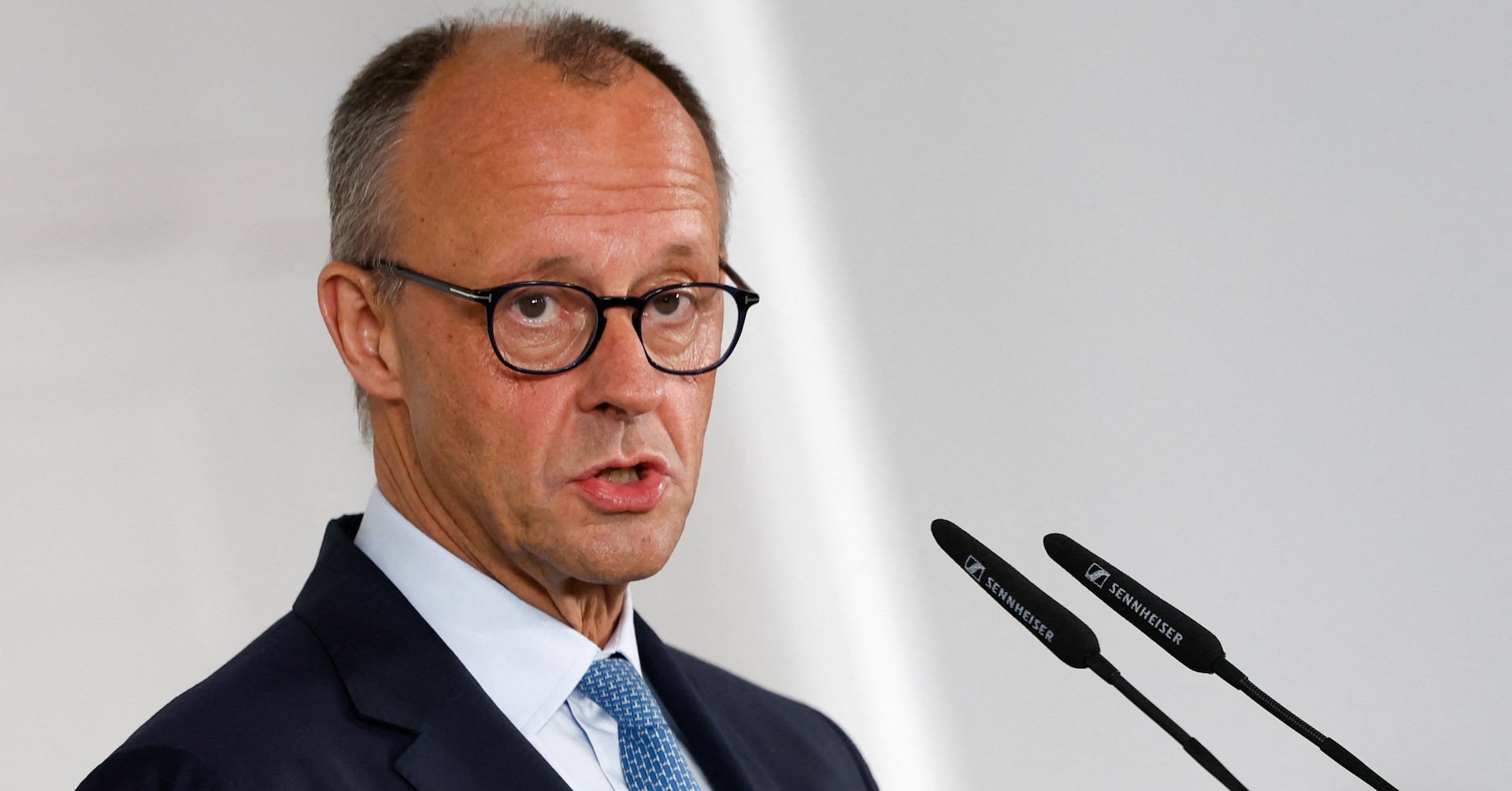
Merz: Germany still to decide whether to back sanctions on Israel
German Chancellor Friedrich Merz announced on September 18, 2025, during a joint press conference in Madrid with Spanish Prime Minister Pedro Sanchez, that Germany will decide on supporting European Union sanctions against Israel before the EU meeting in Copenhagen in October. Merz criticized Israel’s actions in Gaza as disproportionate to its stated objectives but rejected claims of genocide. He emphasized that Germany’s recognition of Palestinian statehood is not currently under discussion. Merz’s remarks highlight Germany’s growing willingness to critique Israel while remaining hesitant to impose punitive measures, given its historical responsibility toward the nation. The European Commission recently proposed suspending a trade arrangement affecting €5.8 billion ($6.87 billion) of Israeli exports due to the Gaza conflict, though the measure lacks sufficient EU support. Merz stated that Germany’s final stance would be determined in the coming days, with discussions at the federal cabinet level ahead of the October 1 informal council meeting. Germany’s special obligation to Israel, rooted in its Holocaust history, faces increasing strain as European concerns over the Gaza conflict intensify. The conflict has resulted in approximately 64,000 Palestinian casualties, with Israeli tanks advancing in Gaza City and communication lines severed, signaling an imminent escalation in ground operations.
-
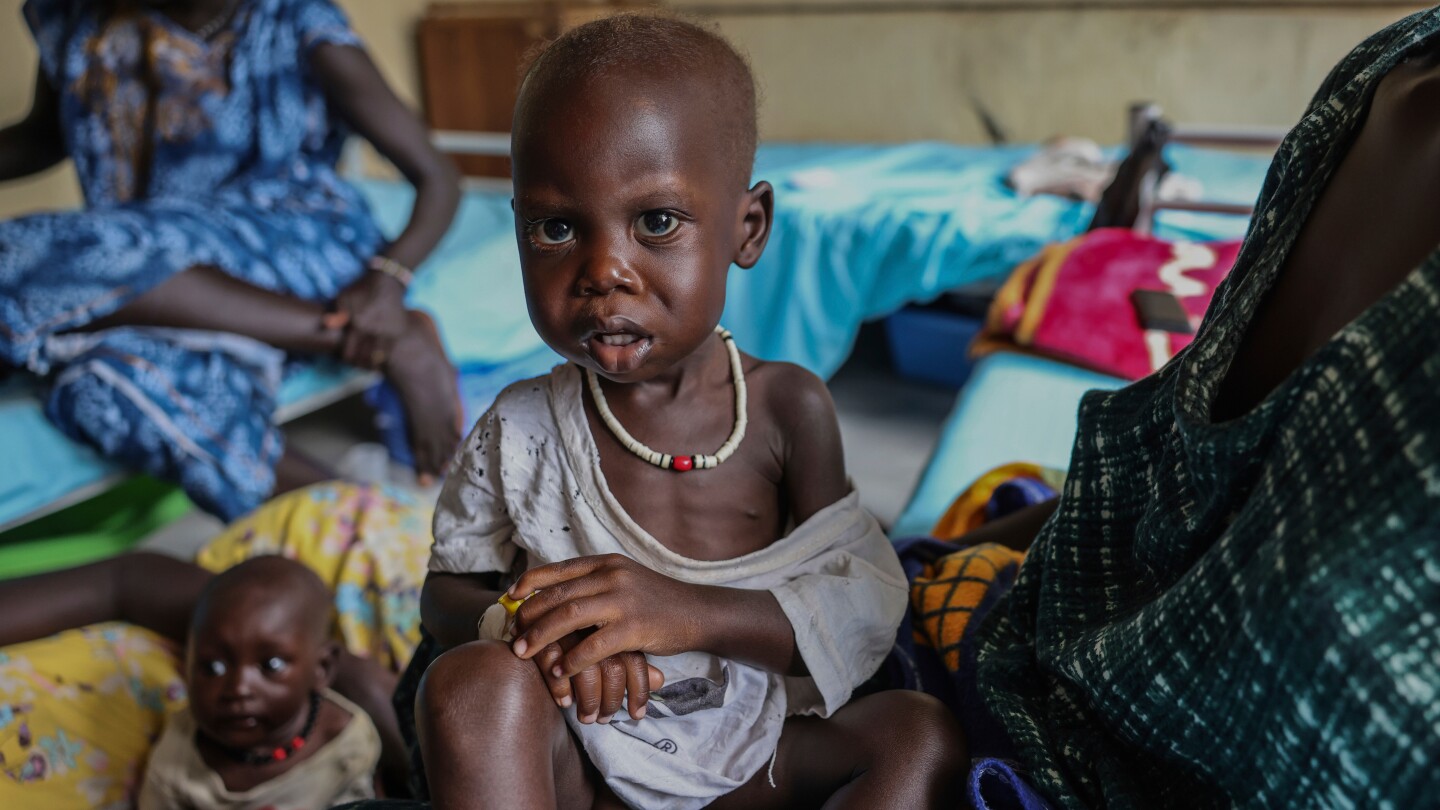
‘Children are bound to die’: Corruption, aid cuts and violence fuel a hunger crisis in South Sudan
In South Sudan, a devastating hunger crisis is unfolding, exacerbated by a toxic mix of conflict, corruption, and climate change. At Bor State Hospital, 200 kilometers from the capital Juba, 14-month-old Adut Duor lies emaciated, his spine protruding and legs too weak to walk. His mother, Ayan, unable to breastfeed, represents the plight of 1.1 million malnourished pregnant and lactating women in the country. A recent UN-backed report reveals that 2.3 million children under five require treatment for acute malnutrition, with over 700,000 in severe condition. The crisis is fueled by renewed violence in northern counties, reduced humanitarian aid, and systemic corruption. Funding cuts have forced organizations like Save the Children to lay off critical staff, while supplies of life-saving therapeutic food are dwindling. Violence in Upper Nile State has blocked aid delivery, leaving thousands of children without essential support. Flooding, worsened by climate change, has submerged farmland and displaced 1.6 million people, compounding food insecurity. Hospitals like Maban County Hospital near the Sudan border face severe shortages, with staff unpaid for months and basic supplies exhausted. The neighboring war in Sudan has disrupted trade, driving up costs and pushing 92% of South Sudanese below the poverty line. Critics argue that years of aid dependence and government mismanagement have left the country ill-equipped to address the crisis. The UN has accused South Sudanese leaders of siphoning billions of dollars that could have been used to build schools, staff hospitals, and secure food. As the international community warns of a worsening crisis, the suffering of children like Adut and Moussa Adil underscores the urgent need for action.
-
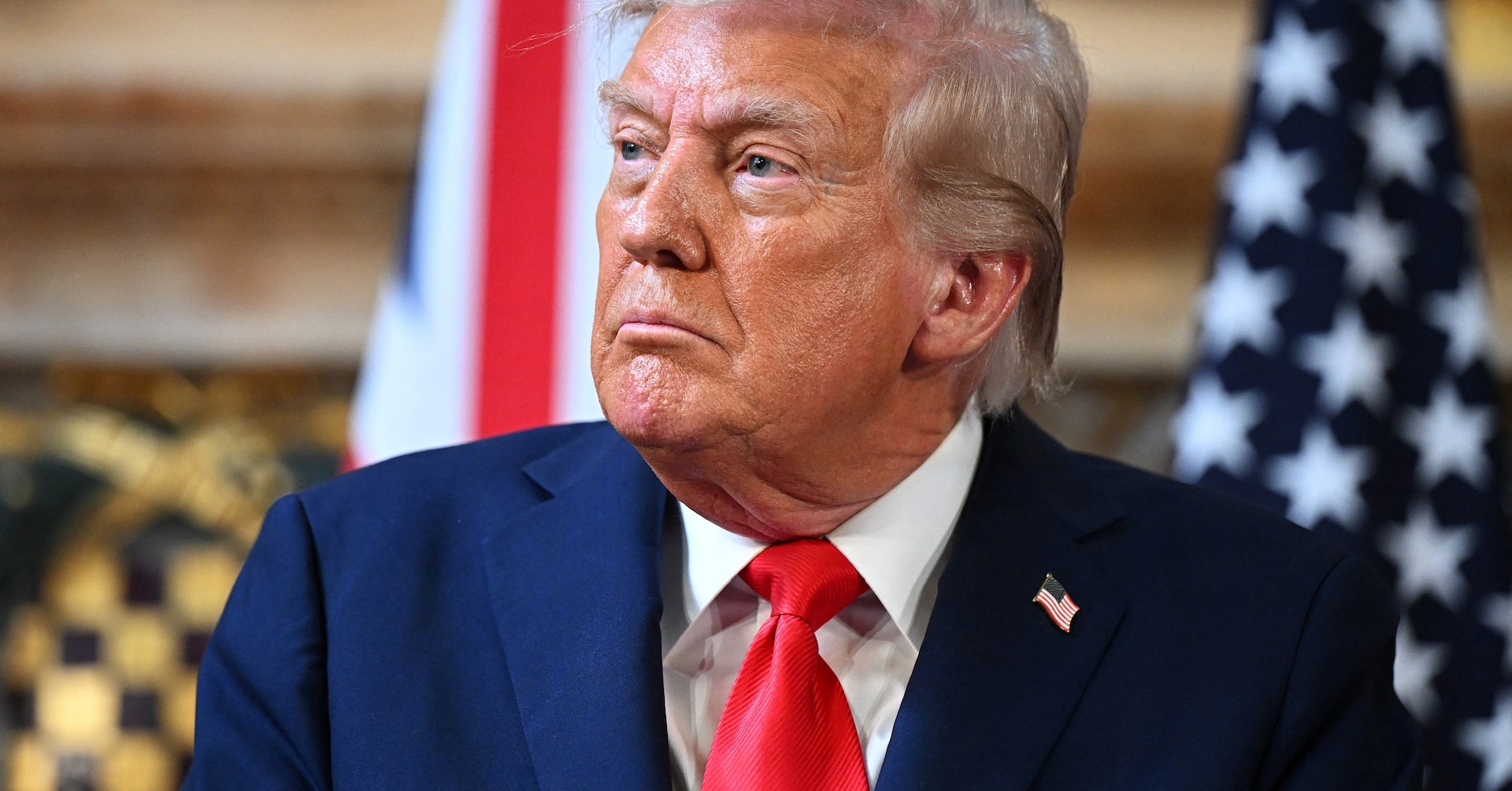
Trump says it sounds like China has approved TikTok deal
In a recent interview with Fox News on Thursday, President Donald Trump revealed that China appears to have approved a deal concerning TikTok, ensuring the popular short-video app’s continued operation in the United States. This announcement follows a high-profile agreement reached earlier this week between the U.S. and China. ‘We had a very productive meeting, and it seems they’ve given their nod to TikTok,’ Trump stated during his appearance on ‘The Story with Martha MacCallum.’ The deal, which transitions TikTok to U.S.-controlled ownership, was described by Chinese state media as a ‘win-win’ outcome. China has also committed to reviewing TikTok’s technology exports and intellectual property licensing as part of the agreement. Trump and Chinese President Xi Jinping are scheduled to discuss the matter further in an upcoming call on Friday. This development marks a significant step in U.S.-China relations, particularly in the realm of technology and digital commerce.
-

US military weighs recruiting campaign to honor Charlie Kirk, NBC reports
In the wake of the tragic assassination of prominent conservative activist Charlie Kirk, the Pentagon is reportedly exploring a new military recruitment campaign aimed at inspiring young Americans to enlist in his memory. According to NBC News, the initiative would frame military service as a patriotic tribute to Kirk, potentially using the slogan, ‘Charlie has awakened a generation of warriors.’ The campaign would leverage chapters of Kirk’s influential conservative student organization, Turning Point USA, and universities nationwide as recruitment hubs. Anthony Tata, the Undersecretary of Defense for Personnel and Readiness, is spearheading the effort. However, the proposal has sparked internal debate within the Pentagon, with some leaders cautioning that it could be seen as exploiting Kirk’s death. Kirk, a key ally of former President Donald Trump, was celebrated for his advocacy of right-wing policies on issues such as race, gender, and immigration. Trump has posthumously announced plans to award Kirk the Presidential Medal of Freedom, the nation’s highest civilian honor. The Pentagon has yet to officially comment on the potential campaign.
-
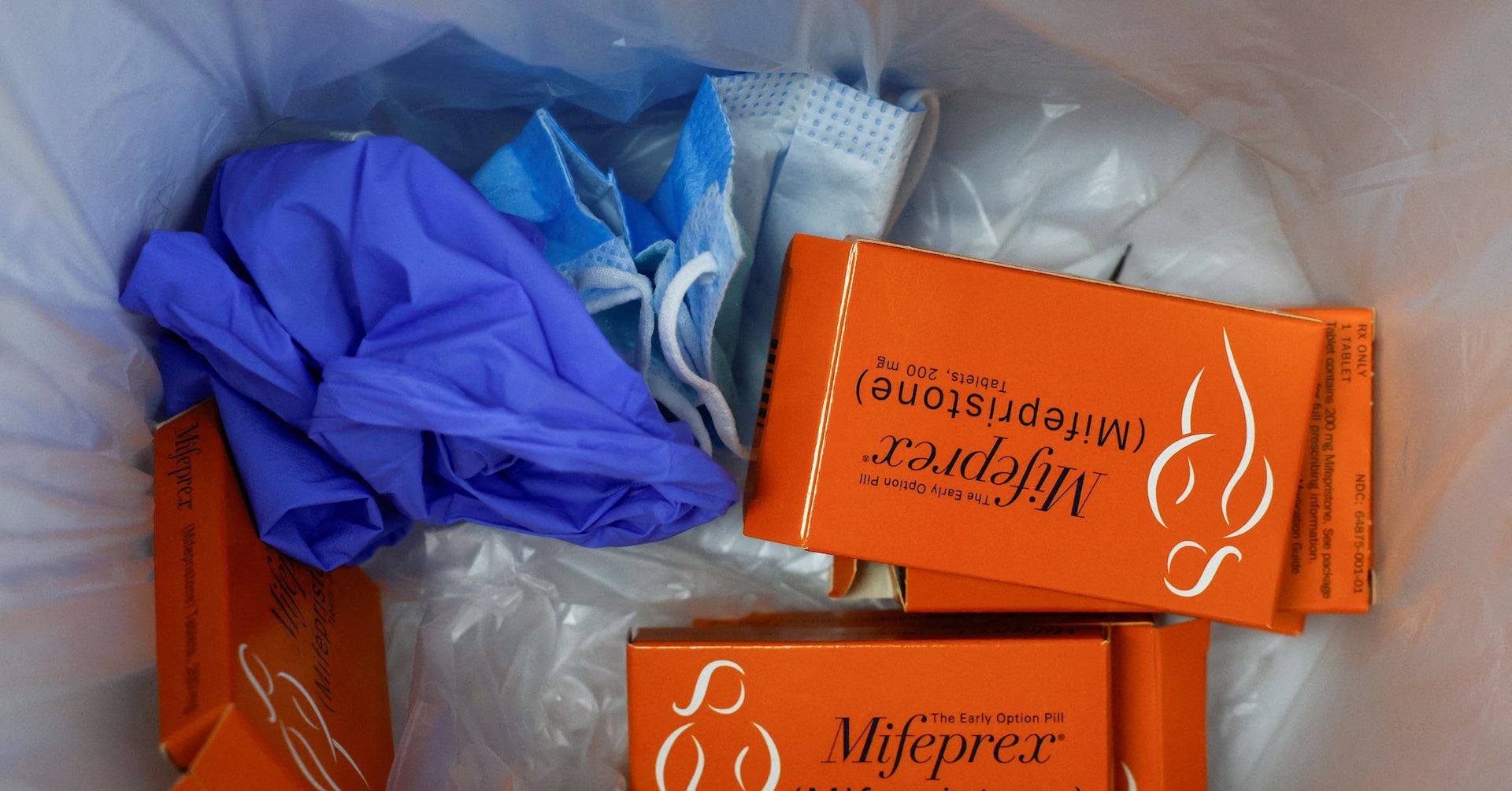
Texas governor signs bill cracking down on mail-order abortion pills
Texas Governor Greg Abbott has signed a contentious bill into law, intensifying the state’s crackdown on mail-order abortion medications. The legislation, which was passed by the Republican-led legislature earlier this month, empowers private citizens to sue individuals and companies involved in shipping abortion pills into Texas. Critics argue that the measure fosters a climate of ‘bounty hunters’ and imposes Texas’s restrictive abortion laws on other states. The bill, signed quietly on Wednesday night, aims to further restrict access to abortion in a state where nearly all abortions are already banned. It is set to take effect in approximately three months. The law allows citizens to file lawsuits against medical providers, pharmaceutical companies, delivery services, and individuals aiding in the procurement of abortion pills, such as mifepristone and misoprostol. Successful plaintiffs can win $100,000 in damages per violation, though women who take the pills are exempt from liability. Exceptions also exist for medically necessary procedures like miscarriages and ectopic pregnancies. The bill’s enforcement mechanism mirrors the ‘qui tam’ provisions of the False Claims Act, which incentivizes whistleblowers to expose fraud. This approach has been increasingly adopted by social conservatives to enforce anti-abortion laws. The measure has sparked significant debate, with critics warning it will pit Texans against each other. State Senator Carol Alvarado, a Democrat from Houston, criticized the bill, stating, ‘The bill only works if we turn Texans against each other.’ Abortion rights advocates highlight that medication-induced abortions now account for 63% of all U.S. abortions, a significant increase since the Supreme Court overturned Roe v. Wade in 2022. With many abortion clinics closed, telehealth and mail-order services have become vital for women seeking abortions in states with restrictive laws. The Texas law raises questions about its potential to undermine ‘shield laws’ in Democratic-led states that protect abortion providers from out-of-state legal actions. The bill’s proponents, including Texas Right to Life president John Seago, argue it is necessary to hold accountable those who circumvent Texas’s abortion ban. However, the measure has drawn widespread criticism for its potential to create a surveillance state and further restrict reproductive rights.