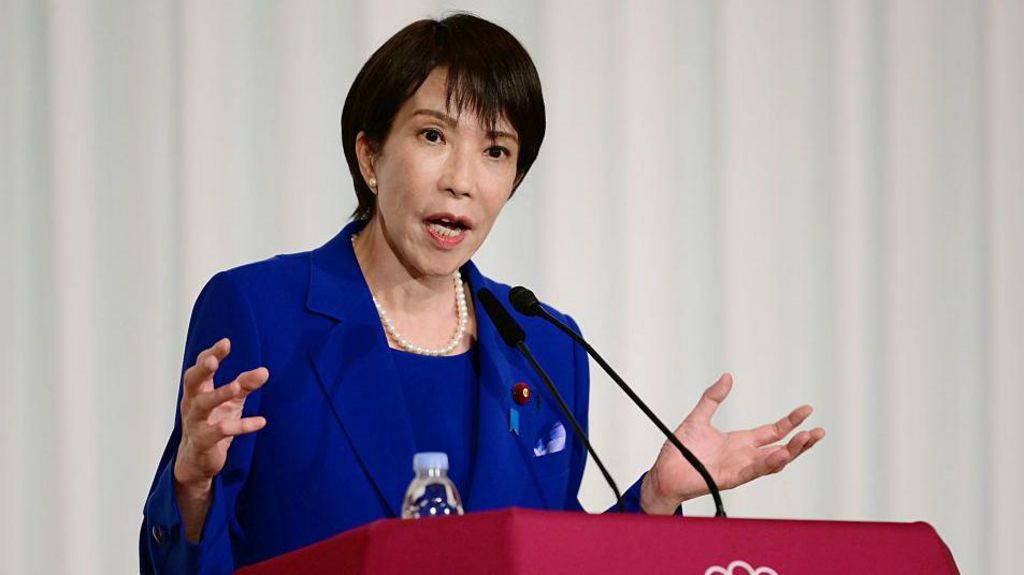
Japanese financial markets experienced a significant surge as Sanae Takaichi was elected the new leader of the ruling Liberal Democratic Party (LDP), setting the stage for her to become Japan’s next prime minister. The Nikkei 225 index soared by over 4%, surpassing the 47,000 mark for the first time in history. Takaichi, a pro-business politician, is renowned for her advocacy of increased public spending and reduced borrowing costs. Her admiration for former UK Prime Minister Margaret Thatcher and her free-market economic policies have further bolstered investor confidence. Following her victory in the LDP leadership race, shares in real estate, technology, and heavy industry sectors saw notable gains. However, the Japanese yen plummeted to a record low against the euro and dropped by more than 1.5% against the US dollar. If confirmed as the successor to Shigeru Ishiba later this month, Takaichi will make history as Japan’s first female prime minister. She faces the daunting tasks of revitalizing a sluggish economy, addressing rising household costs, and fostering wage growth. Additionally, Takaichi will need to manage the complex US-Japan relationship and finalize a tariff agreement with the Trump administration, a deal initiated by the Ishiba government.
作者: admin
-

US pharmacy chain Rite Aid closes final stores
Rite Aid, once a dominant player in the US pharmacy sector, has officially closed all its remaining stores, marking the end of a 63-year legacy. The company’s website was updated on Saturday with a closure announcement, expressing gratitude to its loyal customers and providing a link for them to access their pharmacy records. Founded in 1962, Rite Aid grew to become one of the nation’s largest pharmacy chains, boasting 5,000 stores at its peak. However, the company has faced significant challenges in recent years, including financial instability and a Justice Department investigation. By the time of its final closure, fewer than 100 stores were still operational. Rite Aid filed for bankruptcy twice, in October 2023 and May 2025, as part of efforts to restructure and address litigation claims. The company also faced legal repercussions for its role in the opioid crisis, settling lawsuits for up to $30 million in 2022 and agreeing to a Justice Department complaint in July 2024 over unlawful prescriptions. The closure of Rite Aid adds to a broader trend of pharmacy chain shutdowns across the US, with CVS and Walgreens also reducing their retail footprints. Experts warn that these closures are contributing to the rise of ‘pharmacy deserts,’ leaving millions of Americans without convenient access to essential medications.
-

Trump sends troops from California to Portland after court denies deployment
In a controversial move, President Donald Trump has redirected federalized troops from California to Portland, Oregon, following a court ruling that blocked his initial attempt to deploy the National Guard in the city. This deployment circumvents the judicial order by utilizing National Guard members who were already stationed in Los Angeles after summer protests. California Governor Gavin Newsom has condemned the action, labeling it a ‘breathtaking abuse of the law and power’ and vowing to file a lawsuit. Portland, a Democrat-led city, has become the latest target in Trump’s broader crime crackdown initiative, with the president arguing that troops are essential to restore peace amidst ongoing protests over immigration enforcement. The Pentagon confirmed that 200 members of the California National Guard were reassigned to Portland to support U.S. Immigration and Customs Enforcement (ICE) and other federal personnel. White House spokeswoman Abigail Jackson defended the deployment, stating that President Trump exercised his lawful authority to protect federal assets and personnel following violent riots and attacks on law enforcement. She criticized Governor Newsom, urging him to ‘stand on the side of law-abiding citizens instead of violent criminals destroying Portland and cities across the country.’ The Trump administration’s decision to redeploy troops from Los Angeles to Portland has sparked significant backlash. Governor Newsom accused the president of using the military as a political weapon against American citizens and ignoring judicial orders. ‘This isn’t about public safety, it’s about power,’ Newsom said. ‘We will take this fight to court, but the public cannot stay silent in the face of such reckless and authoritarian conduct by the President of the United States.’ Protests in Portland and other cities have been fueled by the Trump administration’s intensified immigration enforcement efforts. Portland, in particular, has drawn Trump’s ire due to its alleged concentration of individuals associated with Antifa, a loosely organized far-left activist movement recently designated as a domestic terrorist organization by the president. The Portland deployment follows Trump’s authorization of 300 National Guard troops to Chicago, another city experiencing protests over immigration enforcement. Illinois Governor JB Pritzker criticized the move, accusing the administration of attempting to ‘manufacture a crisis’ and create a ‘war zone’ to justify the deployment. ‘They want mayhem on the ground. They want to create the war zone so that they can send in even more troops,’ Pritzker told CNN. ‘They’re using every lever at their disposal to keep us from maintaining order.’
-
BBC finds Russian guards, Iranian trucks and rusting railway on Trump’s Caucasus peace route
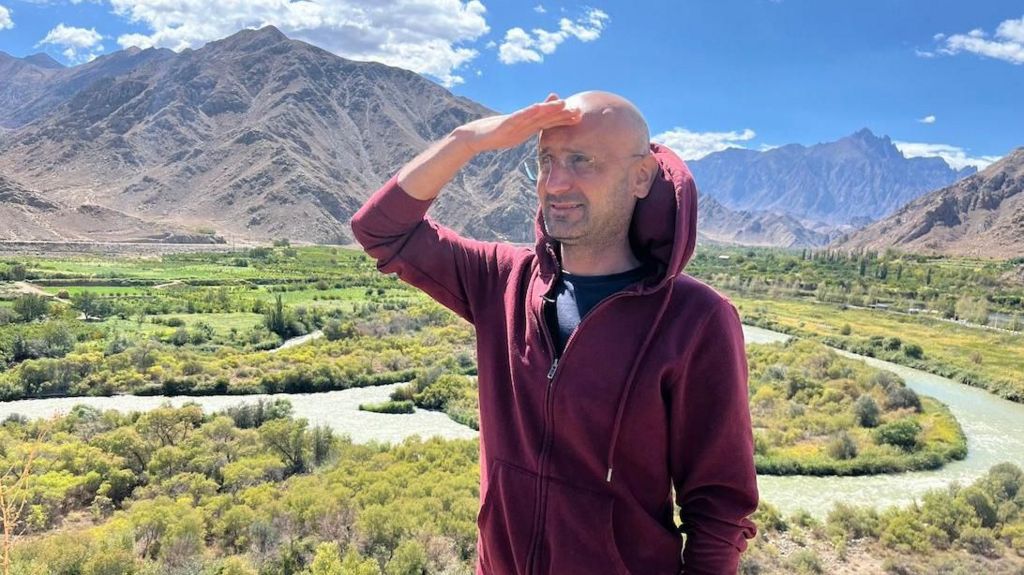
In the rugged terrain of southern Armenia, remnants of a Soviet-era railway stand as silent witnesses to a bygone era. Yet, this derelict stretch of track is poised to become the cornerstone of a groundbreaking peace initiative spearheaded by former US President Donald Trump. Dubbed the Trump Route for International Peace and Prosperity (Tripp), this ambitious project aims to transform the region into a symbol of reconciliation between Armenia and Azerbaijan, two nations long embroiled in conflict.
The Tripp proposal envisions a 43-kilometer corridor through Armenian territory, linking Azerbaijan to its exclave of Nakhchivan. This route, which will include a railway, motorway, and pipelines, is expected to be developed by US companies under a 99-year agreement. Trump has touted the economic benefits, claiming it will bring prosperity to Armenia, Azerbaijan, and the US. However, the project faces significant political and logistical challenges, including opposition from Iran and Russia, both of whom view the initiative as a threat to their regional influence.
The roots of the Armenia-Azerbaijan conflict trace back to the disputed Nagorno-Karabakh region, which Azerbaijan recaptured in 2023, displacing thousands of Armenians. Trump’s intervention in August 2025 marked a turning point, as he brokered a deal between Armenian Prime Minister Nikol Pashinyan and Azerbaijani President Ilham Aliyev. While the agreement has brought temporary peace, details remain vague, and the timeline for Tripp’s construction is uncertain.
Russia, historically dominant in the South Caucasus, has seen its influence wane, paving the way for US mediation. Despite Moscow’s proposal to guard the route being rejected, Russian border troops continue to patrol the Armenia-Iran border. Meanwhile, Iran, a neighbor to both nations, has expressed mixed reactions, with hardliners threatening to derail the project. However, Armenia has assured Tehran that Tripp poses no threat to its interests.
The initiative has also attracted European attention, with France and the EU viewing it as part of a broader ‘middle corridor’ linking Europe to Central Asia and China. Turkey, eager to capitalize on Russia’s declining influence, has voiced support for Tripp, which would create a direct link to Azerbaijan.
For Armenia, the project represents hope for economic revival in regions abandoned for decades. Local journalist Marut Vanyan, who fled the conflict in 2023, remains cautiously optimistic. ‘They say there will be billions in investment, new roads, and trade with Iran, America, Europe, Turkey, and Azerbaijan,’ he says with a skeptical smile. While a formal peace treaty remains elusive, the absence of violence on the Armenia-Azerbaijan border since the Washington meeting offers a glimmer of hope for lasting peace.
-

The indigenous weavers who aim for empowerment over exploitation
In the vibrant city of Riohacha, Colombia, the traditional Wayuu mochila bags have transcended their indigenous roots to become a global fashion staple. Once exclusive to the Wayuu, Colombia’s largest indigenous group, these handwoven bags are now celebrated worldwide, adorning international boutiques, fashion events, and online platforms like Etsy, Amazon, and Instagram. For Sandra Aguilar, a mochila seller on Riohacha’s palm-lined promenade, each sale is a testament to her heritage. ‘Thanks to online posts, international visitors are becoming very knowledgeable about the mochila,’ she says, highlighting the growing appreciation for its ancestral value. The Wayuu, numbering around 380,000 in Colombia, have woven these bags for centuries, with geometric patterns reflecting clan identity, spirituality, and the natural world. Weaving is not only a cultural practice but also a vital source of income in La Guajira, Colombia’s second-poorest province. While the global demand has brought economic opportunities, it has also introduced challenges, including exploitation and the erosion of traditional craftsmanship. Many artisans face low wages, with intermediaries offering as little as $5.50 per bag, leaving weavers with minimal profit. However, socially-conscious entrepreneurs and organizations are working to promote fair trade and cultural preservation. Laura Chica, founder of Chila Bags, emphasizes the importance of high-quality, traditionally patterned mochilas, ensuring artisans receive fair wages. Her brand has gained international recognition, featured in Vogue China and showcased at fashion weeks worldwide. Yet, the market remains divided. While some brands prioritize sustainability and fair trade, others focus on mass production, often at the expense of quality and fair pay. Organizations like Fundación Talento Colectivo and One Thread Collective are empowering weavers through education and leadership workshops, aiming to foster autonomy and entrepreneurship. Yamile Vangrieken, a weaver from Riohacha, exemplifies this shift. Leading a group of relatives, she collaborates with One Thread Collective to export their bags, providing stable income and microloans. Despite the challenges, the mochila’s rise in global fashion has brought increased recognition to the Wayuu and their artistry. ‘We are also artists, even if we don’t have a title that says so,’ Aguilar asserts. ‘Our essence is in our designs, in our products, and we mustn’t let that go.’
-

As Gisèle Pelicot faces one of her rapists in court, what has changed in France?
Gisèle Pelicot, a French woman who endured years of horrific abuse orchestrated by her husband, is set to return to court in Nîmes to face one of her attackers. This man is the sole individual appealing the verdict from last year’s trial, which saw 51 men convicted of raping Pelicot while she was drugged and unconscious in her own home. Her decision to waive her right to anonymity and publicly confront her attackers was initially hailed as a turning point in France’s fight against sexual violence. However, the optimism surrounding her case appears to be fading. In Mazan, the picturesque town where Pelicot and her husband once lived, locals express frustration over the town’s association with the infamous trial. One man even threatened a journalist, demanding they leave and stop discussing the case. Mayor Louis Bonnet has described Pelicot’s ordeal as a “private matter” unrelated to the town, a stance that has drawn criticism. While some, like 68-year-old Aurore Baralier, believe Pelicot’s case has empowered women to speak out, others, such as a 33-year-old civil servant named Aurélie, argue that little has changed. Aurélie revealed that domestic violence remains hidden, with women too afraid to come forward. Across France, the Pelicot case has undeniably amplified conversations about sexual violence, particularly in the wake of the MeToo movement. Complaints of rape have tripled, signaling a shift in victims’ willingness to seek justice. Yet, activists and experts argue that systemic issues persist. Conviction rates remain stagnant, and rape culture continues to thrive, exacerbated by the rise of masculinist movements and deep-fake pornography. The French government has defended its efforts, citing increased funding for combating sexual violence. However, a Senate report criticized the lack of a strategic approach, and the Council of Europe has condemned France’s failure to adequately protect women. While occasional stories, like the arrest of a man in Dijon for drugging his wife, offer glimmers of hope, the broader picture remains bleak. Lawyer Elodie Tuaillon-Hibon, who has been involved in high-profile cases, including that of actor Gérard Depardieu, remains skeptical. She likens sexual violence in France to a “war waged against women and children every day” and emphasizes that meaningful change requires a serious commitment to public policy. As Pelicot prepares to face her attacker once more, her case serves as a stark reminder of the long road ahead in the fight against sexual violence in France.
-
How China is challenging Nvidia’s AI chip dominance
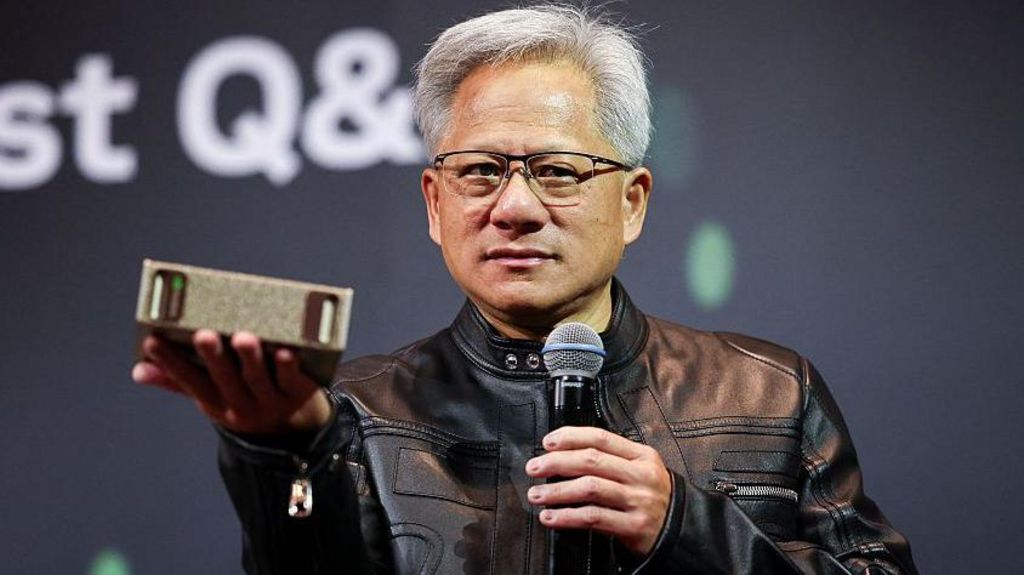
For decades, the United States has been the undisputed leader in the global technology market. However, China is making significant strides to challenge this dominance, particularly in the realm of advanced semiconductor technology. Nvidia CEO Jensen Huang recently remarked that China is merely ‘nanoseconds behind’ the US in chip development, signaling a narrowing gap in this critical industry.
-
India wants to lure its best minds back from the US – but it won’t be easy
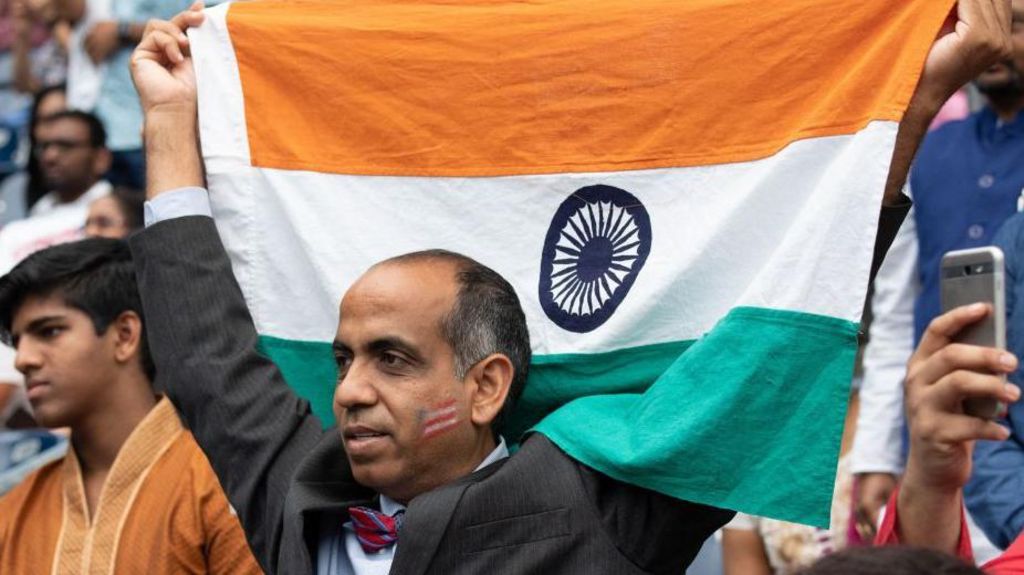
The recent decision by US President Donald Trump to increase H-1B visa fees to $100,000 has ignited a significant debate in India about reversing the decades-long brain drain. Indian policymakers are actively encouraging skilled professionals to return home and contribute to the nation’s development. A senior bureaucrat close to Prime Minister Narendra Modi revealed that the government is intensifying efforts to attract overseas Indians back to the country. Meanwhile, a member of the PM’s economic advisory council argued that the H-1B visa fee hike could benefit India by making it a more attractive destination for global talent. The core idea is to capitalize on the current situation to lure back highly skilled professionals in technology, medicine, and innovation who left India over the past 30 years. However, experts caution that while anecdotal evidence suggests some Indians are considering returning, large-scale reverse migration remains a challenge. Nithin Hassan, a former Meta employee who gave up a $1 million job to return to Bengaluru, exemplifies this trend. He launched B2I (Back to India), a platform assisting NRIs in navigating the complexities of relocating. Hassan noted a surge in inquiries following Trump’s policy shifts, with queries tripling since his second term began. Other headhunters, like Shivani Desai of BDO Executive Search, reported a 30% increase in Ivy League graduates exploring return options. The rise of Global Capability Centres (GCCs) in India has also created viable opportunities for returning professionals. Yet, critics like Sanjaya Baru, former media adviser to PM Manmohan Singh, argue that the government must take more proactive steps to identify and incentivize top talent to return. Despite these efforts, India faces significant push factors, including poor infrastructure, bureaucratic hurdles, and a challenging business environment, which have driven many high-earning Indians to seek citizenship elsewhere. To truly reverse the brain drain, experts emphasize the need for comprehensive reforms, including simplified tax laws, targeted incentives, and improved R&D ecosystems.
-
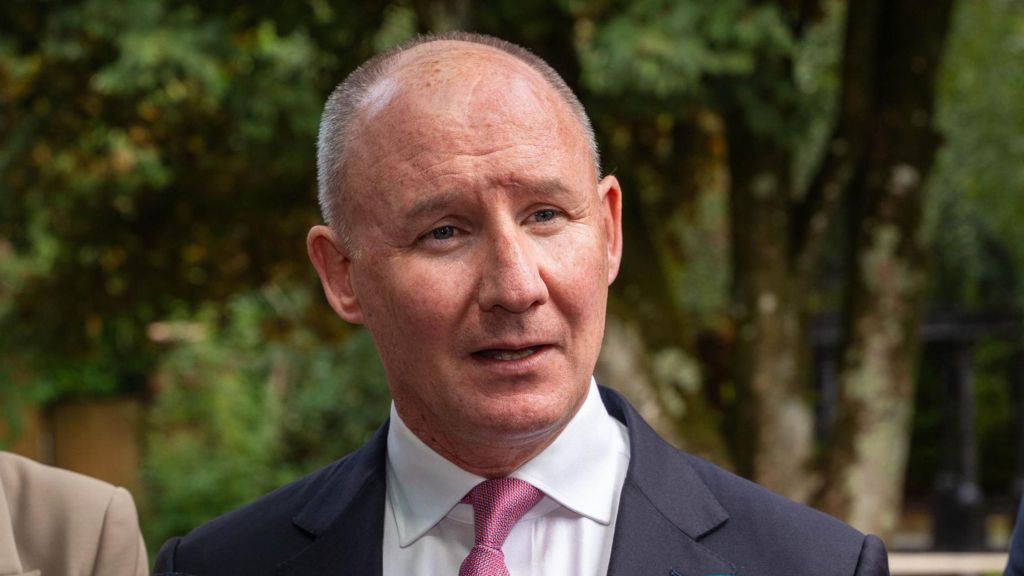
Jim Gavin exits Irish presidential race ‘with immediate effect’
In a surprising turn of events, Fianna Fáil’s presidential candidate Jim Gavin has announced his immediate withdrawal from the Irish presidential election, less than three weeks before the scheduled polling day. Gavin, who was poised to compete against Independent TD Catherine Connolly and Fine Gael’s Heather Humphreys for the role of Ireland’s head of state, cited personal reasons for his decision. In a statement released on Sunday evening, Gavin acknowledged that he had ‘made a mistake that was not in keeping with my character and the standards I set myself.’ He emphasized the importance of family and personal integrity, stating, ‘Taking all these considerations on board, I have decided to withdraw from the presidential election contest with immediate effect and return to the arms of my family.’ This unexpected development has left the political landscape in flux, with analysts speculating on the potential impact on the remaining candidates and the election’s outcome. Further updates are expected as the situation unfolds.
-

Photos: Morocco sees eighth straight day of youth protests
Morocco has witnessed an unprecedented wave of youth-led protests for the eighth consecutive day, as thousands of young demonstrators took to the streets across the nation to demand significant improvements in public health and education services. The protests, organized by the online collective GenZ 212, have challenged the perception of Moroccan youth as politically apathetic and have highlighted growing discontent with social inequalities and corruption. The group, which operates primarily on the web platform Discord, has mobilized its 180,000 members to stage peaceful rallies in 14 cities, including Tetouan, Casablanca, and Rabat. Demonstrators have been chanting slogans such as ‘The people want an end to corruption’ and ‘Freedom, dignity, and social justice,’ reflecting their broader demands for systemic reforms. The protests gained momentum following reports of the deaths of eight pregnant women at a public hospital in Agadir, which activists cite as evidence of the healthcare system’s failures. While the gatherings have been largely peaceful, isolated incidents of violence have occurred, including a confrontation in the village of Lqliaa that resulted in three fatalities. GenZ 212 has emphasized its commitment to nonviolence and continues to call for the resignation of Prime Minister Aziz Akhannouch, whose term ends next year. The protests mark a significant shift in Morocco’s political landscape, as young people take a more active role in advocating for change.