作者: admin

  • Lao president visits China Academy of Space Technology

    Lao president visits China Academy of Space Technology

    For decades, China Daily Information Co (CDIC) has maintained clear intellectual property guidelines for all content hosted on its official digital platform. First established with copyright protection in 1994, the company retains full legal rights to every piece of content published on the site, covering a broad range of material from written articles and photographic work to interactive multimedia resources. Under CDIC’s intellectual property rules, no party is permitted to republish or reuse any content from the platform in any format without obtaining explicit, written advance authorization from the organization.

    Beyond its copyright policies, the website also provides practical guidance for visitors, recommending that users access the platform through browsers configured to a minimum resolution of 1024*768 for the optimal viewing experience. The site also holds the required official licensing for online multimedia publication, with a published license identifier 0108263 and official registration number 130349 on record.

    To help visitors engage more deeply with the organization, the platform lists a range of quick access links for core services and resources. These include a detailed informational page about China Daily, resources for brands and organizations interested in purchasing advertising space on the site, contact information for general inquiries, current open job vacancies for job seekers, and dedicated employment resources for expatriate workers looking for opportunities with the organization. Visitors are also invited to follow China Daily’s content across its social media channels to stay updated on the latest news and updates.

  • Tough cookies: How pop group Le Sserafim overcame internal conflict and internet trolls

    Tough cookies: How pop group Le Sserafim overcame internal conflict and internet trolls

    The pop industry is littered with the remains of iconic bands that collapsed under the weight of internal drama: British boyband Five split after backstage brawls turned physical, 90s pop collective All Saints disbanded over a petty argument about a jacket, and Britrock legends Oasis endured a 16-year split after Liam Gallagher pelted brother Noel with a piece of fruit. What is far less common is a musical act willing to openly address their rifts, work through friction, and emerge stronger on the other side. That makes the latest full-length album from global K-pop phenomenon Le Sserafim a truly remarkable outlier in modern pop.

    Nestled in the heart of the group’s new tracklist is the raw, introspective single “Need Your Company”, a track that lays bare the past interpersonal tension between Huh Yunjin, the group’s New York-born vocalist, and leader Kim Chaewon. Over a gentle, melancholy guitar riff, the pair sing lines that cut straight to complicated, messy human connection: “Is friendship all just for show? / I really wanna trust you… no matter how you hurt me.”

    In an interview from her label’s Seoul offices, Yunjin opened up about the emotional core of the track, explaining it explores the awkward, conflicting feeling of craving closeness with someone while struggling to vocalize that vulnerability. “There are times when you doubt your own emotions, like, ‘Oh, am I the only one who wants to be this intimate? Are they not committed to this relationship?’” she said.

    Chaewon, who was unable to attend the interview while recovering from a neck injury, previously framed the friction behind the song as a failure of communication rather than deep personal dislike. Speaking to Korean talk show *Lee Mu-jin Service*, she noted that all people have inherently different personalities, and the pair spent months working to adapt to those differences. For Yunjin, even opening up about pain was an act of care: “Sometimes saying, ‘you hurt me’, can sound harsh, but it can also mean I care enough about us that I want things to get better,” she wrote in the album’s liner notes. Chaewon echoed that sentiment, confirming that after their honest conversation, the pair actually grew closer – close enough, in fact, to complete a heart-stopping 233-metre tandem bungee jump off Macau Tower together. After the jump, Chaewon laughed that she spent the entire fall clinging to Yunjin.

    This willingness to confront hard feelings head-on is far from a one-off for the quintet, which also includes Japanese members Miyawaki Sakura and Nakamura Kazuha, and youngest member Hong Eunchae. Since debuting in 2022, the group has carved out a unique niche in K-pop, blending radical self-awareness with playful, unapologetic absurdity. Their name, an anagram of the phrase “I’m Fearless”, established their early brand: combative, bulletproof confidence, paired with sophisticated bass-driven dance hits like *Antifragile* and *Unforgiven* that cemented their mainstream appeal.

    But their resolve was tested early on by a vicious, sustained online hate campaign that targeted every part of the group, from their live vocal performances to their physical appearance, and even their family members. A 2024 documentary laid bare the heavy toll that vitriol took on the five members, with Sakura – a seasoned industry veteran who previously performed with J-pop’s HKT48 and global project group Iz*One – breaking down in tears as she questioned why she continued to put herself through the pain of public scrutiny.

    Against all odds, Le Sserafim turned that hardship into success, growing into one of the best-selling pop acts on the planet. They have notched five Top 10 albums in the United States, and their tracks have amassed more than 33,000 appearances on Spotify’s global charts. As they have matured both as people and artists, their music has grown more adventurous and genre-bending: 2024’s *Crazy* drew inspiration from New York ballroom culture with pulsing house beats, while 2025’s *Come Over* enlisted production from beloved British dance collective Jungle. Even fellow artists have taken note: British singer-producer PinkPantheress, a self-professed fan, collaborated on a remix of *Crazy* and hailed the group’s music as “way ahead of its time”.

    The group has also paid forward the resilience they built through hardship, mentoring newer labelmates Katseye as the rookie group navigated their own run-ins with internet trolls. “Yunjin, I talk to her almost every single day,” Katseye member Sophia Laforteza said, with bandmate Lara Raj adding, “I feel like, if there is anyone that would understand us, it’s them.”

    A masterclass in handling online hate came in the form of the group’s 2025 one-off single *Spaghetti*, a deliciously sarcastic takedown of obsessive haters that asks the blunt question: If we’re really that terrible, why are you so obsessed with us? Packed with layered hooks and a showstopping guest verse from BTS’ J-Hope, the track became a massive viral hit and marked a creative turning point for the group. “We realised how positive and energetic we are, especially on tour. It turns out that having fun looks really good on us,” Yunjin explained. “That helped us narrow down what we want to do for our new music, and that’s how Spaghetti came along.”

    The track’s quirky visuals and unapologetic fun opened a new creative chapter for the group, who have long been known for their off-stage humor – from their absurd attempts to sneak out of rehearsals, to their relentless gentle teasing of youngest member Eunchae, to the time Kazuha snuck into a concert queue disguised in a full horse costume – and now they’re weaving that personality into their recorded music.

    Another album track, *Saki*, leans into this playful satire, building a raucous posse rap around a fake alter-ego that Sakura created to mock the absurd online rumors that follow the group. “It’s kind of satire,” Yunjin explained. “Everybody’s like, ‘Who the heck is Saki?’ Why is everybody so obsessed with her? Is she a nepo-baby? I heard she’s the rudest person. No, I’ve heard she stays sober and drives everyone home from parties.’” The punchline? Sakura laughs that Saki is actually an introvert who never attends parties, preferring to stay home and knit. For Sakura, hobbies like crocheting and knitting are a way to hold onto her identity outside of the group: “I’m kind of afraid to just be ‘Sakura from Le Sserafim’,” she said. “That’s why I try to take on a lot of different hobbies, because even if you’re going through hard times, when you go into the world of crochet, all those fears are brushed away.” Her knitting hobby has even spawned its own line of official merchandise, while Kazuha’s famous horse costume stunt has inspired hundreds of viral memes.

    At its core, the new album is a love letter to the solidarity that has kept the group intact through every high and low. Before writing and recording began, Yunjin – who co-wrote the majority of the album’s tracks – sat down with each bandmate to talk through their shared experiences and feelings. “She’s one of our closest friends,” Kazuha said. “We’ve been through the same things and shared a lot of different emotions. The fact that she can make that into a song for us, so we can speak through the lyrics, means a lot.” Yunjin summed up the album’s core mission: “Overall, we had the same sentiment. We wanted to talk about how this sisterhood helped us become resilient, so that we’re able to dream and to run again.”

    The album’s lead single *Celebration* brings that message of solidarity to the dancefloor, while redefining what the group’s “fearless” brand means four years into their career. “During our early days, fearless meant that we’re free of fear, and that’s why we’re strong,” Sakura explained. “In the era of ‘Fearless 2.0’, we don’t deny fear but we embrace it. We use fear as fuel to go forward.”

    Perhaps the group’s most fearless creative move yet is their latest single *Boompala*, which samples 1990s novelty hit *The Macarena* over a thumping Latin House beat. The unlikely combination shouldn’t work on paper – but it defies expectations, resulting in another viral smash. The track’s opening choreography, which shows Chaewon pausing mid-meditation to sneak in a silly dance, has exploded in popularity on TikTok, and the album has already sold more than 500,000 physical copies worldwide in its first week.

    For long-time fans who have stood by the group through every hardship, the band’s transition into a happier, more confident new era is deeply heartwarming. The group will kick off their second world tour this July, marking their first ever UK show with a stop at London’s O2 Arena on 16 October. Eunchae says the new tour will build on the raucous party atmosphere of their 2025 *EasyCrazyHot* run, packed with new ideas for staging and performance that the group brainstormed on their first world tour, which wrapped in January. “On tour, we kept thinking, ‘Maybe we can try this kind of performance or that kind of stage direction next time’. So we’ve added lots of those ideas. I think it’s going to be a visual and aural feast,” she said.

    Yunjin also teased that more new music is on the horizon before the tour wraps in December, pointing to the album’s title, which is labeled as “Part 1”. For fans who have fallen in love with the group’s raw honesty and unapologetic joy, that can only be good news. Tickets for Le Sserafim’s O2 Arena show are on sale now.

  • Here’s why election results in the second largest US city are so slow

    Here’s why election results in the second largest US city are so slow

    As vote counting continues across California’s 2026 statewide primary elections, the days-long wait for final results has sparked familiar political friction, with former President Donald Trump amplifying baseless claims of electoral fraud to criticize the state’s widely used vote-by-mail system. Here is a breakdown of why results are taking longer to finalize, and what the current state of key races looks like.

    California, the most populous U.S. state, has more than 23 million registered voters, and state law automatically sends a mail-in ballot to every registered voter ahead of any election. Currently, around 80% of all ballots cast in the state are submitted by mail, requiring a multi-step, labor-intensive process to sort, verify signature matches against official voter records, and count each ballot. Under state rules, any mail-in ballot postmarked by Election Day (June 2, 2026, this year) and received by county election offices no later than June 9 is considered valid, regardless of when it arrives. Additionally, provisional ballots and ballots with mismatched or missing signatures require extra follow-up: voters are notified of issues and given until two days before certification to correct any errors.

    State law grants California’s 58 counties up to 30 days after Election Day to complete counting, with final results required to be submitted to Secretary of State Shirley N. Weber by July 3, and official certification scheduled for July 10. Most county results are expected to be finalized by June 15, nearly two weeks after polls closed.

    Weber emphasized in an election night statement that the delayed outcome is entirely standard, urging Californians to remain patient. “California elections officials prioritise the right to vote and election security over rushing the vote count. We have a process that by law ensures both voting rights and the integrity of elections,” she said.

    But Trump has seized on the delay to spread unsubstantiated claims of widespread Democratic electoral misconduct, repeating false assertions he first promoted after his 2020 loss to Joe Biden. “Democrats are stealing” the California election, Trump claimed Thursday, repeating his longstanding criticism of universal mail-in voting. He has also pushed baseless claims that federal prosecutors in Los Angeles are investigating voter fraud; California Governor Gavin Newsom’s office refuted the claim on social media as another lie about the state, while a spokesperson for the U.S. Attorney’s Office in Los Angeles declined to comment on Trump’s remarks to the BBC. Trump has also called on Congress to pass his proposed Save America Act, which would mandate proof of U.S. citizenship for voter registration, and previously issued an executive order to restrict mail-in voting by creating federal voter eligibility lists, a move experts and critics say exceeds presidential authority.

    Newsom’s office has pushed back against the misinformation, reposting an official explainer of the vote counting process on social media, noting that state officials also wish results could be finalized more quickly.

    As of Thursday, the Associated Press reports that roughly 56% of all ballots have been counted. In the high-profile race for California governor, where Newsom is term-limited and dozens of candidates are vying to advance to the November general election, early partial results show Republican Steve Hilton, a British-American former television host, holding a narrow lead with 27.6% of the vote (1.42 million votes counted). Trailing closely behind are Democratic candidates Xavier Becerra, a former Biden cabinet secretary, with 25.6% (1.32 million votes), and billionaire climate activist Tom Steyer with 19.8% (1.02 million votes). Under California’s jungle primary system, the top two vote-getters advance to the general election in November, regardless of partisan affiliation. Trump publicly congratulated Hilton on his early lead Wednesday on social media. Political analysts stress that Hilton’s lead could shift dramatically as millions of remaining outstanding ballots are counted in the coming days.

    In the Los Angeles mayoral primary, incumbent Mayor Karen Bass has secured a spot in the November runoff, but made history as the first sitting mayor in more than two decades to fail to reach the 50% vote threshold needed to avoid a runoff. As of Thursday’s count, Bass holds 35% of the vote. The race for the second runoff spot remains too close to call: reality TV star Spencer Pratt holds 29.9% of the vote, while Democratic city council member Nithya Raman trails close behind at 22.8%.

    The sheer scale of Los Angeles County contributes heavily to the extended counting timeline: the county is home to nearly 6 million registered voters, a larger voting population than 41 U.S. states, and the city of Los Angeles itself is the second most populous city in the country. Despite the delays, election officials note that the slower timeline is a deliberate feature of California’s election system, designed to protect ballot access and ensure every valid vote is counted.

  • ‘It looks black’ – Americans react to Reflecting Pool’s completed paint job

    ‘It looks black’ – Americans react to Reflecting Pool’s completed paint job

    After multiple weeks of intensive renovation work at one of Washington D.C.’s most iconic public landmarks, crews have started the process of refilling the Lincoln Memorial Reflecting Pool — a project that has already sparked heated discussion among visitors over its freshly applied coating. The material used to line the basin is a specially selected shade officially labeled “American flag blue”, but many casual observers stepping up to the edge of the partially filled pool are saying the finished surface reads as deep black to the naked eye.

    The Reflecting Pool, which draws millions of domestic and international tourists every year, has long been recognized for its mirror-like views of the Lincoln Memorial and Washington Monument, a feature that has made it one of the most photographed sites in the U.S. capital. This latest renovation was aimed at addressing long-standing issues with leaking and erosion that have plagued the structure for decades, with the new coating intended to improve durability and reduce maintenance needs moving forward.

    As water levels continue to rise slowly across the 1,668-foot-long basin, visitors have been sharing mixed reactions on social media and in on-the-record interviews, with many noting that the darker hue fundamentally changes the visual character of the landmark that generations have known. Others have pushed back, arguing that the true color will become more apparent once the pool is completely filled, and that the darker base will actually improve the clarity of the iconic reflections the site is famous for. Project managers have not yet issued an official comment addressing the public’s observations about the coating’s perceived color discrepancy.

  • Ferry search leads to €2.9m drugs seizure

    Ferry search leads to €2.9m drugs seizure

    In a major breakthrough against cross-border drug trafficking, Irish law enforcement and revenue officials have seized a massive shipment of illegal cannabis worth an estimated €2.9 million (£2.5 million) at a key southern Irish port. The bust unfolded Thursday at Rosslare Europort, located in County Wexford, after the contraband arrived aboard a cross-Channel ferry originating from Dunkirk, France.

    Officers from the Irish Revenue Commissioners stopped the sealed freight unit for inspection as part of ongoing anti-smuggling work. A mobile X-ray scanning device picked up anomalies hidden within the unit’s legitimate cargo, leading to the recovery of approximately 145 kilograms of suspected herbal cannabis and an additional 7.9 kilograms of compressed cannabis resin.

    The operation, which grew out of routine intelligence-led profiling of incoming freight, has resulted in the arrest of a man in his 20s, who remains in police custody at an Irish station as investigations continue. An Garda Síochána, Ireland’s national police service, confirmed the details of the seizure in an official statement following the bust.

    Authorities emphasized that the large-scale seizure is part of a sustained, coordinated campaign targeting transnational organized criminal networks that profit from the illegal importation, distribution, and sale of controlled substances across Ireland. Officials have published an official photograph of the seized drug haul to highlight the scale of the operation, part of ongoing efforts to disrupt illegal drug supply chains before they reach domestic communities.

  • Zelensky proposes face-to-face talks in open letter to Putin

    Zelensky proposes face-to-face talks in open letter to Putin

    More than three years into Russia’s full-scale invasion of Ukraine, Ukrainian President Volodymyr Zelensky has made a new public push for direct negotiations with Russian leader Vladimir Putin, issuing an 1,800-word open letter calling for an immediate, full ceasefire during talks and a face-to-face meeting hosted by a neutral third country such as Switzerland or Turkey.

    In the letter, Zelensky argues that waiting for the United States to shift its foreign policy focus back to Eastern Europe — amid Washington’s current preoccupation with the Iran conflict — is a reckless mistake that costs unnecessary lives. He emphasized that a lasting peace can only be forged through direct dialogue between Kyiv and Moscow, rather than through delayed, third-party mediated talks that have repeatedly collapsed over the past months. Previous negotiation rounds hosted in Geneva, Abu Dhabi and Istanbul have ended without progress, and ceasefire talks have been stalled since the outbreak of hostilities in Iran.

    Addressing Putin directly, Zelensky acknowledged that after the widespread destruction Russia’s invasion has brought to Ukraine, he has little sympathy for the hardships facing Russian troops. But he stressed that every Ukrainian death inflicted by the ongoing conflict is a devastating loss for his country, and noted that ordinary Russian citizens are already grappling with the burdens of war: repeated Ukrainian drone and missile strikes, growing fuel shortages, and spiking domestic prices. “Do not be afraid to take the path out of this war. That is the main thing that is required of you now,” Zelensky implored.

    The letter landed on the same day that Putin was addressing international journalists on the sidelines of the major annual St. Petersburg International Economic Forum. A day before the forum, Kyiv launched a drone strike on the outskirts of St. Petersburg, which Zelensky referenced in the letter as a symbolic “visit” to the Russian leader. Separate attacks the same day in Russian-occupied Crimea left four people dead, according to Russian-backed local authorities, who blamed Kyiv for the strike. Ukraine confirmed it targeted a key fuel depot in the regional capital Simferopol.

    The Kremlin confirmed Thursday that it had received Zelensky’s letter and that Putin would receive a full briefing on its contents. Speaking to reporters before the letter’s contents were formally delivered to him, Putin said he remained “certainly prepared and willing to reach an agreement with Ukraine,” but added that any deal would require significant compromises from both sides. The Russian leader immediately cast doubt on the prospects of a meeting, however, questioning whether Zelensky qualifies as a legitimate representative of Ukraine, a matter he said required further legal analysis. Putin also reaffirmed Russia’s long-stated goal of seizing full control of the Donbas region, suggesting the European Union could pressure Kyiv to concede the territory as part of any peace deal. In his letter, Zelensky pushed back directly on this claim, telling Putin “You will not capture” the Donetsk region, a core part of the Donbas.

    The proposal quickly drew a response from former U.S. President Donald Trump, who praised the move toward talks. “I think it would be great if they met. They should. Get it done,” Trump told reporters Thursday, adding that he believed U.S. mediation had been instrumental in creating an opening for direct dialogue. When asked what compromises each side would need to make to reach a deal, Trump declined to share specifics but said he expected both parties would make the necessary concessions to end the fighting. Earlier Thursday, Russian Foreign Minister Sergei Lavrov attempted to frame the conflict through a U.S. political lens, claiming that “Biden’s war has become Trump’s war” and noting that Washington’s policy on Ukraine remains aligned with its European NATO allies.

    Prior to Zelensky’s proposal, Putin had already ruled out a full ceasefire during any negotiation period, creating an immediate sticking point for the new peace push. The conflict, which began with Russia’s full-scale invasion in February 2022, has killed hundreds of thousands of people on both sides and left large swathes of eastern and southern Ukraine in ruins.

  • ‘Acts of revenge’: Israel arrests Palestinian women footballers and students

    ‘Acts of revenge’: Israel arrests Palestinian women footballers and students

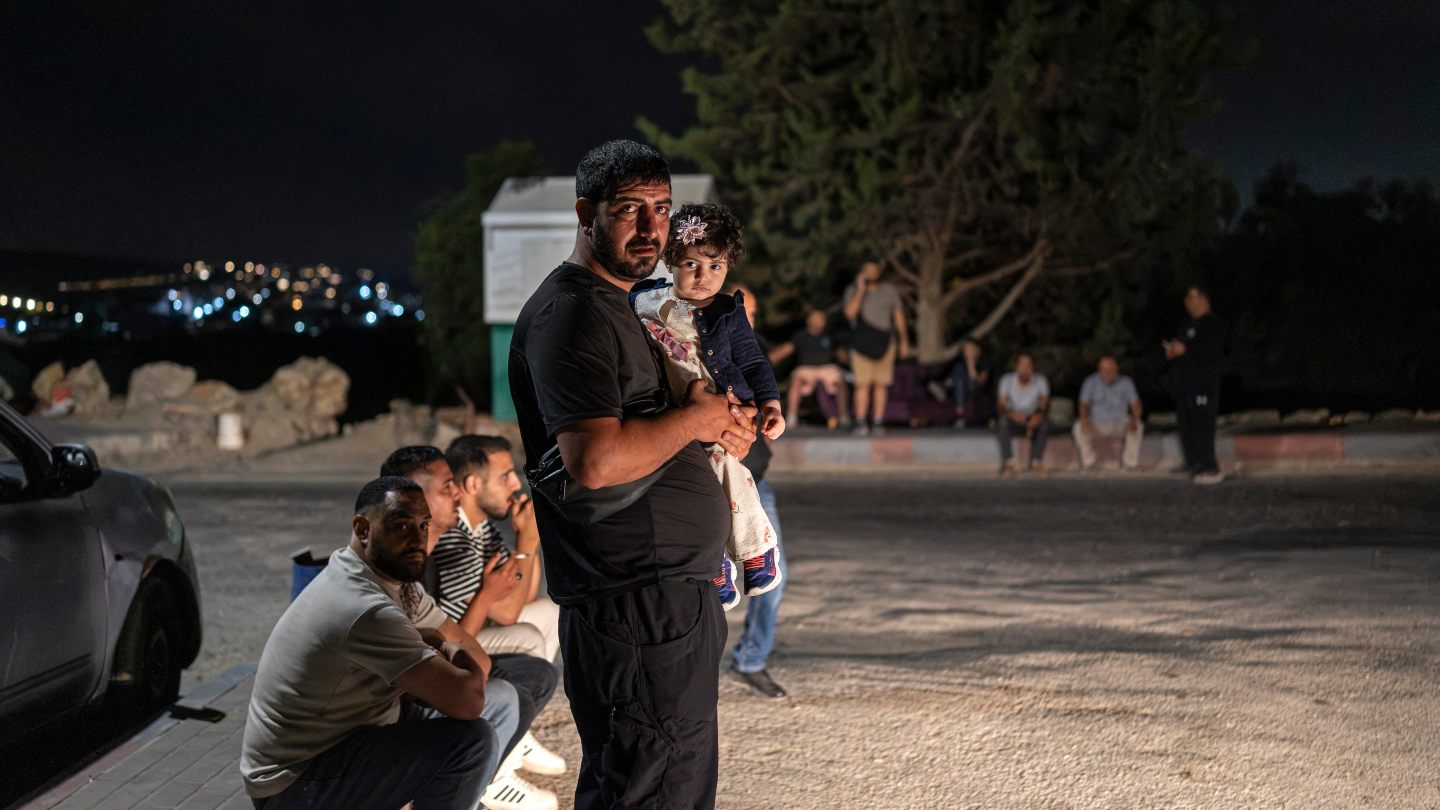
    Before the first light of day filtered across the occupied West Bank, the sharp, sudden sound of pounding echoed through the entrance of Ahmed Safi’s apartment building in the town of Birzeit, north of Ramallah. When the 48-year-old Palestinian father jolted awake, he watched as Israeli soldiers streamed through the halls of his building, and assumed the incursion targeted another resident. He could never have guessed the operation would end with his own 20-year-old daughter, Sama – a psychology undergraduate at Birzeit University – in handcuffs.

    “We were stunned, completely shocked,” Safi told reporters from Middle East Eye in an interview. “We never had any indication this raid was meant for her.”

    Family accounts confirm soldiers entered the residential compound shortly after 2 a.m. on Tuesday, shouting orders in Hebrew as they cleared each floor and made their way to the Safi family’s unit. They demanded identification from Ahmed, his wife, and Sama, before presenting the 20-year-old with a sealed arrest warrant. When the family pressed for details on the allegations against her, commanding officers only offered that they would “learn the reason in court.”

    Before moving Sama out of the apartment, soldiers ransacked her personal study and bedroom, seizing her mobile phone, laptop, and multiple personal items. Among the possessions taken were framed photographs of her cousin, Ayser Safi, who was killed by Israeli forces in a separate 2024 incursion. Sama was then led down the stairs of the building, handcuffed behind her back, blindfolded, and loaded into an unmarked Israeli military vehicle.

    For the Safi family, the shock of the arrest is compounded by urgent fears over Sama’s chronic medical condition: she lives with Familial Mediterranean Fever (FMF), an inherited autoimmune inflammatory disorder that requires daily, consistent medication to prevent life-threatening complications. Ahmed Safi said he repeatedly attempted to explain his daughter’s health needs to the raiding party, but soldiers refused to let him gather her medication or discuss her condition before taking her into custody.

    “Without her daily drugs, she suffers crippling high fevers, intense body pain, and other disabling symptoms,” Safi explained. “This disease triggers spontaneous autoimmune attacks. If she goes without her medication, it can cause permanent liver and kidney damage. We are extremely worried for her right now.”

    As of this week, Sama is being held at the Al-Maskubiya interrogation facility in Jerusalem, with her first scheduled court appearance set for next Tuesday. No formal charges against her have been released to the public.

    Sama is not alone in this latest wave of detentions: she is one of five Palestinian women taken into Israeli custody in a series of overnight raids this week, three of whom are current Birzeit University students, with one a recent graduate of the institution. Among the detainees are two active players on the Palestinian women’s national football team: 20-year-old Natalie Abu Diya and 20-year-old Rand Halawani. The other two detainees are third-year public administration student Julan Abu Awad and recent graduate Laila Nael Khalil.

    Natalie Abu Diya, a second-year media studies student at Birzeit, was taken from her on-campus student housing during what witnesses described as a violent overnight incursion. Her father, Samer Abu Diya, told Middle East Eye that Natalie had represented Palestine in international youth competition as a member of the national under-18 women’s football squad. The family was on a phone call with Natalie until roughly 10:30 p.m. the night of her arrest, when she told them she had 13 class assignments to finish and planned to stay up late to complete the work. By 3:30 a.m., her roommates contacted the family to say Israeli soldiers had broken into her room and taken her into custody.

    Natalie was later transferred to Israel’s Ofer Prison, where she has already met with her legal representation. The family says they still have no information about what charges, if any, will be brought against her.

    “Natalie is my youngest daughter. She is independent, determined, and exceptionally bright,” Samer Abu Diya said. “I do not doubt her ability to withstand this ordeal, but I am deeply heartbroken by the injustice that is being done to her.”

    The second national team player, Rand Halawani, was arrested after Israeli authorities summoned her for questioning in Jerusalem. A military court has extended her detention through Friday, and no further details on charges have been released.

    The Palestinian Football Association (PFA) issued a scathing condemnation of the detentions, calling the arrests “unjust” and part of a broader pattern of systematic targeting that has gone unchecked for years.

    “Their arrest is not an isolated incident; it is part of a well-documented pattern of systematic targeting of Palestinian athletes, which continues without any form of accountability,” the PFA statement read. “The PFA calls on FIFA, our continental confederations, and the entire global sporting community to move beyond empty statements and take concrete disciplinary action within the framework of international football to address these ongoing violations. The targeting of Palestinian athletes must end. The impunity must end. The double standards must end.”

    Julan Abu Awad, the third Birzeit student detained, was arrested during a pre-dawn raid on her family’s home in the West Bank. Her sister, Jenin Abu Awad, said the entire family was left stunned by the incursion.

    “We tried to ask why they were taking her, but they just told us we would find out in court, and that she would be detained for a long time,” Jenin told Middle East Eye. “They tore her room apart, searched every inch of it, and turned everything upside down.”

    The raid that led to Julan’s arrest came just one week after Israeli forces first raided the family home, interrogating all members, seizing personal items including a bottle of perfume and a pack of cigarettes, but leaving without making any arrests. Julan is currently being held at the Al-Maskubiya interrogation center, and like Sama Safi, she has a pre-existing chronic medical condition that requires regular medication: she experiences severe recurring migraines that can leave her incapacitated for days.

    “When she has a migraine, she vomits repeatedly, cannot stand any light, and needs complete silence. She needs strong painkillers and a sedative injection to get through an attack,” Jenin explained. “We are very worried about her health right now.”

    These five detentions are part of a much broader, ongoing pattern of daily incursion and arrest across the occupied West Bank. Palestinian prisoner rights organizations estimate that roughly 9,000 Palestinians are currently held in Israeli prisons, with nearly half of that population detained without formal charges or trial.

    Abdullah Zaghari, head of the Palestinian Prisoners’ Club, a prominent advocacy group, said in an interview that Israeli forces have seen a sharp uptick in the detention of Palestinian girls and women in recent months, with a particular focus on university students and former political prisoners. Most of these arrests are carried out under the broad allegation of “incitement,” often tied to nothing more than social media posts expressing opposition to the Israeli occupation or solidarity with other Palestinian communities.

    Zaghari warned that detained Palestinian women face severe risks inside Israeli prisons, including documented abuse, systemic medical negligence, and prolonged solitary confinement. “The number of arrests of male and female university students has skyrocketed under this pretext, which has no basis in international law whatsoever,” Zaghari said. “These arrests are part of ongoing acts of revenge against the Palestinian people by the occupation.”

    Data from the Palestinian Prisoners’ Club shows that the total number of Palestinian women held in Israeli facilities has risen to 89 as of this week. That population includes three minor girls, three pregnant women, and two women living with cancer. Most are held in Israel’s Damon Prison, while dozens more are still being held in temporary interrogation and detention facilities. At least 19 of the 89 detained women are held under administrative detention, a policy that allows Israeli authorities to imprison individuals without charge or trial, with detention terms renewable indefinitely.

  • Lebanon-Israel ceasefire plans in doubt following Hezbollah’s rejection

    Lebanon-Israel ceasefire plans in doubt following Hezbollah’s rejection

    After four rounds of US-mediated direct negotiations between Israeli and Lebanese delegations in Washington, a US-backed draft plan for a ceasefire between the two nations has emerged, but its path to implementation remains deeply uncertain, with multiple Lebanese stakeholders warning critical pieces are still missing and key regional players stand opposed.

    The two days of talks concluded with a preliminary declaration that lays out a framework for a ceasefire and the establishment of pilot security zones in southern Lebanon. Under the proposed arrangement, the Lebanese Armed Forces would take sole control of these designated areas, barring all non-state armed groups from operating within their borders. The pilot zones are framed as an initial testing ground for a wider security arrangement that could be expanded across the region if successful.

    However, a senior Lebanese official close to President Joseph Aoun told Middle East Eye that the draft proposal lacks any clear, binding implementation mechanism, and its entire fate now rests on whether Hezbollah, the powerful non-state armed group that holds significant sway in southern Lebanon, will give its approval. What is more, the official confirmed that neither Hezbollah nor Nabih Berri – Lebanon’s long-serving Parliament Speaker, a key Hezbollah ally and established intermediary between the group and Washington – were privy to the full details of negotiations as they progressed. Once the draft text was finalized, President Aoun circulated it to both Hezbollah and Berri to gather feedback before communicating Lebanon’s final position to US negotiators.

    The senior official described the closed-door negotiations as grueling, noting that the Lebanese delegation threatened to walk out and suspend talks after Israeli negotiators pushed back against demands for a full, immediate ceasefire. It was this deadlock that led US mediators to put forward the pilot zone concept as a compromise middle ground to break the impasse.

    Another sticking point emerged during the talks when the US delegation insisted on including language condemning what it called “Iran’s attacks on countries in the region”. Lebanese negotiators viewed the repeated push for this language as a deliberate attempt to decouple the Israel-Lebanon peace track from ongoing US-Iran negotiations. Iran has listed a full end to Israeli strikes on Lebanon as a core condition for its own ceasefire talks with Washington, and just days prior, Tehran suspended negotiations in response to Israeli threats to bomb central Beirut.

    The situation on the ground in southern Lebanon has continued to deteriorate despite a nominal ceasefire declared on 17 April. Since that truce took effect, Israel has steadily expanded its military presence across the region, through territorial occupation, repeated air strikes, and mandatory evacuation orders for local residents. Roughly one-fifth of Lebanon’s total territory is now under direct or indirect Israeli control, a footprint that extends far beyond the initial buffer zone Israel declared when the truce was announced. Notably, the new US-backed proposal makes no mention of requiring an Israeli troop withdrawal or ending ongoing Israeli military operations in southern Lebanon, and Israeli Defense Minister Israel Katz confirmed Thursday that Israeli forces would “for the time being, continue its fire and operations on the ground”. Katz added that Israel would keep working to dismantle Hezbollah’s infrastructure in the region and retained US-backed “freedom of action” to strike targets in Beirut in response to any attacks on Israeli territory.

    Hezbollah officials say they were not surprised by the outcome of the Washington talks. A source familiar with the group’s position told Middle East Eye that Hezbollah opposed direct negotiations between the Lebanese state and Israel from the start, predicting it would produce a framework that ran counter to the group’s core interests. “From the first statement issued after the first joint meeting that initiated the direct negotiations path, we knew this is where the Lebanese state intended to go,” the source said. “That is why we were against this track from the start.”

    Hezbollah secretary-general Naim Qassem has since formally rejected the outcome of the talks, calling direct negotiations with Israel “shameful” for Lebanon and dismissing any attempts to tie a ceasefire and Israeli withdrawal to the group’s disarmament. Qassem stressed that any credible ceasefire must cover all of southern Lebanon, where Israel has seized a self-declared security zone, and argued that Israeli security in northern towns would never be achieved as long as Lebanese villages remain under attack, unsafe, and destroyed. “Towns in northern Israel would not be secure as long as our villages are unsafe, bombed, destroyed, and our people are being killed,” Qassem said. For Hezbollah, any discussion of the group’s weapons must only take place after a full stop to all Israeli attacks across Lebanon and a complete withdrawal of Israeli troops from all occupied Lebanese territory – a position that directly clashes with the US framework, which centers on restricting Hezbollah’s military presence and activity south of the Litani River as a core condition for the ceasefire.

    Criticism of the proposal has also come from other Lebanese officials not affiliated with Hezbollah. One senior Lebanese official not involved in the negotiations described the proposal’s wording as deeply ambiguous, saying it remains unclear whether the ceasefire and security arrangements would take effect simultaneously or sequentially. The official also called out a section of the draft that endorses US Secretary of State Marco Rubio’s claim that Hezbollah is “an enemy of Lebanon” in addition to being an enemy of Israel and the United States, calling the paragraph embarrassing for Lebanon even if it only reflects a US position.

    The dispute highlights the narrow, high-stakes path facing the Lebanese government. The presidency has framed the proposal as a last chance to secure a broad ceasefire, but Hezbollah views it as an attempt to achieve through diplomacy what Israel failed to win through military force. It also exposes a core contradiction at the heart of the US-led process: Washington is pushing for a formal state-to-state agreement between Lebanon and Israel, but the most powerful military actor on the Lebanese side – Hezbollah – has been excluded from the negotiations entirely.

    Israeli and Lebanese delegations are scheduled to reconvene later this month for further talks on political and security arrangements. Even so, Lebanese officials openly acknowledge that without Hezbollah’s backing, the proposal is at risk of remaining nothing more than a non-binding diplomatic framework with no viable path to implementation.

  • Protesters topple World Cup player statues in Mexico City

    Protesters topple World Cup player statues in Mexico City

    A growing wave of labor unrest has shaken Mexico City in recent days, as striking teachers demanding substantial wage increases have escalated their demonstrations by toppling iconic statues of World Cup-winning national soccer players. What began as a series of peaceful pickets focused on government budget negotiations quickly gained traction, with organizers now issuing explicit warnings that the upcoming soccer tournament will face widespread disruption if their long-standing financial demands are not formally addressed.

  • Ollie Robinson’s dream England comeback: 3 wickets in a maiden first over at Lord’s

    Ollie Robinson’s dream England comeback: 3 wickets in a maiden first over at Lord’s

    Twelve months ago, around the 2023 Christmas holiday, fast bowler Ollie Robinson had convinced himself his days representing England in international test cricket were over. While his national teammates were down in Australia battling for the Ashes, Robinson was on the outside, looking in, his name absent from England’s squad entirely.

    What followed was a chain of events that would set the stage for one of the most dramatic test cricket comebacks in recent memory. After England finished the Ashes with a demoralizing 4-1 series defeat, the team’s management set out to reset their core squad ahead of the 2024 home season. Head coach Brendon McCullum reached out to Robinson with a game-changing message at the opening of the domestic campaign: the talented but polarizing paceman would get a second chance to earn his place back in the national side.

    Robinson’s fall from the England setup just a year prior had not been for a lack of on-field performance. Across 20 test matches, he had already notched an impressive 76 wickets for his country. Instead, he was dropped in early 2024 over concerns about poor fitness standards and questions over his commitment to team-first values. Determined to prove his critics wrong, Robinson embraced a new leadership opportunity this year, taking over as captain of his county side Sussex. The role sparked a noticeable shift in his mindset and work ethic: through the ongoing County Championship, he has already claimed 18 wickets, putting in consistent match-winning performances that made him impossible for national selectors to ignore. When key pace options Jofra Archer and Brydon Carse were ruled out of England’s first home test against New Zealand, opening at Lord’s this Thursday, the spot opened back up for Robinson — and with it, a mountain of pressure to perform.

    What happened next exceeded even the most optimistic expectations for Robinson’s return. Tasked with delivering the new ball for England, after the hosts had been bowled out for a underwhelming first innings total of just 140, Robinson delivered the most historic opening over of his career. He removed New Zealand’s star opener Devon Conway with his third delivery, followed by captain Kane Williamson with his fifth ball, and rising star Rachin Ravindra with his sixth. The three-wicket maiden over sent the packed Lord’s crowd into a frenzy, with supporters chanting Robinson’s name before he had even finished his first six deliveries of the match.

    Speaking to reporters after the incredible over, Robinson admitted the pre-comeback nerves had left him almost unable to perform. “The first over I couldn’t feel my legs, I was so nervous,” he told the BBC. “To get the first wicket, the emotion coming was incredible.” Speaking to Sky Sports, he added: “It was so loud. I was in a bit of a daze and just trying to focus. The crowd were amazing, it’s one of the loudest I’ve heard them here.”

    Robinson was open about the full shift in attitude that allowed him to earn his way back to the national side. “I was in a place where I never thought I’d play for England again,” he said. “To get the text from Baz (McCullum) shifted my mindset. To get back in the team, I knew the date of the first day of the test and there was a lot of work. I’ve tried my best to get back in the condition for today. I know there’s a lot of hard work ahead.”

    By the close of play on day one, Robinson’s incredible form had only continued. He finished the day with unbeatable figures of 4 wickets for just 10 runs across six overs, three of which were maidens. New Zealand’s batting line-up was left reeling at 61 for 6, putting England firmly in control of the match at the end of the opening day.

    Robinson’s stellar performance overshadowed another landmark comeback on the day. New Zealand pace bowler Kyle Jamieson, who was also making his return to test cricket after a career-threatening back injury, picked up an impressive five-wicket haul for 62 runs — his first five-wicket test haul in five years — and was on track to be the day’s standout player before Robinson’s historic opening over. Jamieson’s return came after three stress fractures in three seasons forced him into a year-long rehabilitation process, mirroring Robinson’s own journey back from the sidelines.

    Giving credit to the opposing side after day one, Robinson noted: “They bowled so well, we knew we had to follow suit. Both teams hit the stumps a lot so credit to both teams. We’ve still got a job to do and mop them up in the morning.”