作者: admin

  • Division, theater and one golden moment as Trump addresses Congress

    Division, theater and one golden moment as Trump addresses Congress

    The annual State of the Union address transformed into a stark display of American political division as former President Donald Trump delivered his speech before a deeply fractured Congress. The event, traditionally a ceremonial gathering of the nation’s governing bodies, instead highlighted the profound ideological rifts characterizing contemporary U.S. politics.

    Trump entered the chamber six minutes behind schedule, projecting an air of unwavering confidence despite potential hostility over his unconventional presidential approach. The reception was immediately polarized: Republicans repeatedly rose in enthusiastic standing ovations while numerous Democrats remained conspicuously seated with expressions of stern disapproval.

    The Supreme Court justices, including Chief Justice John Roberts Jr. and Justices Elena Kagan, Brett Kavanaugh, and Amy Coney Barrett, observed from their customary front-row positions. Their black robes contrasted sharply with the political theater unfolding before them, their recent judicial rebuke of Trump’s signature tariff policies creating palpable tension in the chamber.

    Attendance numbers reflected the event’s contentious nature, with dozens of Democratic members staging a boycott. The resulting empty seats provided visual evidence of the address’s disputed legitimacy while creating spatial breathing room absent during Trump’s protest-marred 2025 appearance.

    The presidential narrative emphasized economic achievements and national strength, with Trump claiming credit for falling inflation, rising employment, and a thriving stock market. When addressing the Supreme Court’s tariff decision, however, the president openly criticized the ruling as mistaken, causing visible discomfort throughout the chamber.

    Emotional depth was provided by carefully selected guests whose expressions conveyed complex human stories. These included survivors of Jeffrey Epstein’s sexual crimes and members of the victorious U.S. Olympic ice hockey team, who appeared momentarily overwhelmed by the ceremony’s grandeur. The Olympians’ recognition prompted the evening’s sole unifying moment, with the entire chamber rising to chant “USA!” in rare bipartisan celebration.

    Democratic resistance manifested through subtle protests rather than overt disruption. Many members wore white suffragette homage or accountability-demanding pins referencing Epstein. Congressman Al Green’s display of a sign criticizing Trump for sharing racist content resulted in his swift ejection, continuing his history of address disruptions.

    The primary Democratic protest weapon became strategic silence—the deliberate withholding of applause during Republican standing ovations. Outside the Capitol, alternative narratives emerged simultaneously through activist-led “People’s State of the Union” events and preemptive Democratic rebuttals, reflecting modern media’s preference for instant response over ceremonial tradition.

    As the address reached its climactic assertion of American strength, the physical chamber embodied national division: Republicans standing, Democrats seated, and Supreme Court justices maintaining judicial neutrality through studied impassivity.

  • ACT Police won’t press charges over Trump, Elon Musk Nazi posters in popular Canberra cafe

    ACT Police won’t press charges over Trump, Elon Musk Nazi posters in popular Canberra cafe

    Australian Federal Police have concluded their investigation into a Canberra establishment without filing charges, one week after confiscating controversial satirical posters under newly enacted hate speech legislation. The Dissent Cafe and Bar had become the center of a national debate after police declared it a crime scene following complaints about political parody artwork displayed on its exterior.

    The contentious images depicted several prominent international figures—including former U.S. President Donald Trump, Tesla CEO Elon Musk, Vice President JD Vance, Israeli Prime Minister Benjamin Netanyahu, and Russian President Vladimir Putin—all portrayed in Nazi-style uniforms. The establishment had maintained the display for several weeks prior to police intervention.

    Despite the owner’s refusal to remove the materials, leading to their seizure by authorities, replacement posters soon appeared featuring the same imagery overlaid with the word ‘censored.’ This development sparked significant backlash from both local political representatives and the arts community, raising fundamental questions about the application of new hate speech laws passed following recent terrorist incidents in Australia.

    In an official statement released Wednesday, ACT Police acknowledged that while the posters technically engaged certain elements of the legislation, they ultimately failed to meet all necessary criteria for prosecution. ‘As such, criminal proceedings will not occur,’ the statement confirmed, adding that the confiscated materials would be returned to the proprietor.

    The police emphasized their ongoing commitment to addressing anti-Semitic, racist, and hate-related incidents through appropriate legal channels when criminality is identified. Meanwhile, the cafe’s social media accounts had previously defended the display as ‘clearly and obviously parody art with a distinct anti-fascist message,’ criticizing what they characterized as excessive legal response to artistic expression.

  • Australian sharemarket soars to new record high as tech stocks rebound, Woolworths hits 17-month high

    Australian sharemarket soars to new record high as tech stocks rebound, Woolworths hits 17-month high

    Australia’s financial markets achieved a historic milestone on Wednesday as the S&P/ASX 200 index surged to an unprecedented peak, closing at 9,128.3 points with a remarkable 1.18% gain. This performance eclipsed previous records set in October, demonstrating remarkable resilience against recent inflationary pressures.

    The technology sector emerged as the primary catalyst for this rally, posting an impressive 5.9% advancement despite widespread concerns about artificial intelligence disruption. This substantial growth was complemented by a robust 5.7% upswing in consumer staples, with only three of the eleven market sectors experiencing declines during the trading session.

    Market analysts observed a significant reversal from weeks of sell-offs on both Wall Street and domestic exchanges, as investor confidence in AI capabilities grew. Notable performers included Xero, which recovered 5.5% of its value, while Technology One regained 14% of its 52-week losses. Megaport and Iress demonstrated particularly strong performances with gains of 9.8% and 9.6% respectively.

    WiseTech Global emerged as a standout performer, witnessing an 11% share price increase following its strategic announcement to eliminate 2,000 positions in favor of AI integration. This decision helped mitigate approximately half of the company’s losses accumulated over the previous six months.

    The consumer sector witnessed extraordinary movements with Woolworths reaching a 17-month high, adding $3.2 billion to its market capitalization following exceptionally strong half-year results. The supermarket giant’s shares climbed 13%, achieving a new 52-week peak that significantly contributed to the market’s overall performance.

    Resources companies demonstrated substantial strength with Fortescue Metals Group advancing 4.6% amid climbing profits, while BHP reached its own record high with a 3.2% gain. Tabcorp exceeded market expectations with its half-year results, propelling shares upward by 23.5%.

    Defense technology firm DroneShield reported soaring revenue and profits, resulting in a 12.6% share price increase. Treasury Wine Estates, proprietor of the Penfolds brand, recovered 3.1% of recent losses, while agricultural enterprises including Cobram Estate Olives and Ricegrowers posted gains of 3.3% and 2.3% respectively.

    Market analysts highlighted the significance of this broad-based recovery. eToro analyst Josh Gilbert noted regarding Woolworths’ performance: “While today’s result isn’t the definitive response to skeptics, it indicates a positive directional shift. The upgraded guidance demonstrates renewed confidence from management after two years of tempered expectations.”

    Investors now await forthcoming results from major companies including Qantas, Ramsay Health Care, and Super Retail Group, scheduled for release on Thursday, which will provide further indication of market trajectory.

  • Japan to deploy missiles on island near Taiwan by 2031

    Japan to deploy missiles on island near Taiwan by 2031

    Japan has officially announced plans to deploy surface-to-air missile capabilities to Yonaguni Island, its westernmost territory situated merely 110 kilometers from Taiwan, by March 2031. Defense Minister Shinjiro Koizumi confirmed the timeline on Tuesday, marking the first specific deployment schedule since initial plans were unveiled in 2022.

    The strategic move occurs against a backdrop of escalating Sino-Japanese tensions that have deteriorated significantly since November, when Prime Minister Sanae Takaichi suggested potential Japanese Self-Defense Force involvement in the event of a Taiwan conflict. China, which considers Taiwan a breakaway province, has consistently asserted its right to pursue reunification by force if necessary.

    Yonaguni’s proximity to Taiwan makes it a critical frontline position in Japan’s defense architecture. The island already hosts approximately 160 military personnel conducting coastal surveillance operations, with plans to establish an electronic warfare unit by fiscal year 2026 capable of disrupting enemy communications and radar systems.

    The recently announced missile unit will be equipped with medium-range surface-to-air systems designed to intercept incoming aircraft and missiles. Minister Koizumi noted that while the deployment timeline might adjust based on facility construction progress, the current target remains fiscal year 2030.

    This military enhancement follows China’s imposition of export restrictions against 40 Japanese companies and entities, citing national security concerns. Beijing had previously condemned Japan’s military activities near Taiwan as provocative, responding to Koizumi’s November visit to Yonaguni with drone flights that prompted Japanese aerial scrambles.

    Prime Minister Takaichi’s recent parliamentary election victory has provided political momentum for strengthening Japan’s defense capabilities, signaling a more assertive national security posture that extends beyond mere military adjustment to represent a fundamental shift in regional strategic calculations.

  • Asian stocks gain after optimism about AI sends Wall Street higher

    Asian stocks gain after optimism about AI sends Wall Street higher

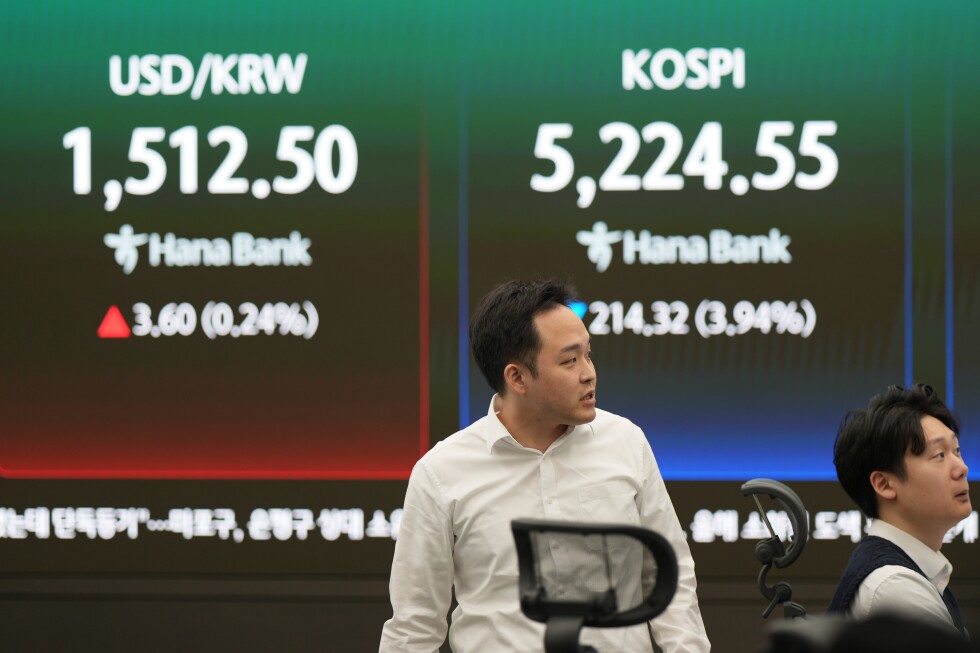
    Asian financial markets experienced broad gains during Wednesday’s trading session, propelled by renewed Wall Street momentum and sustained enthusiasm for artificial intelligence technologies. Japan’s Nikkei 225 index achieved a historic milestone, climbing 1.3% to reach 58,081.62 points despite ongoing trade complications with China.

    The market performance demonstrated notable complexity as export restrictions imposed by China on 40 Japanese entities failed to derail the overall bullish sentiment. Corporate reactions varied significantly with Subaru Corporation and Mitsubishi Materials Corporation recording share price increases, while Eneos Corporation and Sumitomo Heavy Industries experienced declines. Market analysts attributed the export sector’s strength primarily to the persistently weak Japanese yen, which benefited major exporters including Honda Motor Company and Panasonic Corporation.

    Regional benchmarks followed the upward trajectory with Australia’s S&P/ASX 200 advancing 1.1% to 9,122.50 points. South Korea’s Kospi index surged 1.7% to 6,069.36, while Hong Kong’s Hang Seng gained 0.3% and Shanghai Composite added 0.7%.

    The currency markets witnessed modest fluctuations as the U.S. dollar traded at 155.78 yen, representing a slight decrease from the previous 155.83 yen. This level remains substantially stronger than the 160 yen range observed several months earlier. The euro demonstrated minimal movement, trading at $1.1784 compared to $1.1779.

    Investor attention remained divided between market fundamentals and political developments, particularly President Donald Trump’s scheduled State of the Union address. Market participants anticipated reassurances regarding economic stability and policy continuity supporting domestic employment and manufacturing sectors.

    The current market enthusiasm stems from Tuesday’s Wall Street recovery where the S&P 500 registered a 0.8% gain, reclaiming nearly three-quarters of Monday’s substantial losses. This reversal was significantly influenced by Advanced Micro Devices’ 8.8% surge following announcement of a multiyear agreement to supply artificial intelligence chips to Meta Platforms. The comprehensive arrangement includes provisions for Meta to acquire up to 160 million AMD shares at nominal pricing, contingent upon procurement volumes.

    Industry analysts interpreted these developments as validating sustained confidence in AI investment, contrasting sharply with previous concerns about potential technology sector disruptions. Anthropic’s introduction of new AI implementation tools for corporate applications further reinforced optimism that artificial intelligence would complement rather than replace existing software ecosystems.

    Corporate earnings continued to exceed expectations with Keysight Technologies leading S&P 500 performers through a 23.1% rally, while Home Depot advanced 2% following better-than-anticipated profit and revenue reports.

    Fixed income markets maintained stability as Treasury yields held steady following improved consumer confidence indicators. Benchmark crude prices saw moderate increases with West Texas Intermediate gaining 45 cents to $66.08 per barrel and Brent crude advancing 47 cents to $71.24.

  • German chancellor lands in Beijing for inaugural China trip

    German chancellor lands in Beijing for inaugural China trip

    German Chancellor Friedrich Merz arrived in Beijing on Tuesday facing mounting pressure from domestic industries to address a record trade deficit with China, now standing at nearly €90 billion. This inaugural visit comes amid growing alarm from German business leaders who warn that the massive imbalance is fundamentally eroding the nation’s industrial core.

    Official statistics reveal a stark contrast in trade flows: German imports from China surged 8.8% in 2025 to €170.6 billion, while exports to China declined 9.7% to €81.3 billion. This widening gap has solidified China’s position as Germany’s top trading partner, surpassing the United States, but at a concerning cost to Europe’s largest economy.

    Jürgen Matthes, Head of International Economic Policy at the German Economic Institute, attributes this imbalance to what he describes as “massive Chinese subsidies” and currency undervaluation. “These price advantages cannot just come from more innovation and efficiency,” Matthes stated, highlighting how Chinese manufacturing overcapacity and deflationary pressures are creating what economists term a new “China shock” for European industries.

    The visit carries significant geopolitical dimensions beyond trade. Chancellor Merz is expected to urge Chinese leadership to leverage its influence with Moscow to help resolve the ongoing conflict in Ukraine. However, the substantial business delegation accompanying him signals that economic concerns will dominate the agenda.

    Germany’s automotive, machinery, and chemical sectors—traditional pillars of its economy—are particularly vulnerable to what industry federations describe as “distortions” in competition. The Federation of German Industries has specifically called for addressing export controls on critical rare earths, while engineering groups advocate for restoring “fair competitive conditions.

    This tension represents a strategic challenge to Germany’s longstanding “change through trade” approach with authoritarian nations. While Merz emphasized that Germany would continue its “de-risking” policy rather than pursue full decoupling, the visit underscores a fundamental reassessment of economic dependencies that have accumulated over decades of deepening ties.

  • Elusive Shein boss hails Chinese roots in rare public appearance

    Elusive Shein boss hails Chinese roots in rare public appearance

    In a rare public address, Shein founder Xu Yangtian (also known as Sky Xu) has committed substantial investment to China’s fashion industry while reaffirming the company’s deep ties to its manufacturing homeland. Speaking at the High-quality Development Conference in Guangzhou, the reclusive billionaire announced plans to invest over 10 billion yuan ($1.45 billion) to establish a high-tech fashion hub in Guangdong province.

    Xu emphasized the symbiotic relationship between Shein’s global success and Guangdong’s industrial ecosystem, praising the region’s ‘world-class business environment’ and ‘complete industrial ecosystem.’ His remarks, delivered to provincial officials and business leaders, marked a significant departure from his typically private profile and were widely circulated across Chinese social media platforms.

    The investment pledge comes despite Shein’s strategic distancing from China in recent years, including its headquarters relocation to Singapore and exploration of stock market listings in New York and London. Xu acknowledged Guangdong as ‘fertile ground’ for development, noting that local support has already enabled Shein to generate over 600,000 jobs in the region.

    The announcement occurs against a backdrop of increasing challenges for Chinese global retailers. Shein currently faces EU investigations regarding potential digital law violations, including the controversial sale of childlike sex dolls through its platform. The company has responded by removing the listings and banning responsible sellers while strengthening platform regulations.

    Additional pressures include heightened scrutiny from Western markets, particularly regarding environmental sustainability concerns and labor conditions within fast-fashion supply chains. The company’s expansion plans continue nonetheless, with new retail locations scheduled to open in French cities following delayed launches in December.

  • Prominent Russian scholar of North Korea detained during lecture in Latvia, Russian media says

    Prominent Russian scholar of North Korea detained during lecture in Latvia, Russian media says

    In a significant development involving international academia and diplomacy, Professor Andrei Lankov—a distinguished Russian scholar specializing in North Korean studies—was apprehended by Latvian authorities while delivering a lecture in the country. The incident, initially reported by Russian media outlets RBK and Tass, occurred during his presentation on North Korea, though specific grounds for the detention remain undisclosed.

    Lankov, who holds dual Russian and Australian citizenship and serves as a history professor at Seoul’s Kookmin University, confirmed to RBK that he was detained by Latvian police, blacklisted, and subsequently transferred to immigration services. As of 11 p.m. Moscow time, he remained in custody with legal representatives and associates addressing his case.

    South Korea’s Kookmin University administration stated they are actively evaluating the circumstances surrounding his detention. Attempts to contact Lankov directly were unsuccessful at the time of reporting.

    With deep expertise in North Korean affairs, Lankov spent his formative academic years as an exchange student in North Korea during the 1980s and has maintained a decades-long career analyzing the regime. He has taught in Seoul since 2004 after previous academic engagements in South Korea and Australia.

    Lankov is recognized for his realist perspective on North Korea, characterizing it as a Machiavellian state skillfully leveraging limited resources and manipulating global powers to ensure its survival. Notably, he has also voiced criticism against Russia’s military operations in Ukraine and Moscow’s recruitment of North Korean personnel to support its campaign.

    This incident follows a previous legal challenge in Russia, where in April 2025, a Moscow court fined Lankov 10,000 rubles (approximately $130) for participating in activities of an organization deemed “undesirable” by Russian authorities. Lankov had learned about those charges through media inquiries at the time.

  • ‘Don’t hold out to come to the US’: Advocates urge Afghans to seek new lives elsewhere

    ‘Don’t hold out to come to the US’: Advocates urge Afghans to seek new lives elsewhere

    In a significant shift of policy guidance, American immigration advocacy groups are now advising Afghan nationals awaiting US resettlement to pursue safe haven in alternative countries. This recommendation stems from the stringent refugee ban implemented by the Trump administration, which has effectively closed official pathways to the United States.

    Shawn VanDiver, a US Navy veteran and head of the #AfghanEvac coalition, delivered this sobering counsel during a virtual assembly with approximately 1,000 affected Afghans globally. He explicitly stated, ‘The President has declared that individuals from Afghanistan and several other nations are prohibited from entering. There exist no clandestine channels, alternative entries, or expedited processes.’ The official guidance now encourages families to establish lives elsewhere while monitoring the political landscape for potential future policy amendments.

    The context involves multiple categories of Afghan applicants: approximately 180,000 individuals in the Special Immigrant Visa pipeline, an estimated 65,000 refugees, and 15,000 awaiting family reunification. While judicial mandates require continued processing of applications, actual visa issuances remain discretionary and have been effectively halted.

    Complicating the situation, the Department of Homeland Security recently proposed new regulations extending work authorization processing to 180 days for asylum seekers. However, the agency acknowledged that current backlogs could extend wait times between 14 and 173 years, making the system practically inaccessible.

    This policy environment follows President Trump’s sweeping refugee ban enacted on January 20, 2025. Although litigation ensued, the courts ultimately ruled that while the administration could suspend new refugee admissions, it could not block individuals with already-approved documentation.

    Concurrently, the administration has empowered Immigration and Customs Enforcement (ICE) officers with broad authority to detain legally admitted refugees who haven’t obtained permanent residency. This represents a dramatic departure from previous policy under which failure to secure a green card wasn’t grounds for detention or removal.

    The situation further intensified with the decision to close Camp As-Sayliyah in Qatar, a transit facility housing over 1,000 pre-screened Afghans awaiting US transfer. The State Department has begun offering financial incentives for voluntary departure before the March 31 closure, with reports indicating offers of $4,500 per main applicant plus $1,200 for additional family members.

    These developments occur alongside a massive re-vetting initiative targeting up to 80,000 Afghans admitted during the Biden administration, prompted by a security incident involving a former CIA asset. Advocacy groups emphasize the need to distinguish between individual criminal acts and collective responsibility, warning against broad immigrant vilification.

  • UGC Season 3 heads to the Earth Course for a high-stakes Elite Matchplay showdown

    UGC Season 3 heads to the Earth Course for a high-stakes Elite Matchplay showdown

    The Ultimate Golf Challenge (UGC) enters its most strategically pivotal phase as Season 3 transitions to the renowned Earth Course at Jumeirah Golf Estates for Round 2 on February 26. Following the Stableford format opening at Saadiyat Beach Golf Club, the competition adopts the intense Elite Matchplay system—a dramatic shift that promises to reshape the championship landscape.

    This format revolution transforms the game into nine simultaneous head-to-head duels where each hole constitutes an individual battle. Unlike traditional stroke play, matchplay demands psychological resilience and tactical precision as players compete to win more holes than their direct opponents. Five athletes from each of the ten participating teams will engage in these parallel contests, with victories earning five points and halved matches yielding two points.

    Tournament Director Brandon De Souza emphasized the round’s extraordinary significance, noting: ‘With up to 225 points potentially in play, this represents a monumental opportunity for teams to radically alter their standings. A single player’s performance can contribute 45 points to their team’s total—a game-changing scenario that could propel lower-ranked squads into immediate contention.’

    The Earth Course itself presents a formidable challenge. Known as one of the region’s most demanding layouts and home to the DP World Tour Championship, it will test competitors’ technical mastery and mental fortitude. The combination of world-class terrain and the unforgiving matchplay format creates what De Souza describes as ‘a potentially season-defining showdown where participants will emerge as either heroes or villains for their teams.’