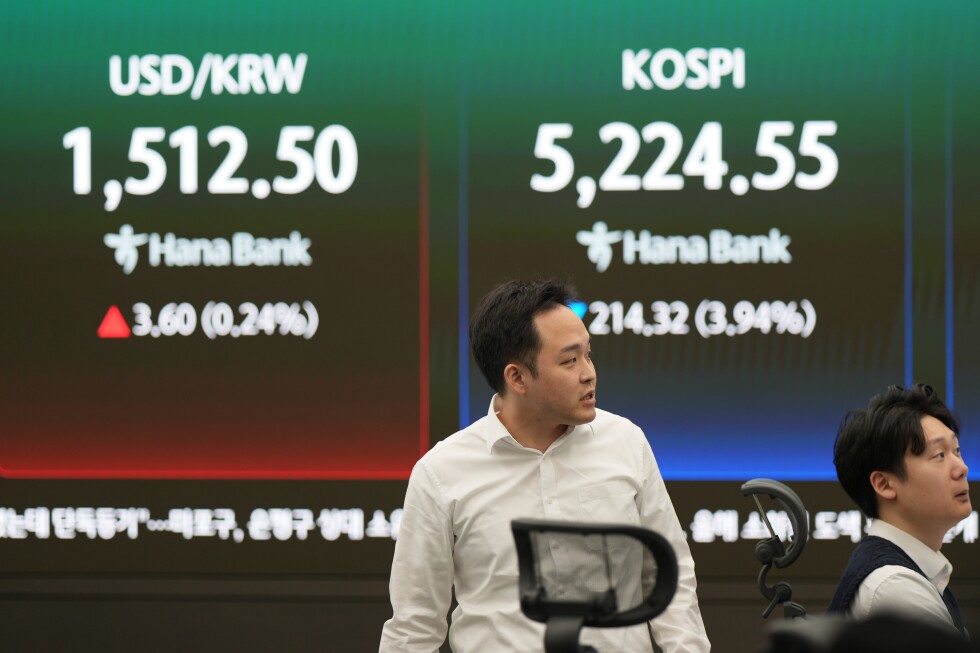
Asian financial markets opened the week with significant losses as escalating geopolitical tensions and soaring energy prices continued to rattle investor confidence. The regional decline followed Wall Street’s fifth consecutive weekly downturn, marking its longest losing streak in nearly four years.
Japan’s Nikkei 225 index led the decline with a 2.8% drop to close at 51,885.85, while South Korea’s Kospi experienced a substantial 3.3% plunge to 5,258.02. Australia’s S&P/ASX 200 retreated 0.7% to 8,461.00, and Hong Kong’s Hang Seng declined 0.7% to 24,775.65. China’s Shanghai Composite notably bucked the trend, reversing morning losses to close 0.2% higher at 3,920.90.
The primary catalyst for market anxiety remains the potential disruption to oil shipments through the Strait of Hormuz, a critical maritime choke point for global energy supplies. Benchmark Brent crude soared to $115.06 per barrel, representing a dramatic increase from pre-conflict levels of approximately $70. Similarly, U.S. benchmark crude surged to $100.71 per barrel.
Financial analysts warn that sustained conflict could trigger widespread inflationary pressures and potentially hamper economic growth across Asian economies. “While we do not anticipate a protracted conflict, we expect heightened market volatility in the near term,” commented Xavier Lee, senior equity analyst at Morningstar Research.
The U.S. markets previously concluded their worst weekly performance since the conflict’s inception, with the S&P 500 dropping 1.7% and the Dow Jones Industrial Average shedding 793 points. Technology stocks, including Amazon and Nvidia, faced particularly heavy selling pressure.
Currency markets also exhibited heightened activity, with the Japanese yen trading at 159.73 against the U.S. dollar amid concerns about its declining value. Japanese financial officials acknowledged increased speculative activity in foreign exchange markets, pledging comprehensive response measures without specifying particular interventions.