作者: admin

  • Iran nears deal to buy supersonic anti-ship cruise missiles from China: Report

    Iran nears deal to buy supersonic anti-ship cruise missiles from China: Report

    Iran is advancing toward a significant arms acquisition from China, with negotiations nearing completion for the purchase of advanced CM-302 supersonic anti-ship cruise missiles. This development occurs alongside substantial US military deployments to the region, creating a volatile geopolitical landscape.

    According to intelligence reports, these bilateral defense talks initiated two years ago have gained considerable momentum since June 2025. This acceleration follows coordinated US-Israeli strikes targeting Iranian nuclear facilities. The CM-302 missiles under discussion represent a substantial capability upgrade with their 290-kilometer operational range and advanced countermeasure evasion technology.

    The United States has responded with pronounced military reinforcement, positioning the USS Abraham Lincoln carrier strike group in the Arabian Sea while the USS Gerald Ford maintains presence in the Eastern Mediterranean. This deployment coincides with ongoing nuclear negotiations between Washington and Tehran.

    This potential transaction builds upon existing defense cooperation between Tehran and Beijing. Middle East Eye previously reported Iran’s acquisition of Chinese surface-to-air missile systems in June 2025, reportedly compensated through oil shipments. China remains Iran’s predominant oil customer, importing approximately 90% of Iranian crude exports according to US Energy Information Administration data.

    The geopolitical implications are particularly significant given the strategic importance of the Strait of Hormuz, through which nearly 20% of global seaborne oil transits. Iran has previously demonstrated capability to disrupt this critical waterway, temporarily closing the channel recently and conducting joint military exercises with China and Russia in adjacent waters.

    Historical context reveals deep-rooted Sino-Iranian defense cooperation dating to the 1980s, when China supplied HY-2 Silkworm missiles during the Iran-Iraq conflict. More recently, Iran acquired HQ9 anti-aircraft systems in 2010. The current missile transfer would represent a substantial escalation as offensive weaponry capable of threatening US naval assets.

    Despite growing cooperation, regional diplomats suggest China may exercise caution in over-committing to the partnership amid ongoing US-China rapprochement efforts. The upcoming April summit between Presidents Trump and Xi Jinping adds further complexity to these strategic calculations.

  • New US tariff starts at 10%, Trump administration working to hike it to 15%

    New US tariff starts at 10%, Trump administration working to hike it to 15%

    The United States commenced enforcement of a provisional 10% universal import tariff on Tuesday, creating significant uncertainty in global trade circles as the Trump administration simultaneously works toward implementing a more substantial 15% levy. This development follows President Donald Trump’s recent Supreme Court defeat regarding previous tariff mechanisms.

    President Trump initially executed an executive order on Friday mandating a 10% tariff with a 150-day duration, designed to replace comprehensive duties previously invalidated by the Supreme Court. However, in a surprising reversal on Saturday, the president declared his intention to elevate the rate to 15%. The U.S. Customs and Border Protection agency subsequently notified shipping entities Monday evening that collections would commence at the lower 10% rate, citing the absence of updated formal presidential documentation.

    A White House official confirmed to Reuters that Trump maintains unwavering commitment to implementing the 15% tariff under Section 122 of the Trade Act of 1974, though no specific timeline was provided for this anticipated increase. The official emphasized that the president’s determination remains unchanged despite the current implementation at the reduced rate.

    The policy shift has generated considerable confusion within international trade markets, with no official explanation provided for the discrepancy between announced intentions and implemented rates. Financial analysts from Deutsche Bank suggested the situation might clarify following Trump’s scheduled State of the Union address, while maintaining that effective tariff rates would likely decrease overall compared to pre-Supreme Court ruling levels.

    Market reactions reflected this uncertainty, with global stocks opening lower Tuesday despite the less punitive than expected tariff rate. U.S. markets demonstrated resilience however, with the Dow Jones Industrial Average climbing 0.65%, the S&P 500 Index advancing 0.5%, and the technology-focused Nasdaq increasing 0.8% by midday trading.

    The new tariff structure presents particular complications for the European Union, which previously negotiated a trade agreement predicated on a 15% base tariff rate. European Commission Trade Minister Maros Sefcovic acknowledged a “transitional period” regarding the temporary tariff but received assurances from U.S. trade officials that Washington would honor existing agreements.

    Legal experts note that Section 122 authorization permits presidential imposition of duties for up to 150 days to address “large and serious” balance-of-payments deficits. Trump’s order cited a $1.2 trillion annual goods trade deficit, a current account deficit representing 4% of GDP, and reversal of the U.S. primary income surplus as justification. However, numerous economists and trade attorneys contest the characterization of an imminent balance-of-payments crisis, suggesting the new tariffs remain vulnerable to legal challenges.

    Concurrently, the Trump administration issued warnings to international partners against retreating from previously negotiated trade arrangements, threatening significantly higher duties under alternative statutory authorities should countries disengage from existing agreements. Japan, the European Union, Britain, and Taiwan all indicated preferences to maintain their current trade deals with the United States.

    ING’s Global Head of Macro Carsten Brzeski observed that despite the 150-day limitation on current measures, trade uncertainty will likely persist given the potential for consecutive extensions. Meanwhile, China’s commerce ministry expressed willingness to conduct additional trade discussions with the United States while simultaneously urging Washington to abandon its “unilateral tariffs.”

  • Community rightly ‘cynical’ about Sydney to Newcastle high-speed rail, minister warns

    Community rightly ‘cynical’ about Sydney to Newcastle high-speed rail, minister warns

    A New South Wales government official has voiced significant skepticism regarding the revived proposal for a high-speed rail connection linking Sydney and Newcastle, acknowledging that local communities have legitimate reasons for their cynicism toward such infrastructure promises. Central Coast Minister David Harris made these remarks during a budget estimates hearing on Wednesday, just one day after the Albanese administration announced the commencement of a two-year development phase for the ambitious transport initiative.

    The federal government has allocated approximately $660 million to advance planning for what is designated as ‘Line 1’ of a broader high-speed rail network that ultimately aims to connect Brisbane and Melbourne. According to preliminary assessments by the High Speed Rail Authority, this initial segment could dramatically reduce travel times between Sydney and Newcastle to just one hour—a substantial improvement over the current 2.5-hour journey on century-old tracks.

    Despite the promising projections, Minister Harris highlighted the long history of unfulfilled promises, noting that various proposals for high-speed rail have circulated for decades without concrete realization. The minister specifically addressed potential station locations on the Central Coast, mentioning Tuggerah, Warber Vale, and Ourimbah as possible stops, though he acknowledged significant logistical challenges including construction through state forest areas.

    Harris reported that community sentiment reflects widespread skepticism, with residents adopting a ‘believe it when they see it’ attitude toward the project. However, he clarified that despite his sarcastic tone during questioning, he does not share the outright opposition expressed by some political counterparts, provided the project demonstrates financial viability and includes a Central Coast stop.

    The projected cost of the Sydney-Newcastle link stands at approximately $61.2 billion, with operational commencement not expected before 2039. Government officials have indicated they will explore both public and private financing options once project scope, costs, and risks are finalized. Proponents estimate the infrastructure could generate a $250 billion economic boost over 50 years while creating nearly 100,000 new jobs, though Premier Chris Minns acknowledged the project would require tremendous effort and substantial financial investment.

  • Threat of further violence looms after Mexican cartel rampage

    Threat of further violence looms after Mexican cartel rampage

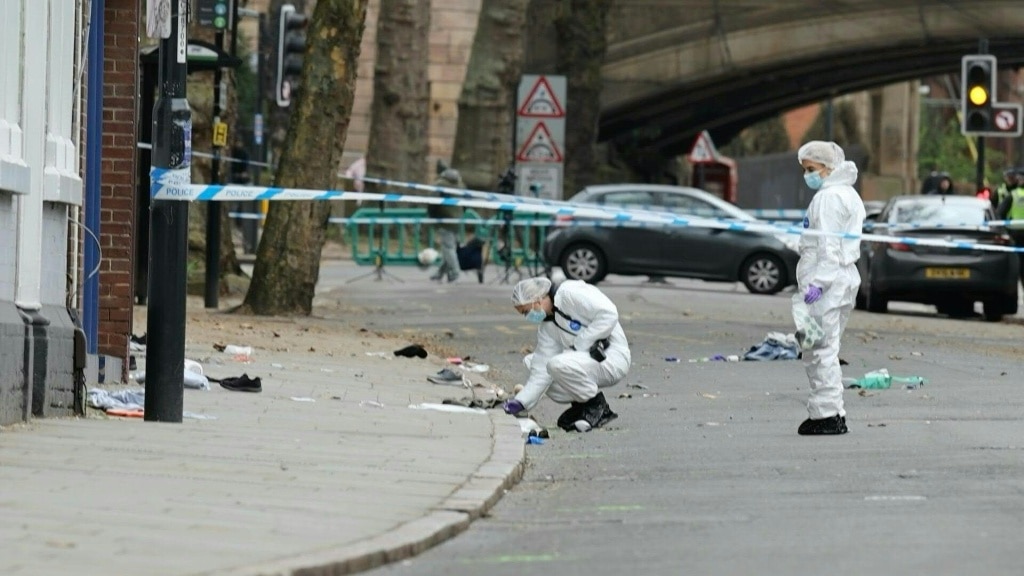
    GUADALAJARA, Mexico – The aftermath of a coordinated cartel assault continues to haunt Mexico’s western Jalisco state, where charred vehicle carcasses and scorched asphalt bear witness to Sunday’s eruption of violence. The Jalisco New Generation Cartel (CJNG), among Mexico’s most formidable criminal syndicates, orchestrated this display of force in retaliation for the killing of their leader, Nemesio “El Mencho” Oseguera.

    The systematic torching of vehicles and looting of convenience stores served as a stark demonstration of the cartel’s operational capacity and its intent to maintain dominance regardless of leadership decapitation. This calculated spectacle of chaos successfully instilled widespread fear across urban centers, challenging governmental authority and disrupting civilian life.

    President Claudia Sheinbaum’s administration has attempted to project control, emphasizing the restoration of “peace and tranquillity” during daily briefings while deploying military and police convoys throughout Guadalajara. Despite these visible security measures, public apprehension persists, evidenced by unusually empty streets, shuttered businesses, and closed educational institutions as residents adopt precautionary measures.

    Amid the tension, local entrepreneur Anwar Montoya defied the climate of fear by reopening his Severo café. “We’re a new business and I have a lot of things to pay for,” Montoya explained, acknowledging the previous day’s events as “strange and difficult” while hoping his establishment might provide a safe haven for the community. His café attracted patrons including left-wing parliamentarian Mariana Casillas, who criticized both the cartel violence and what she characterizes as the government’s inadequate response.

    Casillas contextualized the crisis within Mexico’s two-decade-long drug war, noting that Sunday’s violence represented an intensified manifestation of persistent patterns rather than an isolated incident. She argues that the government’s continued focus on high-profile leader extraction fails to address root causes including systemic violence, poverty, and forced recruitment that sustain cartel operations.

    Security analysts echo these concerns, with Insight Crime managing editor Deborah Bonello observing that leadership decapitation strategies consistently trigger violent power struggles within criminal organizations. “When you take out a major leader, there’s a detonation of a struggle to take control in that vacuum,” Bonello noted, predicting intensified conflict in various regions.

    This security crisis emerges as Guadalajara prepares to host World Cup matches in June, raising international concerns about spectator safety. While FIFA President Gianni Infantino expressed being “very reassured” about security preparations and Mexican officials guarantee fan protection, local skepticism remains profound. Montoya questioned the city’s readiness, stating “I don’t think this is a safe place for the World Cup,” while Casillas emphasized that residents prioritize basic security, clean water, and locating disappeared relatives over international sporting events.

    The unfolding situation underscores Mexico’s complex security challenges as the government balances international commitments against domestic crises, with the upcoming tournament presenting both an opportunity for global prestige and a potential flashpoint for further violence.

  • FBI director’s private jet use delayed investigations, Democrat alleges

    FBI director’s private jet use delayed investigations, Democrat alleges

    A significant political confrontation has emerged between Senate Democrats and FBI leadership regarding Director Kash Patel’s use of government aircraft. Senate Judiciary Committee Chairman Dick Durbin (D-IL) has formally requested investigations into what he characterizes as “irresponsible joyriding” that allegedly compromised critical law enforcement responses.

    Durbin’s allegations, based on whistleblower accounts, claim that Patel’s personal use of FBI jets delayed essential investigative teams during high-profile emergencies. Specifically, the Senate Democrat cited a delayed response to the September shooting death of conservative commentator Charlie Kirk in Utah, allegedly due to pilot unavailability during Patel’s travel. Another alleged incident involved the FBI’s shooting reconstruction team being forced to drive from Virginia to Rhode Island following a mass shooting at Brown University that left two students dead and nine wounded, rather than using aircraft reportedly placed on hold for the director.

    FBI spokesperson Ben Williamson vehemently denied all allegations, calling them “false” and “egregiously misleading” in public statements. Regarding the Kirk investigation, Williamson clarified that Patel was in Washington DC on September 10th and in New York the following day for 9/11 memorial ceremonies—not engaged in personal travel. The spokesperson further characterized the Brown University response allegations as “ridiculous” and emphasized that all operational needs were properly met.

    The controversy emerges against the backdrop of long-standing scrutiny regarding FBI directors’ aircraft usage across multiple administrations. According to CNN reports, the FBI maintains three jets based in Virginia for operational and director transport, supplemented by a national fleet for surveillance and emergency response. While FBI directors are prohibited from commercial air travel due to security concerns, they must reimburse the government for personal flights at commercial ticket rates.

    Historical context reveals this isn’t the first time FBI directors have faced such scrutiny. Former directors Robert Mueller, James Comey, and Christopher Wray all faced similar criticisms regarding aircraft usage during their tenures. Notably, Patel himself had previously criticized his predecessor for personal use of agency jets before his appointment by President Donald Trump.

    Recent incidents under scrutiny include Patel’s trip to Italy for Winter Olympics events, where footage showed him celebrating with the U.S. men’s hockey team after their victory. While an FBI spokesperson stated the trip involved official meetings with Italian officials, the imagery of Patel drinking beer with players in the locker room attracted attention. Additional reports indicate Patel used FBI aircraft for trips to Pennsylvania to watch his girlfriend’s country music performance, and potentially for hunting and golf excursions in Texas and Scotland.

    Durbin has formally requested the Government Accountability Office and Justice Department’s inspector general to investigate whether Patel’s travel patterns represent appropriate use of resources, particularly during ongoing security crises. The FBI maintains that Patel fully complies with federal reimbursement requirements for personal travel.

  • Jury in trial of ex-AFL player Nick Stevens dismissed after ‘technical difficulties’

    Jury in trial of ex-AFL player Nick Stevens dismissed after ‘technical difficulties’

    A Melbourne courtroom witnessed significant disruption as technical failures compelled a judge to dismiss jurors in the fraud trial of former Australian Football League (AFL) player Nick Stevens. County Court Judge Fiona Todd expressed visible frustration and issued a formal apology to the dismissed panel for what she termed a ‘complete waste of your time.’

    The case involves Stevens, a 12-season veteran who played for both Port Adelaide and Carlton during the 1990s and 2000s, facing serious allegations of defrauding six families from the regional Victorian city of Mildura. Prosecutors allege the 46-year-old received approximately $171,000 in payments for swimming pool installations that were either improperly executed or never delivered.

    Stevens has entered not guilty pleas to 13 charges of obtaining financial advantage by deception, four alternative counts of theft, and one count of using a false document. His defense counsel, Jim Stavris, had earlier urged jurors to carefully evaluate the evidence and consider Stevens’ intentions throughout his dealings with the families.

    The trial encountered insurmountable technical obstacles when the court could not access video recordings containing witness examinations from Stevens’ previous trial, which had been aborted due to judicial unavailability. Despite efforts to resolve the issues overnight, the technical problems persisted into Wednesday morning, prompting Judge Todd’s decision to discharge the jury.

    Judge Todd conveyed her dissatisfaction with the situation, stating she was ‘not particularly happy’ about the unnecessary inconvenience caused to the jurors. The case will now require empaneling an entirely new jury panel at a future date, resulting in additional delays and costs to the judicial system.

  • Domino’s slashes ‘crazy’ cheap pizza deals, profits surge $60m

    Domino’s slashes ‘crazy’ cheap pizza deals, profits surge $60m

    In a dramatic financial reversal, Domino’s Pizza Enterprises, Australia’s largest pizza franchise, has reported a monumental $60 million turnaround in profits, crediting its decision to eliminate deep discounting strategies. The company announced an after-tax profit of $40.9 million for the half-year, a significant recovery from the $22.2 million loss recorded during the same period last year.

    The strategic shift involved a deliberate move away from what Chairman Jack Cowin termed ‘crazy price stuff’—aggressive coupon deals that, while driving high sales volume, ultimately eroded franchisee profitability. This recalibration resulted in a 1.6% dip in overall company sales, a consequence the company anticipated and accepted in its pursuit of sustainable earnings.

    With 3,518 stores spanning Australia, New Zealand, Asia, and Europe, Domino’s new focus is on ‘profitable promotions.’ While same-store sales declined in the ANZ region (4.7%) and Asia (6.1%), they saw a modest 1.3% increase in Europe. Crucially, the health of the franchise network improved markedly, with average store profitability rising from $98,600 to $103,000—the first such increase in three years.

    Analyst Josh Gilbert from eToro highlighted the significance of the strategy, noting that Domino’s is now prioritizing the value of each transaction over sheer volume. This approach ensures franchisees remain profitable, which in turn fuels further investment and store expansion. Supporting this, the company has also reduced its advertising spend and interim dividend to 21.5 cents per share, reflecting a disciplined financial management approach despite a 14% drop in its share price following the announcement.

  • Gazans salvage ancient books in mosque library damaged by war

    Gazans salvage ancient books in mosque library damaged by war

    In the shattered remains of Gaza’s Great Omari Mosque, a dedicated team of volunteers undertakes a critical cultural rescue mission amidst the debris of war. The historic library, once among Palestine’s most significant repositories of knowledge, now lies partially destroyed with its precious collections buried under rubble and dust.

    The devastation follows more than two years of conflict that erupted in October 2023, leaving cultural and religious sites throughout Gaza severely damaged. Haneen Al-Amsi, director of the Eyes on Heritage Volunteer Foundation, described her shock upon discovering the extensive damage: “I was stunned when I saw the destruction in the library,” she told AFP, explaining how this prompted her restoration initiative.

    The library, previously housing approximately 20,000 volumes, now retains fewer than 4,000 salvageable works according to initial assessments. Volunteers meticulously sift through charred manuscript fragments and yellowed paper shards, wearing protective masks and gloves as they attempt to preserve what remains of Gaza’s intellectual heritage.

    “This library represents the third largest collection in Palestine after the Al-Aqsa Mosque and Ahmed Pasha al-Jazzar libraries,” Amsi emphasized. “It contains invaluable original manuscripts and diverse collections spanning jurisprudence, medicine, Islamic law, literature, and numerous other disciplines.”

    The damage extends beyond this single institution. UNESCO has verified destruction at 150 cultural sites since the conflict began, including 14 religious locations and 115 buildings of historical significance. A June 2025 UN commission report concluded that Israeli attacks on educational and cultural sites constituted war crimes, though Israel dismissed these findings as politically motivated.

    For the volunteers, each recovered volume represents a tangible connection to Gaza’s rich historical tapestry—a region that has hosted Canaanite, Egyptian, Persian, and Greek civilizations over millennia. Despite the overwhelming damage and what Amsi describes as “irreversible” losses to some materials, the preservation effort continues as an act of cultural defiance and historical stewardship.

  • Louvre president hands in resignation to Macron: Elysee

    Louvre president hands in resignation to Macron: Elysee

    In a significant development for France’s cultural landscape, the presidency of the Louvre Museum has undergone a dramatic leadership change. Laurence des Cars, the institution’s president, formally submitted her resignation to French President Emmanuel Macron on Tuesday, February 24, 2026. The Élysée Palace confirmed the resignation had been accepted, characterizing the decision as a responsible move during a period requiring institutional stability.

    The resignation follows an extended period of institutional challenges that have plagued the world’s most visited museum. These include a sophisticated jewel theft operation that exposed security vulnerabilities, alongside additional controversies that have strained the museum’s administration. The presidential statement emphasized the necessity for ‘appeasement and renewed momentum’ to advance critical security enhancement initiatives currently underway.

    This leadership transition occurs as the Louvre prepares to implement comprehensive security upgrades and address operational shortcomings. The museum administration now faces the dual challenge of maintaining daily operations while executing necessary reforms to safeguard its unparalleled collections, which include iconic works like the Mona Lisa.

    The French government’s acknowledgment of des Cars’ ‘act of responsibility’ suggests a coordinated transition rather than a sudden departure. Cultural ministry officials indicate that a successor will be appointed promptly to ensure continuity in overseeing both the museum’s artistic mission and its substantial security modernization projects.

  • Sacking of former Victoria Police officer Murray Gentner upheld over ‘disgraceful’ WhatsApp group messages

    Sacking of former Victoria Police officer Murray Gentner upheld over ‘disgraceful’ WhatsApp group messages

    Victoria’s Court of Appeal has delivered a decisive ruling affirming the lawful dismissal of a former police detective involved in sharing inappropriate content through a WhatsApp group. The verdict, announced on Wednesday morning, represents the culmination of a protracted legal battle surrounding former Detective Senior Constable Murray Gentner’s termination from Victoria Police in July 2023.\n\nThe case originated during an investigation into the unauthorized dissemination of custody photographs featuring former AFL coach Dani Laidley. While examining potential leaks, police investigators discovered a private WhatsApp group containing multiple officers, including Gentner. Although cleared of criminal charges related to sharing details of Laidley’s arrest, Gentner faced disciplinary action for other content shared within the group.\n\nA disciplinary inquiry officer (DIO) investigation revealed that participants in the chat had exchanged images of deceased individuals at crime scenes, seized sex toys from warrants, and engaged in derogatory, discriminatory commentary about colleagues. The DIO report characterized Gentner’s conduct as \”disgraceful or improper,\\” noting he had consistently prioritized his own interests over professional duties throughout a five-year period ending in 2021.\n\nThe report expressed particular concern about officers treating deceased individuals with disrespect, stating such behavior \”would be a shock to the majority of the community\” and represented \”an affront to public decency.\” Gentner, a 20-year veteran of the force, had previously described his involvement as a significant error in judgment.\n\nThe legal journey saw Gentner initially appeal his dismissal to the Police Registration and Services Board, which upheld the termination. He then escalated his challenge to the Victorian Supreme Court, where Justice Michael McDonald ruled in August 2024 that the dismissal was unjust due to procedural errors regarding the DIO’s authority to amend charges during review.\n\nVictoria Police subsequently challenged this decision to the Court of Appeal. Justice Simon Whelan, speaking for a three-judge panel, determined that the DIO did possess the necessary authority to amend charges, rendering Gentner’s dismissal lawful. The court set aside Justice McDonald’s judgment and dismissed Gentner’s appeal, with detailed reasons for the decision expected to be published later Wednesday.