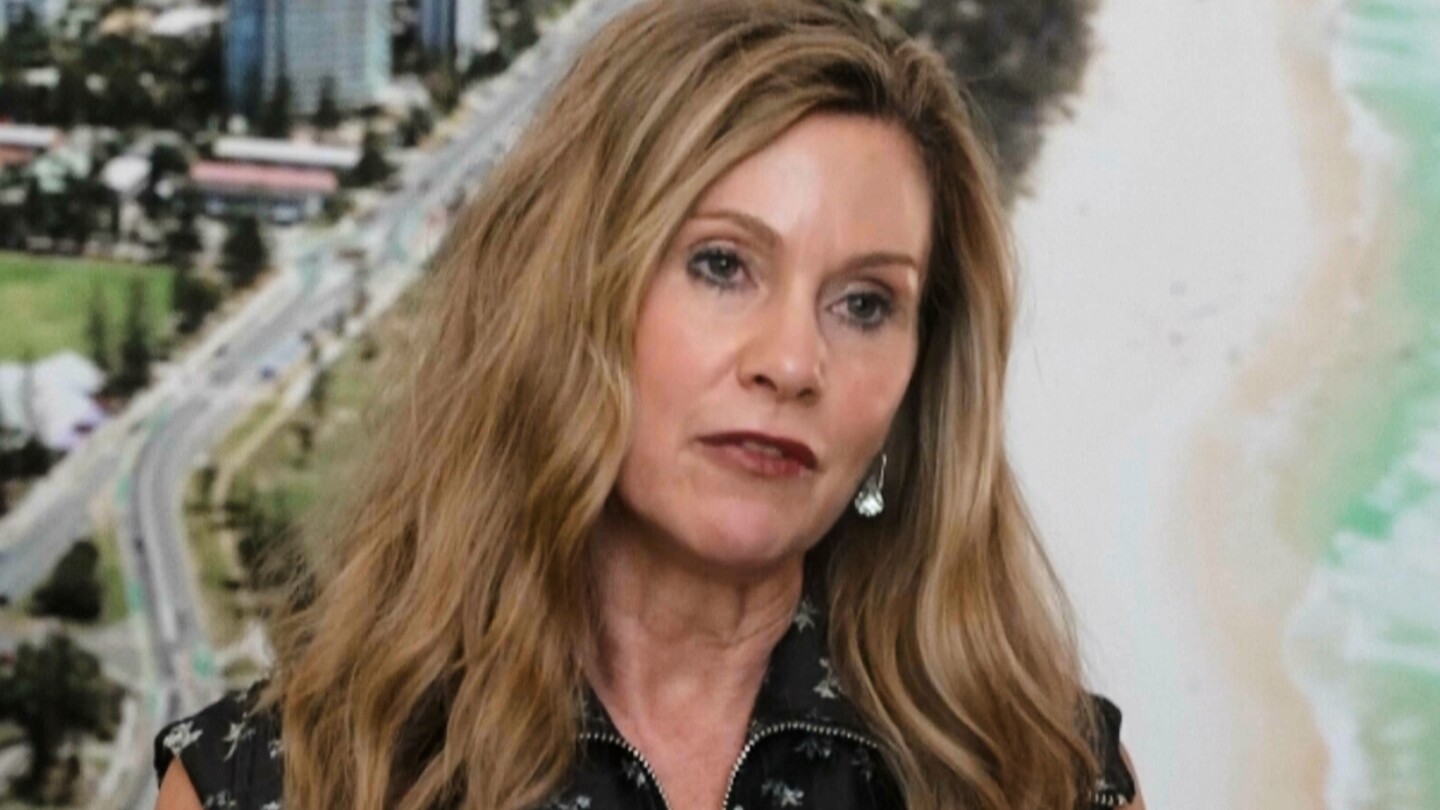
The Australian government has initiated a comprehensive public education campaign to guide parents and children in transitioning away from social media ahead of the implementation of a groundbreaking national age restriction. Starting December 10, social media platforms such as Facebook, Instagram, Snapchat, TikTok, X, and YouTube will face fines of up to 50 million Australian dollars ($33 million) if they fail to enforce measures preventing users under 16 from creating accounts. The current de facto age limit, based on U.S. privacy laws, is 13. Australian eSafety Commissioner Julie Inman Grant emphasized the significance of this change, describing it as a “very monumental event for a lot of young people.” The campaign, which includes digital, television, radio, and billboard messages, aims to raise awareness and provide resources for families to navigate the new regulations. Communications Minister Anika Wells highlighted the goal of allowing children to experience childhood without the pressures of social media, while also giving young Australians more time to develop their identities. However, the policy has sparked debate, with over 140 academics opposing the age limit as overly simplistic. Despite these concerns, the law passed with strong support last year. Australia’s approach is being closely monitored by other nations, including Denmark, which is considering similar measures to protect children in the digital age.
作者: admin
-

Police call off search for four-year-old missing in Australian outback
South Australian police have officially suspended the search for four-year-old Gus Lamont, who vanished from his family’s remote sheep station nearly three weeks ago. Despite a renewed effort involving 80 Australian Defense Force personnel, no trace of the boy has been found. Gus was last seen playing outside his home near Yunta, approximately 300 kilometers from Adelaide, on September 27. His grandmother had left him unattended for about 30 minutes before discovering his absence, triggering one of the largest search operations in the region’s history. Authorities, who do not suspect foul play, have transitioned the case into a ‘recovery operation.’ The search covered an expansive area of 470 square kilometers—twice the size of Edinburgh—but the rugged, harsh terrain and unpredictable weather conditions have significantly hindered efforts. A 12-person taskforce has been established to continue the investigation, with future searches not ruled out. Gus, described as adventurous yet shy, was last seen wearing a gray hat, light gray pants, boots, and a blue long-sleeve T-shirt featuring a yellow Minion character. His disappearance has captivated national attention, with widespread media coverage and online speculation. Police have urged the public to refrain from sharing unverified information, particularly after fake AI-generated images of Gus circulated on social media. The Lamont family remains ‘devastated,’ expressing their profound grief and longing for Gus. Commissioner Grant Stevens acknowledged the family’s resilience, describing the situation as ‘traumatic’ and emphasizing the emotional toll of not knowing Gus’s whereabouts.
-
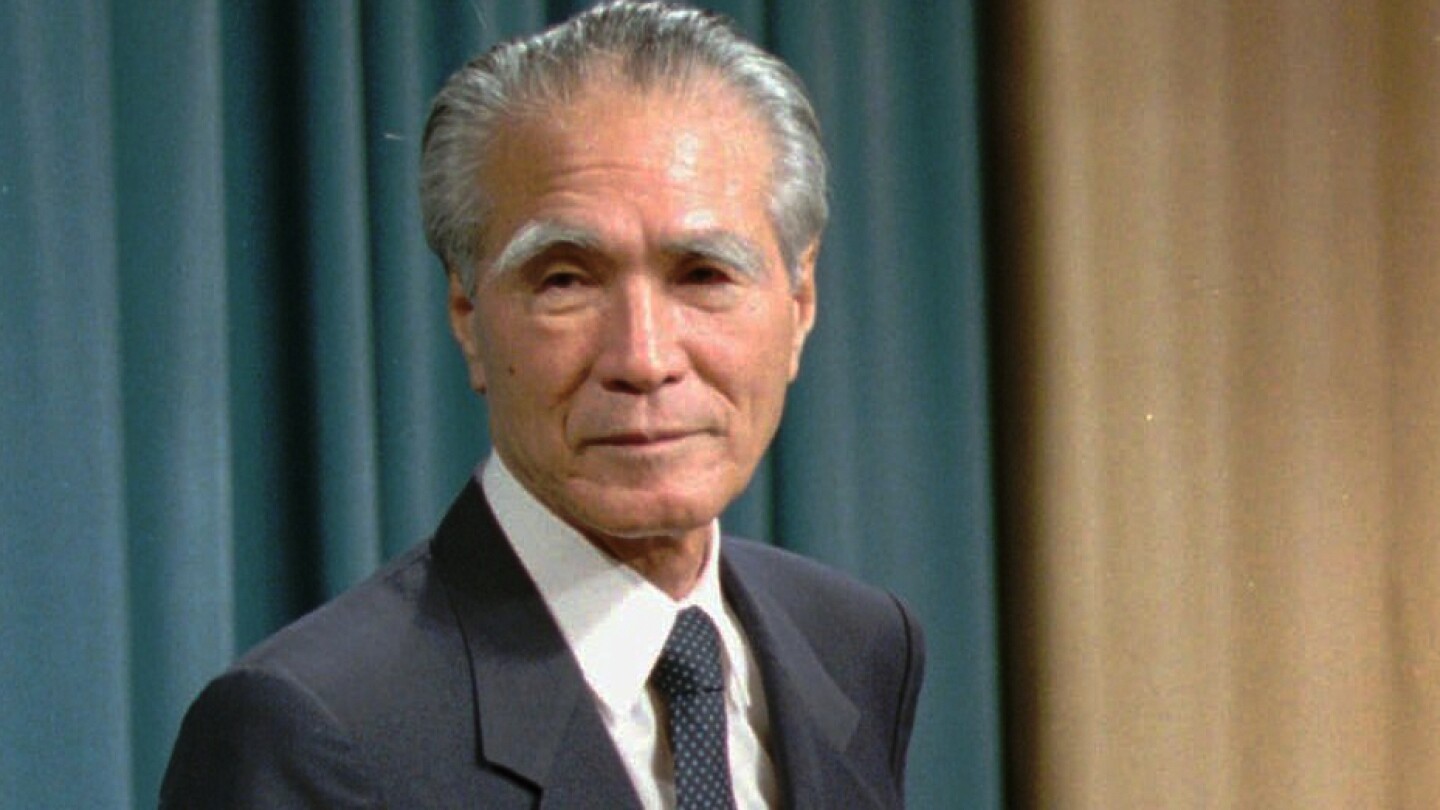
Former Japanese prime minister Murayama, known for apology over wartime aggression, dies at 101
TOKYO — Tomiichi Murayama, the former Prime Minister of Japan renowned for his distinctive bushy eyebrows and his landmark 1995 apology to Asian nations for Japan’s wartime aggression, passed away on Friday at the age of 101. Murayama succumbed to old age at a hospital in his hometown of Oita, located in southwestern Japan. The announcement of his death was made by Mizuho Fukushima, the leader of Japan’s Social Democratic Party. Murayama, who headed the Japan Socialist Party (now the Social Democratic Party), served as Prime Minister from June 1994 to January 1996, leading a coalition government during a transformative period in Japanese politics. His 1995 statement, often referred to as the ‘Murayama Statement,’ remains a cornerstone of Japan’s post-war reconciliation efforts, expressing deep remorse for the suffering caused by Japanese imperialism in Asia. Murayama’s legacy is marked by his commitment to peace and his efforts to mend historical wounds.
-

Trade, Covid, rare earths and a real danger of global recession
China has strategically positioned itself for a potential confrontation with the United States, a scenario that could precipitate a global financial collapse. Unlike China, the US appears unprepared, lacking a viable contingency plan beyond diplomatic talks. This imbalance stems from America’s recent upheaval in its alliance networks and growing distrust among its trading partners, a situation not witnessed in over three decades. Capitalizing on this perceived US vulnerability, China has initiated a preemptive counteroffensive, imposing sanctions on rare earth elements—a move that has effectively cornered the US. While the US possesses potential countermeasures, such as disrupting air traffic control services, these actions could escalate tensions to the brink of war. Conversely, other US responses, like restricting the supply of advanced chips, may prove ineffective as alternative, albeit less efficient, solutions exist. China’s rare earth sanctions, however, pose an immediate threat to global markets, potentially triggering a recession. This strategy pits global markets against US President Donald Trump, while Chinese President Xi Jinping maintains firm control over China’s largely detached markets. The COVID-19 pandemic served as a rehearsal for China, demonstrating its populace’s adaptability and trust in government directives during crises. This preparedness contrasts sharply with the US’s initial denial and subsequent struggle to manage the pandemic, which ultimately contributed to Trump’s electoral defeat. China’s strategic foresight, coupled with the US’s lack of readiness, suggests that Beijing holds the upper hand in this high-stakes geopolitical standoff. However, the situation remains fluid, with global developments, such as the Netherlands’ nationalization of a Chinese tech company, potentially complicating China’s position. As tensions escalate, the world watches closely, aware that the outcome of this confrontation could reshape the global order.
-

Wall Street steadies after its slide as banks recover some of their losses
The U.S. stock market showed signs of stabilization on Friday, with bank stocks recovering from significant losses earlier in the week. Despite this, Wall Street remains volatile, experiencing frequent fluctuations. The S&P 500 saw a slight decline of 0.1% in early trading, while the Dow Jones Industrial Average rose by 91 points (0.2%), and the Nasdaq composite dropped by 0.3%. Big Tech stocks, including Nvidia, faced downward pressure, dropping 0.6% amid concerns over inflated valuations driven by the artificial intelligence boom, despite strong profit growth. Meanwhile, bank stocks rebounded after several institutions, such as Fifth Third Bancorp, Huntington Bancshares, and Truist Financial, reported better-than-expected quarterly earnings. This recovery followed a sharp decline in the sector triggered by fears of bad loans affecting smaller and midsized banks. Zions Bancorp and Western Alliance Bancorp, both central to Thursday’s concerns, also saw gains, rising 3.4% and 2.9%, respectively. The market remains cautious as scrutiny intensifies over loan quality following the bankruptcy of First Brands Group, an auto parts supplier. Jefferies Financial Group, potentially impacted by the bankruptcy, rose 4.8% after a significant drop since mid-September. JPMorgan CEO Jamie Dimon warned of potential risks in the banking sector, likening them to ‘cockroaches,’ but analysts suggest the situation is not yet critical. Trading volatility persists amid geopolitical tensions, including President Trump’s tariff threats on China, though he later indicated a possible meeting with Chinese President Xi Jinping. Overseas, European and Asian markets saw declines, with Germany’s DAX dropping 1.8% and Hong Kong’s Hang Seng falling 2.5%. Treasury yields remained steady after Thursday’s sharp declines.
-

Naomi Osaka is out of the Japan Open quarterfinals with a left leg injury
OSAKA, Japan — Tennis star Naomi Osaka was forced to withdraw from her quarterfinal match at the Japan Open on Friday due to a left leg injury, paving the way for Jaqueline Cristian to advance to the semifinals via walkover. The Women’s Tennis Association (WTA) confirmed the development, marking Cristian’s third semifinal appearance this year and her first on a non-clay surface. Osaka, the tournament’s top seed, had been struggling with the injury sustained during her second-round match against Suzan Lamens. Despite the setback, Osaka managed to secure victories over Wakana Sonobe and Lamens earlier in the tournament. During her match against Lamens, Osaka took a commanding 5-0 lead in the third set but abruptly halted play after experiencing discomfort in her left leg. She returned to the court with her thigh wrapped but ultimately closed out the match on her third match point. This withdrawal adds to a challenging season for Osaka, who recently exited in the second rounds of both the China Open and the Wuhan Open. Meanwhile, in another quarterfinal match, 2021 U.S. Open finalist Leylah Fernandez triumphed over Rebecca Šramková with a 7-6 (2), 6-3 victory, continuing her strong performance in the tournament.
-
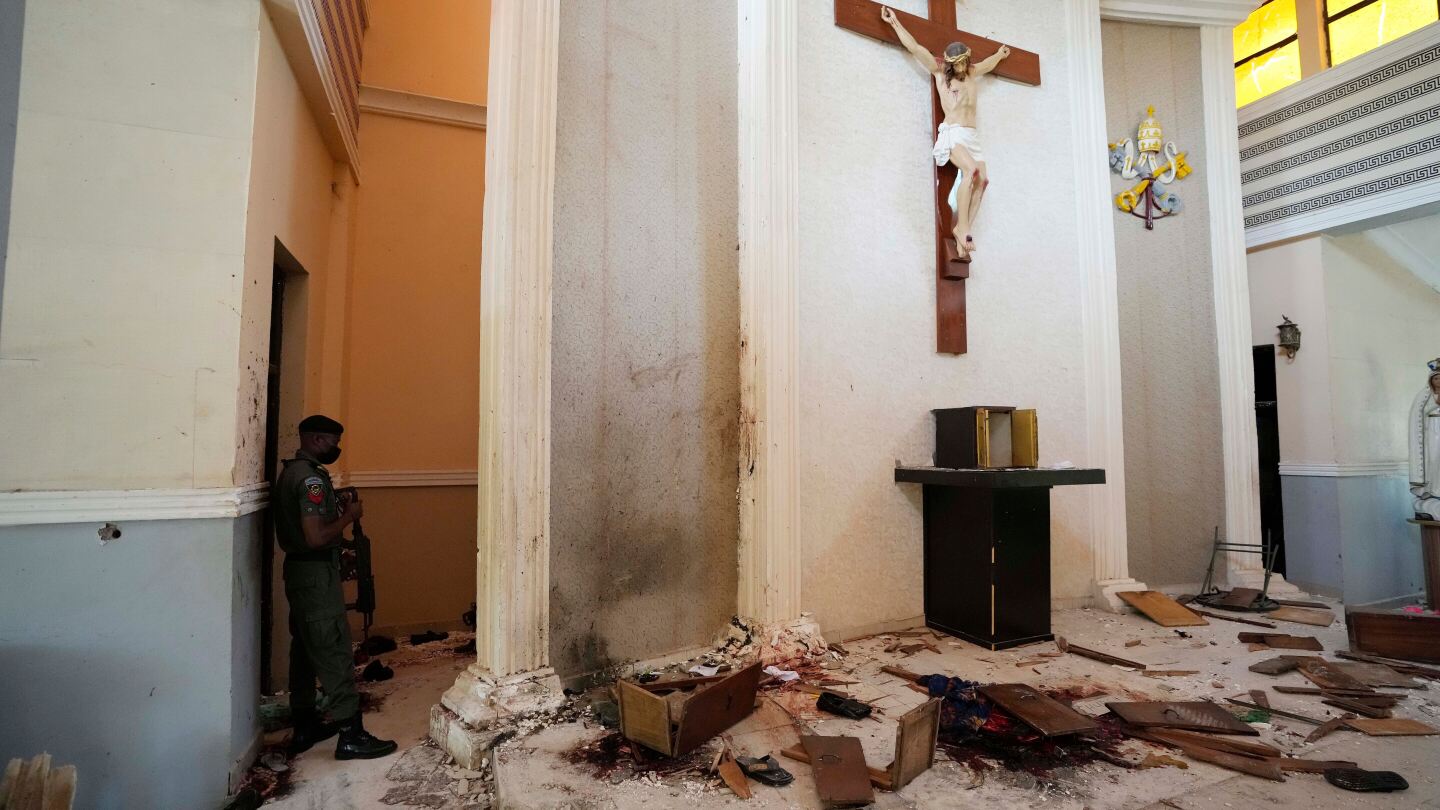
A US senator claims ‘Christian mass murder’ is occurring in Nigeria. The data disagrees
U.S. Senator Ted Cruz has ignited a contentious debate by urging Congress to designate Nigeria as a violator of religious freedom, alleging ‘Christian mass murder’ without substantiated evidence. The Nigerian government has firmly dismissed these claims as baseless. Cruz, a Republican member of the Senate Foreign Relations Committee, introduced a bill last month seeking to label Nigeria a ‘Country of Particular Concern’ due to alleged ‘severe violations’ of religious freedom. Such a designation could lead to U.S. sanctions. However, the bill’s passage remains uncertain as it awaits Senate action. Cruz’s assertions have been echoed by some U.S. celebrities and commentators, with some even alleging a ‘Christian genocide,’ though no evidence has been provided. Cruz’s office has not responded to inquiries about the motivation behind these allegations. Nigeria, with a population of 220 million, is nearly evenly divided between Christians and Muslims. The country has long grappled with insecurity from various groups, including Boko Haram, which targets both Muslims and Christians. Analysts emphasize that the majority of victims in Nigeria’s Muslim-majority north are Muslims, not Christians. While religiously motivated attacks occur, they are part of a broader spectrum of violence, including farmer-herder conflicts and ethnic clashes. Joseph Hayab, a former chairman of the Christian Association of Nigeria, refuted claims of ‘Christian genocide,’ noting that while thousands of Christians have been killed, the situation has improved compared to previous years. Nigeria’s Information Minister, Idris Muhammed, stated that there is no systematic or intentional targeting of any religious group. Nigeria was previously designated a ‘Country of Particular Concern’ by the U.S. in 2020, but this was lifted in 2023 to improve bilateral relations. The Christian Association of Nigeria has acknowledged the persecution of Christians but emphasized that violence affects both religious groups. Data from the Armed Conflict Location and Event Data program shows that between January 2020 and September 2023, 20,409 deaths resulted from 11,862 attacks on civilians in Nigeria, with 317 Christian deaths and 417 Muslim deaths recorded in religion-targeted attacks. Analysts argue that Nigeria’s complex security dynamics do not meet the legal definition of genocide, which requires intent to destroy a specific group. Instead, they describe the violence as mass killings not targeted at any particular group. Experts warn that framing the crisis as genocide could exacerbate tensions and hinder efforts to address the root causes of violence.
-

Taylor Swift fans flock to German museum to see Ophelia painting
A German museum has experienced an unexpected surge in visitors, thanks to Taylor Swift’s latest album, *The Life of a Showgirl*. The Hessische Landesmuseum in Wiesbaden, Germany, has seen a significant increase in foot traffic as fans flock to view Friedrich Heyser’s 1900 painting of Ophelia, which inspired the opening scene of Swift’s music video for *The Fate of Ophelia*. The video, which has garnered over 65 million views on YouTube, features the painting coming to life with Swift at its center. Museum spokesperson Susanne Hirschmann expressed delight at the newfound attention, noting that visitors have traveled from as far as Hamburg and nearby U.S. military bases. The museum’s online announcement about the painting’s connection to Swift went viral, with social media posts receiving thousands of likes. The painting, which depicts Ophelia lying drowned in water surrounded by flowers, aligns with the album’s themes and cover art. Museum director Andreas Henning praised Swift’s use of the painting as inspiration, calling it a unique opportunity to attract new audiences. *The Life of a Showgirl* has already broken records, becoming the UK’s biggest album debut of 2025 and surpassing Adele’s *25* in U.S. sales. This marks Swift’s third UK chart-topping album this year, following *Lover (Live From Paris)* and *The Tortured Poets Department*. The album also follows Swift’s recent personal milestones, including her engagement to NFL star Travis Kelce and regaining control of her music catalog.
-
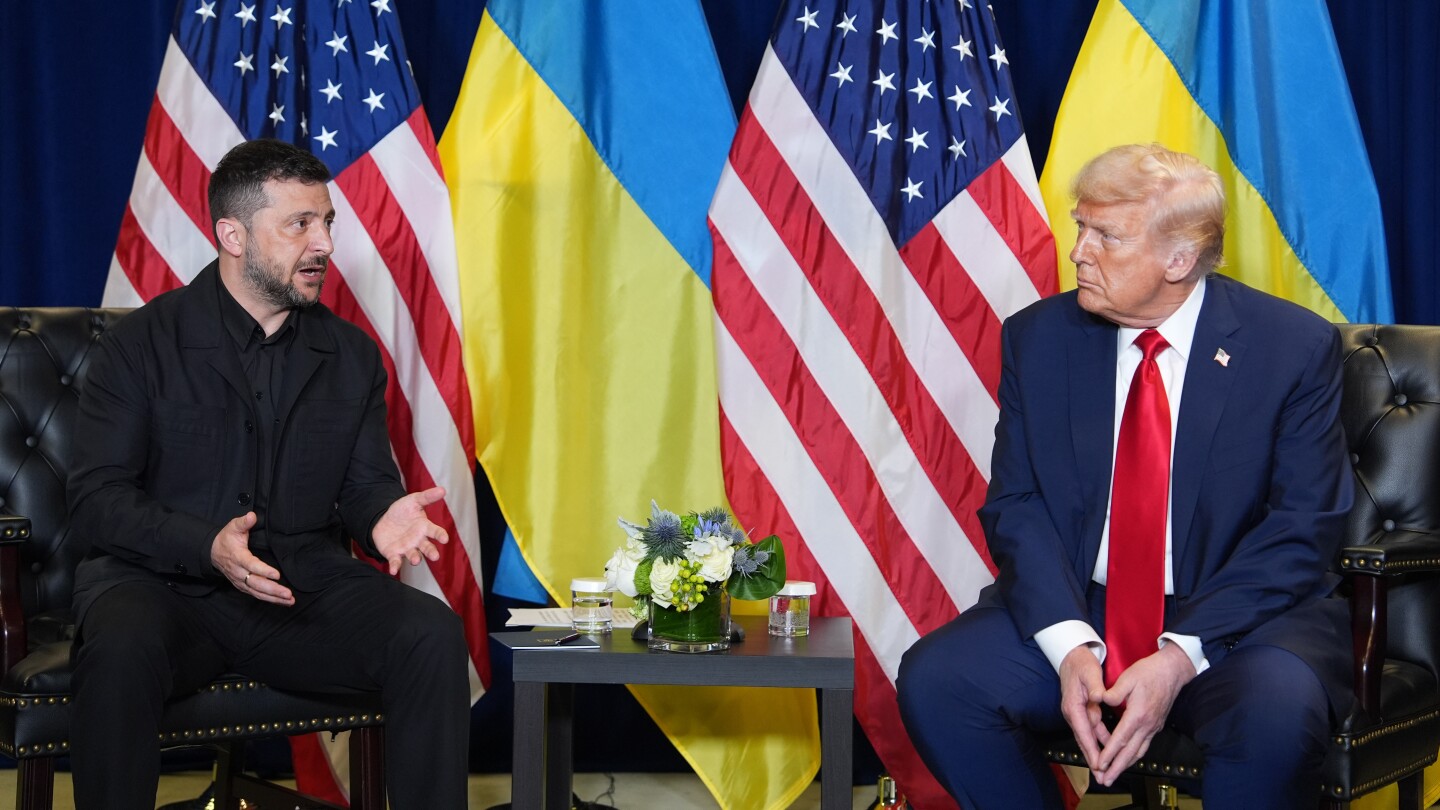
Ahead of Zelenskyy meeting, Trump shows signs he might not be ready to send Kyiv Tomahawk missiles
President Donald Trump is scheduled to meet with Ukrainian President Volodymyr Zelenskyy at the White House on Friday, following a lengthy phone call between Trump and Russian President Vladimir Putin. The discussions come amid Ukraine’s urgent request for long-range Tomahawk cruise missiles, which Trump has indicated he is hesitant to provide, citing the need to preserve U.S. military resources. Zelenskyy has argued that these missiles are essential for striking deep into Russian territory and compelling Putin to engage in serious negotiations to end the ongoing conflict. However, Putin has warned that supplying such weapons to Ukraine would severely damage U.S.-Russian relations. This will be the fourth face-to-face meeting between Trump and Zelenskyy since Trump returned to office in January. Trump has also announced plans to meet with Putin in Budapest to discuss potential resolutions to the war, with senior aides from both sides set to convene next week. Despite Trump’s earlier optimism about brokering peace, recent developments suggest that direct talks between Zelenskyy and Putin remain unlikely, as Russia continues its aggressive military actions in Ukraine.
-
A war on drugs or a war on terror? Trump’s military pressure on Venezuela blurs the lines
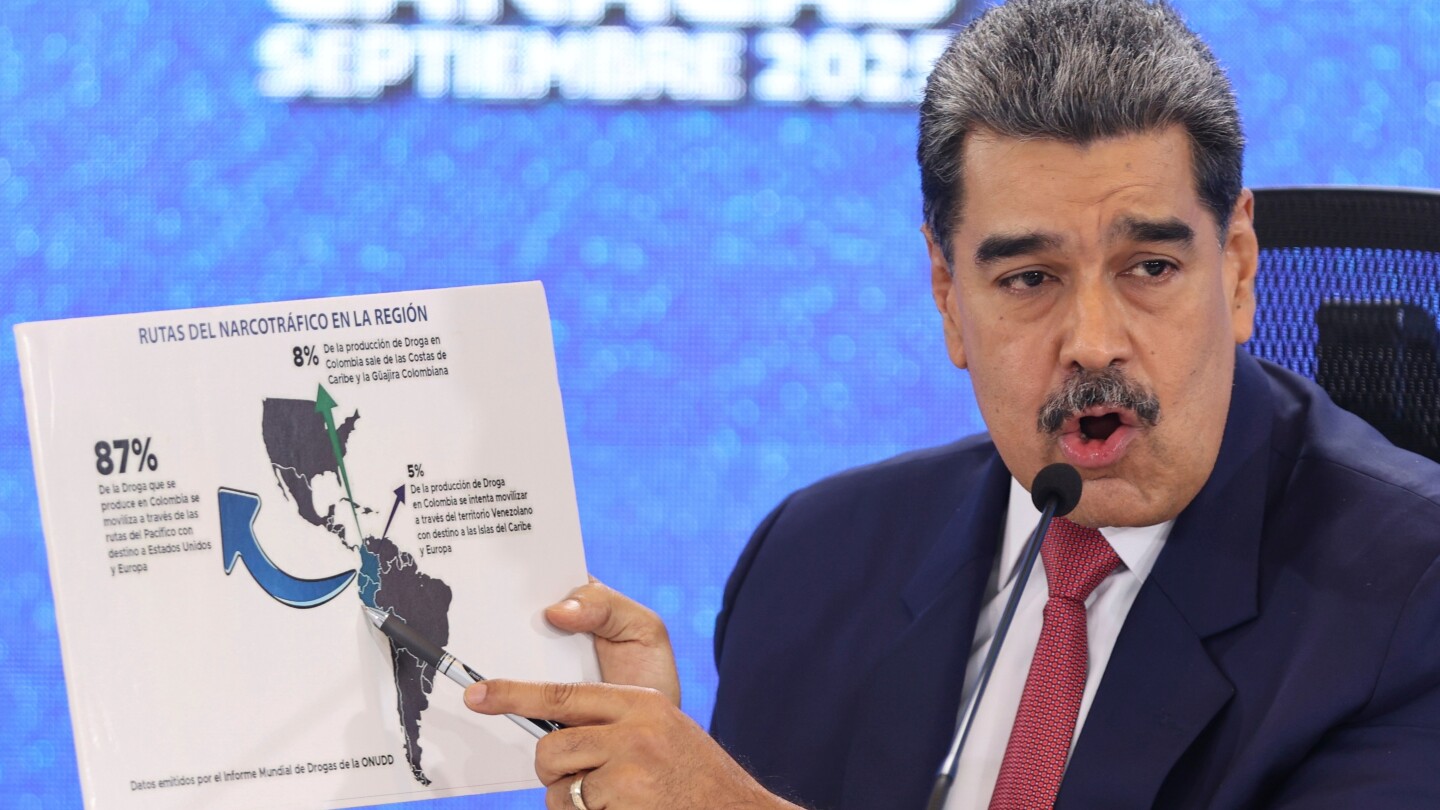
The Trump administration’s approach to combating drug cartels in Latin America is drawing parallels to the post-9/11 war on terror, with legal scholars questioning the expansion of military power and its implications for international law. President Donald Trump has authorized military strikes against Venezuelan drug traffickers, relying on the same legal framework that justified lethal force against al-Qaida after the 2001 attacks. However, critics argue that this strategy stretches the boundaries of international law, particularly as the U.S. military targets groups primarily engaged in drug trafficking rather than terrorism. The administration has conducted at least five strikes, killing 27 people, without congressional approval or traditional legal investigations, raising concerns about the justification for these actions and their impact on U.S.-Latin American relations. Trump has also hinted at potential covert operations to oust Venezuelan President Nicolás Maduro, further escalating tensions. Legal experts, including Claire Finkelstein of the University of Pennsylvania, argue that labeling drug cartels as combatants in an ‘armed conflict’ undermines international law. Meanwhile, the U.S. intelligence community disputes claims that Maduro’s administration is orchestrating drug trafficking and illegal immigration. The administration’s focus on Venezuela overlooks the fact that most fentanyl, responsible for the majority of U.S. overdose deaths, is smuggled from Mexico. Despite calls for transparency, the Trump administration has yet to provide evidence to Congress proving the targeted boats were carrying narcotics. The International Criminal Court could investigate the strikes, but its efforts are hampered by internal issues and U.S. sanctions.