作者: admin

  • Watch: Iran, Olympics and partisan divisions among takeaways from Trump speech

    Watch: Iran, Olympics and partisan divisions among takeaways from Trump speech

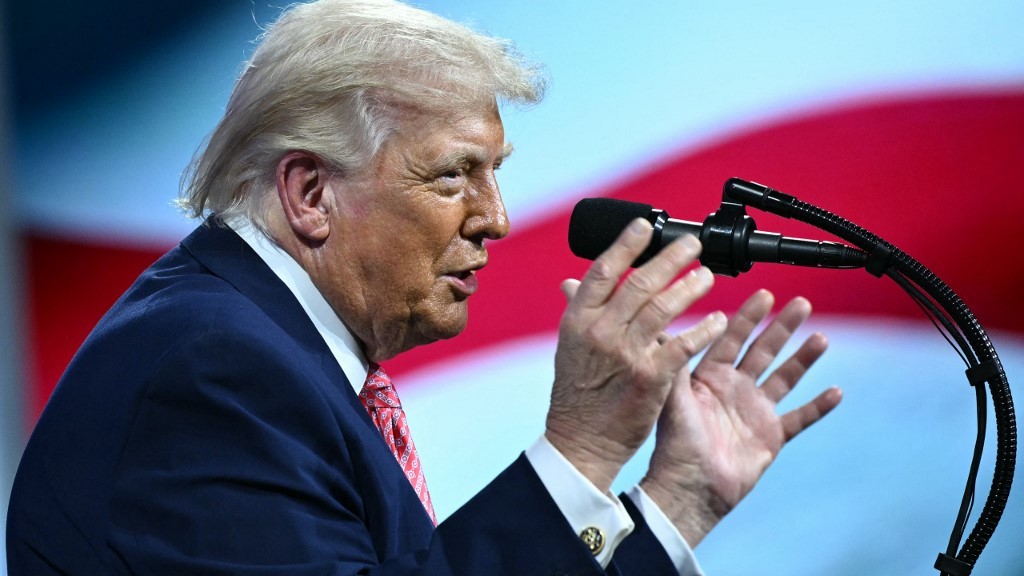
    President Trump’s highly anticipated address to a joint session of Congress became a multifaceted political spectacle that highlighted both international tensions and domestic divisions. The speech, delivered before the nation’s highest legislative body, featured several notable confrontations with political rivals alongside carefully staged moments with special guests.

    The administration’s hardline stance toward Iran emerged as a significant foreign policy focus, with the President articulating a confrontational approach toward Tehran’s regional activities. This position signals continued strain in U.S.-Iran relations following the collapse of the nuclear agreement and increasing Middle East tensions.

    In a notable departure from security matters, the address also touched upon international sports diplomacy, specifically addressing Olympic participation. This unexpected inclusion demonstrated the administration’s broader approach to leveraging international sporting events within its foreign policy framework.

    The proceedings revealed deep partisan fractures, with visible divisions between Republican and Democratic responses throughout the address. These political schisms were particularly evident during exchanges between the President and opposition lawmakers, creating a stark visual representation of the current polarized political climate in Washington.

    The carefully orchestrated event included both planned and spontaneous moments that underscored the ongoing political tensions within the Capitol. Special guests provided symbolic backing to certain policy positions, while the presence of political adversaries created several tense exchanges that highlighted the challenges of governance in a divided government.

  • Happy Chinese New Year event draws longest lines at Smithsonian festival

    Happy Chinese New Year event draws longest lines at Smithsonian festival

    The Smithsonian’s National Museum of Asian Art witnessed unprecedented public engagement during its Lunar New Year celebrations on Saturday, with China’s cultural exhibition emerging as the festival’s primary attraction. Hosted collaboratively by the Chinese Embassy and the museum, the “Happy Chinese New Year” event created remarkable visitor traffic, generating the day’s longest queues at the Arts and Industries Building.

    The festival, designed to commemorate the arrival of spring and the new lunar year, featured diverse Asian cultural representations including performances, educational displays, and culinary offerings. However, China’s immersive cultural experience captivated attendees most significantly, with visitors forming double queues to participate in traditional activities.

    Cultural immersion took center stage as participants engaged in New Year print rubbings and calligraphy sessions, particularly focusing on the cherished “fu” character symbolizing blessings and happiness. The exhibition combined dynamic cultural performances with folk-culture demonstrations, showcasing intangible cultural heritage through hands-on activities that provided authentic Spring Festival experiences.

    Attendee Laura, reflecting on her San Francisco upbringing within Asian communities, noted how the festival evoked nostalgic connections to home traditions. She embraced the cultural atmosphere by wearing a traditional red dress while posing with symbolic Chinese artifacts. Another visitor, David from Virginia, brought his family to bridge classroom Mandarin lessons with practical cultural exposure, emphasizing the educational value of the experience.

    The Chinese exhibition featured elaborate lantern displays, intricate paper-cutting artworks, and specially curated Year of the Horse thematic items. Artists from Jiangsu Province’s Chinese Painting Institute demonstrated live calligraphy techniques, distributing personalized “fu” characters to enthusiastic participants. Meanwhile, a student troupe from Renmin University’s affiliated high school delivered a vibrant performance blending chamber music, choral arrangements, martial arts, and contemporary dance.

    Air China contributed to the celebrations by integrating Spring Festival cultural elements with tourism promotion through its Hello! China campaign. The event formed part of broader Lunar New Year festivities across Washington D.C., including earlier celebrations at the Planet Word Museum and subsequent performances at multiple cultural venues throughout the week.

  • Ejections, shouting and hockey players – Key moments from Trump’s big speech

    Ejections, shouting and hockey players – Key moments from Trump’s big speech

    President Donald Trump delivered the longest State of the Union address in history, presenting a mixture of triumphant rhetoric and confrontational remarks before a sharply divided Congress. The speech occurred during a critical period marked by escalating tensions with Iran, significant legal setbacks for the administration’s tariff policies, and growing concerns about economic affordability that could impact upcoming midterm elections.

    The event showcased remarkable tensions between the executive and judicial branches. Notably absent were five of the nine Supreme Court justices, following Trump’s previous criticism of their decision to strike down his global tariffs. During the address, Trump shared a visibly strained moment with Chief Justice John Roberts before directly criticizing the Court’s ruling on tariffs as “disappointing” and “unfortunate.” The president announced alternative measures using Section 122—a rarely invoked law allowing 15% tariffs for 150 days without immediate congressional approval—while suggesting these tariffs might eventually replace income taxes.

    Partisan divisions dominated the chamber atmosphere. Dozens of Democrats boycotted the event entirely, while remaining opposition members staged vocal protests. Representative Al Greene was escorted out for displaying a sign referencing racist social media content previously shared by Trump. Congresswomen Ilhan Omar and Rashida Tlaib repeatedly shouted accusations of lying during the president’s remarks on immigration and Somali-American communities.

    The address featured patriotic highlights including the celebration of the U.S. men’s hockey team’s Olympic gold medal victory. Goalie Connor Hellebuyck received the Presidential Medal of Freedom announcement, though Trump sparked controversy by joking about potential impeachment if he didn’t invite the women’s team—later extending that invitation during his speech.

    Throughout the evening, Trump emphasized national protection themes, deliberately highlighting partisan divides by asking Republicans to stand for policies opposed by Democrats, whom he called “crazy” for their lack of support. The event culminated with plans for America’s 250th anniversary celebrations while underscoring the profound political polarization characterizing current American politics.

  • German leader arrives in China to press for fair trade and help ending Ukraine war

    German leader arrives in China to press for fair trade and help ending Ukraine war

    German Chancellor Friedrich Merz commenced a pivotal two-day diplomatic mission to Beijing on Wednesday, engaging with China’s senior leadership to address critical issues spanning economic equity and global security. The visit marks Merz’s inaugural trip to China since assuming office in May 2023, occurring amidst a flurry of Western diplomatic engagements with Beijing.

    Merz emphasized the European consensus approach to China relations prior to departure, stating: “Our message from a European perspective remains consistent: We seek a partnership with China that is balanced, reliable, regulated, and equitable. This represents both our proposal and our expectation from Chinese counterparts.”

    The Chancellor’s agenda focuses on two primary concerns: ensuring fair market access for German corporations within China’s economy and soliciting Beijing’s influence to help resolve the ongoing conflict in Ukraine. Merz acknowledged China’s indispensable role in global governance, noting that “major international political challenges cannot be addressed today without Beijing’s involvement.”

    This diplomatic engagement occurs against a backdrop of growing European apprehension regarding China’s economic practices. Germany witnessed an 8.8% surge in Chinese imports reaching €170.6 billion ($201 billion) last year, while German exports to China declined by 9.7% to €81.3 billion ($96 billion). European leaders seek increased Chinese manufacturing investment within their territories while urging China to address industrial overcapacity affecting sectors like electric vehicles and solar panels.

    Xinhua News Agency characterized the relationship as vital, stating: “As major economies championing multilateralism during turbulent times, China and Germany bear shared responsibility for maintaining global supply chain stability and opposing protectionism.” The visit represents another chapter in China’s diplomatic outreach as it seeks allies to counter former President Trump’s tariff policies and challenges to established international institutions.

  • BBC sees damage in Puerto Vallarta after Mexican cartel violence

    BBC sees damage in Puerto Vallarta after Mexican cartel violence

    The popular Mexican coastal resort of Puerto Vallarta is undergoing damage assessment following a recent outbreak of cartel-related violence. BBC correspondent Will Grant conducted a firsthand inspection of the affected areas, documenting the physical and psychological impact on this tourist-dependent community.

    Grant’s reporting reveals a stark contrast between the town’s international reputation as a vacation paradise and the current reality of violence-scarred streets. The assessment follows intense clashes between rival cartel factions that disrupted the normally tranquil atmosphere of this Pacific coast destination.

    Local authorities have intensified security measures while business owners and residents evaluate the economic consequences of the security incident. The timing proves particularly damaging as Puerto Vallarta typically experiences high tourist traffic during this season. Restoration efforts are underway, though the psychological impact on both visitors and residents may prove more lasting than physical repairs.

    This incident represents another challenge for Mexico’s tourism industry, which contributes significantly to the national economy yet remains vulnerable to security issues in various regions. The Mexican government faces ongoing difficulties in balancing tourist security with complex cartel dynamics that occasionally spill into resort areas.

  • Senegal PM proposes tougher anti-LGBT law, doubling prison terms

    Senegal PM proposes tougher anti-LGBT law, doubling prison terms

    In a significant legislative move, Senegal’s Prime Minister Ousmane Sonko has proposed substantially increased penalties for same-sex relations, potentially doubling prison terms to a maximum of ten years. The controversial bill, approved by the cabinet last week and formally submitted to parliament on Tuesday, represents the government’s latest effort to strengthen existing prohibitions against homosexual activities in the predominantly Muslim nation.

    The proposed legislation specifically targets what it categorizes as “acts against nature,” elevating potential prison sentences from the current one-to-five year range to five-to-ten years. Notably, the draft law stipulates that offenses involving minors would automatically incur the maximum penalty. Additionally, the bill introduces provisions for punishing those who promote or advocate for same-sex relations with three to seven years imprisonment, while also prescribing penalties for unsubstantiated accusations of homosexuality.

    Financial penalties have also been substantially increased under the proposed legislation, with fines reaching up to 10 million CFA francs (approximately $18,000). Despite these heightened punishments, Prime Minister Sonko emphasized that same-sex relations would maintain their current classification as misdemeanors rather than being elevated to more serious criminal categories.

    The legislative initiative follows a recent wave of arrests targeting alleged same-sex relationships, with local media reporting approximately 30 detentions this month alone, including two public figures and a prominent journalist. These developments occur against a backdrop of longstanding tensions surrounding LGBT rights in Senegal, where conservative religious groups frequently characterize pro-LGBT activism as foreign interference and have organized demonstrations demanding stricter enforcement of anti-homosexuality laws.

    Prime Minister Sonko, a former opposition leader appointed to his current position in 2024, had previously pledged to criminalize same-sex relations in the West African country. His Pastef party maintains control of the parliamentary chamber where the bill will eventually be voted upon, though no specific date has been set for the legislative debate.

    International human rights organizations have condemned both the proposed legislation and recent enforcement actions. Human Rights Watch specifically criticized the crackdown as violating “multiple internationally protected rights,” including principles of equality and nondiscrimination. Senegal’s move aligns with a broader trend across several African nations, including Burkina Faso and Mali, which have recently implemented similar sanctions against LGBT communities. Uganda notably enacted some of the world’s most severe anti-homosexuality legislation in 2023, including potential death penalties for certain same-sex acts.

  • US embassy in Israel will provide consular services to settlers in occupied West Bank

    US embassy in Israel will provide consular services to settlers in occupied West Bank

    In a significant policy development, the US State Department has announced it will begin providing on-site consular services to Israeli settlers residing in West Bank settlements for the first time. The US Embassy in Jerusalem confirmed that consular officers would offer routine passport services in Efrat, an Israeli settlement south of Bethlehem in the occupied West Bank, on February 27.

    The embassy further revealed plans to expand these services to additional Israeli cities, the West Bank city of Ramallah, and the settlement of Beitar Illit near Bethlehem. This move represents a notable departure from previous US diplomatic practice, marking the first public offering of consular services directly to settlers in territory considered illegal under international law.

    The announcement follows controversial remarks by US Ambassador to Israel Mike Huckabee during an interview with Tucker Carlson. Ambassador Huckabee stated he would be “fine” with Israeli control extending across much of the Middle East, including Syria, Jordan, Saudi Arabia, Iraq, and Egypt. More significantly, he asserted that Area C of the occupied West Bank constitutes part of Israel, directly contradicting longstanding US policy that recognizes no Israeli sovereignty over these territories.

    This diplomatic shift coincides with increased Israeli efforts to consolidate control over the West Bank. The Israeli government recently approved plans to extend its civilian authority into Areas A and B, directly challenging Palestinian Authority control established under the Oslo Accords. These agreements originally designated Area A under full PA control, Area B under shared control, and Area C under Israeli military occupation pending final status negotiations.

    Approximately 400,000 Israeli settlers currently reside in Area C, which comprises about 60% of the West Bank, enjoying services and political representation denied to Palestinians. Analysts view the US consular services expansion as potentially signaling acceptance of de facto Israeli annexation, despite official US statements supporting a two-state solution and refusing recognition of Palestinian statehood absent a final agreement.

  • Rubio flies into the Caribbean for talks with leaders unsettled by Trump policies

    Rubio flies into the Caribbean for talks with leaders unsettled by Trump policies

    U.S. Secretary of State Marco Rubio arrived in St. Kitts and Nevis on Wednesday for high-stakes discussions with Caribbean Community (CARICOM) leaders, marking a pivotal moment in regional diplomacy. The visit follows a series of aggressive Trump administration policies that have created widespread uncertainty among Caribbean nations.

    The diplomatic mission comes precisely one month after President Trump ordered the military capture of Venezuela’s former leader Nicolás Maduro, whom Trump hailed during his State of the Union address as “an absolutely colossal victory for United States security.” This operation forms part of a broader strategy that includes intensified anti-narcotics operations, increased pressure on Cuba, and a renewed assertion of the Monroe Doctrine principles to ensure Western Hemisphere dominance.

    Caribbean leaders expressed deep concerns about shifting U.S. policies during the CARICOM summit opening. Terrance Drew, Prime Minister of St. Kitts and Nevis and current CARICOM chair, noted that the region “stands at a decisive hour” amid global order transformations, uncertain supply chains, and intensifying climate shocks.

    The administration’s demands for accepting third-country deportees, rejecting Cuban medical missions, and cooling relations with China have particularly troubled regional partners. Godwin Friday, newly elected Prime Minister of St. Vincent and the Grenadines, echoed European leaders’ apprehensions, stating that international rules “have changed in troubling ways.”

    Jamaican Prime Minister Andrew Holness emphasized the Cuba situation’s regional implications, warning that “a prolonged crisis in Cuba will not remain confined to Cuba” but would affect migration, security, and economic stability throughout the Caribbean basin. While affirming Jamaica’s support for democracy, Holness advocated for “constructive dialogue between Cuba and the U.S. aimed at de-escalation, reform and stability.”

    The U.S. State Department indicated Rubio would discuss regional security, stability, and economic growth in both group and bilateral meetings. Meanwhile, Caribbean leaders planned to address additional concerns including security, climate financing, reparations, and single market economy development.

    Background operations include U.S. drug interdiction efforts that have resulted in 151 fatalities since September, though evidence of drug smuggling remains undisclosed. Trinidad and Tobago’s Prime Minister Kamla Persad-Bissessar notably praised these operations, thanking Trump and Rubio for “standing firm against narcotrafficking.”

    Humanitarian concerns emerged regarding Cuba’s recovery from Hurricane Melissa, with U.N. officials citing the U.S. oil embargo as hindering aid distribution. The energy blockade and fuel shortages reportedly affect “the entire logistics chain” of recovery operations throughout the island nation.

  • Japan demands the swift release of a Japanese national detained in Iran

    Japan demands the swift release of a Japanese national detained in Iran

    TOKYO — The Japanese government formally acknowledged on Wednesday that one of its citizens has been held in Iranian custody since late January, issuing a firm demand for their immediate release. The confirmation came during a press briefing where Deputy Chief Cabinet Secretary Masanao Ozaki addressed growing international media reports on the case.

    While confirming the detention occurred on January 20th, Ozaki refrained from disclosing specific details regarding the individual’s identity or the circumstances leading to the arrest, emphasizing the government’s obligation to protect private citizen information. The official stated that Japanese diplomatic channels are actively engaged, maintaining communication with both the detainee and their family members to provide all necessary consular assistance and support.

    The announcement highlights a delicate diplomatic situation for Japan, which has historically maintained a neutral and oil-dependent relationship with Iran. The incident occurs amidst a complex geopolitical landscape in the Middle East, though Japanese officials have not linked the detention to broader international tensions. The government’s statement was carefully crafted, balancing a demand for release with a neutral tone to avoid further escalating the situation, reflecting Japan’s standard diplomatic approach of quiet negotiation.

  • Analysis: Trump issues patriotic rallying cry as he faces political headwinds

    Analysis: Trump issues patriotic rallying cry as he faces political headwinds

    In a characteristically defiant State of the Union address on Tuesday night, President Donald Trump proclaimed an American “turnaround for the ages,” delivering a sharply partisan speech that celebrated his administration’s achievements while taunting political opponents. Facing persistently low approval ratings hovering around 40%, the president offered a vigorous sales pitch to the nation rather than signaling any policy course corrections.

    The address opened with triumphant declarations of national revival, with Trump asserting “Our nation is back” and labeling the United States the “hottest” country globally. He cataloged economic indicators including rising incomes, bullish stock markets, reduced fuel prices, subdued inflation, and significantly decreased undocumented border crossings as evidence of his administration’s success.

    Notably absent were substantial new policy initiatives. Instead, Trump repackaged previous proposals including retirement savings accounts for working-class Americans, healthcare plans featuring direct premium subsidies, voter citizenship verification requirements, and restrictions on commercial driver’s licenses for undocumented migrants. He announced an agreement with AI companies to ensure sufficient power generation without burdening consumers with higher utility bills.

    The president reaffirmed his commitment to expansive tariff regimes despite recent Supreme Court decisions striking down many previously imposed duties. Three justices who ruled against the administration watched expressionlessly from the front row during this portion of the speech.

    Immigration provoked particularly intense reactions, with Trump’s characterization of “illegal aliens” as threats generating thunderous Republican applause while drawing angry shouts and icy stares from Democratic legislators. This focus represented an attempt to reclaim political advantage on immigration following recent enforcement operations in Minneapolis that resulted in fatal shootings of American citizens by federal agents—incidents notably omitted from the address.

    Foreign policy received comparatively minimal attention despite significant military buildups near Iran, with Trump offering little justification for potential sustained military action. The speech instead emphasized patriotic themes through recognition of military heroes and Olympic athletes in attendance, possibly signaling a political strategy centered on national pride during upcoming 250th birthday celebrations.

    The address concluded with Trump’s declaration that “Our country is winning again,” setting the stage for midterm elections that will determine Congressional control and test whether the president’s unwavering confidence can shift public sentiment currently running against him.