作者: admin

  • UK leader Starmer faces an electoral test after Epstein fallout shakes his grip on power

    UK leader Starmer faces an electoral test after Epstein fallout shakes his grip on power

    British Prime Minister Keir Starmer confronts a pivotal political challenge as his Labour Party battles to retain a historically secure parliamentary seat in northwest England. The Thursday special election in Gorton and Denton, a Greater Manchester constituency under Labour control for a century, has evolved into an unexpected three-way contest that threatens to expose the Prime Minister’s vulnerability across the political spectrum.

    The election pits Labour local councilor Angeliki Stogia against two insurgent candidates: Matthew Goodwin of the hard-right anti-immigration Reform UK party and Hannah Spencer of the progressive Green Party. Current polling and betting markets indicate an exceptionally tight race, with a Labour victory now considered a potential ‘man-bites-dog’ upset according to University of Manchester political science professor Rob Ford.

    This electoral battle unfolds against a backdrop of significant leadership challenges for Starmer. Since leading Labour to a landslide victory in July 2024, the Prime Minister has struggled to deliver promised economic growth, repair deteriorating public services, and address the ongoing cost-of-living crisis. These difficulties were compounded recently by the scandal involving former UK ambassador to Washington Peter Mandelson, whose connections to convicted sex offender Jeffrey Epstein sparked internal party rebellion and the resignation of key staff members.

    The Gorton and Denton constituency’s diverse demographics—combining traditional working-class neighborhoods, university students, and Muslim residents—create particularly fertile ground for challengers. Reform UK has gained traction among disaffected former Labour voters, while the Green Party has expanded its appeal beyond environmental issues to include support for Palestinian causes and drug legalization, attracting left-leaning voters disillusioned with Labour’s centrist shift.

    A defeat for Labour would intensify questions about Starmer’s leadership strategy, particularly the party’s decision to block popular Greater Manchester Mayor Andy Burnham from running. The outcome may also validate criticisms that the government’s attempts to appeal to potential Reform UK supporters through stricter immigration policies have alienated its liberal base.

    With the next national election not required until 2029, Starmer’s most immediate threat comes from within his own party. While the Prime Minister recently survived a leadership challenge, political analysts suggest that poor performance in upcoming May elections for Scottish and Welsh parliaments could reignite internal opposition to his leadership.

  • Bill Gates ‘took responsibility’ over Epstein ties in staff meeting, foundation says

    Bill Gates ‘took responsibility’ over Epstein ties in staff meeting, foundation says

    Bill Gates has publicly addressed his controversial association with convicted sex offender Jeffrey Epstein during a candid internal meeting with staff from his philanthropic organization. The Microsoft co-founder acknowledged spending time with Epstein between 2011 and 2014, characterizing these interactions as a “huge mistake” while maintaining he witnessed no illicit activities.

    According to The Wall Street Journal, which reviewed a recording of the remarks, Gates revealed specific details about his relationship with Epstein during the foundation’s scheduled town hall. He disclosed that Epstein had discovered details of two extramarital affairs Gates had with Russian women through his own social and business activities. The billionaire philanthropist insisted these relationships were unrelated to Epstein and maintained he “did nothing illicit” in connection with the financier.

    Gates described meeting Epstein in 2011, years after Epstein’s guilty plea for soliciting a minor for prostitution. He admitted being aware of some travel restrictions Epstein faced but acknowledged failing to properly investigate his background. Despite continuing their association through 2014, including meetings abroad, Gates emphasized he never stayed overnight at Epstein’s properties or visited his private island.

    The revelation comes amid renewed scrutiny following January’s release of Epstein-related documents by the US Department of Justice. While Gates hasn’t been accused of wrongdoing by any of Epstein’s victims, the documents contained emails drafted by Epstein in 2013 making unverified claims about Gates. A spokesperson for Gates has previously called these allegations “absolutely absurd and completely false.”

    The foundation clarified that while a small number of employees interacted with Epstein based on his claims of being able to “mobilize significant philanthropic resources,” no collaboration or financial transactions ultimately occurred. Gates established the foundation alongside his former wife Melinda French Gates, who divorced him in 2021 after 27 years of marriage. She recently described the latest Epstein document release as dredging up “painful times in my marriage.”

  • Before roads, travellers stopped here: How UAE’s Fili village connected 2 seas

    Before roads, travellers stopped here: How UAE’s Fili village connected 2 seas

    Nestled within Sharjah’s central region, Fili village emerges as a monumental testament to the United Arab Emirates’ pre-modern commercial ingenuity. Long before contemporary infrastructure defined the landscape, this settlement functioned as the vital nexus connecting the Arabian Gulf with the Gulf of Oman, serving as the beating heart of desert commerce for centuries.

    The community’s name derives from ‘falaj’ – an ancient irrigation network dating back to the Iron or Bronze Age that transformed arid terrain into fertile ground. These sophisticated underground channels harnessed water from wadis and highlands, enabling agricultural sustainability that supported both local inhabitants and the countless trade caravans traversing the region. While approximately a hundred falaj systems remain operational today across the UAE, their historical prevalence numbered in the thousands, underscoring Fili’s exceptional cultural significance.

    Strategic defense and economic activity centered around Fili Fort, constructed between the 18th and 19th centuries as part of a regional defensive network. The fortress provided protective oversight of precious water sources and trade routes, featuring architectural innovations including gate openings through which defenders could dispel attackers with heated substances. Beyond its military function, the fort facilitated vibrant commercial exchange where caravans rested, traded goods, and replenished essential provisions.

    Three primary seasonal trade routes converged at Fili: the Date Harvest route (Darb Al Karyat) transporting summer harvests via camel caravans; the Fish Route (Darb Al Tararid) moving preserved seafood from Ras Al Khaimah’s northern coasts; and the year-round Fuel Route (Darb Al Sakham) supplying charcoal and firewood to urban centers like Dubai and Sharjah.

    Under the visionary leadership of Sheikh Dr Sultan bin Muhammad Al Qasimi, Ruler of Sharjah, Fili is experiencing a cultural renaissance. Comprehensive restoration initiatives include fort rehabilitation, recreation of traditional heritage markets, establishment of pet-friendly facilities, and experiential projects simulating historical caravan journeys. Most significantly, the revitalization of ancient falaj systems and agricultural restoration are breathing new life into the very foundations that originally sustained this remarkable desert hub.

    Today, Fili stands not as a relic of bygone eras but as a living museum, continuing its centuries-old role of connection—now bridging modern visitors with the UAE’s profound historical legacy rather than joining two seas through trade.

  • Orbán orders extra security at energy sites, claiming Ukraine plots disruptions

    Orbán orders extra security at energy sites, claiming Ukraine plots disruptions

    BUDAPEST, Hungary — Hungarian Prime Minister Viktor Orbán has ordered heightened security measures at critical energy facilities following allegations that Ukraine intends to disrupt Hungary’s energy infrastructure. The directive includes military deployment and enhanced police patrols around power plants, distribution stations, and control centers.

    The escalating tensions stem from conflicting accounts regarding interruptions in Russian oil deliveries through the Druzhba pipeline, which traverses Ukrainian territory. Budapest claims Kyiv is deliberately withholding shipments, while Ukrainian officials maintain that the pipeline sustained damage during a Russian drone attack, making repairs hazardous amid ongoing hostilities.

    Orbán, who maintains Europe’s closest relationship with the Kremlin, characterized Ukraine’s actions as ‘an oil blockade’ designed to pressure Hungary. In a social media address, he asserted that national security intelligence indicated preparations for further disruptive actions, though no specific evidence was provided to substantiate these claims.

    The energy dispute occurs against a backdrop of broader geopolitical tensions. Hungary recently vetoed a new EU sanctions package against Russia and threatened to block a €90 billion EU loan package for Ukraine. Orbán has pledged to obstruct all EU assistance measures to Kyiv until oil shipments resume.

    Additionally, the Hungarian government has implemented a drone operations ban in Szabolcs-Szatmár-Bereg County, which borders Ukraine, citing security concerns.

    The confrontation unfolds just weeks before Hungary’s April 12 parliamentary elections, where Orbán’s Fidesz party faces its most significant challenge since returning to power in 2010. The prime minister has launched an extensive media campaign portraying Ukraine as an existential threat to Hungarian interests, while opposition parties accuse him of leveraging the crisis for political gain.

  • What to know as the Louvre gets a new chief after a surprise resignation and a bruising year

    What to know as the Louvre gets a new chief after a surprise resignation and a bruising year

    The Louvre Museum has appointed Christophe Leribault as its new director following the abrupt resignation of predecessor Laurence des Cars, marking a dramatic leadership transition at the world’s most-visited museum. This swift administrative change comes as the iconic institution grapples with multiple crises, including October’s spectacular crown jewels heist valued at €88 million ($102 million), labor disputes, infrastructure deterioration, and a suspected decade-long ticket fraud scheme amounting to $12 million.

    Leribault, an 18th-century art specialist and seasoned administrator, assumes control amid what government officials characterize as a critical need for institutional stability. His extensive credentials include leadership roles at France’s most prestigious cultural institutions—most recently directing the Palace of Versailles, where he managed substantial visitor traffic and a €170 million annual budget.

    The departure of des Cars, who made history as the Louvre’s first female director in 2021, represents a symbolic turning point for the palace built for kings. Her resignation followed months of mounting pressure after the jewel theft exposed fundamental security vulnerabilities. In a telling interview with Le Figaro, des Cars stated she had become a ‘lightning rod’ for criticism and could no longer effectively advance the museum’s transformation.

    Beyond immediate security concerns, the Louvre faces structural challenges inherent to its identity as both historic monument and modern tourist destination. Officials note the complexity of securing 86,000 square meters containing 35,000 displayed artworks while accommodating approximately 9 million annual visitors amidst aging infrastructure and persistent water leaks.

    This leadership transition carries significant political implications for President Emmanuel Macron, whose ‘Louvre New Renaissance’ project stands as his signature cultural legacy initiative. The ambitious €1.15 billion renovation plan—featuring a new Seine-side entrance, expanded underground spaces, and a dedicated Mona Lisa chamber with timed access—now falls under Leribault’s stewardship as Macron approaches his term’s conclusion next year.

    Security enhancements remain the most pressing priority, with French audits revealing that less than 40% of museum rooms currently have camera coverage. While anti-intrusion devices and vehicle barriers were implemented following the theft, the comprehensive security overhaul isn’t projected for completion until 2032, underscoring the monumental challenge facing the new director.

  • Saudi announces record-breaking 904,000 Umrah pilgrims on 4th day of Ramadan

    Saudi announces record-breaking 904,000 Umrah pilgrims on 4th day of Ramadan

    Saudi Arabia has achieved an unprecedented milestone in religious tourism as the Haramain authorities reported a record-breaking 904,000 Umrah pilgrims on the fourth day of Ramadan (February 21, 2026). This remarkable figure, corresponding to the 4th of Ramadan, 1447 AH in the Islamic calendar, nearly doubles last year’s peak of 500,000 pilgrims recorded on March 7.

    In response to the massive influx of worshippers during Ramadan, Saudi authorities have implemented comprehensive safety and crowd management protocols. The Mataf area—the sacred white marble courtyard encircling the Kaaba—has been designated exclusively for Umrah performers throughout daylight hours to ensure ritual safety.

    Security measures have been significantly enhanced at the Grand Mosque to accommodate the surge in worshippers. Authorities have established clear directional signage regulating movement through mosque entrances while prohibiting congregation in walkways, roads, and courtyards. To address transportation challenges, organized public bus services are operating from King Abdulaziz International Airport and 14 designated parking areas—nine within the holy capital and five on approaching highways.

    Pedestrian management has been prioritized with dedicated walking routes in the central area where vehicle access is restricted during prayer times. Unauthorized motorcycles and bicycles face prohibitions, while improperly parked vehicles are subject to towing and penalties. For periods of extreme crowding, worshippers unable to access the Grand Mosque or its external courtyards are being directed to nearby mosques and specially equipped prayer halls.

    The authorities have issued guidance for prayer attendance, noting that spaces fill rapidly during Friday prayers, Maghrib, Isha, Tarawih, and Tahajjud prayers—particularly during Ramadan’s final ten days. Worshippers are advised to proceed to available courtyards and designated areas as directed by security personnel.

  • Global governance seminar held in Geneva, marking launch of English edition of Volume I of ‘China’s Governance under Xi Jinping’s Leadership’

    Global governance seminar held in Geneva, marking launch of English edition of Volume I of ‘China’s Governance under Xi Jinping’s Leadership’

    GENEVA – A significant symposium on international governance frameworks convened at the Palais des Nations in Geneva on Tuesday, simultaneously marking the global release of the English version of ‘China’s Governance under Xi Jinping’s Leadership: Volume I.’ The event, collaboratively organized by Xinhua News Agency and China’s Permanent Mission to the United Nations Office in Geneva, attracted approximately 200 delegates from UN agencies, international bodies, diplomatic corps, research institutions, and commercial enterprises.

    Tatiana Valovaya, Director-General of the UN Office at Geneva, emphasized in her keynote address that the Global Governance Initiative (GGI) put forward by Chinese President Xi Jinping in September 2025 underscores the critical importance of diplomatic dialogue, sustainable development, and mutually beneficial international partnerships. Valovaya acknowledged China’s substantial role in reinforcing multilateral frameworks and urged nations to collaborate in establishing more equitable, inclusive, and efficient international cooperation systems. She reaffirmed the UN’s unique position as the sole global platform where all nations can collectively address shared challenges.

    Chinese Ambassador Jia Guide, Permanent Representative to the UN Office in Geneva, highlighted the contemporary challenges facing global governance, noting that unilateral approaches, trade protectionism, and hegemonic tendencies are eroding multilateral structures. Ambassador Jia revealed that China’s GGI has garnered endorsement from over 150 nations and international organizations, demonstrating widespread international consensus. He reiterated China’s commitment to enhanced coordination with global partners to advance more just and equitable governance mechanisms.

    Xinhua News Agency President Fu Hua presented the newly released publication, describing it as a comprehensive documentation of China’s governance innovations and achievements under President Xi’s leadership. The volume provides detailed insights into policy implementations and personal leadership qualities that have shaped China’s development trajectory. President Fu confirmed Xinhua’s ongoing dedication to promoting global governance concepts through multilateral media partnerships and think tank collaborations, aiming to effectively communicate China’s contributions to global governance reform.

    Concurrently, Xinhua unveiled a specialized think tank report titled ‘Upholding International Justice and Jointly Addressing World Turbulence – Focusing on China’s Solution to Global Governance,’ further elaborating on China’s perspectives regarding contemporary international challenges.

  • Trump says prefers to solve Iran confrontation via diplomacy

    Trump says prefers to solve Iran confrontation via diplomacy

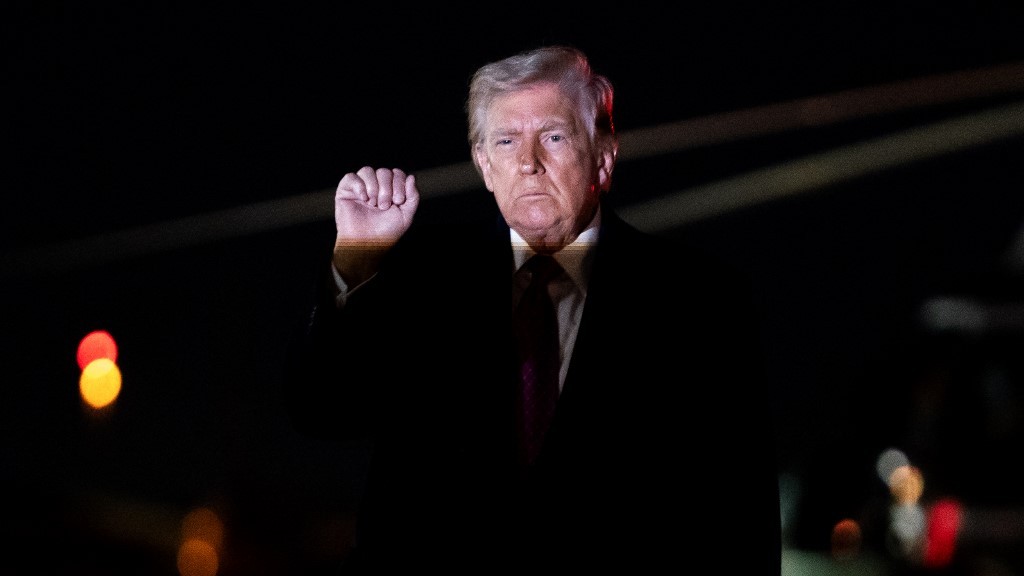
    In his inaugural State of the Union address for his second term, President Donald Trump articulated a preference for diplomatic engagement to resolve ongoing tensions with Iran. Speaking before a joint session of Congress at the U.S. Capitol on Tuesday, the President revealed that negotiations are currently underway between the two nations.

    Trump indicated Tehran’s apparent willingness to reach an agreement, though he emphasized a critical unresolved element in the discussions. “They want to make a deal,” the President stated, “but we haven’t heard those secret words, ‘We will never have a nuclear weapon.’”

    The address marked Trump’s first major foreign policy declaration since beginning his second term, signaling continuity in his administration’s approach to Iran while keeping military options available. The speech focused heavily on national security concerns, with Iran’s nuclear ambitions representing a central theme in the administration’s international security agenda.

    Observers noted that the President’s comments reflected a strategic balancing act—maintaining pressure through sanctions while keeping diplomatic channels open. The administration’s Iran policy has remained consistent since Trump’s withdrawal from the Joint Comprehensive Plan of Action (JCPOA) in 2018, demanding a more comprehensive agreement that addresses Iran’s ballistic missile program and regional activities alongside nuclear limitations.

  • Trump claims Iran working on missiles that could hit US, says he prefers diplomacy

    Trump claims Iran working on missiles that could hit US, says he prefers diplomacy

    President Donald Trump utilized his State of the Union address on Tuesday to assert that Iran is actively pursuing advanced missile technology capable of striking the continental United States. The declaration marks a significant escalation in rhetoric regarding Tehran’s military capabilities.

    During his nationally televised speech, Trump stated, ‘Iran has already deployed missiles threatening European territories and our overseas military installations. They are now advancing their program to construct missiles with potential reach to American soil.’ This claim appears to contradict established intelligence assessments regarding Iran’s current technological capabilities.

    According to defense analysis from the U.S. Congressional Research Service, Iran’s existing ballistic missile arsenal consists primarily of short- and medium-range systems with maximum ranges of approximately 1,850 miles (3,000 kilometers). The geographical reality places the continental United States at a distance exceeding 6,000 miles from Iran’s western borders, making any immediate threat technologically implausible.

    The U.S. Defence Intelligence Agency had previously projected in 2025 that Iran could potentially develop a militarily viable intercontinental ballistic missile by 2035, but only if Tehran made a strategic decision to pursue such capability—a determination that intelligence officials had not confirmed.

    Despite the confrontational rhetoric, Trump emphasized his preference for diplomatic solutions, noting that Washington and Tehran have engaged in two rounds of negotiations aimed at establishing a replacement for the nuclear agreement that the Trump administration abandoned during its first term. These talks have encountered significant obstacles, particularly regarding American demands for complete uranium enrichment cessation and limitations on Iran’s ballistic missile program and regional activities—conditions that Iranian officials have consistently rejected.

    The diplomatic efforts occur against a backdrop of substantial U.S. military deployment to the Middle East, including two aircraft carrier groups, numerous additional naval vessels, combat aircraft, and other assets. Trump has repeatedly warned that military action remains an option should diplomatic efforts fail, with the next round of negotiations scheduled for Thursday.

  • Pope Leo will visit 4 African countries as part of his packed 2026 travel plan

    Pope Leo will visit 4 African countries as part of his packed 2026 travel plan

    The Vatican unveiled an extensive international travel itinerary for Pope Leo XIV on Wednesday, mapping out one of the most ambitious papal schedules in recent years for the first half of 2026. The pontiff will embark on significant journeys to Monaco, Spain, and four African nations: Algeria, Cameroon, Angola, and Equatorial Guinea.

    This announcement signals a new chapter in Leo XIV’s papacy following the conclusion of the 2025 Holy Year, during which he ministered to 33 million pilgrims in Rome. The 70-year-old pontiff, who assumed office in May 2025 as the first U.S.-born pope, has maintained a relatively stationary presence until now due to Jubilee commitments.

    The travel program commences with a one-day visit to Monaco on March 28, followed by an extensive 10-day African pilgrimage from April 13-23. This African journey represents one of the most extensive papal trips since Pope Francis’s 2024 tour of Southeast Asia. The Algeria stop holds particular significance for Leo XIV, given its deep connections to Saint Augustine of Hippo, the 5th-century theologian who inspired the pontiff’s religious order.

    In June, the pope will spend nearly a week in Spain (June 6-12), with expectations high for his presence in Barcelona on June 10 to commemorate the centenary of architect Antoni Gaudí’s death. This timing coincides with the recent completion of the Sagrada Familia basilica’s central tower, reaching its maximum height just last week.

    Concurrently, Pope Leo will undertake a grand tour of Italy beginning in May, featuring half a dozen one-day visits throughout the peninsula. On July 4, while the United States celebrates its 250th independence anniversary, the pontiff will be visiting the Italian island of Lampedusa—a symbolic gesture highlighting his focus on migration issues and peripheral communities.

    The Vatican confirmed that while additional travel to Peru, Argentina, and Uruguay is anticipated in the latter half of 2026, no visit to the United States is planned for this year. This travel pattern reflects Leo XIV’s background as former Augustinian superior Robert Prevost, who spent two decades as a missionary in Peru and developed a reputation for extensive travel during his leadership of the religious order.