作者: admin

  • Join Douglas for a 10km run through peach blossoms in Wuxi

    Join Douglas for a 10km run through peach blossoms in Wuxi

    American athlete Douglas Dueno experienced China’s picturesque countryside during the 2026 Chinese Athletics Association 10KM Elite Series in Yangshan town, Wuxi, Jiangsu province. The event, held on March 29, allowed participants to run through stunning peach blossom orchards in full bloom, creating a unique athletic experience that blended sports with natural beauty.

    Dueno, representing the United States, described the race as an immersive cultural and athletic journey through China’s rural landscapes. The carefully designed route showcased the region’s agricultural revitalization efforts and springtime splendor, with runners following paths winding through vibrant peach plantations.

    Organizers of the elite running series intentionally selected Yangshan for its exceptional spring scenery and to promote rural tourism development. The event attracted both competitive athletes and recreational runners seeking to combine their passion for running with cultural exploration.

    Video documentation of Dueno’s experience captures the convergence of athletic competition and natural appreciation, highlighting how sporting events can serve as bridges for international visitors to connect with local environments and communities. The successful event demonstrates how regional characteristics can be leveraged to create distinctive athletic experiences that benefit both participants and host communities.

  • Most Syrian refugees in Germany expected to return home in three years, Merz says

    Most Syrian refugees in Germany expected to return home in three years, Merz says

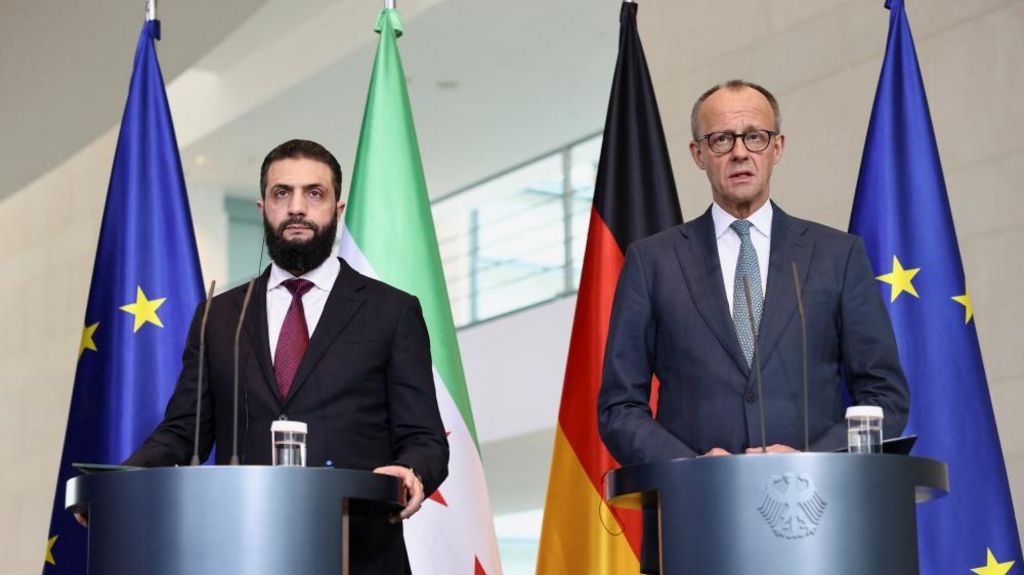
    In a landmark meeting that signals shifting European migration policies, German Chancellor Friedrich Merz and Syrian President Ahmed al-Sharaa convened in Berlin on Monday to announce a comprehensive framework for the repatriation of Syrian refugees. The two leaders revealed an ambitious target: facilitating the return of approximately 80% of Syrians currently residing in Germany within the next three years.

    Chancellor Merz emphasized that Syria’s post-conflict transformation necessitates a fundamental reassessment of protection needs. “The situation in Syria has now changed fundamentally following the conclusion of the civil war,” Merz stated during a joint press conference. “Our initial priority will be returning those who no longer have valid residence rights, particularly criminal offenders, but this will extend to broader populations in subsequent phases.”

    The German leader acknowledged the significant contributions made by Syrian refugees while simultaneously asserting that most express desire to return home and participate in national reconstruction efforts. Merz clarified that exceptions would be made for certain professionals, noting that “it is in our country’s interest that Syrian doctors and carers would be able to remain if they wanted to.”

    President Sharaa expressed profound gratitude for Germany’s hospitality during Syria’s conflict, stating that his nation “would never forget how Germany had opened its doors to refugees during the civil war.” The Syrian leader proposed establishing a circular migration model that would enable Syrians to contribute to reconstruction “without giving up the stability and lives they have built here, for those who wish to stay.”

    The announcement occurs against a backdrop of rising anti-immigration sentiment in Germany, where support for the AfD party has surged significantly. Merz’s government has consequently adopted increasingly stringent refugee policies amid broader European concerns regarding migration management.

    However, the proposal faces substantial opposition from German political factions and human rights organizations. Franziska Brantner of the opposition Green Party challenged the feasibility of large-scale returns, citing Syria’s compromised infrastructure and unstable security situation. “Many Syrians were deeply anchored in Germany,” Brantner noted, “holding systemically important jobs and with children in school.”

    The Kurdish Community in Germany (KGD organized protests during Sharaa’s visit, demanding binding commitments regarding minority protections in Syria. The group has accused the Syrian president of human rights violations and war crimes during the Islamist rebel offensive that toppled former leader Bashar al-Assad in December 2024.

    Despite the official conclusion of Syria’s decade-long civil war, the country remains deeply divided and has experienced recurrent sectarian violence, particularly between government-aligned forces and Kurdish groups in the northeast. Recent attempts at constitutional reform through an interim parliamentary body have faced criticism from Kurdish representatives who allege exclusion from meaningful negotiations and insufficient guarantees for minority rights.

    This development represents a significant evolution from Germany’s 2015 refugee crisis response, when then-Chancellor Angela Merkel declared “Wir schaffen das” (We’ll manage this) while keeping borders open to those fleeing conflict. That policy decision, once viewed as pragmatic, ultimately became a political liability that fueled the rise of anti-immigration parties across Europe.

  • UAE arrests dozens of British citizens over online posts during Iran war

    UAE arrests dozens of British citizens over online posts during Iran war

    The United Arab Emirates has initiated an aggressive crackdown on social media activity concerning recent Iranian attacks, resulting in the detention of numerous foreign nationals including dozens of British citizens. According to advocacy organization Detained in Dubai, the campaign targets residents, tourists, workers, and students across multiple nationalities for documenting or sharing content related to security incidents.

    The situation has dramatically altered the UAE’s international reputation as a secure business and tourism destination. Between missile and drone strikes from Iran that have struck notable locations including Dubai International Airport and the Fairmont hotel on Palm Jumeirah, the Emirati government has implemented stringent measures to control information flow. Official reports indicate Iran launched 398 ballistic missiles, 1,872 drones, and 15 cruise missiles toward the UAE by March 28th.

    British citizens have faced particular scrutiny, with at least 35 detained in Dubai and a comparable number in Abu Dhabi. Cases include a FlyDubai air steward arrested for photographing damage from a crashed Iranian drone near Dubai airport and a 60-year-old London tourist detained for allegedly recording missile impacts. Authorities are reportedly conducting public phone inspections and making arrests based on discovered imagery, with penalties reaching up to two years imprisonment and £40,000 fines.

    Human rights organizations report concerning detention conditions, with allegations of overcrowded cells, denied medication, and pressure to sign Arabic-language confessions without legal representation. The situation has been classified as national security matters in numerous instances, potentially carrying 15-year sentences.

    The economic impact has been substantial, with over $120 billion erased from market capitalization on Dubai and Abu Dhabi stock exchanges and Dubai’s real estate index declining by 16 percent since hostilities began. With approximately half of Dubai’s 240,000 British expatriates having departed, the UAE faces significant challenges to its tourism-dependent economy during this regional conflict.

  • International observers urge violence-free elections after clashes at Serbia vote

    International observers urge violence-free elections after clashes at Serbia vote

    BELGRADE, Serbia — International election monitors have issued a damning assessment of Serbia’s municipal elections, documenting widespread violence, voter intimidation, and procedural irregularities that marred the democratic process. The Congress of Local and Regional Authorities of the Council of Europe reported that while voting procedures inside polling stations were largely compliant, the environment outside was characterized by alarming acts of aggression and coercion.

    According to the official observer statement, monitors witnessed ‘acts of violence’ and ‘the threatening presence of large groups of people, often unidentified and sometimes masked’ in nearly all visited municipalities. The elections, held across 10 Serbian towns on Sunday, represented a critical test for President Aleksandar Vucic’s administration following over a year of youth-led protests challenging his authoritarian governance.

    Despite the turbulent circumstances, Vucic has claimed comprehensive victory for his right-wing populist Serbian Progressive Party in all contested municipalities. The president personally led the campaign effort, seeking to reassert his political dominance after protests triggered by a November 2024 train station tragedy in northern Serbia.

    Violent incidents erupted in at least three towns, with student activists and independent observers reporting attacks by masked supporters of Vucic. The president’s party conversely accused opposition groups of instigating conflicts. International monitors emphasized that ‘violence and coercion are unacceptable barriers to the free expression of the will of all voters’ and that ‘no voter should feel threatened when exercising his or her democratic right.’

    Additional concerns included serious breaches of voting secrecy, with numerous voters photographing their ballots—a practice that monitors described as ‘highly worrying.’ The pre-election period was characterized by extreme polarization and focus on national rather than local issues.

    Serbian independent monitoring organization CRTA (Center for Research, Transparency and Accountability) corroborated the international assessment, documenting scores of violent incidents and voting irregularities. The group stated that the proceedings ‘can hardly be called an election,’ citing organized voting violations, physical altercations involving state institution employees, and the deployment of riot police in several locations.

    Jovana Djurbabic of CRTA told The Associated Press: ‘The whole atmosphere was marked with high intensity of tensions, violence, pressures. I would not call these elections free, they are not free at all.’

    The electoral controversy has further strained regional relations, with Vucic alleging ‘logistical support’ to his opponents from neighboring Croatia. In response, Croatian President Zoran Milanovic canceled an upcoming regional meeting scheduled for May, stating that hosting Vucic would be ‘impossible’ following his inflammatory comments. Milanovic’s office stated that Vucic’s ‘political statements and actions…inflict damage on relations between the states and jeopardize peace and stability in southeastern Europe.’

    The tensions reflect historical animosities dating to the 1991-95 Croatian War of Independence, during which Serbia backed a Croatian Serb rebellion that resulted in over 10,000 casualties.

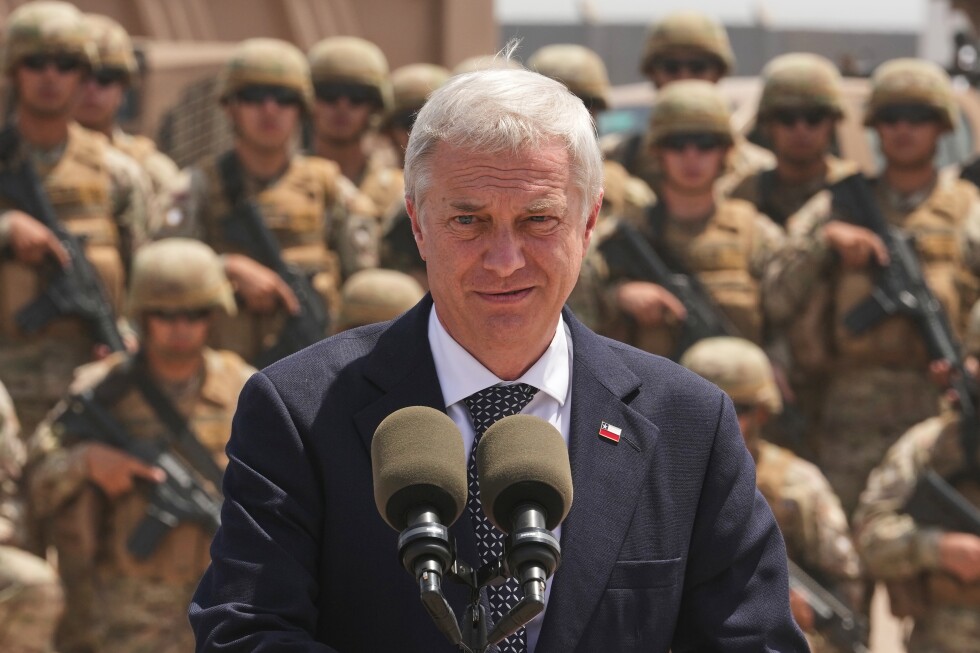
  • Chile’s president vows tougher school security following recent stabbing and firearms incidents

    Chile’s president vows tougher school security following recent stabbing and firearms incidents

    SANTIAGO, Chile — The Chilean government has announced a comprehensive tightening of security protocols across educational institutions following two separate weapon-related incidents that have heightened national concerns about school violence. President José Antonio Kast declared Monday that his administration would implement “certain measures to protect our students” during an address at a capital city school. The policy shift comes in response to what Kast described as fundamental societal changes requiring revised approaches to campus safety. The security enhancement initiative follows Friday’s fatal knife attack in northern Chile, where an 18-year-old student killed a 59-year-old school inspector and wounded four others, leaving one victim in critical condition. This incident, categorized among Chile’s most severe school violence cases, was compounded by Monday’s separate event where authorities detained a 15-year-old student attempting to enter a Curicó school with a loaded firearm concealed in his waistband. Education Minister María Paz Arzola revealed that her office is drafting legislation to authorize backpack inspections by teachers while accelerating the installation of metal detectors in educational facilities. While Major Juan Díaz Serrano of Chile’s police force confirmed the detained teenager made no explicit threats, the occurrence has intensified national security discussions. Although armed attacks remain uncommon in Chile, the nation’s academic institutions have historically served as hubs for activism, particularly during the 2011 and 2019 social upheavals when students demanded systemic reforms. Recent months have witnessed increased campus violence, including a late-2024 explosion that injured over 30 students from homemade firebombs and May’s shooting incident in the Bío Bío region that wounded three students—the first recorded school shooting in Chilean history.

  • ‘Inhumane and degrading’: Israel set to approve death penalty for Palestinians

    ‘Inhumane and degrading’: Israel set to approve death penalty for Palestinians

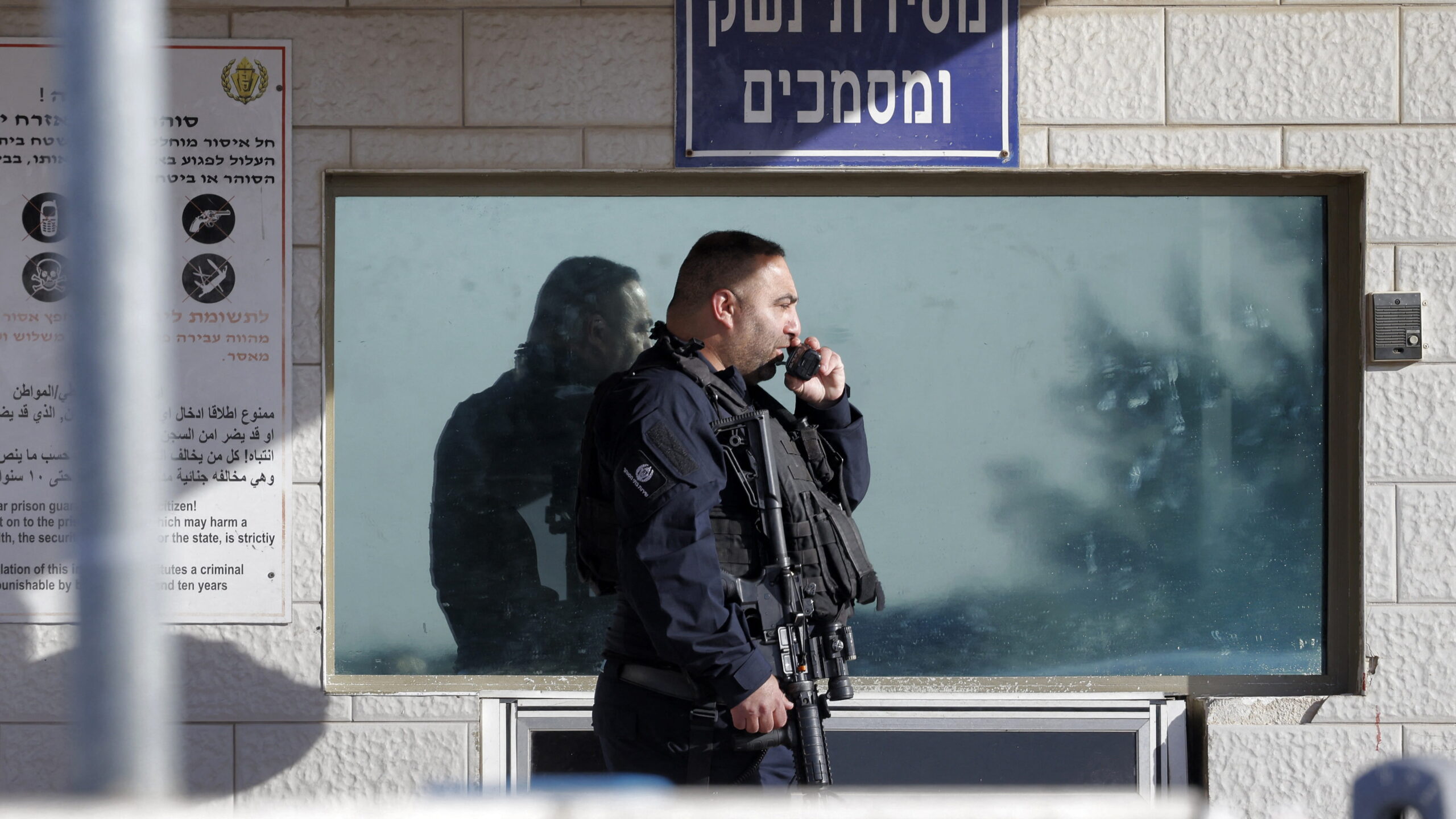
    Israel’s legislative body is poised to conduct a decisive vote on Monday regarding a highly contentious bill that would authorize capital punishment for Palestinian detainees convicted of terrorism-related offenses. The proposed legislation, championed by the far-right Otzma Yehudit (Jewish Power) party, has ignited fierce international criticism and raised profound concerns about its compatibility with international legal standards.

    European diplomatic leaders from Germany, France, Italy, and the United Kingdom have jointly appealed to Israeli authorities to abandon the scheduled vote. In an official collective statement, they expressed particular apprehension about the bill’s inherently discriminatory nature, cautioning that its implementation could fundamentally undermine Israel’s democratic foundations. They emphasized that “the death penalty represents an inhumane and degrading form of punishment lacking demonstrable deterrent effect,” reaffirming their unified opposition to capital punishment as a core shared value.

    Legal analysts and human rights organizations have raised substantial concerns regarding the bill’s potential violation of international law. According to reports from Haaretz, Israeli military authorities themselves believe the legislation could contravene international legal standards and potentially expose military commanders to international arrest warrants. Despite these legal apprehensions, the Knesset’s National Security Committee advanced the bill last week after overriding more than 1,000 formal objections.

    Prime Minister Benjamin Netanyahu reportedly attempted to moderate the bill’s original language in response to legal concerns, though experts maintain that the current formulation still constitutes a breach of international legal norms. The proposed legislation has generated profound anxiety among families of Palestinian prisoners, with many fearing their incarcerated relatives could face execution if the measure becomes law.

    Sabreen Shahrouri, whose brother Muammar has been imprisoned since 2002 for his involvement in planning a bombing that killed 29 Israelis, described the devastating psychological impact on families. She detailed severe abuses allegedly endured by prisoners, including systematic beatings resulting in fractures, medical neglect, solitary confinement exceeding two years, and incidents where prison guards reportedly set dogs upon detainees. Shahrouri characterized the current prison conditions as “a slow form of execution” that constitutes “an execution of their souls before their bodies.”

    Palestinian prisoners’ rights organizations have condemned the legislation as an “unprecedented act of savagery,” accusing Israel of attempting to formalize the killing of detainees amid escalating abuse reports. United Nations experts have urgently called for the bill’s withdrawal, warning that mandatory death sentences fundamentally contradict the right to life and that proposed execution by hanging would amount to torture under international law.

    Israeli human rights groups including Adalah, the Public Committee Against Torture in Israel, HaMoked, and Physicians for Human Rights-Israel have jointly denounced the legislation, warning it would establish a “racialized system of capital punishment” applied almost exclusively against Palestinians. They described the bills as “among the most extreme and dangerous legislative measures ever proposed by Israel against Palestinians,” creating a discriminatory punitive framework that denies basic rights and protections.

    Documented mistreatment of Palestinian detainees has dramatically intensified since October 2023, with human rights organizations reporting at least 90 fatalities occurring in Israeli custody during this period. The proposed legislation emerges against this backdrop of escalating prison abuses and widespread arrests of Palestinians on broad terrorism charges.

  • Canada’s new NDP leader says party must have ‘hard conversations’ over energy policy

    Canada’s new NDP leader says party must have ‘hard conversations’ over energy policy

    Canada’s New Democratic Party has elected Avi Lewis as its new leader following a decisive first-ballot victory on Sunday, immediately exposing significant internal divisions over energy policy within the left-leaning party. Lewis, who ran on a platform emphasizing aggressive climate action and economic affordability, now faces immediate challenges from provincial NDP leaders in Western Canada who oppose his stance against new oil and gas development.

    The leadership transition has revealed a growing rift between the federal party’s environmental priorities and the economic concerns of energy-producing provinces. Shortly after his victory, Saskatchewan NDP leader Carla Beck publicly rejected Lewis’s invitation to meet, describing his resource development positions as “ideological and unrealistic” in a formal letter. Similarly, Alberta NDP leader Naheed Nenshi expressed concerns that Lewis’s direction would not serve his province’s interests, emphasizing the need for federal leaders who understand Alberta’s essential role in Canada’s economy.

    Despite these criticisms, Lewis characterized the disagreements as evidence of a broadening political coalition. “Hard conversations are necessary,” Lewis told reporters on Monday. “These disagreements mean our tent is growing and are a sign of health.” He maintained that his door remains open to those who disagree with his energy policies while reaffirming his opposition to new fossil fuel development.

    Lewis cited the ongoing Israeli-American conflict with Iran and resulting oil price volatility as evidence that “the energy economy is extremely unstable.” He argued for accelerating Canada’s transition to renewable energy to create “a more stable, secure, and safe economy, and a more independent Canadian economy.”

    The new leader received support from Manitoba Premier Wab Kinew, who acknowledged potential for “heated debates” but emphasized alignment on broader issues. “We’re fighting for the people who don’t have a voice right now,” Kinew stated. Lewis confirmed receiving “words of wisdom and encouragement” during their hour-long meeting in Winnipeg.

    Federal NDP caucus members expressed unity behind Lewis, with interim leader Don Davies stating the party was “100% united” and could serve as “a powerful voice for all the voters who do not see themselves reflected” by Liberal or Conservative policies. Lewis, who does not currently hold a parliamentary seat, indicated he would focus on engaging with the party’s national base rather than immediately pursuing elected office.

    The leadership transition occurs as the NDP seeks to rebuild after significant losses in last year’s federal election, while simultaneously navigating the complex balance between environmental priorities and economic realities in Canada’s energy-producing regions.

  • Around 6,000 cherry trees of over 60 varieties coming into bloom along Beijing’s ‘Cherry Blossom River’

    Around 6,000 cherry trees of over 60 varieties coming into bloom along Beijing’s ‘Cherry Blossom River’

    Beijing has transformed its Beixiao River into a breathtaking floral spectacle with the debut of the capital’s first ‘Cherry Blossom River’ corridor. Approximately 6,000 cherry trees representing over 60 distinct varieties have begun their seasonal bloom, creating a stunning 4.2-kilometer pink canopy along the waterway in Chaoyang district.

    The newly established floral corridor, strategically positioned near Beijing’s northeastern fifth ring road, encompasses the river itself, both banks, and three adjacent parks, forming an integrated riverside viewing experience. The botanical display has been carefully designed to provide extended viewing opportunities through sequential blooming patterns.

    Horticultural experts have orchestrated a phased blooming schedule, with early-season varieties reaching peak coloration between late March and early April, while late-blooming specimens will maintain the display through mid-April. This strategic planning ensures visitors can enjoy the natural spectacle across multiple weeks.

    From April 3 to 12, the municipality will offer unique aquatic viewing experiences with the introduction of rowboats, motorboats, and open-top vessels operating along the blossom-lined river. Additionally, the city has implemented complimentary shuttle services featuring cherry blossom-themed decorations to connect nearby parks and commercial districts, seamlessly integrating the natural attraction with urban infrastructure.

    The ‘Cherry Blossom River’ project represents a significant urban beautification initiative that enhances public access to natural spaces while promoting ecological tourism within China’s capital city.

  • Celine Dion announces comeback following health struggle

    Celine Dion announces comeback following health struggle

    In an emotional video message released on her 58th birthday, global music icon Celine Dion revealed her triumphant return to live performances following an extensive health battle with Stiff Person Syndrome. The Canadian superstar announced a series of concert dates in Paris, marking her first major performance commitment since disclosing her diagnosis in December 2022.

    Addressing her global fanbase directly through social media, Dion expressed profound gratitude while sharing her health progress. ‘This year, I’m receiving the most extraordinary birthday present imaginable – the opportunity to reconnect with my audience and perform once again,’ the artist declared with visible emotion. She confirmed her medical condition has significantly improved, stating she is currently ‘managing my health, feeling good.’

    The five-time Grammy winner will stage ten performances over five weeks at Paris La Defense Arena commencing September 12th. This announcement follows Dion’s courageous appearance at the Paris 2024 Olympic Games opening ceremony, where she delivered a memorable performance from the Eiffel Tower despite challenging weather conditions.

    Dion’s health journey has been documented with remarkable transparency through the 2024 documentary ‘I Am: Celine Dion,’ which provided unprecedented insight into the artist’s struggle with the rare autoimmune disorder. Stiff Person Syndrome causes severe muscle stiffness and spasms, with treatment focusing on symptom management rather than cure. The condition had previously forced Dion to indefinitely cancel her performing schedule.

    Her career trajectory remains extraordinary – from winning the 1988 Eurovision Song Contest representing Switzerland to achieving global dominance with English-language hits including the historic ‘My Heart Will Go On’ from Titanic. With over 260 million albums sold worldwide, Dion’s return to performance represents a significant moment in contemporary music history, demonstrating extraordinary resilience in the face of profound physical challenges.

  • Céline Dion announces comeback shows: ‘I’m so ready for this’

    Céline Dion announces comeback shows: ‘I’m so ready for this’

    In an inspiring development for the music world, global superstar Céline Dion has announced her monumental return to live performance with a 10-night residency at Paris’s La Défense Arena this autumn. The announcement, made on the iconic singer’s 58th birthday, marks a triumphant milestone in her courageous battle against Stiff Person Syndrome (SPS), a rare neurological disorder that temporarily halted her legendary career.

    The Canadian vocal powerhouse, renowned for timeless ballads including “My Heart Will Go On” and “The Power of Love,” revealed her comeback through an emotionally charged Instagram message she described as “the best gift of my life.” Dion expressed both excitement and measured nervousness about returning to the stage, stating: “I’m feeling good, I’m strong, I’m feeling excited, obviously, [and] of course, a little nervous.”

    Her Parisian residency—scheduled across September and October with strategic gaps between performances to accommodate her health needs—represents Dion’s first concert series since her March 2020 show in Newark, New Jersey. The originally planned Courage World Tour was initially interrupted by pandemic restrictions before being completely derailed by her SPS diagnosis in December 2022.

    The announcement was celebrated with spectacular theatrics across Paris, where mysterious posters featuring Dion’s lyrics recently appeared throughout the city. The campaign culminated in the Eiffel Tower illuminating with the poignant message “Paris, je suis prête” (Paris, I am ready) while broadcasting a curated playlist of her greatest hits.

    Dion’s journey back to performance readiness has been nothing short of extraordinary. The artist undertook an intensive rehabilitation regimen, describing her approach to French Vogue: “I’ve chosen to work with all my body and soul, from head to toe.” Her dedication included five-day weekly sessions combining athletic, physical, and vocal therapy—a grueling commitment that previously enabled her emotional performance at the 2024 Paris Olympics.

    Stiff Person Syndrome, affecting approximately 8,000 people worldwide, involves progressive muscle stiffness and painful spasms that can severely impact mobility and vocal function. Dion previously shared harrowing descriptions of the condition, noting it felt “like somebody is strangling you” and prevented her from singing in her characteristic register.

    Tickets for the highly anticipated residency go on sale April 7th, with fan registration opening March 31st. Industry experts anticipate unprecedented demand for what promises to be one of music’s most celebrated comebacks, demonstrating both artistic resilience and the profound connection between an icon and her global audience.