作者: admin

  • Ex-US Treasury chief Summers quits Harvard over Epstein ties

    Ex-US Treasury chief Summers quits Harvard over Epstein ties

    Harvard University announced on Wednesday the resignation of former U.S. Treasury Secretary Lawrence Summers from his academic positions following revelations about his communications with convicted sex offender Jeffrey Epstein. The prestigious institution confirmed Summers would step down from his role as co-director of the Mossavar-Rahmani Center for Business and Government immediately and completely sever ties with the university by the end of the academic year.

    The development comes amid ongoing scrutiny of elite academic and political figures connected to Epstein, whose extensive network of powerful associates continues to generate consequences years after his death. Summers, who served as Treasury chief under President Bill Clinton and later as Harvard president, had previously expressed regret about his communications with the financier in a viral video address to students.

    According to university statements, Dean Jeremy Weinstein accepted Summers’ resignation from leadership positions while noting the professor would remain on leave until his complete departure. The resignation marks the second major Epstein-related departure from Harvard following former president Lawrence Bacow’s earlier exit.

    Court documents unsealed by the Department of Justice revealed extensive communications between Summers and Epstein, prompting the economist to previously step back from public commitments in November 2025. At that time, Summers acknowledged his ‘misguided decision’ to maintain contact with Epstein and accepted full responsibility.

    The Epstein case continues to reverberate through elite circles, with numerous prominent figures facing reputation damage from associations with the financier. Harvard disclosed Epstein had donated $9.1 million to the university between 1998 and 2008, though the institution maintains these funds were properly used for research purposes.

    While mere mention in the Epstein documents doesn’t imply wrongdoing, the released materials have established connections between Epstein and various public figures who previously minimized or denied such relationships. The case represents one of the most extensive reckonings for elite institutions regarding their associations with controversial donors.

  • US women’s ice hockey captain responds to ‘distasteful’ Trump remark

    US women’s ice hockey captain responds to ‘distasteful’ Trump remark

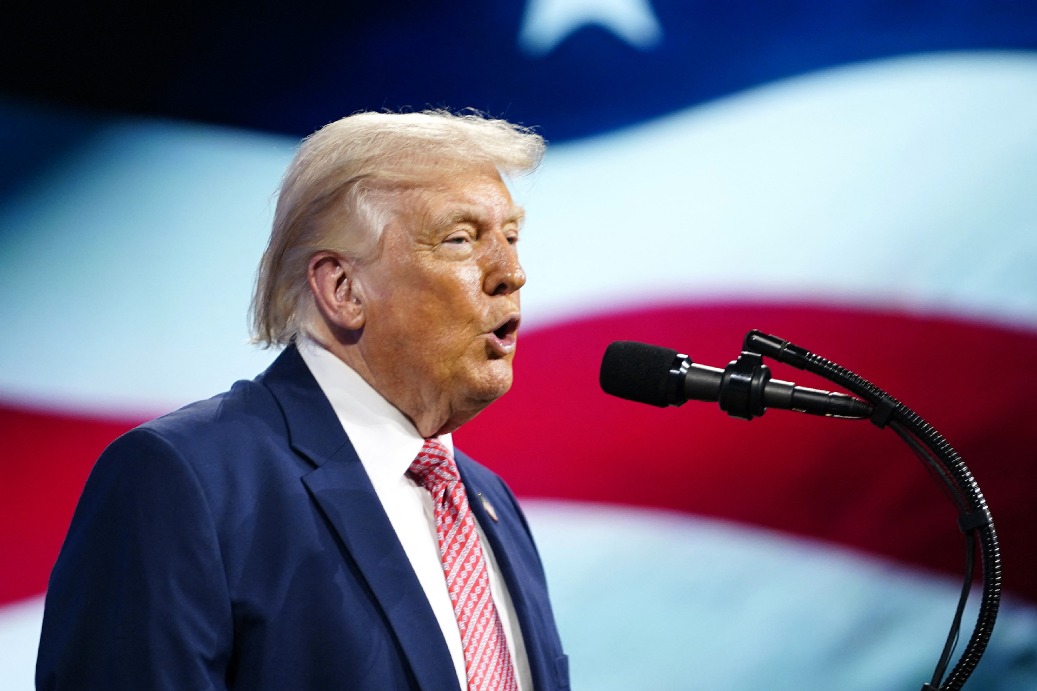
    U.S. Women’s Olympic Ice Hockey Captain Hilary Knight has publicly addressed what she characterized as a ‘distasteful joke’ from former President Donald Trump, stating it regrettably diverted attention from the monumental achievements of American female athletes at the Milan-Cortina Games. The controversy emerged during a congratulatory call Trump made to the gold medal-winning men’s team, where he quipped that inviting the women’s team to his State of the Union address was necessary to avoid being ‘impeached.’

    While several men’s players were reported to have laughed at the remark, Knight emphasized on ESPN’s ‘Sportscenter’ that a strong bond of mutual support exists between the national teams. She expressed disappointment that a ‘quick lapse’ and an unfortunate narrative were obscuring the genuine respect and camaraderie shared between the athletes.

    The women’s team subsequently declined an invitation to attend the address, with USA Hockey citing prior commitments. In contrast, members of the men’s team were honored at the White House, where goaltender Connor Hellebuyck received the Presidential Medal of Freedom.

    Knight, a five-time Olympic medalist who secured her second gold in what she has announced was her final Games, used the platform to call for a broader cultural shift. She advocated for the incident to become a ‘really good learning point’ in how society discusses and values the accomplishments of women, not just in sports but across all industries, asserting that their achievements should stand on their own merit without being overshadowed.

  • Real Madrid victory for ‘everyone against racism’: Tchouameni

    Real Madrid victory for ‘everyone against racism’: Tchouameni

    Real Madrid’s advancement to the Champions League last 16 with a 2-1 victory over Benfica on Wednesday has been framed by midfielder Aurelien Tchouameni as a triumph extending beyond football. The French international declared the win symbolic for “everyone who stands against racism,” redirecting attention from the match’s technical performance to its broader social significance.

    The context stems from the first leg encounter last week, which was overshadowed by allegations of racial abuse directed at Madrid’s Brazilian forward Vinicius Junior by Benfica player Gianluca Prestianni. UEFA has provisionally suspended Prestianni pending investigation, rejecting an appeal from Benfica against the ban earlier on Wednesday.

    A powerful visual statement greeted players at Santiago Bernabeu, where a large banner reading “no to racism” was prominently displayed. Vinicius, who scored Madrid’s second goal, celebrated on social media with the message: “The dance continues.”

    In a separate but related incident, Real Madrid security personnel identified and expelled one of the club’s own members from the stadium before kickoff for performing a Nazi salute during the broadcast. The club issued a statement condemning “this type of gesture and expression that incites violence and hatred in sports and society.”

    Coach Alvaro Arbeloa expressed particular satisfaction with Vinicius’s goal, noting it was especially meaningful given the circumstances. “With joy obviously, for the great goal he scored, and because it was him, he deserves it,” Arbeloa stated.

    The match also highlighted concerns regarding French superstar Kylian Mbappe’s fitness. Arbeloa confirmed post-match that Mbappe would be sidelined temporarily with a knee issue described as a minor injury, with the club prioritizing his full recovery for upcoming crucial fixtures.

  • US presses missile issue as new Iran talks to open in Geneva

    US presses missile issue as new Iran talks to open in Geneva

    Diplomatic efforts resume in Geneva as the United States and Iran prepare for a critical round of indirect negotiations, with ballistic missile capabilities emerging as a central point of contention. The talks, mediated by Oman, follow a significant military buildup by the U.S. in the region and repeated threats from President Donald Trump regarding potential military action.

    President Trump utilized his recent State of the Union address to accuse Iran of pursuing “sinister nuclear ambitions” and developing missile technology capable of threatening European allies and U.S. overseas installations. These assertions were immediately dismissed by the Iranian foreign ministry as “big lies,” with Tehran maintaining that its nuclear program serves purely peaceful purposes.

    The technical specifications of Iran’s missile program remain disputed. While Iranian officials publicly acknowledge a maximum range of 2,000 kilometers (1,200 miles), the U.S. Congressional Research Service estimates capabilities extending to approximately 3,000 kilometers—still insufficient to reach the continental United States but posing significant regional threats.

    Secretary of State Marco Rubio emphasized that Iran’s refusal to negotiate its ballistic missile program represents “a big, big problem,” though he reiterated the administration’s preference for diplomatic solutions. Conversely, Iranian leadership has explicitly limited negotiations to nuclear matters and the lifting of crippling economic sanctions, rejecting broader discussions about its regional activities or missile development.

    Iranian President Masoud Pezeshkian expressed cautious optimism, stating his “favourable outlook for the negotiations” that might finally resolve the prolonged “neither war nor peace” situation. Foreign Minister Abbas Araghchi, leading Tehran’s delegation, characterized the talks as “a historic opportunity” with an agreement “within reach.”

    The U.S. delegation will be represented by envoy Steve Witkoff and senior advisor Jared Kushner. These discussions follow previous rounds in Oman and Geneva that were disrupted by military actions, including Israel’s surprise strikes on Iranian facilities last June that triggered a 12-day conflict.

    Regional security analysts express growing concern about escalating tensions. Emile Hokayem of the International Institute for Strategic Studies noted that “the region seems to expect a war at this point,” despite diplomatic efforts by Middle Eastern states to prevent military escalation. Among Tehran residents, opinions remain divided regarding the potential for renewed conflict, with some expressing grim acceptance of whatever outcome might clarify the nation’s uncertain future.

  • Scam centres ‘destroying’ Cambodia’s economy, PM tells AFP

    Scam centres ‘destroying’ Cambodia’s economy, PM tells AFP

    In a rare international media interview, Cambodian Prime Minister Hun Manet has delivered a stark assessment of the cyber scam operations proliferating within his nation’s borders, characterizing them as a destructive force undermining Cambodia’s economic foundation and global reputation. Speaking with AFP in Brussels during a diplomatic tour addressing border tensions with Thailand, the leader acknowledged the indirect economic benefits these criminal networks have generated while vehemently denying any governmental profiteering.

    The Prime Minister described the multibillion-dollar fraud industry as a ‘black economy’ that actively damages Cambodia’s legitimate economic sectors, particularly through diminished tourism and foreign investment. Despite conceding that scam centers have stimulated certain business activities—including real estate development and employment opportunities—Hun Manet insisted that the vast majority of illicit proceeds never enter government coffers.

    Cambodia has emerged as a regional epicenter for sophisticated cyber fraud operations, with experts estimating approximately 100,000 individuals—many trafficked victims—perpetrating global scams from dozens of compounds nationwide. These operations initially targeted Chinese-speaking populations but have expanded to multilingual schemes extracting billions from victims worldwide through fake romantic relationships and fraudulent cryptocurrency investments.

    The government’s recent crackdown has resulted in thousands of arrests, highlighted by the high-profile extradition to China of Chen Zhi, a former adviser to both Hun Manet and his father. The Chinese-born tycoon, described by US authorities as the kingpin of a ‘sprawling cyber-fraud empire’ operating under the guise of legitimate business through his Prince Group conglomerate, was stripped of his Cambodian citizenship after authorities discovered he obtained it through fraudulent documentation.

    Hun Manet claimed ignorance of Chen’s alleged criminal activities, stating that to Cambodian officials, he appeared merely as a business contributor until allegations surfaced. The Prime Minister explained that Chen’s extradition to China rather than the United States was necessitated by his exclusive Chinese citizenship following the revocation of his Cambodian status.

    While some industry experts question the authenticity of Cambodia’s anti-fraud efforts—pointing to alleged connections between officials and cyber scam networks—Hun Manet maintains that the nation’s economic stability relies not on criminal enterprises but on legitimate sectors including tourism and manufacturing. The government continues its push to dismantle what it characterizes as an existential threat to Cambodia’s economic integrity and international standing.

  • As fighting spirals in South Sudan, a humanitarian crisis looms for displaced survivors

    As fighting spirals in South Sudan, a humanitarian crisis looms for displaced survivors

    A resurgence of violence in South Sudan’s Jonglei state has displaced approximately 280,000 people over the past two months, creating a severe humanitarian crisis that threatens to unravel the nation’s fragile peace agreement. The conflict between government forces (South Sudan People’s Defense Forces) and opposition groups (Sudan People’s Liberation Movement In Opposition) has escalated dramatically since December when opposition fighters seized government outposts.

    The human toll is devastating. Eighteen-month-old Kool Gatyen Pajock represents one of countless civilian casualties, hospitalized with bullet wounds inflicted by government forces according to his grandmother Nyayual Chuol, who witnessed the killing of the infant’s parents. Chuol carried her grandson 130 kilometers to Akobo hospital, now separated from her four other children who fled in different directions during the attack.

    Despite a 2018 peace agreement that ended five years of civil war and a 2020 power-sharing arrangement that made opposition leader Riek Machar first vice president alongside President Salva Kiir, tensions erupted again in March. Machar was placed under house arrest and charged with treason in September alongside seven opposition members linked to attacks on government forces.

    The government’s counteroffensive since January has included aerial bombardments and ground assaults, despite official commitments to peace. Nyankhiay Gatluak Jock, 28, described fleeing her village of Walgak after government helicopters bombed the area followed by ground troops shooting from vehicles. She now shelters with 42,000 other displaced persons in Akobo under UN protection.

    Humanitarian operations have been severely compromised. Thirteen health facilities in Jonglei have been looted or partially destroyed, including a Doctors Without Borders hospital bombed on February 3. Nyaphan Nyang Lual escaped that attack with her family but her husband was shot and daughter abducted during their journey to Akobo. She arrived with her one-month-old granddaughter suffering from diarrhea but found no available medicine or food assistance.

    Funding cuts and government-imposed restrictions on aid organizations have crippled relief efforts. Susan Tab, a reproductive health officer with South Sudanese organization Nile Hope, reported having “nothing … no feeding, no medication” to offer beyond psychosocial support.

    UN humanitarian chief Tom Fletcher, during a February 21 visit to Akobo, declared South Sudan “one of the most neglected crises in the world right now” and pledged to make the situation more visible to prompt international response. He was greeted by thousands of displaced women and children holding posters with handwritten messages, including one that starkly stated: “They killed everyone.”

  • Modi flatters Netanyahu, assures support to Israel in landmark Knesset address

    Modi flatters Netanyahu, assures support to Israel in landmark Knesset address

    Indian Prime Minister Narendra Modi received an unprecedented welcome at Israel’s Knesset on Wednesday, where lawmakers erupted in synchronized chants of his name before falling into complete silence for his address. The ceremonial spectacle revealed the profound strategic recalibration occurring between both nations as they forge alliances beyond traditional Western partnerships.

    Modi opened his landmark speech by delivering India’s strongest condemnation to date of Hamas’ October 7, 2023 attacks, stating, “I carry with me the deepest condolences of the people of India for every life lost and for every family whose world was shattered in the barbaric terrorist attack.” His declaration that “India stands with Israel firmly with full conviction in this moment and beyond” triggered another standing ovation from assembled lawmakers.

    The visit featured meticulously orchestrated symbolism, including the Knesset illuminated in India’s tricolor flag and children waving both nations’ flags. Israeli Prime Minister Benjamin Netanyahu broke diplomatic protocol by repeatedly calling Modi “my brother” and acknowledging, “I’ve never been more moved than by your visit here with us.”

    Netanyahu highlighted their personal chemistry, recalling their 2017 Mediterranean wading incident in Haifa that became emblematic of the relationship’s warmth. He praised India’s consistent support following October 7, noting Modi was the first world leader to call him after the attacks.

    Significantly, most Israeli opposition parties returned to the Knesset specifically to honor Modi after boycotting Netanyahu’s speech, underscoring the cross-party importance placed on Indo-Israeli relations despite domestic political divisions over judicial reforms.

    The leaders announced resumed negotiations on a bilateral Free Trade Agreement, with trade already reaching $3.62 billion in the 2024-2025 period. Modi emphasized this would “unlock the vast untapped potential in our trade relationship” across defense, agriculture, cybersecurity, and technology sectors.

    While Modi endorsed the US-backed Gaza Peace Initiative endorsed by the UN Security Council as offering “a pathway to just and durable peace,” he notably avoided direct reference to Palestinian casualties or Israel’s military operations in Gaza.

    The Prime Minister framed the partnership as having “civilisational affinity” stretching back “thousands of years,” referencing Biblical texts that mention India. The timing of his birth coinciding with India’s recognition of Israel in 1950 provided symbolic resonance to what Netanyahu characterized as a relationship built on “trust, history, and political chemistry.”

  • Hope fades in search for missing after Brazil rains kill 46

    Hope fades in search for missing after Brazil rains kill 46

    Rescue operations in southeastern Brazil are confronting diminishing prospects of locating survivors as the death count from catastrophic rainfall climbed to 46. The state of Minas Gerais endured violent downpours on Monday that triggered devastating floods and landslides, submerging streets and sweeping away residential structures.

    The city of Juiz de Fora suffered the most severe impact, accounting for 40 fatalities, while the neighboring municipality of Uba reported six confirmed deaths. Official rescue services indicate 21 individuals remain unaccounted for. Meteorological forecasts predicting additional heavy rainfall this week have further complicated recovery efforts, with firefighters publicly expressing pessimism about finding any additional survivors.

    Personal tragedies underscore the human cost of the disaster. Josiane Aparecida, a local cook, recounted losing both her aunt and cousin while continuing the desperate search for her cousin’s two young children and their father. Despite maintaining hope, she acknowledged the grim reality of the situation following multiple family losses.

    First responders recovered one victim who had heroically saved his wife from their collapsing home before being engulfed by landslide debris. In Uba, residents waded through thick mud to clear sludge from the overflowed Uba River, which reached unprecedented levels according to longtime residents.

    The economic consequences are substantial, with local businesses facing catastrophic losses. Hardware store owner Felippe Souza Lima described watching neighbors paddle canoes through flooded streets, while automobile dealer Mauro Pinto de Moraes Filho estimated nearly $1 million in damages from two-meter high flooding.

    This catastrophe represents the latest in Brazil’s increasing frequency of extreme weather events. Juiz de Fora’s mayor confirmed the municipality experienced its wettest February in recorded history. The disaster follows 2024’s historic flooding in southern Brazil that claimed over 200 lives and affected two million people, plus the 2022 Petropolis deluge that killed 241 individuals – events scientists increasingly attribute to climate change patterns.

  • US government accused of major ‘cover-up’ over Trump sex abuse claims

    US government accused of major ‘cover-up’ over Trump sex abuse claims

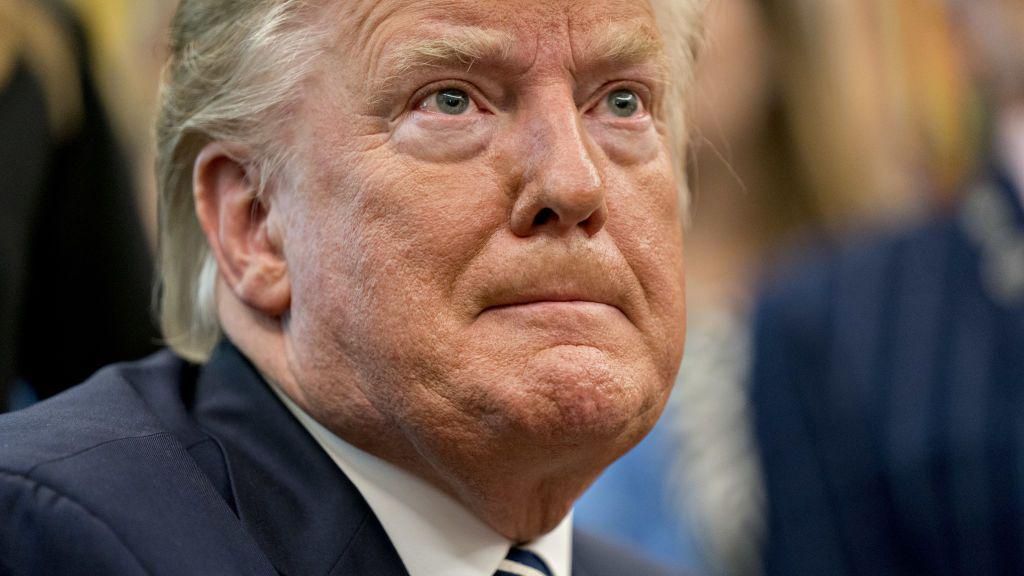
    Congressional Democrats have leveled explosive accusations against the Trump administration, characterizing it as \”the largest government cover-up in modern history\” regarding the handling of documents connected to sexual assault allegations against former President Donald Trump. The controversy centers on apparent gaps in recently released Jeffrey Epstein case files under the Freedom of Information Act.

  • US eases Cuba oil embargo but demands ‘dramatic’ change

    US eases Cuba oil embargo but demands ‘dramatic’ change

    In a significant policy shift, the United States Treasury Department has authorized the resumption of Venezuelan oil exports to Cuba’s private sector for both commercial and humanitarian purposes. The decision, announced Wednesday, comes as the Biden administration seeks to address growing regional instability concerns while maintaining pressure on Cuba’s communist government.

    Secretary of State Marco Rubio, speaking at the Caribbean Community (CARICOM) summit in Saint Kitts and Nevis, delivered a stark ultimatum alongside the sanctions relief. The Cuban-American diplomat emphasized that any diversion of oil to government or military entities would trigger immediate reinstatement of restrictions. ‘Cuba needs to change dramatically because it is the only chance that it has to improve the quality of life for its people,’ Rubio stated, characterizing Cuba’s economic system as ‘in collapse.’

    The policy adjustment follows January’s US-led operation that deposed Venezuelan leader Nicolás Maduro, which abruptly halted nearly half of Cuba’s oil imports and triggered widespread fuel shortages and rolling blackouts. Caribbean leaders expressed deep concern about potential regional spillover effects, with Jamaican Prime Minister Andrew Holness warning that ‘a prolonged crisis in Cuba will not remain confined to Cuba.’

    Saint Kitts and Nevis Prime Minister Terrance Drew, who studied medicine in Cuba, reported concerning firsthand accounts of food scarcity and deteriorating urban conditions. ‘A destabilized Cuba will destabilize all of us,’ Drew cautioned, highlighting the interconnectedness of Caribbean nations.

    Meanwhile, Canada announced $5.8 million in humanitarian assistance for Cuba, diverging from its southern neighbor’s approach while acknowledging the severity of the crisis. The developments occurred alongside a reported maritime incident involving Cuban authorities and a Florida-registered speedboat, which Rubio described as ‘unusual’ and under investigation.

    Rubio simultaneously defended the US position on Venezuela, asserting that the nation had made ‘substantial progress’ since Maduro’s removal and emphasizing the need for ‘fair, democratic elections’ without specifying a timeline.