作者: admin

  • Orbán accuses Ukraine of disrupting oil supplies to Hungary

    Orbán accuses Ukraine of disrupting oil supplies to Hungary

    Hungarian Prime Minister Viktor Orbán has ordered the deployment of military personnel to secure critical energy facilities nationwide following allegations that Ukraine is deliberately obstructing oil shipments through the Druzhba pipeline. The strategic conduit, which serves as Hungary and Slovakia’s primary supply route for Russian crude, has remained inoperative since January 27th after Kyiv cited technical disruptions caused by Russian strikes.

    Orbán contends that Ukraine’s actions constitute a politically motivated ‘oil blockade’ designed to pressure Budapest, asserting that Kyiv is ‘preparing further actions’ to compromise Hungary’s energy security. These claims emerge despite Ukraine’s ongoing struggle with severe power shortages resulting from intensified Russian attacks on its energy infrastructure.

    While Ukraine maintains its position that pipeline operations were suspended due to combat damage, Orbán’s government has implemented comprehensive security measures including military deployment at energy stations, enhanced police patrols at power facilities, and a drone ban in northeastern border regions adjacent to Ukraine.

    The European Commission has confirmed that alternative supply arrangements through Croatia’s Adria pipeline currently ensure adequate oil supplies to both Hungary and Slovakia. Commission spokesperson Anna-Kaisa Itkonen stated the pipeline possesses sufficient capacity to fully meet both nations’ requirements without Russian crude.

    Political analysts suggest Orbán’s heightened rhetoric may connect to domestic political pressures, with his Fidesz party trailing in polls ahead of April elections. This tension recently manifested in Hungary’s veto of a €90 billion EU aid package to Ukraine, directly referencing the pipeline dispute.

  • Why some Democrats are trying to curb a war powers vote on Trump’s Iran strikes

    Why some Democrats are trying to curb a war powers vote on Trump’s Iran strikes

    In a remarkable display of cross-aisle cooperation, Democratic Representative Ro Khanna and Republican Representative Thomas Massie sat together during Tuesday’s State of the Union address, demonstrating rare bipartisan unity against potential military action in Iran. This unusual pairing occurred as President Trump simultaneously threatened Iran with military force while claiming the U.S. had already destroyed Iranian nuclear sites in June.

    The two legislators, despite their divergent political ideologies—Khanna being a progressive who has denounced the situation in Gaza as genocide, and Massie an anti-war Trump critic—have collaboratively initiated a War Powers Resolution to force congressional accountability regarding potential U.S. strikes on Iran. Their effort seeks to compel every member of Congress to formally declare their stance on military engagement with Iran.

    However, this legislative maneuver has encountered delays amid reports that Democratic leadership is attempting to curtail the effort. The 1973 War Powers Act enables any senator to introduce resolutions withdrawing U.S. armed forces from unauthorized conflicts, emphasizing that congressional approval—not executive authority—should determine military engagements.

    Since the 9/11 attacks, the ambiguous nature of the global “war on terror” has permitted successive administrations to conduct military operations from Somalia to Pakistan without formal congressional declarations of war. Khanna emphasized the urgency of their resolution in a February 18 social media post, noting Trump officials allegedly estimated a 90% probability of strikes against Iran.

    Establishment Democrats, many of whom have consistently condemned Iran while hesitating to criticize Israel’s actions in Gaza, appear reluctant to support the resolution. Meanwhile, Iran has expressed preference for diplomatic solutions that preserve its sovereign defense capabilities, despite preparing for potential conflict with the United States—tensions largely fueled by Israeli influence.

    Following closed-door briefings on Iran developments with Secretary of State Marco Rubio and CIA Director John Ratcliffe, Senate Democratic leader Chuck Schumer described the situation as “serious,” requiring the administration to justify its position to the American public. Schumer’s previous statements acknowledge Iran’s concerning activities but stress the necessity of enforcing the War Powers Act to ensure congressional consultation and public transparency.

    The political calculus becomes increasingly complex as lawmakers approach midterm elections, which will serve as the first significant referendum on Trump’s second term. Historical precedent exists for limiting presidential war powers, as both chambers voted to restrict Trump’s authority after the 2020 killing of Iranian commander Qassem Soleimani—a measure Trump ultimately vetoed.

  • Hong Kong tycoon Jimmy Lai wins appeal against fraud conviction

    Hong Kong tycoon Jimmy Lai wins appeal against fraud conviction

    Hong Kong’s Court of Appeal has overturned the fraud conviction of pro-democracy media magnate Jimmy Lai in a significant judicial development. The court nullified the 2022 ruling that had resulted in a nearly six-year prison sentence for Lai and his co-defendant regarding allegations of illegally subletting office space.

    Despite this legal victory, the 78-year-old British citizen will remain incarcerated under a separate 20-year sentence imposed earlier this month for violating Hong Kong’s national security law through alleged collusion with foreign forces. Lai has been detained since 2020 following his arrest alongside key staff members of Apple Daily, the pro-democracy newspaper he established in 1995 which ceased operations that same year.

    The fraud case centered on prosecutors’ claims that Lai violated lease agreements by permitting his private consultancy firm to operate within Apple Daily’s rented office space. Wong Wai-keung, a former executive at Lai’s media company, received a 21-month sentence in the same case.

    International observers and human rights organizations have expressed concern that Lai’s prosecution exemplifies diminishing civil liberties in Hong Kong since Beijing implemented the national security law in 2020. Both UK and US governments have criticized the legislation as instrument for suppressing activist voices.

    Chinese authorities maintain that the security law is essential for preserving stability and deny allegations that it has eroded Hong Kong’s autonomy. Meanwhile, concerns regarding Lai’s deteriorating health in prison have been raised by his family and rights groups, though Chinese officials assert he receives appropriate medical care.

    The conviction reversal has been met with skepticism by some supporters who note that Lai’s extensive remaining sentence under the security law renders the fraud case outcome largely symbolic.

  • Monash IVF posts profit slump, revenue free fall after major scandals

    Monash IVF posts profit slump, revenue free fall after major scandals

    Australian fertility provider Monash IVF Group has reported a significant financial downturn in its half-year results, with underlying profit after tax plummeting 34% to $10.4 million. The company attributes this decline to multiple factors, including market share losses and the financial impact of recent clinical controversies.

    The financial report, released Thursday, reveals the fertility giant lost 2.5% of the Australian market share during the second half of 2025, dropping from 21.5% to 19% across all states except South Australia and the Northern Territory. Company documents acknowledge that ‘negative media impact on market share [was] most pronounced in jurisdictions with Monash IVF branding.’

    This market erosion follows several high-profile incidents that damaged the company’s reputation. In April, the company apologized after a patient unknowingly gave birth to a stranger’s baby. Two months later, another incident emerged where Monash IVF incorrectly transferred the wrong embryo into a Melbourne patient.

    Additionally, the company faced legal consequences for previous practices, agreeing to a $56 million settlement in August 2024 following a class action lawsuit. The litigation alleged the company destroyed embryos due to an inaccurate genetic screening program.

    While the class action payout was accounted for previously, the company’s net finance costs increased by $1.1 million in the first half of this financial year, primarily due to borrowing required to cover the settlement.

    Despite these challenges, Monash IVF reported that specialist staff have remained loyal to the organization. The company highlighted this retention as evidence of their team’s ‘commitment and alignment to Monash IVF’ despite the difficulties of the past year.

    The financial results showed total revenue decreased 1.8% to $137.9 million, which the company attributed to ‘industry softness and domestic IVF market share loss,’ partially offset by price growth and international operations in Indonesia, Malaysia, and Singapore.

    Newly appointed CEO and Managing Director Victoria Atkinson struck an optimistic tone in her statement: ‘I am pleased to commence as CEO and Managing Director of Monash IVF Group at an important time for the Company. Monash IVF has a strong clinical heritage, a dedicated team of specialists and embryologists, and a trusted national footprint.’

    Atkinson identified her immediate focus would be on ‘clinical and operational excellence, supporting our clinicians and ensuring consistent, high quality patient experience across the network,’ while remaining ‘committed to executing our strategy and delivering sustainable value for shareholders.’

    Since its establishment in 1991, Monash IVF has facilitated the birth of 71,296 babies, though recent events have clearly impacted both its clinical reputation and financial performance.

  • Solar-powered truck charging gains ground on South Africa’s freight corridors

    Solar-powered truck charging gains ground on South Africa’s freight corridors

    NAIROBI, Kenya — Africa’s transportation landscape is undergoing a radical transformation as solar-powered charging infrastructure emerges to decarbonize the continent’s freight corridors. Challenging decades of diesel dominance and grid dependency, innovative companies are deploying fully off-grid charging solutions specifically designed for heavy-duty electric trucks.

    Leading this clean logistics revolution is Cape Town-based Zero Carbon Charge (Charge), which is implementing two pioneering solar-powered EV charging stations along South Africa’s critical N3 highway connecting Johannesburg and Durban. This 570-kilometer (354-mile) artery serves as the country’s primary freight and passenger corridor, linking economic centers with vital port infrastructure.

    The $6.2 million equity investment from the Development Bank of Southern Africa (DBSA) has enabled this strategic rollout, with funding contingent on establishing off-grid charging infrastructure every 150 kilometers along national roads. Each self-sufficient charging hub represents a $1.25 million investment in renewable energy infrastructure.

    Company co-founder Joubert Roux confirmed the stations will be operational by June, marking a transition from pilot projects to commercial implementation. “We have proven that it’s possible to fully charge electric trucks using solar energy,” Roux stated. “Now we are building the infrastructure to do that commercially and reliably.”

    The technological breakthrough was demonstrated in January when Charge simultaneously powered two heavy-duty electric trucks from China’s SANY alongside four passenger EVs using exclusively solar energy. This achievement distinguishes Charge from other African clean transport initiatives that have primarily focused on electric motorbikes with hybrid systems rather than fully off-grid solutions for heavy freight.

    South Africa’s evolving EV market faces unique challenges, including limited charging infrastructure concentrated in urban areas and particular difficulties for heavy-duty trucks with high energy requirements. The national utility’s struggle to meet electricity demand further complicates electrification efforts.

    “Our approach is to build energy-resilient charging hubs that are not dependent on an unstable grid,” Roux explained. “By combining solar and storage, we can provide predictable, clean power for fleets.”

    Despite the progress, adoption barriers remain significant. Regulatory delays for site approvals, high import duties, truck certification requirements, and limited vehicle availability continue to challenge widespread implementation. However, with fleet operators facing increasing pressure to decarbonize, solutions like Charge’s off-grid hubs offer both environmental and energy security benefits for logistics, mining, and long-haul transport sectors.

    The African initiative follows global models including WattEV in California and Milence, the joint venture between Daimler Truck and Volvo, positioning the continent as an emerging frontier in the global transition to clean freight transportation.

  • Iran rushes to load oil onto ships in anticipation of US strikes

    Iran rushes to load oil onto ships in anticipation of US strikes

    Iran is dramatically accelerating its oil export operations in anticipation of a potential US military strike that could severely disrupt its ability to move crude to international markets. According to data from Kpler cited by Bloomberg, Iranian oil loadings from Kharg Island reached approximately 20.1 million barrels between February 15-20—equivalent to over three million barrels per day (bpd). This figure represents nearly triple the volume loaded during comparable dates in January and drastically exceeds Iran’s previous three-month average of 1.54 million bpd.

    Kharg Island, responsible for approximately 90% of Iran’s oil exports, represents a highly vulnerable target in any potential conflict. This urgent export surge mirrors Tehran’s actions in June 2025, when Iran rushed to ship oil ahead of US airstrikes on its nuclear facilities.

    The regional oil production landscape shows other major producers are also taking precautionary measures. Reuters reports that Saudi Arabia is increasing both production and exports as part of a contingency plan should US-Iran hostilities disrupt global supplies. The kingdom implemented similar measures in June 2025, boosting exports by around 500,000 bpd during the previous crisis.

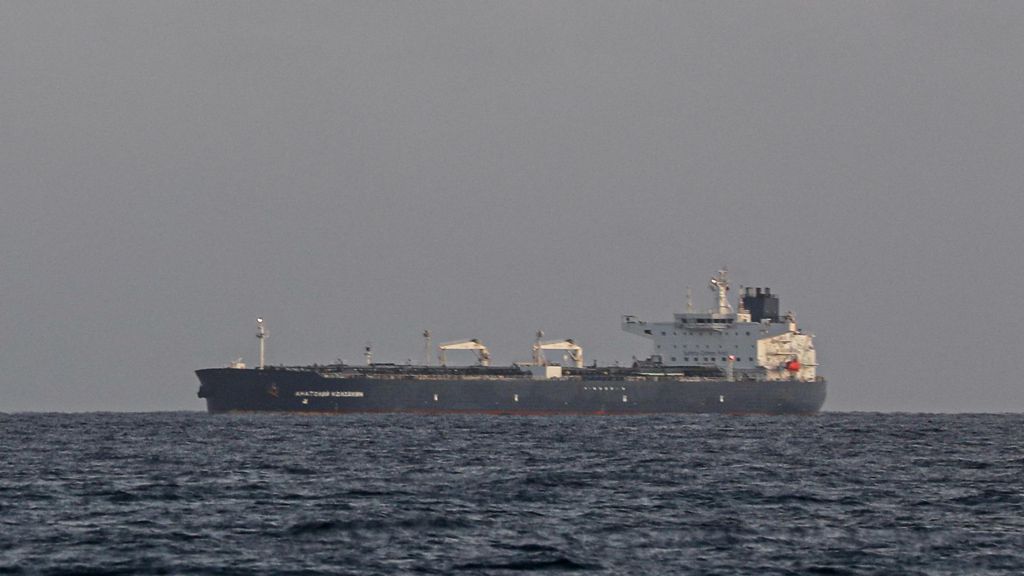
    Market indicators strongly reflect these mounting tensions. Charter rates for Very Large Crude Carriers (VLCCs) have more than tripled since January to over $170,000 daily, according to LSEG data. These rates, determined by supply and demand dynamics, indicate substantially increased booking activity for these massive vessels whose availability remains largely fixed due to lengthy construction times.

    Meanwhile, Brent crude prices have climbed over the past month, trading up 0.38% on Wednesday at $70.84 per barrel amid the escalating geopolitical tensions.

    The current crisis has been building since January, when President Trump first contemplated military action following Iran’s suppression of protests. Although demonstrations have subsided, Trump has maintained aggressive rhetoric while overseeing the largest US military buildup in the Middle East since the 2003 Iraq invasion. The region now hosts two aircraft carriers, dozens of advanced fighter jets, and—in a highly unusual move—a deployment of stealth F-22 Raptor jets to Israel, signaling unprecedented preparedness for potential conflict.

  • Top Dems reportedly work to sabotage bill to stop Trump Iran war

    Top Dems reportedly work to sabotage bill to stop Trump Iran war

    A significant political confrontation is unfolding in Washington as Democratic leadership faces internal dissent over handling potential military action against Iran. Representatives Ro Khanna (D-CA) and Thomas Massie (R-KY) have introduced a bipartisan war powers resolution requiring congressional authorization for any attack on Iran, responding to President Trump’s military buildup in the Middle East and signals of imminent strikes.

    Despite overwhelming public opposition to war with Iran—with only 27% supporting military action according to a recent YouGov poll—Democratic leadership on the House Foreign Affairs Committee has reportedly worked to suppress the resolution. Multiple sources indicate committee staffers deliberately inflated projections of Democratic opposition, suggesting 20-40 potential defections, to discourage support for the measure.

    Senior Democratic staffers acknowledge leadership employs familiar tactics to delay or sideline votes on contentious foreign policy matters. Rather than openly opposing popular measures, they utilize procedural objections and unity arguments to maintain party consensus. This approach mirrors previous handling of war powers votes that challenge national security establishment positions.

    Notable Democrats including Senate Minority Leader Chuck Schumer have focused criticism on procedural aspects rather than substantive opposition to potential military action. Schumer, a top recipient of AIPAC funding, has emphasized the need for public discussion rather than closed-door briefings but hasn’t questioned the policy itself.

    Similarly, Senator Chris Coons (D-DE) expressed concerns about unclear objectives rather than opposing military action in principle. This positioning occurs as reports indicate Trump considers massive operations potentially including assassination of Iranian leaders, while Iran has warned of retaliatory strikes against US bases.

    Behind the scenes, some Democrats reportedly believe Iran requires military confrontation but prefer Trump bear the political consequences. According to sources, the calculation involves allowing Trump to initiate conflict that would damage both Iran and his political standing.

    The resolution faces additional opposition from pro-Israel Democrats Representatives Jared Moskowitz (D-FL) and Josh Gottheimer (D-NJ), who derided it as the ‘Ayatollah Protection Act’ despite intelligence assessments contradicting their nuclear weapons claims. Iran has expressed willingness to negotiate limits on nuclear development in line with nonproliferation treaties.

    Representative Khanna argues opposition stems from powerful interests seeking regime change in Iran and suggests colleagues avoid contentious positions to prevent targeting by influential donors. He continues rallying support for the resolution, acknowledging challenges in overcoming congressional preference to avoid difficult foreign policy votes.

  • Hoping to reprise the World Cup vibes, Australia opens Women’s Asian Cup on Sunday

    Hoping to reprise the World Cup vibes, Australia opens Women’s Asian Cup on Sunday

    BRISBANE, Australia — The Australian women’s national football team embarks on its Women’s Asian Cup journey Sunday in Perth, carrying the weight of a nation’s expectations and the momentum of an unprecedented cultural phenomenon. Captain Sam Kerr leads the Matildas against Philippines in her hometown, aiming to channel the extraordinary public support that propelled them to the 2023 World Cup semifinals.

    Australia hosts the 12-nation tournament for the first time since 2006, seeking its first continental title since 2010. The Matildas enter the competition riding an impressive wave of popularity, having recorded 18 consecutive sold-out matches through October 2024, cementing their status as Australia’s most followed national team.

    Veteran midfielder Hayley Raso acknowledged the mounting pressure: “We love performing here in Australia. The expectations are high and we want to win games—that’s what pushes us most.”

    The tournament features formidable contenders including defending champion China, world No. 8 Japan, three-time champion North Korea, and 2022 finalist South Korea. China, under former Matildas coach Ante Milicic, seeks its record-extending tenth title with a squad featuring Champions League winners from Wuhan Jiangda.

    Tournament format divides twelve teams into three groups, with Australia positioned in Group A alongside South Korea, Iran, and Philippines. Group B contains China, North Korea, Bangladesh and Uzbekistan, while Group C features Japan, Vietnam, India and Taiwan.

    The competition carries significant World Cup qualifying implications, with four semifinalists earning direct qualification to the 2027 Women’s World Cup in Brazil. Four quarterfinal losers will enter additional playoffs for two remaining automatic berths, while two others advance to FIFA’s intercontinental playoffs.

    Key narrative threads include India’s redemption after their COVID-19 forced withdrawal in 2022, Japan’s quest to reclaim continental dominance, and Australia’s opportunity to capitalize on their transformed cultural standing in women’s football.

  • A Hong Kong court quashes fraud conviction of ex-media mogul Jimmy Lai

    A Hong Kong court quashes fraud conviction of ex-media mogul Jimmy Lai

    In a significant judicial development, Hong Kong’s appellate court has overturned fraud convictions against prominent pro-democracy activist and former media magnate Jimmy Lai. The 78-year-old founder of the shuttered Apple Daily newspaper, however, remains incarcerated under a separate national security conviction that carries a 20-year sentence.

    The overturned convictions stemmed from a 2022 case where prosecutors alleged Lai’s consultancy firm improperly used office space leased by his media organization for publication purposes. The original trial court had sentenced Lai to five years and nine months imprisonment and imposed a HK$2 million fine, finding that he had used his media operations as a ‘protective shield’ to violate lease agreements.

    Appellate judges determined that prosecutors failed to establish beyond reasonable doubt that the defendants had made false representations, resulting in the dismissal of both fraud convictions. This ruling may marginally reduce Lai’s overall prison term, as the national security case sentencing structure only permits two years of concurrent sentencing.

    Lai’s legal battles have drawn international attention, with UK Foreign Secretary Yvette Cooper characterizing his sentencing as punishment for exercising freedom of expression and calling for his release on humanitarian grounds. The activist’s children have expressed hope that upcoming diplomatic engagements between US President Donald Trump and Chinese leader Xi Jinping might facilitate their father’s release.

    Chinese and Hong Kong authorities maintain that Lai’s national security conviction reflects proper judicial process and emphasize that the security legislation remains essential for regional stability. The case continues to symbolize the broader tensions between Hong Kong’s legal traditions and Beijing’s increasing influence over the territory’s governance.

  • ‘Could work in my favour’: The NRL rule change that could make a Dolphins star even more dangerous after selection call

    ‘Could work in my favour’: The NRL rule change that could make a Dolphins star even more dangerous after selection call

    A positional dilemma within the Dolphins’ roster has reached its conclusion, yet opposing NRL teams now face an unprecedented tactical challenge. Coach Kristian Woolf has definitively appointed Hamiso Tabuai-Fidow as the club’s starting fullback, a decision that sidelines the exceptionally talented Trai Fuller. Despite being capable of starting for numerous other clubs, Fuller finds himself behind one of rugby league’s most electrifying players.

    Fuller’s impressive performance during his four games at fullback last season—which included 32 tackle busts, two tries, and four try assists—demonstrated his starting caliber. However, Woolf’s unwavering commitment to Tabuai-Fidow has reshaped Fuller’s role. The coach’s transparent communication allowed Fuller to accept this secondary position gracefully, acknowledging the difficulty in disputing a spot held by a player of Tabuai-Fidow’s caliber.

    The resolution of this selection debate coincides with a significant NRL rule modification: the introduction of an extended bench. This regulatory shift transforms Fuller from a sidelined talent into what may become the league’s most dangerous utility weapon. Rather than competing for a spot in a stacked back five featuring Herbie Farnworth, Jake Averillo, Selwyn Cobbo, and Jamayne Isaako, Fuller is now poised to exploit the new bench rules.

    His potential impact lies in late-half appearances against fatigued defenses, where his explosive playmaking ability could prove devastating. Fuller himself recognizes how the extended bench ‘could work out a bit better for me,’ focusing on maintaining peak performance readiness for whenever his opportunity arises. This strategic adaptation positions the Dolphins to leverage the rule change more effectively than any other NRL franchise, turning a selection headache into a tactical advantage.