作者: admin

  • DPRK stages military parade to mark major Party Congress: KCNA

    DPRK stages military parade to mark major Party Congress: KCNA

    PYONGYANG – In a display of national strength and political unity, the Democratic People’s Republic of Korea (DPRK) conducted a major military parade on Thursday, commemorating the Ninth Congress of the ruling Workers’ Party of Korea. The event, extensively documented by state media, featured columns of troops, advanced weaponry, and coordinated demonstrations through the capital’s central square.

    The Korean Central News Agency (KCNA) provided comprehensive coverage of the meticulously orchestrated event, highlighting its significance as a manifestation of national unity and military readiness. The parade served as the centerpiece of political celebrations surrounding the landmark Party Congress, which sets the national agenda and leadership direction for the coming years.

    Analysts observing the event noted the parade’s dual purpose: demonstrating internal political cohesion while sending a calculated message of deterrence to international observers. The display included both conventional military units and strategic assets, presented with precision timing and coordination before senior party leadership and assembled dignitaries.

    The military exhibition represents a continuation of Pyongyang’s established practice of using major political events as platforms to showcase defense capabilities. This latest parade reinforces the nation’s narrative of self-reliance and military preparedness amid ongoing international discussions regarding regional security dynamics.

  • Law dedicated to firefighters taking shape

    Law dedicated to firefighters taking shape

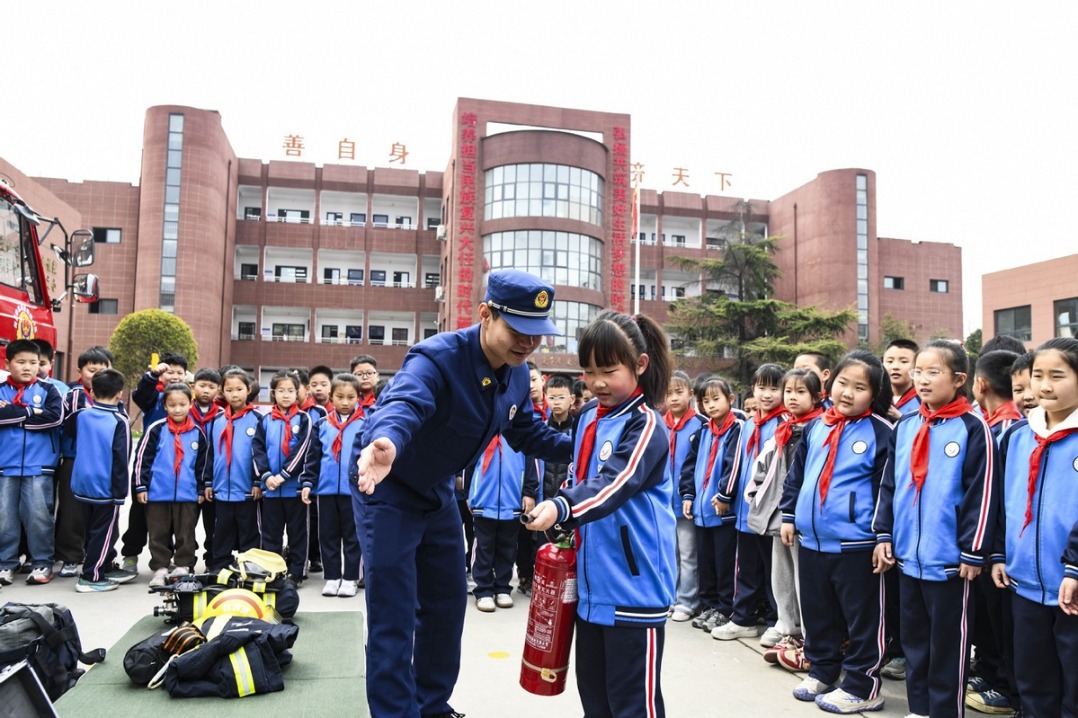
    China’s legislative body has initiated formal consideration of the nation’s inaugural specialized law governing firefighters and rescue personnel. The draft legislation, presented to the Standing Committee of the National People’s Congress for preliminary review, represents a comprehensive legal framework consisting of seven chapters and 47 distinct articles.

    Jointly developed by the Ministry of Justice and the Ministry of Emergency Management, the proposed law establishes precise operational parameters for China’s comprehensive national firefighting and rescue teams. These units, recognized as the primary emergency response force and national team for disaster management, will operate under clearly defined command structures and accountability measures.

    The legislative proposal specifies that managerial and command personnel within the firefighting and rescue force will be classified as civil servants, while operational firefighters will be designated as state employees. The draft explicitly outlines their core responsibilities, encompassing both emergency response operations and fire prevention supervision duties.

    A significant component addresses disciplinary protocols, prohibiting conduct such as mission hesitation, unauthorized departures from service, or refusal to execute duties during emergency operations. Individuals dismissed for such violations would be permanently barred from future civil service or public institution employment.

    The legislation also mandates enhanced support systems including structured recruitment processes, performance evaluation mechanisms, specialized training programs, and dedicated exit management procedures. Regarding compensation, the draft guarantees that necessary funding will be incorporated into government budgets, ensuring firefighters receive appropriate salaries, allowances, bonuses, and comprehensive social insurance benefits.

    Additional provisions strengthen occupational safety protections and establish interconnected policies covering medical treatment, retirement benefits, and compensation frameworks. This legislative initiative follows the 2018 institutional reforms that transferred firefighting services from public security authorities to the Ministry of Emergency Management, creating the current national comprehensive firefighting and rescue force.

    The NPC’s Social Development Affairs Committee, which conducted preliminary review of the draft, emphasized that the legislation would significantly enhance China’s capacity to address major disasters and extraordinary accidents, thereby improving protection for public safety and social stability.

  • Kenyan police arrest man accused of recruiting fighters for Russia’s war in Ukraine

    Kenyan police arrest man accused of recruiting fighters for Russia’s war in Ukraine

    NAIROBI, Kenya — Kenyan law enforcement has apprehended Festus Omwamba, a central figure in an elaborate human trafficking operation that deceived Kenyan citizens with false promises of skilled employment in Russia, only to forcibly deploy them to combat zones in Ukraine. The arrest occurred in Moyale, a northern border town near Ethiopia, where Omwamba was attempting to evade capture after recently returning from Russia.

    Police spokesperson Michael Muchiri confirmed Omwamba faces charges related to human trafficking and will be transferred to Nairobi for further investigation. The suspect was identified through testimonies from three Kenyan recruits who managed to escape the conflict and provided statements to The Associated Press.

    This development follows last week’s official government disclosure that over 1,000 Kenyan nationals were recruited to fight for Russian forces in Ukraine. According to current statistics, at least 89 remain actively deployed on front lines, 39 are receiving medical treatment in hospitals, 28 are classified as missing in action, and one casualty has been formally confirmed.

    A parliamentary intelligence report presented by Majority Leader Kimani Ichung’wah revealed disturbing collusion between Kenyan and Russian government officials with unauthorized recruitment agencies to systematically funnel citizens into military service. The Russian Embassy in Nairobi has vehemently denied these allegations, stating they never issued visas for military purposes and maintaining that any foreign enlistment occurs voluntarily.

    Foreign Minister Musalia Mudavadi announced on February 9th that he would undertake diplomatic missions to Russia to address what he termed ‘dubious entities exploiting citizens through this misadventure.’ Simultaneously, efforts are underway to secure the release of Kenyans detained in Ukrainian prisons and facilitate the repatriation of those stranded in Russia.

    Firsthand accounts from escaped recruits describe Omwamba’s operational methods. John Kamau, who sought refuge at the Kenyan Embassy in Russia before returning home, testified that Omwamba housed prospective recruits in Nairobi properties while processing their tourist visas and travel arrangements. Another anonymous recruit revealed how Omwamba avoided digital communication, preferring direct calls or personal meetings to maintain operational secrecy. This individual had been promised plumbing work in Russia but instead had his passport confiscated upon arrival and received immediate military deployment after brief training.

  • Top-ranked Jeeno Thitikul struggles in the first round of the LPGA Singapore tournament

    Top-ranked Jeeno Thitikul struggles in the first round of the LPGA Singapore tournament

    Singapore’s Sentosa Golf Club witnessed a dramatic opening round at the HSBC Women’s World Championship on Thursday, where recent champion Jeeno Thitikul faced unexpected challenges. The world’s top-ranked player carded a disappointing 1-over par 73, placing her seven strokes behind the surprise leader, American Auston Kim.

    Kim delivered an impressive performance with a 6-under 66, capitalizing on two birdies in her final three holes to secure a one-stroke advantage over China’s Yan Liu. The leaderboard remained tightly contested with five players, including 12th-ranked Haeran Ryu, sharing third position at 4-under 68.

    The tournament, featuring nine of the world’s top ten golfers, saw several other highly-ranked competitors struggling to find their rhythm. Defending champion Lydia Ko and Canadian standout Brooke Henderson both finished with respectable 2-under 70s, while third-ranked Charley Hull and fourth-ranked Minjee Lee joined Thitikul in the middle of the pack with matching 72s.

    Notably absent from the Asian swing is world number two Nelly Korda, marking the only top-ten player not competing in Singapore. This event represents the second leg of the LPGA’s three-tournament Asian series, with the circuit moving next to Hainan Island, China for the final stop.

  • Free trains and buses carry migrants back to work

    Free trains and buses carry migrants back to work

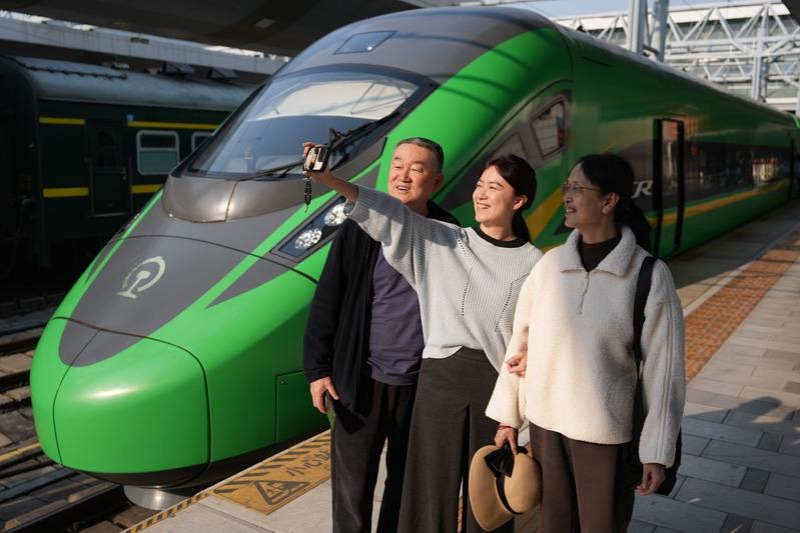
    In a massive nationwide effort to facilitate post-Spring Festival workforce mobilization, Chinese authorities are operating complimentary trains and dedicated buses to transport migrant laborers back to their workplaces. This annual migration sees millions of workers transitioning from central and western regions to industrial hubs along the eastern seaboard following the Lunar New Year celebrations.

    The Qianxinan Bouyei and Miao Autonomous Prefecture in Guizhou province has emerged as a focal point of this initiative, with human resources departments coordinating specialized rail services offering approximately 500 seats per train. These services connect workers to major manufacturing centers including Foshan, Hangzhou, and Guangzhou through February 28th.

    One beneficiary, surnamed Yang, described the streamlined application process: “After my village issued the notice, I simply scanned a QR code to register and received confirmation the following day.” This digital approach has significantly reduced the administrative burden on workers traditionally faced with complex multi-transfer journeys carrying heavy luggage.

    Wang Wanmin, Director of the prefecture’s Human Resources and Social Security Bureau, emphasized the program’s scale: “We will continue operating special trains and buses to transport 20,000 fellow townspeople to jobs, further stabilizing employment and boosting incomes.”

    Parallel initiatives are underway across China’s transportation network. The China Railway Chengdu Group plans to operate 32 post-festival special trains serving approximately 18,000 passengers through March 6th, primarily from labor-exporting regions like Sichuan and Guizhou.

    The coordination extends beyond transportation to employment matching. A recent special train from Xi’an to Suzhou carried workers pre-matched with positions in high-end intelligent manufacturing, electronic information, and precision machinery industries. Upon arrival at Suzhou North Railway Station, local authorities provided dedicated shuttle vehicles directly to factory dormitories.

    Guangdong province has implemented additional flexible solutions, introducing point-to-point bus routes from labor-exporting areas. Between February 19-25, workers could scan codes to arrange transportation from Hunan, Jiangxi, and Hubei provinces directly to Guangzhou. Huizhou city has established return-to-work shuttle services at major transport hubs, expected to serve over 3,000 workers with last-mile connections.

  • Li: Partnership with Germany can help boost global growth

    Li: Partnership with Germany can help boost global growth

    In a significant display of economic diplomacy, Chinese Premier Li Qiang and German Chancellor Friedrich Merz convened at Beijing’s Great Hall of the People on Wednesday, emphasizing the critical importance of Sino-German cooperation amidst growing global economic instability. The joint appearance at the China-Germany Economic Advisory Committee symposium highlighted both nations’ commitment to strengthening their economic partnership as a stabilizing force in the international arena.

    Premier Li articulated that the current global economic landscape, characterized by rising unilateralism and protectionism, demands enhanced collaboration between the world’s major economies. “The more severe the situation becomes, the more essential it is for China and Germany to reinforce our cooperative ties,” Li stated, positioning cooperation as the optimal strategy for risk mitigation and development as the fundamental approach to ensuring security.

    The Chinese leader outlined promising prospects for bilateral trade during China’s 15th Five-Year Plan period (2026-2030), emphasizing the strong complementary nature of the two economies. Li highlighted that cooperative elements significantly outweigh competitive aspects, enabling a constructive competitive-cooperative dynamic that fosters mutual development. He called for strengthening traditional cooperation sectors including machinery, equipment, and chemicals while simultaneously pursuing new opportunities in emerging industries.

    Reaffirming China’s commitment to economic openness, Li pledged continued high-level expansion of foreign access and proactive addressing of concerns raised by German and other international enterprises. Simultaneously, he expressed hope that Germany would maintain an open, fair, and non-discriminatory business environment enabling market-based cooperation and competition.

    Chancellor Merz reciprocated these sentiments, acknowledging the crucial economic partnership between the nations. He committed to supporting German companies investing and expanding operations in China while continuously improving Germany’s business climate to welcome Chinese enterprises.

    The economic relationship remains substantial, with recent Ministry of Commerce data revealing consistent bilateral trade exceeding $200 billion and mutual investment stocks surpassing $65 billion. Merz’s visit, accompanied by a delegation of prominent German business leaders, occurs amid Germany’s strategic rebalancing of economic relations with China within the evolving geopolitical context.

    Industry leaders expressed strong confidence in the partnership. DHL Express Global CEO John Pearson described German-Chinese economic cooperation as a “cornerstone of global trade stability,” highlighting the synergy between German engineering innovation and China’s massive consumer market, industrial scale, and advancements in digital transformation and green development.

    Henkel Greater China President Anna An noted China’s increasingly vital role in their global operations after 55 years in the market, citing China’s market resilience and improving business environment. Volkswagen Group CEO Oliver Blume detailed their accelerated ‘In China for China’ strategy, with their Hefei development center now equipped to develop, test, and manufacture next-generation intelligent vehicles specifically for the Chinese market.

    Automotive supplier Aumovio’s CEO Philipp von Hirschheydt announced plans for deeper localization in China, expressing confidence that the nation would become one of their core global growth engines, reflecting the broader trend of German companies strengthening their Chinese operations despite global uncertainties.

  • Time is the essence, as ‘slow travel’ becomes the norm

    Time is the essence, as ‘slow travel’ becomes the norm

    A profound transformation is reshaping China’s tourism landscape as the era of breakneck-paced itineraries gives way to a more contemplative approach to exploration. The emerging ‘slow travel’ movement, spearheaded by Generation Z and millennial travelers, represents a fundamental shift in how vacations are conceived and experienced.

    Recent data from a 2025 China Youth Daily survey reveals that 55.3% of young respondents now express preference for immersive slow travel experiences, with over half opting for independent journeys rather than structured tour packages. This behavioral change reflects a growing desire for meaningful connection over mere destination collection.

    The commercial sector has responded dynamically to this trend. Meituan’s platform data indicates remarkable surges in searches for ‘gentle adventures’ throughout 2025, including a 135% increase in low-impact rafting interest, 65% growth in controlled bungee experiences, and over 80% rise in elevator-assisted mountain climbing inquiries.

    Across scenic regions in Guangdong, Zhejiang, and Hubei provinces, tourism operators have redesigned attractions to accommodate this new pace. At Foshan’s Xiqiao Mountain, modified bungee jumps now feature gentle descents instead of rapid drops. River valleys offer ‘lying-flat rafting’ experiences where participants float leisurely downstream, embracing relaxation over adrenaline.

    Accommodation providers have similarly adapted, prioritizing comfort over convenience by promoting spacious rooms, extended checkout times, and walkable environments. Cultural destinations including museums, historical neighborhoods, and heritage sites have become primary attractions, with 57.2% of young travelers identifying historical locations as their preferred destinations according to the China Youth Daily report.

    This movement transcends mere tourism preference, representing a philosophical reorientation toward quality of experience. As Shanghai office worker Li Yiran explained, ‘I’m not collecting places anymore—I’m collecting moments.’ This sentiment echoes among travelers who value atmospheric immersion and cultural engagement over checklist completion.

    The cultural dimension of this shift proves particularly significant, with many young travelers dedicating afternoons to traditional craft workshops or exploratory walks through ancient alleyways. This approach emphasizes depth over breadth, signaling a broader societal recalibration of values surrounding leisure, self-care, and meaningful experience.

  • Sixth round of Sino-US trade talks expected

    Sixth round of Sino-US trade talks expected

    Diplomatic channels between Beijing and Washington are reactivating as the world’s two largest economies prepare for their sixth round of high-stakes trade negotiations. This forthcoming dialogue occurs against a backdrop of significant legal and policy shifts that have fundamentally altered the bilateral trade environment.

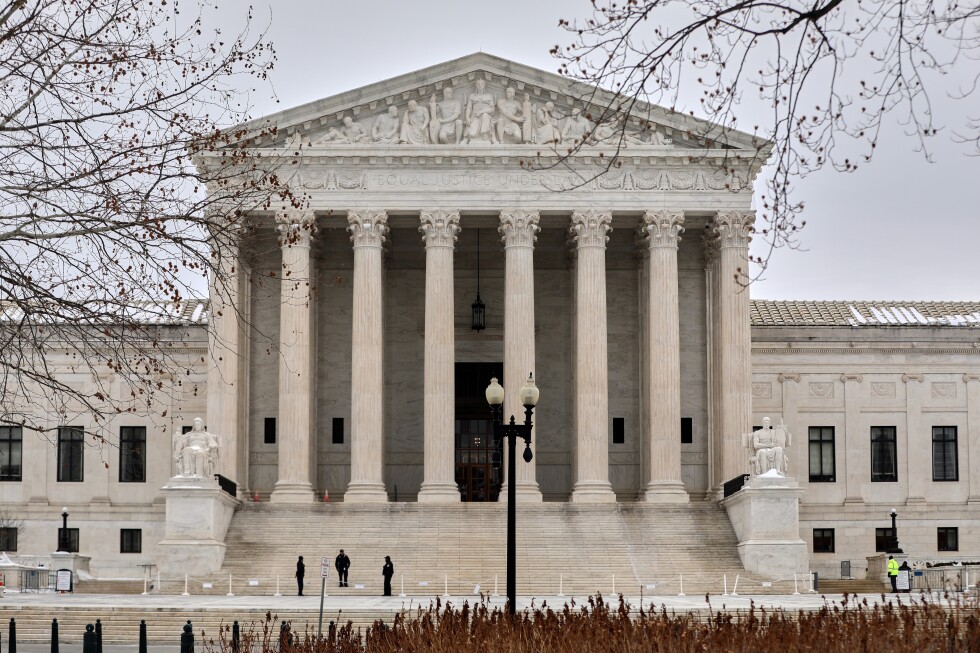
    The catalyst for renewed discussions emerged from a landmark US Supreme Court decision that invalidated sweeping tariffs previously imposed under the International Emergency Economic Powers Act. This judicial ruling effectively nullified both the 10% ‘fentanyl tariff’ and the 34% ‘reciprocal tariff’ targeting Chinese imports.

    In response to this legal setback, the US administration swiftly pivoted to Section 122 of the Trade Act of 1974, implementing a blanket 10% import surcharge affecting all trading partners. This temporary measure, effective immediately, carries a predetermined 150-day expiration timeline. White House officials have concurrently signaled their intention to pursue more permanent tariff mechanisms through Section 301 and Section 232 investigations.

    China’s Ministry of Commerce has articulated a firm position, urging the United States to dismantle existing unilateral tariffs and abstain from implementing new protectionist measures. Beijing remains prepared to engage in candid consultations while maintaining vigilant oversight of US policy developments. A ministry spokesperson emphasized that China will conduct comprehensive assessments and implement countermeasures at strategically appropriate junctures.

    Analysts highlight that these negotiations will address critical expiring agreements established during previous rounds, including temporary tariff arrangements and rare earth export policies. Researcher Bai Ming of the Chinese Academy of International Trade and Economic Cooperation identifies technology restrictions and resource export controls as particularly contentious negotiation points.

    Economic experts including Luo Zhiheng of Yuekai Securities anticipate protracted, complex negotiations characterized by cyclical patterns. The ultimate bargaining power, analysts suggest, will derive from each nation’s economic resilience and technological capabilities rather than short-term tactical maneuvers.

    Despite the turbulent policy environment, China’s export sector demonstrates strengthened resilience through diversified markets and optimized trade structures. Chief economist Ming Ming of CITIC Securities projects relatively contained impact on China’s 2026 export performance, reflecting the nation’s enhanced capacity to absorb external trade shocks.

  • S.Korea’s Park Chan-wook to head Cannes festival jury

    S.Korea’s Park Chan-wook to head Cannes festival jury

    In a landmark decision for global cinema, the Cannes Film Festival has appointed acclaimed South Korean director Park Chan-wook as president of its main competition jury for the 79th edition this May. This historic appointment marks the first time a Korean filmmaker will preside over the prestigious jury that determines the Palme d’Or winner.

    The festival organization released an official statement celebrating Park’s ‘narrative, stylistic, and moral’ cinema, particularly praising his ability to blend genres while addressing profound human themes. The 62-year-old director, known for his visually striking and thematically complex films, expressed honor at the selection, noting that in ‘this age of hatred and division,’ the collective experience of cinema creates ‘a moving, universal sense of solidarity.’

    Park’s appointment coincides with unprecedented global recognition for South Korean cultural exports, from Bong Joon-ho’s Oscar-winning ‘Parasite’ to the international phenomenon of ‘Squid Game’ and the worldwide dominance of K-pop groups like BTS and Blackpink. The director stands as a pioneering figure in this cultural wave, having achieved international acclaim with his 2003 masterpiece ‘Oldboy,’ which won the Grand Prix at Cannes in 2004.

    Renowned for his exploration of vengeance and redemption through what critics term ‘Korean noir,’ Park’s filmography includes the celebrated ‘Vengeance Trilogy’ and his recent romantic thriller ‘Decision to Leave,’ which earned him the Best Director award at Cannes in 2022. His upcoming project, ‘No Other Choice’ (2025), adapts Donald Westlake’s novel ‘The Ax’ and addresses contemporary anxieties about artificial intelligence and the competitive job market.

    Beyond his cinematic achievements, Park is recognized as a profound literary adapter, having transformed works by Émile Zola into his vampire film ‘Thirst’ and Sarah Waters’ ‘Fingersmith’ into the critically acclaimed ‘The Handmaiden.’ His television work includes the English-language mini-series ‘The Little Drummer Girl’ and HBO’s ‘The Sympathizer,’ demonstrating his versatility across mediums and languages.

    A philosophy graduate from Seoul’s Sogang University, Park brings both intellectual depth and artistic vision to his role as jury president, positioning him to lead one of the film world’s most prestigious judging panels during this year’s festival.

  • ‘Public lynching’: Senegal cracks down on LGBTQ+ community

    ‘Public lynching’: Senegal cracks down on LGBTQ+ community

    Senegal has dramatically escalated its suppression of LGBTQ+ individuals through coordinated government action and public persecution, creating what human rights defenders describe as an atmosphere of ‘public lynching.’ The recent wave of repression includes increased arrests, online harassment, and newly proposed legislation that would impose stricter penalties on same-sex relations.

    Prime Minister Ousmane Sonko unveiled a draft bill this week seeking to double prison sentences for consensual same-sex relations to a maximum of ten years. The legislation would also criminalize advocacy for LGBTQ+ rights with prison terms ranging from three to seven years. This political maneuver aligns with longstanding demands from influential religious groups in the predominantly Muslim nation.

    The crackdown intensified in early February with the arrest of approximately thirty individuals, including local celebrities, on charges of ‘acts against nature’—a legal euphemism for homosexuality. Their identities were publicly disclosed, triggering widespread media coverage with sensational headlines such as ‘Big homo clean-up’ and ‘Bisexuals, walking dangers.’

    Social media platforms have become arenas for vitriolic discourse and unverified videos showing physical assaults against individuals suspected of being LGBTQ+. Senegal’s media ethics regulator CORED has issued calls for respecting human dignity and privacy amid the escalating public exposure of detainees.

    Human rights organizations report that community members are experiencing severe trauma, with many going into hiding or seeking exile. The Paris-based association STOP Homophobia documented eighteen requests for assistance to leave Senegal in recent days, noting increased reports of familial violence, threats, and housing insecurity among LGBTQ+ individuals.

    Public discourse has further been inflamed by accusations that detainees deliberately transmitted HIV, a characterization that health experts warn could undermine public health efforts by discouraging testing and treatment. The situation has become so dire that France’s refugee protection office no longer considers Senegal safe for individuals based on sexual orientation since 2021.

    Despite international concern, few local institutions have opposed the crackdown. Denis Ndour, the new president of Senegal’s human rights league, recently endorsed harsher penalties while describing homosexuality as an illness incompatible with local norms. This stance highlights the challenging environment for LGBTQ+ advocacy in a country where such rights are frequently characterized as foreign imports.

    For those without means to escape, the situation appears increasingly desperate. As one exiled individual told AFP under pseudonym: ‘The only thing they can do is see death coming and wait.’