作者: admin

  • Mamdani puts New York City government back on TikTok

    Mamdani puts New York City government back on TikTok

    Three years after New York City became one of dozens of U.S. jurisdictions to ban TikTok from all official government devices over national security concerns, the city’s new administration has reversed the policy, allowing municipal agencies to return to the popular short-form social media platform under strict cybersecurity safeguards.

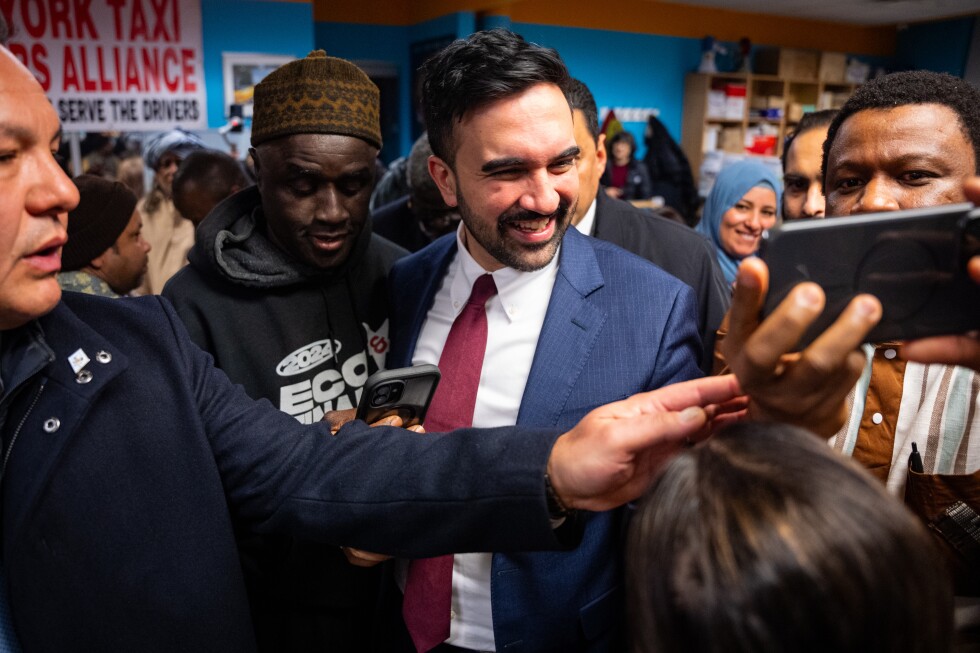
    The policy shift was announced Tuesday by Mayor Zohran Mamdani, a self-made political star whose own rapid rise to power was fueled in large part by viral TikTok content. Taking to the platform himself, Mamdani made the announcement directly to users with a simple message: “TikTok, we’re back.”

    The original 2023 ban was enacted by Mamdani’s predecessor, Eric Adams, amid a nationwide wave of restrictions on the app. At the time, the federal government and a majority of U.S. states had moved to block TikTok from government-issued devices, over persistent unsubstantiated claims that the platform’s China-based parent company ByteDance could share user data with the Chinese government. TikTok has repeatedly denied these allegations, and in the years since the ban was put in place, the company reached a framework agreement to spin off its U.S. operations in a bid to ease regulatory pressure and avoid a full national ban of the service.

    According to a confidential memo from city cybersecurity officials shared by the mayor’s office, the decision to lift the ban centers on expanding the city government’s ability to reach residents where they already spend time. NYC Cyber Command, the municipal agency tasked with defending city government systems from cyber threats, framed the reversal as a commitment to accessible public communication in its Tuesday memo.

    “The Mamdani administration is committed to using every tool in our toolbox to communicate with New Yorkers,” the memo read. “At a moment when people are turning to city government for information about free services, emergency situations, upcoming events, and more, we want to open up new avenues of communication with the public and help deliver the information New Yorkers need.”

    To address ongoing security concerns, the city has put in place a strict set of protocols for all official municipal TikTok activity. Under the new rules, agencies must use dedicated, separate devices exclusively for TikTok management; these devices are prohibited from storing any sensitive city data, connecting to internal government email systems, or accessing other municipal internal networks. All official TikTok accounts must be registered using official agency credentials rather than personal staff emails, and each department must explicitly designate a limited number of authorized personnel to manage official accounts.

    TikTok did not immediately issue a statement or respond to requests for comment on the policy change.

    Mamdani, 34, built his political brand as a prolific social media creator long before taking office as mayor. As a candidate, his sharp, issue-focused videos regularly went viral across TikTok, turning him into a household name among younger New York voters and accelerating his path to City Hall. Since the ban was lifted, the official @nycmayor TikTok account — which had remained dormant since 2023 — has already begun posting new content.

    Early posts from the reactivated account include a video where Mamdani invites city residents to attend his administration’s “rental rip-off hearings,” where tenants can report complaints about dangerous and unlivable conditions in their apartment buildings. Another post features Mamdani alongside WNBA New York Liberty star Natasha Cloud announcing a public competition: New Yorkers can vote for the small local municipal issue they want the mayor to prioritize, from fixing a broken neighborhood basketball rim to repairing cracked sidewalks, with the winning project fast-tracked for repair.

  • Oil and gas prices won’t immediately return to normal even if the Iran war ends, the EU warns

    Oil and gas prices won’t immediately return to normal even if the Iran war ends, the EU warns

    NICOSIA, Cyprus – The European Union’s top energy official issued a stark warning Tuesday that the crippling surge in European oil and gas prices driven by the ongoing Iran conflict will not return to pre-war levels in the near term, even if a peace agreement is reached immediately.

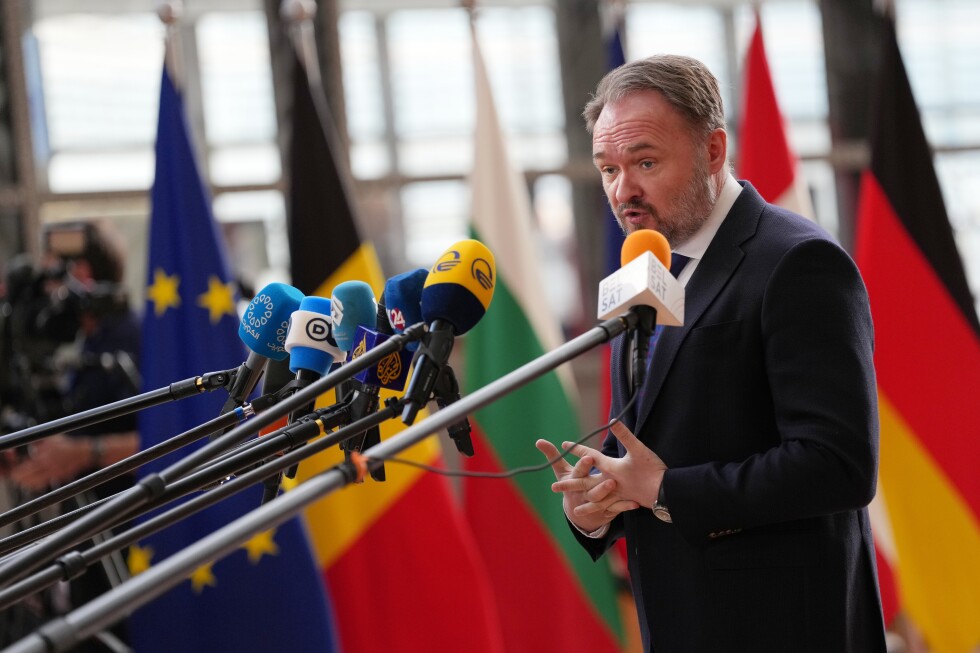
    Speaking to reporters following a gathering of EU energy ministers, Commissioner Dan Jørgensen clarified that while the 27-nation bloc currently faces no immediate shortfall in crude oil or natural gas supplies, critical bottlenecks have emerged for diesel and jet fuel. Persistent tightening constraints across global natural gas markets are also pushing electricity prices sharply higher across the continent.

    “It is extremely important that I state this as clearly as possible: even if peace is achieved tomorrow, we will not see a return to normal energy prices in the foreseeable future,” Jørgensen emphasized.

    The ongoing war has sent energy costs soaring across Europe, with natural gas prices jumping roughly 70% and crude oil prices rising around 60% since hostilities began. Jørgensen noted that the EU’s total import bill for fossil fuels has ballooned by an extra 14 billion euros since the conflict started.

    To buffer households and businesses from these unprecedented cost spikes, Jørgensen revealed that the European Commission, the EU’s executive branch, is currently finalizing a broad package of targeted support measures. Coordinated action across all member states is critical, he stressed, to avoid fragmented national policies that could send confusing and destabilizing signals to global energy markets.

    The full set of policy tools, which Jørgensen said will be released publicly “quite soon,” includes provisions to make it easier for national governments to decouple retail electricity prices from volatile natural gas market rates. The commission is also actively evaluating a proposal from Commission President Ursula von der Leyen to cut taxes on electricity for consumers.

    While Jørgensen said he does not expect a repeat of the 2022 European natural gas crisis, when energy firms recorded extraordinary windfall profits from skyrocketing prices, he confirmed that a one-time windfall profit tax on energy sector companies remains on the table as a policy option.

    Jørgensen added that the commission is working to expand and simplify existing avenues for member states to provide direct financial support to vulnerable households and energy-intensive industries that are facing extraordinary financial pressure from rising costs.

    In addition to structural support measures, Jørgensen encouraged EU countries to adopt the International Energy Agency’s 10-point energy reduction plan, which includes policy measures like expanded work-from-home arrangements, lowered highway speed limits to cut fuel consumption, expanded subsidies for public transit, and incentives for carpooling.

    Turning to the bloc’s long-term energy transition strategy, Jørgensen reaffirmed the EU’s commitment to its ban on Russian natural gas imports, a policy implemented to cut Moscow’s revenue for its ongoing invasion of Ukraine and reduce European dependence on Russian fossil fuels. He reported that the bloc’s reliance on Russian gas has already fallen sharply from 45% before the Ukraine war to just 10% today, and will drop to zero as import infrastructure for alternative suppliers is scaled up, most notably from the United States. The EU is also pursuing expanded energy imports from Azerbaijan, Algeria, Canada, and smaller producing nations across the globe.

    Jørgensen concluded by stressing that the bloc must not repeat the overreliance on Russian energy that allowed President Vladimir Putin to weaponize energy exports as a political tool against European nations. “It would be totally unacceptable for the EU to continue purchasing energy that indirectly helps finance the terrible war that Putin is conducting in Ukraine,” he said.

  • Foshan opens China’s highest producing humanoid robot production line

    Foshan opens China’s highest producing humanoid robot production line

    Foshan’s Nanhai district has inaugurated China’s pioneering automated production line dedicated exclusively to humanoid robots, boasting an unprecedented annual manufacturing capacity exceeding 10,000 units. This state-of-the-art facility commenced operations on Sunday, representing a monumental advancement in China’s strategic push toward humanoid robot industrialization.

    The groundbreaking project emerges from a strategic collaboration between Guangdong Dongfang Precision Science & Technology—a nationally recognized leader in sophisticated equipment manufacturing—and Leju Robotics, an innovative enterprise specializing in cutting-edge robotic technology research and development.

    Leveraging an advanced industrial internet platform, the production line implements comprehensive digital management systems and full-cycle quality traceability protocols. This technological infrastructure enables the facility to achieve remarkable production efficiency, completing one fully assembled humanoid robot every 30 minutes throughout its operational cycle.

    The establishment of this production base signifies a crucial milestone in China’s broader technological roadmap, accelerating the transition from experimental robotics research to full-scale commercial manufacturing. This development positions Foshan as a central hub in China’s rapidly expanding robotics ecosystem, potentially reshaping global supply chains for advanced humanoid robots.

  • Guangzhou Shipyard International begins testing of 10,000-vehicle PCTC

    Guangzhou Shipyard International begins testing of 10,000-vehicle PCTC

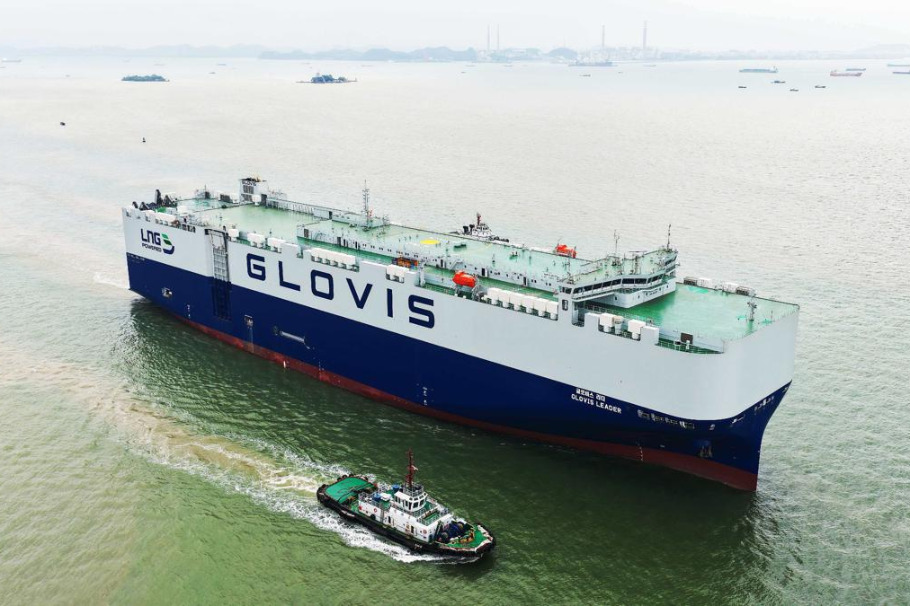
    Guangzhou Shipyard International (GSI) has commenced landmark sea trials for the world’s first pure car truck carrier (PCTC) capable of transporting over 10,000 vehicles. The vessel departed from Guangzhou, Guangdong province, marking a significant milestone in maritime transportation technology.

    Measuring 230 meters in length with a molded breadth of 40 meters and structural draft of 10.5 meters, this pioneering vessel represents cutting-edge shipbuilding achievement. The PCTC features an innovative 14-deck garage design that provides exceptional flexibility for carrying diverse vehicle types, including electric vehicles, hydrogen fuel cell vehicles, and heavy-duty trucks, with a maximum capacity of 10,800 vehicles.

    Propelled by an advanced diesel and LNG dual-fuel system equipped with shaft generators, the vessel achieves speeds up to 19 knots (approximately 36 kilometers per hour) while generating power during navigation for enhanced energy efficiency. This sophisticated propulsion technology enables significant emission reductions, allowing the vessel to comply with stringent IMO Tier III environmental standards.

    The development underscores China’s growing leadership in specialized maritime transport solutions and green shipping technologies. This breakthrough in PCTC capacity and efficiency sets new benchmarks for the global automotive logistics industry, potentially transforming how vehicles are transported internationally while addressing environmental concerns through cleaner propulsion systems.

  • King Charles ‘might be a Muslim’, says former New York Mayor Rudy Giuliani

    King Charles ‘might be a Muslim’, says former New York Mayor Rudy Giuliani

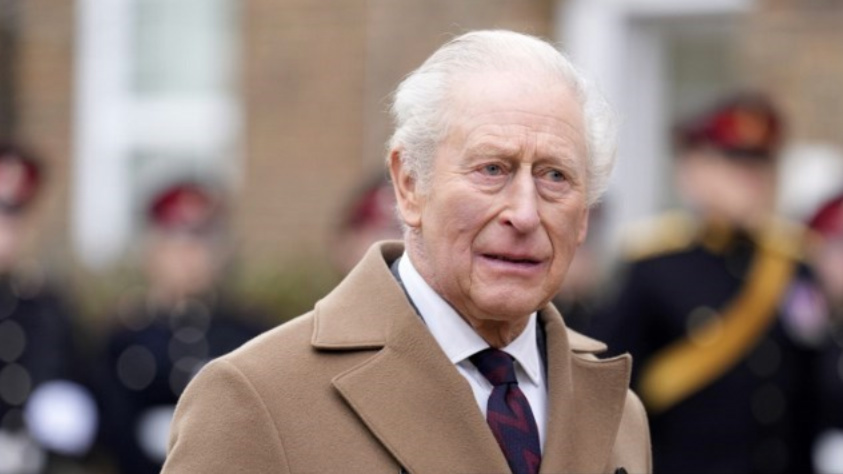
    Former New York Mayor Rudy Giuliani has ignited a firestorm of controversy with explosive comments regarding British Muslims and the monarchy during an appearance on Piers Morgan’s YouTube program. The one-time personal attorney to Donald Trump asserted that King Charles III might secretly be Muslim while claiming Islamic communities are attempting to ‘take over’ Britain, describing the Quran as a ‘cult of death.’

    Giuliani’s remarks emerged during a discussion advocating for continued US-Israeli military engagement with Iran. ‘I have people from England telling me you’re gonna be a Muslim country in 10 years,’ Giuliani told Morgan, further speculating that ‘Charles III might be the Muslim monarch of England’—a statement echoing online conspiracy theories without factual basis.

    The former mayor’s assertions stand in stark contrast to the monarch’s well-documented views. King Charles, as head of the Church of England, has consistently demonstrated admiration for Islamic culture, having learned Arabic to read the Quran in its original language. In his historic 1993 speech as Prince of Wales, Charles emphasized the commonalities between Abrahamic faiths and described British Muslim communities as ‘an asset to Britain’ that ‘add to the cultural richness of our nation.’

    Giuliani further claimed Muslim communities wield ‘tremendous power’ in British politics, specifically referencing the election of Muslim mayors including London’s Sadiq Khan. He incorrectly asserted that sharia law ‘dominates’ parts of England, despite the 85 existing sharia councils possessing no legal authority or enforcement capabilities under British law.

    The interview took a sharper political turn when Giuliani suggested Prime Minister Keir Starmer is ‘very, very affected by Muslims politically’ and accused Muslim communities of resisting assimilation. These claims contradict Charles’s 1993 statement that British Muslims must ‘balance their vital liberty to be themselves with an appreciation of the importance of integration.’

    The monarch’s philosophical engagement with Islam stems from his interest in Traditionalism, an esoteric school of thought emphasizing universal truths across major religions. Charles has consistently maintained that Islam is ‘part of our past and our present’ and has contributed significantly to European civilization.

    While the king’s position on current US-Israeli operations against Iran remains undisclosed, historical reports indicate he privately opposed the 2003 invasion of Iraq, suggesting a potentially divergent perspective from Giuliani’s hawkish stance.

  • Harry Kane misses England friendly against Japan because of ‘minor issue’

    Harry Kane misses England friendly against Japan because of ‘minor issue’

    LONDON — Three key England first-team players will miss the international friendly against Japan at Wembley on Tuesday, after a series of fitness issues hit the Three Lions’ squad just 24 hours ahead of kickoff.

    The biggest absentee is captain and star striker Harry Kane, the all-time leading goalscorer for both England and Bayern Munich. The forward picked up a minor knock during a team training session, according to the English Football Association, and coaching staff made the call to rest him as a precautionary measure. Despite being ruled out of the match, Kane has remained with the national squad to undergo ongoing evaluation of his injury, with no major concerns raised about the severity of the issue.

    Kane is far from the only high-profile name missing from Thomas Tuchel’s lineup for this international break. The England head coach already confirmed on Monday that Arsenal stars Bukayo Saka and Declan Rice would also be sidelined for the fixture, after both players reported feeling unexplained discomfort during routine pre-camp medical assessments.

    The spate of fitness issues comes at a highly sensitive point of the season for all three players, who face a grueling run of fixtures over the coming weeks with their domestic clubs. Both Kane’s Bayern Munich and Arsenal sit atop their respective national leagues — the Bundesliga and the Premier League — and both sides have advanced to the quarterfinals of the UEFA Champions League, putting them in contention for major domestic and European titles before the end of the campaign. Clubs and national team staff alike have prioritized player welfare in this congested fixture schedule, leading to the decision to rest the injured stars rather than risk further damage that could impact their club campaigns.

  • ‘Art is a very powerful tool’ – Golden toilet throne appears in DC

    ‘Art is a very powerful tool’ – Golden toilet throne appears in DC

    A provocative new art installation has drawn sharp public attention in Washington D.C., after a gilded toilet throne, formally named “A Throne Fit for a King,” was positioned on the iconic National Mall. The site-specific work is framed as a pointed artistic critique of former U.S. President Donald Trump’s high-profile renovations to the White House during his time in office.

    The creator behind the work leans into the long-standing tradition of political satire in contemporary art, using the unexpected combination of a royal throne motif and a functional bathroom fixture to underscore their commentary. Placing the work in one of the capital’s most visited public spaces ensures the piece reaches wide audiences, sparking spontaneous debate about the intersection of political power, personal excess, and public artistic expression.

    Many art observers have echoed the core idea that art remains one of the most potent mediums for holding political figures to account, and this provocative installation is no exception. It turns a mundane object into a conversation piece that encourages passersby and art critics alike to examine the intersection of wealth, power, and public office in modern American politics.

  • Trump administration to shutter historic Border Road between US and Canada

    Trump administration to shutter historic Border Road between US and Canada

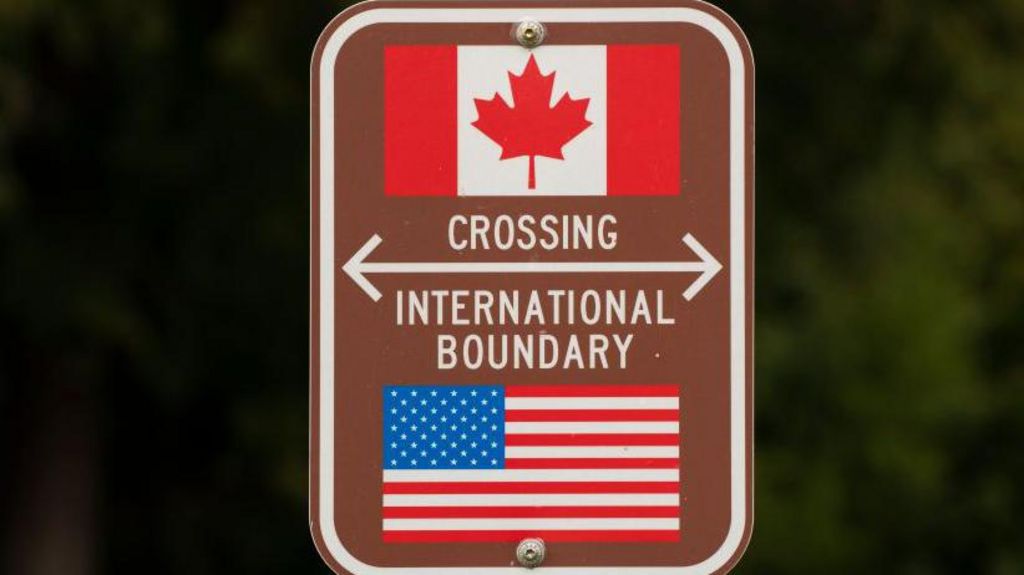
    After more than 80 years of facilitating unregulated cross-border connection between rural farming communities on the U.S.-Canada divide, a 14-kilometer stretch of highway sitting entirely on U.S. soil will close permanently starting July 1, the U.S. government has confirmed. The move, driven by the Trump administration’s cited concerns over rising irregular migration and drug trafficking, has upended long-standing local customs and forced Canadian authorities to move forward with a parallel replacement road.

    Known locally as Border Road, the route has been open for free use by both Canadian and American residents since the 1940s. What makes the situation unusual is that even though the road falls within U.S. territory near the Montana-Alberta line, it has long been maintained by Alberta’s Warner County, which has already earmarked funding for the new alternate route. Warner County Chief Administrative Officer Shawn Hathaway told the BBC the decision is deeply unfortunate, noting that Canadian officials only received initial notification of the U.S. closure plan last summer. Critically, the road remains the only access point for two Canadian residents who own homes in the area, Hathaway added.

    The closure comes amid broader border security priorities pushed by the Trump administration, but its impact hits close to home for cross-border communities that have operated with open, informal connections for generations. For local residents on both sides of the line, the permanent shutdown marks the end of a decades-long era of unfettered neighborly connection.

    Ross Ford, a Canadian farmer whose property sits just north of the border, called the move regrettable, emphasizing that tight bonds between cross-border neighbors have been a staple of life in the region for decades. “Of course, they live in Montana and that won’t change – but we have this new barrier,” Ford told the Canadian Press. Roger Horgus, a Montana resident who lives along the existing road, recalled a childhood where local kids freely crossed the invisible border line to ride bikes and play together. He dismissed the closure as unnecessary, noting that Canadian officials have managed the road’s maintenance for decades. “[The road closure is] ridiculous. I hate to see it because the Canadians have taken such good care of us and the road, with grading and all of that,” Horgus said. “The roads will basically parallel each other for the full length of the road. So we’ll have our road, and they’ll have their road.”

    The existing Coutts-Sweet Grass official border crossing, located in the same region, handles between 800 and 1,200 commercial trucks daily and facilitates roughly C$15.9 billion ($11.4 billion USD) in annual two-way bilateral trade, according to data from Canadian Manufacturers & Exporters. To offset the loss of Border Road, the Alberta provincial government has committed C$8 million ($5.74 million USD) to construct a new parallel road for Canadian users on the Canadian side of the border. Alberta Transportation Minister Devin Dreeshen told the Canadian Press that construction is scheduled to kick off in April, with completion targeted ahead of the July 1 Border Road shutdown. Dreeshen struck a hopeful note on the future of cross-border community ties, saying: “Regardless of the line on the map, you’ll have farmers on both sides of the border, you’ll have family friends on both sides of the border. I think obviously that will continue.”

    As of press time, the U.S. Department of Homeland Security (DHS) has not issued any immediate comment in response to the BBC’s request for statement on the decision.

  • From Idlib to Downing Street: Ahmed al-Sharaa meets the UK’s prime minister

    From Idlib to Downing Street: Ahmed al-Sharaa meets the UK’s prime minister

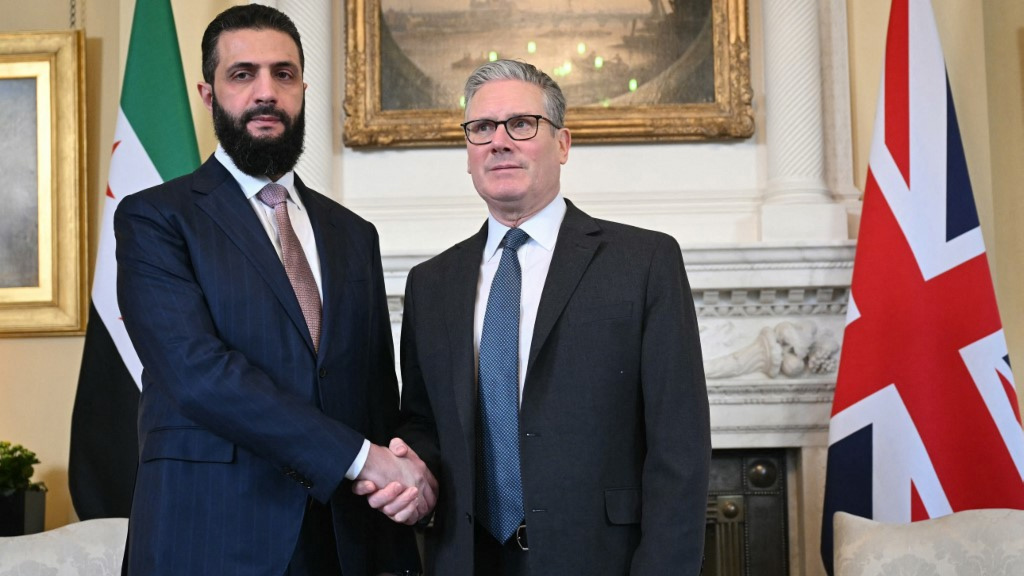
    In a historic diplomatic development, Syrian President Ahmed al-Sharaa conducted his inaugural official visit to London on Tuesday, meeting with British Prime Minister Keir Starmer at 10 Downing Street. This landmark engagement represents a dramatic transformation in bilateral relations following the overthrow of longtime autocrat Bashar al-Assad in December 2024.

    President Sharaa’s background marks an extraordinary evolution in international diplomacy. Previously heading Hay’at Tahrir al-Sham (HTS), the rebel coalition that ultimately toppled the Assad regime, Sharaa was once affiliated with al-Qaeda—an organization that remains proscribed as terrorist in Britain. Notably, HTS itself was designated as a terrorist organization by the UK until its de-proscription in October under Starmer’s government.

    The diplomatic thaw began in July when Britain fully re-established relations with Syria after a 14-year hiatus. Sharaa’s London visit is anticipated to facilitate the complete reopening of Syria’s embassy in London and Britain’s diplomatic mission in Damascus, restoring full diplomatic channels between the nations.

    Economic cooperation forms a central pillar of this renewed relationship. The UK government is preparing to announce a new export finance scheme supporting British companies pursuing business opportunities in Syria. This initiative aligns with recent Syrian legislation permitting full foreign ownership of investment projects, signaling Damascus’s commitment to attracting international investment for national reconstruction.

    President Sharaa’s European diplomatic tour included meetings with German Chancellor Friedrich Merz, where discussions touched upon the status of Syrian refugees in Germany. The Syrian leader is scheduled to address the prestigious Chatham House think tank, further cementing his government’s reintegration into international diplomatic circles.

    The groundwork for economic collaboration was laid last week when Talal al-Hilali, Director of the Syria Investment Authority, visited London to engage with construction firms and financial institutions. These developments indicate Syria’s determined effort to attract substantial foreign investment as it endeavors to rebuild its economy after years of conflict.

  • Guizhou’s tourism development spotlighted at Guiyang conference

    Guizhou’s tourism development spotlighted at Guiyang conference

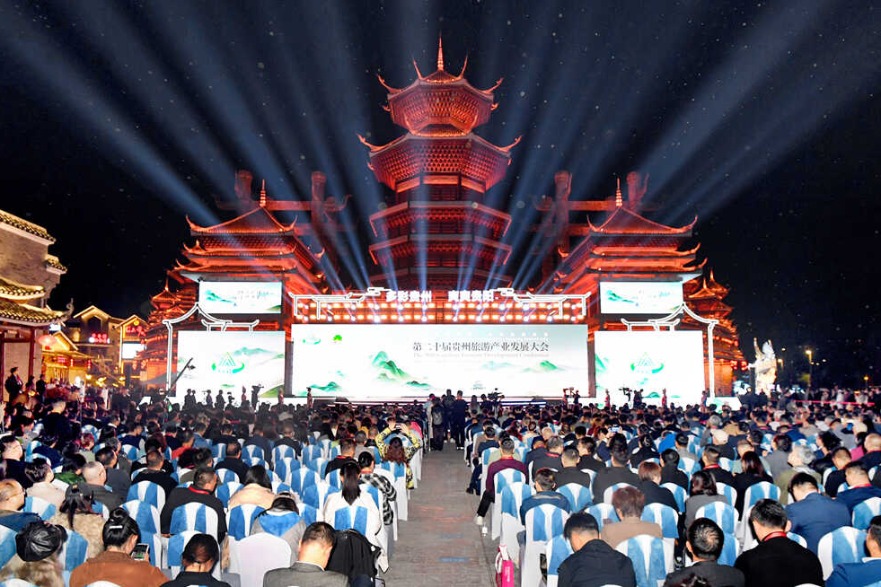
    The 20th Guizhou Tourism Development Conference commenced Monday in Guiyang, marking a significant milestone in the province’s ambitious plans to transform its tourism sector. The event brought together government officials, industry leaders, and international organizations to showcase innovative approaches to integrated tourism development.

    Governor Li Bingjun opened the conference by emphasizing Guizhou’s strategic pivot toward wellness tourism, highlighting the province’s unique natural advantages including its temperate summer climate, breathtaking landscapes, diverse culinary offerings, and rich cultural heritage. “Wellness travel represents the future of tourism and modern lifestyle preferences,” Governor Li stated, outlining plans to position Guizhou as a premier destination for health-conscious travelers.

    The conference featured the unveiling of ten newly designated scenic spots across Guiyang, selected through a rigorous process combining public voting and expert evaluation. These destinations range from historical towns to social media-friendly attractions, collectively forming a new network of tourism landmarks designed to enhance visitor experiences.

    Industry participation demonstrated strong corporate confidence in Guizhou’s tourism vision. Representatives from major Chinese companies including Wanda Group and H World Group joined international organizations in exploring investment opportunities. Notably, Amap Chairman Liu Zhenfei announced ambitious plans to integrate artificial intelligence throughout Guizhou’s tourism infrastructure, promising to enhance the convergence of lifestyle services, transportation, and tourism experiences while elevating the technological sophistication of the province’s tourism offerings.

    The conference served as both a showcase for Guizhou’s existing tourism assets and a forward-looking platform for introducing next-generation travel experiences that blend cultural immersion, physical activity, and wellness rejuvenation.