
As military tensions and ongoing conflict in Iran continue to roil global markets, American agricultural producers across the country are confronting mounting financial strain that threatens their bottom lines and long-term operational stability. One of the most immediate and visible impacts of the geopolitical unrest has been a sharp upward swing in global energy prices, a development that hits farming operations particularly hard. Fuel for tractors, irrigation equipment and transport trucks, along with petroleum-based inputs like fertilizers and pesticides, have all jumped in cost in lockstep with rising crude oil prices tied to the Middle Eastern instability. \n\nDuring on-the-ground reporting from rural Alabama, BBC correspondent Gary O’Donoghue sat down with one local farmer to discuss how the conflict’s ripple effects are reshaping his day-to-day operations and financial outlook. Despite facing significant growing cost pressures that have eaten into his expected annual profits, the agricultural producer confirmed he remains a staunch supporter of former President Donald Trump’s foreign and domestic policy agenda, aligning himself with the administration’s approach to Middle Eastern relations even as it creates direct financial hardship for his operation. \n\nAgricultural economists note that U.S. farmers are already navigating a host of interconnected challenges, from volatile commodity prices to ongoing trade disputes and extreme weather events linked to climate change. The added cost shock from the continuing Iran conflict has created an extra layer of uncertainty for an industry already operating on thin profit margins, with many small-scale independent producers particularly vulnerable to sudden input price swings. While larger agribusiness operations may have more financial buffer to absorb the short-term costs, small family farms like the one interviewed in Alabama often lack the capital reserves to offset sustained price increases, raising concerns about potential long-term consolidation in the U.S. farming sector if the conflict in Iran drags on.
作者: admin
-
South Africa hit by record diesel price hikes despite fuel levy cut
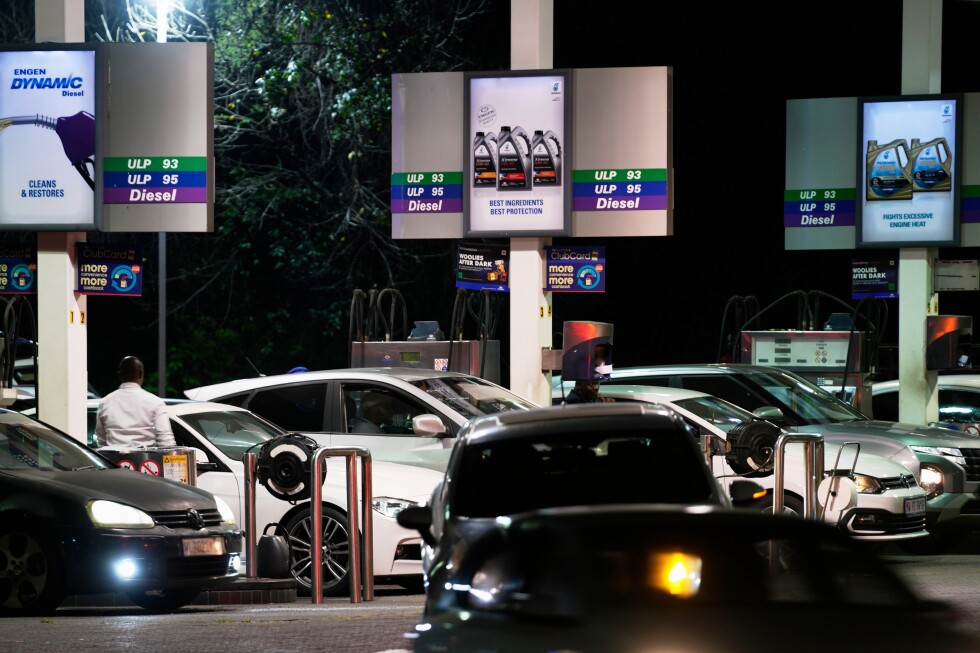
JOHANNESBURG – Chaos unfolded at fuel stations across South Africa on Tuesday, as tens of thousands of motorists rushed to fill their tanks ahead of midnight, when historic, record-breaking fuel price increases were set to take effect. The skyrocketing prices have been traced directly to ongoing global market volatility sparked by the Iran conflict, which has sent international oil prices swinging sharply upward in recent weeks.
In a last-minute effort to soften the blow for consumers, South African Finance Minister Enoch Godongwana announced a 3 rand ($0.18) per liter cut to the national fuel levy earlier the same day. Even with this government intervention, the planned price adjustments remain the steepest in the country’s modern history: diesel prices will jump by 7.51 rand ($0.44) per liter, while gasoline prices will rise by 3.06 rand ($0.18) per liter. The unprecedented diesel hike, the largest single increase ever recorded in South Africa, has already sent ripples of anxiety through the southern African economy.
By Tuesday evening, the panic buying had already drained supplies at multiple outlets. Numerous stations in eastern Johannesburg had already sold out of both diesel and gasoline, turning away waiting motorists. Other locations only had limited gasoline stocks left, forcing drivers searching for diesel to leave empty-handed. Long, visible queues formed at any station that still had fuel available for sale. Some stations across the country have already introduced rationing measures, limiting individual motorists to purchases of between 30 and 50 liters per vehicle to stretch dwindling supplies, while broader distribution network delays and operational bottlenecks have worsened the existing shortage.
Godongwana acknowledged that the ongoing Middle East conflict has created significant instability in global energy markets, which has directly translated to upward pressure on domestic fuel prices in South Africa. The temporary one-month fuel levy cut, implemented for April, will cost the national government an estimated 6 billion rand (more than $351 million) in lost tax revenue, as the country looks to absorb some of the shock that would otherwise fall fully on consumers.
Economic analysts warn that even with the government’s intervention, the price hikes will carry severe consequences for households and the broader economy. “Even after the fuel levy reduction, these are the largest increases in recent history, and they would be devastating for consumers,” explained Theuns Du Buisson, an economic researcher at the Solidarity Research Institute. Du Buisson noted that the massive diesel increase in particular will send logistics and transportation costs soaring, which will in turn push overall inflation higher in the coming months.
Low-income households are expected to bear the brunt of these increases, Du Buisson added, since the vast majority of South Africans rely on public transit – primarily minibus taxis and buses – which will almost certainly raise fares to offset higher fuel costs. The impact was already visible on Tuesday, when the Pretoria city municipality confirmed that local bus service had been disrupted after fuel shortages emptied storage tanks at the city’s bus depots.
The Iran conflict has already rippled across global energy and financial markets, with multiple other countries facing similar fallout. Haiti has implemented new austerity measures in response to Iran conflict-driven oil price surges and supply chain disruptions, and the European Union has warned that global oil and gas prices are unlikely to return to pre-conflict levels even if hostilities end in the near term.
-
US journalist Shelly Kittleson kidnapped in Baghdad
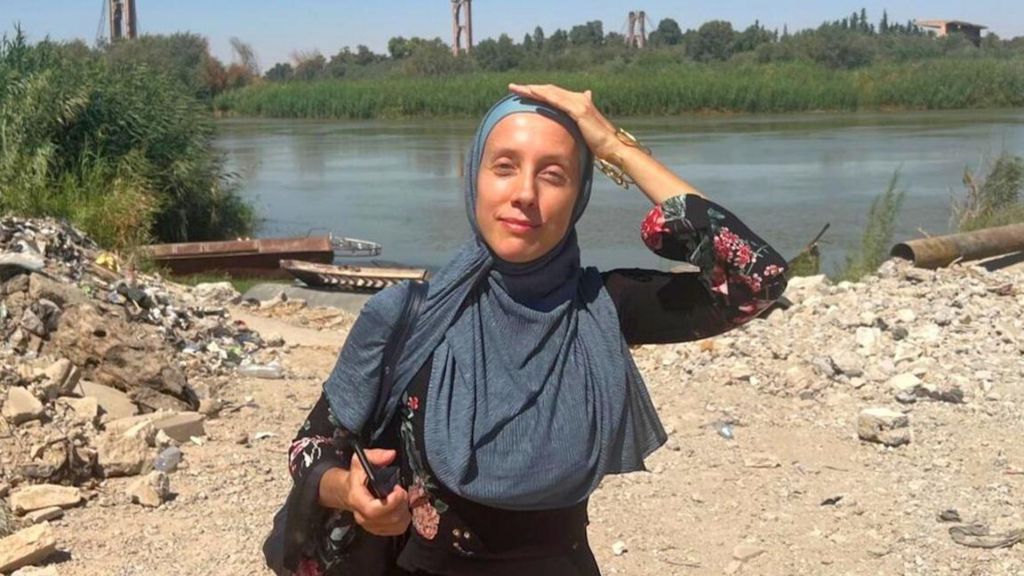
A seasoned American freelance conflict reporter has been abducted in central Baghdad, launching a joint search operation by Iraqi and U.S. security authorities that has already led to the arrest of one suspect linked to an Iran-aligned militia, according to senior officials from both nations.
Veteran journalist Shelly Kittleson, who has reported from conflict zones across Afghanistan, Iraq and Syria for multiple international outlets and is based in Rome, Italy, was taken captive on the evening of Tuesday, confirmed Al-Monitor, a U.S.-based publication that has featured Kittleson’s work. Local reporting indicates the abduction took place near a hotel in the heart of the Iraqi capital, Al-Monitor added.
Shortly after the kidnapping, Iraq’s Ministry of Interior announced that security forces launched an urgent manhunt for the abductors based on detailed intelligence. During the pursuit, one of the kidnappers’ vehicles overturned after the driver attempted to evade capture, and one suspect was taken into custody. Iraqi authorities did not immediately name the suspect in their public statement, referring only to the group as “unknown individuals”, but a senior U.S. State Department official confirmed the detained individual has ties to Kataib Hezbollah, an Iran-backed militia group designated as a terrorist organization by many Western governments.
U.S. Department of State spokesperson Dylan Johnson, Assistant Secretary of State for Global Public Affairs, confirmed the abduction of an American journalist, though he did not publicly name Kittleson in his post to social platform X. Johnson noted that the State Department had previously fulfilled its obligation to warn the journalist of active threats against her, and that U.S. officials are continuing to coordinate closely with the Federal Bureau of Investigation (FBI) to secure her swift and safe release. Multiple U.S. sources confirmed that officials reached out to Kittleson multiple times to alert her to the dangers she faced, with the most recent warning coming as late as Monday night, just one day before her abduction.
Alex Plitsas, a CNN national security analyst who serves as Kittleson’s emergency contact, told CBS News — the U.S. partner of the BBC — that U.S. authorities specifically warned Kittleson that Kataib Hezbollah was plotting to kidnap or kill female journalists, and that her name was included on a target list held by the militia. Plitsas added that Kittleson dismissed the warning, believing the threat information to be unsubstantiated. A second anonymous source familiar with the situation confirmed this account to CBS.
In a statement provided to the BBC, a State Department representative said: “Due to privacy and other considerations, we have nothing further to share at this time.” Al-Monitor released an official statement saying it is “deeply alarmed” by Kittleson’s kidnapping, and issued an urgent call for her immediate and unharmed release.
An anonymous senior Iraqi official confirmed to CBS that Iraqi security operations are being coordinated “at the highest level” of government to secure Kittleson’s freedom. The Iraqi Interior Ministry reiterated in its statement that ongoing operations are focused on tracking down the remaining at-large perpetrators, rescuing Kittleson, and bringing all involved in the “criminal act” to justice under Iraqi law.
Multiple sources familiar with the ongoing response told CBS that senior security and intelligence agencies from both nations, including the FBI, the U.S. National Security Council, U.S. Army Delta Force, and the Iraqi Counter-Terrorism Service, are in constant communication to coordinate the search and rescue effort.
Baghdad earned a reputation as one of the world’s most dangerous cities for abductions during the height of sectarian conflict following the 2003 U.S.-led invasion, but kidnapping rates have dropped sharply in recent years as overall security across Iraq has stabilized.
-
Trump has vowed to end birthright citizenship. Can he do it?
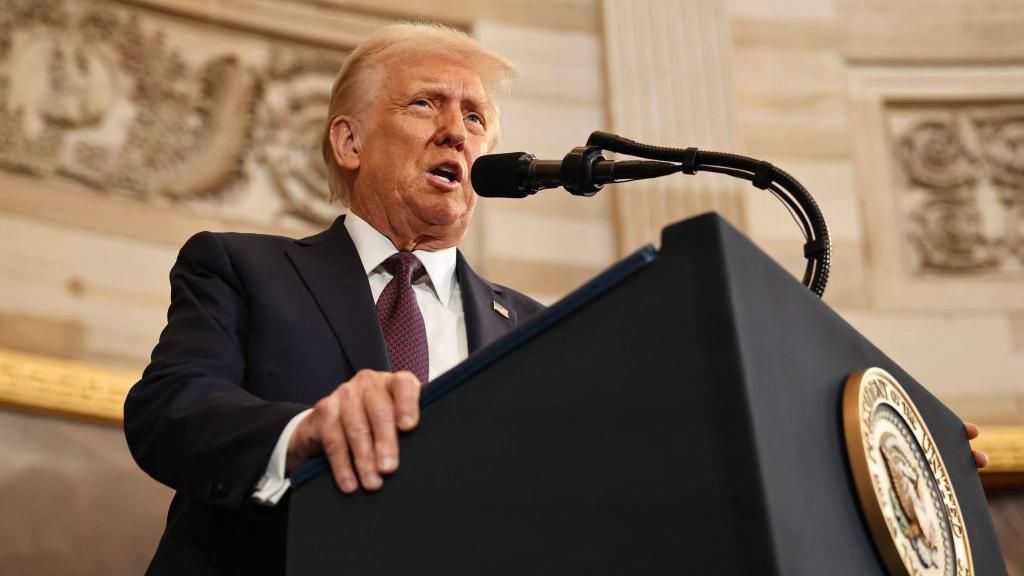
As one of the first policy moves of his second term as the 47th U.S. President, Donald Trump has followed through on a years-long campaign promise by signing an executive order to revoke automatic birthright citizenship for nearly all children born on U.S. soil to non-citizen parents. Now, after lower courts blocked the order from going into effect amid widespread legal pushback, the U.S. Supreme Court is set to hear oral arguments in the high-stakes constitutional case on April 1.
Trump’s order targets children born to two groups of non-citizen residents: those residing in the U.S. without legal authorization, and those staying in the country on temporary visas. The policy’s roots stretch back to decades of anti-immigration rhetoric that frames birthright citizenship as a pull factor for unauthorized border crossings and the controversial practices of “anchor babies” and “birth tourism” – where foreign nationals travel to the U.S. specifically to secure citizenship for their newborn children before returning to their home countries.
The future of the policy hinges on interpretation of the 14th Amendment, ratified in 1868 in the aftermath of the U.S. Civil War to codify citizenship for formerly enslaved Black people. The amendment’s opening clause explicitly states that “All persons born or naturalized in the United States, and subject to the jurisdiction thereof, are citizens of the United States and of the state wherein they reside.” Trump and his administration argue that the phrase “subject to the jurisdiction thereof” excludes children of unauthorized immigrants and temporary visa holders, a reading that has been uniformly rejected by lower courts and most constitutional legal scholars.
This interpretation of the 14th Amendment is not new. The Supreme Court first cemented the broad application of birthright citizenship in the landmark 1898 case United States v. Wong Kim Ark. The case centered on a U.S.-born child of Chinese legal immigrants who was denied re-entry to the country after a trip abroad. The Supreme Court ruled in Wong’s favor, holding that a person’s birth on U.S. soil grants citizenship regardless of their parents’ immigration status, with only narrow exceptions for children of foreign diplomats and other sovereign agents. That ruling has stood unchallenged for more than 125 years.
“Wong Kim Ark vs United States affirmed that regardless of race or the immigration status of one’s parents, all persons born in the United States were entitled to all of the rights that citizenship offered,” explained Erika Lee, director of the Immigration History Research Center at the University of Minnesota. “The court has not re-examined this issue since then.”
Most legal experts agree that the president lacks the unilateral authority to rewrite a foundational constitutional principle via executive order, a power that would require a full constitutional amendment. Amending the Constitution, however, is a notoriously high bar: it requires a two-thirds majority vote in both chambers of Congress followed by ratification from three-quarters of U.S. states. Given the deeply polarized current state of U.S. politics, such an outcome is widely considered functionally impossible for this controversial proposal.
Constitutional scholar Saikrishna Prakash, a professor at the University of Virginia Law School, noted that while Trump can direct federal agencies like Immigration and Customs Enforcement to apply a narrower interpretation of citizenship, any denial of citizenship will immediately trigger legal challenge. “He’s doing something that’s going to upset a lot of people, but ultimately this will be decided by the courts,” Prakash said. “This is not something he can decide on his own.”
Past Supreme Court precedent also undermines the Trump administration’s position. In the 1982 case Plyler v. Doe, the high court rejected Texas’ argument that unauthorized immigrants were not covered by the 14th Amendment’s jurisdiction clause, ruling that all people physically present in the U.S. are subject to U.S. law and entitled to the constitution’s protections.
The policy fight over birthright citizenship carries major demographic consequences. Pew Research Center data shows that in 2016, around 250,000 babies were born to unauthorized immigrant parents in the U.S., a 36% drop from the 2007 peak. By 2022, the most recent year for which data is available, there were 1.2 million U.S.-born citizens with unauthorized immigrant parents. Analysis from the nonpartisan Migration Policy Institute think tank projects that ending automatic birthright citizenship would create a growing underclass of non-citizens born in the U.S., pushing the total unauthorized population to 4.7 million by 2050 when accounting for second-generation descendants.
Trump has repeatedly stated that he would deport entire families, including U.S.-born children, to avoid family separation, writing that the only way to avoid splitting families is to deport all members together. Lower courts across the country have already struck down Trump’s order, with district judges in Maryland, Massachusetts, and Washington issuing nationwide injunctions to block its implementation. Seattle-based Judge John Coughenour called the order “blatantly unconstitutional”.
The Trump administration appealed these injunctions to the Supreme Court, arguing that lower court judges should have restricted authority to block federal policy. In a ruling last June, the conservative majority on the high court sided with the administration, limiting the power of district courts to issue nationwide injunctions against presidential orders. Trump called the decision a “big win” and a “monumental victory for the constitution, the separation of powers and the rule of law”, though the ruling only addressed judicial authority, not the core question of whether Trump’s executive order itself is constitutional. The three liberal justices on the court dissented, warning the ruling would have the effect of eroding individual civil rights.
Around the globe, more than 30 countries practice unrestricted birthright citizenship, while other major nations including the United Kingdom and Australia only grant automatic citizenship if at least one parent is a citizen or permanent resident.
-

Eritrea advance after 19-year absence from Afcon qualifying
After nearly two decades on the sidelines of continental competition, Eritrea’s national men’s football team has pulled off one of the most surprising results in recent African football, advancing to the group stage of 2027 Africa Cup of Nations (Afcon) qualifying following a 4-1 aggregate preliminary round win over Eswatini.
The milestone marks Eritrea’s first appearance in Afcon qualifying in 18 years, and comes after a years-long pattern of withdrawals and absences that left the side almost entirely absent from top international competition. Their last outing in an Afcon qualifier dates all the way back to September 2007, in a fixture that, in a striking turn of irony, was also against Eswatini.
Ali Sulieman, a striker plying his trade with Egyptian Premier League side Kahrabaa Ismailia, emerged as the hero of the two-legged tie, netting a hat-trick across both matches to power the Red Sea Camels to victory. Eritrea, which lacks any international-standard football stadium to host home matches, played its first leg in neutral Morocco last Wednesday, securing a 2-0 win thanks to strikes from Sulieman and attacking teammate Siem Eyob-Abraha, a former Manchester United youth prospect who currently plays for Sheffield United in England’s EFL Championship. The side extended their aggregate lead in the return leg in Eswatini, holding on for a 2-1 victory despite the hosts scoring a late stoppage-time consolation goal in the 96th minute.
Ranked 184th in the current FIFA global rankings — with only four African nations sitting lower than Eritrea — the side has played barely a handful of senior international matches over the past six years. Its last competitive fixture before this qualifying tie was a 2022 World Cup qualifier against Namibia in September 2019, and after a friendly match against Sudan in January 2020, the senior men’s side did not compete in another fixture until a pair of friendlies against Niger in May 2024. Most recently, Eritrea was scheduled to face bitter regional rival Ethiopia in 2024 African Nations Championship qualifying, but pulled out of the fixture at the eleventh hour.
Industry analysts widely attribute Eritrea’s long history of withdrawals from international competition to longstanding concerns over domestic-based players defecting while traveling abroad. This fear was realized in 2019, when multiple members of an Eritrean youth side absconded during a regional tournament hosted in Uganda. Beyond player concerns, Eritrea, a one-party state that gained independence from Ethiopia in 1993, has faced decades of tense regional relations and domestic political unrest, including a bloody two-year border war with Ethiopia between 1998 and 2000 that has left cross-border relations fractured ever since.
Under new management led by former Egypt international defender Hesham Yakan, who represented the Pharaohs at the 1990 FIFA World Cup in Italy, Eritrea has made a deliberate return to continental football this cycle, building a mixed squad that blends both homegrown talent and players from the large Eritrean diaspora. The side is one of six nations that have secured their place in the group stage of qualifying, joining Burundi, Ethiopia, Lesotho, Somalia and South Sudan from the preliminary round.
The 2027 Afcon tournament, set to be hosted jointly by Kenya, Tanzania and Uganda, makes history as the first edition of the continental showpiece to be co-hosted by three countries. Group stage play is scheduled to kick off in September 2025, with the Confederation of African Football (Caf) yet to announce an official date for the group stage draw.
Full preliminary round qualifying results, decided by aggregate score over two legs, are as follows: Djibouti 1-4 South Sudan; Chad 0-8 Burundi; Somalia 0-0 Mauritius (Somalia advanced 4-2 on penalties); Seychelles 1-2 Lesotho; Eritrea 4-1 Eswatini; Sao Tome and Principe 0-4 Ethiopia.
-
Judge rules Trump unlawfully terminated legal status of migrants who used US entry app
A federal judge delivered a landmark ruling this week that blocks the Trump administration’s unilateral termination of legal parole status for hundreds of thousands of migrants who entered the United States through the Biden-era CBP One program, finding the Department of Homeland Security (DHS) acted beyond its legal powers when it revoked the protected status of program participants.
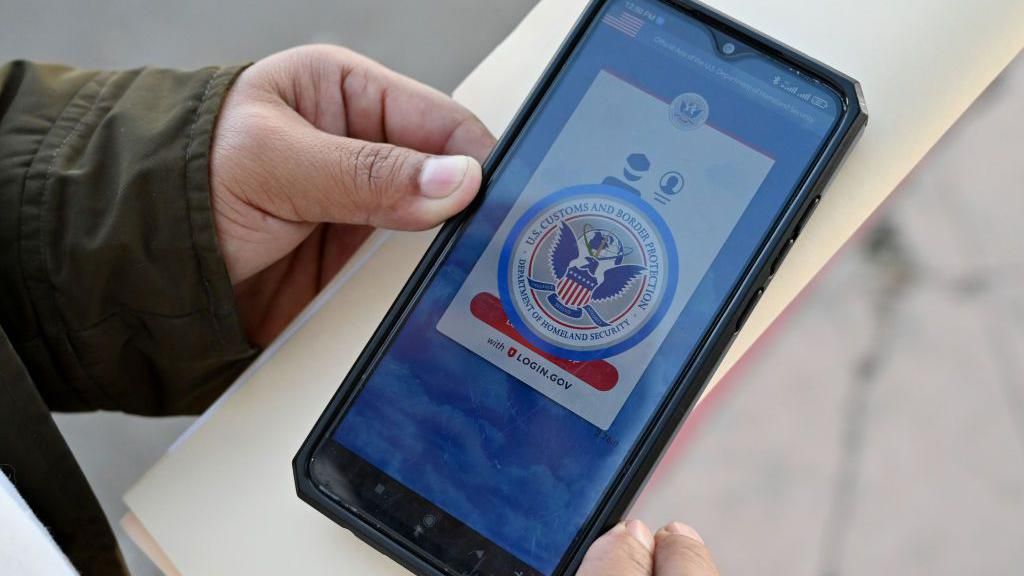
First launched in 2023 under the administration of former Democratic President Joe Biden, the CBP One initiative was designed to streamline southern border processing for asylum seekers. The program required migrants to schedule appointments via a mobile app to enter the U.S., and granted successful participants two years of parole, a temporary legal status that allowed them to live and work legally in the country while their asylum claims proceeded through the backlogged immigration court system. By the time Trump took office for his second term, roughly 900,000 migrants had been approved for parole through the program.
Shortly after taking office, the Trump administration moved to end the CBP One parole program, re-purposing the app for a new ‘self-deportation’ initiative. In April of this year, DHS began sending mass emails to tens of thousands of program participants, notifying them their parole status had been terminated, ordering them to leave the country, and revoking their legal work authorization. The agency framed the move at the time as a response to what it called an ‘abuse of parole authority’ by the Biden administration, arguing the program had contributed to what it calls the worst border crisis in U.S. history.
But on Tuesday, U.S. District Judge Allison Skye Borroughs of the District of Massachusetts rejected the Trump administration’s action in a sweeping 38-page decision. In her ruling, Borroughs wrote that the mass parole terminations exceeded DHS’s statutory authority under federal immigration law, and directly contradicted the procedural requirements laid out in the agency’s own existing regulations. The ruling immediately restores legal parole status for all program recipients nationwide who received a termination notice from DHS.
The case was brought by the Venezuelan Association of Massachusetts, three individual Venezuelan women directly impacted by the termination policy, and legal advocacy group Democracy Forward. The plaintiffs argued the mass termination was unlawful and violated the federal Administrative Procedure Act, which governs how federal agencies implement new rules. In their lawsuit, they noted that the policy change instantly pushed hundreds of thousands of people from legal status to being considered ‘illegal aliens’ overnight, upending lives that had been built legally in the U.S.
Reacting to the ruling, Skye Perryman of Democracy Forward called the decision a clear rejection of the administration’s attempt to erase the lawful status of hundreds of thousands of people with a single mass email. Carlina Velásquez, president of the Venezuelan Association of Massachusetts, added that for many Venezuelan families who had lived for months in fear and uncertainty after the termination notices were sent, the ruling brings long-awaited relief. A DHS spokesperson has not yet issued a formal response to the ruling, and administration officials have signaled they are likely to file an appeal, consistent with the administration’s pattern of challenging court rulings that block its restrictive immigration policies.
While the ruling restores temporary legal status to affected migrants, it does not guarantee permanent residency or long-term legal status for most program participants. The CBP One parole only grants a two-year term, during which asylum seekers must complete their immigration claims. Many recipients have already passed their two-year deadline, and dozens more will see their parole expire in the coming months, leaving their long-term status uncertain even after the court’s ruling.
The decision marks the latest legal setback for the Trump administration’s aggressive nationwide crackdown on undocumented immigration, which has included rolling back dozens of Biden-era immigration policies and ramping up deportation operations and enforcement efforts across the country.
-

Pope Leo XIV urges an Easter end to the US-Israel war on Iran, calling for dialogue
VATICAN CITY – On Tuesday, as Pope Leo XIV departed the papal summer retreat of Castel Gandolfo on the outskirts of Rome, the U.S.-born pontiff shared a message of urgent hope with reporters: that the ongoing U.S.-Israel war on Iran could reach a ceasefire before the start of Easter celebrations, the most sacred observance on the Christian calendar.
Citing recent public comments from former U.S. President Donald Trump indicating a desire to wind down the conflict, Pope Leo expressed his expectation that the administration would seek an exit path to de-escalation. “Hopefully he’s looking for a way to decrease the amount of violence, of bombing, which would be a significant contribution to removing the hatred that’s being created, that’s increasing constantly in the Middle East and elsewhere,” the pontiff told reporters.
The pope’s appeal came during Holy Week, the period leading up to Easter that centers on reflection, penance, and preparation for the commemoration of Jesus Christ’s crucifixion and resurrection. Reflecting on the disconnect between the holy season and global conflict, Pope Leo noted that what should be a time of quiet peace and self-examination has been overshadowed by widespread suffering. “It should be the holiest time of the year. It is a time of peace, a time of reflection. But as we all know, again, in the world, in many places we are seeing so much suffering, so many deaths, even innocent children,” he said. “We constantly make the call for peace, but unfortunately, many people want to promote hatred, violence, war.”
Pope Leo’s latest remarks extend a broader public push against the misuse of religion to justify armed conflict, a message he first laid out earlier this month during Palm Sunday Mass in St. Peter’s Square. During that service, the pontiff declared that God rejects the prayers of leaders who wage war and invoke religious belief to legitimize their violence, offering special intercession for Christian communities across the Middle East grappling with the fallout of regional conflict.
Recent weeks have seen multiple global leaders on different sides of active conflicts twist religious doctrine to back their military actions. U.S. Defense Secretary Pete Hegseth has repeatedly leaned on his personal Christian faith to frame the war on Iran as a struggle between a Christian nation and its purported evil enemies. Meanwhile, Russia’s Orthodox Church has characterized Moscow’s full-scale invasion of Ukraine as a “holy war” against a Western world it decries as morally corrupt.
As Holy Week progresses, Pope Leo will carry forward the centuries-long traditions of the papacy leading into Easter. On Holy Thursday, he will perform the traditional foot-washing rite at the Basilica of St. John Lateran, a ritual that honors Jesus’ act of humility toward his disciples before his crucifixion. On Good Friday, he is set to lead the annual Way of the Cross procession through Rome’s iconic Colosseum, an event commemorating Christ’s suffering and death, where he will personally carry the processional cross. The Easter Vigil, held after dark on Holy Saturday, will see the pope baptize new converts into the Catholic Church, before he leads the main Easter Sunday Mass in St. Peter’s Square and delivers his iconic Urbi et Orbi blessing to the city of Rome and the world from the basilica’s central loggia.
-

Italian Christmas meal tragedy turns into murder inquiry
In a quiet small municipality of Pietracatella, located 161 miles southeast of Rome, a tragic pre-Christmas gathering last year has sparked an ongoing murder probe after investigators discovered deadly ricin poisoning in the bodies of a mother and her teenage daughter who died days after the meal.
Fifty-year-old Antonella Di Ielsi and her 15-year-old daughter Sara Di Vita began showing severe symptoms of illness shortly after sharing the holiday lunch at the family home. Di Ielsi’s husband Gianni, a former mayor of Pietracatella, also fell ill after the meal and was hospitalized, but ultimately made a full recovery. The couple’s oldest child did not attend the gathering, and escaped any exposure to the toxin.
When the pair first arrived at the hospital, attending doctors misdiagnosed their condition as common food poisoning. Suspecting the illness came from contaminated fish or wild mushrooms, medics discharged Di Ielsi and Di Vita after initial observation. But their condition deteriorated dramatically just a short time later, forcing emergency readmission to the intensive care unit at Cardarelli Hospital in nearby Campobasso.
Dr. Vincenzo Cuzzone, head of the hospital’s intensive care unit, described to local media how the toxin attacked the victims’ bodies at an extraordinary rate. “Liver failure developed first, followed by complete multi-organ failure at a truly unparalleled speed,” he explained. Without any known antidote to counteract the ricin, medical teams were powerless to stop the progression of the poisoning, and both victims eventually died.
Initially, authorities linked the deaths to errors in the initial diagnosis, opening a manslaughter investigation into the doctors who approved the discharge of the two patients. That narrative shifted dramatically after comprehensive laboratory testing, conducted at facilities in both Italy and Switzerland, confirmed the presence of ricin, a naturally occurring potent toxin derived from castor beans. Even a tiny dose of ricin can trigger fatal organ failure, and there is currently no effective antidote for ricin poisoning.
With this new evidence in hand, Italian prosecutors have reclassified the case as a murder investigation. As of the latest updates, law enforcement has not yet identified any persons of interest or established a clear motive for the poisoning.
-
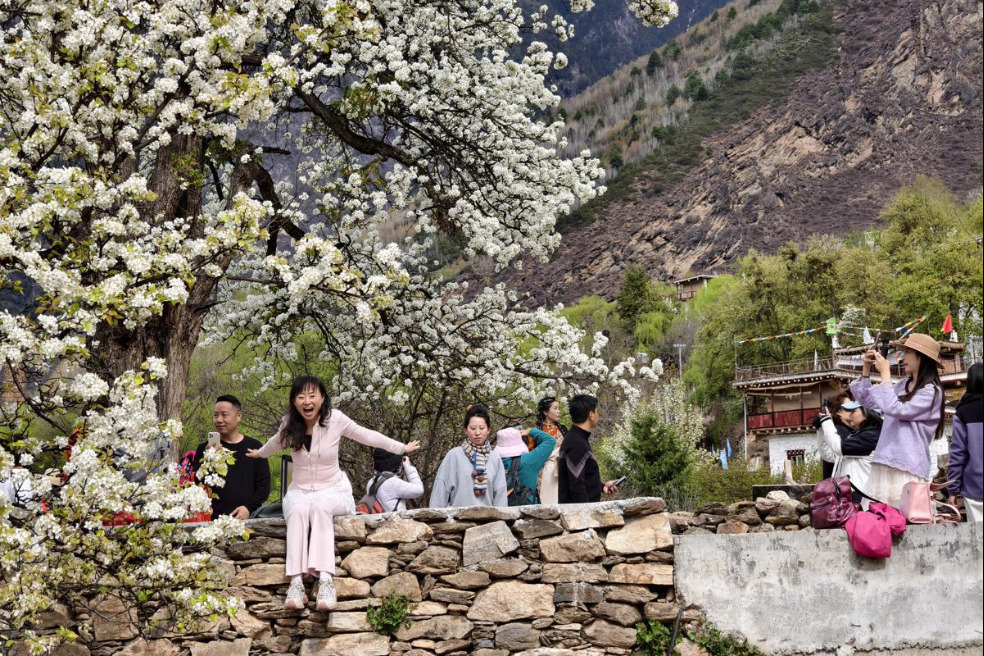
Pear blossoms in full bloom in one of the world’s Best Tourism Villages
Nestled in the mountainous terrain of Sichuan province, the Tibetan village of Jikayi has emerged as a springtime spectacle with its ancient pear trees bursting into full bloom. This natural phenomenon coincides with the village’s recent designation among the UN World Tourism Organization’s Best Tourism Villages, drawing increased attention to its unique cultural offerings.
Situated in Danba county at approximately 2,000 meters elevation on the Qinghai-Tibet Plateau’s southeastern fringe, Jikayi received this prestigious international acknowledgment in October. The recognition highlights the village’s successful integration of natural preservation, cultural heritage, and sustainable tourism development.
The village landscape is dominated by numerous century-old pear trees that create a breathtaking floral canopy each spring. Beyond the botanical attractions, Jikayi provides visitors with immersive experiences in Gyalrong Tibetan culture, including traditional culinary practices and preservation of intangible cultural heritage. The village maintains ancient watchtower construction techniques and distinctive coming-of-age ceremonies that offer insights into the region’s rich cultural tapestry.
Photographs circulating from the area show tourists capturing memories beneath the flowering branches, illustrating the growing appeal of this destination. The seasonal transformation has positioned Jikayi as both a natural wonder and cultural crossroads, where visitors can engage with traditions that have been maintained for generations while enjoying the visual splendor of the blooming landscape.
The UN recognition has catalyzed increased tourist interest, providing economic benefits to local communities while encouraging the preservation of both environmental and cultural assets. This balance between tourism development and heritage conservation represents a model for rural communities seeking sustainable growth strategies.
-

Chinese manufacturer secures historic double victory at World Superbike Championship
In a groundbreaking achievement for Chinese motorsports, manufacturer ZXMOTO has captured an unprecedented double victory at the World Superbike Championship’s Portuguese round, concluded March 29. The remarkable feat marks the first time a Chinese motorcycle manufacturer has claimed victory in the World Supersport category, breaking the longstanding dominance of established European and Japanese brands that have traditionally ruled the premier global competition.
The historic triumph represents the culmination of an extraordinary journey by founder Zhang Xue, whose path from rural workshop apprentice to international racing champion embodies determination and technical innovation. Born in a small Hunan province village, Zhang began his mechanical education at age 14 as a motorcycle repair apprentice, spending countless hours dismantling and studying engines while saving for his first second-hand motorcycle.
Zhang’s persistence became evident in 2006 when, at 19, he rode over 100 kilometers through rain for a television appearance opportunity to demonstrate his riding skills. Though initially unsuccessful, his dedication eventually earned him a position with a professional racing team where he served as both stunt rider and mechanic, achieving podium finishes in domestic competitions.
After years of high-intensity training led to injuries, Zhang recognized the technological gap between China’s motorcycle industry and global leaders, prompting his strategic shift from racing to manufacturing. Between 2009-2012, he mastered full vehicle development processes at a Zhejiang province factory before relocating to Chongqing, China’s motorcycle manufacturing hub, to begin his own production journey.
The technological breakthrough came with the 2024 founding of ZXMOTO and development of fully independent engine technology. The mass-produced 820RR civilian motorcycle, powered by this domestically developed engine and adapted for racing, ultimately delivered the team’s historic double victory in Portugal, demonstrating Chinese engineering capability on motorsports’ global stage.