作者: admin

  • Trump signs order to create voter eligibility lists, restrict mail ballots

    Trump signs order to create voter eligibility lists, restrict mail ballots

    Less than 24 hours after the formal signing ceremony held in the Oval Office of the White House in Washington, D.C., a new executive order from U.S. President Donald Trump aimed at overhauling core parts of the nation’s election administration has ignited immediate political and legal firestorm across the country. Dated March 31, 2026, the directive marks the second major executive action Trump has taken to reshape voting procedures since he returned to office, following a 2025 order that was largely blocked by federal courts.

    Under the terms of the new order, the U.S. Department of Homeland Security is mandated to work in direct partnership with the Social Security Administration to assemble comprehensive, state-by-state rosters of voters who have been formally confirmed as U.S. citizens aged 18 and older, the minimum voting age in the country. Once compiled, these national voter eligibility lists will be turned over to state-level election authorities for use in verifying who is eligible to cast ballots in federal elections.

    Beyond creating centralized eligibility rolls, the order also imposes new restrictions on mail-in and absentee voting, a method of voting that has been the subject of fierce partisan debate in U.S. politics for years. The U.S. Postal Service is instructed to only deliver ballot packages to voters whose names appear on the state-approved eligibility lists compiled under the new federal framework. Additionally, all election mail will be required to use official, pre-marked envelopes with tracking barcodes to monitor delivery and confirm receipt by election officials.

    The move has triggered swift pushback from legal experts, election administrators, voting rights advocates and Democratic party officials, nearly all of whom question the foundational legality of the order. Under the U.S. Constitution, authority over the administration of federal, state and local elections is primarily granted to individual state governments, with limited rule-setting power reserved for Congress. Legal analysts widely agree that the executive order oversteps federal authority granted under the Constitution, making it vulnerable to being struck down by the courts.

    Within hours of the order being signed, voting rights organizations and Democratic leaders from multiple states announced they would immediately file legal challenges to block the directive from taking effect. This latest effort to alter election rules follows a similar executive order Trump issued in 2025, which sought to tighten voter registration requirements and stop the counting of ballots that arrive after Election Day. Courts ultimately blocked key provisions of that 2025 order, a precedent that opponents of the new directive say suggests a similar outcome is likely this time around.

  • Pond skimming marks end of snow season in Xinjiang’s Altay

    Pond skimming marks end of snow season in Xinjiang’s Altay

    As spring temperatures rise and winter snowpack begins to melt across northern Xinjiang, the 2025-2026 snow season came to a festive close this weekend at Altay’s Jiangjunshan International Ski Resort, where hundreds of skiing enthusiasts gathered for the beloved annual tradition of pond skimming. A thrilling celebration of the season’s final days, the event invited participants of all skill levels to test their balance and courage gliding across an open pool of meltwater at the base of the resort’s slopes.

    Event organizers carved out two separate courses to accommodate attendees of varying experience: a full 35-meter main track for seasoned thrill-seekers, and a shorter, gently sloped mini-track built specifically for first-time participants and beginners. On the main course, skiers pushed off from the top of the snow-covered slope, building speed as they descended before launching onto the surface of the pool, sending up plumes of water as they attempted to skim all the way across to the opposite bank. While some skilled skiers managed to glide the full distance without falling, many challengers lost their footing mid-crossing and plunged into the chilly water, emerging soaked, grinning, and eager to share photos of their playful mishaps with fellow attendees.

    Mao Xiaoshuai, a visitor who traveled from the southwestern city of Chengdu, Sichuan province to join the event, described the experience as unforgettable. “Combining the speed of downhill skiing with the playful fun of splashing through water makes for a totally unique rush,” he explained in an interview on Sunday. “You get the best of both winter and early spring all in one run, and it’s the perfect way to let go of all the stress that’s built up over months of work.”

    Over on the beginner track, organizers intentionally designed a gentler gradient to lower the barrier to entry, ensuring that even first-time skiers and families with young children could join in the fun without feeling intimidated. The welcoming atmosphere drew crowds of spectators who cheered on every participant, regardless of whether they made it across the pool or took an unexpected dip.

    Jiangjunshan International Ski Resort will officially close its 2025-2026 snow season this coming Wednesday. Beyond the festive closing event, the resort celebrated a standout winter: official data shows the facility welcomed 1.3 million total visits over the past four months, marking a 46 percent jump compared to the previous winter season. The number of dedicated ski visits specifically rose even more sharply, hitting 870,000 — a 66 percent year-on-year increase that highlights Altay’s growing reputation as one of China’s top winter sports destinations.

  • Peter Magyar, the former Orban ally vying for power in Hungary

    Peter Magyar, the former Orban ally vying for power in Hungary

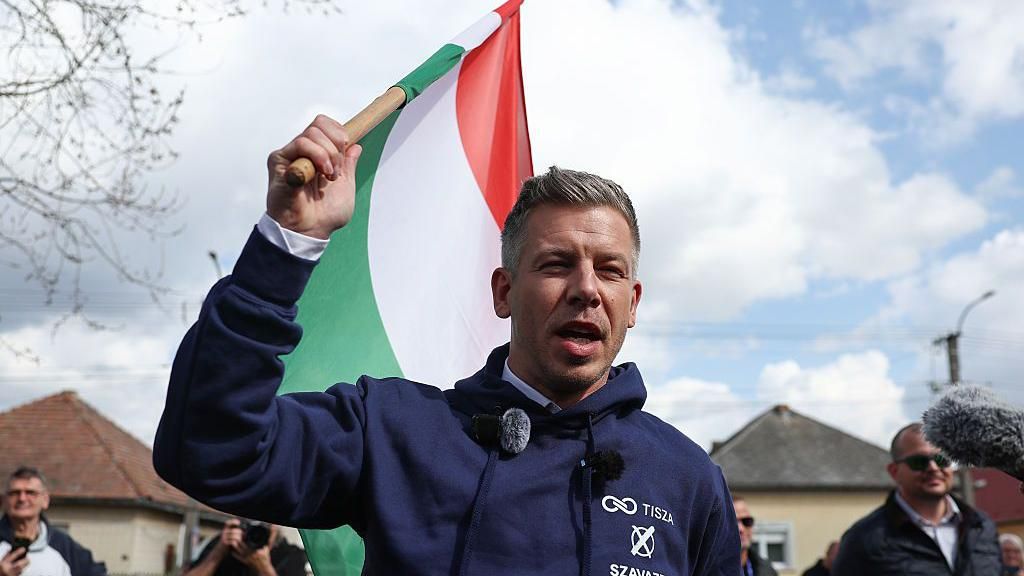
    As Hungary gears up for its 12 April parliamentary elections, the political landscape of the Central European nation has been upended by a surprising challenger whose rapid rise has sent shockwaves through Viktor Orban’s long-dominant ruling party. Forty-five-year-old Peter Magyar, a one-time insider within Orban’s Fidesz party who only entered full opposition politics two years ago, now stands as the most serious threat to Orban’s 16 consecutive years in power since the prime minister first won office in 2010. Opinion polls currently place Magyar within striking distance of an election victory.\n\nMagyar’s campaign has been defined by relentless energy and a urgent, nationally rooted message. Borrowing his original slogan “Now or Never” from a 19th-century Hungarian revolutionary poet’s rallying cry for national independence, he has condensed the message to just “Now” on campaign materials, crossing out the “or Never” to amplify the sense that this is Hungary’s critical moment for change. Over the course of the campaign, he has crisscrossed every corner of the country, with plans to visit all 106 of Hungary’s parliamentary constituencies, delivering up to six public speeches a day. Over more than two years of grassroots organizing, he has built a robust support base even in the small towns and rural villages that have long been Fidesz’s strongest electoral strongholds. In 2024, he completed a 300-kilometer walk from Budapest to the Romanian border, framing the journey as an effort to “reunite” a divided nation and win over disillusioned traditional Fidesz voters.\n\nMagyar’s break from the party he once belonged to did not come out of nowhere, but it was accelerated by a high-profile 2024 political scandal that brought down two of Fidesz’s top female leaders. Before February 2024, Magyar was deeply embedded in the Fidesz political machine: he joined the party as a university student in 2002, married rising Fidesz star Judit Varga (who would later become Hungary’s justice minister), and held a series of key positions, including a diplomatic posting to Hungary’s permanent mission in Brussels, leadership of Fidesz’s European Parliament negotiating team, and board seats on multiple state-owned enterprises.\n\nThe scandal that shattered Fidesz’s ranks erupted when Hungarian President Katalin Novak granted a pardon to an official who helped cover up systemic sexual abuse at a state-run children’s home. Public outrage forced Novak to resign, and Varga – who had co-signed the pardon as justice minister and was slated to lead Fidesz’s 2024 European election campaign – was also forced to step down, ending her rising political career within the party. With his ex-wife pushed out of Fidesz and their marriage having already ended in 2023, Magyar made a bombshell move: he appeared live on a leading pro-opposition YouTube channel Partizán to publicly renounce the Fidesz leadership. The interview, watched by more than a million viewers in a country of just 9.6 million people, instantly went viral.\n\n”Everyone warned me against it – friends, family, people I’ve known for years,” Magyar told the host during the interview. “I’ve been inside this system, inside this circle, for a very long time.” In a subsequent Facebook post, he declared he would no longer remain part of a system where top leaders hid behind female subordinates to take the blame for their mistakes. Speaking to the BBC after the interview, Magyar noted that his disillusionment with Fidesz had grown gradually over years: “The Fidesz we see today is very, very different from the one I joined in 2002. For a long time, I accepted the argument that holding power required the compromises they made. But 2024 became the turning point.” He also acknowledged he feared for the future of his three children after making the leap into opposition, but said the need for change outweighed those personal risks.\n\nA month after his viral interview, on Hungary’s 15 March national holiday marking the 1848 revolution against Habsburg rule, Magyar cemented his status as the leading opposition voice. While Orban delivered a fiery speech from Budapest’s National Museum attacking the European Union and calling for Hungary to “occupy Brussels,” Magyar addressed a crowd of an estimated 10,000 supporters, accusing Fidesz of widespread systemic corruption and economic mismanagement. He used the event to announce the formation of his new political movement, later taking over a small dormant party called Tisza to qualify for elections. He further escalated his attacks by releasing a secretly recorded 2023 conversation with his ex-wife that referenced a high-profile corruption trial, a move that drew condemnation from Varga, who accused him of abuse – a charge Magyar has repeatedly denied. Orban’s inner circle has attacked Magyar as a traitor who betrayed his family first, then his country, framing him as a proxy for Brussels. Orban himself has downplayed the challenge, dismissing Magyar simply as “someone who left Fidesz.”\n\nDespite the attacks, Magyar’s political momentum proved unstoppable. In the 2024 European Parliament elections, Tisza won 29.6% of the national vote and seven seats, finishing behind Fidesz’s 44.8% but demonstrating that Magyar could draw significant support away from the ruling party. By autumn 2024, Tisza had pulled ahead of Fidesz in national opinion polls. During commemorations of the 1956 anti-Soviet uprising last year, Magyar led a rival march to Orban’s, directly challenging the prime minister’s long-standing close ties to the Kremlin. He pointedly asked Orban, who rose to political prominence calling for Soviet troops to withdraw from Hungary in 1989: “Mr. Prime Minister, why won’t you say ‘Russians go home’ any more?” He accused Orban of betraying the legacy of 1956 to remain what he called “the Kremlin’s most loyal ally,” pushing back against Orban’s framing of Tisza as a “warmonger” movement carrying out a “Brussels war agenda.”\n\nA key factor in Magyar’s rise is his positioning as a non-liberal alternative to Orban, unlike the fragmented liberal opposition that repeatedly failed to unseat the prime minister in previous elections. Magyar has openly criticized the old liberal opposition, dismissing former Socialist leader Ferenc Gyurcsany as no better than Orban, and has systematically consolidated anti-Orban support under his own banner. He has also directly confronted the pro-Orban media outlets that dominate Hungary’s media landscape, going public early this year to reveal an alleged Russian-style smear and honey-trap campaign targeting him.\n\nMagyar announced that intelligence operatives had leaked surveillance footage implying he had used drugs during a private meeting with an ex-girlfriend. He pre-empted the leak by acknowledging he had consensual sex with the woman but denied any drug use, calling the incident a set-up by state security services. He subsequently passed multiple drug tests to prove his innocence, and none of the corruption or personal scandals that Orban’s camp has leveled against him have damaged his public support to date.\n\nAs a former insider, Magyar argues he has a unique advantage over Orban: he knows the ruling party’s tactics and vulnerabilities intimately. “I know them, I know their tricks, and I know they are terrified,” he told reporters. For Hungarians, he says, this election is a once-in-a-generation opportunity to change the course of the country after 16 years of Orban’s rule. \n\nOn policy, Magyar has centered his campaign on promises to root out systemic corruption, revitalize Hungary’s stagnant economy, reach out to the country’s marginalized Roma community, and unlock billions of euros in frozen EU development funds that have been withheld due to Brussels’ concerns over rule of law erosion under Orban. For his part, Orban has campaigned on framing Magyar as a puppet of the EU and Kyiv, positioning himself as the champion of national sovereignty and a “real party of peace” amid the ongoing war in Ukraine.


  • Key suspect in cross-border gambling, fraud syndicate repatriated from Cambodia to China

    Key suspect in cross-border gambling, fraud syndicate repatriated from Cambodia to China

    China’s Ministry of Public Security confirmed on Wednesday that a high-profile key figure connected to a large transnational criminal network focused on illegal gambling and telecom fraud has been successfully sent back to Chinese territory from Cambodia. The suspect, identified as Li Xiong, is considered a core member of the operation that victimized countless individuals through illegal financial scams and unregulated gambling activities, according to official statements.

    This repatriation marks a significant milestone in China’s ongoing coordinated crackdown on cross-border organized crime, which has increasingly targeted criminal syndicates that operate across international borders to avoid domestic law enforcement. Criminal networks involved in transnational fraud and illegal gambling have long posed major threats to public safety and financial stability both in China and neighboring Southeast Asian nations, prompting bilateral law enforcement cooperation to dismantle these operations and bring fugitive suspects to justice.

    The handover of Li Xiong underscores the growing collaborative relationship between Chinese and Cambodian law enforcement agencies in addressing shared transnational security challenges. For years, these criminal syndicates have exploited gaps in cross-border regulation to run large-scale scams that steal billions of yuan from Chinese residents and global victims annually, making coordinated repatriation efforts a critical component of regional anti-crime initiatives.

    This operation aligns with China’s broader national strategy to combat transnational telecommunications fraud, online gambling, and other cross-border criminal activities that harm public interests. Chinese law enforcement officials have repeatedly emphasized that the country will continue to work with international partners to track down fugitive criminal suspects operating overseas, ensuring that no offenders can evade justice by fleeing beyond national borders.

  • Phoenix TV of Hong Kong marks 30th anniversary, eyes wider global reach

    Phoenix TV of Hong Kong marks 30th anniversary, eyes wider global reach

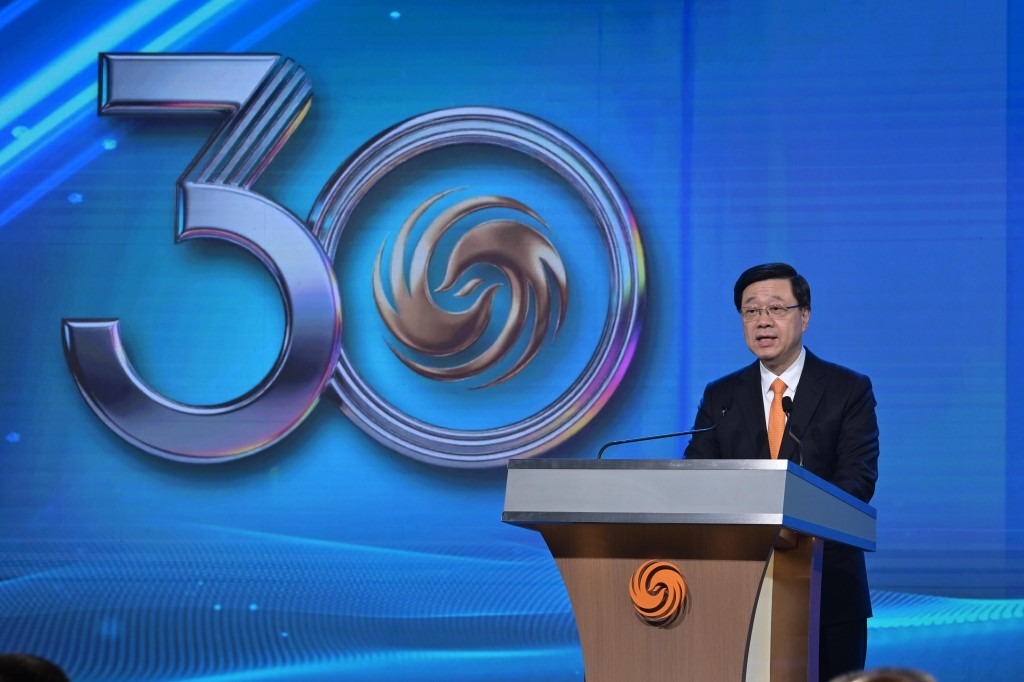
    HONG KONG – On March 31, 2026, Hong Kong-based international broadcaster Phoenix Television gathered industry leaders, government officials, and media partners for a milestone celebration marking three decades of operation since its founding in 1996. At the anniversary ceremony held in the city, John Lee Ka-chiu, Chief Executive of the Hong Kong Special Administrative Region (HKSAR), delivered a keynote address that framed the 30-year mark as both a moment to reflect on past accomplishments and a jumping-off point for a new chapter of growth.

    Lee emphasized that Phoenix TV has carved out a unique, influential role in global media over its 30-year history, thanks to its strategic positioning in Hong Kong and long-standing strengths in cross-border communication. He urged the network to continue building on these advantages to share nuanced, authentic stories about China with audiences across the world, reinforcing its role as a bridge between different regions and cultural communities.

    Xu Wei, Phoenix TV’s Chairman of the Board and Chief Executive Officer, reflected on the network’s three-decade evolution, noting that adaptive innovation and a willingness to embrace shifting industry landscapes have been the core driving forces behind the broadcaster’s sustained development. Looking forward, Xu outlined Phoenix TV’s new strategic vision: the network aims to extend the global reach of Chinese culture, connect with broader international audiences, and solidify its position as a foundational platform for constructive cross-cultural dialogue and global exchange.

    Since its launch 30 years ago, Phoenix TV has built out an extensive global infrastructure that supports its international mission. It currently operates 63 news bureaus across six continents, runs six distinct television channels, and delivers its signal to audiences in 190 countries and regions worldwide. In recent years, the broadcaster has also recorded consistent growth in its follower and user bases across major international digital and social media platforms, positioning it well for the next phase of global expansion.

  • Lamine Yamal condemns racist abuse aimed at Egypt

    Lamine Yamal condemns racist abuse aimed at Egypt

    An international friendly football match between Spain and Egypt in Barcelona has sparked widespread backlash after a section of fans directed Islamophobic and xenophobic chants at the Egyptian national team, drawing sharp condemnation from Spanish star winger Lamine Yamal, the country’s football governing body and head coach. The 0-0 draw, played on Tuesday at Espanyol’s RCDE Stadium, was originally scheduled to take place in Qatar but was relocated to Barcelona amid ongoing conflict in the Middle East.

    During the first half of the match, Spanish law enforcement confirmed that offensive, discriminatory chants targeting the Egyptian delegation were audible from the stands. Stadium officials attempted to intervene twice during the game: first at halftime, an on-screen warning was broadcast to spectators calling for an end to xenophobic language and chanting, with a second reminder displayed early in the second half. The intervention was met with boos and whistles from some fans in the crowd. Currently, Catalan law enforcement has launched a formal investigation into the recorded Islamophobic and xenophobic incidents.

    Eighteen-year-old Lamine Yamal, Spain’s breakout star who finished runner-up in the 2025 Ballon d’Or and was a key part of Spain’s 2024 European Championship winning squad, spoke out about the incident on his personal Instagram. As a practising Muslim, Yamal emphasized that even though the chants were aimed at the opposing Egyptian side rather than himself personally, the abuse remained unacceptable. “Using a religion as a taunt on the field makes you ignorant and racist,” Yamal wrote. “Football is for enjoying and cheering, not for disrespecting people for who they are or what they believe.”

    The Spanish Football Federation (RFEF) echoed Yamal’s criticism in an official social media statement, releasing a firm rebuke of the discriminatory behavior. “The RFEF stands against racism in football and condemns any act of violence inside stadiums,” the federation said. Spain head coach Luis de la Fuente went a step further, calling the offensive chants “intolerable” and arguing that bad actors have exploited football platforms to spread hate. “Violent people use football to carve out a space for themselves. They must be removed from society, identified, and kept as far away as possible,” De la Fuente added.

    Beyond the off-pitch controversy, the match itself delivered a 0-0 stalemate that carried implications for Spain’s global ranking. De la Fuente made 10 changes to his starting lineup from Spain’s previous 3-0 friendly win over Serbia, with Yamal the only player retained in the starting XI. Egypt were missing star forward Mohamed Salah, who missed the fixture through injury. As co-hosts of the 2030 FIFA World Cup, Spain dropped out of the top spot in the men’s global FIFA rankings following the drawn result.

  • Eurovision Song Contest launches first-ever Asia edition

    Eurovision Song Contest launches first-ever Asia edition

    After decades of dominating the global live music competition scene, the iconic Eurovision Song Contest is breaking new ground with the launch of its first standalone regional edition exclusively for Asia. The landmark expansion, which marks one of the most significant shifts in the contest’s 70-year history, has already generated widespread buzz across the continent’s vibrant music industry, with industry analysts and fans alike debating whether the massive popular appeal of Korean pop (K-pop) and Taiwanese pop (T-wave) will be the secret ingredient that turns the new Asia-focused iteration into a global and regional hit.

    For years, Eurovision has built its reputation as a platform that celebrates cultural diversity, theatrical performances, and breakout musical talent, drawing hundreds of millions of viewers across Europe and beyond to its annual broadcast. The decision to launch a regional Asia edition comes as the contest’s organizers look to tap into the world’s largest and fastest-growing music market, where streaming has exploded in popularity and regional pop genres have built massive global fanbases over the past two decades.

    Industry insiders note that K-pop, in particular, has already established an unrivaled global footprint, with acts topping charts across North America, Europe, and Asia, selling out stadium tours, and amassing billions of streams on digital platforms. Meanwhile, T-pop (often referred to as the T-wave) has carved out its own loyal regional following, blending infectious pop melodies with local cultural influences to create a unique sound that resonates with young audiences across East and Southeast Asia.

    The question on many industry observers’ minds is whether the Eurovision formula, which has worked so well for Europe, can be successfully adapted to Asia’s diverse musical landscape. Many optimistic analysts argue that the combination of Eurovision’s established brand recognition and the star power of popular regional genres like K-pop and T-pop will draw massive viewership, attract top sponsors, and cement the Asia edition as a permanent fixture on the global entertainment calendar. Skeptics, however, note that Asia’s fragmented regulatory environment, diverse linguistic and cultural differences, and already crowded landscape of regional music competitions could present unexpected hurdles for the new venture.

    As organizers prepare to roll out details about competing entries, broadcast schedules, and venue plans in the coming months, all eyes are on how the first Eurovision Asia edition will take shape, and whether regional pop trends will carry the new competition to widespread success.

  • Cross-border travel surge expected during Qingming Holiday

    Cross-border travel surge expected during Qingming Holiday

    China is set to experience a sharp uptick in cross-border travel during the upcoming Qingming Festival holiday, running from April 4 to 6, according to official projections released Wednesday by the National Immigration Administration. The agency forecasts that average daily cross-border trips will exceed 2.3 million, representing an 11.1 percent increase compared to the same holiday period in 2025.

    Beyond its deep cultural roots as a time for ancestral tomb sweeping and honoring family predecessors, the Qingming Festival has evolved into one of China’s most popular windows for spring leisure travel. This year’s anticipated travel boom has been amplified by two key complementary factors: multiple local regions have rolled out dedicated spring break arrangements for primary and secondary school students, expanding the pool of potential travelers, and the special administrative regions of Hong Kong and Macao are scheduled to observe a five-day holiday for the occasion, creating extended opportunities for cross-border movement.

    Official projections show that major international hubs across the country, including Shanghai Pudong International Airport, Beijing Capital International Airport, Chengdu Tianfu International Airport, Guangzhou Baiyun International Airport and Shenzhen Bao’an International Airport, will all see modest growth in passenger volumes compared to previous years. By contrast, land ports connecting the Chinese mainland with Hong Kong and Macao are on track to record far more robust growth, driven by two overlapping demand streams: rising numbers of Hong Kong, Macao and Taiwan residents returning to their ancestral hometowns for traditional rites, and growing inbound travel from overseas Chinese and international tourists.

    Among the busiest border crossings, Shenzhen’s key checkpoints are projected to see heavy daily traffic: Luohu is expected to handle roughly 250,000 crossings per day, followed by Futian at 230,000, Shenzhen Bay at 190,000, West Kowloon High-Speed Rail Station at 120,000, and Liantang at 110,000. In Zhuhai, which serves as the main mainland gateway to Macao, the Gongbei checkpoint alone is forecast to register 375,000 daily crossings, while the Hong Kong-Zhuhai-Macao Bridge checkpoint will see 152,000 daily trips, and both Qingmao and Hengqin checkpoints are projected to handle 113,000 daily cross-border trips each.

    The projected surge in cross-border travel comes as regional tourism and cross-border family ties continue to recover following years of restricted movement, with the combination of cultural tradition and extended holiday timelines creating ideal conditions for increased mobility across China’s borders this spring.

  • Rescuers give up hope for the humpback whale stranded in the Baltic Sea

    Rescuers give up hope for the humpback whale stranded in the Baltic Sea

    BERLIN — For nearly three weeks, a wayward humpback whale that wandered far from its natural Atlantic habitat into Germany’s Baltic Sea coast has captivated national attention, but rescue teams announced Wednesday they have ended all efforts to save the animal, concluding the exhausted mammal will not survive its current stranding.

    Nicknamed ‘Timmy’ by the public and media following weeks of repeated strandings and close calls, the whale became trapped for the second time in as many days on Tuesday, when it swam into a shallow inlet off Germany’s small Baltic island of Poel. Poel sits just off the coast near the northern port of Wismar, roughly 30 miles northeast of Timmendorfer Strand, where rescuers pulled Timmy free from even shallower waters just one week earlier using a heavy excavator. That successful rescue proved temporary, however: within days, the lost whale once again found itself stuck in low, unnavigable waters.

    In the days following the first successful rescue, authorities adopted a careful, low-intervention strategy aimed at letting the already exhausted animal rest and rebuild its strength. Teams occasionally used small boats to gently nudge the whale toward deeper open water, but prioritized minimizing stress to give Timmy the best chance to swim out to the North Sea and eventually back to the Atlantic on its own.

    That strategy has now been abandoned, lead scientific coordinator Burkard Baschek told reporters at a televised press conference Wednesday. Baschek, who also serves as scientific director of the Ocean Museum Germany, said monitoring on Wednesday revealed deeply concerning signs: the whale was breathing at highly irregular intervals, drone footage showed almost no movement of sediment beneath its 12-15 meter body, and it barely responded when rescue teams approached.

    Though Timmy showed a small uptick in activity after crews pulled back to give it space, Baschek noted that the change was not enough to signal any real chance of recovery. ‘It is not activity that gives us grounds for hope,’ he said. ‘We firmly believe that the animal will die there.’

    Two prior times during the whale’s three-week odyssey along the Baltic coast, Timmy managed to gather enough strength to free himself from shallow waters. But repeated strandings have left the whale severely weakened, and falling seasonal tides have only worsened the dangerous conditions in the inlet. ‘The prospects that it will free itself are very small,’ Baschek added. ‘The approach of maximum rest and respect for nature demands at some point that we let it go.’

    Timmy’s unplanned journey through the Baltic has been front-page news across Germany, with national media running constant updates on the whale’s status that turned the lost animal into a viral national sensation. The humpback was first spotted in the region on March 3, far outside its normal range: the Baltic Sea is not a natural habitat for the species, and its shallow, cooler waters do not support the large prey humpbacks rely on for long-term survival.

    Experts still do not know exactly what led the whale so far off course. The most common theories suggest Timmy may have followed a large shoal of herring into the Baltic, or lost his bearings during his annual northward migration. Even under the best conditions, the journey back to open Atlantic waters would have been a monumental challenge: the trip from the inlet to the North Sea, and then out to the Atlantic, stretches hundreds of kilometers, a taxing swim for even a healthy humpback.

  • Xiong’an national observatory officially inaugurated

    Xiong’an national observatory officially inaugurated

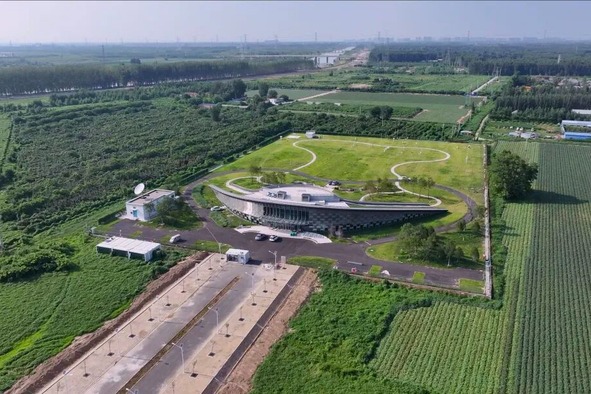
    BEIJING – On Wednesday, China formally launched its 27th national climate observatory in the Xiong’an New Area, a strategically planned modern development zone located in Hebei Province, northern China. The inauguration marks a key milestone in strengthening the country’s national climate monitoring network and advancing meteorological research for one of China’s most ambitious urban development projects.

    Officials from the China Meteorological Administration confirmed that the new observatory features a structured network of one central main monitoring station and eight regional auxiliary stations. This distribution allows the facility to capture comprehensive climate data across four distinct major ecosystem types that exist within the Xiong’an region, including dense urban development zones, natural forest landscapes, protected wetland reserves, and large-scale agricultural farmland areas.

    Unlike traditional static observation facilities, all meteorological data collected across the Xiong’an network is transmitted instantly in real time to a cloud-hosted big data platform. This digital integration dramatically boosts local and national capabilities in continuous climate monitoring, rapid extreme weather early warning, and customized meteorological services tailored to the needs of different economic and public service sectors.

    Located approximately one hour’s drive southwest of central Beijing, Xiong’an New Area was first established by Chinese authorities in 2017. Widely referred to as China’s “city of the future,” the development is a core component of the national strategy to relocate non-essential capital functions from Beijing to ease urban overcrowding pressure, while driving coordinated economic and social development across the Beijing-Tianjin-Hebei region. As the new city continues its phased construction and population growth, robust meteorological infrastructure has become an urgent priority to support sustainable urban planning and daily operation.

    Following its official inauguration, the Xiong’an National Climate Observatory will take on dual roles beyond basic climate data collection. In addition to fulfilling routine long-term climate observation tasks, the facility will also conduct targeted cutting-edge research in multiple key climate-related fields. The data and research output from the observatory will provide more robust, reliable technical support for national efforts including climate resource assessment, long-term climate change tracking and impact analysis, and early identification of meteorological disaster risks across the region and beyond.

    Over the past several years, local meteorological authorities in Xiong’an have already made significant progress in building out smart meteorological infrastructure, establishing a preliminary integrated regional monitoring network that covers the entire new area.

    “Moving forward, our team will continue to strengthen core capabilities across three key areas: meteorological disaster risk monitoring and early warning, ecological meteorological support for environmental protection and restoration, and high-quality meteorological services that support stable urban operation,” said Guo Yitao, deputy director of the newly inaugurated Xiong’an observatory.