作者: admin

  • Nation’s open-source chip ecosystem to push global collaboration

    Nation’s open-source chip ecosystem to push global collaboration

    For decades, accessing the architecture required to design cutting-edge high-end computer chips has come at a prohibitive cost: millions of dollars in mandatory licensing fees locked most early-stage startups out of the industry, creating an uneven playing field dominated by a small handful of proprietary technology holders. Today, a game-changing open standard called RISC-V instruction set architecture is rapidly growing in global traction, offering a free, collaborative alternative to the closed, costly proprietary models that have long defined the sector.

    During the 2026 Zhongguancun Forum, China’s premier annual event for showcasing top national scientific and technological advances held in Beijing last week, industry and research leaders announced that China has successfully built out a complete, end-to-end RISC-V ecosystem. This integrated network spans from foundational technological innovation to full-scale industrial implementation, establishing China as a key global contributor to the worldwide push for more accessible, autonomous computing infrastructure.

    To simplify how RISC-V works, an instruction set architecture can be thought of as the core “dictionary” that allows chips to function. Just as humans rely on dictionaries to understand and use words, a chip depends on this set of standard instructions to interpret and run software commands. While legacy architectures such as Intel and AMD-controlled x86 charge steep licensing fees and ban users from modifying the core design, RISC-V operates on an open-source model that grants anyone the right to freely use, alter, and build on the existing framework.

    At a side event held alongside the main forum, the Chinese Academy of Sciences (CAS) unveiled two landmark new developments that complete the domestic ecosystem. The first is Xiangshan, an open-source processor platform that acts as the high-performance hardware core of the ecosystem. The second is open-Ruyi, a domestically developed operating system built from the ground up exclusively to run on the Xiangshan hardware.

    As modern computing continues to evolve, simply increasing a chip’s raw clock speed is no longer enough to meet growing demand. The central challenge today is scalable computing: the ability to manage massive volumes of concurrent tasks and distribute processing power efficiently across complex networks. This makes high-performance processor cores the “command centers” that determine a computing system’s overall speed and functionality.

    According to Bao Yungang, deputy director of the CAS Institute of Computing Technology, the Xiangshan core currently ranks as the most powerful open-source RISC-V processor available globally. In the SPEC CPU2006 industry benchmark test, the standard for measuring processor performance, the Xiangshan core hits 16.5 points per gigahertz — a score that reflects exceptional efficiency when handling complex computational tasks. Bao added that the Xiangshan-openRuyi pairing creates a reinforcing feedback loop, where technological development responds directly to industry needs, and real-world application in turn drives further innovation. He also noted that the Xiangshan core is already deployed in key sectors including artificial intelligence, cloud computing, and industrial controls.

    Unlike traditional chip development workflows, where software is retrofitted to match existing hardware — a process that often creates unnecessary inefficiencies, open-Ruyi was designed from its inception to align perfectly with the Xiangshan core’s unique technical specifications, explained Wu Yanjun, deputy director of the CAS Institute of Software. This native alignment unlocks full performance potential, as the synergy between hardware and software is critical to maximizing processing power, Wu noted.

    To lower the barrier for third-party developers and enterprises to join the ecosystem, CAS also launched the RuyiSDK, a comprehensive software development kit that acts as a one-stop resource for engineers. The toolkit provides all the pre-built tools, documentation, and frameworks developers need to build custom software for the platform, eliminating the need to start development from scratch.

    Beyond accessibility and innovation, the shift to open-source chip architecture also addresses growing global concerns over supply chain security, offering a path for countries and companies to avoid being cut off from critical computing technology due to trade disputes, export restrictions, or exploitative pricing. Liu Yanan, chip technology director at China Mobile (Suzhou) Software Technology Co., explained that the long-term goal of the ecosystem is to deliver an autonomous, cost-effective computing infrastructure that can meet the wide range of processing demands created by the fast-growing global digital economy.

    To date, CAS has assembled one of the world’s largest RISC-V research and development cohorts, with more than 600 hardware-focused researchers and 400 software engineers working on the project. Its global open talent and development programs have already drawn more than 27,000 participants from over 1,100 universities across the world, marking a clear shift toward a more inclusive, collaborative global model for the future of semiconductor development.
  • Isotope production unit boosts cancer care

    Isotope production unit boosts cancer care

    China has marked a transformative milestone in advancing domestic cancer care, with researchers at the China Spallation Neutron Source (CSNS) in Dongguan, Guangdong province announcing they have achieved full capability to produce life-saving alpha-emitting medical isotopes. For years, China has relied on costly, supply-volatile imports of these critical materials, creating a major bottleneck in access to cutting-edge cancer treatment. The new domestic production capacity is set to resolve this gap, bringing next-generation targeted cancer therapy within reach for far more patients.

    Called the “nuclear warheads” of modern oncology, alpha isotopes are the core component of next-generation radiopharmaceuticals that deliver lethal radiation directly to tumor cells while minimizing damage to surrounding healthy tissue. The CSNS team has confirmed it can produce three of the most clinically essential alpha isotopes: radium-223, actinium-225, and lead-212, all of which have well-documented effectiveness in treating hard-to-manage late-stage prostate cancer and neuroendocrine tumors.

    Wang Sheng, director of the Spallation Neutron Source Science Center and a professor at the Chinese Academy of Sciences’ Institute of High Energy Physics, emphasized the urgent public health need for this advancement, noting that China records nearly 5 million new cancer diagnoses annually — accounting for 25% of the global total — with an overall mortality rate above 50%.

    Unlike conventional radiation therapy, which uses long-range radiation that can pass through healthy tissue and cause unintended damage, alpha particles function like precision short-range heavy artillery. Once inside a cancer cell, alpha radiation releases enough energy to break both strands of the cell’s DNA, creating irreversible damage that the cell cannot repair. Wang added that the treatment also delivers a valuable “bystander effect”: dying cancer cells release signals that trigger the death of adjacent malignant cells, even if those cells were not directly targeted by radiation.

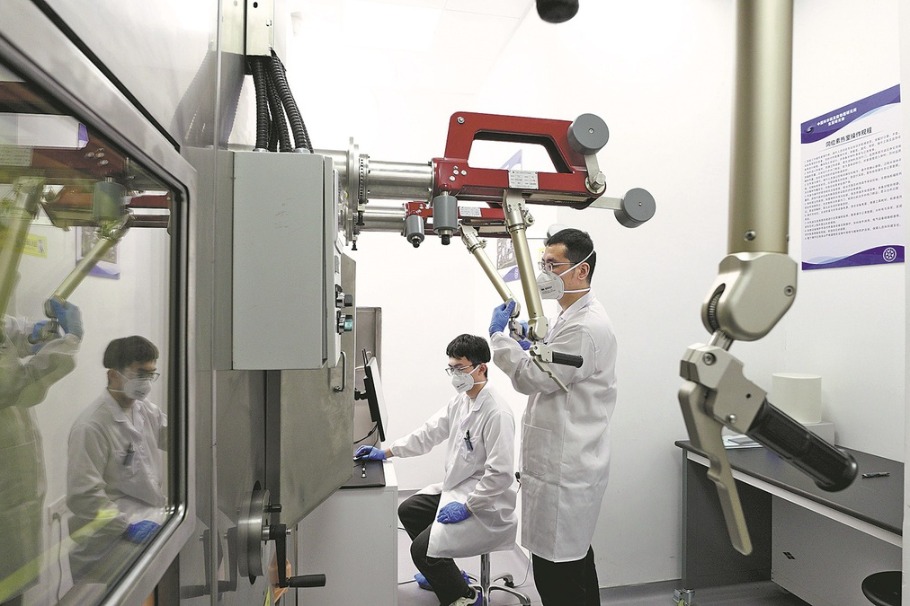
    Historically, medical alpha isotopes have been produced almost exclusively in nuclear reactors. But the CSNS research team developed an innovative alternative approach using a high-energy linear accelerator. By directing a high-powered proton beam at a target constructed from thorium, a naturally occurring abundant metal, researchers are able to extract the exact isotopes required for clinical use.

    Dai Xiongxin, who leads the project’s industrialization initiative, explained that this new production method offers multiple advantages over traditional reactor-based production. It eliminates the need for highly enriched uranium, a material that carries inherent nuclear proliferation risks, making the process both safer and more cost-effective. “It offers flexible production capacity, broader access to raw materials, and significantly lower costs,” Dai noted.

    Rigorous quality testing has confirmed that the domestically produced isotopes achieve a purity level of over 99%, matching the high quality standard of imported international supplies. The project does face one key logistical challenge, however: alpha isotopes have extremely short half-lives, decaying within days or even hours of production, making long-term storage and long-distance transportation impossible. To overcome this barrier, the CSNS center signed a strategic cooperation agreement with the China Isotope & Radiation Corporation over the weekend to build a complete localized industrial chain for production and distribution in Guangdong province.

    A purpose-built dedicated production line is currently under construction at the site. Once the facility reaches full operational capacity by 2031, it is projected to produce enough isotopes to supply nearly 1 million patient treatments per year, marking a major leap forward in China’s quest for self-sufficiency in advanced medical resources and expanding access to life-saving cancer care across the country.

  • 132,000 jobs at risk as Nepal graduates from ‘least developed status’

    132,000 jobs at risk as Nepal graduates from ‘least developed status’

    In November 2026, Nepal will complete its long-awaited transition out of the United Nations’ Least Developed Country (LDC) classification and move up to developing country status — a milestone widely seen as confirmation of a nation’s developmental progress. But a new analysis from the International Labour Organization (ILO) released on March 16 warns that this landmark shift comes with substantial near-term economic and employment risks: up to 132,000 existing jobs could be lost over five years, with total economic losses reaching nearly $1 billion. The report breaks down projected losses evenly by gender, with 67,000 jobs for men and 65,000 for women expected to disappear, almost entirely driven by shrinking export volumes that will follow the expiration of trade preferences exclusively reserved for LDCs.

    The manufacturing sector, Nepal’s largest export-driven employer, will bear the brunt of the impact: the *Employment Impact Assessment on Nepal’s LDC Graduation* estimates that roughly 142,000 manufacturing positions will face disruption, placing urgent pressure on the Nepali government to both offset existing losses and create new, stable roles to replace them. What makes the outlook particularly concerning for gender equity is that women, who already face far lower labor force participation rates across Nepal, will see a proportional share of losses. Urban areas will see steeper job declines than rural regions, with urban women facing twice the rate of job loss as their male counterparts. This imbalance, the report warns, could trigger reverse migration of displaced female workers from cities back to rural communities, where work is overwhelmingly informal, low-productivity, and frequently unpaid, deepening the economic precarity of already vulnerable groups.

    Key export-reliant sub-sectors including apparel, textiles, and handwoven carpets are most exposed to losses, as these industries already contend with steep domestic transport costs and cutthroat global competition. Overall, the report projects total export losses will equal between 2.5% and 4.3% of Nepal’s total annual export value, varying by target market and product category.

    Numan Ozcan, ILO’s country director for Nepal, framed the upcoming 2026 graduation as a critical turning point for the South Asian nation, but emphasized that the milestone is just the start of a challenging new phase. “It is a transition into a more competitive environment with fewer international support measures and higher expectations,” Ozcan said. “That can sound very technical, but it can also become very real and very personal. Maybe not for the people sitting in this meeting room, but for business owners, factory workers, and workers in small shops, hotels, transport or the informal economy. It can become very real and personal.”

    The ILO’s analysis does not only outline risks, however: through simulated policy testing, the report found that targeted strategic investments can fully offset projected GDP losses and create new employment to replace the roles lost. The most promising areas for intervention, the report notes, include upgraded trade facilitation infrastructure, expanded investment in the tourism sector, and deliberate growth of the information and communications technology (ICT) industry. The organization stressed that the success of these mitigation efforts will hinge entirely on proactive policy design and timely implementation ahead of the November graduation date, urging the Nepali government to begin preparations immediately to secure a smooth transition. Ultimately, Ozcan said, the true test of Nepal’s graduation will not be the milestone itself, but whether the country can convert its new developing country status into sustained, inclusive growth: “The real test is how Nepal can translate graduation into better jobs, stronger enterprises and greater economic security for everyone.”

  • War takes toll on Africa, fuels pain at the pump

    War takes toll on Africa, fuels pain at the pump

    The escalating military conflict in the Middle East has sent shockwaves through global energy markets, and its most acute economic impacts are now being felt across Africa, a region where most nations depend heavily on imported energy and remain deeply vulnerable to external supply disruptions. As tensions disrupt critical oil shipping lanes through the Strait of Hormuz, communities and economies across the continent are already grappling with empty fuel station storage tanks, hours-long queues at pumps, soaring price expectations, and growing fears that an already heavy cost of living will become even more unmanageable.

    Industry analysts warn that prolonged instability in the Middle East will exacerbate pre-existing economic challenges across African economies, deepening already entrenched inflationary pressure, expanding ballooning trade deficits, and draining already strained foreign exchange reserves at a time when many nations are still fighting to build a stable post-pandemic recovery amid sky-high import costs.

    In Kenya, a nation that imports nearly all of its petroleum needs, most via government-brokered agreements with Middle Eastern exporters, fuel retailers have already reported significant supply tightening. Some retail outlets have completely run out of product as global prices climb and market participants prepare for further pump price increases. Vivo Energy Kenya, one of the country’s largest fuel distribution firms, confirmed that it has faced temporary stockouts at a number of its service stations, driven by a combination of elevated consumer demand and global supply chain constraints, adding that it is working urgently to restock its inventory across the network.

    In response to growing public anxiety and reports of unauthorized hoarding by suppliers, Kenya’s Energy Cabinet Secretary Opiyo Wandayi has issued a formal directive ordering all oil marketing companies to release any withheld fuel stock to the market, warning that hoarding is a violation of national law and will result in formal sanctions for non-compliant firms.

    X. N. Iraki, an economist based at the University of Nairobi, explained that the spike in global energy prices will inevitably be passed through to local consumers at the pump, driving up transportation, manufacturing, and household costs that will push the overall cost of living even higher. Iraki added that the ongoing fuel crisis could carry significant political as well as economic ramifications ahead of Kenya’s scheduled 2027 general election, creating new voter anxiety that will shape political discourse in the coming months. He noted that while Kenya made its first major oil discovery back in 2012, persistent logistical hurdles and financing challenges have delayed large-scale commercial production, leaving the country completely exposed to sudden external energy supply shocks.

    Further north in Ethiopia, national authorities have already called for urgent fuel conservation measures as global supply disruptions put growing pressure on domestic energy markets. The Ethiopian Petroleum and Energy Authority has issued an official directive urging both private citizens and commercial businesses to cut non-essential fuel consumption and prioritize supply for critical public services, as lengthy queues have become a common sight at fuel stations in the capital Addis Ababa, and dozens of retail outlets have been forced to temporarily close their doors due to stockouts.

    In West Africa, economic analysts warn that prolonged Middle Eastern tensions will add new layers of complexity to macroeconomic management in Nigeria, a country that already struggles with persistently high double-digit inflation. Jide Pratt, country manager for commodity data firm TradeGrid in Nigeria, explained that rising global crude prices will push up production costs across nearly every sector of the country’s economy. Notably, even though Nigeria is one of Africa’s largest crude oil exporters, it lacks sufficient domestic refining capacity, meaning it relies almost entirely on imports of refined petroleum products to meet domestic demand — leaving Nigerian consumers directly exposed to every shift in global energy prices.

    In East Africa’s South Sudan, the spreading fuel crisis has already begun to disrupt domestic power supplies, forcing authorities to implement strict energy consumption restrictions. The national government has launched formal electricity rationing programs in the capital Juba to conserve fuel used for thermal power generation.

    Regional energy analysts say the unfolding crisis lays bare deep structural weaknesses across African national energy systems, including an overreliance on imported finished fuel products, chronically limited domestic refining capacity, and widespread exposure to sudden foreign exchange volatility that makes energy imports even more costly when global prices rise. Raymond Parsons, an economist at the North-West University Business School in South Africa, noted that the current supply shock poses simultaneous risks to both price stability and economic growth across nearly all African economies.

    “It is therefore not good news for either the inflation outlook or growth prospects,” Parsons said. “As the economy experiences a supply-side shock, the economic pain is inevitable.”

  • South Africa gets ready for battery production

    South Africa gets ready for battery production

    Against a backdrop of surging global demand for renewable energy storage solutions, South Africa is moving forward with plans to launch its first domestic lithium-iron phosphate (LFP) battery cell production sector, building on collaborative partnerships with experienced Chinese industry players, multiple industry and government stakeholders have confirmed.

    Regional resource endowments position southern Africa uniquely well to support the emerging battery industry, according to Irshaad Kathrada, chief executive officer of South Africa’s Localisation Support Fund, a non-governmental organization focused on local industrial development. Kathrada noted that South Africa and its regional neighbors, including mineral-rich Zimbabwe and Mozambique, hold abundant raw material reserves required for battery production. When it comes to building a competitive domestic battery sector from scratch, he added, China’s decades of scaled manufacturing experience and technological advancement make it an indispensable strategic partner.

    While South Africa boasts a large general labor force, the country currently faces a gap in specialized skilled battery manufacturing professionals, as many local technical experts have relocated abroad in recent years for better career opportunities. This means attracting overseas talent and building local skills through international collaboration will be a core priority for the sector’s development, Kathrada explained.

    Beyond meeting local renewable energy needs, the African Continental Free Trade Area (AfCFTA) agreement creates massive untapped potential to scale South African battery production for regional, European and global export markets, Kathrada emphasized. LFP battery cells, the type South Africa aims to produce, have become a dominant technology across fast-growing renewable energy segments, including electric vehicles and grid-connected renewable energy storage systems.

    A recent feasibility analysis from EY-Parthenon Africa confirms that launching a large-scale gigafactory in South Africa is a sound operational and commercial investment. Heather Orton, head of strategy and innovation at EY-Parthenon Africa, told reporters that a 5 to 10 gigawatt-hour annual capacity LFP gigafactory checks out on both technical and commercial grounds under all tested scenarios. “There is sufficient existing and projected demand across the region to support multiple local manufacturers and anchor a complete, competitive new battery value chain here over the next 10 years,” Orton said.

    Global market projections underscore the scale of the opportunity. Orton noted that the total global battery cell market is forecast to jump from 1.6 terawatt-hours in 2024 to 4.9 terawatt-hours by 2034, with total demand for battery storage in southern Africa alone expected to hit 55 gigawatt-hours over that period. She added that developing a full battery storage project typically takes up to three years from planning to operation, with roughly 12 months of that timeline allocated to securing required legislative and regulatory approvals. Beyond revenue growth, Orton stressed that building a domestic battery manufacturing sector will deliver major public benefits, including creating thousands of new local jobs and strengthening South Africa’s overall national energy security.

    South Africa’s official development finance body, the Industrial Development Corporation, stands ready to support the sector’s launch by acting as a funding catalyst, according to Kgashane Mohale, a senior industrial specialist at the agency. Mohale confirmed that South Africa remains actively open to forging partnerships with Chinese battery manufacturers that bring proven industry experience and technical capacity to the table.

    Deshan Naidoo, founder and managing director of South African renewable energy firm Afrivolt, said South Africa has a once-in-a-generation opportunity to build a competitive, export-focused battery manufacturing industry, and can draw key lessons from China’s successful sector development. China’s targeted policy support, research and development investment and industry incentives have allowed it to become the global leader in renewable energy and battery manufacturing, a position that cannot be ignored, Naidoo explained. “We need to work alongside Chinese partners to close our local skills gap, and our industry is fully ready to collaborate on this development journey,” he said. Joint projects with Chinese firms will not only bring capital and technology to South Africa, but also facilitate critical skills transfer that will build long-term local industry expertise, he added.

    Local academic institutions are also preparing to support the emerging sector. Sean Jobson, a professional engineering technologist at the University of Johannesburg, said the university is eager to collaborate with public and private stakeholders working to establish domestic battery manufacturing. The institution already has an active research program focused on battery technology and renewable energy innovation, ready to contribute to the sector’s development.

  • Fire water tanks were dry during HK blaze

    Fire water tanks were dry during HK blaze

    An ongoing judge-led independent investigation into Hong Kong’s deadliest November residential blaze has uncovered a critical failure: all eight fire water tanks serving Tai Po district’s Wang Fuk Court were completely drained when the fire broke out, a consequence of unorthodox maintenance tiling works that dragged on for months. The tragedy, which claimed 168 lives, prompted Hong Kong Chief Executive John Lee Ka-chiu to convene the independent inquiry committee, which has held six weeks of public evidential hearings starting March 19, with testimony already heard from 20 residents of the affected public housing estate.

    One resident’s firsthand account, delivered to the committee Monday, laid bare the immediate danger created by the empty tanks. When he attempted to deploy a building fire hose to contain the spreading flames on November 26, he turned the valve to find no water emerged at all, leaving him unable to slow the blaze before emergency services arrived.

    Testimony from the industry professionals responsible for the estate’s fire safety inspections continued during Tuesday’s sixth hearing. Chung Kit-man, director of Victory Fire Engineering Ltd, the registered contractor that completed a mandatory fire safety inspection of Wang Fuk Court in March 2025, told the committee he was aware the tanks had been drained one month ahead of the blaze to accommodate the maintenance works.

    Chung explained that his team received reports from on-site workers that no water tank leaks were detected during the March 2025 inspection. However, official inspection forms bearing Chung’s signature explicitly flagged issues with the water tanks. Chung admitted that his employees likely made an error when completing the documentation, and that he had failed to catch the mistake before signing off.

    Li Chunyin, a frontline worker with Victory Fire who carried out the inspection, backed up that account, telling the committee he had directly inspected the interior of the concrete water tanks and confirmed no tiles were installed on their inner surfaces at the time of the check. He added that none of the eight blocks’ tanks showed any signs of leakage, so no repairs were recommended by his team.

    Committee counsel Lee Shu-wun presented a pricing document from the estate’s maintenance consultant, Will Power Architects Co, that confirmed the scope of works included applying white ceramic tiling to the interior of the fire water tanks — a practice Chung described as highly unusual for non-potable water storage used exclusively for firefighting.

    “To my knowledge, fire water tanks only exist to store water for emergency firefighting, so there is no requirement for the water to meet drinking water standards,” Chung told the inquiry. “I cannot understand why this tiling maintenance took three full months to complete.”

    To execute the tiling works, main contractor Prestige Construction and Engineering Co subcontracted the coordination of system shutdowns to another fire service installation firm, China Status Development and Engineering Co. This subcontractor was responsible for submitting applications to the Hong Kong Fire Services Department to approve temporary shutdowns of the building’s fire hydrant and hose network.

    Earlier hearings revealed a staggering procedural failure: China Status never sent any of its own personnel to inspect the system or verify whether a prolonged full-system shutdown was actually necessary for the works. Despite this, the firm submitted 16 separate shutdown applications, resulting in the entire firefighting water system being disabled for more than six months starting in April 2025.

    During that extended shutdown, Victory Fire workers conducting routine checks discovered the rooftop water tanks of three blocks were empty on October 16, 2025, and soon confirmed all eight blocks’ tanks had been drained for the ongoing tiling repairs. A week before the blaze, on November 19, inspection teams also found that the main power switch controlling the fire booster pump for all eight blocks had been switched off.

    When questioned about his firm’s response, Chung said he and his workers requested an official shutdown notice from the Wang Fuk Court building management team but never received one. He admitted that his team never issued a formal warning or formal safety advice to management about the risks of a prolonged shutdown, citing a long-unspoken norm across Hong Kong’s fire safety industry: “the mindset of not telling other industry players how to do their jobs.”

  • Stanford University wins battle to keep diaries of Mao Zedong’s secretary

    Stanford University wins battle to keep diaries of Mao Zedong’s secretary

    A long-running legal dispute over a vast collection of historical documents from late former Chinese Communist Party cadre Li Rui has concluded with a California court ruling that Stanford University’s Hoover Institution is the rightful owner of the materials. The collection, which includes decades of personal diaries, official correspondence, meeting minutes, work notes, creative writing, and personal photographs spanning from 1938 to Li Rui’s death in 2019, is widely regarded as an irreplaceable firsthand historical record of modern Chinese history and the CCP’s period of governance.

    Li Rui, a once-prominent party figure who held reformist political views and became known for vocal criticism of CCP leadership in his later years, had long intended to preserve his materials outside of China to avoid censorship, according to court findings. When Li was still alive, his daughter Li Nanyang began transferring the documents to Stanford’s Hoover Institution in 2014, a step she says was taken in direct alignment with her father’s explicit wishes. Following Li Rui’s death in 2019, however, his widow Zhang Yuzhen launched a parallel legal claim in Beijing, arguing that Li had granted her authority to decide which documents would be made public, and that the transfer to Stanford was unlawful. A Beijing court ruled in Zhang’s favor, ordering the materials be returned to China.

    Stanford subsequently initiated its own legal proceedings in the U.S. to confirm its ownership of the collection, arguing that the transfer aligned with Li’s wishes and that the documents would face censorship, redaction, or even destruction if returned to China, framing the case as a defense of academic freedom and open access to historical records. In its ruling, the California court noted key irregularities in the Chinese legal proceedings: it found that the Beijing lawsuit was likely not initiated by Zhang of her own free will, but was instead backed and financed by the CCP, with Zhang herself having previously stated she had no personal desire to sue her stepdaughter. Zhang passed away during the course of the U.S. trial proceedings.

    The court’s final judgment confirmed that the original donation to the Hoover Institution was lawful and fully consistent with Li Rui’s documented intentions. It further ruled that the Beijing court’s order had no enforceable standing in the United States. The court specifically highlighted Li Rui’s own stated belief that his papers would be suppressed or destroyed if kept within China, and that his explicit goal in transferring the materials was to make them openly accessible to researchers and the public globally.

    Condoleezza Rice, current director of the Hoover Institution and former U.S. Secretary of State, praised the ruling in a public statement, noting that the decision guarantees that one of the most valuable firsthand accounts of modern Chinese history will remain freely available for academic study. Stanford’s legal team echoed this sentiment, saying the university was pleased that Li Rui’s final wishes would be honored, and that the materials would remain open to any interested researchers. The BBC has reached out to Zhang’s former U.S. legal representation for comment on the ruling, with no response reported as of yet.

  • Future ‘air taxis’ showcased in Wuhan

    Future ‘air taxis’ showcased in Wuhan

    Shortly after the 2026 Spring Festival holiday, Wuhan’s annual government economic conference took an unexpected futuristic turn: the quiet convention space at Hongshan Auditorium was underscored by the low hum of spinning rotor blades, where four cutting-edge electric vertical takeoff and landing (eVTOL) aircraft stood on public display. More than just a technological exhibition, the event served as a clear public declaration of Hubei province’s ambition to become a leading hub for China’s fast-growing low-altitude economy, a sector recently elevated to national strategic priority by Beijing.

    As the industry moves beyond early concept testing and into the final stretch toward full commercial rollout, 2026 is widely viewed as a make-or-break year for crossing the gap between experimental development and mass consumer adoption. Huang Xiaofei, vice president of strategy for Shanghai-based eVTOL developer Volant Aerotech, framed the moment as a pivotal inflection point: “As the core technological driver of a projected trillion-yuan market, eVTOL has officially exited the concept verification phase and entered the commercial sprint.”

    The four aircraft on display in Wuhan each showcased distinct innovations tailored to address current gaps in the emerging eVTOL sector, from consumer accessibility to operational range and specialized use cases. E-hawk Technology’s 1.2-metric-ton model, for example, integrated fully enclosed rotors to drastically improve ground safety, a key concern for urban deployment. Company chairman Cai Xiaodong outlined a two-pronged approach to bring the aircraft to market: consumers will be able to purchase their own craft for a projected price below 2 million yuan ($289,500), or access air taxi services via a ride-sharing model that mirrors popular on-demand ground ride-hailing apps. “In the future, it will be as simple as pulling out your phone from a residential compound or city park to call a real flying taxi,” Cai explained, noting the firm plans to launch a two-seat version this year focused on low-altitude logistics and scenic tourism operations.

    Wuhan-based Xunqi Technology addressed one of the most common limitations of pure-electric eVTOLs: range anxiety. Its hybrid tilt-rotor V1000 model uses a hybrid range-extender system to deliver a total range exceeding 1,000 kilometers — enough to fly nonstop from Wuhan to Beijing, Guangzhou, or Shanghai without mid-journey recharging. “Pure electric eVTOLs’ biggest shortfall is range, which we solve with our hybrid system,” said Li Jia, the company’s deputy chief designer. The 400-kilogram capacity craft has already had its type certification application accepted by the Civil Aviation Administration of China, a critical regulatory milestone, with its first full test flight scheduled for 2026.

    One of the most socially impactful prototypes on display came from Wuhan Fusheng General Aviation, which unveiled a pure-electric eVTOL designed to function as a flying micro intensive care unit for emergency medical response. Traditional medical evacuation helicopters cost roughly 10,000 yuan per hour of operation, but the new design cuts that cost to just 2,200 yuan per hour, according to company executive president Chen Zhaoyan. What makes the craft unique, Chen added, is its ability to complete patient triage, real-time vitals monitoring, and medical data synchronization directly within the cabin, with an interior purpose-built to accommodate a full stretcher and portable CT scanner. Later this year, the firm will partner with Wuhan University’s Zhongnan Hospital to test the aircraft’s capability for transporting medicine and blood plasma, with a goal of making the affordable technology accessible to ordinary communities by 2027.

    Rounding out the exhibition was the SW01, a compact recreational eVTOL that stood out for its consumer-friendly design. Replacing complex traditional aircraft controls with a familiar steering wheel and throttle setup, and featuring a transparent open canopy, the craft targets recreational users with a target price below 500,000 yuan, letting casual users safely fly over scenic parks and lakes.

    The Wuhan showcase is far more than a local technology event: it reflects a coordinated national push to unlock the low-altitude economy. A newly revised civil aviation law, set to take effect in July 2026, will formalize clear management rules for airspace below 300 meters, clearing away long-standing regulatory barriers for eVTOL deployment. Earlier this month, five central government departments including the Ministry of Industry and Information Technology released joint guidelines mandating that at least 90 percent of low-altitude public airways be covered by ground mobile communication networks by 2027, laying the critical infrastructure needed for widespread safe operation of urban air taxis.

  • South Korea and Indonesia expand cooperation on defense and energy as Mideast war disrupts markets

    South Korea and Indonesia expand cooperation on defense and energy as Mideast war disrupts markets

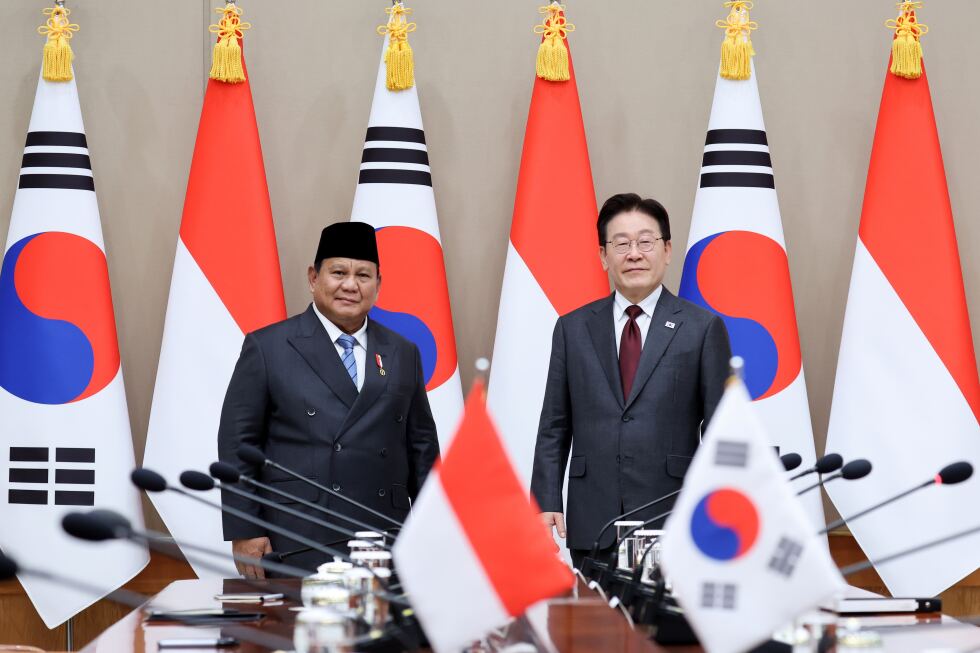
    Against a backdrop of growing global instability triggered by the ongoing conflict in the Middle East, South Korea and Indonesia have committed to elevating their bilateral strategic partnership, announcing a sweeping set of agreements to deepen collaboration across defense manufacturing, advanced technology, and critical supply chains during a Wednesday summit in Seoul, South Korea’s presidential administration confirmed.

    The high-level meeting brought together South Korean President Lee Jae Myung and Indonesian President Prabowo Subianto in the South Korean capital, where the two leaders put their signature to a joint communiqué outlining plans for expanded economic integration and continued joint work on major defense development initiatives. These collaborative projects span multiple high-priority defense sectors, including the co-development of fighter jets, training aircraft platforms, and advanced anti-tank missile systems.

    Beyond defense cooperation, the two nations have also moved to strengthen coordination around energy, critical minerals, and key resource supply chains. President Lee emphasized that Indonesia has emerged as an irreplaceable partner for South Korea in securing stable energy supplies at a time when global energy markets face widespread disruption from the Middle East conflict. Indonesia serves as a critical source of natural gas and coal for South Korea’s energy network, and under the new agreement, South Korean importers will take delivery of approximately 820,000 tons of liquefied natural gas (LNG) from Indonesia this year alone. This volume of LNG is sufficient to operate all of South Korea’s gas-fired power generation facilities at full capacity for roughly 12 days, providing a substantial buffer against potential market volatility.

    Both leaders also voiced their satisfaction with the progress of the KF-21 supersonic fighter jet program, South Korea’s flagship indigenous defense development project. Launched in 2015, the initiative has counted Indonesia as a core international partner from its earliest stages. Last week marked a major milestone for the program, with the first completed KF-21 aircraft officially rolled off the production line. Multiple industry reports indicate that South Korea has plans to export 16 of the completed fighter jets to Indonesia once full production scales up, cementing the long-term collaborative framework for the project.

  • Fun taken to new heights at ice-climbing center

    Fun taken to new heights at ice-climbing center

    Against the backdrop of a booming winter sports culture ignited by the 2022 Beijing Winter Olympics, a landmark new recreational facility has opened its doors in southwest China, bringing the high-adrenaline experience of ice climbing from remote mountain icefalls directly to urban enthusiasts.

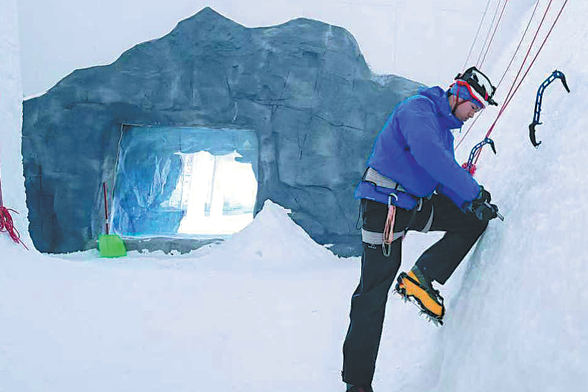
    China’s first city-based indoor ice climbing venue, dubbed Ice Panda, welcomed its first official visitors in January 2026 after a three-month trial operation period, located within the Futian Transit-Oriented Development (TOD) commercial complex in Chengdu Future Science and Technology City, Sichuan province. Spanning 1,600 square meters, the purpose-built center centers around a 12.5-meter professionally engineered main ice wall, designed to accommodate climbers of every skill level with three distinct gradient options: a 60-degree gentle incline for new learners, a 79-degree steep slope for intermediate practitioners, and a challenging 90-degree vertical wall for seasoned athletes.

    For first-time participants, the center offers a 498 yuan ($72) one-hour beginner package that includes full professional gear rental, while experienced climbers can access the venue for 198 yuan per hour without equipment. Since its soft launch, the facility has drawn a steady stream of visitors ranging from young urban professionals seeking a novel stress-relief activity to dedicated climbing enthusiasts traveling from neighboring cities.

    Zhang Wei, a 28-year-old software engineer based in Chengdu and one of the center’s early visitors, described his experience as a transformative break from daily work pressure. “It’s so cool to go ice climbing right in the city,” he said. “The intense focus it demands, the cold air hitting your face, the sound of your tools biting deep into the ice… it completely clears your mind of all the daily stress that builds up at work.”

    A veteran climber who only gave his surname as Li traveled all the way from Chongqing, about 300 kilometers from Chengdu, to test the new venue. He noted that the facility solves a long-standing inconvenience for domestic ice climbing lovers. “The texture of the real ice immediately got me into the zone,” Li said. “In the past, I had to wait for winter and drive hours to reach the natural icefalls in western Sichuan. Now, with this indoor facility, I can come practice anytime, all year round.”

    For first-time climbers like Ye, a local resident who tried ice climbing for the first time at Ice Panda, the venue’s convenience is its biggest draw. Located within a major urban TOD complex, the center is easily accessible via public subway, and offers on-site full equipment rental, eliminating the barrier of entry for beginners who do not own their own expensive gear.

    To ensure the venue meets the needs of both new learners and professional practitioners, Ice Panda’s management team spent months collecting feedback from visitors and elite climbers during the trial operation phase to refine the facility’s design. A key priority was replicating the texture and challenge of natural outdoor glacial ice, while maintaining high safety standards.

    “For example, we embedded a fiber mesh into the ice to simulate the texture of glacial ice formed when snowmelt mixes with grass and twigs,” explained Li Changbin, general manager of Ice Panda. He added that the special construction method not only creates a more authentic climbing experience, but also boosts the ice wall’s structural integrity and its ability to hold climbing tools securely.

    Beyond offering a recreational activity for visitors, Ice Panda positions itself as a comprehensive hub for growing ice climbing culture across China. During its trial run, the facility already partnered with leading outdoor sport brands to host enthusiast exchange events, and collaborated with top professional climbers to offer public introductory training classes. A full lineup of brand collaborations and community activities is already scheduled for the coming months, as the team works toward its long-term goal.

    “Our goal is to transform ice climbing from a niche extreme sport into a fashionable, accessible and healthy lifestyle for the general public,” Li Changbin said.

    Chengdu, the capital of Sichuan province, serves as the main gateway to the abundant natural icefall resources in the mountainous regions of western Sichuan. In the years following the 2022 Beijing Winter Olympics, public interest in winter sports including ice climbing has surged across the city. Local climbing coach Huang Siyuan noted that the new indoor center fills a critical gap in the local ecosystem, giving beginners a low-risk space to build foundational skills before they advance to outdoor natural icefalls.

    Local authorities noted that the launch of Ice Panda aligns with Chengdu Future Science and Technology City’s broader development strategy for the Futian TOD, which aims to integrate culture, commerce, sports, tourism and other business formats to create a new regional consumption landmark that meets the diverse lifestyle needs of both local residents and out-of-town visitors.