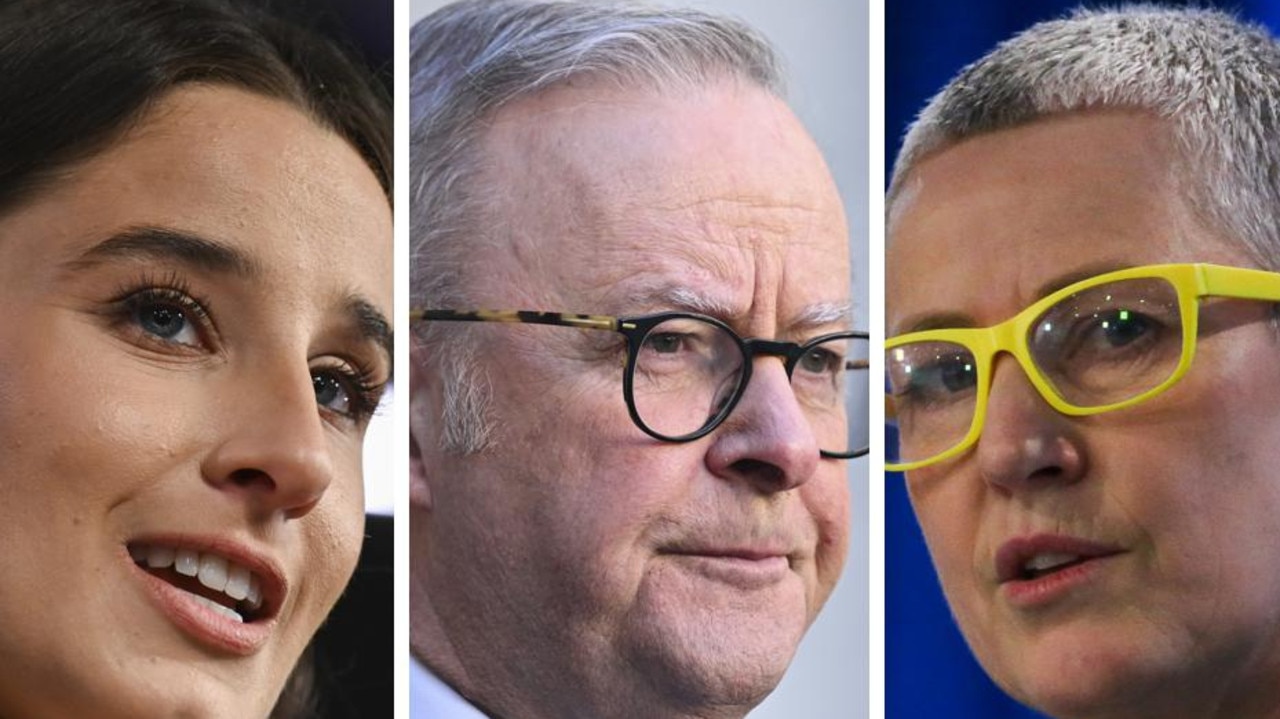
A wave of high-profile scandals and a recent string of femicides across Australia have pushed the urgent crisis of violence against women and children to the top of the national policy agenda, with Prime Minister Anthony Albanese set to convene national cabinet this week to address stalled progress and systemic failures in the country’s response. The gathering comes as Social Services Minister Tanya Plibersek continues public consultations for the second five-year phase of Australia’s 10-year National Plan to End Violence Against Women and Children, launched to tackle the multifaceted crisis through targeted action on prevention, intervention, response, and long-term recovery.
作者: admin
-
Reserve Bank signals further rate pain possible to crush persistent inflation
Australia’s multi-year battle against elevated inflation appears to be turning a corner on paper, but leading economic analysts are sounding a stark warning: Australian households carrying mortgages should prepare for more financial pain, as any apparent progress is unlikely to translate to imminent cash rate cuts. In fact, further interest rate hikes remain on the table ahead of the Reserve Bank of Australia’s (RBA) September monetary policy meeting.
-
Activists urge Mamdani to cancel Hindu nationalist event in New York City
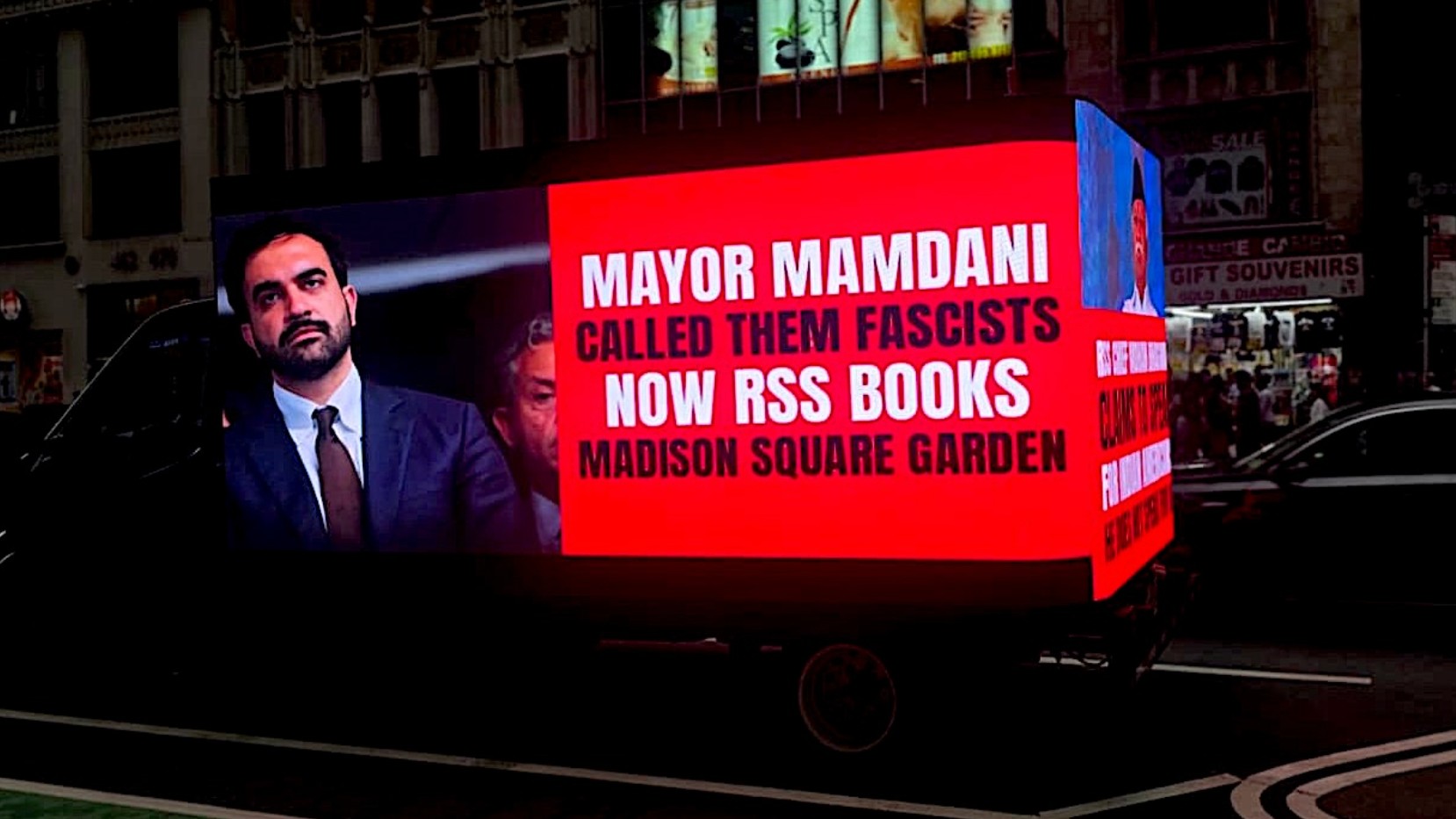
A coalition of human rights organizers and community leaders is escalating pressure on New York City Mayor Zohran Mamdani to scrap a high-profile weekend event at Madison Square Garden headlined by Mohan Bhagwat, the leader of India’s far-right Hindu nationalist paramilitary organization Rashtriya Swayamsevak Sangh (RSS).
Protesters are set to gather outside New York’s City Hall on Tuesday to call for the event’s cancellation and to draw public attention to the RSS’s expanding ideological footprint across the United States. In a formal statement ahead of the rally, Sravya Tadepalli, deputy executive director of the advocacy group Hindus for Human Rights, emphasized that Bhagwat does not speak for the global Hindu community. Tadepalli framed the RSS as an extremist movement that has systematically incited violence, systemic exclusion, and collective fear against India’s religious minority groups.
“New York should not provide the RSS with a platform to rebrand religious nationalism as a message of unity,” Tadepalli said. “We will gather at City Hall to defend a genuinely pluralistic vision of an India where no faith is used to determine who belongs or who holds power.”
Tuesday’s demonstration builds on an open letter signed by dozens of human rights organizations, community groups, and two prominent New York local officials: Comptroller Brad Lander and City Council member Shahana Hanif. Notably, two Indian-American New York elected officials — state assembly member Steven Raga and City Council member Shekar Krishnan — have declined to add their signatures to the demand. Middle East Eye attempted to reach out to Mayor Mamdani, Raga, and Krishnan for comment on the controversy, but received no response before publication.
Founded in 1925 in Nagpur, India, by Hindu nationalist ideologue Keshav Baliram Hedgewar, the RSS is widely recognized as the ideological foundation of the global Hindutva movement, which advocates for a Hindu supremacist political order in India. The ruling Bharatiya Janata Party (BJP), led by Indian Prime Minister Narendra Modi, is widely documented as the political wing of the RSS. From its earliest years, the organization maintained ideological ties to 20th-century European fascist movements, and its founding thinkers also expressed open alignment with the Zionist movement in Palestine. Scholars draw parallels between Hindutva and Zionism, noting both frameworks seek to establish a state structured around the political and cultural dominance of a single religious community.
Edward Anderson, an academic specializing in Hindu nationalism and the Indian diaspora, told Middle East Eye that while hosting the RSS leader at a major New York venue like Madison Square Garden may seem unexpected, the organization has actively cultivated support among diaspora communities across the globe since India gained independence. Anderson explained that the choice of high-profile venue serves two key strategic purposes for the movement. First, it aligns with the RSS’s public narrative of growing power and national pride, projecting an image of success to both domestic and international audiences. Second, footage and images from the event can be circulated back to audiences in India to reinforce the movement’s global standing.
This is not the first time a top figure linked to the RSS-BJP ecosystem has headlined a major event at Madison Square Garden: just months after his first election as prime minister in 2014, Modi drew a crowd of roughly 18,000 adoring supporters to the arena, where he laid out his vision for a “India of your dreams.” The Los Angeles Times famously described the atmosphere as a “rock-star reception” for the new prime minister. Anderson noted that Bhagwat’s upcoming event fits into a broader deliberate strategy by the RSS to boost its international legitimacy, counter widespread international criticism that frames the group as a paramilitary anti-minority movement.
Since Modi took office in 2014, documented hate crimes against religious minority communities in India have surged sharply. Muslim communities have been targeted in public lynchings by Hindu vigilantes over unsubstantiated claims of cow slaughter or beef consumption, and prominent Hindu religious leaders have repeatedly publicly called for the mass murder of Muslims, rarely facing legal or social consequences. Systemic exclusion has also infiltrated India’s electoral system, where Muslim voters are disproportionately removed from official voter rolls. In recent years, hate crimes against India’s small Christian minority have also risen dramatically.
Mayor Mamdani has a well-documented public record of criticizing the rise of Hindu nationalism in India, most recently in public comments in 2024. Four months before he took office as mayor, Mamdani co-signed a letter calling for the removal of a Hindu nationalist float from New York’s annual India Day parade. The float depicted a Hindu temple constructed on the site of the demolished 16th-century Babri Mosque in Ayodhya, a project that has become a core symbol of Hindutva political ambition. At the time, then-state assembly member Mamdani told media outlet Maktoob Media: “For the BJP and associated Hindu nationalist groups, India’s Muslim population isn’t only an obstacle to their political goals, it is anathema to their definition of the nation.”
Despite this past criticism, Mamdani has faced prior scrutiny from progressive activists who argue that many of his high-profile public stances — including his positions on the Israeli-Palestinian conflict — amount to symbolic political positioning rather than actionable policy change.
-
Iranians queue for petrol after US announces new sanctions
Just hours after the United States unveiled a sweeping new round of economic sanctions targeting Iran, long lines of vehicles snaked out of petrol stations across the Iranian capital of Tehran on Tuesday, as residents braced for deeper economic pain amid a months-long military stalemate that has already shut down critical shipping through the Strait of Hormuz.
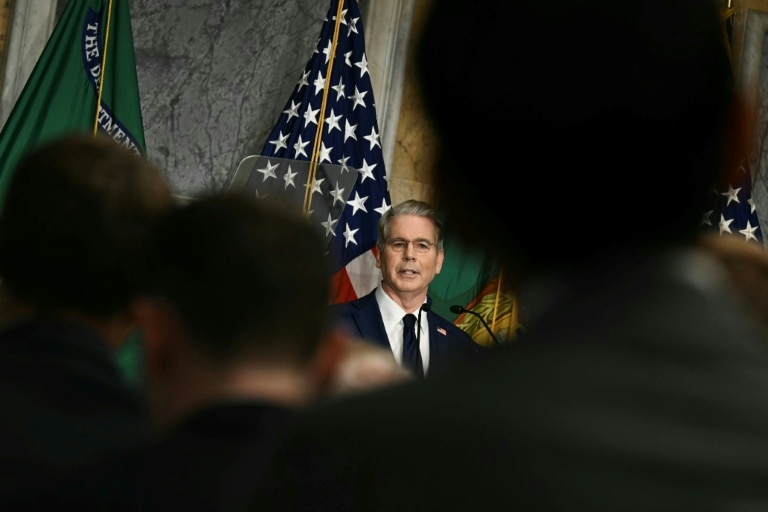
Six months into a conflict that has left peace negotiations deadlocked, Washington is doubling down on economic coercion to force Iran into policy concessions. On Monday, US Treasury Secretary Scott Bessent laid out the administration’s strategy of what he called “economic asphyxiation”, framing the goal as cutting off every financial and trade lifeline that supports Iran’s ruling government.
For Iranians, who have already weathered decades of successive US sanctions, the latest measures have stoked immediate anxiety over rising costs and supply shortages. Even as Tehran’s leadership has dismissed the new sanctions as nothing new, everyday residents across the capital are already feeling the impending squeeze. “People are being hurt, both those who are financially well-off and those who are financially weak,” 55-year-old realtor Mehdi Yazdian told reporters, calling on Iranian authorities to implement price controls to cushion the blow. He added, “Yes, these sanctions are having an effect, but naturally, our people are resilient.”
Iran’s economy was already grappling with crippling sky-high inflation long before the current conflict broke out, conditions that fueled a nationwide anti-government protest movement that reached its peak in January. Iranian authorities responded to the unrest with a harsh crackdown that foreign human rights groups estimate has killed thousands of people. Tehran has repeatedly blamed the violence on what it calls “terrorist acts” orchestrated by the United States and Israel.
Many Iranians worry the added economic pressure from new sanctions could reignite the mass unrest that swept the country earlier this year. “I personally am not afraid of war at all because this is our land,” said 45-year-old English teacher Kia Farahani. “But I think that this war will be more economic and will cause people to feel a lot of pressure, and now maybe there will be protests again.”
The Trump administration has condemned Tehran’s crackdown on protestors, with former President Donald Trump saying Iran is “killing protesters, even when they are not protesting, at levels not seen before.” Writing on his Truth Social platform, Trump called the situation “a humanitarian crisis of epic proportions, and must be stopped, NOW.” Iran has also carried out dozens of executions linked to the winter protest movement, drawing further international condemnation.
The new petrol rationing announcement from Iranian officials compounded public anxiety this week. Mohsen Haji-Mirzaei, chief of staff to Iran’s president, confirmed to state television that the country would cut official petrol quotas while leaving subsidized prices unchanged; consumers who want to purchase more fuel than their allotted quota will have to pay a higher market rate. The announcement came just hours after the US sanctions reveal, prompting the long lines seen at Tehran filling stations on Tuesday.
The expanded US sanctions cast a wide global net, targeting entities across the Middle East, Asia and Europe. The new measures impose expanded secondary sanctions on Iran’s digital assets sector, technology industry, gold trade, aviation and shipping networks, affecting entities based in the United Arab Emirates, Hong Kong, China, Singapore and multiple European nations. In his announcement, Bessent warned that any country that refuses to back Washington’s economic pressure campaign would “share in the isolation” of Iran, and did not rule out eventually targeting Chinese financial institutions for non-compliance.
China, which remains one of Iran’s largest and most steadfast oil customers, rejected the new sanctions Tuesday, saying it would “take all necessary measures to firmly safeguard its own rights and interests.”
Tehran has remained outwardly defiant in the face of the new measures, with senior officials predicting the US effort will end in “another defeat” for Washington. “We’ve been waiting for these plans for a long time, and the government is and was ready and has a two-year plan to manage these events,” said Iranian Economy Minister Ali Madanizadeh.
Tehran-based independent economic analyst Saeed Laylaz noted that the new sanctions align with the Trump administration’s long-running “maximum pressure” strategy against Iran. “The United States of America has nothing that it can do that it had not done before,” Laylaz told AFP, pointing out that decades of international isolation have forced Iran’s economy to build greater self-sufficiency over time. Still, he expressed skepticism about Iranian authorities’ ability to address longstanding domestic economic challenges, including persistent runaway inflation.
Global oil markets responded to the latest developments with growing stability, with international benchmark Brent crude falling roughly 3 percent to below $90 a barrel on Tuesday, marking the second consecutive day of declines. Traders judged that the risk of direct military strikes between the US and Iran had receded in recent weeks, even as the ongoing conflict has disrupted one of the world’s most critical energy chokepoints. When Iran first blockaded the Strait of Hormuz at the start of the conflict, crude prices spiked dramatically, sending shockwaves through the global economy. As of Tuesday, Iran and neighboring Oman, another key coastal state for the strait, have been working to negotiate a framework to reopen navigation. The two countries’ foreign ministers met in Tehran Tuesday, confirming after their talks that they had agreed to a plan to establish a joint temporary navigation corridor through the strait and launch a joint demining project to clear the waterway for commercial traffic.
-

Mass arrests in global crackdown on West African cyber-crime networks
A major coordinated global law enforcement sweep targeting transnational West African organized cyber-crime rings has concluded with 58 arrests and the identification of more than 260 suspects across 22 nations spanning six continents, global policing body Interpol has announced.
Led by Interpol, Operation Jackal IV — the latest in a series of anti-crime operations launched in 2022 targeting these networks — focused on dismantling criminal infrastructure behind pervasive romance scams, fraudulent investment schemes, and a range of other cyber-enabled financial frauds. The operation ran from November 2025 through June 2026, investigators probing not only how frauds including cryptocurrency scams and business email compromise attacks were carried out, but also how criminal groups laundered their illegal proceeds across international borders.
Authorities specifically targeted networks linked to the notorious Nigerian criminal syndicate Black Axe, a transnational organization Interpol says is responsible for a large portion of global cyber-enabled financial fraud. Beyond traditional financial scams, the investigation uncovered alarming emerging criminal trends: syndicates are increasingly using sextortion tactics to target vulnerable minors, with victims as young as 14 years old. Most of the financial scams commonly target retirees residing in English-speaking countries, per Interpol findings.
Operation Jackal IV underscores the critical impact of cross-border law enforcement collaboration to counter transnational organized crime, agency officials emphasized. “By following illicit financial flows across borders, we are attacking the very lifeblood of organised crime and making it increasingly difficult for criminal networks to profit from their activities,” explained Tomonobu Kaya, director of Interpol’s Financial Crime Centre, in an official statement. “Operation Jackal IV demonstrates the power of international co-operation.”
Over the course of the operation, Interpol facilitated cross-border coordination, shared real-time intelligence between participating nations, and delivered specialized training and investigative support for anti-money laundering probes. While many components of the investigation remain ongoing, early results show major law enforcement actions across Argentina, Italy, Romania, and South Africa.
South Africa recorded some of the most significant outcomes of the sweep. Local law enforcement carried out raids on seven facilities tied to a romance and investment scam syndicate in Johannesburg, with Interpol investigators on-site to support local authorities. The action resulted in 39 arrests, the seizure of $2.67 million in illegal assets, and the freezing of 257 compromised bank accounts.
Beyond cyber-enabled fraud, Interpol confirmed that the West African criminal networks targeted in the operation are also involved in a range of other violent and high-level criminal activity. Black Axe, the most prominent syndicate targeted, operates global trafficking, prostitution, and even targeted killing operations, with its primary recruitment base in Nigeria. The group often inducts new members during their time in university, with many of its operatives holding advanced degrees, law enforcement officials have documented.
This operation marks the fourth iteration of Interpol’s Jackal series of anti-crime campaigns. The previous operation, Jackal III carried out in 2024, resulted in the arrests of more than 300 people tied to Black Axe and its affiliated criminal networks across the globe.
-
Spanish government says sorry to people of Ceuta for migrant crisis
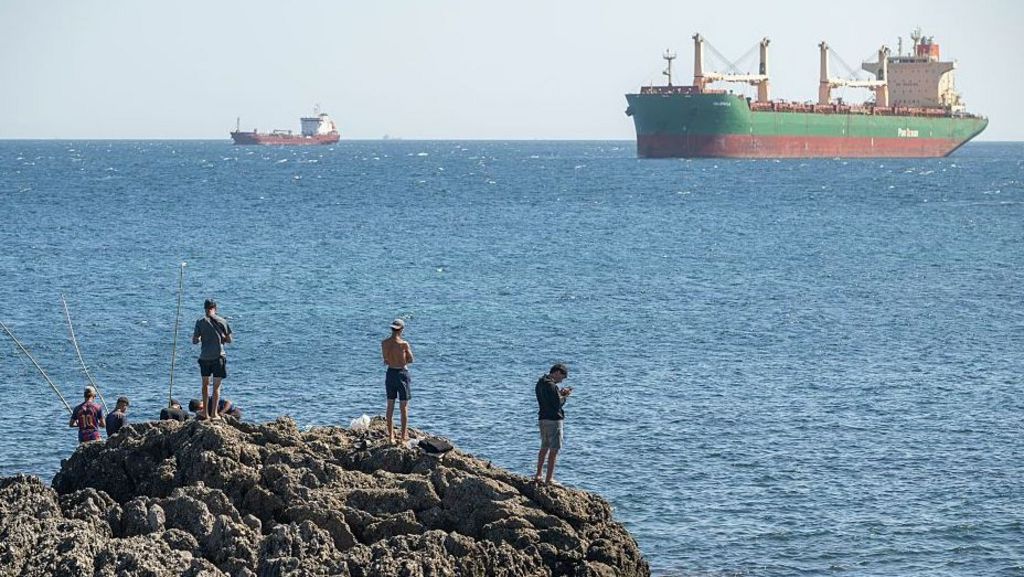
Weeks after a historic mass migration event that put unprecedented strain on Spain’s North African exclave of Ceuta, the Spanish national government has issued a formal apology to local residents and announced sweeping changes to the country’s immigration and asylum legislation to address long-standing systemic gaps.
In testimony before a parliamentary committee, Defence Minister Margarita Robles delivered the official apology on behalf of the Socialist government led by Prime Minister Pedro Sánchez. “I want to apologise to all those who may have felt, or who even still feel, abandoned or not sufficiently cared for,” Robles stated, adding that she had directly observed the widespread anxiety, sense of abandonment, and insecurity that has gripped the local community since the crisis unfolded.
The emergency began on July 30 and 31, when more than 72,000 migrants crossed the border from Morocco into Ceuta, a small Spanish territory located on the northern coast of Africa. Most migrants bypassed the fortified border barrier by swimming around it, according to official accounts. Ceuta Mayor Juan Jesús Vivas has confirmed that at least 100 migrants died during the dangerous mass crossing, a death toll that has drawn international attention to the risks migrants face attempting to reach European territory.
While the vast majority of those who crossed returned to Morocco within hours of entering Ceuta, several thousand remain in the exclave to this day. Among those still in Ceuta are many unaccompanied children, and the majority of the remaining migrants lack formal shelter, forcing them to sleep in open-air public spaces including beaches and city streets. With Ceuta’s total permanent population standing at just 84,000, local residents and Ceuta’s regional government have repeatedly complained that the ongoing presence of thousands of unhoused migrants is completely unsustainable, piling mounting political pressure on Sánchez’s national government to take decisive action.
In response to the crisis, the Sánchez administration has formally declared a national security emergency in Ceuta, centralizing all crisis management efforts under national control. The government has appointed Territorial Policy Minister Ángel Víctor Torres to lead and coordinate the national response, removing the Ceuta local government from its previous leadership role in managing the emergency.
Parallel to the emergency management restructuring, the government has announced a comprehensive overhaul of Spain’s migration and asylum laws, designed to bring Spanish policy fully into alignment with updated European Union regulations. Interior Minister Fernando Grande-Marlaska stated that the reforms are intended to create a migration process that is orderly, efficient, and maintains all possible legal and humanitarian guarantees for migrants.
Key changes to the legislation include cutting the maximum period of time undocumented migrants can be held for medical screenings, biometric data collection, and initial legal evaluation from the maximum allowed seven days under EU rules to just three days. The reforms will also introduce a two-tiered processing system for asylum claims, which is designed to speed up consideration of cases classified as urgent.
Despite the flurry of government action, the response has left critical questions unresolved, most notably a public contradiction between top cabinet officials over advance warnings of the mass crossing. Robles told parliament that Spain’s CNI intelligence agency shared information with security forces about a possible imminent large-scale crossing shortly before the event occurred, but Grande-Marlaska appeared to directly contradict this account. “There was no report that hinted that on 30 July what eventually happened was going to happen,” he said. Robles later clarified that the advance information was not shared via a formal written report, leaving uncertainty over how thoroughly the threat was communicated to on-the-ground security teams.
Sánchez has publicly blamed human trafficking networks and viral social media content encouraging migration for the mass crossing. But many political opponents and analysts have pointed the finger at the Moroccan government, which has a long history of controlling migration flows through the Ceuta and Melilla borders to exert political pressure on Madrid and the European Union.
Speaking during questioning of Robles in parliament, Esther Muñoz, a lawmaker with the conservative opposition People’s Party, argued that the crisis was years in the making. “The crisis in Ceuta didn’t begin on 30 July,” Muñoz said. “It’s been brewing for years and you know it, because you know that [the Moroccan authorities] have spent years sizing us up, sizing up our ability to respond and our willingness to do so.”
The emergency has also amplified long-simmering geopolitical tensions over territorial claims to Ceuta and its sister exclave Melilla. Just last week, Moroccan Justice Minister Abdellatif Ouahbi reaffirmed his country’s claim to the territories, stating Morocco holds “historical and geographical right” to the cities and calling for formal bilateral negotiations with Spain on the issue.
Robles rejected the claim outright during her parliamentary testimony, stating that she would not allow “any minister from any government, in this case Morocco, to question the Spanish status of Ceuta and Melilla.”
-
Was Jason Arday really a serial plagiarist? No, the evidence shows
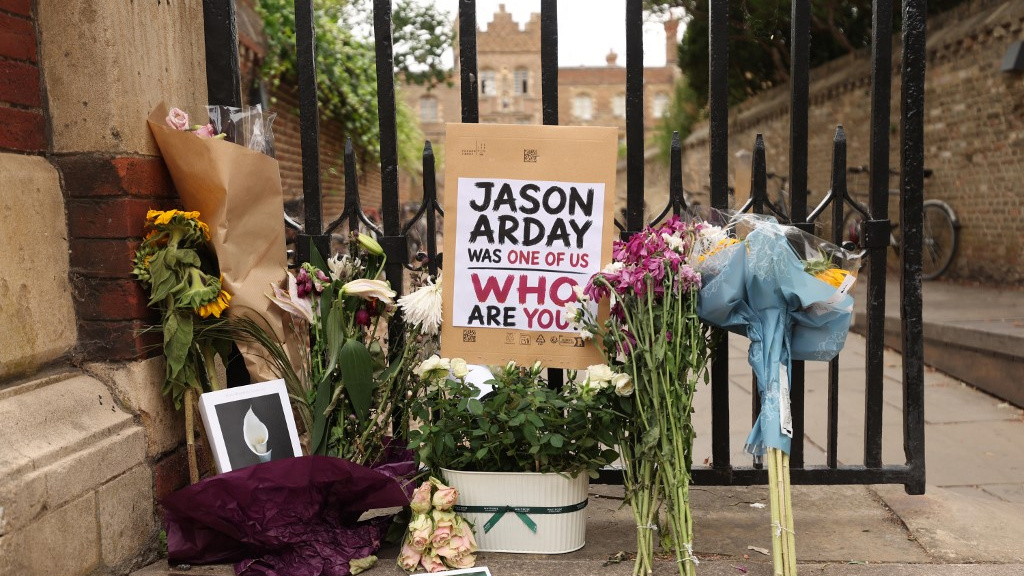
In the weeks leading up to the death of Jason Arday, a prominent Cambridge University sociologist of race and education earlier this month, a widespread media and online campaign painted him as a serial plagiarist and a fabulist who invented large swathes of his personal and professional backstory. But new in-depth analysis from Middle East Eye (MEE) has upended many of the most damaging claims at the center of the attacks, revealing a far more nuanced picture that contradicts the pervasive negative narrative that circulated before his death.
Most critically, MEE’s review of Arday’s body of work finds that the label of “serial and unrepentant plagiarist” applied to him by critics does not hold up to close examination. To date, no accredited academic institution has found Arday guilty of intentional plagiarism, despite the flurry of public allegations that have dominated coverage of the scholar. Across 33 peer-reviewed papers Arday published throughout his career, only two – approximately 6% of his total output – have required formal corrections to address attribution gaps. The overwhelming majority of his research, which centered on racial equity in education, has never faced formal plagiarism charges.
The bulk of the original accusations against Arday originated from a 2024 blog post by Nathan Cofnas, a proponent of the controversial “race science” school of thought and a former Cambridge academic currently employed by Ghent University. Cofnas claimed that after removing work that was allegedly plagiarized or not written by Arday, “there is essentially nothing resembling real scholarship” left of his career. But this assessment has been vigorously pushed back against by leading scholars in Arday’s field.
Yale University philosopher Jason Stanley argued last week that Arday’s academic impact matches that of top-tier researchers in his discipline. Noting that Arday published four single-authored papers in 2018, just years after completing his PhD, Stanley pointed out that the four works have accumulated 238, 184, 177, and 47 citations respectively on Google Scholar. “This is very impressive impact for a scholar right out of their PhD. A surprisingly large percentage of academic papers receive no citations at all,” Stanley explained, adding that Arday’s work played a meaningful role in the expanding field of race in education research.
Cofnas built his case against Arday almost entirely on results from Copyleaks, an AI text detection tool that flags textual overlap between works. But experts and institutional guidelines note that AI detection of overlap does not itself prove plagiarism, which is defined by the intentional use of another scholar’s work without proper attribution, a determination that can only be made through formal institutional academic processes.
Much of the public scrutiny of Arday’s work focused on his 2015 PhD thesis, completed at Liverpool John Moores University (LJMU). The university launched a formal investigation into plagiarism claims earlier this year, and issued its final ruling in March clearing Arday of misconduct. Investigators concluded that the minor citation issues identified in the thesis stemmed from “honest and reasonable error,” and that the total textual overlap with existing work fell “well within the accepted range of compliance with the academic standards of the time.” LJMU also noted that Arday’s supervisory team had been depleted during his PhD, leaving him with only one formal supervision meeting throughout the entire program.
The Telegraph later reported that it had found 188 sentences in Arday’s thesis identical or nearly identical to work in a 2009 thesis by scholar Paula Zwozdiak-Myers, most appearing in the literature review section. But MEE’s independent review of Arday’s thesis found that he extensively cited and acknowledged Zwozdiak-Myers’s work throughout other sections of the document, explicitly noting that his core framework of reflective practice for student teachers drew directly from her existing research. Under LJMU’s academic misconduct policy, intentionality is a required element for a finding of plagiarism, a factor that was central to the university’s clearing of Arday. Even after Arday’s death, LJMU reaffirmed in a statement that his PhD “still stands.”
Of the two peer-reviewed papers that required corrections, MEE’s review aligns with institutional findings that gaps were accidental. A 2018 paper published in the journal *Social Sciences* was amended in 2023 to add missing citations for work adapted from a 2016 study by scholar Anjum Memon. The journal noted that the original paper already acknowledged adapting Memon’s research, but “inadvertently omitted overlap between the two publications in prior sections,” a gap the author voluntarily corrected. A 2021 paper by Arday was similarly amended to add two missing references.
Journalist Peter Jukes, co-founder of Byline Times, summed up the findings of independent academic reviews: “We’ve worked with academics comparing the 3% of the texts of two papers (of the 33 Arday had peer reviewed) and they confirm the university assessment – citation failures and data handling errors, corrected.” In an interview with The Times just weeks before his death, Arday himself acknowledged early career gaps that he attributed to limited resources early in his career, noting that after 2021, he was able to afford a professional proofreader, leading to marked improvements in the accuracy of his work.
Beyond academic plagiarism claims, Arday faced widespread mockery online and in the press for alleged fabrications of his personal backstory – claims that MEE has also confirmed are largely unfounded. The most widely derided claim was that Arday ran 30 marathons in 35 days for charity in 2010. MEE verified that contemporaneous coverage in multiple local newspapers, on-the-record witness testimony, Arday’s own contemporary blog posts, and dozens of event photos all confirm the challenge was completed, with no evidence of fabrication. Arday’s claim to have played semi-professional football was also dismissed by critics, but records confirm he played for two clubs, Walton and Hersham FC and Lewisham Borough FC. While Arday claimed to have played for Crystal Palace’s under-18 team, the club has stated it does not hold records from the 1990s and early 2000s, when Arday would have played, leaving the claim unconfirmed rather than disproven.
Critics also ridiculed Arday’s claim to have helped raise £5 million for charity over his career, but Arday always clarified the total was raised collectively across dozens of fundraising initiatives over 20 years, not by him alone. Byline Times found that Arday’s publicly documented charity work puts the collective £5 million figure well within the realm of plausibility. Even the claim that Arday falsely attributed a forthcoming book to himself is unfounded: the book *Being Young, Black and Male: Challenging the Dominant Discourse* is listed as an upcoming title with publisher Palgrave Macmillan, and has simply not yet been released.
While some open questions remain about small details of Arday’s work and background, and a number of academics have called for a full posthumous review of his research, the broader narrative of serial misconduct and fabrication that circulated before his death has been largely debunked. This case also highlights broader systemic issues in how academic institutions handle public plagiarism allegations, according to a senior anonymous Cambridge academic who spoke to MEE.
“Universities shouldn’t be safe spaces for plagiarism, and if we hold our students to the highest standards we have to apply those standards to ourselves,” the senior academic said. “But calling someone a plagiarist is not a very helpful way of measuring the severity of what has been alleged… The case of Professor Arday has revealed huge problems with the process, some of which were already known from public reporting of other cases: it takes far too long and the university struggles to balance the need for confidentiality with the fact that an allegation is in the public domain.”
Cambridge University initially declined to investigate Arday, citing LJMU’s clearing of him from wrongdoing, but opened a probe in early August “following new information about Professor Arday’s academic qualifications and honorary appointments,” with no mention of plagiarism in the official statement. Shortly after the probe was announced, Arday resigned, explicitly stressing that his resignation “should not be mistaken for an acceptance of the narratives that have surrounded me.” He died less than a month later.
Notably, the primary accuser Nathan Cofnas, who has argued that Black people would “disappear from almost all high-profile positions outside of sports and entertainment” without affirmative action, was suspended by Ghent University last week pending a disciplinary investigation into his recent controversial public statements. Cofnas has claimed he is being made a “scapegoat” for his views. Following Arday’s death, Cambridge Chancellor Lord Chris Smith labeled the campaign against Arday a “racist feeding frenzy.”
In the wake of his passing, dozens of former colleagues, students, and collaborators have shared tributes highlighting Arday’s mentorship and commitment to advancing equity in education. Oxford academic Dr. Rebecca Syed Sheriff described Arday as “kind, wise, warm, fun… He always had good ideas, always genuinely interested in the experiences of young people who would not usually be seen in research.” University of Glasgow professor Melanie Ramdarshan Bold added, “I learned so much from him: from his scholarship, which was brilliant and edifying, but just as much from the way he approached the world and other people.”
For many former students, Arday’s impact extended far beyond academic research. Sophie, a former BTEC student who experienced homelessness while studying with Arday when he worked as a college lecturer, shared that Arday supported her through daily check-ins, helped her secure food and housing, and connected her to a career in sports coaching that she held for 11 years before earning her degree. “Jason was my teacher and my football coach but most of all Jason checked in on me almost every day, he made sure I had somewhere to sleep and eat, he made me feel I belonged and that I could succeed no matter the circumstances,” she said.
As the academic community processes Arday’s death and the controversies that preceded it, the case has sparked broader conversations about due process for academics facing public accusations, the limitations of AI detection tools for determining plagiarism, and the outsized influence of bad-faith actors with ideological agendas in shaping media narratives about scholars of race.
-

US country music legend Dolly Parton dies at 80
Beloved American country music trailblazer Dolly Parton, who climbed from humble, impoverished roots in rural Tennessee to become one of the nation’s most cherished cultural figures, has passed away at the age of 80. Her family confirmed the news in an announcement shared publicly on Tuesday.
In a social media video statement, Parton’s nephew Bryan Seaver shared that “Dolly has lived in the light and is in the arms of Jesus.” He went on to honor his aunt’s far-reaching impact, noting that the multi-award-winning artist “opened doors for generations of singers, songwriters, musicians, and dreamers from every walk of life.”
No official cause of death has been released by the family, but Parton, who built a multi-faceted career as a singer-songwriter, actress, philanthropist, and powerhouse business leader, had openly discussed experiencing ongoing health complications in recent months. Her husband of more than five decades, Carl Dean, passed away in 2023.
Former U.S. President Donald Trump has ordered all American flags across the country to be flown at half-staff for a full week in tribute to Parton, describing her death as “a true loss for millions of people.” In a post on his Truth Social platform, Trump added, “There has never been anyone like her, and never will.”
Parton’s health struggles became public knowledge earlier this year, when she announced the cancellation of a planned series of concerts in Las Vegas this past May, citing persistent health concerns. In updates shared with her fanbase via social media, she explained that while her treatment for an undisclosed illness was progressing well, she did not feel physically prepared to return to the stage for live performances.
Parton’s journey in music began the day after she graduated from high school, when she left her small Tennessee hometown to pursue her dreams in Nashville, the global capital of country music. By 1967, at just 21 years old, she had already become a household name across the United States after joining Porter Wagoner’s widely syndicated country music television show, which brought her distinctive voice and charismatic personality into millions of American living rooms.
Over a remarkable six-decade career, Parton proved to be an extraordinarily prolific artist, composing roughly 3,000 original songs. Her discography includes countless global hits, from the upbeat soundtrack staple *9 to 5* and the beloved duet *Islands in the Stream* to the iconic ballad *I Will Always Love You* — a track that found international new fame when Whitney Houston recorded a blockbuster cover of it.
Across her career, Parton released 49 full studio albums, plus more than 100 compilation and collaboration projects, earning her the enduring nickname of the “Queen of Country Music.” Repeating his praise for his aunt’s barrier-breaking legacy, Seaver added, “By her example, we believed that anything was possible. She never saw a door she couldn’t open, and the doors she opened made and changed history.”
Never one to shy away from her signature, unapologetic personality and striking public image, Parton redefined what it meant for a woman to succeed in a male-dominated music industry. She blazed a trail that countless female artists would follow, ultimately cementing her status as a national treasure whose work has been covered by dozens of major artists, including Shania Twain, Sinéad O’Connor, and the White Stripes.
-

Sliman Mansour, a pioneer of contemporary Palestinian art, dies aged 79
The global art community is mourning the passing of Sliman Mansour, one of the most influential contemporary Palestinian artists, who died over the weekend at the age of 79. His family shared the news of his death in a heartfelt public statement posted to his official Instagram account.
“The final chapter has been written. With hearts heavy beyond words, we share that our beloved father has passed away,” the statement read. “To the world, he leaves behind a life filled with beauty, memory, and a legacy that will continue to live through all those he touched. But to us, we lost a father, our source of love, strength and home.”
Born in 1947 in Birzeit, a small Palestinian town just north of Ramallah, Mansour entered the world just 12 months before the 1948 Nakba — the catastrophic event that saw more than 700,000 Palestinians forcibly displaced from their ancestral homes to make way for the creation of the state of Israel. He discovered his passion for drawing in early childhood, and his raw talent was first recognized by a German tutor at a Bethlehem boarding school, who encouraged him to deepen his painting practice and submit his work to international competitions. In a 2023 interview with Middle East Eye, Mansour recalled that his tutor entered his work into a United Nations ‘Children of the World’ drawing contest, where he took home first prize in 1962 — a milestone that set him on his path as a professional artist.
Throughout his decades-long career, Mansour centered his practice on preserving and elevating the Palestinian historical narrative, pushing back against erasure tactics that sought to minimize Palestinian connection to their homeland. He repeatedly called out the misleading narratives promoted by Israeli officials and Zionist movements, which framed the land as sparsely populated and barren before the arrival of modern Jewish settlers. “That was the very strategy of the Zionist movement, to deny your existence, because when you are not there, it’s much easier to take your land, to kill you, to imprison you,” he told Middle East Eye in the 2023 interview.
Mansour and his fellow Palestinian artists set out to reclaim their people’s story by weaving deeply symbolic imagery — both drawn from ancient cultural traditions and crafted to reflect modern struggle — into every canvas. “As artists, we started to search for images to reflect identity,” he explained, noting that the movement drew heavily on ancient Palestinian culture and the distinctive landscape of historic Palestine. He frequently highlighted how Israeli occupation deliberately altered that landscape, replacing native olive groves with non-native cypress and pine trees to erase traces of Palestinian presence.
Symbolism lay at the heart of all Mansour’s most celebrated works, with each recurring motif carrying specific political and cultural meaning. For example, he once explained that when he painted Jaffa orange trees, he was referencing land seized during the 1948 Nakba, while olive trees represented territory occupied during Israel’s 1967 conquest of the West Bank, East Jerusalem, and Gaza. Other iconic symbols that recur across his oeuvre include tatreez-embroidered traditional thobes, doves for peace and freedom, and the keffiyeh, a globally recognized marker of Palestinian identity.
For decades, Mansour’s work faced systematic repression from Israeli occupying forces. He recalled that as early as 1979, when he and fellow artists began organizing independent exhibitions, Israeli forces regularly seized canvases that they deemed objectionable — even mundane works depicting peasant women working in fields in traditional embroidered clothing.
Among his most famous works is *Last Summer in Palestine*, completed in 1994. The piece reinterprets Leonardo da Vinci’s iconic *The Last Supper*, replacing Jesus with a Palestinian man and the 12 disciples with 12 Palestinian women, centering Palestinian community and experience in one of Western art’s most recognizable compositions. Another of his best-known works, 2005’s *Camel of Burdens*, depicts a frail elderly Palestinian man carrying an eye-shaped orb on his back, with the historic city of Jerusalem contained within the sphere.
Over his career, Mansour earned widespread international acclaim and a dedicated global following for his unflinching, beautiful depictions of Palestinian life and struggle. His many honors include the 2019 UNESCO-Sharjah Prize for Arab Culture, the grand prize at the 1998 Cairo Biennale, and the 1998 Palestine Prize for Visual Arts.
Later in life, Mansour shifted much of his focus to mentoring the next generation of Palestinian artists, instilling in his students the same commitment to cultural identity and resistance that defined his own work. “I firmly believe in the significance of embracing your craft and embracing your connection to your people, their culture, and their pursuit of freedom,” he said. “It is crucial for my students to grasp the sense of belonging and never lose hope.”
As tributes pour in from across the global art and political communities, Mansour’s legacy as a tireless defender of Palestinian narrative and one of the greatest visual artists of his generation remains firmly fixed in the work he leaves behind, and in the countless young artists he inspired.
-
Dolly Parton: A life in pictures
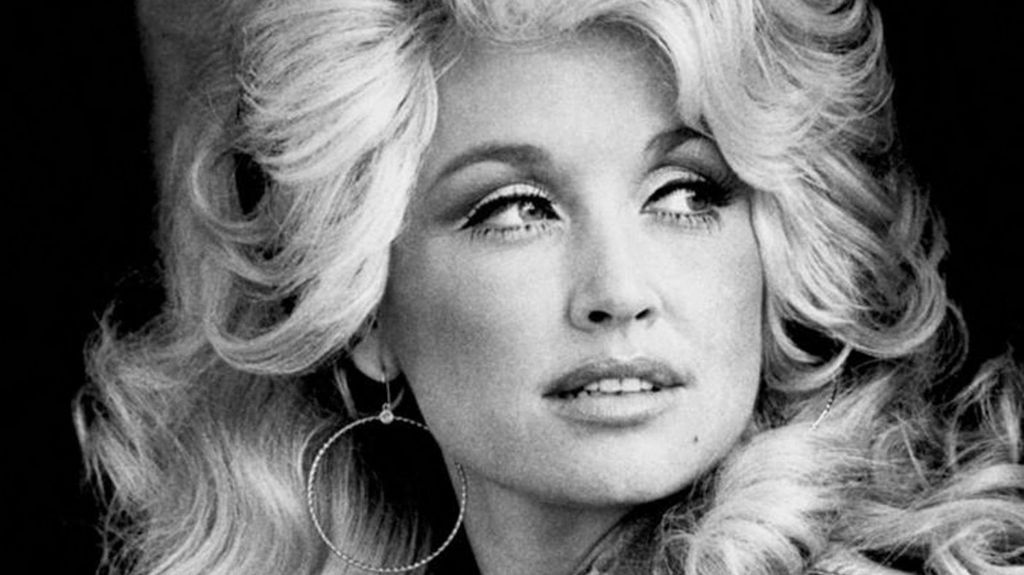
Dolly Parton, the universally adored country music superstar whose career has stretched across more than six decades, carries a origin story rooted in the humble, rugged hills of Tennessee’s Smoky Mountains. Born the fourth of 12 children into deep poverty, she grew up in a cramped one-room cabin on the banks of the Little Pigeon River, a starting point that would shape both her work ethic and her lifelong commitment to giving back to communities like the one that raised her.
Parton’s gift for performance emerged far earlier than most. By childhood, she was already a regular presence on local radio and television broadcasts, and cut her debut single at just 13 years old. The day after she graduated from Sevier County High School in 1964, she moved straight to Nashville, the heart of American country music, to chase her professional dreams. By 1966, she claimed her first charting solo hit with *Dumb Blonde*, and just one year later, iconic country star Porter Wagoner extended a life-changing invitation: join his nationally syndicated *The Porter Wagoner Show* as a regular cast member and touring performer, catapulting her into national consciousness. Her breakthrough studio album *Hello, I’m Dolly* soon followed, and in 1969, she achieved a lifelong dream when she was inducted as a member of the Grand Ole Opry, an institution she has long called the “church of my heart.”
What sets Parton apart from most entertainment icons is her unparalleled productivity as a songwriter. Across her career, she has penned more than 3,000 songs, sold more than 100 million records worldwide, and earned 11 Grammy Awards including a prestigious lifetime achievement honor. Even as she expanded into acting and entrepreneurship, Parton has always identified first as a songwriter, once calling the craft “my way of expressing myself. It’s my therapy.” One of her most legendary creative feats came during a single 1973 writing session, when she composed two of her most enduring signature hits: *Jolene* and *I Will Always Love You*, tracks that remain cultural touchstones almost 50 years later.
Throughout the 1970s and 1980s, Parton transcended the boundaries of country music to become a global mainstream star. Famed for her oversized charisma, signature rhinestone-studded style, quick wit and warm charm, she crossed over to pop audiences with hit albums including *Here You Come Again*, and produced one of the 1980s’ most iconic duets, *Islands in the Stream*, alongside collaborator Kenny Rogers. She also built a successful parallel career as a film actor, making a acclaimed screen debut in the 1980 workplace comedy *9 to 5* starring alongside Jane Fonda and Lily Tomlin. She went on to earn further praise for roles in *The Best Little Whorehouse in Texas* opposite Burt Reynolds, and the beloved drama *Steel Magnolias*, where she held her own alongside an ensemble cast including Julia Roberts and Sally Field, balancing sharp comedic timing with unexpected emotional depth.
Beyond entertainment, Parton has built a lasting legacy through philanthropy and community investment. In 1986, she opened the Dollywood theme park in Pigeon Forge, Tennessee, just miles from her childhood home. What began as a passion project grew into one of the most popular regional tourist destinations in the United States, and its success has funded much of Parton’s charitable work. Most notably, her Imagination Library literacy program, launched in honor of her illiterate father, has distributed more than 100 million free books to children across the globe, a impact so significant that a Scottish regional council now votes to hold an annual day honoring Parton for her work advancing childhood literacy. She has also stepped up repeatedly to fund disaster relief efforts in her home region: after the 2016 Great Smoky Mountains wildfires, she founded the My People Fund that distributed $10 million to displaced homeowners, and in 2024 she pledged $2 million for Hurricane Helene relief in East Tennessee and Appalachia, combining a personal donation with matching funds from her foundation and business holdings.
Even into her late 70s, Parton remained a staple of global popular culture. Her 2014 performance in the “Legends Slot” at the UK’s Glastonbury Festival drew a crowd of more than 180,000 attendees, one of the largest daytime crowds in the festival’s history, and went down as one of the most beloved sets in the event’s history, turning the Pyramid Stage into a mass singalong of her greatest hits. In 2021, she made headlines for her playful public service announcement encouraging Covid-19 vaccination, adapting the lyrics of *Jolene* to urge the public: “Vaccine, vaccine, vaccine, vaccine, I’m begging of you, please don’t hesitate.” After initially declining a nomination, she was inducted into the Rock and Roll Hall of Fame in 2022, embraced the honor with characteristic humor, declaring “I’m a rock star now” and released a full rock album shortly after. In 2023, she turned in another viral performance as the halftime show headliner for the Dallas Cowboys’ annual Thanksgiving game, appearing in a rhinestone-encrusted Cowboys cheerleader outfit that won over fans worldwide.
Most recently, Parton has continued to create new work even amid personal hardship. After the passing of her husband Carl Dean in 2025, she released the tribute track *If You Hadn’t Been There* in his honor, while continuing development on *Dolly: A True Original Musical*, a stage production chronicling her extraordinary life. In early 2026, she delivered a moving pre-recorded tribute to the late Ozzy Osbourne at the BRIT Awards, where Osbourne was posthumously honored with a Lifetime Achievement Award, a moment widely cited as one of the ceremony’s most emotional highlights. Just this month, Parton announced that she would cancel her upcoming short Las Vegas residency due to ongoing health issues, telling fans she needed extra time to recover. For audiences worldwide, however, her legacy as a generous, quick-witted, and singularly talented artist is already secure: a songwriter at heart whose career reshaped modern country music, crossed generational and cultural boundaries, and improved the lives of millions through her relentless philanthropy.