作者: admin

  • US Congress to debate Trump’s war powers

    US Congress to debate Trump’s war powers

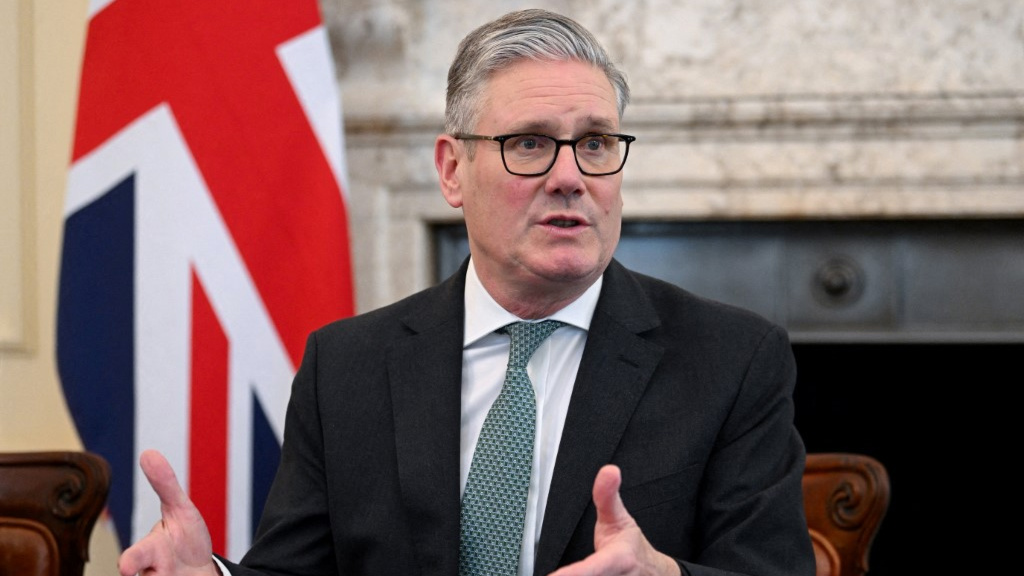
    A pivotal constitutional confrontation is unfolding in Washington as Congress prepares to vote on measures challenging President Donald Trump’s military actions against Iran. The legislative body, which possesses exclusive war-declaring authority under the U.S. Constitution, is moving to reassert its institutional power following what critics describe as Trump’s dramatic expansion of executive authority since his 2025 return to the White House.

    Senator Tim Kaine has emerged as a leading voice of opposition, characterizing the conflict as “an unnecessary, idiotic, and illegal war against Iran” in social media statements following the initiation of hostilities during the overnight period from Friday to Saturday. In late January, anticipating potential escalation, Kaine introduced legislation mandating congressional authorization for any military engagement with Iran. He has now urgently called for Congress to reconvene from recess to address his resolution, with a vote anticipated this week.

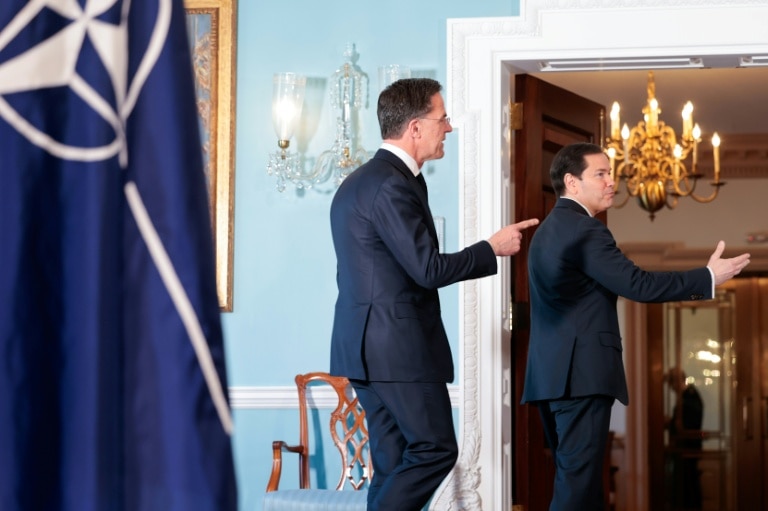
    The administration defended its actions through high-level briefings, with Secretary of State Marco Rubio and Pentagon chief Pete Hegseth meeting with congressional officials on Monday. However, Senator Mark Warner, the Democratic chair of the Senate Intelligence Committee, expressed serious reservations after the briefing, noting: “There was no imminent threat to the United States of America by the Iranians. There was a threat to Israel. If we equate a threat to Israel as the equivalent of an imminent threat to the United States, then we are in uncharted territory.”

    The legal foundation of the conflict hinges on the 1973 War Powers Act, which permits limited presidential military intervention in response to emergency situations involving attacks on U.S. interests. Notably, Hegseth himself referred to the situation as “war” rather than limited intervention during Monday’s press conference, while Trump asserted in his late-night video announcement that Iran posed an “imminent” threat—a claim that Atlantic Council analyst Daniel Shapiro criticized as inadequately explained.

    The administration provided formal notification to eight congressional leaders just before hostilities commenced, triggering the 60-day clock under the War Powers Act. Beyond this period, Trump would require explicit congressional authorization to continue military operations. In a rare display of bipartisan cooperation, Republican Congressman Thomas Massie and Democratic colleague Ro Khanna are preparing legislation to force a congressional vote on the Iran conflict, potentially as early as this week.

    Despite these challenges, the Republican majority is expected to protect Trump’s position, and even if opposition measures pass, they would likely fail to overcome a presidential veto, which requires a two-thirds majority in both chambers to override.

  • Energy infrastructure emerges as war target, lifting prices

    Energy infrastructure emerges as war target, lifting prices

    Global energy markets experienced significant turbulence Monday as military escalation in the Middle East directly targeted critical energy infrastructure, triggering substantial price increases and supply disruptions. The conflict’s expansion into energy production facilities has created immediate impacts on worldwide energy flows and pricing structures.

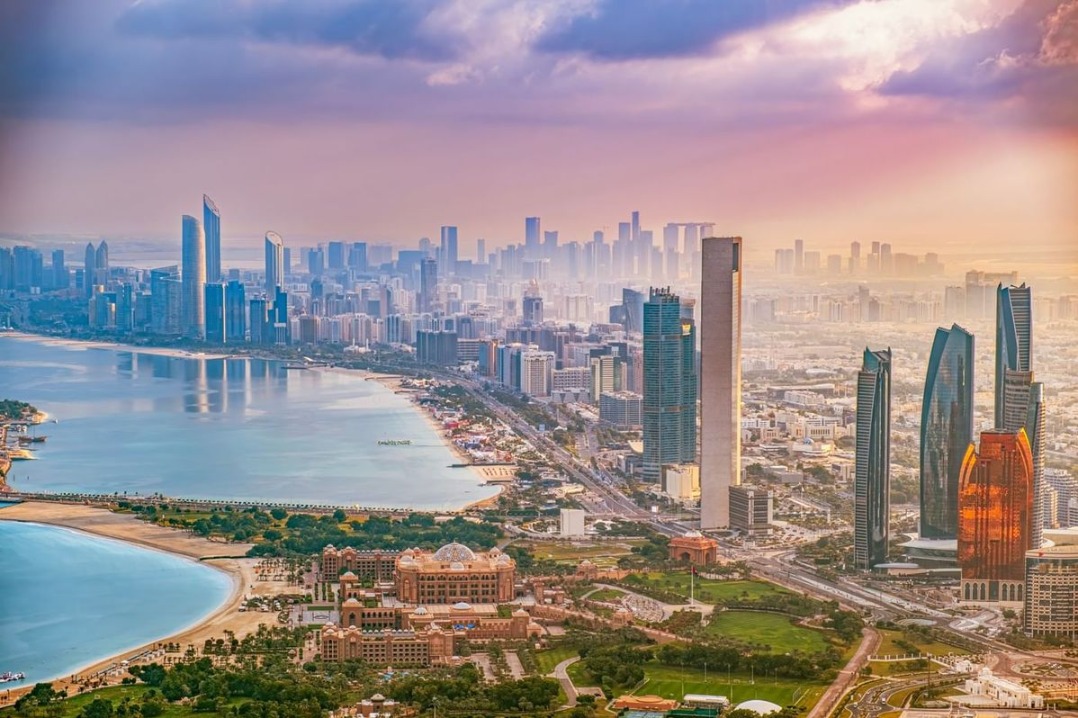
    QatarEnergy, the state-controlled energy corporation, confirmed suspension of liquefied natural gas production following Iranian strikes targeting two major gas processing facilities. This development occurred alongside operational disruptions at Saudi Arabia’s massive Ras Tanura refinery, where drone attacks caused fires and partial shutdowns. Simultaneously, Abu Dhabi reported drone assaults on its energy terminal infrastructure.

    The supply disruptions produced immediate market reactions, with European natural gas prices closing 39% higher after briefly exceeding 50% gains during trading sessions. Brent crude futures surged beyond $82 per barrel during early trading, representing a 13% increase, before settling at $77.74 with a 7.3% daily gain. The US benchmark West Texas Intermediate concluded at $71.23 per barrel, marking a 6.3% increase.

    Parallel to production facility attacks, the strategic Strait of Hormuz experienced a de facto closure as major shipping corporations including MSC, Maersk, CMA CGM, Hapag-Lloyd, and Cosco suspended transit operations. Although not officially closed, soaring insurance costs and security concerns have effectively halted maritime traffic through this critical waterway that typically handles approximately 20% of global oil and LNG supplies.

    Rystad Energy analysis indicates the maritime exodus prevents approximately 15 million barrels daily from reaching international markets. Senior Vice President Jorge Leon noted that whether through forced closure or risk avoidance, the impact on energy flows remains substantially identical. The situation has prompted discussions about potential strategic petroleum reserve releases if disruptions persist.

    Asian nations face particular vulnerability as primary recipients of approximately 80% of Hormuz-transited petroleum, according to International Energy Agency data. Europe likewise confronts significant energy security concerns as a major destination for Qatari LNG exports, with markets already strained following severe winter demand.

    Analysts from Eurasia Group projected potential Brent crude prices approaching $100 per barrel under worst-case scenarios involving permanent damage to Iranian export infrastructure and prolonged Hormuz disruptions. While current projections suggest a more probable $75-$85 range, market observers note that sustained elevated prices could influence broader economic and political dynamics, including potential impacts on US midterm elections.

    Financial markets demonstrated mixed reactions, with Wall Street closing unevenly as investors weighed conflict duration expectations. Oxford Economics anticipates Iran will struggle to maintain prolonged Strait disruptions, projecting oil prices peaking near $80 per barrel in second quarter before declining toward $60, contingent upon conflict resolution and regional stability restoration.

  • Israel strikes near Beirut city center, first such attack since 2024 ceasefire

    Israel strikes near Beirut city center, first such attack since 2024 ceasefire

    Israeli military forces conducted targeted airstrikes in Beirut’s southern suburbs on Monday evening, marking the first significant breach of the November 2024 ceasefire agreement. The attacks focused on the Jnah and Bir Hassan districts, areas situated in close proximity to the Lebanese capital’s city center.

    According to local broadcaster al-Jadeed, the strikes represent the closest Israeli military action to central Beirut since the implementation of the ceasefire over fifteen months ago. The Israeli military confirmed the operation, stating it had targeted a Hezbollah official, though no specific details regarding the target or potential casualties were immediately provided.

    The escalation occurs amid heightened regional tensions involving multiple Middle Eastern actors. Visual documentation from the scene showed substantial smoke rising from the impact sites following the explosions, indicating significant structural damage to the targeted locations.

    This military action demonstrates the fragile nature of the ceasefire that has largely maintained relative calm along the Israel-Lebanon border since late 2024. The strike underscores ongoing tensions between Israel and Hezbollah, which have persisted despite the formal ceasefire arrangement.

    The development comes within the broader context of continued regional instability and the complex web of alliances and conflicts involving the United States, Israel, Iran, and various regional militant groups. Security analysts are monitoring the situation closely for potential retaliatory measures and further escalation.

  • Jammu and Kashmir’s long road to India cricketing glory

    Jammu and Kashmir’s long road to India cricketing glory

    In a landmark achievement for Indian domestic cricket, the Jammu and Kashmir cricket team has secured its maiden Ranji Trophy title by defeating eight-time champions Karnataka in a thrilling final showdown. This victory represents far more than a sporting accomplishment—it stands as a testament to resilience and determination emerging from a region historically marginalized within India’s cricketing landscape.

    The Ranji Trophy, among the world’s oldest first-class cricket competitions, serves as the foundational bedrock of Indian cricket. Jammu and Kashmir’s triumph against Karnataka—a team featuring four current international players including KL Rahul and Mayank Agarwal—marks a dramatic underdog story that captivated the nation during a season otherwise dominated by T20 World Cup coverage.

    Cricket’s roots in the region extend back to the colonial era, when Kashmir willow gained renown for producing high-quality bats that powered the sport across India. Despite this historical connection, Jammu and Kashmir faced decades of institutional neglect, political turmoil, and inadequate infrastructure that hampered cricketing development. The team didn’t secure its first Ranji match victory until 1982-83—more than twenty years after gaining state association status.

    The transformation began approximately fifteen years ago as political volatility eased and systematic development initiatives took hold. Three critical inflection points catalyzed the team’s remarkable ascent:

    Between 2011-2013, former Indian captain Bishen Singh Bedi instilled crucial self-belief in players traditionally overawed by more established teams. His mentorship proved instrumental for Pervez Rasool, who became the first cricketer from the region to represent India.

    In 2018-2019, former Indian all-rounder Irfan Pathan joined as player-mentor, emphasizing unity beyond regional divisions and helping identify emerging talents like batsman Abdul Samad and fast bowler Umran Malik.

    Approximately five years ago, administrative restructuring established an Apex Council led by Mithun Manhas—a former Delhi stalwart with Jammu roots—who professionalized the setup with modern coaching methods, scientific fitness programs, and national-standard infrastructure.

    Seasoned domestic batsman Paras Dogra, drafted as captain at age 41, provided leadership that elevated the entire team. The squad’s spearhead proved to be fast bowler Aquib Nabi, who claimed 60 wickets this season following 44 last year, earning IPL recognition and endorsement from former captain Sourav Ganguly for national team consideration.

    This victory symbolizes cricket’s expanding footprint across India’s diverse regions and offers Jammu and Kashmir meaningful integration into the national mainstream through shared sporting pride—an achievement reminiscent of Afghanistan’s improbable cricketing ascent on the global stage.

  • US-Israeli war on Iran expands and shuts down Gulf oil and gas production

    US-Israeli war on Iran expands and shuts down Gulf oil and gas production

    The Middle East descended deeper into a large-scale military confrontation on Monday as hostilities between the US-Israeli alliance and Iran escalated dramatically, triggering severe consequences across the region. The conflict, now in its third day, has expanded beyond direct engagements to significantly impact global energy infrastructure and regional stability.

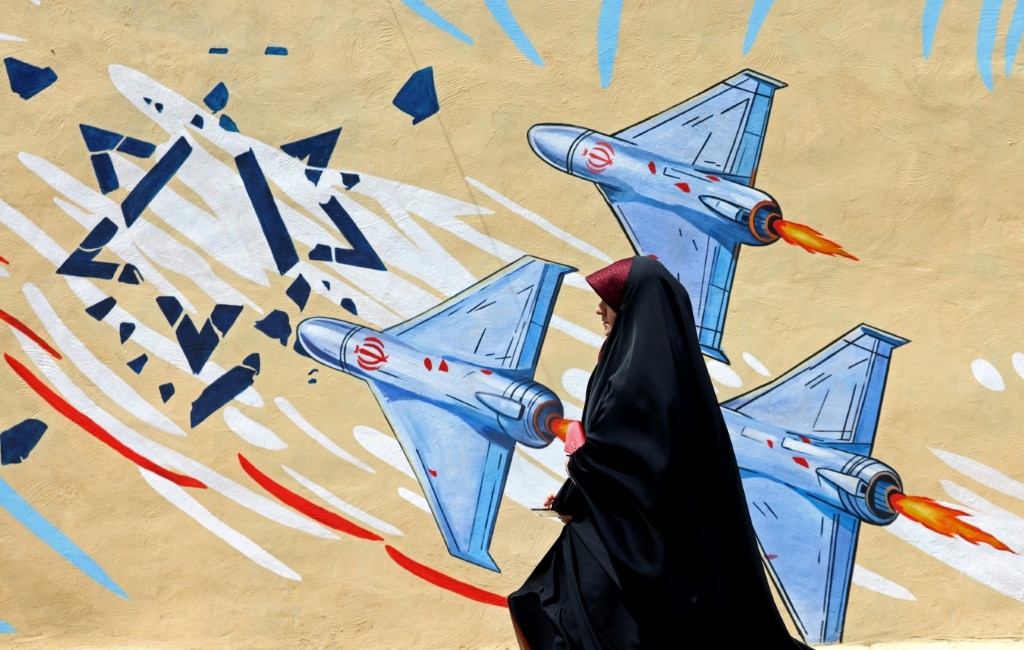
    Iran’s Islamic Revolutionary Guard Corps (IRGC) declared it had executed coordinated strikes on over 500 US and Israeli targets utilizing an arsenal of 700 drones and hundreds of missiles. This offensive came in response to what Iranian officials characterize as unprovoked aggression, following the killing of Supreme Leader Ali Khamenei in a joint operation on Saturday.

    The energy sector experienced immediate disruption as Saudi Arabia’s state-owned Aramco initiated precautionary shutdowns at its critical Ras Tanura refinery complex following drone strikes. Simultaneously, Qatar—the world’s largest LNG producer—halted production at facilities in Ras Laffan and Mesaieed after similar attacks, though Qatar’s defense ministry reported successfully intercepting two SU24 fighter jets originating from Iranian airspace.

    These developments precipitated a 13% surge in global oil prices, pushing benchmarks above $82 per barrel—the highest valuation since January 2025. The price spike intensified as commercial shipping operations either suspended transit or diverted course from the strategically vital Strait of Hormuz, a maritime channel accounting for approximately one-fifth of global oil shipments.

    The conflict’s geographical expansion continued as Lebanon became increasingly embroiled in hostilities. Israeli airstrikes targeted Beirut’s suburbs, southern regions, and the Beqaa Valley, resulting in 31 fatalities and 249 injuries. These operations prompted mass displacements and Israeli expulsion orders affecting dozens of communities. Hezbollah claimed its rocket and drone attacks on northern Israel constituted retaliation for Khamenei’s death.

    In a significant political development, the Lebanese government imposed an immediate and comprehensive ban on Hezbollah’s military operations, demanding the transfer of all “illegal” weapons to state authority. The decision received endorsement from influential parliamentary speaker Nabih Berri, traditionally a Hezbollah ally, signaling shifting political dynamics within the Lebanese establishment.

    Additional theaters of conflict emerged as three US F-15 aircraft crashed in Kuwait under disputed circumstances. While US military officials attributed the incident to “apparent friendly fire,” Iranian authorities claimed responsibility for intercepting the jets near the Kuwaiti border. Meanwhile, rockets targeted a British military installation in Cyprus, with preliminary assessments suggesting Lebanese militant groups orchestrated the attack.

    The conflict’s repercussions extended to digital infrastructure, where Amazon Web Services reported service disruptions at Emirati data centers struck by “objects” that ignited fires. In Jerusalem, Israeli authorities maintained the closure of Al-Aqsa Mosque for the third consecutive day during Ramadan, drawing condemnation from Palestinian religious authorities who perceive the action as exploiting security concerns to alter the holy site’s status quo.

    Humanitarian organizations reported escalating casualties, with the Iranian Red Crescent Society documenting 555 fatalities from US-Israeli operations. American officials confirmed four military personnel killed during missions, while Iranian strikes in Israel resulted in at least 11 deaths.

    Top Iranian official Ali Larijani emphasized Tehran’s preparedness for prolonged conflict, stating “Iran, unlike the United States, has prepared itself for a long war”—a declaration underscoring the potential for continued regional destabilization.

  • Trump says he will not rule out sending ground troops to Iran

    Trump says he will not rule out sending ground troops to Iran

    In a significant escalation of rhetoric, U.S. President Donald Trump has declined to exclude the possibility of deploying American ground forces to Iran during an interview with the New York Post on Monday. This statement marks a stark departure from previous presidential approaches to military engagements.

    Trump explicitly contrasted his position with predecessors who typically preemptively ruled out boots-on-ground scenarios. ‘I don’t have the yips with respect to boots on the ground—like every president says, ‘There will be no boots on the ground,’ I don’t say it,’ Trump stated, adding that he would authorize such deployment ‘if they were necessary.’

    The comments come amid ongoing military operations that began Saturday morning, which Trump characterized as ‘way ahead of schedule’ in targeting senior Iranian officials. The President projected the conflict would conclude within four to five weeks during separate remarks to The New York Times.

    Domestically, the military action faces substantial public skepticism. A Reuters/Ipsos poll conducted over the weekend revealed only 27% of Americans approve of the strikes, while 43% disapprove and 29% remain uncertain. Trump dismissed these findings, asserting ‘I don’t care about polling.’

    Meanwhile, Iranian officials signaled preparation for prolonged hostilities. Ali Larijani, Secretary of Iran’s Supreme National Security Council, declared on social media platform X that ‘Iran, unlike the United States, has prepared itself for a long war.’ Larijani emphasized Iran’s defensive posture throughout the conflict and vowed to ‘fiercely defend ourselves and our six thousand years old civilization regardless of the costs.’

    The geopolitical tensions unfold against the backdrop of national mourning in Iran following the recent death of Supreme Leader Ayatollah Ali Khamenei, adding complexity to an already volatile situation.

  • AFL 2026: Carlton will unveil new era against Sydney in Opening Round

    AFL 2026: Carlton will unveil new era against Sydney in Opening Round

    Carlton Blues head coach Michael Voss has officially announced the inclusion of two debutants, Jagga Smith and Harry Dean, for Thursday night’s highly anticipated AFL matchup against the Sydney Swans. The confirmation came during a press briefing where Voss expressed enthusiasm for the new talents joining the team’s lineup.

    Voss highlighted Smith’s exceptional pre-season performance, particularly his dominant display against Geelong, which solidified his selection. Meanwhile, Dean is poised to commence what the coach described as a “very long partnership” with key defender Jacob Weitering on Carlton’s defensive line.

    While Voss remained noncommittal regarding other potential starters including Wade Derksen, Will Hayward, Ben Ainsworth, and Ollie Florent, all participated in Tuesday’s training session. The coach’s comments suggested cautious optimism about Weitering’s availability despite the defender sustaining a fractured rib during last month’s State of Origin match.

    Voss indicated that Weitering’s final selection hinges on his performance during Tuesday’s critical contact session, though he noted “there’s nothing to suggest” the defender wouldn’t be fit to play against his former teammate Charlie Curnow.

    The Blues have demonstrated evolved ball movement strategies during pre-season, with Smith and rejuvenated midfielder Sam Walsh showing particular dynamism. Voss acknowledged that the season opener would likely feature a high-error first quarter as teams adjust to the pace, emphasizing the importance of settling into an effective rhythm.

    The coach concluded by outlining Carlton’s strategic approach: “Everyone has got to be good at one thing, so we hope we bring that to the table but also have enough in the other phases of the game where we can do some damage.”

  • At least 555 killed in US-Israeli attacks on Iran: Red Crescent Society

    At least 555 killed in US-Israeli attacks on Iran: Red Crescent Society

    TEHRAN – The Iranian Red Crescent Society (IRCS) confirmed on Monday that coordinated military strikes by the United States and Israel have resulted in at least 555 fatalities across Iran since operations commenced Saturday morning. The humanitarian organization disclosed that 131 Iranian counties sustained damage during the extensive aerial campaign.

    According to an official statement published on the IRCS website, emergency response teams have mobilized more than 100,000 rescue personnel nationwide. These teams are conducting continuous relief operations, evacuating casualties to medical facilities, and providing urgent assistance in affected regions.

    The military escalation began Saturday when joint US-Israeli forces targeted Tehran and multiple other urban centers. The attacks resulted in the death of Supreme Leader Ali Khamenei, along with members of his family, senior military officials, and numerous civilians. In retaliation, Iran launched multiple waves of missile and drone strikes against Israeli territory and US military installations throughout West Asia.

    Among the most devastating incidents reported by Iran’s official IRNA news agency was the bombing of a girls’ school in Hormozgan province, which claimed 165 lives and injured 95 others. Additionally, a medical facility in northern Tehran, including its neonatal intensive care unit, suffered significant damage during Sunday night’s bombardment.

  • Melbourne Airport worker Oscar Diaz Ysuiza accused of Nazi salute at Jewish teenagers

    Melbourne Airport worker Oscar Diaz Ysuiza accused of Nazi salute at Jewish teenagers

    A 23-year-old Melbourne Airport employee has appeared before the Melbourne Magistrates Court following allegations of performing a Nazi salute toward Jewish teenagers. Oscar Diaz Ysuiza from Greenvale faced charges of publicly displaying prohibited Nazi symbols during Tuesday’s administrative hearing, one month after the alleged incident occurred on February 2.

    According to Australian Federal Police documents, the accused allegedly directed the banned gesture at a group of Jewish school-aged children who were reportedly departing for a gap year program in Israel. The teenagers, aged between 17 and 18, were at the airport preparing for their international travel when the incident occurred.

    Investigators identified Mr. Ysuiza through witness interviews and comprehensive review of surveillance footage after he allegedly left the terminal shortly following the confrontation. The accused held an Aviation Security Identification Card at the time of the incident, though airport authorities have since revoked his security credentials.

    Melbourne Airport management emphasized their commitment to passenger safety in an official statement: ‘Everyone has the right to feel safe and welcome at Melbourne Airport, and offensive behavior will never be tolerated.’ The airport clarified that Mr. Ysuiza was employed by a third-party contractor rather than directly by the airport authority.

    Magistrate Brett Sonnet scheduled the case for further proceedings on May 26, granting police six weeks to prepare their evidentiary brief. The accused, who appeared with court support, declined to comment on the allegations when approached by media representatives outside the courthouse.

  • Anglican divisions deepen as rebel clerics pick rival to first female leader

    Anglican divisions deepen as rebel clerics pick rival to first female leader

    A profound theological rift within the global Anglican Communion has reached a critical juncture as conservative clergy convene in Abuja, Nigeria, to elect an alternative spiritual leader in direct opposition to the historic appointment of Dame Sarah Mullally as the first female Archbishop of Canterbury. This unprecedented move by the Global Anglican Future Conference (Gafcon) threatens to formalize a schism within the 95-million-strong denomination, the world’s third-largest Christian communion.

    The four-day summit, organized by Gafcon’s self-described ‘authentic Anglicans,’ represents a calculated challenge to the Church of England’s progressive leadership. While Archbishop-elect Mullally prepares for her official installation later this month at Canterbury Cathedral, traditionalist leaders are establishing a parallel hierarchy based on conservative theological principles that reject female ordination and LGBTQ+ inclusion.

    This confrontation stems from longstanding doctrinal disagreements that intensified in 2023 when Gafcon repudiated the leadership of then-Archbishop Justin Welby over proposals to bless same-sex couples. The organization, drawing significant support from African churches but with substantial presence in the Americas and Australia, now claims to represent the majority of global Anglicans—though this assertion remains contested.

    Within Nigeria itself, perspectives reflect the global divide. At Lagos’s Vining Memorial Church Cathedral, congregants expressed polarized views. Bunmi Odukoya supported Mullally’s appointment, stating, ‘The work of God is an individual thing. If you’re called—you can be a man, you can be a woman—you need to fulfill the calling of the Lord.’ Conversely, Uche Nweke maintained traditional opposition: ‘When you look at the Bible and the apostles, there was no woman in there.’

    Ecclesiastical historians like Diarmaid MacCulloch, Oxford University’s Emeritus Professor of Church History, characterize Gafcon’s actions as ‘a schism, even if they don’t want to say that,’ describing the election of a rival leader as ‘a very aggressive thing to do.’

    The institutional structure of the Anglican Communion, historically maintained through four ‘Instruments of Communion’ led by the Archbishop of Canterbury, now faces unprecedented strain. Bishop Anthony Poggo, Secretary General of the Anglican Communion, acknowledges the limited options when ‘one part of the family refuses to follow established processes,’ conceding, ‘It saddens us.’

    Despite the escalating conflict, some voices advocate reconciliation. Nigerian youth pastor Alexander Olasinde, while disagreeing with the Church of England’s liberal stance, emphasizes shared spiritual goals: ‘All of us as Christians have one goal, and that is to make it to heaven. We need to find common ground.’

    The upcoming Anglican Consultative Council meeting in June will address proposals to broaden leadership structures to better reflect the Communion’s global nature, but Gafcon’s boycott ensures these discussions will occur without conservative representation, potentially deepening the divide within this historically influential Christian tradition.