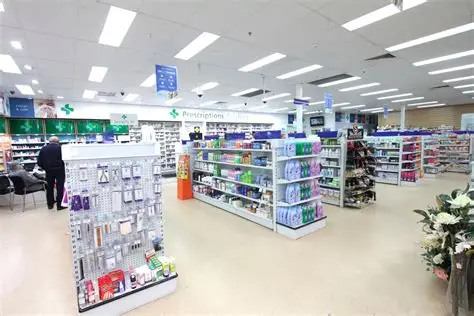
Australia’s $1.32 billion annual pharmaceutical export sector faces unprecedented uncertainty after the Trump administration imposed a sweeping 100 percent tariff on all imported patented pharmaceuticals, a policy designed to force global drugmakers to shift manufacturing operations to U.S. soil. Announced in late March 2026, the new levy only applies to patented medications produced outside U.S. borders, though the administration has offered a steep reduction to 20 percent for any company that relocates its production facilities to the United States.
The tariff announcement marks the latest escalation in a series of trade restrictions the Trump administration has rolled out targeting Australian goods over the past 12 months, following a 10 percent baseline tariff on most Australian imports and a 50 percent levy on Australian steel and aluminum implemented last year. In justifying the new policy, U.S. President Donald Trump claimed the importation of foreign-made pharmaceuticals and active ingredients posed an unacceptable threat to U.S. national security and economic stability.
Australian officials have slammed the new measures as a betrayal of decades of mutually beneficial free trade between the two nations. Speaking to reporters on April 3, Australian Health Minister Mark Butler described the tariff as deeply disappointing and out of step with the two countries’ long-standing friendly trade relationship. “For more than 20 years, we have shared free and fair trade in pharmaceutical products that flows both ways, delivering benefits to our mutual economies and to patients on both sides of the Pacific,” Butler said. “We are now working closely with Australian pharmaceutical exporters that serve the U.S. market, and we remain deeply concerned about the potential impact on their businesses and the thousands of Australian jobs they support.”
Butler noted that one of Australia’s largest pharmaceutical exporters, biotech giant CSL, which is a leading supplier of blood plasma products to the U.S., does not expect a material impact on its operations in 2026, as the company has already invested heavily in expanding U.S.-based production capacity in recent years.
Industry groups representing Australian drugmakers have issued firm opposition to the new tariff regime. Medicines Australia, the leading trade association representing the nation’s research-driven pharmaceutical sector, released a statement reaffirming its commitment to free, fair and open global trade and rejecting the new levies on Australian patented and branded drug exports to the U.S.
Liz de Somer, chief executive officer of Medicines Australia, explained that the tariffs will disproportionately harm smaller Australian firms that are still working to break into the U.S. market, rather than large established players with existing U.S. production footprints. Data from the Australian government cited by the organization shows Australia already runs a pharmaceutical trade deficit with the U.S., exporting roughly A$1.91 billion ($1.32 billion) in pharmaceutical products annually while importing A$3.34 billion from U.S. manufacturers.
De Somer added that the new tariff is not the only policy causing alarm for the Australian sector. The U.S. has also proposed a reference pricing benchmark that could undermine Australia’s long-standing Pharmaceutical Benefits Scheme (PBS), a public program that lets the federal government negotiate lower drug prices for Australian patients. U.S. trade lobbyists have repeatedly criticized the PBS as an unfair trade practice, and a U.S. reference policy could pressure Australia to raise drug prices, which currently sit far lower than prices in other wealthy nations. De Somer noted that other developed nations including the United Kingdom and Japan have already entered negotiations with the Trump administration to address both the tariff and reference pricing proposals, adding that “We must now consider the consequences of not addressing these global developments.”
Economic analysts echo the concern that small and mid-sized Australian exporters face the greatest risk from the new policy. Ben Udy, lead economist at Oxford Economics Australia, told reporters that around 45 percent of all Australian pharmaceutical exports are destined for the U.S. market, with the vast majority of those shipments consisting of blood and plasma products. Udy explained that the “area of greatest uncertainty” created by the new tariffs centers on smaller exporters of patented branded medicines that do not qualify for any exemptions from the new levies. For these firms, Udy said, there are only two viable paths forward: lobbying the U.S. administration for individual tariff relief, or shifting their export focus to other alternative global markets.