Australia’s latest economic data presents a complex paradox of robust growth masking underlying vulnerabilities. The national accounts for the December quarter revealed a stronger-than-anticipated 0.8 percent seasonally adjusted GDP increase, propelled by heightened government expenditure and resilient private demand. This contributed to an annual growth rate of 2.6 percent for the 2025 calendar year, which Treasurer Jim Chalmers hailed as \”very encouraging\” and indicative of \”strong, broadbased growth.\
作者: admin
-

Israeli-US strikes hit building of assembly choosing new Iran supreme leader
In a significant escalation of regional tensions, joint American and Israeli military operations have struck a critical Iranian governmental building in the holy city of Qom. According to reports from Iranian state-affiliated media on Tuesday, the targeted structure housed the Assembly of Experts—the powerful body constitutionally mandated with appointing, overseeing, and potentially dismissing Iran’s Supreme Leader.
Tasnim News Agency characterized the attack as perpetrated by ‘American-Zionist criminals,’ releasing footage showing severe structural damage to the facility. While no immediate casualty figures were provided, the symbolic timing of the strike appears deliberate. A senior Israeli official informed Fox News that the operation occurred while the assembly was ‘counting the votes for the appointment of the supreme leader,’ following the death of former leader Ali Khamenei in a previous wave of U.S.-Israeli attacks on Saturday.
This incident represents the second assault on institutions central to Iran’s leadership transition. Tasnim further reported that the main headquarters of the Assembly of Experts in Tehran had been targeted just one day prior, on Monday. In response to the power vacuum, Iranian authorities have activated constitutional contingency plans. These measures include establishing an interim leadership council comprising the president, the head of the judiciary, and a jurist from the Guardian Council—the body that oversees legislation and electoral vetting.
Adding to the complex political landscape, Iran’s top security official, Ali Larijani, has emerged as a pivotal powerbroker during this transitional period. The interim council is tasked with governing the nation while the intricate process of selecting a permanent successor to the supreme leader unfolds, a procedure that typically involves meticulous deliberation by the now-targeted Assembly.
-

US embassy in Riyadh warns of attacks over Saudi city of Dhahran
The United States Embassy in Riyadh has issued an urgent security advisory warning of imminent missile and unmanned aerial vehicle (UAV) attacks targeting the eastern Saudi city of Dhahran. This alert follows a significant escalation of regional tensions triggered by recent military operations.
The security warning emerges amidst heightened Middle Eastern instability following a coordinated US-Israeli offensive against Iranian targets this past Saturday. In response to these operations, Tehran has launched retaliatory missile and drone strikes toward Israeli territory and American assets throughout the region.
Dhahran, a strategically significant urban center in Saudi Arabia’s Eastern Province, hosts critical energy infrastructure and international corporate compounds. The city serves as the administrative headquarters for Saudi Aramco, the world’s largest oil company, and contains substantial expatriate residential communities.
The embassy’s alert specifically cautioned US citizens to maintain heightened situational awareness and implement appropriate personal security measures. Diplomatic officials advised American personnel to avoid crowded areas and monitor local media for developing security information.
This security development occurs against the backdrop of intensified regional hostilities that began with the weekend’s military actions. The initial strikes against Iranian targets have prompted a series of retaliatory measures that now threaten to expand conflict zones beyond immediate border areas.
The Arabian Gulf region has experienced increasing military activity in recent days, with multiple nations activating air defense systems in response to incoming projectile threats. Security analysts indicate this escalation represents the most significant regional military confrontation in recent years, with potential implications for global energy markets and international security arrangements.
-

Mahmood to stop study visas from four countries due to ‘abuse’
The United Kingdom has announced stringent visa restrictions targeting nationals from Afghanistan, Cameroon, Myanmar, and Sudan in response to what authorities describe as systematic abuse of immigration pathways. Home Secretary Shabana Mahmood unveiled the policy shift that will suspend study visas for these countries while additionally terminating skilled work visa provisions for Afghan citizens.
Official statistics reveal alarming patterns of asylum claims originating from these nations. Data indicates that 95% of Afghan students who entered the UK since 2021 subsequently filed asylum applications, while Myanmar students demonstrated a sixteen-fold increase in asylum claims. Students from Cameroon and Sudan showed over 330% growth in asylum applications during the same period.
The Home Office justification centers on preserving the integrity of Britain’s asylum framework, noting that approximately 13% of all asylum claims now originate from individuals who initially entered through study visas. Government analysis further indicates that asylum seekers from these four nations disproportionately cite destitution in their applications, with currently 16,000 individuals from these countries receiving state support.
A government spokesperson emphasized: “This decisive action against visa exploitation ensures Britain maintains its capacity to uphold its proud tradition of assisting those with legitimate humanitarian needs.”
The policy transformation follows mounting political pressure to address immigration levels, particularly from right-leaning factions including the Conservative Party and Reform UK. This hardening stance has manifested through recent measures including the reduction of refugee protection periods to 30 months and successful negotiation of deportation agreements with Angola, Namibia, and Democratic Congo through visa leverage tactics.
Home Secretary Mahmood characterized the move as “an unprecedented decision to refuse visas for those nationals seeking to exploit our generosity,” vowing to “restore order and control to our borders.” The changes will be formally implemented through Immigration Rules revision on March 5th.
Despite these restrictions, the UK maintains its position as the sixth-largest recipient of UNHCR-referred refugees globally, demonstrating continued commitment to international protection obligations alongside enhanced immigration enforcement.
-

Israeli military says begins large-scale wave of strikes targeting state infrastructure in Tehran
In a significant escalation of regional tensions, the Israeli military confirmed Tuesday it had initiated extensive aerial operations targeting critical state infrastructure throughout Tehran. The announcement came via official statement, with military representatives indicating this constituted a major offensive campaign against Iranian governmental facilities.
The operations, described as a “large-scale wave” of precision strikes, represent one of the most direct military confrontations between the two nations in recent history. While specific targets remained undisclosed at the time of reporting, the reference to “state infrastructure” suggests strategic government installations, potentially including communication networks, transportation hubs, and administrative complexes.
Military officials maintained that additional operational details would be released subsequently, indicating the possibility of ongoing or phased operations. The timing and scale of these strikes suggest a calculated escalation in the long-standing shadow conflict between Israel and Iran, which has previously manifested through proxy engagements across the Middle East.
This development occurs against a backdrop of increasing regional instability and follows recent heightened tensions between the two nations. The direct targeting of Tehran’s infrastructure marks a notable departure from previous engagements that typically involved peripheral or proxy forces.
-

Khamenei killing plays into Shiite Islam’s reverence for martyrs
Following the death of Ayatollah Ali Khamenei, Iran has become a nation visibly divided along ideological lines. The government’s official declaration of 40 days of public mourning—a traditional Shiite practice—and its characterization of Khamenei’s death as martyrdom stand in stark contrast to spontaneous celebrations erupting among segments of the population. This polarization reflects profoundly divergent perceptions of Khamenei’s nearly four-decade rule: viewed by supporters as a principled martyr and by opponents as a repressive autocrat.
The theological foundation of martyrdom in Shiite Islam traces back to the 7th century Battle of Karbala, where Hussain ibn Ali, grandson of Prophet Muhammad, was slain after refusing to pledge allegiance to Caliph Yazid, whom he considered unjust. This historical narrative of righteous resistance against oppression became central to Shiite identity and was systematically incorporated into Iran’s political framework following the 1979 Islamic Revolution.
Khamenei’s leadership was defined by confrontational foreign policy and domestic authoritarianism. He maintained unwavering support for regional proxies including Hamas and Hezbollah while rejecting diplomatic compromises during three rounds of U.S.-Iran negotiations. Domestically, his regime responded to recurrent protest waves with brutal suppression, including the lethal crackdown on January 2026 demonstrations that resulted in thousands of casualties.
The supreme leader accumulated substantial personal power and wealth during his 37-year reign, commanding military forces, judiciary appointments, and media oversight through parallel governance structures. His personal wealth, managed through the Setad organization, was estimated at $95 billion as of 2013.
The recent military strikes that killed Khamenei and several family members represent the culmination of escalating tensions with the United States and Israel. While government institutions continue to reinforce the narrative of martyrdom, contrasting public reactions reveal deep societal fractures that will inevitably shape Iran’s political future.
-

Iran betting Gulf pain will force Trump to seek a deal
Persian Gulf allies of the United States now confront a scenario they had meticulously avoided—becoming primary targets in a rapidly expanding Middle Eastern conflict. All six Gulf Cooperation Council nations (Bahrain, Kuwait, Oman, Qatar, Saudi Arabia, and the UAE) have experienced retaliatory strikes from Iran following joint U.S.-Israeli military operations dubbed “Operation Epic Fury.”
Unlike previous limited engagements, Iran’s current campaign represents a dramatic escalation in both scale and strategy. Military installations across the region have been struck alongside deliberate targeting of civilian infrastructure including international airports, commercial ports, and luxury hotels. This shift marks a departure from Tehran’s comparatively restrained response during the June 2025 conflict, when it limited strikes to a single Qatari military base after providing advance warning.
Regional experts interpret Iran’s aggressive posture as that of a cornered regime fighting for survival. The Islamic Republic, lacking capability to strike the U.S. mainland directly, has turned to targeting American military assets concentrated throughout the Gulf region. Iranian forces have launched approximately 390 ballistic missiles and 830 drones toward Gulf states in the conflict’s initial phase alone—far exceeding the 14 missiles deployed in last year’s solitary strike on Qatar’s Al-Udeid air base.
While Gulf air defense systems have successfully intercepted most projectiles, the psychological impact on these carefully cultivated hubs of global commerce may prove more damaging than physical destruction. Cities like Dubai, Abu Dhabi, and Doha have built their international reputations as oases of stability and security—an image now severely compromised by sustained attacks.
The economic consequences are already materializing through closed airspaces creating the largest disruption to global travel since COVID-19, interrupted shipping through the critical Strait of Hormuz, and rising oil prices. Particularly concerning for regional leaders is the potential targeting of desalination plants that provide fresh water to these arid nations.
Iran’s strategy appears calculated to pressure Gulf governments into lobbying Washington for conflict resolution. However, this approach risks backfiring by driving regional partners closer to the United States after a period of diplomatic distancing. The situation represents the most significant regional peril since the 1990-91 Gulf War, with implications extending far beyond the Middle East.
-

Trump says US Navy will protect ships in Middle East ‘if necessary’
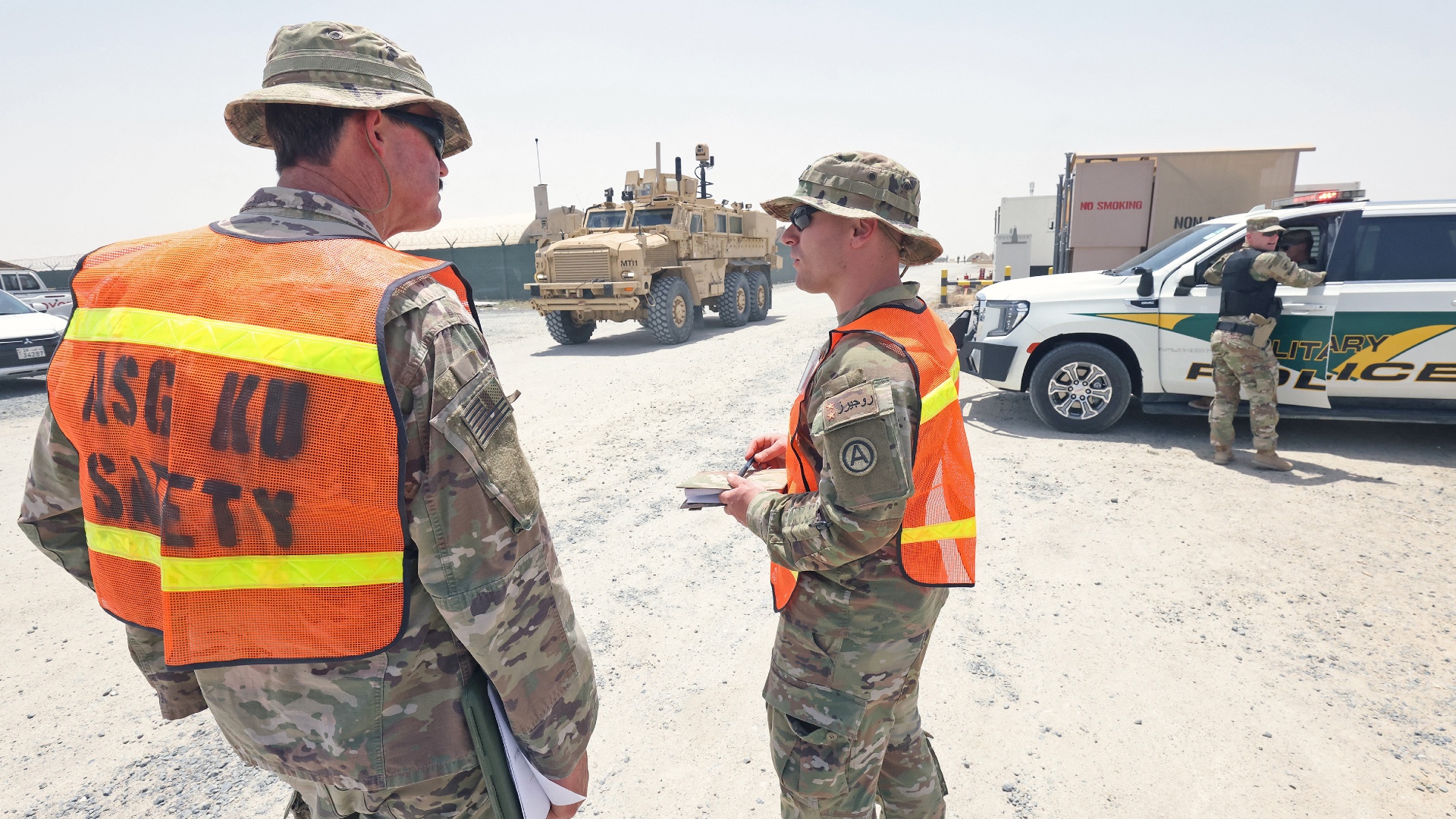
In response to escalating tensions in the Middle East, U.S. President Donald Trump has announced a dual strategy of military protection and financial guarantees to secure vital energy shipments through the Strait of Hormuz. The strategic waterway, which handles approximately 20% of global oil and gas transit, has become a flashpoint following Iranian threats to target commercial vessels.
President Trump declared via social media that the U.S. Navy stands ready to provide military escorts ‘if necessary’ to ensure the uninterrupted flow of energy resources. Simultaneously, he directed the United States Development Finance Corporation to offer political risk insurance to shipping companies at ‘very reasonable prices’ for all maritime trade, particularly energy transportation, in the Gulf region.
This announcement comes as Lloyd’s List Intelligence reports approximately 200 crude oil and product tankers are currently stranded in the Gulf area. Insurance providers have significantly increased premiums following incidents of Iranian forces firing upon several vessels and explicit threats from Iranian officials to ‘set fire’ to any ship attempting passage through the strait.
While global oil prices momentarily retreated after Trump’s statement, industry experts remain skeptical about the effectiveness of these measures. Richard Meade, Editor-in-Chief of Lloyd’s List, noted that previous military interventions failed to fully reassure shipping companies during Houthi attacks in the Red Sea, with many opting for longer, costlier alternative routes despite protection offers.
Analysts warn that prolonged disruption could drive crude prices above $100 per barrel, significantly impacting consumer fuel costs worldwide. Even the United States, which has historically been somewhat insulated from global price fluctuations due to substantial domestic production, would face considerable economic pressure.
Defending the ongoing conflict with Iran, Trump acknowledged potential short-term price increases but predicted a dramatic price decline once tensions resolve: ‘As soon as this ends, those prices are going to drop, I believe lower than even before.’
-

European allies rush to bolster Cyprus defences after drones target British base
A multinational European security deployment is underway in Cyprus following a drone incursion at the British RAF Akrotiri airbase over the weekend. The Eastern Mediterranean nation has become an unexpected focal point in regional tensions stemming from U.S.-Israeli operations against Iranian interests.
The United Kingdom has dispatched HMS Dragon, a Type 45 air defense destroyer, alongside helicopters equipped with advanced counter-drone capabilities. French President Emmanuel Macron confirmed the imminent arrival of the frigate Languedoc, while Greece has committed four F-16 fighter jets and two frigates, including the Psara equipped with the specialized Centauros anti-drone system.
Greek Defense Minister Nikos Dendias, during his visit to Nicosia, emphasized his nation’s commitment: “Greece is present, and will continue to be present to assist in any way in the defence of the Republic of Cyprus.”
Military analysts note the strategic significance of these deployments. Former strategist Mikey Kay observed that the Type 45 destroyer represents “very expensive equipment” that is “highly capable,” though questions remain about its effectiveness against potential swarm attacks using lower-cost Iranian Shahed 136 drones.
The incident has triggered operational responses beyond Cyprus. RAF F-35 jets operating over Jordan have engaged and destroyed an Iranian drone, according to UK Ministry of Defence statements. Meanwhile, the drone scare has prompted evacuations of both British military families and local Cypriot residents near the base.
Cyprus has explicitly distanced itself from the broader Middle East conflict, with government spokesmen criticizing initial ambiguities regarding the base’s usage. The nation emphasized that British installations should serve exclusively humanitarian purposes and reaffirmed that Cyprus itself is not a target in regional tensions.
The British military presence in Cyprus, covering nearly 3% of the island’s territory, represents a colonial legacy dating to the 1960 independence agreement. This marks the first significant attack on RAF Akrotiri since pro-Libyan militants struck the base in 1986.
-

Irish government to charter flight for citizens stranded in Middle East
The Irish government has initiated emergency evacuation procedures for its citizens stranded in the Middle East following escalating regional conflicts. Foreign Affairs Minister Helen McEntee announced a charter flight operation from Oman with capacity for approximately 280 passengers, prioritizing the most vulnerable Irish nationals currently in the United Arab Emirates.
The evacuation effort represents the first phase of Ireland’s crisis response, with authorities directly contacting citizens deemed most urgently requiring assistance. Minister McEntee emphasized the selective nature of this initial operation, acknowledging that thousands of registered citizens would necessitate multiple flights. “I appreciate when you talk about the thousands who are there, that is a fraction of the number of people that may want to get home at the same time,” McEntee stated during an interview with Irish broadcaster RTÉ.
The flight’s departure remains contingent on airspace accessibility and security conditions, with no specific timeline confirmed. The minister urged patience as authorities implement their phased evacuation strategy while maintaining full consular support for all Irish citizens in the region.
This development occurs against the backdrop of severe aviation disruptions across the Middle East, with thousands of flights canceled since Saturday. The transportation crisis follows recent military actions involving US and Israeli strikes against Iran, which resulted in the death of Iran’s supreme leader and subsequent retaliatory measures throughout the region.
The Irish evacuation parallels similar efforts by other nations, including the United Kingdom, which announced comparable charter flights from Muscat prioritizing vulnerable British nationals. Both governments have emphasized the challenges of large-scale citizen extraction during active regional conflict and airspace instability.