作者: admin

  • Protecting Yungang Grottoes in focus

    Protecting Yungang Grottoes in focus

    The Yungang Grottoes, a UNESCO World Heritage Site in China’s Shanxi province, are confronting unprecedented preservation challenges as visitor numbers reach record highs and climate change intensifies conservation concerns. According to recent data, the ancient Buddhist monument attracted 5.28 million visitors in 2025, representing an 18.87 percent year-on-year increase, partly driven by China’s expanded 240-hour visa-free transit policy covering travelers from over 50 countries.

    Hang Kan, director of the Yungang Research Institute and a deputy to the National People’s Congress, highlighted the pressing issues facing cultural preservation efforts nationwide. “China’s archaeological achievements are becoming increasingly abundant, but the construction of artifact storage facilities is lagging behind,” Hang stated in an interview with China Daily. He noted that preservation conditions at small and medium-sized museums remain inadequate, prompting his proposal for establishing regional archaeological artifact storage facilities tailored to national conditions.

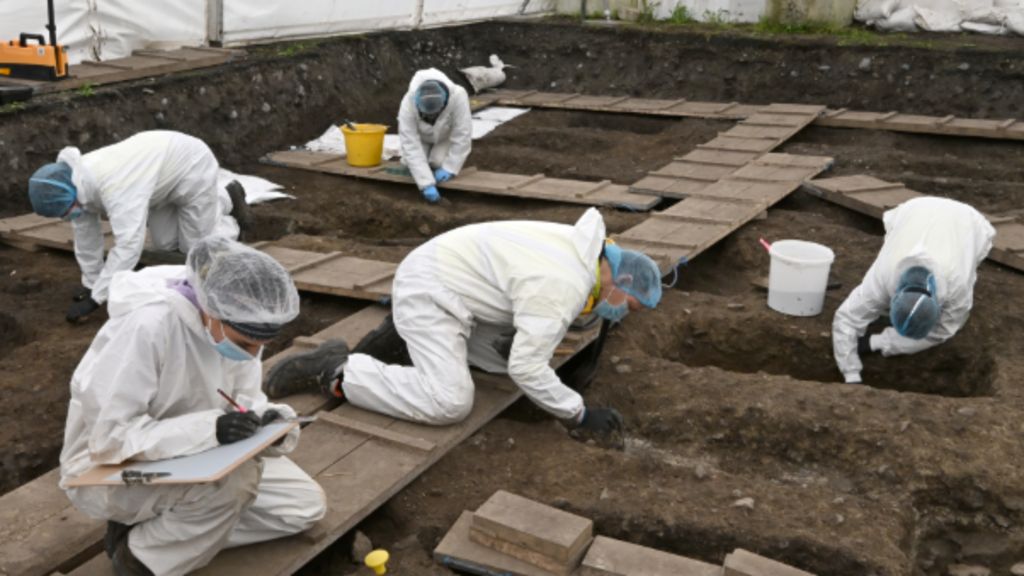
    The 1,500-year-old grottoes, carved during the Northern Wei Dynasty (386-534) and designated a World Heritage Site in 2001 for their extraordinary artistic and historical significance, are now protected through innovative technological approaches. Authorities are advancing the Digital Yungang project, employing 3D laser scanning and hyperspectral imaging to overcome data collection challenges presented by the site’s high-relief sculptures.

    In a groundbreaking preservation effort, technicians have created an exact replica of Cave 12—known as the Music Grotto—using 3D printing technology. This replica has been exhibited across China, allowing public access to the ancient heritage without requiring physical visitation that could potentially damage the fragile originals.

  • Shan Chongxin: Build intl innovation center to attract global talent

    Shan Chongxin: Build intl innovation center to attract global talent

    In an exclusive interview with China Daily, Shan Chongxin, Vice-President of Zhengzhou University and member of the 14th CPPCC National Committee, outlined ambitious plans to transform the institution into an international innovation center designed to attract elite research talent from across the globe.

    Speaking during China’s annual Two Sessions political gatherings, Professor Shan revealed the university’s strategic vision to significantly deepen international collaboration frameworks. The initiative aims to position Zhengzhou University as a premier destination for world-class researchers and innovators seeking cutting-edge research environments.

    Beyond global expansion, the university is strengthening industry-academia partnerships to accelerate the practical application of research findings. This industry-oriented approach seeks to bridge the gap between theoretical research and real-world implementation, ensuring academic work delivers tangible societal and economic benefits.

    Professor Shan also emphasized his legislative focus on educational equity, particularly advocating for enhanced youth education programs in China’s underdeveloped regions. His dual approach combines advancing top-tier international research capabilities with addressing fundamental educational disparities within the country.

    The proposed innovation center represents China’s growing emphasis on developing world-class research institutions that can compete globally for scientific talent while addressing domestic development needs through practical research applications.

  • South Africa’s anti-apartheid veteran and ex-defense minister Mosiuoa ‘Terror’ Lekota dies at 77

    South Africa’s anti-apartheid veteran and ex-defense minister Mosiuoa ‘Terror’ Lekota dies at 77

    JOHANNESBURG — South Africa’s political landscape is in mourning following the passing of Mosiuoa “Terror” Lekota, the renowned anti-apartheid stalwart and former defense minister, who died at 77 after an extended illness. His political organization confirmed his demise on Wednesday, marking the end of an era for South African politics.

    Lekota’s legacy as a formidable opponent of white minority rule was forged during his eight-year imprisonment on Robben Island (1974-1982), where he shared incarceration with Nelson Mandela and other legendary freedom fighters. His activism continued relentlessly even after his release, resulting in additional detentions for his unwavering opposition to apartheid.

    Following South Africa’s historic democratic transition in 1994, Lekota ascended to significant leadership roles, serving as Defense Minister from 1999 to 2008 and occupying the national chairmanship of the ruling African National Congress. His political trajectory took a dramatic turn in 2008 when he severed ties with the ANC following the contentious removal of President Thabo Mbeki, who had previously lost the party presidency to Jacob Zuma.

    In a bold political maneuver, Lekota established the breakaway Congress of the People (COPE) party, which achieved remarkable success in the 2009 elections by capturing over 7% of the national vote and securing 30 parliamentary seats. This schism substantially weakened the ANC’s electoral dominance, drawing away numerous disaffected members and officials.

    Despite his monumental contributions to strengthening multiparty democracy, internal factionalism within COPE precipitated its gradual decline, culminating in the party’s failure to win any legislative representation in the 2024 elections. Lekota’s departure from active politics in 2025, prompted by health considerations, preceded the ANC’s own historic loss of parliamentary majority that same year.

    Political leaders across the spectrum have paid tribute to Lekota’s enduring legacy. Bantu Holomisa, Defense Deputy Minister and opposition leader, praised Lekota for fundamentally transforming South Africa’s opposition landscape by establishing a credible alternative to ANC hegemony, noting that he and other ANC dissidents remained committed to the original principles of the liberation struggle.

  • In pics: Lunar eclipse in China

    In pics: Lunar eclipse in China

    Skygazers across China were treated to a breathtaking celestial spectacle on Tuesday as a total lunar eclipse painted the moon a dramatic crimson hue. The astronomical event, visible throughout much of the country, reached its peak during evening hours when the Earth’s shadow completely enveloped the moon.

    In Yan’an, Northwest China’s Shaanxi province, photographers captured stunning images of the blood moon suspended against the night sky. The phenomenon occurs when sunlight passing through Earth’s atmosphere gets filtered and scattered, casting the lunar surface in reddish-orange tones rather than the complete darkness one might expect.

    This particular eclipse marked a significant astronomical event for 2026, drawing both amateur stargazers and professional astronomers to observation points across the nation. The clear weather conditions in many regions provided optimal viewing opportunities for those equipped with telescopes and cameras.

    The lunar spectacle attracted widespread public interest, with many Chinese citizens sharing their photographs and experiences on social media platforms. Educational institutions and astronomy clubs organized viewing events to help the public understand the science behind the phenomenon while enjoying its visual grandeur.

    Such celestial events continue to foster scientific curiosity and appreciation for astronomy among China’s population, demonstrating how natural phenomena can bridge gaps between scientific communities and the general public.

  • Canada PM says Israeli-US strikes on Iran ‘inconsistent with international law’

    Canada PM says Israeli-US strikes on Iran ‘inconsistent with international law’

    Canadian Prime Minister Mark Carney has publicly characterized recent US-Israeli military actions against Iran as fundamentally incompatible with established international legal standards. During an address at Sydney’s Lowy Institute think tank on Wednesday, Carney articulated Canada’s official position calling for immediate de-escalation in the Middle East conflict while simultaneously condemning Iran’s regional influence.

    While acknowledging Canada’s support for initiatives aimed at transforming Iran’s governmental structure—which Carney identified as the ‘primary catalyst for instability and terrorism’ in the region—the Prime Minister maintained that the military strikes ‘would appear, prima facie, inconsistent with international law.’ Carney cautiously noted that definitive legal assessment ‘is a judgement for others to make,’ acknowledging his own limitations in international jurisprudence.

    The diplomatic remarks occurred during the second day of Carney’s official visit to Australia, part of a broader Asia-Pacific tour designed to strengthen economic partnerships and reduce reliance on United States leadership. This strategic pivot reflects Carney’s frequently expressed concerns about the deterioration of the US-led global order, a theme he emphasized at January’s World Economic Forum where he warned of systemic ‘rupture’ in international governance.

    Carney’s administration has experienced persistent tensions with the Trump White House, including economic threats and tariff impositions against Canada. The Prime Minister framed the Middle East conflict as ‘another example of the failure of the international order,’ while reaffirming Canada’s commitment to international legal principles that ‘bind all belligerents.’

    The military strikes that prompted Carney’s comments resulted in the death of Iranian Supreme Leader Ayatollah Ali Khamenei, occurring just two days after US diplomats engaged in nuclear negotiations with Iranian counterparts in Geneva. Subsequent retaliatory actions by Iran have targeted US diplomatic and military installations across the region, with allied groups escalating attacks on Israeli positions.

    Despite his legal objections, Carney endorsed the strategic objectives behind the strikes, citing Iran’s refusal to dismantle its nuclear program and continued support for militant organizations. However, he expressed disappointment that international diplomatic efforts failed to achieve peaceful disarmament and noted with concern that the United States and Israel acted ‘without engaging the United Nations or consulting with allies, including Canada.’

    Carney’s Australian itinerary includes meetings with Prime Minister Anthony Albanese and parliamentary addresses in Canberra, with discussions expected to focus on economic security, critical minerals collaboration, and defense cooperation between the two middle-power nations.

  • Five-year plans the ballast for stable growth

    Five-year plans the ballast for stable growth

    For over seventy years, China’s systematic approach to national development through five-year planning has provided the foundational framework for the country’s remarkable economic transformation and social advancement. These comprehensive blueprints have evolved into sophisticated governance instruments that effectively translate strategic leadership vision into actionable national policy.

    The upcoming legislative review of China’s national development planning law represents a significant milestone in institutionalizing this proven governance model. The proposed legislation, comprising six chapters and 37 articles, establishes comprehensive legal procedures for the formulation, review, approval, and supervision mechanisms for national development plans. This legal framework aims to enhance macroeconomic governance while maintaining the planning system’s adaptive capacity.

    International observers recognize China’s five-year plans as critical windows into the nation’s medium to long-term policy direction. According to Zamir Ahmed Awan of the Global Silk Route Research Alliance, these documents represent more than mere policy prescriptions—they constitute a disciplined governance approach that strategically aligns national objectives with market mechanisms and local implementation. The plans provide macroeconomic guidance while preserving market vitality, identifying priority sectors, and establishing clear performance metrics that ensure policy coherence across ministries and regions.

    The historical significance of China’s planning system cannot be overstated. Since the inaugural Five-Year Plan in 1953, the country has progressed from an impoverished agricultural society to the world’s premier manufacturing hub and second-largest economy. Each successive plan has reflected evolving national priorities—from industrialization and economic reform to sustainability and innovation—while maintaining consistent focus on national development and prosperity.

    The planning process itself exemplifies meticulous consensus-building, incorporating expertise from diverse disciplines, multiple governmental levels, and public consultation mechanisms. This comprehensive approach ensures that strategic goals transform into operational realities, with institutional designs that maintain development continuity across political cycles.

    As China prepares to implement its 15th Five-Year Plan (2026-2030), international attention focuses on how the world’s second-largest economy will navigate contemporary challenges. The new plan signals a strategic emphasis on technological self-reliance, green transformation, and institutional modernization—critical priorities for sustaining development amid global geopolitical tensions and domestic structural evolution.

    President Xi Jinping has emphasized that China’s planning system represents both a crucial governance experience and a distinctive advantage of socialism with Chinese characteristics. The system’s stability and predictability provide confidence to businesses and citizens alike, particularly during periods of global uncertainty. Moreover, China’s development planning increasingly carries global significance, offering international partners stable expectations and cooperative opportunities as the nation further integrates with the world economy.

  • Japan beats Taiwan 2-0 and Vietnam edges India 2-1 with late winner at Women’s Asian Cup

    Japan beats Taiwan 2-0 and Vietnam edges India 2-1 with late winner at Women’s Asian Cup

    PERTH, Australia — Japan and Vietnam emerged victorious in their opening Group C matches of the Women’s Asian Cup on Wednesday, though both teams faced significant challenges in extreme heat conditions. Japan secured a 2-0 win against a resilient Taiwan defense while Vietnam claimed a dramatic 2-1 victory over India with a stoppage-time goal.

    Japan, the tournament favorite and back-to-back champion in 2014 and 2018, dominated possession with nearly 90% of the ball and registered 30 shots at goal. Despite overwhelming offensive pressure, Japan struggled to convert opportunities until the 61st minute when Momoko Tanikawa expertly controlled Hana Takahashi’s lofted pass and finished with a precise right-foot shot. The victory was sealed in added time when Kiko Seike leaped above defenders to head home Remina Chiba’s cross.

    Taiwan’s defensive organization limited the scoring margin despite failing to register a single shot on target. Goalkeeper Wang Yu-ting made crucial saves, including tipping Yui Hasegawa’s last-minute shot over the crossbar.

    In the parallel match, Vietnam’s Ngân Thi Van Su delivered a spectacular performance with both goals. She opened the scoring in the 30th minute with a curling right-foot shot into the top corner. India equalized four minutes after halftime through substitute Sanfida Nongrum’s left-foot strike. The game appeared headed for a draw until Van Su’s dramatic left-foot winner in the fourth minute of stoppage time.

    Tournament officials implemented mandatory cooling breaks in both matches as temperatures approached 37°C (99°F) in Perth. Players used ice bags and hydration breaks to combat the extreme conditions.

    The tournament continues with Group A featuring Australia’s 1-0 win over the Philippines and South Korea’s 3-0 victory over Iran, while Group B saw North Korea defeat Uzbekistan 3-0 and defending champion China beat Bangladesh 2-0.

  • Unification Church loses Japan appeal against dissolution

    Unification Church loses Japan appeal against dissolution

    In a decisive legal judgment, the Tokyo High Court has rejected the Unification Church’s appeal against its court-ordered dissolution, marking a significant development in a case that has captivated Japanese society. The ruling affirms the lower court’s March 2023 decision that mandated the disbandment of the religious organization’s Japanese branch for inflicting ‘unprecedented damage’ on citizens through its practices.

    The judicial proceedings gained momentum following the shocking 2022 assassination of former Prime Minister Shinzo Abe, whose killer attributed his actions to resentment toward the religious group. The assailant, Tetsuya Yamagami, currently serving a life sentence, claimed his mother’s ruinous donations to the Church had bankrupted his family, prompting his violent retaliation.

    Founded in South Korea in 1954 by Sun Myung Moon, the organization—colloquially known as the ‘Moonies’—achieved global recognition during the 1970s and 1980s for its massive stadium wedding ceremonies. In Japan, the Church developed into a substantial financial operation, allegedly compelling followers to purchase expensive religious items to atone for historical sins related to Japan’s wartime occupation of Korea.

    Despite the Church’s vehement denial of wrongdoing and its characterization of Wednesday’s decision as ‘unjust,’ the judicial confirmation means liquidation procedures will commence, stripping the organization of its tax-exempt status. While the group retains the right to appeal to Japan’s Supreme Court, the current ruling represents a critical setback.

    The assassination exposed extensive connections between the Church and numerous conservative lawmakers from the ruling party, resulting in the resignation of four government ministers and prompting official actions to disband the organization. In response to mounting scrutiny, the Church has recently pledged to implement measures preventing excessive donations from members.

    Veteran journalist Eito Suzuki, who has documented the Church’s activities for decades, expressed relief at the court’s decision, noting that ‘many young people had their lives stolen’ by the organization’s practices. However, Suzuki simultaneously cautioned that underlying structural issues regarding political affiliations remain unaddressed.

  • ‘Narrative war’: disinformation surges as conflict roils Middle East

    ‘Narrative war’: disinformation surges as conflict roils Middle East

    A sophisticated digital information war has erupted in tandem with the escalating military confrontations between the United States, Israel, and Iran, creating a parallel battlefield where fabricated narratives spread faster than verifiable facts. This phenomenon, described by analysts as a ‘narrative war,’ has seen all conflict parties weaponize disinformation through advanced technological means.

    According to fact-checking organizations including AFP’s verification team, pro-Iranian accounts have systematically circulated recycled imagery and outdated videos to exaggerate damage from Tehran’s missile strikes against Israel and Gulf states. Simultaneously, Iranian opposition channels on platforms like X and Telegram have propagated false narratives blaming the government for attacks on civilian infrastructure, including a missile strike on a girls’ school.

    The Institute for Strategic Dialogue (ISD) reports the emergence of fabricated social media profiles impersonating senior Iranian leadership, while video game footage repurposed as authentic combat visuals and AI-generated depictions of sunken US warships have collectively amassed over 21.9 million views on X alone. Moustafa Ayad of ISD notes that the primary objectives appear to be ‘wearing down enemies’ through psychological warfare and rationalizing military actions across the region.

    Platform responses have emerged amid growing concerns about information authenticity. X announced new policies suspending creators from its revenue-sharing program for 90 days if they post AI-generated conflict content without disclosure. The platform’s head of product, Nikita Bier, emphasized the critical need for authentic information during warfare, noting current AI technologies make it ‘trivial to create content that can mislead people.’

    Additional complications have surfaced with NewsGuard revealing significant weaknesses in Google’s reverse-image tool, which has produced inaccurate AI-generated summaries of fabricated visuals related to the conflict. Ari Abelson of media authenticity company OpenOrigins warns that ‘the fog of war is quickly becoming the slop of war as AI synthetic content creates infinite noise in information ecosystems.’

    The situation demonstrates how digital disinformation tactics previously observed in Ukraine and Gaza have evolved with increasingly sophisticated technology, creating unprecedented challenges for information verification during international crises.

  • Nation’s green development accelerating

    Nation’s green development accelerating

    China’s environmental landscape has undergone a remarkable transformation over the past decade, evolving from severe pollution challenges to becoming a global leader in green development initiatives. This shift stems from President Xi Jinping’s consistent emphasis on maintaining ‘strategic resolve’ in building an ecological civilization, particularly highlighted during annual Two Sessions meetings with national lawmakers and political advisers.

    The turning point came in 2014 when President Xi raised pointed questions about PM2.5 pollution levels for three consecutive days during the Two Sessions deliberations. At that time, images of smog-shrouded Chinese cities dominated international headlines, making air quality a subject of global concern. Today, the term PM2.5 appears far less frequently in public discourse as China’s air quality reached its best recorded level in 2025, with average PM2.5 concentrations dropping to 28 micrograms per cubic meter.

    This environmental improvement represents more than just targeted pollution control—it signifies a fundamental philosophical shift in China’s development approach. Professor Christoph Nedopil Wang of Griffith University, specializing in Asia-Pacific green economic transitions, notes that China has moved from reactive pollution control to “a proactive, systemic economic transformation.”

    President Xi’s consistent messaging during successive Two Sessions meetings has reinforced this transformation. In 2015, he declared that “protecting the environment is ensuring livelihood,” while in 2016 he advocated for environmental protection red lines. By 2018, he emphasized building a “Green Great Wall” along China’s northern borders.

    The commitment reached its pinnacle in September 2020 when China announced its ambitious dual carbon goals: peaking carbon dioxide emissions before 2030 and achieving carbon neutrality before 2060. This marked Beijing’s first concrete timeline for net-zero emissions.

    According to Wang Xiaoli, associate professor at the National Academy of Governance, green and low-carbon industries now account for over 18% of China’s GDP, with advanced manufacturing, green technologies, digital transformation, and AI emerging as new growth engines.

    Institutional support has strengthened through the establishment of a new “environment and resources” sector within the Chinese People’s Political Consultative Conference in 2023, reflecting heightened priority on ecological protection in national policy planning.

    As China enters its 15th Five-Year Plan (2026-30) period, international observers are closely watching for further policy signals regarding China’s green development. Key areas of interest include expanding the national carbon market to heavy industries, integrating AI into green manufacturing, and developing new incentives for transition finance. How China balances domestic carbon goals with its role as a leading exporter of green energy equipment amid rising trade tensions will be particularly scrutinized in the coming years.