作者: admin

  • ‘Isolated’ Iranian forces suspected of firing missile towards Turkey

    ‘Isolated’ Iranian forces suspected of firing missile towards Turkey

    A destabilizing incident occurred on Wednesday when a NATO missile defense system intercepted an Iranian ballistic missile heading near Turkish airspace. The event took place close to the southern city of Hatay, raising immediate concerns about regional escalation. According to sources speaking with Middle East Eye, the projectile may have been launched by isolated elements within Iran’s military, rather than representing a deliberate act by the central government in Tehran.

    This event is particularly notable as Iran had previously avoided Turkish airspace throughout its ongoing exchanges with the US and Israel. The missile was intercepted approximately 100 kilometers east of Turkey’s Incirlik Air Base, a strategic NATO asset, likely by alliance vessels stationed in the Eastern Mediterranean.

    Expert analysis suggests this incident may be a direct consequence of Iran’s ‘Mosaic’ doctrine—a decentralized military command structure designed for resilience. Oral Toga, an analyst at the Ankara-based Centre for Iranian Studies, explained that this system empowers regional commanders to operate autonomously, especially if communications with central command are severed. This decentralization, reportedly activated after recent strikes killed over 40 high-ranking Iranian officials, might have led to rogue elements firing without explicit orders.

    The situation was serious enough to prompt a diplomatic response. Turkish Foreign Minister Hakan Fidan formally protested to his Iranian counterpart, Abbas Araghchi, in a phone call, warning Tehran to prevent any actions that could widen the regional conflict. This diplomatic exchange underscores the delicate balance Turkey maintains as a NATO member hosting critical alliance assets, including an early-warning radar station, while navigating its complex relationship with Iran.

    Further compounding the situation, Iranian Foreign Minister Araghchi had previously acknowledged in an interview that some military units had become ‘independent and somewhat isolated,’ operating on pre-issued general instructions rather than specific orders. This admission, coupled with a separate missile interception report in Syria’s Qamishli on the same day, suggests a pattern of potentially rogue operations that Tehran may not fully control.

  • Nepal votes in key post-uprising polls

    Nepal votes in key post-uprising polls

    Nepal embarked on a pivotal democratic exercise Thursday as millions of citizens cast ballots in parliamentary elections that represent a fundamental test between established political forces and an emergent youth movement. This electoral confrontation, the first since September 2025’s deadly anti-corruption uprising that claimed 77 lives and toppled the government, has mobilized nearly 19 million eligible voters across the Himalayan nation.

    The electoral landscape features three prominent figures vying for leadership: Marxist former Prime Minister KP Sharma Oli seeking political redemption, Balendra Shah—the rapper-turned-Kathmandu-mayor championing youth representation, and Gagan Thapa, the 49-year-old newly elected leader of the centrist Nepali Congress party promising generational change. Their competition reflects broader tensions between experienced politicians advocating stability and younger candidates demanding economic reform and accountability.

    Security measures were extensively implemented with thousands of soldiers and police deployed at polling centers following Interim Prime Minister Sushila Karki’s appeal for citizens to vote ‘without any fear.’ The logistical complexity of conducting elections in the world’s most mountainous country required helicopter transport of voting materials to remote regions, including areas near Mount Everest.

    Unlike previous elections focused primarily on the capital, political attention centered on the agricultural plains south of Kathmandu, particularly the Jhapa-5 constituency where Oli and Shah faced direct competition. With 3,400 candidates competing for 165 directly elected seats in the 275-member House of Representatives, election authorities anticipated results within 24 hours for direct contests, though proportional representation outcomes may require additional time.

    Analysts project no single party will secure an outright majority, potentially necessitating extended coalition negotiations that could shape Nepal’s political trajectory for years to come. The election represents not merely a transfer of power but a referendum on governance itself, testing whether the energy that fueled September’s uprising can transform into sustainable political change.

  • Google settles with Epic Games with offer to lower its app store commissions

    Google settles with Epic Games with offer to lower its app store commissions

    In a landmark settlement ending a protracted legal battle, Google has agreed to significantly restructure its Android app store operations. The tech giant will reduce its controversial commission fees and establish a certification pathway for alternative app marketplaces, marking a substantial shift from its previous monopoly practices.

    The concessions, formally submitted to a federal court in San Francisco, stem from Epic Games’ August 2020 antitrust lawsuit challenging Google’s payment system. The Fortnite developer argued that Google’s 15-30% commissions on in-app transactions stifled competition and consumer choice.

    This resolution follows the U.S. Supreme Court’s refusal to hear Google’s appeal against a federal judge’s order mandating comprehensive Play Store reforms. A 2023 trial jury had previously declared Google’s ecosystem an illegal monopoly, creating legal pressure that forced the company’s hand.

    Under the new framework, Google will lower baseline commissions for subscriptions and e-commerce to 10-20%. Additionally, apps preferring to remain within the Play Store can opt for a separate 5% payment processing fee. Developers retain the freedom to use alternative payment systems, while consumers gain access to certified third-party app stores with reduced security warnings.

    Though U.S. District Judge James Donato must approve the proposed registration process as an alternative to more drastic measures ordered in October 2024, Google is already preparing to implement these changes globally. The rollout will commence in the United States, United Kingdom, and European Union.

    Epic Games CEO Tim Sweeney, who has long advocated for open digital platforms, endorsed the settlement. ‘This transformation elevates Android to a genuinely open platform,’ Sweeney stated during a joint interview with Google’s Android executive Sameer Samat. Samat acknowledged the company’s desire to ‘focus more energy on building than quarreling’ after years of legal acrimony.

    The reduced fee structure may impact profits at Alphabet Inc., Google’s parent company. However, with a current market valuation of $3.7 trillion—quadruple its worth when Epic filed suit—Alphabet remains well-positioned to absorb financial impacts.

    This settlement occurs amid broader antitrust challenges for Google, including ongoing cases regarding its search engine monopoly and digital advertising practices. Meanwhile, Epic’s parallel crusade against Apple’s App Store continues with less optimistic prospects for similar concessions, as courts have not deemed Apple’s ecosystem monopolistic.

    Sweeney referenced Rolling Stones lyrics to characterize the outcome: ‘You can’t always get what you want, but if you try, you can often get what you need. And what we need is competition.’

  • Stella McCartney lets horses steal the show — and makes her point in Paris without saying a word

    Stella McCartney lets horses steal the show — and makes her point in Paris without saying a word

    In a striking departure from conventional fashion presentations, Stella McCartney transformed a riding hall in Paris’s Bois de Boulogne into an ethical fashion manifesto during Winter 2026 Paris Fashion Week. The British-American designer inaugurated her show with ten horses—five black and five white—gracefully choreographed by equestrian artist Jean-François Pignon, establishing an immediate emotional connection between live animals and human creativity.

    The collection served as both a personal chronology and sustainability statement, rigorously excluding leather, fur, and feathers while showcasing material innovations that demanded second glances. Opening with floor-length faux fur coats crafted through advanced techniques using lab-grown yeast and recycled denim, the presentation demonstrated that 93% of its materials met sustainable criteria.

    Autobiographical elements woven throughout the collection included chunky fisherman rib knits reflecting McCartney’s childhood in Scotland, alongside jewel-toned stirrup leggings and bow-adorned dresses paying homage to her formative Parisian internships. The core designs featured McCartney’s signature soft tailoring with defined shoulders, breathable corporate suiting, and satin evening wear that shimmered subtly. Plastic-free sequined dresses with intricate bustles and pleats exemplified the balance between masculine and feminine aesthetics that characterized the entire presentation.

    The show concluded with a model wearing a ‘My Dad Is A Rockstar’ tank top, prompting applause from front-row attendee Paul McCartney. Among the distinguished guests were Oprah Winfrey, Gayle King, and LVMH heir Antoine Arnault with wife Natalia Vodianova—notable given McCartney’s recent acquisition of the conglomerate’s minority stake in her brand. The designer revealed her upcoming receipt of France’s Légion d’honneur while reaffirming her commitment to creating women-centered fashion without planetary harm.

  • Iran’s supreme leader gone, but opposition still at war with itself

    Iran’s supreme leader gone, but opposition still at war with itself

    The assassination of Iran’s Supreme Leader by a joint US-Israeli military operation has created an unprecedented power vacuum, yet the nation’s opposition movements remain dangerously fragmented despite American calls for regime change. While many Iranians celebrated the elimination of the Islamic Republic’s leadership, the absence of a unified alternative and Washington’s ambiguous strategic objectives have left the country’s political future hanging in the balance.

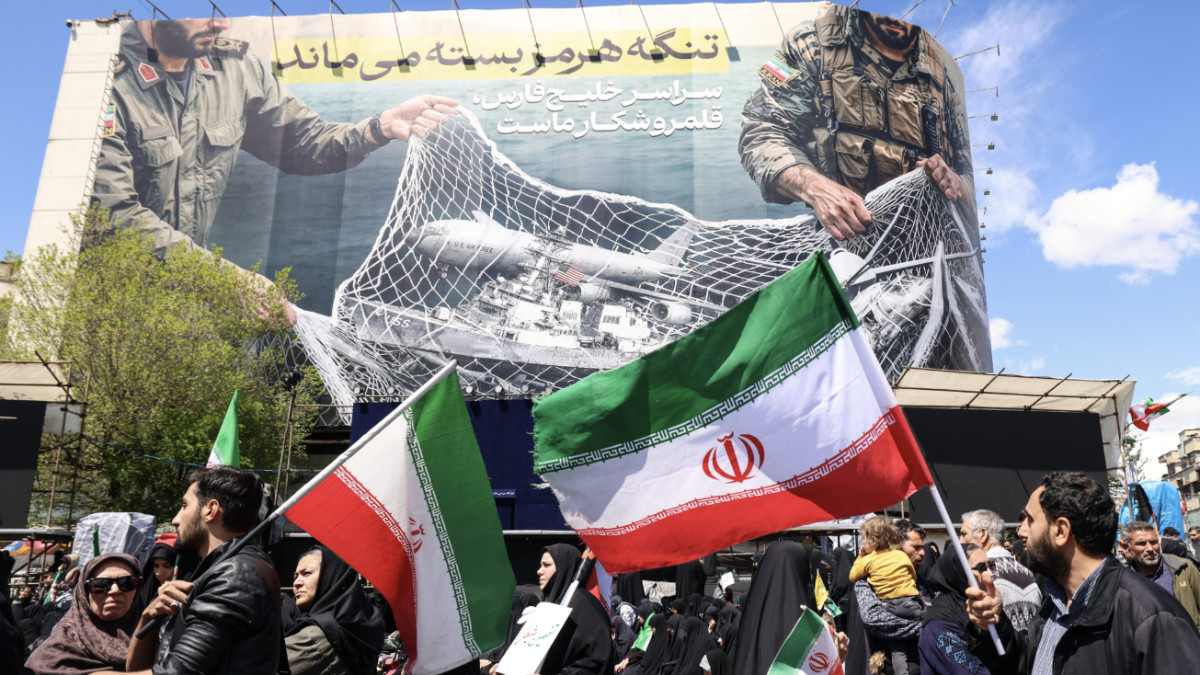
    President Donald Trump’s initiation of ‘Operation Epic Fury’ included direct appeals for Iranians to ‘take over your government,’ though subsequent mixed signals from his administration regarding regime change objectives have created confusion. Within Iran, authorities are scrambling to appoint a new supreme leader while state media amplifies pro-government demonstrations, even as internal opposition figures face severe repression—exemplified by imprisoned Nobel Peace laureate Narges Mohammadi.

    The diaspora community reflects similar divisions, with bitter rivalries preventing consensus. According to Ali Vaez, Iran Project Director at International Crisis Group, ‘No opposition leader has managed to forge the kind of broad-based coalition needed to unify the fragmented opposition landscape.’ This polarization has intensified despite efforts like last year’s opposition conference that brought together previously estranged groups.

    Reza Pahlavi, US-based son of the deposed Shah, has emerged as a prominent figure, gaining recognition during the 2022-2023 Woman, Life, Freedom movement. However, experts note he lacks broad consensus, facing criticism for his support of Israel and failure to distance himself from his father’s autocratic legacy. His supporters have clashed online with other opposition factions, particularly ethnic minority groups who reject his leadership.

    The People’s Mujahedin Organisation of Iran (MEK), designated as terrorist by Tehran, has organized rallies under the ‘No Shah, No Mullahs’ banner but remains controversial due to its alignment with Iraq during the 1980s Iran-Iraq war. Both Pahlavi and MEK have American political supporters, though Trump has notably refrained from endorsing any specific alternative.

    In recent remarks, Trump suggested preference for ‘somebody from within’ Iran who is ‘currently popular,’ drawing comparisons to US strategy in Venezuela where the ruling system was maintained despite leadership changes. However, he acknowledged the lack of clear alternatives, noting ‘most of the people we had in mind are dead’ while criticizing post-invation de-Baathification policies in Iraq.

    This approach reflects the practical reality that most opposition groups lack operational capacity within Iran, making elements within the existing power structure potentially more consequential. Meanwhile, many protesters who risked their lives in recent demonstrations remain focused primarily on removing the current government rather than planning what comes next, highlighting the challenges ahead for any transition of power.

  • UK: Piers Morgan says pro-Israel lawyer suing him for defamation

    UK: Piers Morgan says pro-Israel lawyer suing him for defamation

    British television host Piers Morgan faces a defamation lawsuit from pro-Israel attorney Natasha Hausdorff following a heated exchange on his YouTube program ‘Piers Morgan Uncensored’ in June 2025. The legal action stems from Morgan’s confrontational interview with Hausdorff, who serves as legal director for UK Lawyers for Israel, during which he openly challenged her characterization of Hamas infrastructure in Rafah.

    The contentious moment occurred when Hausdorff asserted that ‘every second house’ encountered by Israeli forces in Rafah constituted Hamas ‘terror infrastructure.’ Morgan responded dismissively, stating, ‘I certainly wouldn’t take your word for it; sounds like a lot of old bullshit again.’ This exchange has now become the central focus of the defamation claim.

    Morgan has publicly addressed the lawsuit through a statement on social media platform X, expressing his willingness to undergo ‘an open court test’ of Hausdorff’s defense of Israeli government claims regarding Gaza operations. He notably highlighted Israel’s continued restrictions on journalistic access to Gaza as context for the dispute.

    The lawsuit emerges against a complex backdrop of Morgan’s evolving coverage of the Israel-Palestine conflict. While the presenter maintains he has provided more platform space for pro-Palestine perspectives than any other mainstream Western media figure, he has simultaneously faced significant criticism for perceived pro-Israel bias following the October 7 attacks. Morgan initially declared support for Israel’s right to self-defense immediately after the Hamas-led offensive, but his position has demonstrated notable evolution as the conflict progressed.

    Last May, Morgan engaged in a particularly confrontational exchange with Israeli Ambassador to the UK Tzipi Hotovely, during which he asserted: ‘Don’t treat us like idiots. Your government has something to hide in Gaza.’ This shift in tone reflects the broader complexity of media coverage surrounding the ongoing conflict and the challenges faced by journalists navigating highly polarized narratives.

  • Miao communities celebrate Lantern Festival with fireworks

    Miao communities celebrate Lantern Festival with fireworks

    The ancient town of Taijiang in Guizhou Province transformed into a spectacular arena of light and sound on Tuesday as Miao ethnic communities celebrated the Lantern Festival with their traditional fiery dragon dances. Against the night sky, more than sixty brilliantly crafted dragons weaved through narrow streets and bustling alleys, each massive creation carried by teams of 50 to 100 participants.

    The celebration reached its crescendo as spectators actively participated by igniting handheld fireworks, creating cascading showers of sparks that engulfed the procession in a luminous embrace. This interactive tradition holds deep cultural significance among the Miao people, who believe that the intensity of firecrackers directly correlates with the abundance of good fortune in the coming year.

    The Lantern Festival, marking the final day of the Chinese New Year celebrations, typically features tranquil lantern displays and sweet rice ball consumption. However, Taijiang’s Miao communities have preserved this distinctive tradition that combines artistic dragon craftsmanship with pyrotechnic spectacle. The event demonstrates how ethnic minority groups maintain their unique cultural identities while participating in broader national celebrations.

    Local authorities reported record participation this year, with the thunderous celebrations drawing visitors from across the province. The preservation of such traditions offers valuable insights into China’s diverse ethnic tapestry and the ways in which traditional practices continue to thrive in modern society.

  • US interior secretary is in Venezuela to discuss critical minerals

    US interior secretary is in Venezuela to discuss critical minerals

    CARACAS, Venezuela — In a significant diplomatic move, U.S. Secretary of the Interior Doug Burgum convened with Venezuela’s acting President Delcy Rodríguez on Wednesday, signaling the Trump administration’s intensified efforts to secure influence over the nation’s vast natural resource reserves. The high-level meeting represents the latest development in Washington’s strategic pivot toward resource diplomacy in South America.

    Burgum, who chairs President Donald Trump’s National Energy Dominance Council, embarked on the two-day diplomatic mission to engage with both American and Venezuelan corporate entities. The U.S. diplomatic mission in Venezuela characterized the visit through social media channels as a ‘vital and historic step’ supporting the administration’s phased strategy for Venezuelan economic transformation, specifically emphasizing the creation of ‘a legitimate mining sector and safe critical mineral supply chains.’

    This diplomatic engagement follows the capture of former President Nicolás Maduro by U.S. forces two months ago, which precipitated Rodríguez’s ascension to acting leadership. The visit continues energy-focused diplomacy initiated in February by Energy Secretary Chris Wright, who previously explored Venezuela’s substantial petroleum potential.

    The Trump administration recently unveiled plans to establish a critical minerals trading alliance among allied nations, strategically designed to counter China’s dominant position in supplying essential elements required for advanced military equipment and consumer electronics. Venezuela’s resource portfolio extends beyond its well-documented oil reserves to include substantial deposits of gold, copper, diamonds, and other valuable minerals, though extraction operations frequently occur under hazardous conditions within a minimally regulated industry.

    Accompanied by Laura Dogu, the top U.S. diplomat stationed in Venezuela, Burgum’s meetings at the presidential palace further solidify the administration’s resource-focused foreign policy approach. Previous allegations by Maduro and his administration suggested U.S. geopolitical interests were primarily driven by Venezuela’s substantial resource wealth, claims that gain renewed context amid these developing diplomatic exchanges.

  • Greens, Your Party and Labour backbenchers build anti-war alliance in parliament

    Greens, Your Party and Labour backbenchers build anti-war alliance in parliament

    A significant cross-party alliance is emerging within the UK Parliament, mobilizing to counter potential British entanglement in US-Israeli military operations against Iran. This coalition unites the resurgent Green Party, the newly formed left-wing Your Party led by Jeremy Corbyn, the parliamentary Independent Alliance, and dissenting Labour backbenchers.

    The movement gained concrete form when Corbyn, the former Labour leader, introduced the Military Action Bill on Thursday. This legislation, garnering support across party lines, would mandate parliamentary approval for any foreign military use of British bases. The bill directly challenges Prime Minister Keir Starmer’s recent decision to permit US forces to utilize UK installations for targeting Iranian missile sites.

    Co-sponsorship of the bill includes Green MPs Ellie Chowns and Hannah Spencer—fresh from her landmark by-election victory in Gorton and Denton—alongside Independent Alliance MPs Adnan Hussain and Ayoub Khan. They are joined by prominent Labour rebels including Diane Abbott, John McDonnell, and Richard Burgon.

    While the bill’s passage remains unlikely, it signifies growing political pressure on the government from both flanks. Starmer faces simultaneous criticism from Reform UK and the Conservative Party, who advocate for stronger support of US-Israeli actions and unrestricted base access.

    The proposed legislation would establish stringent requirements for parliamentary authorization of British military deployments and equipment use in armed conflicts. Crucially, it would force the withdrawal of permission if such approval is not granted.

    This parliamentary maneuver coincides with notable shifts in Britain’s political landscape. The Greens have surged to second place in national polls following Spencer’s electoral breakthrough, while Corbyn’s Your Party has established its leadership structure with him as parliamentary leader.

    Both Corbyn and Green co-leader Zack Polanski have spearheaded opposition to UK involvement, with Polanski condemning Starmer’s ‘utter inability to stand up to Donald Trump’ and warning against ‘another illegal war in the Middle East.’ Corbyn accused the Prime Minister of appeasing Trump at the expense of international law.

    Their stance appears aligned with public sentiment. Recent YouGov polling indicates that 49% of Britons oppose US military action against Iran (versus 28% support), while exactly half disapprove of allowing US forces to use UK bases, with only 30% in favor. This suggests the left-wing bloc may better represent public opinion than the government’s conservative critics.

  • Putin hosts Hungary’s foreign minister for energy supply talks as war in Mideast causes disruptions

    Putin hosts Hungary’s foreign minister for energy supply talks as war in Mideast causes disruptions

    In a significant diplomatic engagement, Russian President Vladimir Putin met with Hungarian Foreign Minister Péter Szijjártó in Moscow on Wednesday to address critical energy supply issues. The high-stakes discussion centered on maintaining Hungary’s access to Russian fossil fuels despite ongoing regional conflicts and pipeline disruptions.

    Minister Szijjártó arrived in Moscow specifically seeking guarantees from Russian authorities regarding continued oil and gas supplies. This urgency stems from recent interruptions in the Druzhba pipeline, which transports Russian oil through Ukrainian territory to Hungarian and Slovakian refineries. The Hungarian government has attributed these disruptions to political decisions by Kyiv, while Ukrainian officials counter that the pipeline damage resulted from Russian drone attacks.

    President Putin provided reassurances during the meeting, stating: “We have always fulfilled all our obligations, and, of course, we intend and are ready to do so. I understand that this is of concern to you, particularly oil supplies. We see what’s happening in the global and European gas markets.”

    In a notable humanitarian gesture, Putin announced the release of two ethnic Hungarian prisoners of war who had been fighting with Ukrainian armed forces. The Russian leader revealed that Hungarian Prime Minister Viktor Orbán had requested their release during a telephone conversation the previous day. Szijjártó was authorized to transport the prisoners back to Budapest on his return flight.

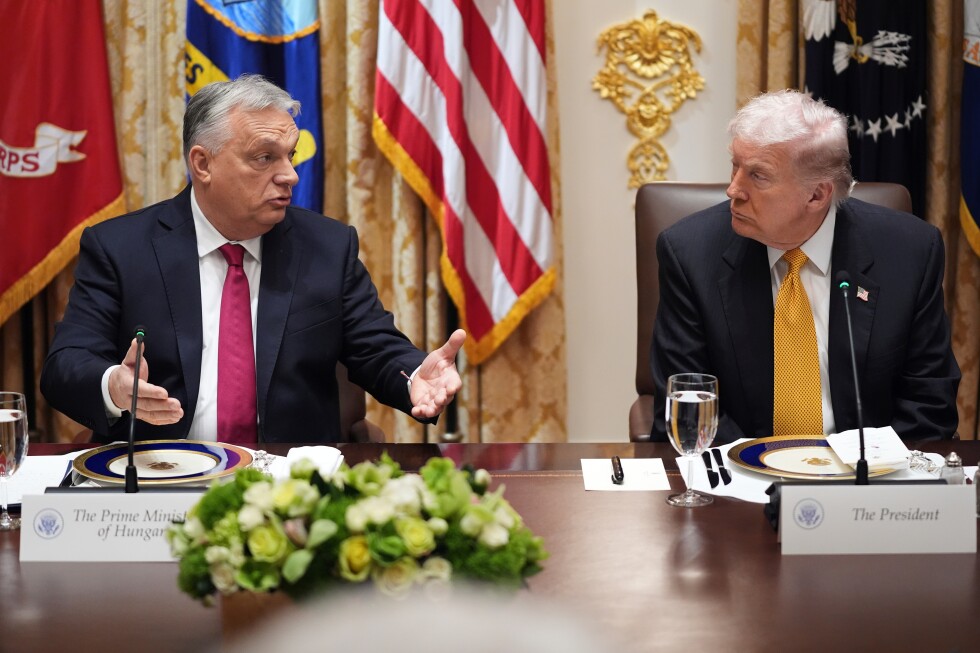
    The meeting occurs against a backdrop of heightened political tensions as Prime Minister Orbán faces challenging elections next month. Trailing in polls to a center-right opponent, Orbán has intensified an anti-Ukraine campaign, alleging that Kyiv and the European Union are attempting to bankrupt Hungary through forced financial assistance to Ukraine. Last week, Hungary blocked a new EU sanctions package against Russia and vowed to withhold a substantial €90 billion EU loan to Kyiv until oil flows through the Druzhba pipeline resume.