作者: admin

  • Protesters rally in San Francisco against OpenAI deal with Pentagon

    Protesters rally in San Francisco against OpenAI deal with Pentagon

    San Francisco became the epicenter of a growing technological ethics debate this week as demonstrators gathered to vocally oppose OpenAI’s newly revealed collaboration with the U.S. Department of Defense. The protest movement, gaining momentum through digital activism and street demonstrations, reflects deepening concerns about the militarization of artificial intelligence technology.

    The controversy emerged following disclosures that the maker of ChatGPT had entered into a strategic partnership with Pentagon officials, though specific project details remain classified. This development has triggered what industry observers are calling a ‘significant user exodus’ from OpenAI’s flagship platform, with uninstallation rates reportedly surging across multiple metrics since the announcement.

    Protest organizers, representing a coalition of digital rights activists, ethical AI researchers, and concerned citizens, argue that military applications fundamentally violate OpenAI’s original charter principles emphasizing beneficial AI development. ‘We founded this movement to ensure artificial intelligence would serve humanity, not warfare,’ stated one demonstrator holding a sign reading ‘ETHICS NOT ARMS’ outside OpenAI’s headquarters.

    The backlash illustrates the challenging balance AI companies face between commercial opportunities, government contracts, and maintaining public trust. While defense officials characterize the collaboration as focusing on ‘cybersecurity enhancements and veteran support services,’ skeptics remain unconvinced, fearing eventual weaponization pathways.

    Industry analysts note this represents a pivotal moment for the AI sector, where ethical considerations increasingly collide with expansion ambitions. The user backlash demonstrates how quickly public sentiment can shift when perceived ethical boundaries are crossed, potentially establishing precedent for how AI firms approach governmental partnerships moving forward.

  • Khamenei’s killing is neocolonialism’s final gambit

    Khamenei’s killing is neocolonialism’s final gambit

    The recent targeted killing of Iran’s spiritual leader Ayatollah Ali Khamenei by US-Israeli forces represents a dramatic escalation in international relations that may inadvertently accelerate the collapse of the petrodollar system—the foundational mechanism of American economic dominance since the 1970s. This event eerily echoes the 1953 Anglo-American coup that overthrew Iran’s first democratically elected Prime Minister Mohammad Mossadegh, establishing a pattern of foreign intervention primarily motivated by control over energy resources.

    The petrodollar system emerged from a 1974 agreement with Saudi Arabia that mandated oil transactions exclusively in US dollars, creating perpetual global demand for American currency and effectively forcing nations to subsidize US economic supremacy. This arrangement exemplifies what Ghanaian President Kwame Nkrumah termed ‘neocolonialism’—where nations maintain the appearance of sovereignty while being economically directed from external powers.

    Iran has consistently challenged this dollar-dominated architecture, trading oil in euros, yuan, and rupees while encouraging partners to abandon dollar transactions. The assassination has unified broad sections of the Muslim world in indignation and revealed the moral bankruptcy of the international order, with European leaders offering only tepid calls for restraint while remaining dependent on the petrodollar system.

    The official justification centered on Iran’s nuclear program collapses under scrutiny, as multiple intelligence assessments confirm Iran suspended organized weapons development in 2003. The real threat appears to be Iran’s progress toward energy independence through peaceful nuclear technology, which would allow greater oil exports in alternative currencies.

    As China trades oil in yuan, Russia abandons dollar transactions, and BRICS nations develop alternatives, the petrodollar system faces existential challenges. Saudi Arabia now accepts renminbi for oil sales to China, while India and Iran have operationalized rupee-rial payment mechanisms. Each non-dollar transaction builds infrastructure for a post-dollar world.

    The assassination, occurring during active diplomatic negotiations, demonstrates that US commitment to diplomacy remains contingent on dictating terms. This overreach has exposed American desperation rather than strength, potentially hastening the very neocolonial order’s collapse it intended to preserve. The question remains what system will emerge from the petrodollar’s ruins and whether Global South nations can ensure genuine sovereignty rather than simply substituting one master for another.

  • US Senate to vote on Trump’s war powers as Iran conflict continues

    US Senate to vote on Trump’s war powers as Iran conflict continues

    The United States Senate is poised for a critical vote on a war powers resolution that would significantly curtail President Donald Trump’s authority to conduct military operations against Iran without explicit congressional approval. The legislative measure, if enacted, would mandate the withdrawal of American forces from hostilities unless Congress formally authorizes continued military engagement.

    This constitutional confrontation emerges just five days after the initiation of joint U.S.-Israel strikes against Iranian targets, which triggered retaliatory attacks by Iran against Israel and American allies throughout the Gulf region. The resolution represents the most substantial legislative challenge to presidential war-making authority since hostilities began.

    Democratic Senator Tim Kaine of Virginia, the primary sponsor of the legislation, framed the vote as a historic moment of accountability. “Every senator will have to go on the record to declare whether it is in our best interest to send our sons and daughters into conflict against Iran,” Kaine stated, emphasizing the human cost already incurred with six service members lost and others injured in the ongoing conflict.

    The political dynamics reveal a deeply divided Congress. While a majority of Democratic senators are expected to support the measure, Republican support remains uncertain. The resolution requires a simple majority for passage, after which it would proceed to the House of Representatives for consideration later this week.

    Even if both chambers approve the measure, it would face an almost certain presidential veto. Overriding such a veto would necessitate a two-thirds majority in both the Senate and House—a formidable political hurdle given current divisions.

    The constitutional debate centers on the War Powers Resolution of 1973, enacted to constrain presidential authority following the Vietnam War. The legislation requires presidential notification of Congress within 48 hours of military engagement and congressional authorization within 60 days for operations to continue.

    Secretary of State Marco Rubio has maintained that the administration has complied with notification requirements, though he echoed previous administrations in questioning the constitutionality of the War Powers Act itself. The current administration, like its predecessors, has relied on post-9/11 authorizations for military force to justify operations in the Middle East, despite multiple unsuccessful attempts to repeal those authorities.

    This legislative action occurs against the backdrop of expanding military operations, with the administration having previously conducted strikes against Iranian nuclear facilities and other military actions without congressional approval, establishing a pattern of executive action that has increasingly concerned legislators from both parties.

  • War in the Middle East: latest developments

    War in the Middle East: latest developments

    The Middle East faces a severe escalation of conflict with multiple nations now embroiled in heightened military engagements. Iranian cities, including Tehran, experienced significant explosions and aerial bombardments as regional tensions reached critical levels.

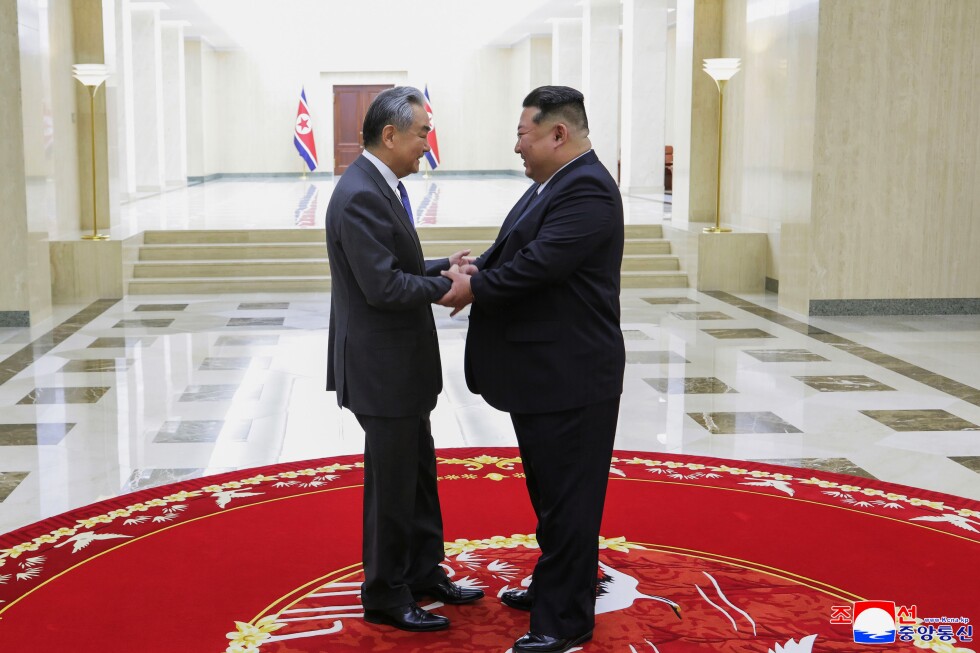
    China has announced diplomatic intervention with Foreign Minister Wang Yi confirming Beijing’s deployment of a special envoy to mediate the crisis. ‘China has consistently served as a stabilizing force for peace and remains prepared to maintain its constructive involvement,’ Wang stated.

    Israeli military operations have expanded into southern Lebanon, with forces advancing into towns including Khiam, approximately six kilometers inside Lebanese territory. According to UNIFIL sources, this movement represents Israel’s effort to establish a defensive buffer zone against Hezbollah militants.

    Regional diplomacy faces strain as Qatar’s Prime Minister strongly criticized Iran’s foreign minister during a telephone conversation, accusing Tehran of attempting to provoke neighboring nations into broader conflict. Simultaneously, Turkey summoned the Iranian ambassador after a missile intended for a Cyprus base landed within Turkish borders.

    Maritime security has become a critical concern with Danish shipping conglomerate Maersk suspending all Gulf bookings following updated risk assessments. The strategic Strait of Hormuz witnessed dramatic developments as Omani naval forces rescued 24 crew members from a missile-stricken container ship. Iranian forces asserted complete control over the vital waterway shortly after former US President Trump declared readiness to provide naval escorts for tankers.

    The human cost continues to mount with Sri Lankan authorities recovering 87 bodies following the sinking of Iranian warship IRIS Dena, reportedly struck by US torpedoes. Iran’s official IRNA news agency reported 1,045 military and civilian casualties from US-Israeli strikes, though independent verification remains unavailable.

    Economic repercussions emerge as Kpler energy analysts report a 90% reduction in oil tanker traffic through the Strait of Hormuz since conflict initiation. European stock markets showed stabilization after substantial Asian losses triggered by soaring oil prices.

    Military operations continue with The Times of Israel reporting planned Israeli operations in Iran extending ‘at least one or two more weeks’ with thousands of additional targets identified. Iranian state television announced postponement of Ayatollah Ali Khamenei’s funeral citing anticipated unprecedented attendance, while succession deliberations remain ongoing.

    Regional defenses activated with the United Arab Emirates intercepting three missiles and 121 drones, while Qatar neutralized ten drones and two missiles. Iran’s Revolutionary Guards targeted opposition groups in Iraq’s Kurdish region, while missile barrages toward Jerusalem triggered air raid sirens before reported interceptions.

    International political tensions surface as Spanish Prime Minister Pedro Sanchez defiantly rejected war participation after Trump threatened complete trade termination over Spain’s refusal to permit US military base usage for Iranian operations.

  • Allen’s record-breaking century powers NZ into World Cup final

    Allen’s record-breaking century powers NZ into World Cup final

    In a breathtaking display of power hitting, New Zealand’s Finn Allen rewrote the record books with a devastating 33-ball century to crush South Africa by nine wickets in the T20 World Cup semi-final. The Black Caps’ spectacular chase of 170 runs was completed with a staggering 43 balls to spare, booking their place in Sunday’s final against yet-to-be-determined opponents.

    Allen’s monumental innings, featuring 10 fours and 8 sixes, shattered the previous T20 World Cup record held by Chris Gayle (47 balls against England in 2016) by an incredible 14 deliveries. The 26-year-old’s blistering knock also equaled the third-fastest century in men’s T20 international history, demonstrating complete dominance from the moment he took strike.

    The victory was set up by New Zealand’s bowlers who reduced South Africa to 77-5 before Marco Jansen’s rescue mission of 55 not out from 30 balls helped the Proteas post 169-8. However, this total proved grossly inadequate against Allen’s assault, particularly during the powerplay where New Zealand raced to 84-0 in just six overs.

    Allen shared a 117-run opening partnership with Tim Seifert (58 off 33) before accelerating dramatically, smashing 42 runs from just 11 deliveries during his 56-run stand with Rachin Ravindra. The climax came when Allen hammered Jansen for five consecutive boundaries to seal the emphatic victory.

    “I’m sure my parents were up watching the whole game. Hopefully they’re proud,” Allen said post-match. “It was an extremely impressive start from our bowlers. They set the game up for sure.”

    The defeat marked another heartbreaking semi-final exit for South Africa, who entered the match as tournament favorites with an unbeaten record. Their top order collapsed early, with Quinton de Kock (10) and Ryan Rickelton (0) falling to consecutive deliveries in the second over, while Aiden Markram (18) and David Miller (6) failed to capitalize on dropped chances.

    South African captain Temba Bavuma acknowledged Allen’s dominance: “Finn Allen is a nightmare for a captain. He only faced about four dot balls. Every other ball he was scoring. In areas where there were gaps, he was able to find them.”

    The victory avenged New Zealand’s group stage loss to South Africa and sets up a potential final against either England or Australia. For South Africa, the defeat extends their unfortunate record in World Cup knockout matches, having now lost three of their four T20 World Cup semi-finals and four of their last five knockout games across formats.

  • China issues alerts for snow and ice, urges caution on icy roads

    China issues alerts for snow and ice, urges caution on icy roads

    Meteorological authorities across China have activated multiple weather advisories in response to significant winter precipitation affecting both northern and southern regions. The National Meteorological Center reports substantial snowfall across northern territories, with particularly heavy accumulation anticipated throughout Thursday in Hebei and Shanxi provinces, including the capital Beijing.

    Forecast models indicate light to moderate snow and sleet patterns extending across North China, with additional winter precipitation expected in Heilongjiang, Liaoning, Gansu provinces, and the Xinjiang Uygur Autonomous Region. The Beijing Meteorological Service has implemented a yellow-level icy road alert—the preliminary tier in China’s three-stage warning system—following Wednesday morning’s snowfall commencement.

    Transportation authorities have issued comprehensive travel advisories highlighting hazardous road conditions, significantly reduced visibility, and substantial journey disruptions. The public has been urged to exercise extreme caution and implement appropriate safety measures when traveling.

    Simultaneously, southern China confronts截然不同的 weather challenges as torrential rainfall saturates coastal regions. Guangdong province experienced intense downpours on Tuesday, with Zhuhai recording unprecedented precipitation levels for March according to Weather China, the official meteorological administration’s digital platform. This contrasting weather phenomenon demonstrates the diverse climatic challenges currently affecting the nation.

  • Proposed law aims to enhance ethnic unity and safeguard rights in China

    Proposed law aims to enhance ethnic unity and safeguard rights in China

    China is advancing significant legislation designed to fortify ethnic unity and protect the lawful rights of all ethnic groups nationwide. The proposed law on promoting ethnic unity and progress represents a strategic initiative to cultivate a stronger sense of community for the Chinese nation, according to official statements from the National People’s Congress (NPC).

    Lou Qinjian, spokesman for the fourth session of the 14th NPC, emphasized that the legislation aligns with the Communist Party of China’s contemporary approach to ethnic affairs. The law reflects what officials describe as an overarching historical trend—marking a transition from traditional practices to modern governance while preserving unity within diversity through formal state legislation.

    The legislative process began with the draft law’s initial review by the NPC Standing Committee in September. Following standard parliamentary procedure, the proposal was subsequently published on the NPC’s official website to solicit public feedback and distributed to all NPC deputies for consideration. The draft will undergo formal deliberation during the NPC’s annual session running from March 5 to March 12.

    The comprehensive legislation establishes clear overall requirements, fundamental principles, and defines the responsibilities of relevant entities in promoting ethnic unity. It outlines specific measures including building a shared cultural homeland, facilitating cross-ethnic interaction and integration, and promoting mutual prosperity and development among all ethnic groups.

    Officials indicate the new law will work in coordination with existing regulations such as the law on regional ethnic autonomy, creating a cohesive legal framework for nationwide ethnic relations. The legislation specifically focuses on developing the community of the Chinese nation while ensuring ethnic regions receive support to accelerate their integration with the country’s broader development objectives.

    According to NPC spokespersons, the legislation represents a systematic approach to strengthening institutional mechanisms that foster national unity while safeguarding the rights and interests of citizens from all ethnic backgrounds, ultimately enhancing the cohesion and unity of the Chinese nation.

  • Regulator contacts Meta over workers watching intimate AI glasses videos

    Regulator contacts Meta over workers watching intimate AI glasses videos

    The UK Information Commissioner’s Office (ICO) has initiated formal communications with Meta following disturbing revelations about the handling of sensitive user content captured through the company’s AI-powered smart glasses. This development comes after a joint investigation by Swedish publications Svenska Dagbladet and Goteborgs-Posten uncovered that outsourced workers in Kenya had access to highly personal recordings, including intimate moments and private activities.

    According to the investigation, data annotators employed by Nairobi-based outsourcing firm Sama reviewed unfiltered content from Meta’s Ray-Ban smart glasses, which included footage of individuals using toilets, engaging in sexual activity, and changing clothes. One worker reportedly stated, ‘We see everything – from living rooms to naked bodies,’ highlighting the severe privacy implications.

    Meta acknowledged that contracted workers sometimes review user content to enhance the AI experience but emphasized its commitment to data protection. ‘When people share content with Meta AI, like other companies we sometimes use contractors to review this data to improve people’s experience with the glasses,’ the company told BBC News. Meta claims to employ privacy filters, including face blurring technology, though sources indicated these measures frequently failed.

    The Ray-Ban Meta glasses feature recording capabilities activated either manually or through voice commands, with a visible light indicator signaling active recording. However, users may not fully comprehend that their content could undergo human review, as detailed in Meta’s extensive privacy policies that few thoroughly read.

    The ICO expressed significant concerns, stating: ‘Devices processing personal data, including smart glasses, should put users in control and provide for appropriate transparency. Service providers must clearly explain what data is collected and how it is used.’ The watchdog is now seeking clarification on Meta’s compliance with UK data protection laws.

    This incident raises broader questions about the ethical implications of AI-powered wearable technology and the responsibility of tech giants to protect user privacy amidst rapid technological advancement. Previous reports have already documented concerns about smart glasses being used for non-consensual recording, particularly affecting women.

    Sama, the outsourcing company involved, has a complicated history with content moderation services. Previously designated as an ‘ethical’ B-corp, the company faced criticism and legal action from former employees regarding its content moderation practices and has since discontinued such services.

  • Higher tariffs likely this week, says US Treasury

    Higher tariffs likely this week, says US Treasury

    The United States is poised to implement a 15% global tariff this week, according to Treasury Secretary Scott Bessent, following a period of conflicting statements from the Trump administration regarding the precise rate. This new tariff structure is designed to replace the sweeping “Liberation Day” import taxes imposed last year, which were recently invalidated by the Supreme Court.

    The policy confusion originated when the White House, responding to the court’s ruling, initially enacted a 10% levy. This move directly contradicted President Donald Trump’s social media announcement of a 15% rate, creating significant uncertainty among global business leaders and international trading partners. White House officials have since been working to align official documentation with the President’s stated 15% target, while simultaneously downplaying the legal impact of the Supreme Court’s decision.

    To implement the temporary tariff, the administration employed Section 122, an unconventional trade authority that permits the president to declare tariffs of up to 15% without congressional approval for 150 days under specific conditions. The administration has indicated it will pursue more permanent tariff measures using established legal instruments such as Section 301 and Section 232, which target unfair trade practices and national security threats respectively.

    Secretary Bessent expressed confidence that the tariff rates would return to their previous levels within five months. The original “Liberation Day” tariffs, announced in April last year, featured rates starting at 10% and escalating to 50% for certain countries, triggering extensive trade negotiations as nations sought preferential rates through investment commitments and policy concessions.

    The transition to a uniform 10% tariff with some product exemptions eliminated the competitive advantages previously secured by countries like the United Kingdom through bilateral agreements. Business communities have indicated a preference for the structured procedures associated with Section 301 and 232 implementations, which include investigation periods and opportunities for comment, providing more predictability than the administration’s abrupt policy announcements.

    The ongoing tariff uncertainty continues to raise fundamental questions about the future of U.S. trade policy and its impact on global economic relationships.

  • Chinese scientists develop non-invasive method for long-term brain imaging in mice

    Chinese scientists develop non-invasive method for long-term brain imaging in mice

    Chinese researchers from the Southern University of Science and Technology have achieved a significant breakthrough in neuroimaging technology with the development of PACMes, an innovative photoacoustic imaging system that enables long-term, high-resolution brain monitoring in mice without surgical intervention or contrast agents.

    The pioneering technology, detailed in a recent publication in Science Advances, addresses longstanding challenges in brain imaging where the scalp and skull typically cause substantial interference through light refraction, optical scattering, and acoustic attenuation. The PACMes system achieves synergistic optimization across three critical dimensions: near-infrared optical excitation, low-frequency acoustic detection, and advanced computational reconstruction.

    This integrated approach facilitates efficient penetration through intact biological barriers while minimizing scattering interference and ensuring high-sensitivity, full-angle detection of photoacoustic signals. The system produces isotropic high-resolution imaging across the entire field of view, covering a 13-millimeter diameter area that encompasses the complete mouse cerebral cortex with exceptional 33-micrometer spatial resolution.

    A remarkable feature of PACMes is its capacity for continuous monitoring exceeding five months, providing unprecedented opportunities for longitudinal studies. In practical application, the system successfully tracked vascular changes in a mouse model of mild ischemic stroke throughout a five-month observation period. Crucially, the technology non-invasively identified the formation of new collateral circulation in the infarct area 72 hours post-modeling—a key pathological feature that offers direct insight into vascular repair mechanisms following stroke.

    The research team emphasizes that this technology represents an ideal platform for monitoring chronic progression of various brain disorders. The innovation holds particular promise for advancing research into cerebrovascular conditions including Alzheimer’s disease and epilepsy, potentially opening new avenues for investigating disease mechanisms and evaluating therapeutic interventions.