作者: admin

  • AFL 2026: Carlton captain Patrick Cripps on the Blues’ floundering flag chances

    AFL 2026: Carlton captain Patrick Cripps on the Blues’ floundering flag chances

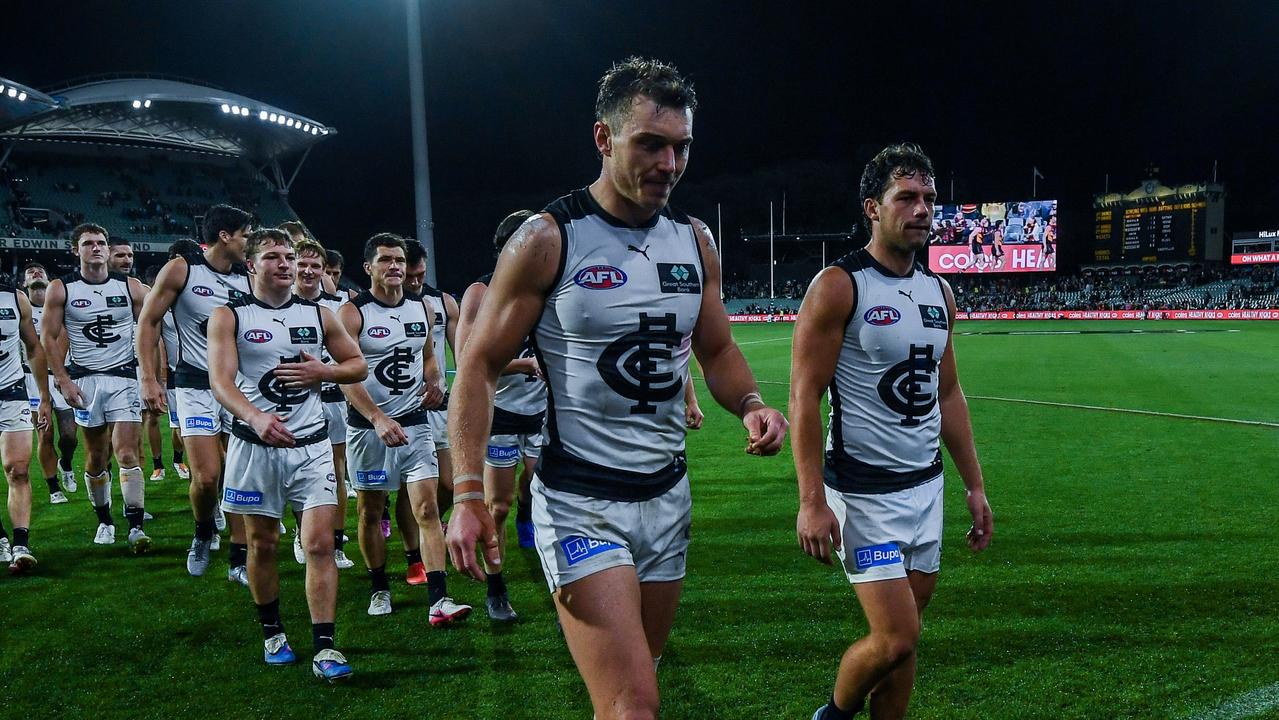
    Against a backdrop of early-season struggles that have left many questioning Carlton’s 2026 premiership hopes, captain Patrick Cripps is holding firm to his belief that the club is still on track to compete for Australian Football League’s ultimate prize, despite a disappointing 1-4 record through the first five rounds.

    The 31-year-old skipper, now competing in his 13th professional season, has not written off his chance to lift the club’s long-elusive premiership trophy this year. For Cripps, the slow start is far from a final verdict on what the evolving Blues squad can achieve in the coming months.

    With a high-stakes clash against longtime archrival Collingwood scheduled for Thursday night, Cripps argues it is far too early to count his side out of contention. A win against the Pies, he insists, could provide exactly the momentum shift Carlton needs to turn its season around.

    “Competing for a premiership is still what drives me. Any player in the back half of their career plays for that one goal above everything else,” Cripps told reporters ahead of the Collingwood game. “What I and a lot of us learned last season is that when you fixate too much on the end prize, you lose the joy of putting in the work week after week. That ultimate goal will always be there for as long as I keep playing, but I still love this game – I love training, I love competing against the best.”

    Cripps highlighted that while the early results have not gone Carlton’s way, the internal culture and training intensity at the club remain as strong as he has ever experienced in his tenure. “My focus lately has been on leading this group day in and day out. We’ve carried great energy through the first weeks of the season, and that’s one thing we’ve really nailed this year. The start has obviously been challenging, and we haven’t gotten the wins we wanted, but the energy around the club and the standard of our training is higher than I’ve ever felt it. Even when results aren’t going your way, I still love showing up to the club every day – that’s always the biggest test. It’s still early, there’s so much untapped potential in this group, and we can’t wait to get out there on Thursday and kick this campaign into gear.”

    Carlton turned in an improved performance against Adelaide last week, fixing the second-half slumps that had plagued earlier outings, but still walked away empty-handed without the four competition points. That result followed a controversial call from head coach Michael Voss to drop George Hewett, the club’s reigning best and fairest winner, a decision that sent shockwaves through the competition.

    Cripps acknowledged that the cutting of a popular, experienced teammate like Hewett serves as a wake-up call for every player in the Carlton squad. “It’s always tough losing George – he’s someone I love playing alongside, we’ve shared the field for four years now, every player at the club loves having him around, you always know what you’re going to get from him,” Cripps said. “But at the same time, when results aren’t going your way, you have to be willing to shake up the combination to get things back on track. The way George has handled this, showing up and putting in the work this week, that’s a credit to his character. He puts in more effort than anyone I’ve ever seen at this club, and I’m proud to call him a teammate.”
  • Lieutenant General Susan Coyle appointed first female Australian Chief of Army

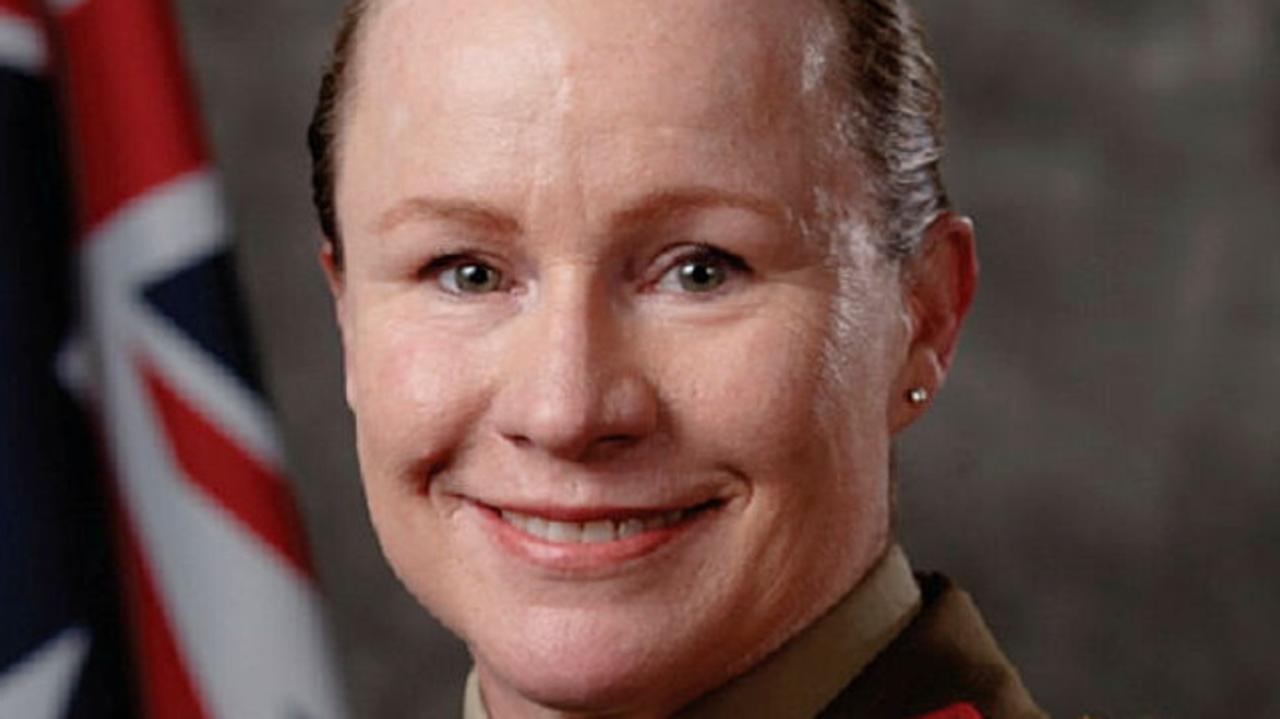
    Lieutenant General Susan Coyle appointed first female Australian Chief of Army

    The Australian Defence Force (ADF) is undergoing one of its most high-profile leadership reshuffles in recent years, with a series of historic appointments announced just days after the service was thrown into turmoil by the arrest of Australia’s most decorated veteran, Ben Roberts-Smith. Amid growing global geopolitical friction including escalating conflict in the Middle East, Prime Minister Anthony Albanese’s government has confirmed a shake-up that will see the ADF welcome its first female Chief of Army and a new Chief of Defence.

    On Monday, Lieutenant General Susan Coyle, a decorated 40-year veteran with extensive operational experience across multiple global deployments, was officially named to the top army post. Coyle, who most recently served as Chief of Joint Capabilities starting in 2024, will step into the role vacated by Lieutenant General Simon Stuart AO, who has held the position since 2022. A graduate of both the United States Army War College and Harvard University and a Member of the Order of Australia, Coyle has completed deployments to Timor Leste, the Solomon Islands, Afghanistan, and the Middle East, bringing deep on-the-ground experience to her new command.

    In a parallel senior promotion, outgoing Chief of Navy Mark Hammond AO will ascend to the role of Chief of Defence, taking over from Admiral David Johnston, whose two-year term is set to conclude in July. Upon his promotion, Hammond will be elevated to the rank of Admiral, while Rear-Admiral Matthew Buckley will step into Hammond’s current role as the new Chief of Navy.

    Speaking to reporters following the announcement, Hammond struck a humble note about his new appointment, acknowledging the weight of the responsibilities ahead. “This is probably the most humbling moment in my career,” he said. “I certainly look forward to serving with, and for Australia’s sailors, soldiers, and aviators as their Chief of Defense through the challenging times ahead.”

    Hammond also used the press briefing to address growing concerns over regional security following recent Iranian drone attacks in the Strait of Hormuz, pushing back against any questions about the ADF’s operational readiness. “Today, that navy is as ready as it ever has been,” he stated, adding that Australian vessels deployed to the Red Sea are equipped with the world’s most advanced radars alongside cutting-edge missile and defensive systems. Responding to questions about a potential request for contribution related to former U.S. President Donald Trump’s proposed blockade of the strait, Hammond noted that no formal request for Australian support had been received, and any deployment decision would rest solely with the Australian government.

    Defence Minister Richard Marles framed Coyle’s historic appointment as a landmark moment for the ADF, ahead of his much-anticipated national defence strategy update — a two-yearly policy review scheduled to be delivered to the National Press Club on Wednesday. Marles described Coyle as “the standout candidate” for the role, emphasizing that her elevation to Chief of Army carries profound meaning for both current and future servicewomen in the ADF. “It is deeply significant … for women who are thinking about serving in the Australian Defence Force in the future,” he said. The role of Chief of Army carries core responsibilities for overall command of the service, as well as oversight of training and operational readiness.

    The leadership overhaul comes at a sensitive juncture for the ADF, which is already navigating multiple pressures. In recent days, the government has faced intense scrutiny and pressure from veteran communities following the arrest of Ben Roberts-Smith, who is currently being held on remand on multiple war crime-related charges. Roberts-Smith has consistently maintained his innocence and has not entered any pleas in the case.

    On the strategic front, the Australian government has been actively reframing its national defence posture in recent years, with a growing focus on countering potential threats along the country’s northern border. Earlier this year, Canberra announced a large-scale sell-off of ageing defence assets as part of this reset, while the alliance has also faced repeated calls from Donald Trump for U.S. allies to dramatically increase their defence spending commitments.

    Prime Minister Albanese paid tribute to the departing leaders, Admiral Johnston and Lieutenant General Stuart, for their years of service to the nation. “There is indeed no higher calling than to serve in the Defence Force, and all Australians owe a debt to those who protect the Australian way of life,” he said.

  • Pope Leo says he does not fear Trump, citing Gospel as he pushes back in feud over Iran war

    Pope Leo says he does not fear Trump, citing Gospel as he pushes back in feud over Iran war

    A high-stakes public clash between history’s first U.S.-born pontiff and sitting U.S. president has erupted over the ongoing U.S.-Israel war in Iran, with Pope Leo XIV rejecting Donald Trump’s harsh attacks and reaffirming his commitment to the Catholic Church’s longstanding call for global peace.

    The confrontation unfolded after Leo delivered a pointed message during a Saturday prayer service at St. Peter’s Basilica, held the same day U.S. and Iranian negotiators sat down for face-to-face talks in Pakistan amid a fragile ceasefire. Though the pope did not name Trump or U.S. officials directly, he criticized what he called the “delusion of omnipotence” that fuels ongoing conflicts worldwide — a remark widely interpreted as a rebuke of the Trump administration’s framing of the Iran war, which has been justified through appeals to U.S. military superiority and religious endorsement.

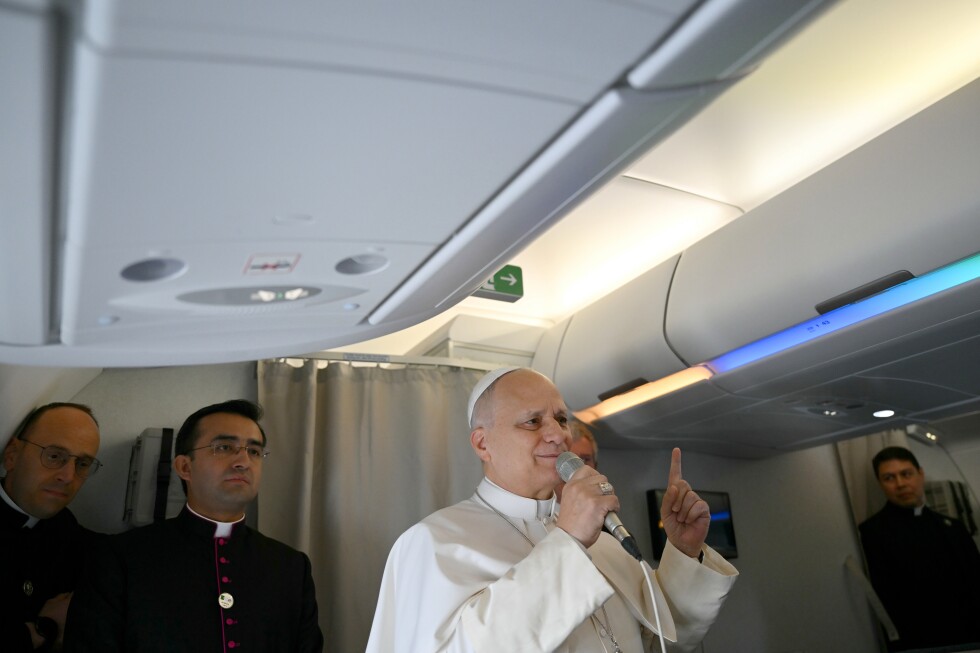
    Leo doubled down on his position Monday while speaking to reporters aboard the papal plane, midway through the first leg of his 11-day trip to Africa. He pushed back against Trump’s weekend broadside, emphasizing that the Vatican’s appeals for peace and reconciliation are rooted in Gospel teachings, not political opposition to the U.S. president.

    “To put my message on the same plane as what the president has attempted to do here, I think is not understanding what the message of the Gospel is,” Leo told The Associated Press. “And I’m sorry to hear that but I will continue on what I believe is the mission of the church in the world today.”

    The pontiff stressed that his general calls for peace are not direct attacks on Trump or any other political leader. He noted he has no intention of engaging in a public political debate, and will not step back from his core mission of spreading the Gospel’s call for peacemaking.

    “I will not enter into debate. The things that I say are certainly not meant as attacks on anyone. The message of the Gospel is very clear: ‘Blessed are the peacemakers,’” Leo said. “I will not shy away from announcing the message of the Gospel and inviting all people to look for ways of building bridges of peace and reconciliation, and looking for ways to avoid war any time that’s possible.”

    When asked about the Trump administration’s criticism, he added simply: “I have no fear of the Trump administration.”

    Trump first launched his extraordinary attack on Sunday, during a trip from Florida back to Washington. In a lengthy social media post and subsequent remarks to reporters on the tarmac, the president said he “is not a fan of Pope Leo” and claimed the pontiff “is not doing a very good job” as leader of the Catholic Church. He labeled Leo “a very liberal person” and accused him of catering to the U.S. radical left, going far beyond his criticism of the pope’s comments on the Iran war.

    In his social media post, Trump argued he did not “want a Pope who thinks it’s OK for Iran to have a Nuclear Weapon,” a claim Leo has never publicly made. He also criticized Leo for opposing the Trump administration’s January ousting of Venezuelan President Nicolás Maduro, writing: “I don’t want a Pope who thinks it’s terrible that America attacked Venezuela, a Country that was sending massive amounts of Drugs into the United States.”

    Trump went so far as to claim that he was directly responsible for Leo’s ascension to the papacy, writing: “If I wasn’t in the White House, Leo wouldn’t be in the Vatican.” He added that “Leo should get his act together as Pope, use Common Sense, stop catering to the Radical Left, and focus on being a Great Pope, not a Politician. It’s hurting him very badly and, more importantly, it’s hurting the Catholic Church!”

    He repeated the false claim that Leo supports Iran’s nuclear program in subsequent comments to reporters, and added the unfounded assertion that Leo “likes crime I guess.” Later that day, Trump also posted an altered image portraying him with saint-like healing powers comparable to Jesus Christ, showing him in a biblical-style robe laying hands on a sick man, surrounded by onlookers, American symbols, and religious imagery.

    The conflict has drawn reactions from religious and political leaders on both sides of the Atlantic. Archbishop Paul S. Coakley, president of the U.S. Conference of Catholic Bishops, issued a statement saying he was “disheartened” by Trump’s comments. “Pope Leo is not his rival; nor is the Pope a politician. He is the Vicar of Christ who speaks from the truth of the Gospel and for the care of souls,” Coakley said.

    Across the Atlantic, Italian political leaders from all ideological factions have expressed solidarity with Pope Leo. Italian Prime Minister Giorgia Meloni publicly voiced support for his peace mission, while Elly Schlein, leader of Italy’s main opposition party, called Trump’s attacks “extremely serious.”

    The public clash comes amid a uniquely polarized religious and political landscape in the U.S. AP VoteCast data from the 2024 presidential election shows Trump won 55% of the Catholic vote, but his administration maintains extremely close ties to conservative evangelical Protestant leaders, who have publicly claimed the war on Iran has heavenly endorsement. Defense Secretary Pete Hegseth has urged Americans to pray for victory “in the name of Jesus Christ,” and when asked whether he believes God approves of the war, Trump responded: “I do, because God is good — because God is good and God wants to see people taken care of.”

    Prior to the current ceasefire, when Trump publicly warned of mass strikes against Iranian civilian infrastructure that would wipe out “an entire civilization,” Leo called the remarks “truly unacceptable.” The pontiff has previously doubled down on his anti-war stance, citing Old Testament scripture to argue that “God does not listen to the prayers of those who wage war, but rejects them.”

    While disagreements between sitting popes and U.S. presidents are not unheard of, direct, public confrontation of this intensity is extremely rare for both sides.

  • Marata Niukore to return to Australia next year as Eels leave the door open for Jaydn Su’A move

    Marata Niukore to return to Australia next year as Eels leave the door open for Jaydn Su’A move

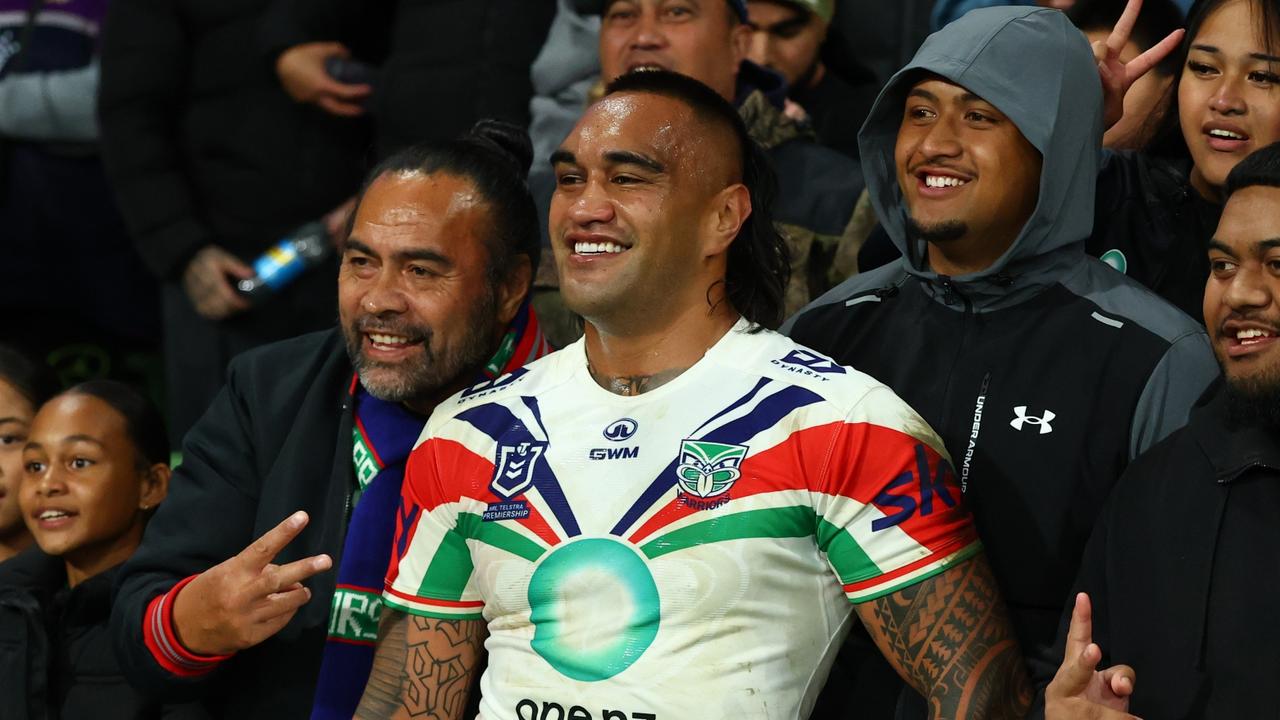
    The National Rugby League (NRL) off-season transfer market has already begun to heat up, with two high-profile forward movements emerging as the 2025 season approaches its midpoint. The Newcastle Knights have pulled off a major long-term recruitment coup, locking in Warriors enforcer Marata Niukore on a three-year contract that will see the 29-year-old move to Newcastle starting in 2027.

    Niukore’s rugby league career began in Australia with the Parramatta Eels, where he spent the first five seasons of his top-flight career before making the move to the New Zealand Warriors four years ago. He comes to the Knights off one of his strongest recent performances, having scored a try in the Warriors’ historic drought-breaking victory over the reigning-premier Melbourne Storm last week.

    Despite still being in the prime of his career at 29, Niukore opted to make the move to Newcastle after facing a growing logjam of young elite talent in the Warriors’ forward pack. With the New Zealand side boasting one of the most promising youth development systems in the NRL, opportunities for senior players in the coming seasons were projected to become increasingly limited, opening the door for Niukore to seek a fresh start down under.

    Knights’ head of recruitment Peter O’Sullivan expressed strong enthusiasm for the signing, noting Niukore’s rare versatility and on-field impact that will add major depth to the club’s future squad. “He is a big athletic body, who can play in the middle or on the edge, with the same level of execution,” O’Sullivan said in a statement confirming the deal. “Marata is one of the top edge defenders in the game and having played a lot of NRL in the centres, he adds genuine skill and versatility to our future stocks. Equally importantly, we know he is a great person, who cares about the club, the community and the teammates he represents, already committing to leaving the jersey in a better position than how he receives it.”

    The Knights have built a strong track record of shrewd recruitment in recent seasons: former Canberra Raiders forward Trey Mooney has thrived since making the switch to Newcastle, while five-eighth Dylan Brown was in elite form before a season-ending knee injury cut his 2025 campaign short.

    Meanwhile, across the NRL, the St George Illawarra Dragons have confirmed that representative forward Jaydn Su’A will depart the club at the end of the 2025 season. In a statement confirming Su’A’s exit, Dragons chief executive Tim Watsford paid tribute to the forward’s contributions during his tenure with the club. “Jaydn has been an important part of our squad and has made a valued contribution to the club during his time in the Red V,” Watsford said. “We thank Jaydn for his contribution to the Dragons and wish him and his family all the best for the future.”

    The former State of Origin forward has quickly emerged as a top target for the Parramatta Eels, who are currently grappling with a worsening injury crisis that has gutted their forward pack. The club has not ruled out pushing for an early mid-season transfer to bring Su’A to the club immediately, rather than waiting for the end of the season. When asked about a potential move, Eels head coach Jason Ryles confirmed the club was exploring all options to reinforce their injury-hit squad. “We do have the ability to do that (sign players now) but that’s something that we’ll have to look at with our recruitment team during the week and the weeks coming,” Ryles said.

  • Congressman Eric Swalwell drops out of California governor’s race amid abuse claims

    Congressman Eric Swalwell drops out of California governor’s race amid abuse claims

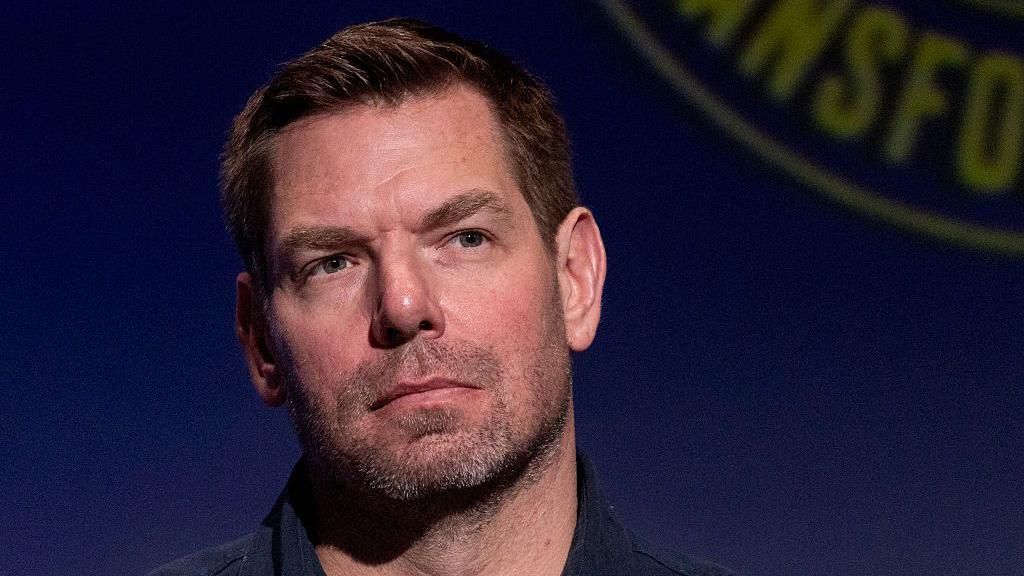
    Weeks ahead of California’s critical gubernatorial primary election, Democratic U.S. Representative Eric Swalwell has announced he is ending his campaign for governor, caving to mounting pressure from party allies following multiple sexual misconduct claims leveled against him by four women. The allegations against the congressman span a spectrum of serious accusations, from unwanted sexual harassment to violent rape. Swalwell has repeatedly and vehemently denied all of the claims, saying he is prepared to clear his name using verifiable facts. Even as the candidate pushed back against the accusations, his closest political allies within the Democratic Party ramped up calls for his withdrawal from the race. Before his exit, Swalwell was widely viewed as one of the leading contenders for the Democratic nomination in the open primary to fill the seat being vacated by outgoing Governor Gavin Newsom. The race for governor of California, the most populous state in the United States, has been a wide-open contest with no clear favorite from the start. Swalwell’s departure comes at a make-or-break juncture, just a few weeks before mail-in ballots are distributed to registered voters across the state ahead of the June 2 primary election. In a public statement posted to the social media platform X, Swalwell confirmed the end of his gubernatorial bid. “I am suspending my campaign for Governor,” he wrote. Addressing his loved ones, campaign team, supporters, and friends, he added: “I am deeply sorry for mistakes in judgment I’ve made in my past.” Swalwell emphasized that while he will continue to work aggressively to refute what he calls the false serious accusations against him, this legal and personal battle should not distract from the state’s gubernatorial race. “That’s my fight, not a campaign’s,” he concluded.

  • ‘A truly historic moment’: Hungarian opposition wins election landslide

    ‘A truly historic moment’: Hungarian opposition wins election landslide

    Hungary has entered a new political era following a watershed election that saw the country’s united opposition claim an extraordinary landslide win, a result already being described by political observers as a truly transformative moment for the central European nation.

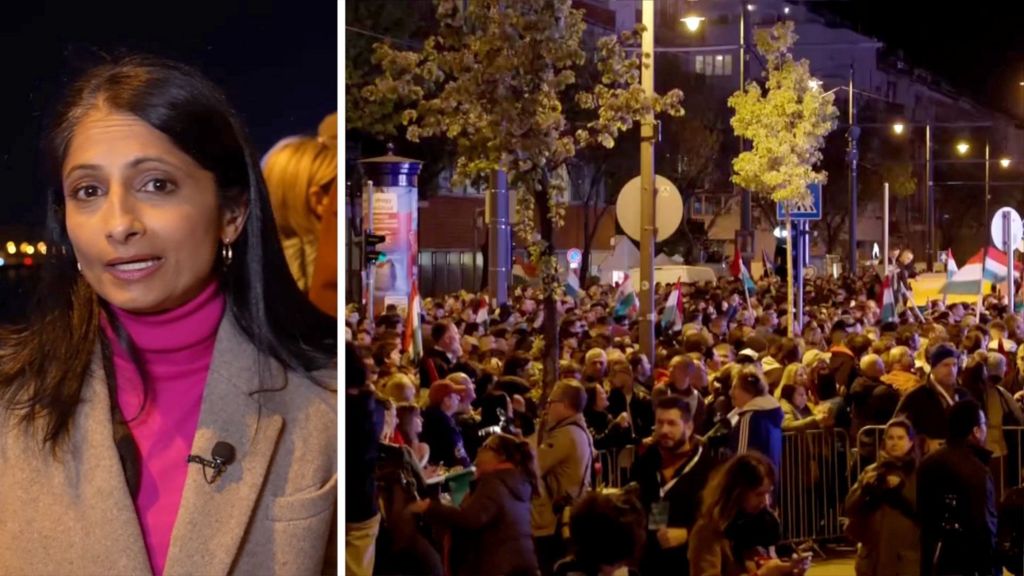
    As thousands of people gathered outside Hungary’s ornate parliament building in central Budapest to wait for official confirmation of the outcome, Rajini Vaidyanathan reported live from the scene on the dramatic turn of events. The air was thick with a mix of excitement and disbelief as crowds followed updates, their murmurs growing louder when news broke that the sitting prime minister had formally conceded defeat.

    Witnesses at the scene described spontaneous celebrations breaking out across the capital after the concession announcement, with opposition supporters waving flags, cheering, and embracing one another outside the seat of national power. The scale of the victory marks a dramatic end to what had been a prolonged period of incumbent rule in Hungary, opening the door to a new government with vastly different policy priorities for the country.

    Political analysts note that this landslide result reflects a significant shift in voter sentiment across Hungary, with large numbers of citizens turning away from the ruling administration in favor of the opposition’s policy platform. The outcome is expected to have ripple effects across European politics, as the new administration prepares to take office and implement its planned policy agenda.

  • Albanese flags move on controversial Australian housing tax

    Albanese flags move on controversial Australian housing tax

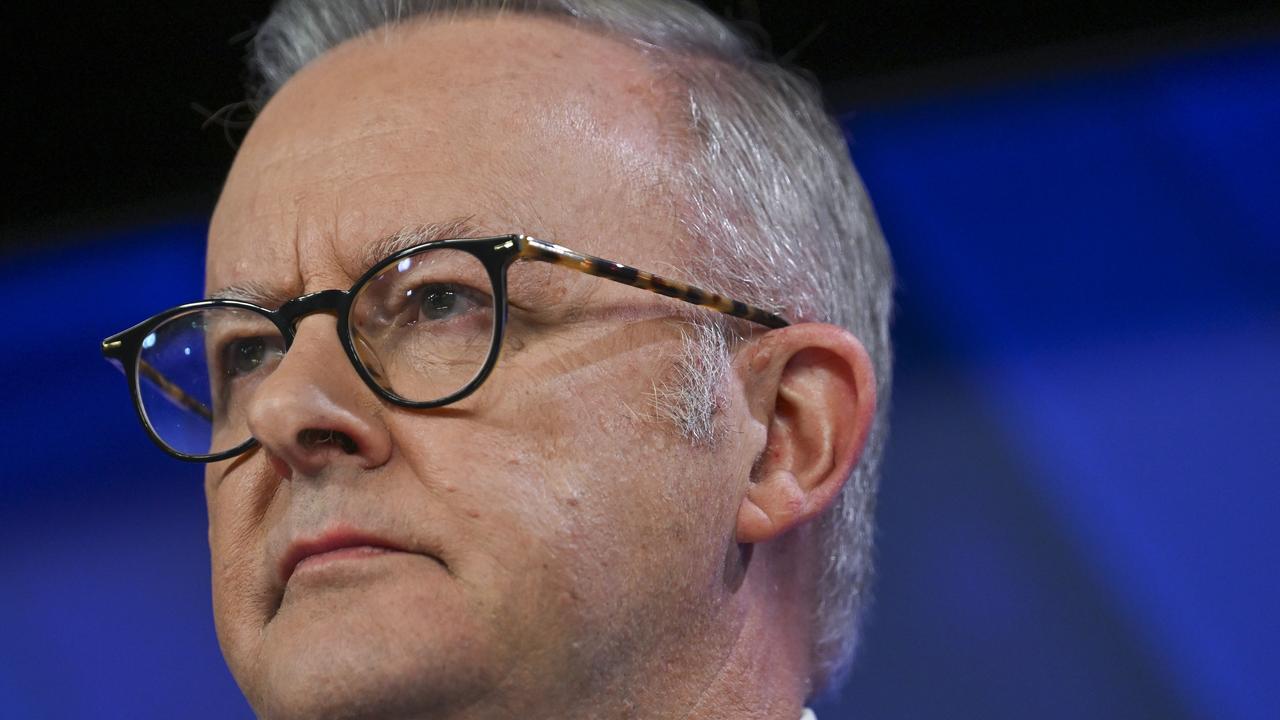
    Weeks out from Australia’s upcoming federal budget, Prime Minister Anthony Albanese has delivered the clearest hint yet that the center-left Labor government is prepared to eliminate a contentious capital gains tax concession that benefits property investors, as the administration navigates growing political pressure over rising housing inequality from the right-wing populist party One Nation.

    For months, unconfirmed reports have circulated that the Albanese government is considering rolling back Australia’s generous 50% capital gains tax discount, a policy that applies to profits earned from selling assets held for more than 12 months, including residential investment property. For context, capital gains tax is levied on profits from asset sales such as property and shares, with those profits counted toward an individual’s annual taxable income. The existing 50% discount cuts the taxable portion of these gains in half for long-term asset holders.

    Speaking to Nine Entertainment’s metropolitan publications on Monday, Albanese confirmed that the government is exploring policy changes beyond its existing push to expand national housing supply, a shift that comes as One Nation has sharpened its political messaging around housing affordability and systemic inequality to win over disaffected voters.

    “The system needs to work for people,” Albanese said. “You don’t change that by rhetoric and by dividing people, which is what a lot of this populist rhetoric does. You do that by giving people a stake in the economy.”

    Until this announcement, Labor’s national housing strategy has centered almost exclusively on boosting housing supply, anchored by its ambitious National Housing Accord that sets targets for new construction across the country. On Monday, the Prime Minister also signaled the government would increase spending on incentives to encourage state and territory governments to hit those housing supply targets, linking housing accessibility to broader national stability.

    “Resilience is also about economic resilience and social cohesion, and making sure that young Australians understand they have a stake in the economy,” he said. “And housing is obviously one of the focuses of that.”

    Currently, a Liberal Party-led Senate inquiry is examining potential changes to national housing tax policy. Earlier this year, prominent financial journalist and economist Alan Kohler told the committee that the existing tax structure sends “a clear signal that capital income is preferred over labour income,” a bias that he argues lies at the root of Australia’s widening wealth gap.

    Kohler noted that while the discount is framed as an inflation adjustment, it is far larger than needed to offset rising prices, and has distorted the property market by encouraging speculative investment. This dynamic, he explained, has pushed up overall housing demand and increased the maximum price investors are willing to pay for residential property, pricing out many first-time homebuyers and low-income households.

    The government’s openness to changes to the capital gains discount aligns with recent comments from Treasurer Jim Chalmers, who said last week that he would be “pretty happy” if the 2026–27 budget was remembered as a landmark “tax reform budget.”

    Beyond housing tax reform, Albanese also signaled that the upcoming budget will include a sweeping overhaul of the National Disability Insurance Scheme (NDIS), Australia’s landmark social support program for people with permanent disability.

    “The NDIS was there to assist people who have a permanent incapacity to fully participate in society – that’s something we need to value and cherish,” Albanese said. “It’s undermined if four out of 10 kids in a class are on the NDIS. That wasn’t why it has that public support, and we need to make sure that we maintain public support by ensuring it’s sustainable.”

    The government has already moved to narrow eligibility for the scheme, proposing to shift support for children with mild autism to state and territory-run systems under the new Thriving Kids program. The reform has faced significant pushback, however, with state leaders refusing to take on the extra funding burden for the initiative. Albanese has explicitly ruled out introducing means testing for the NDIS, saying that eligibility should remain tied to an individual’s disability needs and their ability to participate in community and economic life, not their income or assets.

  • Iran’s IRGC warns any wrong move by ‘enemy’ in Strait of Hormuz to have lethal consequences

    Iran’s IRGC warns any wrong move by ‘enemy’ in Strait of Hormuz to have lethal consequences

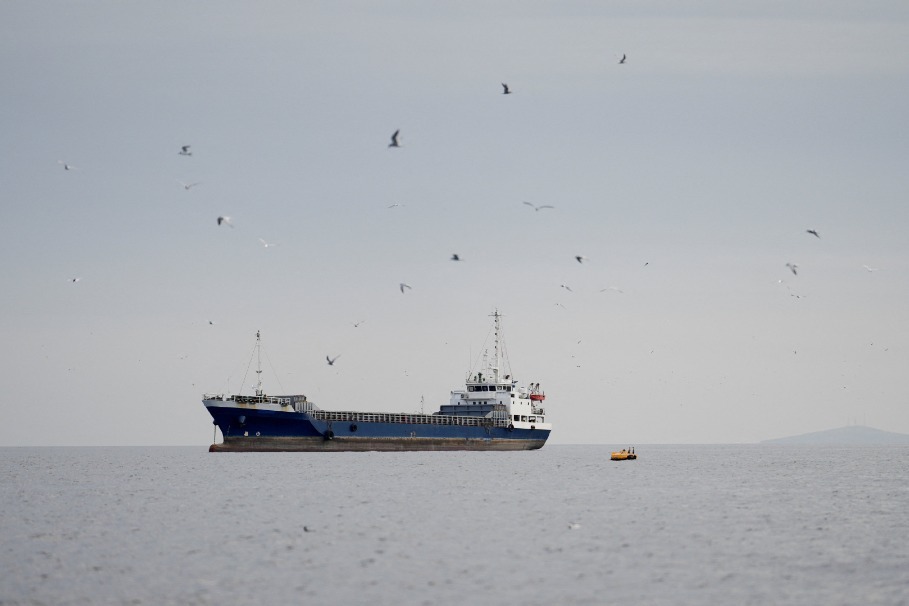
    Tensions have flared again in the strategically critical Strait of Hormuz just days after a fragile ceasefire between Iran and the United States went into effect, with Iran’s Islamic Revolution Guard Corps (IRGC) Navy issuing a stark public warning that any miscalculated move by hostile forces in the waterway will be met with deadly consequences.

    The warning was published Saturday on the social media platform X, where the IRGC Navy also shared drone-collected surveillance footage purporting to show the full operational landscape of the strait. The branch emphasized that every movement—whether active or stationary—of foreign vessels within the strategic waterway is under constant, full surveillance by Iran’s armed forces. “Any erroneous maneuver will trap the enemy in deadly whirlpools in the strait,” the post read.

    The escalation of rhetoric follows conflicting accounts of a U.S. naval operation in the region one day prior. U.S. Central Command (CENTCOM) announced Saturday that two American warships had completed a transit through the Strait of Hormuz and launched mine-clearing operations in the Persian Gulf. Iran’s top military body, Khatam al-Anbiya Central Headquarters, immediately pushed back against the claim, issuing a strong denial that any American vessels had entered the strait’s territorial waters.

    In an exclusive Sunday report, Iran’s state-owned Press TV framed the U.S. military’s attempted deployment of the two destroyers—identified as the USS Michael Murphy and USS Frank E. Peterson—as a botched propaganda exercise timed to coincide with newly resumed Tehran-Washington negotiations in Islamabad. Press TV reported that Iranian naval forces forced the two American destroyers to retreat before they could reach the strait.

    Expanding on its stance Sunday, the IRGC released an official statement clarifying that any foreign military vessel seeking to approach the Strait of Hormuz under any pretext will be classified as a violation of the ongoing ceasefire and will face harsh, decisive retaliation.

    The current standoff comes against a backdrop of sharply escalated regional conflict that began in late February 2026, when Israel and the United States launched joint airstrikes targeting Tehran and multiple other Iranian cities. The strikes killed Iran’s then-Supreme Leader Ali Khamenei, alongside a number of senior Iranian military commanders and civilian bystanders. In response, Iran launched a massive retaliatory campaign of missile and drone attacks targeting both Israel and U.S. military assets across the Middle East, and moved to tighten its control over the Strait of Hormuz by banning passage for all vessels owned or affiliated with Israel and the United States.

    A two-week ceasefire between Iran and the United States entered into force on Wednesday, paving the way for extended bilateral negotiations between the two delegations in the Pakistani capital. As of Sunday, those talks had not resulted in any breakthrough agreement, leaving the fragile truce at growing risk of collapse amid the latest naval dispute.

  • Orbán era swept away by Péter Magyar’s Hungary election landslide

    Orbán era swept away by Péter Magyar’s Hungary election landslide

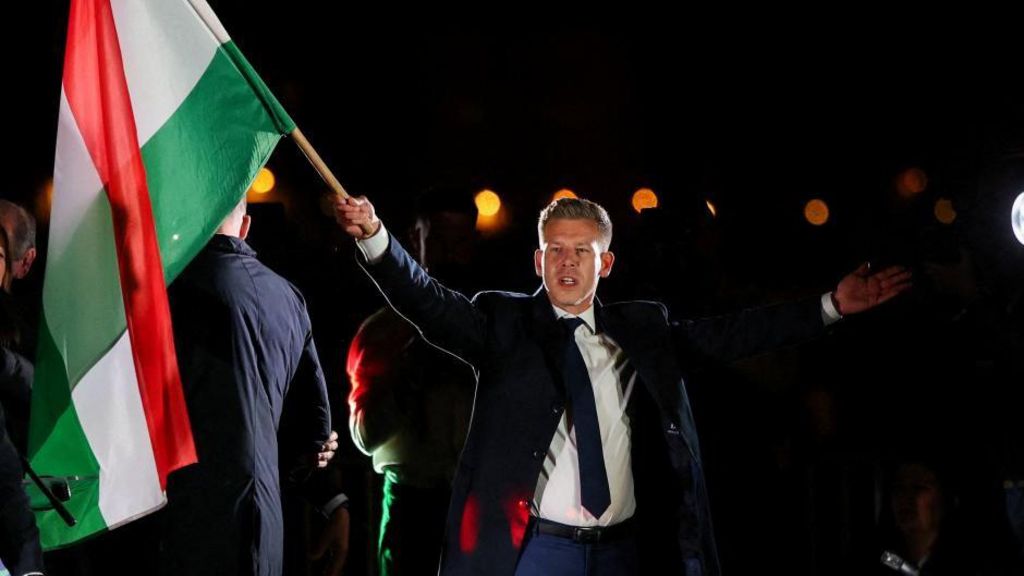
    After 16 consecutive years holding power in Hungary, Prime Minister Viktor Orbán’s long tenure has come to an abrupt end, following a historic general election that saw a stunning political upheaval led by 45-year-old former ruling party insider Péter Magyar. His newly formed Tisza Party has secured what appears to be an overwhelming constitutional majority, bringing down the Orbán administration that critics had long labeled an “electoral autocracy.”

    Preliminary vote counting, which has processed more than 98% of all ballots, projects Tisza will take 138 seats in Hungary’s parliament — five more than the 133 two-thirds supermajority required to amend the national constitution. Orbán’s long-ruling Fidesz party is on track to win just 55 seats, with the far-right Our Homeland movement claiming the remaining six seats. The election saw a historic 79% voter turnout, the highest participation rate in the democratic history of modern Hungary.

    Shortly after the unofficial results began trending toward a Tisza victory, Orbán personally called Magyar to congratulate him on the win, a confirmation that Magyar shared publicly on his Facebook page. Speaking to thousands of jubilant supporters gathered on a Danube River square overlooking Budapest’s iconic parliament building, Magyar declared, “We did it. Together we overthrew the Hungarian regime.”

    Minutes after Magyar’s announcement, a visibly somber Orbán addressed his dejected Fidesz supporters at a downtown conference center. “The result of the election is clear and painful,” he told the crowd, thanking the roughly 2.5 million voters who remained loyal to his party. “The days ahead of us are for us to heal our wounds.” Orbán, 62, has not stepped down as leader of Fidesz and will remain in office as a caretaker prime minister until a new government is formed.

    Magyar built his anti-incumbent movement over two years, crisscrossing Hungary from small rural villages to major city squares, rallying voters frustrated by the systemic cronyism and corruption that became entrenched during Orbán’s four consecutive terms in office. Once a member of Fidesz himself, Magyar positioned himself as the voice of Hungarians ready for sweeping change. He has pledged an ambitious policy agenda: rolling back controversial Orbán-era reforms to education and healthcare, dismantling the widely unpopular National Unity Regime (NER) patronage system that enriched loyal Fidesz allies with state resources, restoring judicial independence, and cracking down on systemic public corruption.

    The election result upended weeks of misleading polling from pollsters aligned with Fidesz, which continued to forecast a narrow Orbán victory as late as election night. For years, Hungarian society had existed as two parallel political worlds: one in which Orbán’s supporters and state media outlets maintained confidence in a fourth re-election, and another where Magyar drew massive, enthusiastic crowds and independent pollsters tracked his growing lead. On election night, those two worlds collided, with Magyar’s movement emerging as the clear will of the majority.

    One of the first institutional changes Magyar’s administration is expected to pursue is overhauling Hungary’s pro-Orbán state media ecosystem, which for years had strictly toed the Fidesz party line. On election night, even state broadcaster M1 — long a mouthpiece for Fidesz — rebroadcast a pre-victory speech from Magyar, a sign of the immediate shift sweeping through the country’s media landscape.

    Magyar’s victory also signals a major shift in Hungary’s foreign policy. For years, Orbán cultivated a close alliance with Russian President Vladimir Putin, justifying his reliance on cheap Russian energy and defying EU efforts to cut dependence on Russian fossil fuels. He also recently blocked a bloc-wide €90 billion aid package for Ukraine, straining Hungary’s relationships with other EU member states. As celebrations erupted on the streets of Budapest, Tisza supporters chanted “Russians go home,” and Magyar has pledged to reset Hungary’s relationship with the European Union.

    European leaders were quick to welcome the historic election outcome. Polish Prime Minister Donald Tusk, one of the first regional leaders to issue a statement, praised Magyar’s “glorious victory” and echoed the crowd’s slogan in Hungarian: “Ruszkik Haza” — Russians go home. Magyar has announced his first foreign trip as prime minister will be to Warsaw, to reinforce the long-standing historical friendship between Hungary and Poland.

    As the dust settles on the most dramatic political shift in Hungary’s post-communist history, the future of Fidesz remains uncertain. While Orbán retains his position as party leader, political analysts widely agree that the once-dominant right-wing party will face a period of major internal restructuring and soul-searching in the wake of its historic defeat. For Hungary and the broader European Union, the election marks the start of a new political era after nearly two decades of Orbán’s illiberal rule.

  • Runoff looms as Fujimori leads troubled Peru vote

    Runoff looms as Fujimori leads troubled Peru vote

    Peru’s 2026 general presidential and legislative election, held April 12, concluded with right-wing contender Keiko Fujimori holding a narrow lead but forced into a June runoff, capping a day of widespread logistical failures, police intervention, and public frustration that deepened uncertainty over the South American nation’s efforts to escape years of crippling political instability.

    Approximately 27 million eligible Peruvians turned out to select from 35 presidential candidates, an election called to resolve a prolonged period of chaos that has seen multiple presidents ousted from office or jailed in recent years. Campaigning centered overwhelmingly on two of the country’s most pressing crises: soaring violent crime and pervasive systemic corruption. Homicide rates across Peru have more than doubled over the past decade, while annual reported extortion cases have skyrocketed from just 3,200 to 26,500 over the same period, pushing public safety to the top of voter priorities.

    On the eve of voting, Fujimori — the 50-year-old daughter of disgraced former Peruvian president Alberto Fujimori — laid out a hardline public safety platform to AFP, saying she would crack down on instability by deploying the military to control prisons, strengthening border enforcement, and expediting deportations of undocumented migrants. Early exit polls from leading pollsters Ipsos and Datum placed Fujimori in first place with roughly 16% of the vote, well short of the 50% majority required to win the election outright.

    The tight race for the second spot in the June runoff remained too close to call late Sunday, with four candidates — Roberto Sanchez, Ricardo Belmont, Rafael Lopez Aliaga, and Jorge Neito — separated by just a few percentage points, putting all in a statistical tie for the final runoff position.

    What was meant to be a step toward restoring political order instead devolved into a day of disruption marked by major logistical breakdowns. More than 100 polling stations, the majority in the capital city of Lima, failed to receive required voting materials on time, forcing dozens of locations to open hours behind schedule. At 15 polling centers, frustrated voters waited for hours under Peru’s equatorial sun before staff were forced to turn them away entirely. In total, the material failures left roughly 63,000 registered voters unable to cast their ballots on election day.

    While the disenfranchised voters represent a small fraction of Peru’s total electorate, political observers warn their absence could still swing the race in the extremely tight contest for second place. In the 2021 presidential election, a margin of just 238,000 votes separated the second and third place finishers that cycle.

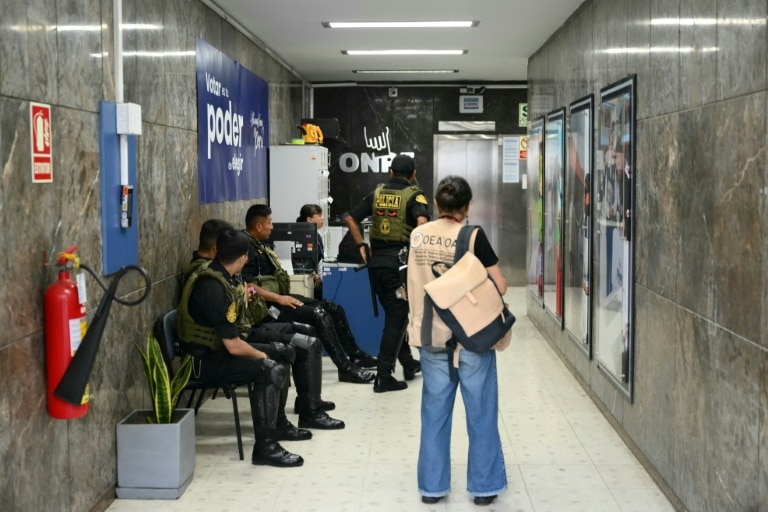
    With polls still open, police and prosecutors launched a raid on the headquarters of Peru’s National Office of Electoral Processes (ONPE) to investigate the material delivery failure, followed by a separate raid on a private logistics subcontractor that officials have blamed for the missed deadlines. The unprecedented mid-vote police intervention and widespread delays fueled unproven allegations of election foul play from candidates and the public, casting a cloud over the integrity of the results.

    Protesters gathered outside the guarded ONPE headquarters in Lima to voice frustration over the disorganization. “They have not made it easier for people to vote,” 25-year-old administration student Karina Herrera told reporters on site. Multiple presidential candidates raised concerns about the irregularities and called to extend voting into Monday if issues were not resolved; electoral officials ultimately opted to extend voting by just one hour before closing all polls.

    ONPE head Piero Corvetto defended the body’s handling of the election, acknowledging the widespread logistical failures but insisting no systemic fraud was possible. “We have had a logistical problem, and we have done everything humanly possible to reduce it,” Corvetto said. “There is no possibility of fraud. There is full assurance that the election results will faithfully reflect the popular will.”