
Under the golden autumn sun of Changbai Mountain, 70-year-old Cui Chang’an, a fourth-generation ginseng master, carefully uncovers a ginseng root that has grown for over three decades. ‘We never just dig ginseng,’ Cui explains. ‘We lift it, leave the small ones, and replant the seeds. That’s how the mountain keeps giving.’ This ancient practice is the cornerstone of Fusong county, known as China’s hometown of ginseng, where the tradition of gathering ginseng, called Fangshan, has been recognized as a national intangible cultural heritage since 2008. Fusong boasts over 460 years of documented cultivation history, with wild collection in the Changbai Mountain region dating back more than 1,500 years. Today, about 45,000 people in Fusong are employed in the ginseng industry, managing 14,000 hectares of wild-simulated ginseng, producing nine metric tons valued at 135 million yuan ($18.9 million). Ginseng is cultivated in two main ways: garden ginseng, grown on flat land like ordinary crops, and wild-simulated ginseng, which grows naturally under forest canopy and is considered equivalent to wild ginseng, a national first-class protected plant. At the heart of Fusong lies Wanliang, home to the world’s largest national-level ginseng market, where 80 percent of China’s ginseng is traded. Products from this small town are exported globally, particularly to Japan, South Korea, and Southeast Asian countries, with items like ginsenosides soaps exceeding 100,000 pieces annually. Fusong now produces five major categories of ginseng goods — food, health supplements, cosmetics, medicines, and bioproducts — totaling more than 600 varieties. Fusong County Natural Biotechnology Co, a provincial high-tech leader, is at the forefront of innovation, being the only firm in China capable of extracting individual ginsenosides like RH2 and RG3. With rising global wellness awareness, demand for ginseng continues to grow. Experts like Wang Defu, honorary president of the Fusong Ginseng Culture Research Association, see a promising future for Chinese ginseng, emphasizing the need for a stronger international brand and greater global recognition. Supported by government initiatives focusing on standardization, brand development, market expansion, and technology integration, the ginseng industry in Fusong is thriving, ensuring its position as a global ginseng hub. For Cui Chang’an, the legacy of ginseng is timeless. ‘I may never find the ginseng my grandfather planted,’ he reflects. ‘But someone will, and the mountains will keep giving.’
作者: admin
-

Sabalenka to face Kyrgios in ‘Battle of Sexes’
In a highly anticipated exhibition match, world number one Aryna Sabalenka will face off against Australian tennis star Nick Kyrgios in a modern take on the iconic ‘Battle of the Sexes.’ The event is scheduled for December 28 at the Coca-Cola Arena in Dubai, which boasts a capacity of 17,000. Sabalenka, the reigning US Open champion and a four-time Grand Slam winner, expressed her readiness for the challenge, stating, ‘I have a lot of respect for Nick and his talent, but make no mistake, I’m ready to bring my A-game.’ Kyrgios, currently ranked 652nd due to a prolonged absence from the tour following a wrist injury, welcomed the opportunity, saying, ‘When the world number one challenges you, you answer the call.’ The match has sparked mixed reactions among tennis fans. While some view it as an entertaining spectacle aimed at attracting a younger audience, others fear it could undermine women’s sports if Sabalenka loses. Kyrgios’s past controversies, including a guilty plea for assaulting an ex-girlfriend in 2023 and his association with controversial influencer Andrew Tate in 2024, have further fueled concerns about the event’s potential to perpetuate sexism. Despite these debates, Sabalenka remains unfazed, describing the match as a ‘cool idea’ and vowing to ‘kick Nick’s ass.’ The format of the match remains under discussion, with potential modifications to court size and serving rules being considered.
-
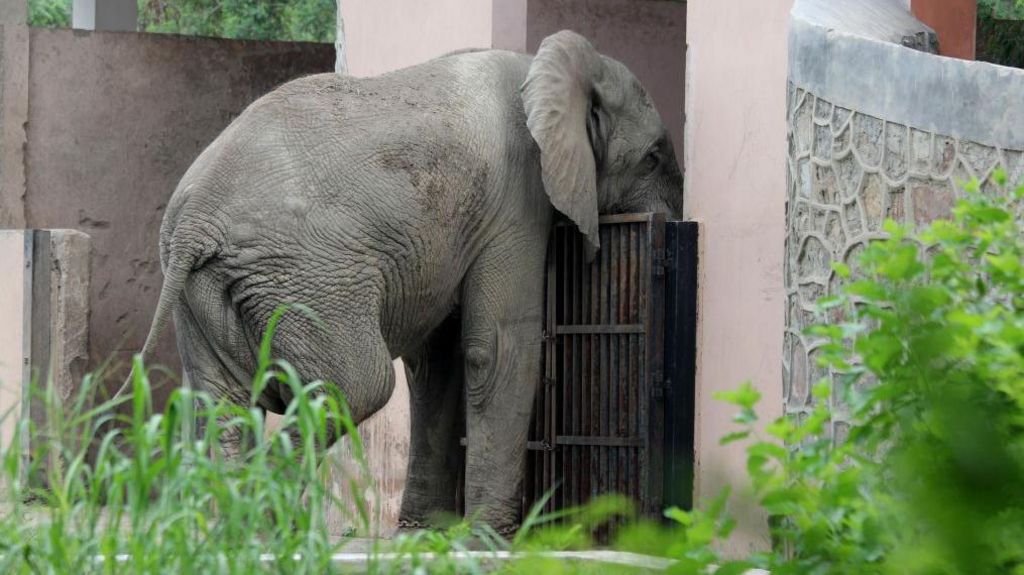
Delhi’s lonely African elephant was killed by rare rodent-borne virus
Shankar, the only African elephant at Delhi Zoo, passed away on September 17, 2023, after a life marked by isolation and loneliness. The 29-year-old male elephant’s death was initially shrouded in mystery, but an autopsy has now revealed the cause: encephalomyocarditis virus (EMCV), a rare rodent-borne pathogen. The virus, which causes fatal inflammation of the heart and sometimes brain fever in mammals, is transmitted through rodent feces and urine. According to Delhi Zoo director Sanjeet Kumar, this is the first recorded death in India attributed to EMCV, though unreported cases may exist. The virus, first isolated in 1945, has been documented in various mammals, including pigs, rodents, big cats, and African elephants. Outbreaks have occurred globally, with captive African elephants particularly affected in the US and South Africa. Shankar’s death has reignited concerns about the welfare of captive animals in India. He was one of two African elephants gifted to India by Zimbabwe in 1998 as a diplomatic gesture. After his companion died in 2001, Shankar lived in isolation, despite a 2009 federal ban on keeping elephants alone for more than six months. Activists had long campaigned for his relocation to a wildlife sanctuary, but a 2021 petition to Delhi’s High Court was dismissed. With Shankar’s passing, only one African elephant remains in India—a solitary male at Mysore Zoo. His death underscores the need for improved animal welfare standards and the risks posed by rare diseases in captive environments.
-

Tanzanian opposition claims security forces are secretly dumping bodies after election violence
Tanzanian authorities are under intense scrutiny following widespread allegations of violence and killings during and after last week’s contentious election. The largest opposition party, Chadema, accused security forces of secretly disposing of hundreds of bodies to conceal the true scale of the fatalities. Protests erupted across the country after the election, with demonstrators in Dar es Salaam and other cities decrying what they perceived as an unfair electoral process. Security forces responded with live ammunition and tear gas, prompting a nationwide curfew. President Samia Suluhu Hassan was declared the winner with over 97% of the vote, a result critics argue lacks credibility due to the suppression of opposition candidates and low voter turnout. Human Rights Watch condemned the violent crackdown, urging accountability for security forces. International observers, including the U.K., Norway, and Canada, have expressed concern over credible reports of significant casualties. The Catholic Church also reported hundreds of deaths, though exact figures remain unverified. Amid the turmoil, Hassan was inaugurated as Tanzania’s first female president, acknowledging the loss of life and calling for a return to normalcy. Authorities have warned against sharing unverified images of the violence, threatening treason charges for those who spread panic. As the internet was restored after a six-day shutdown, life in Dar es Salaam and Dodoma began to slowly return to normal, with businesses reopening and public transport resuming.
-

Centrist D66 party takes home win in Dutch election
In a dramatic conclusion to the Netherlands’ national election, the centrist D66 party narrowly defeated Geert Wilders’ far-right Party for Freedom (PVV), according to the final tally by national news agency ANP. Both parties secured 26 seats in parliament, with D66’s slim margin of approximately 28,000 votes insufficient to claim an additional seat. The outcome hinged on postal votes from Dutch citizens abroad, making it one of the closest electoral contests in recent Dutch history. Rob Jetten, the 38-year-old leader of D66, hailed the result as “historic” and expressed both pride and a sense of “great responsibility” to the nation. If successful in forming a coalition, Jetten would become the country’s youngest and first openly gay leader. For Wilders, the result marked an 11-seat decline for the PVV, a significant setback following its surge to prominence two years ago. Wilders has since faced criticism for his role in destabilizing a four-party coalition over migration policies. He has also raised unsubstantiated claims of voting irregularities, which were swiftly dismissed by local authorities and the independent Electoral Council. The council is set to formalize the election results on Friday. With the Dutch political landscape deeply fragmented, coalition negotiations are expected to be protracted, potentially lasting weeks or months. As the largest party, D66 will lead the efforts to form a government, with Jetten and his team beginning discussions on Tuesday.
-
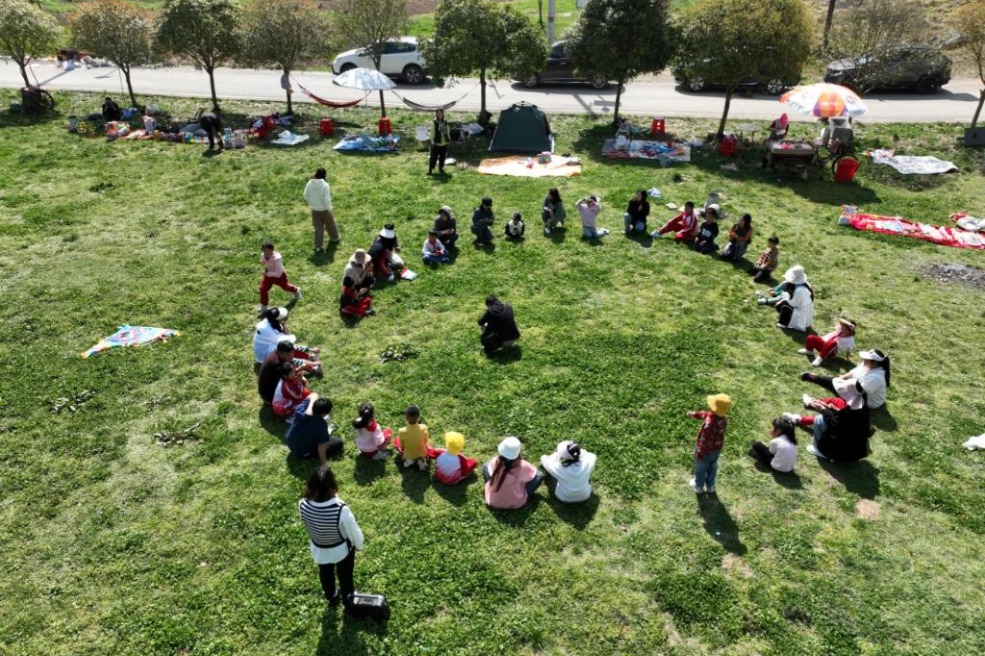
Flexibility expected to lift tourism industry
The introduction of autumn breaks for students in several Chinese provinces is set to invigorate the tourism industry while enhancing the paid vacation system for parents. Provinces such as Zhejiang and Guangdong have announced three-day autumn vacations for primary and junior high school students, running from November 12 to 14, with the option to extend to five days by including the weekend. Cities like Ningbo, Huzhou, Jiaxing, and Foshan are leading this initiative, with other regions like Jinhua also scheduling breaks in November. This move has already spurred a significant surge in flight and hotel bookings. According to Qunar, flight bookings from Ningbo between November 12 and 16 have increased by 2.18 times compared to last year, with Beijing, Xi’an, and Changsha emerging as top destinations. Foshan has seen an even greater rise, with flight bookings up 2.76 times. Online travel agency Tuniu reported a spike in tour reservations for Ningbo, Taizhou, and Foshan during the same period. Families are predominantly opting for two- to three-day domestic trips, though some are planning longer independent vacations to destinations like Sanya or international locations such as Japan. Wei Changren, founder of btiii.com, highlighted the benefits of this initiative, noting that it helps balance travel peaks during summer and public holidays, improving the overall experience for families. The flexibility allows parents to align their paid vacations with the autumn break, potentially refining the paid vacation system. With northern China transitioning to winter, milder destinations in the east and south are gaining popularity, along with nearby international locations like South Korea and Japan. This development follows a September notice from nine central departments, including the Ministry of Commerce and the Ministry of Education, encouraging local governments to optimize student vacation schedules by introducing spring and autumn breaks, potentially shortening summer and winter holidays.
-
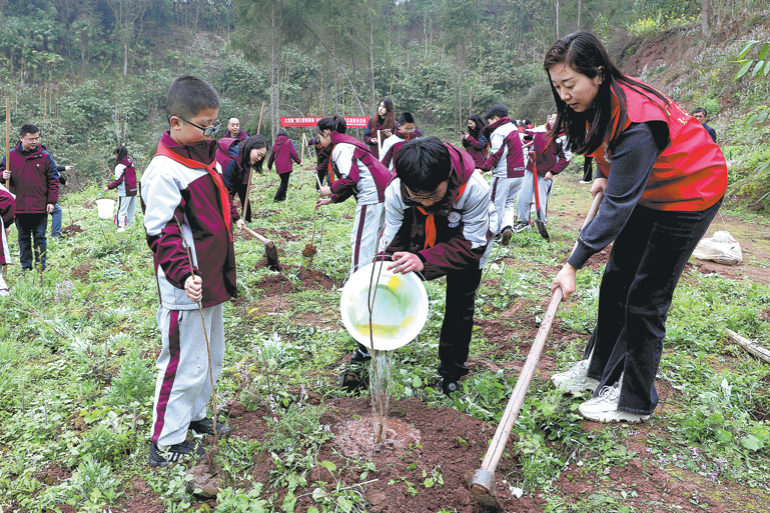
Autumn school holidays a welcome break with tradition
In a significant shift aimed at reducing academic pressure and promoting well-rounded growth, China has introduced autumn breaks for primary and secondary school students. This initiative, part of the nation’s ongoing education reforms, seeks to balance classroom learning with practical, real-world experiences. Chen Mingshan, a 10-year-old fifth-grader from Lichuan, Hubei province, is among the first to experience this new holiday. ‘My parents are taking me to the countryside to pick tangerines and dig up sweet potatoes,’ he said excitedly. ‘The best part is there’s no homework—just free time to enjoy.’ The Lichuan Education Bureau announced a nine-day autumn break from November 3 to November 7, extending the holiday by including two weekends. Schools are mandated to implement the break uniformly, with no written homework or mandatory tasks assigned. Teachers and parents alike have welcomed the initiative. Xiao Junling, a teacher at Lichuan Second Ethnic Experimental Primary School, noted that families are planning meaningful activities, such as learning tea processing, recording Tujia folk songs, or exploring nature reserves. Huang Jie, a parent, praised the opportunity for relaxed, off-peak travel, allowing children to truly unwind. This innovative approach integrates local culture and hands-on learning, transforming abstract knowledge into tangible experiences.
-

Hegseth praises South Korea’s plans to raise its military spending and boost defense capabilities
SEOUL, South Korea — U.S. Defense Secretary Pete Hegseth lauded South Korea’s decision to boost its military budget during a press briefing on Tuesday, emphasizing the nation’s growing role in countering North Korean aggression. This move comes as both allies prepare for potential regional crises, with the U.S. urging South Korea to enhance its conventional defense capabilities, allowing Washington to focus more on strategic challenges posed by China.
Following annual security discussions with South Korean Defense Minister Ahn Gyu-back in Seoul, Hegseth expressed strong encouragement regarding Seoul’s pledge to increase defense spending and invest in advanced military capabilities. The two leaders agreed that these investments would significantly bolster South Korea’s ability to lead its own conventional deterrence and defense efforts against North Korea.
Earlier in the day, South Korean President Lee Jae Myung addressed parliament, urging lawmakers to approve an 8.2% hike in defense spending for the upcoming year. This proposed increase aims to modernize the nation’s military weaponry and reduce its dependence on U.S. support.
Hegseth highlighted the enduring strength of the U.S.-South Korea alliance, describing it as more robust than ever despite the volatile security environment. He also noted agreements to utilize South Korea’s world-class shipbuilding industry for the maintenance and repair of U.S. warships, ensuring that critical military assets remain combat-ready.
The alliance’s primary focus remains addressing North Korean provocations, but Hegseth stressed the need to remain vigilant against other regional threats. He reiterated the U.S. commitment to extending nuclear deterrence to South Korea, which lacks its own nuclear arsenal and relies on the U.S. “nuclear umbrella” for security.
Ahn dismissed speculation about South Korea pursuing its own nuclear weapons program or seeking the redeployment of U.S. tactical nuclear weapons, reaffirming Seoul’s commitment to the nuclear non-proliferation treaty. He emphasized the importance of the Conventional-Nuclear Integration (CNI) framework, which combines U.S. nuclear capabilities with South Korea’s conventional forces.
Notably, the meeting concluded without a joint statement, an unusual outcome for such high-level talks. However, Hegseth assured that there were no disagreements between the two nations, attributing the delay to the complexity of the discussions.
Amid these developments, North Korea conducted artillery tests near its western seas, underscoring the ongoing tensions. South Korea’s Joint Chiefs of Staff reported approximately 10 rounds of artillery fire on Monday, coinciding with Hegseth’s visit to the inter-Korean border. This follows similar tests conducted before President Lee’s recent summit with Chinese President Xi Jinping, where Lee urged Beijing to play a more active role in persuading North Korea to resume dialogue with the U.S. and South Korea.
North Korea has dismissed such efforts, mocking Seoul’s hopes for denuclearization as a “pipe dream.”
-
Philosophy has resonance across globe
The governance philosophy of China, particularly as articulated in ‘Xi Jinping: The Governance of China,’ continues to resonate globally, with international leaders highlighting its emphasis on mutual benefit, inclusivity, and sustainable development. Ahmed Sheraz, a member of the Pakistan Tariff Commission, recently reflected on a Chinese proverb from the book, which advocates for the harmonious coexistence of all living things. He noted that this philosophy aligns with the vision of building a community with a shared future for humanity, a cornerstone of China’s governance approach. Sheraz expressed concern over the global retreat from multilateralism and emphasized that the interconnected challenges of today require collective solutions, which China’s philosophy of cooperation effectively addresses. He cited the Belt and Road Initiative (BRI) as a prime example of this approach, highlighting its role in fostering economic growth and infrastructure development in partner countries. Shaymaa Mahmoud Mahmoud Bayoumi, an Egyptian official, echoed these sentiments, praising China’s focus on people-centered development, innovation, and environmental sustainability. She shared her observations of China’s steady progress over the years, likening it to the tortoise in the fable of the rabbit and the tortoise—a metaphor for China’s long-term, determined approach to modernization. Bayoumi also highlighted the benefits of China’s investments in Egypt, particularly in the Suez Canal Economic Zone, which has created jobs and opportunities. Janeth Yovani Villegas Arteaga, an adviser to Peru’s Ministry of Women and Vulnerable Populations, expressed her admiration for China’s governance achievements, attributing its success to strong leadership and the perseverance of its people. She emphasized the importance of mutual understanding fostered by books like ‘Xi Jinping: The Governance of China,’ which serve as bridges between nations. Helio Assa-fay Varela Robalo, president of the Cape Verdean News Agency, praised China’s role as a global model for sustainable growth and social well-being, particularly in Africa, where China has been advancing skills training and technology transfer through educational and institutional partnerships. These global perspectives underscore the widespread influence of China’s governance philosophy and its potential to drive international cooperation and shared prosperity.
-
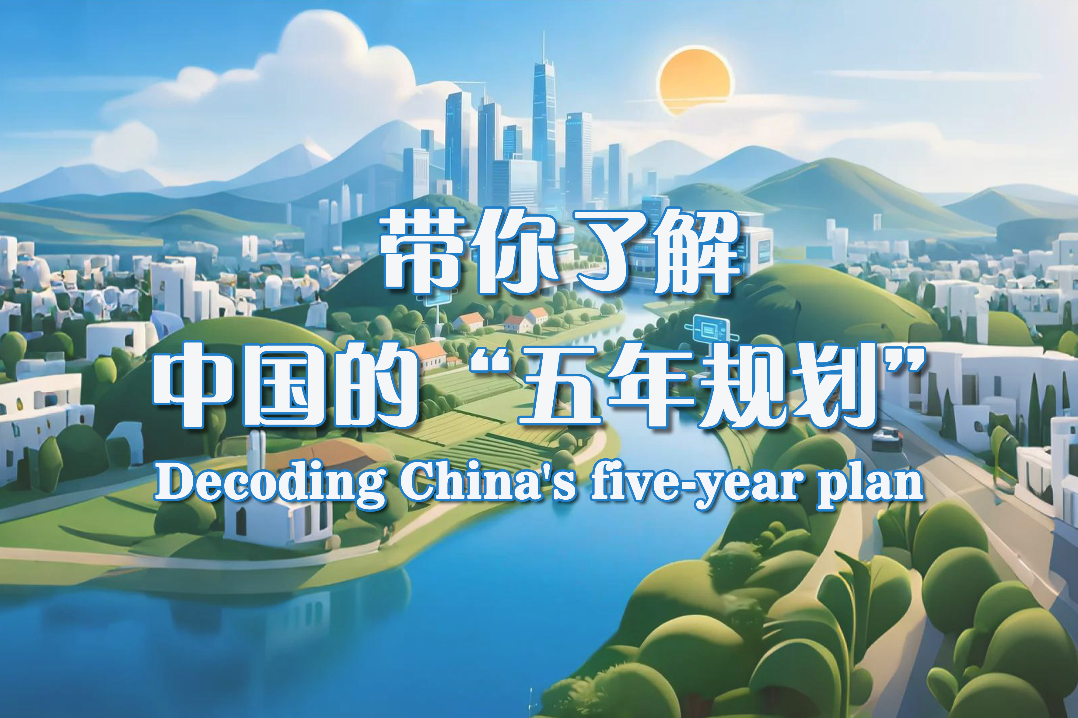
Decoding China’s five-year plan
As 2025 draws to a close, China is set to complete the implementation of its 14th Five-Year Plan (2021-25), a strategic framework that has guided the nation’s social and economic progress over the past five years. This pivotal moment also marks the beginning of preparations for the next five-year plan, which will outline China’s development trajectory from 2026 to 2030. The Five-Year Plan, a cornerstone of China’s governance model, serves as a comprehensive roadmap for achieving national goals, fostering innovation, and addressing key challenges. It plays a critical role in shaping policies, driving economic growth, and ensuring sustainable development. As China transitions to a new phase of planning, the focus remains on enhancing technological advancement, improving public welfare, and strengthening global competitiveness. This systematic approach underscores China’s commitment to long-term strategic vision and its ability to adapt to evolving global dynamics.