作者: admin

  • Japan says a second Japanese person is detained in Iran and demands their early release

    Japan says a second Japanese person is detained in Iran and demands their early release

    TOKYO — Japan’s Foreign Ministry confirmed on Friday that a second Japanese citizen has been detained in Iran, escalating diplomatic concerns between the two nations. The ministry has formally demanded the immediate release of both detained individuals while confirming their safety and well-being.

    Government officials revealed that the second detention occurred prior to the February 28 military strikes on Iran conducted by the United States and Israel. While maintaining the detainee’s safety, Japanese authorities declined to provide specific details regarding the timing of detention or potential connections to the earlier case involving a Japanese journalist.

    Foreign Minister Toshimitsu Motegi addressed the situation during a parliamentary session, confirming that diplomatic channels have established contact with both detainees following the recent military actions. “The government is implementing comprehensive measures to support them, their families, and all affected parties,” Motegi stated, emphasizing Japan’s commitment to resolving the situation through diplomatic means.

    The minister further disclosed that during a meeting with Iran’s ambassador this week, he explicitly emphasized the critical importance of protecting the detainees and securing their prompt release.

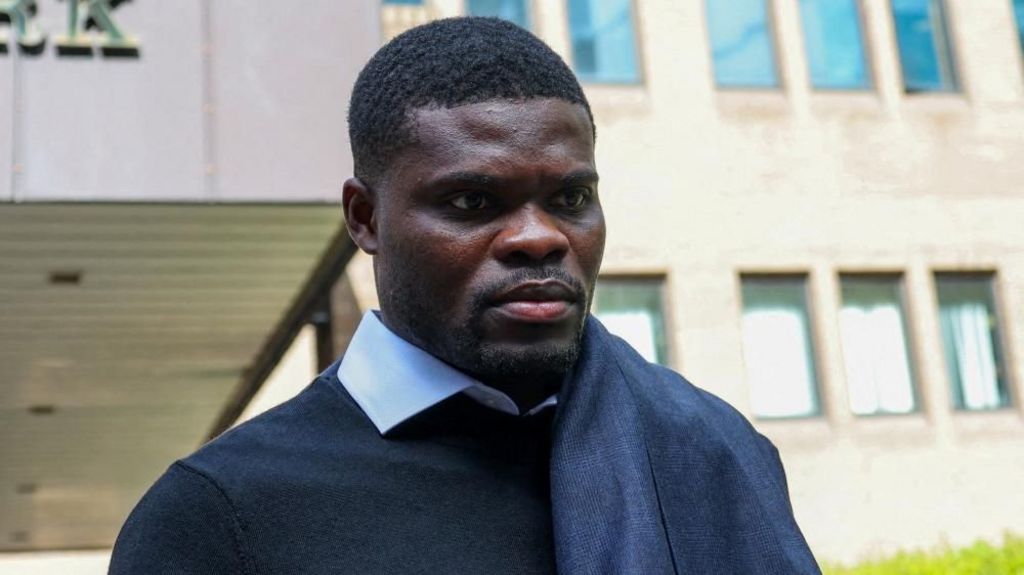
    International press freedom organizations have identified the first detainee as Shinnosuke Kawashima, Tehran bureau chief for Japan’s public broadcaster NHK. According to the Committee to Protect Journalists, Kawashima was arrested on January 20 by Iran’s Islamic Revolutionary Guard Corps and subsequently transferred to Evin Prison on February 23. The CPJ has joined Japan in calling for the immediate release of all journalists detained for their professional activities.

  • Trump replaces Homeland Security Secretary Kristi Noem with Senator Markwayne Mullin

    Trump replaces Homeland Security Secretary Kristi Noem with Senator Markwayne Mullin

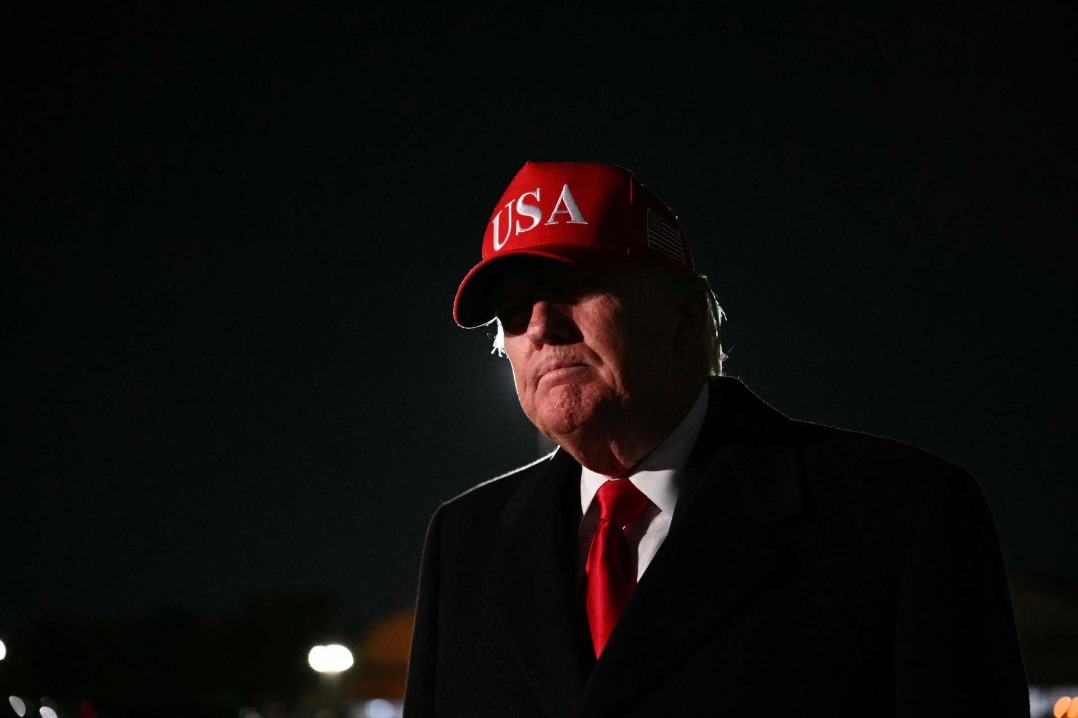
    In a significant cabinet reshuffle, former President Donald Trump has announced the replacement of Homeland Security Secretary Kristi Noem with Oklahoma Senator Markwayne Mullin. The decision was communicated through Trump’s Truth Social platform on Thursday, March 5, 2026, citing bipartisan dissatisfaction with Noem’s leadership during her tenure.

    The move comes amid ongoing challenges at the Department of Homeland Security, including border security management, immigration policy implementation, and counterterrorism efforts. Noem, who previously served as Governor of South Dakota before assuming the cabinet position, faced increasing criticism from both Republican and Democratic lawmakers regarding her administration’s handling of these complex issues.

    Senator Mullin, a Republican from Oklahoma and former professional mixed martial artist turned politician, brings a different perspective to the role. Having served on several committees relevant to homeland security matters, Mullin has established himself as a staunch conservative voice on border protection and national security issues. His appointment signals a potential shift in policy direction and operational approach within the department.

    The transition occurs during a period of heightened global tensions and domestic security concerns, making the leadership change particularly significant. The Department of Homeland Security remains one of the most critical federal agencies, with responsibilities spanning from cybersecurity to emergency response coordination.

    This cabinet-level change reflects the ongoing evolution of Trump’s administrative team as he continues to shape his policy priorities. The swift nature of the announcement, bypassing traditional press briefing channels, demonstrates Trump’s continued preference for direct communication through social media platforms.

  • Demand for minerals to power technology could triple by 2030, UN political chief says

    Demand for minerals to power technology could triple by 2030, UN political chief says

    UNITED NATIONS — The United Nations Security Council convened a high-level session Thursday focusing on the escalating global competition for critical minerals, with projections indicating demand could triple by 2030 and quadruple by 2040. The special session, initiated by the United States during its Security Council presidency, addressed the strategic importance of minerals including lithium, cobalt, and nickel in powering both the digital economy and global energy transition.

    UN Undersecretary-General Rosemary DiCarlo revealed that trade in raw and semi-processed minerals reached approximately $2.5 trillion in 2023, accounting for over 10% of global trade. “A decade ago, these minerals had limited strategic importance,” DiCarlo stated. “Today, they underpin technologies essential to national security and economic stability.”

    The session highlighted growing geopolitical tensions surrounding mineral access. U.S. Energy Secretary Chris Wright emphasized the security imperative of diversifying supply chains, noting that over-reliance on any single nation poses significant risks. This position reflects ongoing U.S. efforts to establish a critical minerals trading bloc with allied nations to counter China’s current dominance in the sector.

    Chinese Ambassador Fu Cong acknowledged the supply-demand imbalances emerging as the world enters “a new period of turbulence and transformation.” He advocated for enhanced international cooperation and promoted China’s G20-initiated ‘green mining’ transformation program as a solution for sustainable resource extraction.

    The geopolitical maneuvering extends to resource-rich nations experiencing instability. Venezuela has offered security assurances to mining companies operating in regions previously controlled by armed groups, while Congo’s President has proposed mineral access worth an estimated $24 trillion in exchange for U.S. support in combating rebels and developing infrastructure. Congo’s UN Ambassador Zenon Mukongo emphasized the private sector’s responsibility to ensure mineral extraction doesn’t finance armed conflicts or violate national laws.

  • Does Mark Carney know where he stands on the US-Israeli war on Iran?

    Does Mark Carney know where he stands on the US-Israeli war on Iran?

    Prime Minister Mark Carney’s administration faces mounting political pressure as it attempts to balance Canada’s international alliances with domestic opposition to military engagement in the Middle East. The crisis emerged on February 28th when Carney initially expressed unequivocal support for U.S.-Israeli military actions against Iran, despite the absence of United Nations authorization—a traditional prerequisite for Canadian foreign policy interventions.

    The initial endorsement triggered immediate dissent within Carney’s Liberal Party, compounded by polling data from the Angus Reid Institute revealing less than half of Canadians support airstrikes against Iran, with merely 30% believing such actions would improve Iranian lives. Facing this domestic discontent during his Australian visit, Carney notably refined his position, emphasizing solidarity with the Iranian people against oppressive governance while maintaining support for preventing nuclear proliferation.

    In a striking admission, Carney acknowledged that Washington and Jerusalem had acted without consulting Ottawa or pursuing UN channels. When pressed about his celebrated Davos speech advocating a new world order, Carney deferred legal assessments to the attacking nations, noting that prima facie, the operations appeared inconsistent with international law. Nevertheless, by week’s end, he refused to categorically exclude Canadian involvement, stating that Canada would stand by its allies in a potentially expanding conflict.

    This diplomatic maneuvering occurs against a backdrop of heightened military enlistment following President Trump’s threats against Canada and escalating trade tariffs. Security experts warn that Carney’s ambiguous stance creates dangerous unpredictability, particularly as the government advises Canadian citizens in the region to shelter in place without initiating evacuation procedures.

  • One Nation walks back Karl Stefanovic link to party fundraiser

    One Nation walks back Karl Stefanovic link to party fundraiser

    One Nation leader Pauline Hanson executed a rapid about-face regarding a campaign fundraising event that initially appeared to feature Channel Nine’s Karl Stefanovic, creating an embarrassing communications debacle for the right-wing party.

    The controversy began Thursday afternoon when Hanson’s campaign team emailed supporters announcing a “special podcast conversation” between the senator, Stefanovic, and former Nationals leader Barnaby Joyce. The communication promoted this event as the centerpiece of One Nation’s campaign launch for the Farrer by-election, detailing a $5 entry fee and donation options ranging from $5 to $100.

    However, within an hour of the initial announcement, a second email titled “Clarify some prior communications” arrived in supporters’ inboxes. This follow-up message contained a bolded declaration stating: “The two events are not connected,” explicitly distancing Stefanovic’s podcast recording from the fundraising component. The revised communication clarified that while supporters could remain as audience members for the podcast recording after the fundraiser concluded, the events operated as separate entities.

    This abrupt reversal comes as One Nation prepares to select its candidate for the crucial Farrer by-election on March 7th. The vacancy was created by former Liberal leader Sussan Ley’s departure from politics, triggering a competitive three-way contest in the rural NSW electorate. One Nation views Farrer as a potential opportunity to secure its second seat in the lower house, facing competition from Liberal, National, and Climate-200-backed independent candidates.

    The incident marks another chapter in Hanson’s relationship with mainstream media figures, having previously appeared as the inaugural guest on Stefanovic’s podcast in January. Political observers note the episode demonstrates the ongoing challenges minor parties face in balancing fundraising needs with credible campaign messaging.

  • AFL 2026: Sydney star Tom Papley on his ‘weird injury’ that prevents him from constant running

    AFL 2026: Sydney star Tom Papley on his ‘weird injury’ that prevents him from constant running

    Sydney Swans forward Tom Papley has disclosed a rare physiological condition that dramatically reshapes his training regimen and game participation. The AFL star suffers from compartment syndrome, an unusual muscular condition that prevents extended endurance running.

    Speaking on The Circus podcast, Papley described the intense physical limitations: “When I run more than five minutes, my calves legitimately feel like they’re going to explode.” This condition has significantly impacted his pre-season preparation and in-game availability, evidenced by his limited 57% playing time during Thursday’s Opening Round match against Carlton.

    The neurological condition affects only a handful of AFL athletes throughout the league’s history. Papley underwent surgical intervention to alleviate pressure, though the procedure provided limited relief. “I’ve had surgery on it to release the pressure but it still doesn’t work,” he revealed. “So I don’t really run 2k’ers – it’s a weird injury.”

    Despite these challenges, Papley contributed to Sydney’s remarkable comeback victory against Carlton. The Swans overturned a 22-point deficit with an electrifying 12-goal third quarter, during which Papley scored his sole goal of the match. The team’s innovative management of his condition demonstrates how professional sports organizations are adapting to unique athlete physiological needs.

    Papley noted the condition’s peculiar characteristics: “It is good for pre-season, just short stuff, but then in games it’s fine because I’m stop-starting.” This revelation highlights the sophisticated medical management and customized training approaches modern football clubs employ to maximize player performance despite physical limitations.

  • Hong Kong ex-media mogul Jimmy Lai will not appeal national security conviction, legal team says

    Hong Kong ex-media mogul Jimmy Lai will not appeal national security conviction, legal team says

    HONG KONG — Jimmy Lai, the prominent pro-democracy publisher and founder of the shuttered Apple Daily newspaper, will not pursue an appeal against his national security conviction, according to an announcement from his legal representatives on Friday. The decision concludes a protracted legal confrontation that has drawn international attention.

    Lai, aged 78 and a British citizen, was sentenced to a 20-year prison term last month following his December conviction on charges of conspiracy to colluse with foreign forces and plotting to publish seditious materials. Known for his vocal criticism of China’s Communist Party, Lai was among the first high-profile individuals detained under Hong Kong’s stringent national security law enacted in 2020.

    The closure of his publication, Apple Daily, in June 2021 followed the arrest of several senior journalists from the outlet, which had built a reputation for its critical reporting on both Hong Kong and Beijing administrations. While his legal team confirmed the decision to forgo an appeal via text message to The Associated Press, they declined to elaborate on the reasoning behind this strategic legal move.

    International observers have interpreted Lai’s conviction as emblematic of the diminishing press freedoms and civil liberties in Hong Kong since its handover to China in 1997. Conversely, Chinese and Hong Kong authorities have maintained that the judicial proceedings embody the principle of rule of law, asserting that the case fundamentally concerns national security violations rather than press freedom issues.

    The significant prison term has raised concerns that Lai may potentially remain incarcerated for the remainder of his life. His family had previously expressed hope that a potential visit by former U.S. President Donald Trump to Beijing might facilitate his release, though Chinese authorities have yet to confirm any such diplomatic engagement.

  • Scott Mathieson: Man accused of arson attack after Prahran firebombing killed David Gaddie

    Scott Mathieson: Man accused of arson attack after Prahran firebombing killed David Gaddie

    A 44-year-old man stands accused of murder following a devastating arson attack that destroyed a Melbourne dessert establishment and claimed a man’s life five months after the incident. Scott Mathieson faced Melbourne Magistrates’ Court on Thursday evening charged with arson causing death, reckless conduct endangering life, and motor vehicle theft.

    The case stems from a catastrophic fire that engulfed The Golden Lounge Dessert and Juice Bar in Prahran during the early hours of January 15, 2025. Police allege that two individuals forcibly entered the Chapel Street premises, doused the interior with accelerant, and intentionally ignited the blaze. Security footage captured the moment a tremendous fireball erupted from the storefront at approximately 4:15 AM, nearly consuming a passing vehicle.

    According to investigative reports, one of the alleged perpetrators caught fire during their escape from the scene. The suspects fled in a stolen orange Holden Commodore sedan. Emergency services discovered a severely burned man in Fitzroy forty-five minutes after the incident. The victim, identified as 52-year-old St Albans resident David Gaddie, was transported to a medical facility but succumbed to his extensive injuries on June 6.

    Victoria Police’s Arson and Explosives Squad executed Mathieson’s arrest following a comprehensive year-long investigation. Authorities have simultaneously released computer-generated images depicting both a potential accomplice believed to have driven the getaway vehicle and a silver Toyota RAV4 observed circling the area proximate to the fire’s ignition.

    Detective Inspector Chris Murray issued a compelling public statement emphasizing the disregard for human safety exhibited by those commissioning arson attacks. “Those people who are paying others an absolute pittance to light these fires have zero concern for their safety,” Murray stated. “Your life is worth more than a couple of hundred dollars.”

    Mathieson did not submit a bail application during Thursday’s proceedings and remains in custody pending his next court appearance scheduled for June 11. Investigators continue to seek additional information regarding the incident and those potentially responsible for the tragic loss of life.

  • Trump takes forceful steps to pressure Latin American leaders to reduce China ties

    Trump takes forceful steps to pressure Latin American leaders to reduce China ties

    The Trump administration has launched a comprehensive campaign to counter China’s expanding influence across Latin America, employing a combination of diplomatic pressure, economic sanctions, and strategic warnings. Recent actions include imposing travel bans on three Chilean officials connected to potential submarine fiber optic cable projects with China, while simultaneously cautioning Peru against relinquishing control of a Chinese-constructed megaport.

    This assertive approach follows Panama’s seizure of two critical ports at either end of the Panama Canal, previously operated by a Hong Kong-based company, after President Trump threatened to reclaim U.S. control over the vital waterway. The administration’s efforts gained additional momentum with the capture of Venezuela’s President Nicolás Maduro in January, which exposed China’s substantial oil interests in the country to unprecedented vulnerability.

    Supporters of this geopolitical pivot argue it represents a necessary response to China’s growing regional presence, which they characterize as potentially destabilizing to the Western Hemisphere’s balance of power. Critics, however, question the effectiveness of such direct confrontation given China’s deeply entrenched economic relationships throughout the region.

    Academic analysis reveals a dramatic shift in regional trade dynamics over the past two decades. Where Cuba stood alone in 2001 as the only nation conducting more business with China than the United States, recent data indicates that nearly all South American countries—except Paraguay and Colombia—now trade more extensively with China. Between 2014 and 2023, China provided approximately $153 billion in loans and grants to Latin American and Caribbean nations, compared to roughly $50.7 billion from the U.S., establishing Beijing as the region’s largest official sector financier.

    Experts note that China’s economic advantage stems from strategic investments in sectors where American presence has been limited, particularly green energy, infrastructure development, and technological innovation. This economic penetration has translated into significant diplomatic leverage, with five nations switching recognition from Taiwan to Beijing since 2016 in pursuit of better economic prospects.

    The White House’s National Security Strategy acknowledges years of regional neglect while vowing to prevent ‘non-Hemispheric competitors’ from establishing strategic footholds. Congressional supporters like Representative John Moolenaar applaud the administration’s focus on defending Western Hemisphere interests against perceived Chinese encroachment.

    Regional analysts predict increasing fragmentation as Latin American nations navigate competing pressures. Right-leaning governments may align more closely with Washington, while left-leaning administrations maintain or deepen Chinese ties, with many countries attempting pragmatic balancing acts. Despite some discontent with Chinese investment outcomes, China maintains advantages through established infrastructure, security, and technology investments, complicating any straightforward regional realignment.

  • Ukraine accuses Hungary of taking seven people hostage

    Ukraine accuses Hungary of taking seven people hostage

    Ukrainian Foreign Minister Andrii Sybiha has leveled explosive accusations against Hungarian authorities, alleging they have taken seven employees of Ukraine’s state-owned Oschadbank hostage under mysterious circumstances. The diplomatic confrontation erupted when Sybiha publicly declared via social media platform X that Hungarian authorities in Budapest had seized the Ukrainian citizens without justification, with their current condition and the reasons behind their detention remaining unknown.

    The incident involves a high-value transport operation between Austria and Ukraine, where the bank employees were moving two vehicles containing an extraordinary cargo: approximately $80 million in various currencies and precious metals. According to official statements from Oschadbank, the detained personnel were transporting 40 million US dollars, 35 million euros, and 9 kilograms of gold when intercepted by Hungarian authorities. GPS tracking data confirmed the vehicles’ location in Budapest at the time of the incident.

    This dramatic development occurs against the backdrop of increasingly strained relations between Ukraine and Hungary, with Budapest maintaining notably close ties with Russia throughout the ongoing conflict. Hungarian Prime Minister Viktor Orbán has consistently opposed military assistance to Ukraine and recently blocked a European Union aid package destined for Kyiv. Orbán has further threatened to employ ‘political and financial tools’ to pressure Ukraine into reopening the critical Druzhba pipeline, which traditionally supplied Russian oil to Hungarian refineries.

    Ukraine counters that the pipeline infrastructure sustained damage from Russian military strikes last month, with repair crews suffering injuries during subsequent attacks. The Druzhba pipeline represents the primary transmission route for Russian oil to both Hungary and Slovakia, with shipments completely halted since January 27th. Hungary and Slovakia, as the only EU nations continuing Russian oil imports, have accused Ukraine of intentionally delaying the resumption of oil flows for political motives.

    Sybiha’s characterization of the incident as ‘state terrorism and racketeering’ signals a significant escalation in diplomatic tensions, with Ukraine formally demanding through official channels the immediate release of both personnel and assets. The Hungarian government has not yet responded to requests for commentary regarding these serious allegations.