
As urban populations surge globally, the concept of smart cities has emerged as a critical solution to enhance livability, safety, and sustainability. With Africa’s urban population projected to double to 1.4 billion by 2050 and the Gulf Cooperation Council (GCC) region expecting a 30% increase by 2030, the need for innovative urban planning has never been more urgent. Governments and city planners are turning to technology to create people-centered smart cities that prioritize the well-being of residents while addressing operational challenges. Egypt’s national Smart Cities Strategy and the Middle East and North Africa (MENA) region’s leadership in sustainable urban development exemplify this trend. These initiatives leverage IoT, smart solutions, and data-driven decision-making to improve public safety, mobility, and environmental monitoring. For instance, network cameras and sensors enhance situational awareness, reduce traffic congestion, and monitor air quality. However, the integration of technology raises concerns about privacy and ethical data usage. Smart city solutions must balance security with privacy, employing features like dynamic privacy masks, encryption, and access controls. The future of smart cities lies in collaboration with trusted vendors and integrators, ensuring the development of reliable, long-term solutions. By fostering innovation while safeguarding fundamental rights, smart cities aim to create safe, secure, and sustainable urban environments for future generations.
作者: admin
-
The Chinese advantage: Redefining the global mobility spectrum
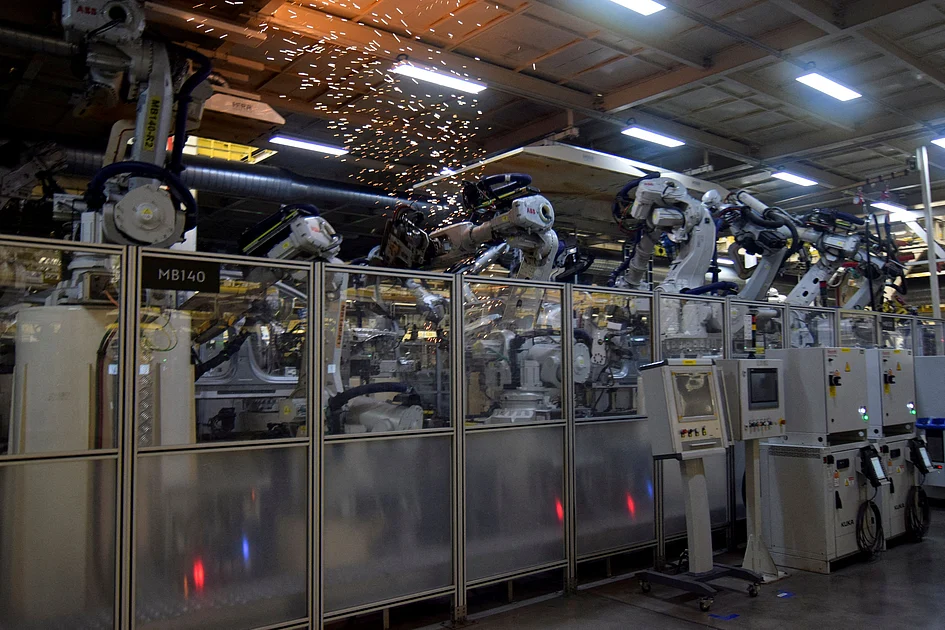
Over the past decade, China has transitioned from being labeled ‘the world’s factory’ to becoming a global leader in innovation, particularly in the mobility sector. Chinese automakers are now not only competing with established Western and Japanese brands but are also redefining global expectations across all segments, from mass-market to luxury vehicles. This transformation is driven by a strategic blend of industrial policy, technological investment, and a profound understanding of consumer behavior. What sets China apart is not just its massive production scale but its comprehensive automotive vision, which consistently delivers quality, performance, and innovation. At the mass-market level, Chinese brands have successfully integrated premium features with cutting-edge technology. Touchscreen displays, over-the-air updates, and connected mobility services have become standard, redefining the concept of value in the electric mobility era. Consumers now prioritize efficiency, connectivity, and sustainability, and Chinese OEMs have made electric mobility accessible to a broad audience while maintaining profitability. In the premium segment, Chinese automakers have shifted from imitation to original innovation. Leveraging strengths in artificial intelligence, data analytics, and software integration, they are enhancing the user experience with advanced digital ecosystems, personalized interfaces, and AI-driven features. Premium vehicles are now defined more by intelligence and connectivity than by traditional luxury. Chinese manufacturers are aligning with this trend, offering products that combine digital sophistication with refined design, setting new industry benchmarks. At the luxury level, China’s automotive vision is characterized by sustainability and design excellence. High-end electric vehicles showcase an elevated aesthetic that blends advanced materials, elegant minimalism, and powerful performance. These vehicles aim to embody a forward-thinking philosophy, appealing to discerning consumers who value environmental awareness and innovation. Chinese manufacturers are producing vehicles that combine high performance with zero-emission technology, offering premium interiors with intelligent systems and silent power. One of China’s greatest advantages lies in its integrated industrial ecosystem. Automakers, battery manufacturers, software developers, and smart factories operate within a collaborative framework that accelerates research, reduces costs, and enables rapid deployment of new technologies and products. The domestic market, with millions of connected vehicles, serves as a large-scale testing ground that generates valuable data and insights. This feedback loop allows Chinese automakers to refine products continuously, respond quickly to market trends, and deliver solutions that meet evolving global standards. The Chinese automotive industry is no longer following global trends; it’s setting them. From advanced battery technologies and faster charging systems to intelligent operating platforms and sustainable production, China is defining the next era of mobility. The global automotive landscape is undergoing a shift in influence, with innovation increasingly originating from China. By uniting innovation across all market tiers, the Chinese automotive industry is not just adapting to the future of mobility but actively shaping it. As global consumers and businesses re-evaluate what drives the industry forward, it is evident that the momentum of change and opportunity increasingly originates from China, spanning every level of the mobility spectrum.
-
Democrat Mikie Sherrill projected to win New Jersey governor race
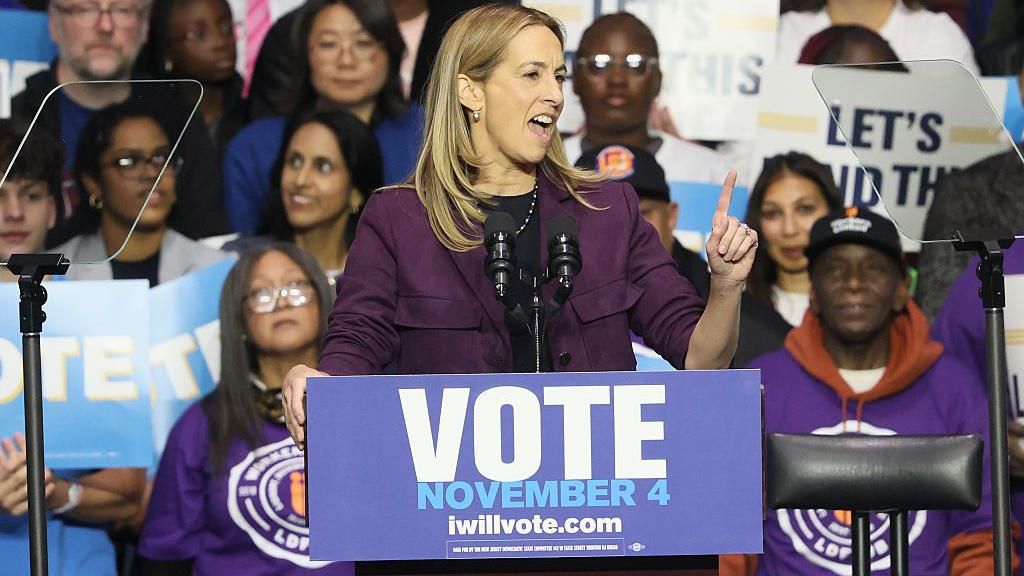
In a pivotal victory for the Democratic Party, Mikie Sherrill, a U.S. Representative from New Jersey, has secured the governorship in the Garden State. This race, closely watched as a barometer for the 2026 midterm elections, saw Sherrill narrowly defeat Republican contender Jack Ciattarelli, a former state legislator endorsed by ex-President Donald Trump. Sherrill’s win follows a similarly significant Democratic triumph in Virginia, where Abigail Spanberger claimed the governorship. The New Jersey race was marked by intense focus on economic issues, with Ciattarelli advocating for tax reductions and Sherrill proposing tax incentives for housing developments and a freeze on utility rate increases. The election also faced disruptions, including bomb threats at polling stations, which Sherrill condemned as attempts to undermine democracy. This victory underscores the Democratic Party’s strategic positioning ahead of the next midterm elections, aiming to consolidate their influence in Congress.
-

Dubai’s branded residences boom: Sector matures with 48,000+ units and rising global prestige
Dubai’s branded residences have transformed from a niche market to a globally recognized asset class, solidifying their position as a cornerstone of the city’s luxury real estate sector. As of the first half of 2025, the emirate boasts an impressive 48,474 branded units across 144 developments, with 12 new projects adding over 5,500 units in just six months. This growth has propelled Dubai to the forefront of the branded residential market, surpassing traditional luxury hubs such as Miami, London, and New York. Despite a slight decline in transaction volume, the total value of branded residence sales surged by 37% year-on-year, driven by demand for ultra-prime properties and larger investments. These residences command an average price premium of 40–60% over non-branded units, with flagship developments like Bugatti Residences fetching up to 160% more. Dubai’s appeal to high-net-worth individuals (HNWIs), its tax-free environment, and long-term residency incentives have fueled this growth. Over 9,800 millionaires are expected to migrate to the UAE in 2025 alone, further boosting demand for homes that blend five-star hospitality with residential comfort. The recent launch of Hilton Residences Jumeirah Lakes Towers (JLT) by Emirates Developments and Hilton exemplifies this trend. The 38-floor tower offers 396 units, including studios, apartments, and exclusive sky villas, all infused with Hilton’s renowned service and lifestyle programming. Johnathan Wingo, Global Head of Real Estate & Residential Programs at Hilton, emphasized the project’s significance, stating, ‘We are proud to bring our century-long legacy into Dubai’s thriving residential market, offering residents a lifestyle experience on par with the world’s finest destinations.’ Located in JLT’s Cluster F, the development places residents at the intersection of Dubai’s cultural, financial, and leisure hubs. Its architecture, described as a ‘vertical sculpture of glass and light,’ mirrors the city’s elegance, while interiors draw inspiration from desert hues and evening calm. Abduljbar Elnatour, Commercial Director at Emirates Developments, highlighted the project’s unique appeal, stating, ‘We bring the dream of living in a hotel to the heart of Dubai.’ The branded residence model is also evolving, with standalone projects—those not linked to operating hotels—now accounting for one-third of completed developments in Dubai. This shift offers developers greater flexibility and buyers more privacy while maintaining brand prestige and premium services. Looking ahead, Hilton plans to expand its footprint across the UAE, with Dubai potentially becoming the first city to host all twelve of its branded residence brands. With robust investor appetite, rising premiums, and a pipeline of over 140 projects slated for delivery by 2031, Dubai’s branded residences sector is not just growing—it’s setting the global standard.
-

Australia adds Reddit and Kick to social media platforms banning children under 16
In a groundbreaking move, Australia has extended its social media age restrictions to include Reddit and Kick, mandating that these platforms ban users under the age of 16. This decision, announced by Communications Minister Anika Wells on Wednesday, places these platforms alongside Facebook, Instagram, Snapchat, Threads, TikTok, X, and YouTube in adhering to the new regulations effective December 10. Platforms that fail to enforce these age restrictions could face fines of up to 50 million Australian dollars ($33 million).
Wells emphasized the government’s commitment to child safety online, stating, ‘Online platforms use technology to target children with chilling control. We are merely asking that they use that same technology to keep children safe online.’ The eSafety Commissioner, Julie Inman Grant, who will oversee the enforcement of these regulations, noted that the list of restricted platforms will evolve with emerging technologies.
The government has defined the criteria for these restrictions, targeting platforms whose ‘sole or significant purpose is to enable online social interaction.’ Inman Grant also highlighted plans to collaborate with academics to assess the ban’s impact, including potential changes in children’s sleep patterns, social interactions, and physical activity levels. ‘We’ll also look for unintended consequences and we’ll be gathering evidence,’ she added, underscoring the importance of learning from Australia’s initiative.
Australia’s approach has garnered international attention, with European Commission President Ursula von der Leyen praising the ‘common sense’ legislation during a United Nations forum in September. However, critics argue that the ban could infringe on user privacy, as platforms may require all users to verify their age. Wells assured that the government aims to protect user data privacy while implementing these measures.
Despite the government’s assurances, over 140 academics specializing in technology and child welfare have expressed concerns, describing the age limit as ‘too blunt an instrument to address risks effectively.’ As Australia pioneers this legislation, its outcomes will likely influence global policies on children’s social media usage.
-

UAE expresses solidarity with Mexico over deadly store fire
The United Arab Emirates (UAE) has extended its heartfelt condolences and solidarity to Mexico in the wake of a catastrophic store fire in Hermosillo, the capital of the northern state of Sonora. The blaze, which erupted unexpectedly, claimed the lives of dozens and left many others injured. In an official statement, the UAE’s Ministry of Foreign Affairs (MoFA) conveyed its profound sympathy to the bereaved families, the Mexican people, and the government. The ministry also expressed hopes for the swift recovery of those injured in the tragic incident. This gesture of solidarity underscores the UAE’s commitment to fostering international cooperation and empathy during times of crisis. The fire has drawn global attention, highlighting the urgent need for enhanced safety measures in public spaces to prevent such disasters in the future.
-

Smoke hangs over Louisville after deadly plane crash
A tragic incident unfolded in Louisville as a UPS cargo plane crashed during takeoff, resulting in the deaths of three individuals. Authorities have indicated that the death toll is expected to rise as rescue operations continue. The crash has left the city shrouded in smoke, with emergency teams working tirelessly at the scene. Preliminary reports suggest that the aircraft encountered difficulties shortly after departure, leading to the devastating accident. The Federal Aviation Administration (FAA) and National Transportation Safety Board (NTSB) have launched investigations to determine the cause of the crash. Local residents have expressed shock and grief, while officials urge caution as the situation develops.
-

Jobe Bellingham finding his feet as Dortmund head to City
Borussia Dortmund’s young midfielder, Jobe Bellingham, is steadily carving out his niche in the team as they gear up for a high-stakes match against Manchester City. At just 19, Jobe made a headline-grabbing move from Sunderland to Dortmund in the summer for a staggering €30.5 million, marking one of the club’s most expensive signings. Following in the footsteps of his elder brother Jude, who became a Dortmund sensation before moving to Real Madrid, Jobe is now poised to make his first appearance on English soil for his new club. Despite initial struggles, including a challenging start to the Bundesliga season and a costly error against Bayern Munich, Jobe has shown resilience and growth. Recent performances, including key assists in the Champions League and a crucial role in Dortmund’s German Cup victory, have highlighted his potential. Dortmund coach Niko Kovac has praised Jobe’s development, noting his physical presence and quality on the field. As Dortmund faces Manchester City, Jobe’s journey from a slow start to a promising rise underscores his determination to step out of his brother’s shadow and establish his own legacy.
-
From Dubai Frame to Hanging Gardens: 20 places you can visit for Dh50 or less
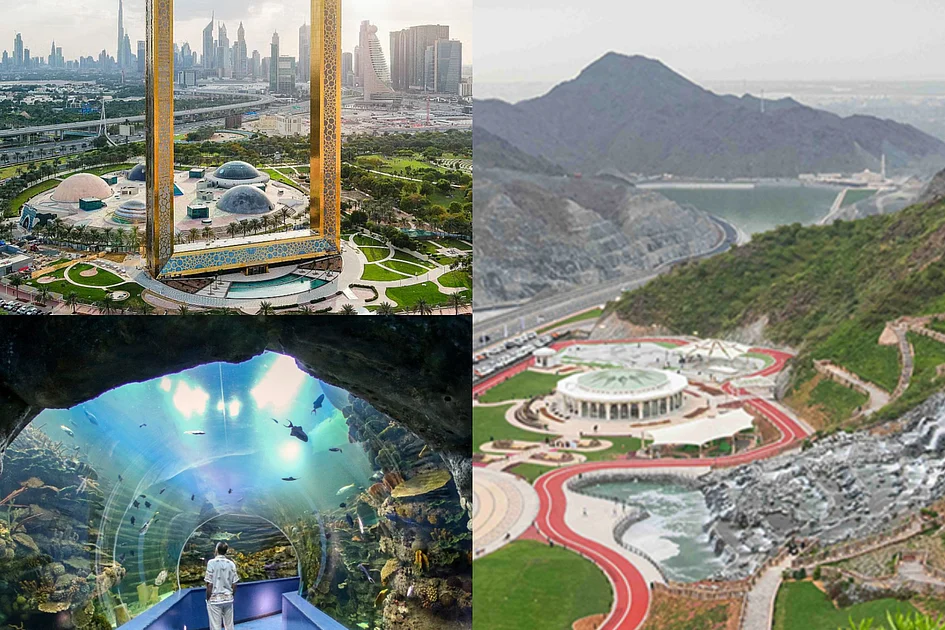
The United Arab Emirates (UAE) is often synonymous with luxury and opulence, but beyond its glittering facade lies a treasure trove of affordable attractions that cater to both residents and tourists. From cultural landmarks to natural wonders, the UAE offers a diverse range of experiences that cost Dh50 or less, ensuring that leisure and exploration are accessible to all. Here’s a curated list of 20 budget-friendly destinations that showcase the rich heritage, vibrant culture, and stunning landscapes of the UAE. Sharjah Aquarium invites visitors to delve into marine life with close to 100 species on display, while Dubai Safari Park offers an immersive wildlife experience with over 3,000 animals. Global Village, a family favorite, provides a multicultural journey through pavilions representing countries worldwide. For panoramic views, the Garden in the Sky in Expo City Dubai and the Hanging Gardens in Kalba are must-visits. History enthusiasts can explore Al Shindagha Museum, the UAE’s largest heritage museum, or the Etihad Museum, which chronicles the nation’s unification. Nature lovers can wander through Jubail Mangrove Park or spot flamingos at Ras Al Khor Wildlife Sanctuary. Unique experiences like the Rain Room in Sharjah and the Butterfly House on Noor Island add a touch of magic to the itinerary. From Al Ain Zoo’s conservation efforts to the Quranic Park’s spiritual journey, these attractions prove that the UAE’s cultural and natural wealth is within everyone’s reach. Whether you’re a resident seeking weekend adventures or a tourist looking to maximize your budget, these destinations offer unforgettable experiences without breaking the bank.
-

A battlefield report: Neither side is winning US-China trade war
In a significant development for American soybean farmers, China has agreed to purchase 918 million bushels of soybeans annually over the next three years. This decision, announced by Treasury Secretary Scott Bessent, has brought much-needed relief to the agricultural sector. President Donald Trump hailed the agreement, stating, “Our farmers will be very happy!” The deal is part of broader trade concessions from China, including commitments on rare earths and fentanyl, which Trump has framed as a victory in the ongoing US-China trade war. He described his recent meeting with Chinese President Xi Jinping as “a 12 on a scale of one to 10.”
However, some analysts argue that China may have emerged as the real winner. They point to China’s retaliatory measures on soybeans and rare earths, which forced the US to back down on 100% tariffs, port fees, and stricter AI-chip export controls. Critics, including editorial writers from the Wall Street Journal, contend that the agreement largely restores the status quo that existed in May. A New York Times headline even suggested that Xi had outmaneuvered Trump, allowing him to claim a win while strengthening China’s position.
The reality, however, is more nuanced. The trade war remains unresolved, with neither side achieving its primary objectives. While the US has secured temporary concessions, China continues to face high tariffs on its exports. Similarly, China has only suspended its strict export restrictions on rare earths for a year. Both nations have demonstrated their capacity to inflict economic pain on each other, but progress toward a lasting resolution remains elusive.
For American soybean farmers, the agreement offers short-term relief but underscores their overreliance on the Chinese market. The president of the American Soybean Association noted that while the purchases are welcome, they are insufficient to restore profitability. Farmers are now seeking diversification, with potential agreements with Malaysia, Cambodia, Thailand, and Vietnam offering hope for long-term stability. These deals, if finalized, could significantly reduce the US agricultural sector’s dependence on China.
As the truce between the US and China continues, the situation remains volatile. Both nations are actively working to reduce their economic interdependence, and hostilities could resume at any moment. For now, the agreement provides a temporary reprieve, but the underlying tensions of the trade war persist.