作者: admin

  • Xinjiang to use geographical advantage to expand opening-up

    Xinjiang to use geographical advantage to expand opening-up

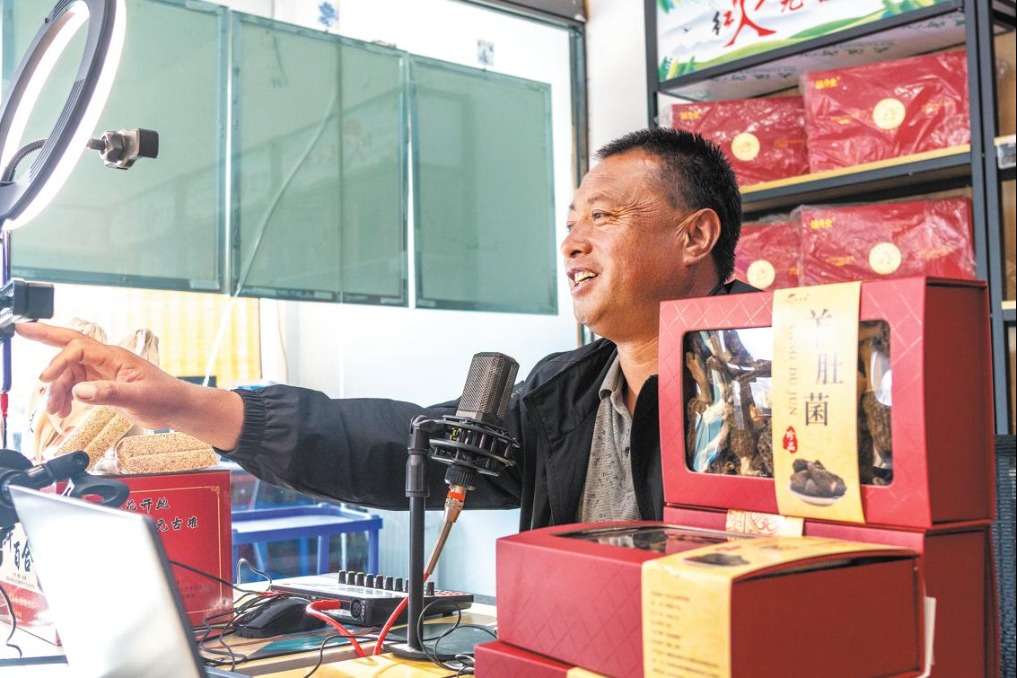
    Xinjiang Uygur Autonomous Region is strategically positioning itself as a pivotal hub in global trade networks by capitalizing on its unique geographical advantages, according to Zheng Jun, a deputy to the 14th National People’s Congress and secretary of the Party Leadership Group of Xinjiang’s Department of Finance. Speaking during the ongoing two sessions in Beijing, Zheng outlined how the region’s transformation from a peripheral territory to a central trade corridor is driving unprecedented growth in foreign commerce.

    The region’s foreign trade has demonstrated remarkable acceleration, surging from 156.9 billion yuan ($22.72 billion) in 2020 to break successive thresholds of 200, 300, 400, and 500 billion yuan between 2022 and 2025. The year 2025 alone witnessed a record 520.37 billion yuan in total trade volume, representing a 19.9 percent year-on-year increase that positioned Xinjiang as China’s fastest-growing regional trade economy.

    This explosive growth stems from multiple synergistic factors: strategic location along the Asia-Europe transport corridor, enhanced logistical efficiency, robust industrial support, and favorable policy frameworks. Xinjiang has established commercial relationships with 228 countries and territories, continuously expanding its global economic partnerships.

    A significant structural transformation is underway in the region’s export composition. Where previously dominated by energy and raw materials, Xinjiang now increasingly exports high-value manufactured goods featuring advanced technology and deep processing capabilities. Mechanical and electrical product exports reached 186.5 billion yuan in 2025, surging 40.7 percent annually, while electric vehicle exports grew 99.9 percent and solar cell exports expanded 187.4 percent.

    The region has developed a comprehensive international logistics network integrating rail, road, and air transportation, consolidating its status as a cross-border logistics hub. This infrastructure enables accelerated domestic logistics and facilitates rapid connection between Xinjiang-manufactured products and global markets.

    Looking toward the 15th Five-Year Plan period (2026-2030), Xinjiang plans to accelerate institutional opening-up and deepen integration between trade and investment sectors. The region aims to achieve high-quality development in foreign trade through steady expansion in scale, diversification of market participants, and continuous optimization of trade structures.

  • Trump says only ‘unconditional surrender’ will end war on Iran

    Trump says only ‘unconditional surrender’ will end war on Iran

    Former President Donald Trump has declared that only Iran’s “unconditional surrender” would halt his proposed offensive against the nation. Through his Truth Social platform, Trump explicitly ruled out any diplomatic negotiations, stating there would be “no deal” without complete capitulation.

    Following surrender, Trump outlined his vision for Iran’s reconstruction under new leadership selected with his direct involvement. He promised to work with allied nations to restore Iran economically, making it “bigger, better and stronger than ever before.”

    This rhetoric coincides with emerging operational plans within the U.S. security apparatus. Politico reported that U.S. Central Command has formally requested additional military intelligence officers from the Pentagon to bolster its Tampa headquarters. These reinforcements would support Iran-focused operations for at least 100 days, potentially extending through September, indicating preparations for a prolonged campaign far beyond initial public projections.

    This intelligence personnel surge represents the Trump administration’s first documented move to expand military resources specifically for potential conflict with Iran. The request suggests Washington anticipates an extended engagement contrary to earlier communications.

    Trump has repeatedly expressed his intention to directly influence Iran’s political future, citing Venezuela as a model for his preferred approach to foreign intervention. He praised Venezuelan President Delcy Rodríguez’s cooperation regarding oil exports, noting “the Oil is beginning to flow” through their collaborative arrangement.

    Analysts observe that Trump appears to seek a similar understanding with Iran, though they caution against direct comparisons between Venezuela and the complex geopolitical landscape of Iran. The Islamic Republic’s entrenched governance structure, maintained since the 1979 revolution that overthrew the U.S.-backed shah, presents fundamentally different challenges than Venezuela’s situation.

  • AI set to transform high-speed rail, adviser says

    AI set to transform high-speed rail, adviser says

    China is positioning artificial intelligence as the transformative force behind the next evolution of its massive high-speed railway network, according to senior advisor Zhao Hongwei. As the country shifts from rapid infrastructure expansion to quality-focused development, AI technologies are emerging as critical drivers for operational excellence in the world’s largest high-speed rail system.

    Zhao, who serves as chief researcher at the China Academy of Railway Sciences and member of the 14th National Committee of the Chinese People’s Political Consultative Conference, revealed that railway authorities have implemented an “AI Plus Railways” action plan to accelerate technological integration. This strategic initiative includes the deployment of a railway-specific large AI model currently in pilot testing phase.

    The practical applications already demonstrate significant advancements. Sophisticated imaging systems installed along tracks capture detailed photographs of passing trains, with AI algorithms analyzing these images to identify potential component failures before they escalate into serious issues. This predictive maintenance capability allows engineers to address abnormalities proactively, substantially reducing downtime and improving safety margins.

    Beyond equipment monitoring, AI systems provide comprehensive situational awareness along railway corridors. Advanced detection algorithms can identify obstacles near tracks and even detect wildlife intrusions into operational areas, enabling controllers to mitigate risks before they impact train movements. These capabilities are particularly valuable given the network’s enormous scale, with approximately 4,000 high-speed trains operating nearly 10,000 daily services across more than 50,000 kilometers of dedicated high-speed lines.

    Looking toward future innovations, China has successfully tested autonomous train operations at speeds reaching 350 kilometers per hour. The next generation of trains, including the CR450 prototype currently undergoing testing, will incorporate increasingly sophisticated intelligent functions. These systems will assist human operators in identifying technical problems, optimizing energy consumption, and supporting complex operational decisions.

    Concurrent research initiatives are advancing key infrastructure technologies capable of supporting 400 km/h operations, while new 200 km/h power-concentrated trains have entered operational testing phases. With China’s overall railway network expanding to approximately 165,000 kilometers by the end of 2025 and handling 4.26 billion passenger trips annually, intelligent technologies are becoming indispensable for maintaining both efficiency and safety across this vast transportation ecosystem.

  • Shanxi strengthens Yellow River basin governance

    Shanxi strengthens Yellow River basin governance

    Shanxi Province has announced ambitious new measures to intensify ecological governance throughout the Yellow River basin, balancing environmental security with sustainable economic development. The initiative emerged from high-level discussions during the fourth session of the 14th National People’s Congress, where provincial leadership outlined their comprehensive vision for regional transformation.

    Tang Dengjie, NPC Deputy and Provincial Party Secretary, emphasized the critical importance of basin-wide ecological conservation, advocating for continued carbon reduction initiatives and a sweeping green transition across industrial sectors. Governor Lu Dongliang concurrently highlighted energy transition as a cornerstone of the province’s five-year development strategy, stressing the dual objectives of maintaining energy security while advancing environmental protection.

    The province’s environmental record during the 14th Five-Year Plan period (2021-2025) demonstrates significant progress, with ecological indicators reaching historic highs. Official data reveals a remarkable 28% reduction in the comprehensive air quality index, while days with good air quality reached 81.4% – unprecedented levels since monitoring began.

    Linfen City, situated entirely within the Yellow River basin, exemplifies this transformation. Municipal Party Secretary Li Yunfeng characterized Linfen as a microcosm of provincial environmental efforts, detailing the city’s journey from severe pollution to emerging ecological leadership. “Previously, residents routinely wore masks during autumn and winter and avoided light-colored clothing outdoors due to pollution,” Li recalled, noting how environmental degradation once negatively impacted both public health and economic performance.

    The city’s turnaround strategy involved shuttering high-energy-consuming enterprises, including the phase-out of 9.15 million tons of coking capacity and 220,000 tons of crude steel production over five years. These measures eliminated heavy pollution enterprises within the city and surrounding areas. Additionally, Linfen has initiated 95 Yellow River purification projects – the highest number in the province – including water conservancy hubs and pumped storage power stations.

    Looking toward the 15th Five-Year Plan period (2026-2030), Shanxi plans to intensify its green development model. Linfen specifically aims to transform into a demonstration city for ecological conservation through accelerated energy transition, economic diversification, and advanced digital upgrades for traditional industries. The city has already completed intelligent transformations for most steel, coking, and foundry enterprises, with over 86% of bulk goods in traditional industries now transported via clean methods. Concurrently, the province is developing modern agriculture and cultural tourism projects along the Yellow River to create sustainable economic alternatives.

  • Inside Venezuela’s political transition two months after Maduro’s ousting

    Inside Venezuela’s political transition two months after Maduro’s ousting

    Two months following the departure of President Nicolás Maduro, Venezuela stands at a critical juncture in its political evolution. BBC correspondent Ione Wells provides exclusive ground reporting from Caracas, capturing the nation’s complex transition phase. The political landscape has been markedly altered by the release of numerous opposition figures previously detained under Maduro’s administration. These newly freed leaders are now actively engaging in dialogues concerning the nation’s governance framework and its future trajectory. A central focus of these discussions involves redefining Venezuela’s international stance, particularly its diplomatic and economic relations with the United States. Wells’ reporting indicates significant shifts in power dynamics as various political factions negotiate their roles within emerging governance structures. The transition period has revealed both challenges and opportunities for institutional reform, with observers closely monitoring how historical grievances balance against pragmatic governance needs. The evolving relationship between Caracas and Washington appears to be a decisive factor influencing Venezuela’s economic recovery prospects and potential reintegration into global financial systems. This political recalibration follows years of intense international pressure and internal unrest that characterized the latter Maduro years.

  • Could Azerbaijan be dragged into the US-Israeli war on Iran?

    Could Azerbaijan be dragged into the US-Israeli war on Iran?

    Azerbaijan has become the latest nation embroiled in the escalating US-Israeli military campaign against Iran following a drone attack on its Nakhchivan exclave. Four unmanned aerial vehicles struck the region on Thursday, causing infrastructure damage and injuring two civilians according to officials in Baku.

    Initial reports indicate one drone targeted the terminal building at Nakhchivan International Airport, approximately 10 kilometers from the Iranian border, while another landed near a village school. Azerbaijani forces successfully intercepted a third drone, though a fourth impacted civilian infrastructure sites.

    Iranian officials have categorically denied involvement in the incident. Deputy Foreign Minister Kazem Gharibabadi stated through Tasnim News Agency that ‘Iran did not carry out strikes against Azerbaijan,’ emphasizing Tehran’s policy exclusively targets military bases of enemies operating in the region that have been used for attacks against Iran.

    The incident has exposed underlying regional tensions, with some Iranian analysts suggesting possible Israeli covert operations aimed at exacerbating Tehran-Baku relations. Seyed Emamian of Tehran Polytechnic University noted the possibility that ‘some Israeli agents are involved to make the Iran-Azerbaijan relationship very challenging’ during the current conflict.

    This development occurs within the broader context of Iran’s asymmetric response strategy to the US-Israeli military campaign, which has included strikes against facilities in Qatar, Saudi Arabia, Kuwait, and the United Arab Emirates. Regional analysts suggest these operations aim to demonstrate that conflict consequences will extend beyond Iran’s borders, potentially undermining Gulf states’ perceived stability and challenging US security guarantees.

    The attack has prompted significant responses from Azerbaijan, including closure of southern airspace for 12 hours and suspension of cargo transit through Iranian border crossings. President Ilham Aliyev has characterized the incident as ‘unprovoked act of terror and aggression’ and instructed armed forces to prepare retaliatory measures, though no military response has yet been implemented.

    Underlying the tension is Azerbaijan’s substantial relationship with Israel, which includes energy cooperation, defense partnerships, and cybersecurity collaboration. Israel reportedly imports 40-50% of its oil from Azerbaijan through the Baku-Tbilisi-Ceyhan pipeline, while security cooperation remains largely opaque despite Aliyev’s acknowledgment of its significance.

    The situation places Azerbaijan in a delicate geopolitical position, balancing its relationships with regional powers while managing the potential for escalated conflict. With over 15 million ethnic Azeris living in Iran, instability could create significant refugee challenges for Baku, potentially drawing Turkey into the conflict given Ankara’s strong support for Azerbaijan demonstrated during the 2020 Nagorno-Karabakh conflict.

  • Russian athletes march at Paralympic opening ceremony

    Russian athletes march at Paralympic opening ceremony

    The 50th anniversary Winter Paralympics commenced in Milan-Cortina under a cloud of geopolitical tension as Russian and Belarusian athletes paraded under their national flags for the first time since the Ukraine invasion. This symbolic return marked a stark contrast to the 2022 bans, generating both celebration and controversy.

    The opening ceremony at Verona’s ancient Arena di Verona witnessed seven nations, including Ukraine, boycotting the procession in protest. Despite their physical absence, Ukrainian representatives received resounding applause when a volunteer carried their flag into the amphitheater.

    International Paralympic Committee President Andrew Parsons addressed the divided global landscape directly: ‘Four years ago I expressed horror at world events. Unfortunately, the situation has not improved. In these Games, differences become sources of strength rather than separation.’

    Further compounding the geopolitical dimensions, Iran withdrew its sole athlete, cross-country skier Aboulfazl Khatibi Mianaei, citing safety concerns stemming from Middle Eastern conflicts. This development followed recent military exchanges between the US-Israel coalition and Iranian forces.

    Organizing committee president Giovanni Malago acknowledged the challenging backdrop: ‘We cannot ignore that these Games occur in a deeply divided world, torn apart by wars and suffering. The message of peace and solidarity is therefore more crucial than ever.’

    Logistical and political considerations resulted in only 28 of the 55 participating nations attending in person. Great Britain’s team abstained for logistical reasons, with many athletes preparing for Saturday competitions in the Dolomites.

    The ceremony blended Shakespearean themes celebrating Verona’s ‘City of Love’ identity with contemporary electronic music from Italian house artists Meduza. The event culminated with the simultaneous lighting of dual Paralympic cauldrons in Milan and Cortina.

    Parsons concluded with an optimistic vision: ‘Paralympians will redefine possibility through exceptional performances, transforming attitudes and inspiring people worldwide. They demonstrate that disability represents not limitation but an incredible dimension of human diversity.’

    Over 660 athletes from 56 nations will compete across six sports until March 15th, with Great Britain fielding a 25-member team.

  • Paralympics open with Russian athletes booed in ceremony

    Paralympics open with Russian athletes booed in ceremony

    The Milan-Cortina 2026 Winter Paralympics launched Friday evening with an opening ceremony overshadowed by geopolitical tensions, as Russian athletes faced audible disapproval from sections of the audience during their procession under the national flag—marking their first such appearance since 2014.

    The International Paralympic Committee (IPC) permitted six Russian and four Belarusian athletes to compete under their national flags despite ongoing military conflicts, a decision that triggered formal boycotts from seven nations including Ukraine, Czech Republic, and several Baltic states. These countries refused to participate in the historic Verona Arena ceremony in protest.

    IPC President Andrew Parsons defended the move, referencing a September General Assembly vote that reinstated Russia and Belarus under their flags. “Unfortunately, the situation has not changed,” Parsons remarked during his address, alluding to global conflicts. “In a world where some countries are better known by the names of their leaders, I prefer to know countries by the names of their athletes.”

    The ceremony, attended by Italian Prime Minister Giorgia Meloni and President Sergio Mattarella, featured a drum performance by Stewart Copeland of The Police and a minimalist rendition of the Italian national anthem. During the athletes’ parade, the Russian delegation of four competitors was met with booing from certain spectators and volunteers, while the Ukrainian flag received sustained applause. Boycotting nations were represented only by flag-bearing volunteers without athletes or officials.

    Giovanni Malago, president of the organizing committee, emphasized the games’ “message of peace, inclusion, and solidarity,” noting its heightened significance amid current global tensions. The event occurs against the backdrop of multiple international conflicts, marking the third time in four Winter Paralympics that the Games have opened proximate to armed hostilities.

    Competitions begin Saturday across three venues in northern Italy, featuring over 600 athletes in six sports. Cortina hosts wheelchair curling, para alpine skiing, and para snowboarding; Milan’s Santagiulia Arena stages para ice hockey; and Val di Fiemme welcomes para biathlon and cross-country skiing. The Games continue through March 15, with notable participants including British para snowboarder Davy Zyw (the first athlete with motor neurone disease in snow sports) and El Salvador’s David Chavez (first Winter Games competitor from his nation).

  • Oil prices surge as Mideast war rages, stocks fall on US jobs

    Oil prices surge as Mideast war rages, stocks fall on US jobs

    Global financial markets experienced significant turbulence Friday as escalating Middle East tensions triggered a dramatic surge in oil prices while disappointing U.S. employment data sparked equity selloffs worldwide.

    Brent North Sea crude, the international benchmark, skyrocketed 8.5% to $92.69 per barrel, marking a nearly 30% weekly increase following President Trump’s declaration that only Iran’s “unconditional surrender” would end the ongoing conflict. The U.S. benchmark West Texas Intermediate crude surged over 12% to exceed $90 per barrel, reaching heights not seen in recent years.

    The dramatic price escalation stems from critical supply disruptions in the Strait of Hormuz, where maritime traffic has virtually ceased despite Trump’s pledge to protect shipping routes. This vital waterway typically handles approximately 20% of global crude oil and liquefied natural gas supplies, making its disruption particularly consequential for energy markets.

    Market analysts noted that earlier optimism for a rapid resolution has evaporated. “Trump’s comments dashed hopes that the conflict would be averted quickly, and the oil price has continued its push higher,” stated XTB research director Kathleen Brooks.

    The energy crisis intensified with reports of attacks on oilfields in southern Iraq and the northern Kurdistan region, forcing a U.S.-operated facility to halt production. Additionally, Kuwait began reducing output due to insufficient petroleum storage capacity, according to Wall Street Journal reports.

    Simultaneously, U.S. economic indicators disappointed investors. The Labor Department reported an unexpected loss of 92,000 jobs in February, reversing January’s revised growth of 126,000 positions. Unemployment edged upward while retail sales declined 0.2% in January, painting a concerning picture of economic momentum.

    The dual pressures of energy-driven inflation and economic softening created a complex scenario for monetary policy. JPMorgan Chase analysts noted that while Trump’s shipping protection pledge reduced some risk premium, it would have “limited impact unless Iran’s extensive disruption capabilities are first neutralized.”

    Wall Street’s major indices closed down approximately 1-1.6%, with European markets following suit despite earlier resilience. The DAX, CAC 40, and FTSE 100 all finished with losses exceeding 0.7%.

    Notably, Boeing defied the market trend, climbing 4.1% on reports of impending major sales agreements with Chinese carriers, highlighting how company-specific developments can outweigh broader market pressures.

    The prolonged energy price surge has raised concerns about persistent inflationary pressures that could constrain central banks’ ability to implement growth-supporting interest rate cuts, potentially delaying anticipated monetary easing until September according to current market expectations.

  • Former 100m world champion Kerley banned for two years

    Former 100m world champion Kerley banned for two years

    In a significant development for track and field, American sprinter Fred Kerley has been handed a two-year suspension for multiple anti-doping violations. The Athletics Integrity Unit (AIU) confirmed the ban following a tribunal’s determination that the former world champion displayed negligence in adhering to anti-doping protocols.

    The disciplinary panel found Kerley committed three whereabouts failures within a twelve-month span between May and December 2024. These violations occur when athletes fail to provide accurate information about their location for testing or miss scheduled tests. The tribunal characterized Kerley’s behavior as “negligent and, to a certain extent, reckless” given his extensive experience in elite competition.

    Kerley’s competitive results from December 6, 2024, through August 12, 2025, have been nullified, requiring forfeiture of any titles, medals, and prize money earned during this period. His suspension will remain in effect until August 11, 2027. Additionally, the athlete has been ordered to pay World Athletics approximately £3,000 in legal costs.

    The 30-year-old sprinter, who claimed the 100m world championship title in 2022 and earned Olympic medals in both Tokyo (silver) and Paris (bronze), had been provisionally suspended since August 2025, causing him to miss that year’s World Championships in Tokyo.

    AIU Head Brett Clothier emphasized the critical importance of whereabouts compliance, stating: “Sophisticated doping substances may only be detectable within an athlete’s sample for a few days or even hours after administration. Anti-doping organisations need to be able to test athletes without notice on the day and hour of our choosing.”

    Kerley partially contested the allegations, acknowledging one missed test but attributing two others to technical issues with the USADA app and alleged procedural errors by doping control officers. The tribunal dismissed a fourth potential violation from December 7th, having already established three violations.

    The sprinter, who recently made headlines as the first track athlete to sign with the controversial Enhanced Games, retains the right to appeal the decision to the Court of Arbitration for Sport.