
One year into his second term, President Donald Trump’s ambitious campaign promises to tackle inflation and reduce living costs are under scrutiny. Trump, who blamed his predecessor Joe Biden for the steep rise in prices, vowed to bring down costs for Americans ‘starting on day one.’ However, official data reveals a mixed picture of his efforts. While some grocery items like eggs have seen price drops, others such as coffee and ground beef have experienced significant increases. Food economics expert Professor David Ortega highlights that Trump’s tariffs and immigration policies have contributed to rising costs, particularly in sectors like agriculture where undocumented labor is prevalent. Additionally, energy prices have risen despite Trump’s pledge to slash electricity bills by half within 12 to 18 months. Professor James Sweeney of Stanford University attributes this to increased demand driven by data centers and AI, as well as cuts to renewable energy subsidies. Car prices have also surged, with tariffs playing a major inflationary role. While Trump has made some progress in reducing gas prices, they remain far from his campaign promise of below $2 per gallon. White House officials defend the administration’s policies, emphasizing efforts to expand energy production and reverse previous regulatory actions. As inflation pressures persist, the effectiveness of Trump’s economic strategies continues to be debated.
作者: admin
-

German nurse gets life in jail after murdering 10 to reduce workload
A German palliative care nurse has been sentenced to life imprisonment after being found guilty of murdering 10 patients and attempting to kill 27 others. The unnamed individual, who worked at a hospital in Wuerselen, western Germany, allegedly administered excessive doses of painkillers and sedatives to elderly patients to reduce his workload during night shifts. The crimes occurred between December 2023 and May 2024. Prosecutors revealed that the nurse displayed a lack of empathy and acted as a “master of life and death,” using drugs like morphine and midazolam to expedite his tasks. Arrested in 2024, the court emphasized the “particular severity of guilt” in his actions, ruling out early release after 15 years. Investigators are examining additional suspicious cases during his career, and exhumations are underway to identify further potential victims. This case echoes the infamous Niels Högel, a former nurse convicted in 2019 for murdering 85 patients, marking one of Germany’s darkest chapters in healthcare history.
-
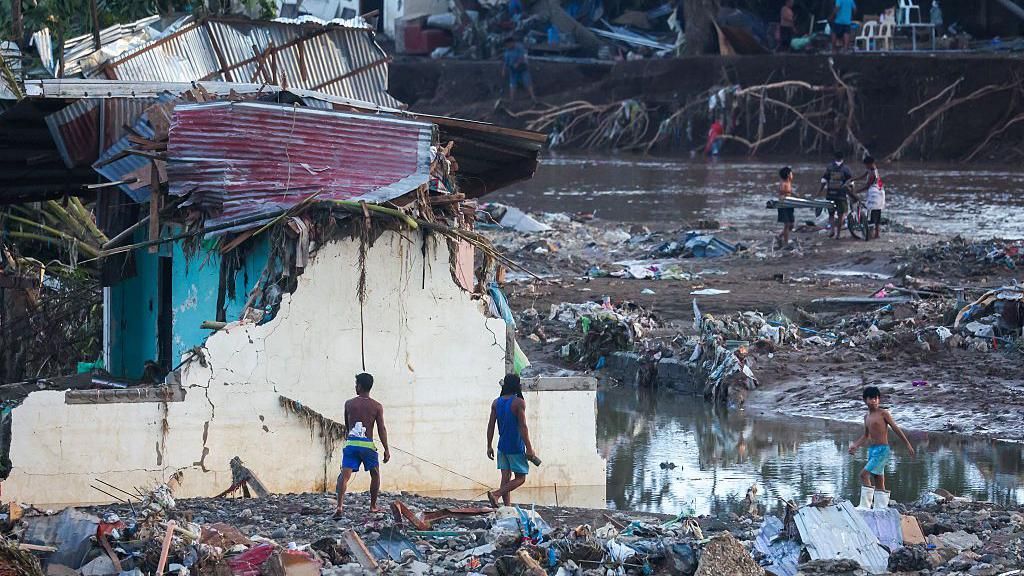
At least 114 dead as Philippines reels from Typhoon Kalmaegi
The Philippines is grappling with the aftermath of Typhoon Kalmaegi, one of the most powerful storms to hit the region this year. As of Thursday, the death toll has climbed to at least 114, with 127 people still missing and 82 injured, according to authorities. The typhoon caused catastrophic flooding across Cebu, the country’s most populous island, where 71 fatalities were reported. Provincial authorities in Cebu have confirmed an additional 28 deaths, which were not included in the national civil defense office’s initial tally. Kalmaegi has since exited the Philippines and is now heading toward central Vietnam, where residents are already dealing with severe flooding that has claimed dozens of lives. The storm unleashed torrents of muddy water, sweeping through towns and cities, leaving behind widespread destruction. Residential areas in Cebu were particularly hard-hit, with many small buildings destroyed and thick layers of mud covering the landscape. Local officials described the devastation as ‘unprecedented.’ Residents returning to their homes are struggling to cope with the aftermath. Jel-an Moira Servas, a business owner from Mandaue city, recounted her harrowing experience of being waist-deep in water within minutes and evacuating with her family. ‘Our houses are filled with mud, and everything is in shambles,’ she said. ‘We don’t even know where to start cleaning.’ The national disaster agency reported that over 400,000 people have been displaced in Cebu, home to 2.5 million residents. The death toll also includes six crew members of a military helicopter that crashed during relief operations on Mindanao island. Volunteer rescuer Carlos Jose Lañas described the situation as the worst flood he has ever witnessed, with emergency responders overwhelmed by the scale of the disaster. Kalmaegi, locally known as Tino, is the 20th tropical cyclone to strike the Philippines this year, a country frequently battered by powerful storms. This disaster follows closely on the heels of back-to-back typhoons in September that killed over a dozen people and caused significant damage to infrastructure and crops. The region has also faced an unusually wet monsoon season, exacerbating the crisis and sparking public outrage over inadequate flood control systems. As Kalmaegi strengthens, with winds reaching 155 km/h, it is expected to make landfall in central Vietnam on Friday, where more than 50 flights have already been canceled or rescheduled. Thailand is also preparing for potential impacts, including flash floods and landslides.
-
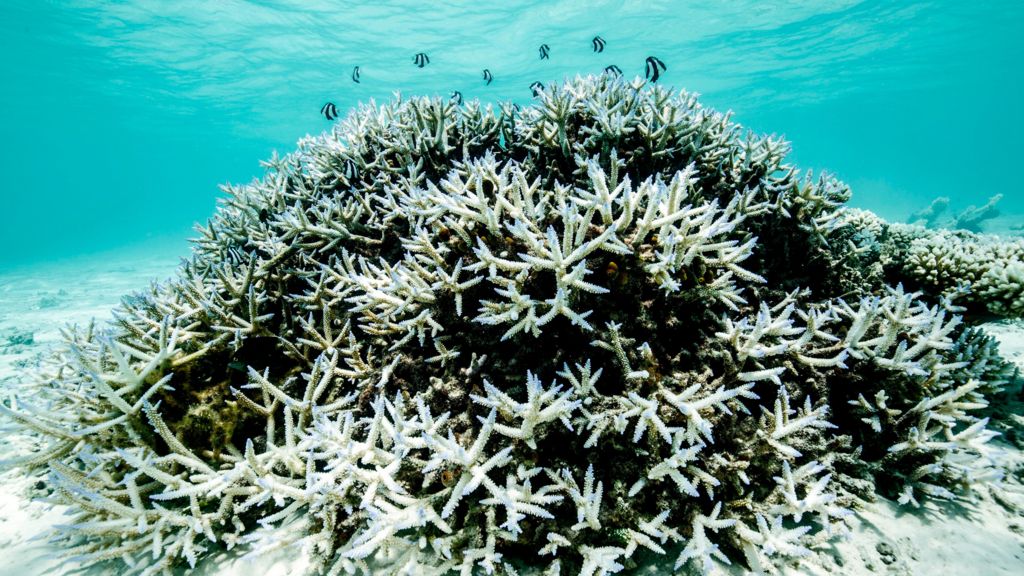
Great Barrier Reef may partially recover from ‘grim future’ if global warming stays below 2C
The Great Barrier Reef, one of the world’s most biodiverse ecosystems, is on track for a ‘grim future’ with a ‘rapid coral decline’ projected by 2050, according to a new study by researchers at the University of Queensland (UQ). However, the research offers a glimmer of hope, suggesting that parts of the reef may recover if global warming is kept below 2°C. The study utilized advanced modeling to simulate the lifecycles of various coral species, revealing that some corals are better equipped to adapt to warmer ocean temperatures, potentially aiding in the growth of new coral. Reefs situated near cooler-water currents were also found to be more resilient. The research underscores the critical importance of reducing carbon emissions to prevent a ‘near collapse’ of the reef. Dr. Yves-Marie Bozec, the lead researcher, emphasized that the study examined the ‘eco-evolutionary dynamics’ of over 3,800 individual reefs, including how corals interact and respond to warmer waters. ‘We forecast a rapid coral decline before the middle of this century regardless of the emissions scenario,’ he stated. The Great Barrier Reef, spanning over 2,300 km off Australia’s northeast coast, has endured four significant marine heatwaves between 2016 and 2022, leading to widespread coral bleaching—a process where corals expel the algae that provide them with life and color, often resulting in death. A recent report highlighted that parts of the reef experienced the largest annual decline in coral cover in nearly 40 years. Dr. Bozec noted that some reef areas ‘may partially recover after 2050, but only if ocean warming is sufficiently slow to allow natural adaptation to keep pace with temperature changes.’ He stressed that global action to reduce carbon emissions is essential to limit warming to below 2°C by 2100. Professor Peter Mumby, a co-author of the study, added that many reefs could persist under the Paris Agreement target of 2°C warming, but higher emissions would likely drive most reefs to near collapse. The study also identified more resilient areas of the reef network, suggesting that conservation efforts should focus on these strategic parts of the ecosystem.
-

NRIs in UAE: India’s fintech sector continues on strong growth path
India’s fintech sector is experiencing unprecedented growth, driven by technological innovation and strategic government initiatives. With over 10,000 companies and $40 billion in investments, the sector has become a cornerstone of India’s digital economy. The Reserve Bank of India (RBI) recently unveiled the Unified Market Interface, a groundbreaking platform enabling instant trading of financial assets as digital tokens, settled through the central bank’s digital currency. This development marks a pivotal moment in India’s digital finance ecosystem, which is further bolstered by advancements in data integration, asset tokenization, artificial intelligence (AI), and cybersecurity. The account aggregator framework currently serves 160 million accounts, enhancing financial inclusivity and transparency. Additionally, the Unified Lending Interface has bridged India’s credit gap, sanctioning 3.2 million loans worth Rs. 1.7 trillion since its launch. The retail digital e-rupee, adopted by 19 banks and 7 million users, has also emerged as a critical component of India’s digital public infrastructure. Despite lower R&D spending compared to the US and China, India is leveraging AI to accelerate innovation in life sciences, climate resilience, and space technology. The automotive sector is also thriving, with vehicle exports growing by 20% in the first half of 2025, driven by global demand for electric vehicles and SUVs manufactured in India. Companies like Suzuki, Hyundai, and Nissan are leading this export surge, positioning India as a global manufacturing hub.
-

China’s bet on self-reliance won’t fix an unbalanced economy
Since 1953, China has periodically introduced five-year plans to guide its economic transformation. The 15th five-year plan, unveiled in October 2025, aims to address sluggish domestic growth and intensifying geopolitical rivalry by emphasizing technological self-reliance, industrial modernization, and expanded domestic demand. President Xi Jinping and other leaders are betting on innovation-driven growth to secure China’s future, despite concerns about weak consumer spending and economic risks. The plan prioritizes advanced manufacturing, tech innovation, and green industries, such as aerospace, renewable energy, and quantum computing. Beijing’s focus on indigenizing critical technologies and military-civil fusion underscores its dual goals of economic and national security. However, the plan’s limited attention to boosting domestic demand and household consumption raises questions about its ability to rebalance the economy. While China’s push for high-tech industries could reshape global supply chains, it may also exacerbate trade frictions with advanced economies. The success of this ambitious plan will ultimately depend on whether it improves the lives of Chinese citizens by 2030.
-
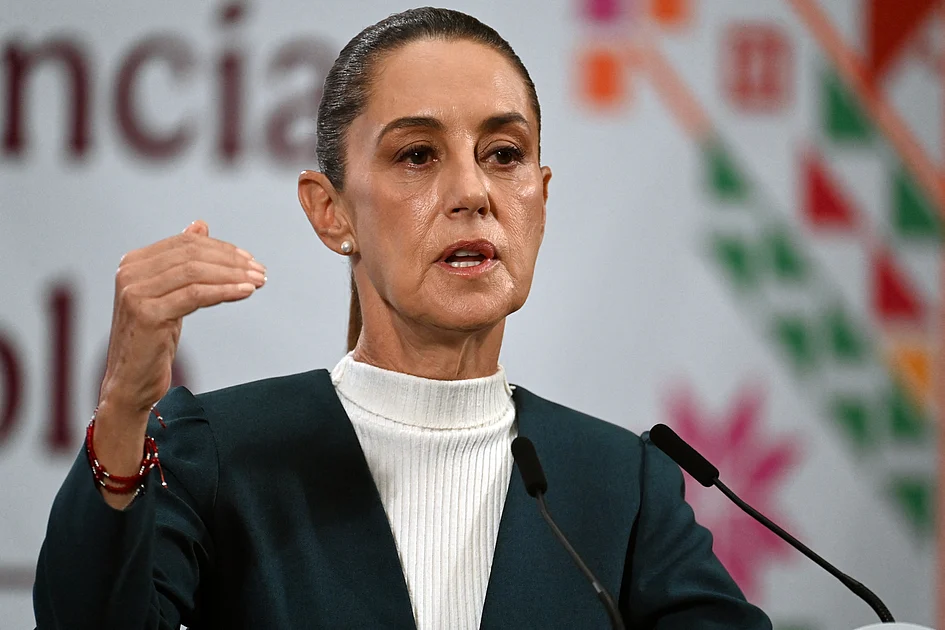
Man arrested after groping Mexican President Claudia Sheinbaum
Mexican President Claudia Sheinbaum has called for nationwide criminalization of sexual harassment following an unsettling incident where a man groped and attempted to kiss her. The event took place on Tuesday as Sheinbaum, Mexico’s first female president, was walking to an event near the presidential palace. Videos circulating on social media captured the moment when the man, appearing intoxicated, approached her from behind, placed his arm around her shoulder, and touched her inappropriately while trying to kiss her neck. A member of the presidential security detail swiftly intervened, removing the man from the scene. Despite the violation, Sheinbaum maintained her composure, agreeing to take a photo with the man and even patting him on the back. However, upon realizing that the man continued to harass other women, she decided to file a formal complaint with the police. Authorities later confirmed the man’s arrest. Sheinbaum emphasized the broader implications of the incident during her morning press conference, stating, ‘If they do this to the president, what will happen to all women in our country?’ She announced plans for a government review to ensure that such behavior is classified as a criminal offense across all 32 federal districts, as current laws vary. The incident has also drawn criticism of the president’s security team and highlighted pervasive ‘macho’ attitudes that normalize violations of women’s personal space. According to UN Women, approximately 70% of Mexican women aged 15 and over have experienced at least one incident of sexual harassment in their lives.
-

Brown leads Team Genesis 2 to victory in Abu Dhabi HSBC Pro-Ams
In a thrilling display of skill and teamwork, England’s Daniel Brown spearheaded Team Genesis 2 to a triumphant victory at the Abu Dhabi HSBC Championship Pro-Am held at Yas Links Abu Dhabi. The team, comprising Cahul Altman, Steven Hall, and Anish Malattari, achieved a remarkable score of 39 under par in the unique ‘Par is your Friend’ 18-hole format, which features one professional and three amateur players. The victory was secured through a back-nine countback, showcasing the team’s resilience and precision. Brown, currently ranked 11th in the Race to Dubai, is eyeing a strong finish to the season, with the top 10 players set to earn dual PGA Tour and DP World Tour cards for the 2026 season. The event saw participation from 13 teams, with another 25 teams competing in the Wednesday morning Pro-Am, won by Nicolai Hojgaard and his HSBC 9 Team. The tournament, featuring a $9 million prize fund, attracted top players from 21 countries, underscoring the DP World Tour’s global appeal. Notable players like Ludvig Aberg and Shane Lowry also participated through Ryder Cup exemptions. The competition continues with the first round scheduled for Thursday, featuring marquee tee times with golfing stars such as Rory McIlroy and Tommy Fleetwood.
-
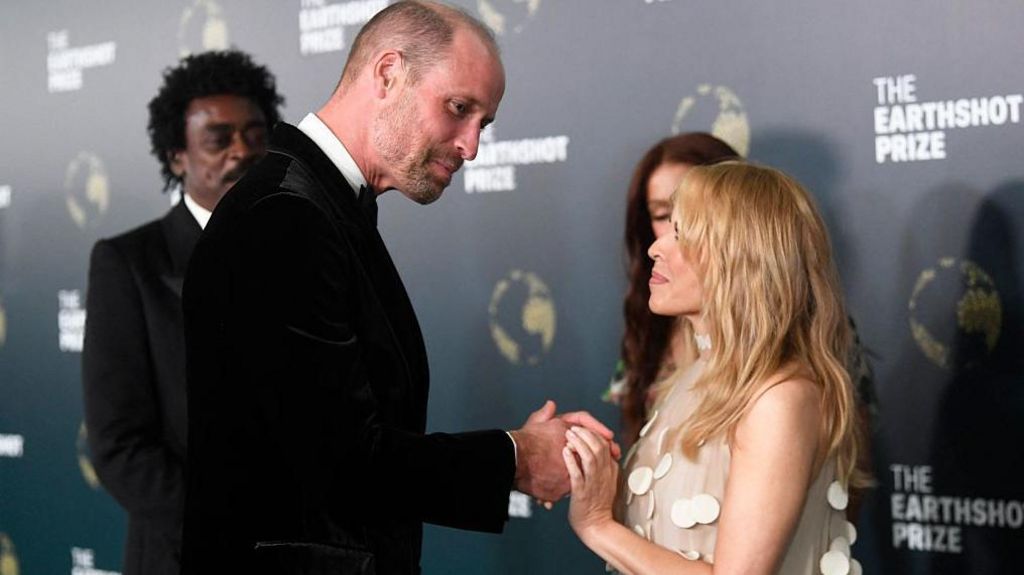
William announces Earthshot Prize 2025 winners in Rio
Prince William, the Prince of Wales, unveiled the five winners of the 2025 Earthshot Prize during a star-studded ceremony at Rio de Janeiro’s Museum of Tomorrow. The event, hosted by acclaimed Brazilian broadcaster Luciano Huck, celebrated groundbreaking environmental projects from across the globe. Prince William hailed the winners as “an inspiration that gives us courage,” emphasizing their work as “proof that progress is possible.” The Earthshot Prize, founded by Prince William in 2020, awards £1 million annually to each of five innovative projects aimed at addressing critical environmental challenges. This year’s winners included initiatives such as re.green, which is making Brazil’s Atlantic Forest financially viable, and the High Seas Treaty, a global effort to conserve marine life set to take effect in 2026. Other winners included Bogotá’s clean air policies, Lagos Fashion Week’s sustainable practices, and Friendship’s efforts to support vulnerable communities in Bangladesh. The ceremony featured performances by Kylie Minogue, Shawn Mendes, and Brazilian pop icon Anitta, while legendary figures like footballer Cafu, gymnast Rebeca Andrade, and former Formula 1 driver Sebastian Vettel presented the awards. Prince William reflected on the halfway point of the Earthshot Prize’s 10-year mission, stating, “We set out to tackle environmental issues head-on and make real, lasting changes that would protect life on Earth.” The event also highlighted the urgency of collective action, with Christiana Figueres, chair of the board of trustees, praising the winners for their ambition and determination. Earlier in his five-day visit to Brazil, Prince William addressed deforestation at the United for Wildlife conference and participated in mangrove conservation efforts on Paqueta Island. He is scheduled to speak at COP30 in the Amazon rainforest, further underscoring his commitment to environmental advocacy.
-
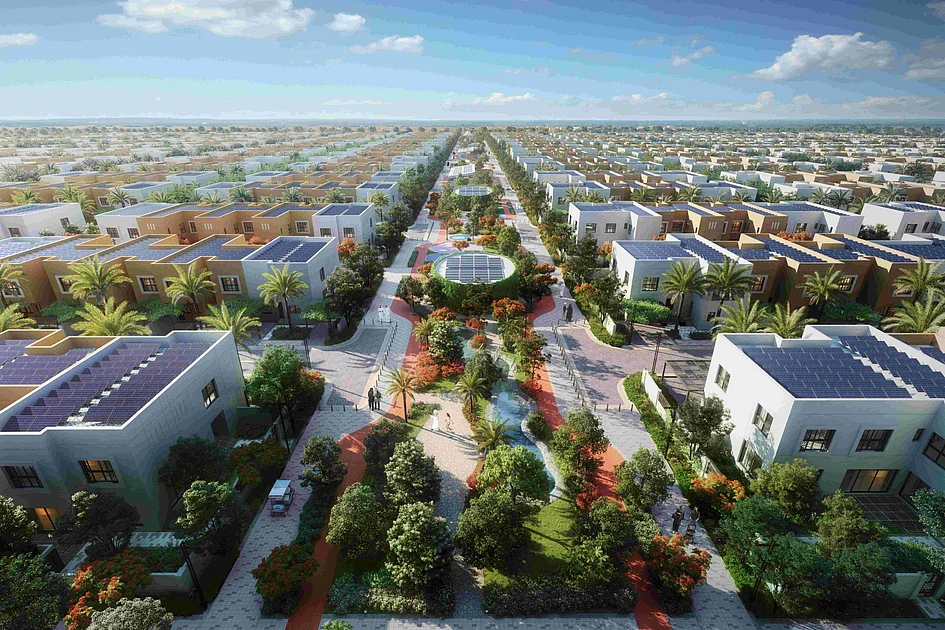
Why food-water-energy nexus must be at heart of tomorrow’s communities
As the world grapples with mounting pressures on water resources, escalating energy demands, and the increasing need for local food production due to global supply chain vulnerabilities, the UAE has positioned itself at the forefront of addressing these challenges. The concept of the food-water-energy nexus has emerged as a critical framework for building resilient and sustainable communities, particularly in the face of rapid urbanization and resource constraints. This approach, endorsed by the United Nations, underscores the interconnectedness of water, energy, and food security, which are central to achieving 14 out of the 17 Sustainable Development Goals. In the UAE, this interconnectedness is not merely theoretical but is actively integrated into strategic initiatives such as the UAE Food Security Strategy 2051, which aims to enhance domestic food production while mitigating the impacts of climate change-induced water scarcity. Sharjah, in particular, has become a hub for sustainable innovation, with projects like Sharjah Sustainable City exemplifying this commitment. Spanning 7.2 million square feet, this master-planned community features 1,250 villas powered by rooftop solar panels, treats 100% of its wastewater for irrigation, and incorporates urban farming and biodomes to promote local food production. The project also emphasizes behavioral change, engaging residents through workshops on urban farming, composting, energy conservation, and sustainable art. Sharjah’s broader sustainability vision, including initiatives like electrifying its public bus fleet with low-emission vehicles, further cements its leadership in regenerative urbanism. Moving forward, the challenge for real estate developers and policymakers lies in embedding the food-water-energy nexus into the core of new developments, ensuring that sustainable living becomes the default rather than the exception. As global milestones for food, energy, and sustainability are observed, the integration of these systems will be pivotal in shaping communities that are not only resilient but also economically, socially, and environmentally sustainable.