作者: admin

  • Fisheries research base in China’s Chongqing conserves rare fish species

    Fisheries research base in China’s Chongqing conserves rare fish species

    In a significant conservation initiative, the Dazhou fisheries research base in Chongqing’s Wanzhou district has emerged as a critical sanctuary for preserving endangered aquatic species native to the upper Yangtze River basin. This specialized facility functions as a wild acclimation center where rare fish undergo preparatory training before their reintroduction into natural habitats.

    The research station operates an extensive network of 32 net cages spanning approximately 800 square meters, creating controlled environments that simulate natural river conditions. This infrastructure supports the conservation of more than 20 distinct fish species, including both rare genetic populations and commercially valuable varieties. The base’s breeding programs have achieved remarkable productivity, with annual output exceeding 20 million high-quality fry of endangered and premium fish species.

    Recent advancements in conservation methodology have seen the base enhance its wild acclimation protocols, implementing rigorous short-term survival training for juvenile fish prior to their release. This scientific approach has demonstrated measurable success in boosting the reproductive rates and survival capabilities of endangered species once they return to their natural ecosystems. The program represents a sophisticated integration of aquaculture technology and ecological restoration, providing a sustainable model for aquatic biodiversity conservation in one of China’s most vital river systems.

  • Ukraine says it has hit Russian ‘missile component’ plant

    Ukraine says it has hit Russian ‘missile component’ plant

    In a significant escalation of hostilities, Ukrainian forces have targeted and struck a critical Russian defense manufacturing facility using British-supplied Storm Shadow missiles. President Volodymyr Zelensky confirmed the operation against the Kremniy El plant in Bryansk, describing it as one of Russia’s “most important military factories” responsible for producing electronic components for missiles used against Ukrainian civilian populations.

    The attack prompted strong reactions from Russian authorities, who reported substantial civilian casualties with at least six fatalities and 42 injuries. Kremlin spokesman Dmitry Peskov characterized the operation as a “terrorist missile attack” and suggested British specialists were necessarily involved in the missile launch. Peskov reiterated Russia’s justification for its ongoing military campaign, stating the invasion aims to demilitarize Ukraine and prevent further attacks on Russian territory.

    Meanwhile, the conflict continues to intensify with reciprocal assaults across multiple fronts. Russian forces employed Iranian-supplied Shahed drones in Kharkiv, resulting in two deaths and five injuries according to Ukrainian officials. Additional Russian strikes in Slovyansk claimed four lives and wounded sixteen others yesterday.

    Despite the military stalemate, both nations report incremental territorial gains while diplomatic efforts continue. US President Donald Trump is facilitating negotiations between Russian and American representatives scheduled for next week. The proposed settlement reportedly involves Ukraine potentially relinquishing claims to portions of the Donbas region not currently under its control—a concession Ukrainian officials have previously rejected given Russia’s existing occupation of over 80% of this territory.

    The incident underscores the conflict’s expanding international dimensions, with Western nations supplying advanced weaponry to Ukraine while Russia receives military support from allies including Iran and North Korea.

  • South Africa deploys troops in Johannesburg to tackle organized crime

    South Africa deploys troops in Johannesburg to tackle organized crime

    JOHANNESBURG — In a significant security operation, South African military forces have been deployed across Johannesburg to address escalating organized crime and illegal mining activities. This mobilization follows President Cyril Ramaphosa’s recent announcement designating criminal networks as the foremost threat to the nation’s democracy and economic stability.

    Eyewitness accounts confirmed the presence of soldiers in the Riverlea district, where a convoy of over a dozen military vehicles conducted operations. Troops were observed entering apartment complexes in this suburb, which has been severely impacted by both gang violence and unauthorized mining operations.

    The deployment represents the initial phase of a broader national strategy, with 550 soldiers activated in Gauteng province through April. According to parliamentary documents, this operation will eventually expand to five of South Africa’s nine provinces, targeting illegal mining in Gauteng, North West, and Free State provinces, while concentrating on gang violence in Western and Eastern Cape regions. Certain operations may extend beyond one year based on security assessments.

    Police statistics underscore the urgency: 6,351 homicides occurred between October and December 2025, averaging nearly 70 daily in this nation of 62 million people. The government characterizes illegal mining and gang violence as particularly severe manifestations of organized crime.

    This deployment marks the most substantial military engagement in domestic security since the 2021 civil unrest that resulted in 350 fatalities during COVID-19 lockdown protests. President Ramaphosa emphasized that the decision underwent careful consideration, acknowledging the military’s controversial historical role during apartheid-era suppression of pro-democracy demonstrations.

    While the move has received broad public support, opposition parties interpret it as an implicit acknowledgment of police failure to control crime. The military operates under police command following specialized training in law enforcement protocols, with defense authorities withholding immediate operational details.

  • Cross-Strait youth exchanges pave the way for a brighter future, says national political adviser

    Cross-Strait youth exchanges pave the way for a brighter future, says national political adviser

    BEIJING – Enhanced interactions between mainland Chinese and Taiwanese youth are creating vital bridges for peaceful development across the Taiwan Strait, according to a prominent political adviser speaking at China’s top political advisory body.

    Dr. Xu Kewei, President of the Guangdong Provincial Federation of Taiwan Compatriots and member of the 14th National Committee of the Chinese People’s Political Consultative Conference (CPPCC), emphasized the transformative power of cross-Strait exchanges during a group interview preceding the closing ceremony of the CPPCC’s fourth session on March 11, 2026.

    As a third-generation Taiwan compatriot who has established roots on the mainland, Dr. Xu brings unique perspective to his dual roles as a medical surgeon and political representative. Through his extensive travels across provinces for surgical procedures, consultations, and academic lectures, he has witnessed firsthand the growing integration of Taiwanese youth into mainland society.

    “Young people from Taiwan are not merely visiting – they are building lives, launching enterprises, and pursuing advanced education throughout the mainland,” Xu observed. He cited compelling examples of this integration: entrepreneurs blending Taiwanese and mainland culinary traditions to create successful beverage franchises, and tech innovators applying artificial intelligence to revolutionize traditional manufacturing sectors.

    The cultural dimension remains equally significant, with young Taiwanese exploring innovative approaches to preserve shared heritage. Xu specifically highlighted renewed interest in Gezai opera, a traditional art form that resonates deeply across both sides of the Strait.

    Statistical evidence underscores this trend, with nearly 4.9 million mainland visits recorded by Taiwan residents in the previous year. Notably, youth constituted over one-third of these exchanges, signaling a generational shift toward deeper engagement.

    “Our shared aspiration must progress from conceptual kinship to tangible coexistence,” Xu asserted. “By fostering these connections, we collectively architect a more prosperous and harmonious future for all Chinese people, regardless of which side of the Strait they call home.”

  • G7 inches closer to tapping oil reserves to tackle price rise

    G7 inches closer to tapping oil reserves to tackle price rise

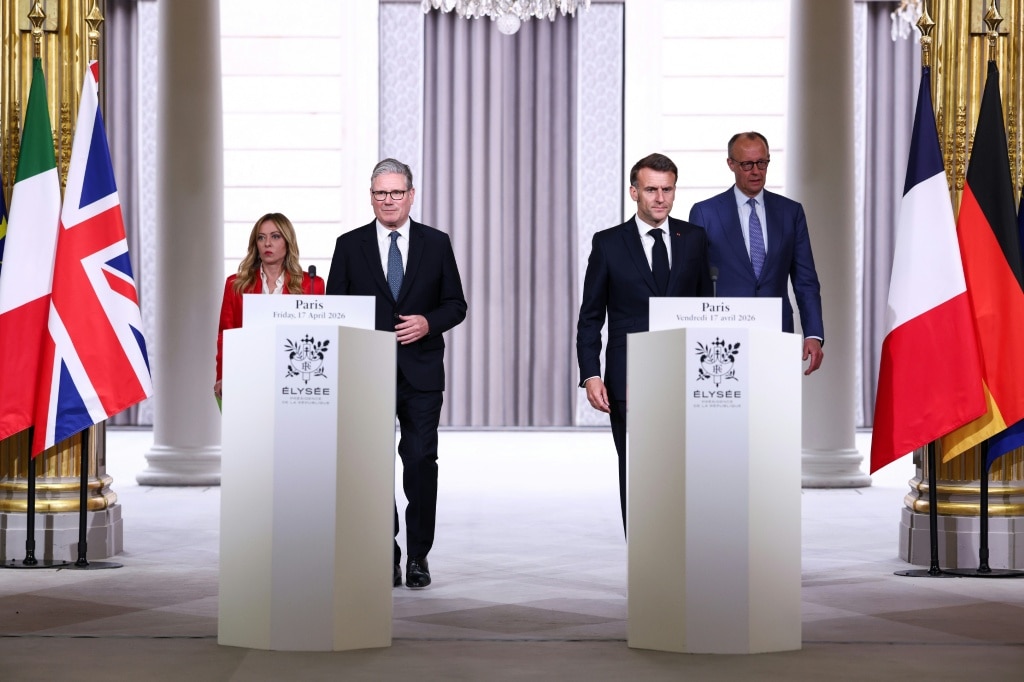
    The Group of Seven advanced economies is advancing toward a coordinated release of strategic petroleum reserves to address soaring crude prices triggered by escalating Middle East hostilities. Energy ministers from the world’s leading industrialized nations declared their readiness to implement “all necessary measures” during emergency discussions preceding a video conference chaired by French President Emmanuel Macron.

    The market turbulence follows intensified military actions between the United States, Israel, and Iran, with Tehran’s retaliation effectively shutting down the Strait of Hormuz – a critical chokepoint for global oil transportation. This development has created unprecedented volatility in energy markets, prompting the International Energy Agency (EPA) to conduct crisis assessments regarding supply security and potential emergency stock releases.

    French Finance Minister Roland Lescure emphasized the need for a clear market signal: “If we cannot reopen the Strait of Hormuz, we will replace it with other oil that will come from elsewhere and circulate around the world.” While no definitive decision has been reached, the G7 leadership meeting is expected to address the reserve deployment strategy comprehensively.

    According to financial analysts, the proposed reserve release could surpass the historic 182-million-barrel deployment following Russia’s invasion of Ukraine in 2022. However, market experts caution that even a substantial 300-400 million barrel release would represent merely a temporary solution, given that IEA member nations consume approximately 45 million barrels daily.

    The geopolitical tensions have already reduced Middle Eastern oil output by approximately 6%, prompting extraordinary measures worldwide. Bangladesh has deployed military forces to protect oil depots, India has implemented stricter controls on natural and cooking gas, and French authorities are conducting random inspections at fuel stations to prevent price gouging.

    The IEA, established after the 1973 oil crisis to coordinate responses to major supply disruptions, maintains over 1.2 billion barrels of public emergency oil stocks among its 32 member countries, with an additional 600 million barrels held under government mandates.

  • Iran’s new supreme leader injured but ‘safe’, says president’s son

    Iran’s new supreme leader injured but ‘safe’, says president’s son

    Iran’s political landscape faces unprecedented uncertainty as newly appointed Supreme Leader Mojtaba Khamenei remains out of public view following injuries sustained during the transition of power. Presidential adviser Yousef Pezeshkian confirmed Wednesday that the 56-year-old successor is “safe and sound” despite physical injuries, marking the first official acknowledgment of his condition.

    The previously low-profile but influential figure assumed Iran’s highest leadership position after his father, Ali Khamenei, was killed alongside his mother and wife in a February 28 airstrike that initiated the US-Israeli military campaign against the Islamic Republic. The daytime attack on a Tehran compound reportedly left Mojtaba with leg injuries, though he remains alert while sheltering at a highly secure location with limited communication access.

    State television has characterized Khamenei as a “wounded veteran of the Ramadan war,” referencing the conflict that erupted during the holy Muslim fasting month. His symbolic ascension to power has been visually represented across Tehran through giant billboards depicting him receiving the national flag from his father under the watchful gaze of Islamic Republic founder Ruhollah Khomeini.

    The new leader’s invisible presence has created a complex political dynamic. While thousands of pro-government supporters brandished his posters at rallies, nighttime protests in the capital have featured chants of “Death to Mojtaba!”—reflecting public opposition to a figure believed instrumental in suppressing anti-government demonstrations since 2009.

    Security analysts anticipate Khamenei will maintain a bunkered existence for the foreseeable future, given his immediate designation as a primary target for US and Israeli forces. Emile Hokayem of the International Institute for Strategic Studies noted that “killing him early is certainly an Israeli priority,” while suggesting that survival would transform him into “a totem, a testimony to the resilience of the system.”

    Power delegation appears imminent, with expectations that Khamenei will assign governmental operations to national security chief Ali Larijani and military operations to powerful parliament speaker Mohammad Bagher Ghalibaf. The new leader has already received pledges of allegiance from Iran’s conventional military, the Islamic Revolutionary Guard Corps, and Tehran-backed groups including Yemen’s Houthi rebels and Lebanon’s Hezbollah. Russian President Vladimir Putin has additionally promised “unwavering support.”

    The leadership transition occurs against the backdrop of former US President Donald Trump’s warning that Khamenei would require American approval to maintain power, stating Sunday that without such endorsement, “he’s not going to last long.” This development marks a critical juncture for Iran’s political future, combining dynastic succession with intensified international pressure and internal dissent.

  • Spring scenery in Kunming, China’s Yunnan

    Spring scenery in Kunming, China’s Yunnan

    China Daily Information Co (CDIC) has established a comprehensive copyright protection framework governing all content published across its digital platforms. The policy explicitly states that all materials—including textual content, photographic images, and multimedia information—remain the exclusive intellectual property of CDIC since 1994.

    The company mandates that republication or utilization of any content in any form requires prior written authorization from CDIC. This protective measure covers the complete spectrum of digital assets hosted on their platforms, reinforcing the organization’s commitment to safeguarding its intellectual property rights.

    Technical recommendations accompany the copyright notice, with the platform suggesting optimal viewing through browsers set at 1024*768 resolution or higher. This specification ensures consumers experience content as intended while maintaining display quality standards.

    The publication operates under formal registration number 130349 and holds multimedia online publishing license 0108263, providing official documentation of its authorized publishing status. These credentials validate the organization’s compliance with national regulatory standards for digital content dissemination.

    Beyond content protection policies, the platform maintains established channels for stakeholder engagement including advertising opportunities, general inquiries, and employment services targeting both domestic and expatriate professionals. These services facilitate organizational transparency and accessibility while supporting sustainable business operations.

  • Poland starts human trafficking probe into Epstein ring

    Poland starts human trafficking probe into Epstein ring

    Polish judicial authorities have initiated a formal criminal investigation into human trafficking activities allegedly connected to the international network of convicted sex offender Jeffrey Epstein. The National Prosecutor’s Office confirmed Wednesday that it is examining whether women and minors were recruited within Polish territory under false pretenses regarding employment opportunities abroad, ultimately leading to their sexual exploitation.

    The probe follows earlier statements by Prime Minister Donald Tusk indicating that Polish officials were examining potential connections between Epstein and Russian intelligence agencies, as well as any links the financier might have maintained within Poland. Justice Minister Waldemar Zurek subsequently announced a coordinated effort involving Poland’s secret services, prosecutors, and police forces to identify any Polish accomplices who facilitated Epstein’s operations.

    Prosecutors outlined their suspicion that perpetrators arranged transportation of victims beyond Poland’s borders, transferring them to other individuals specifically for sexual exploitation purposes. The investigation has expanded internationally, with Polish authorities submitting formal requests for judicial cooperation to two unnamed European countries to assist with the cross-border aspects of the case.

    Under Polish criminal law, human trafficking convictions carry severe penalties, including imprisonment of up to 20 years. The case represents one of the most significant international responses to the Epstein network since his death in 2019, demonstrating continued global efforts to uncover the full extent of his operation and bring accomplices to justice.

  • Carney inches closer to majority, as fourth MP defects to Liberals

    Carney inches closer to majority, as fourth MP defects to Liberals

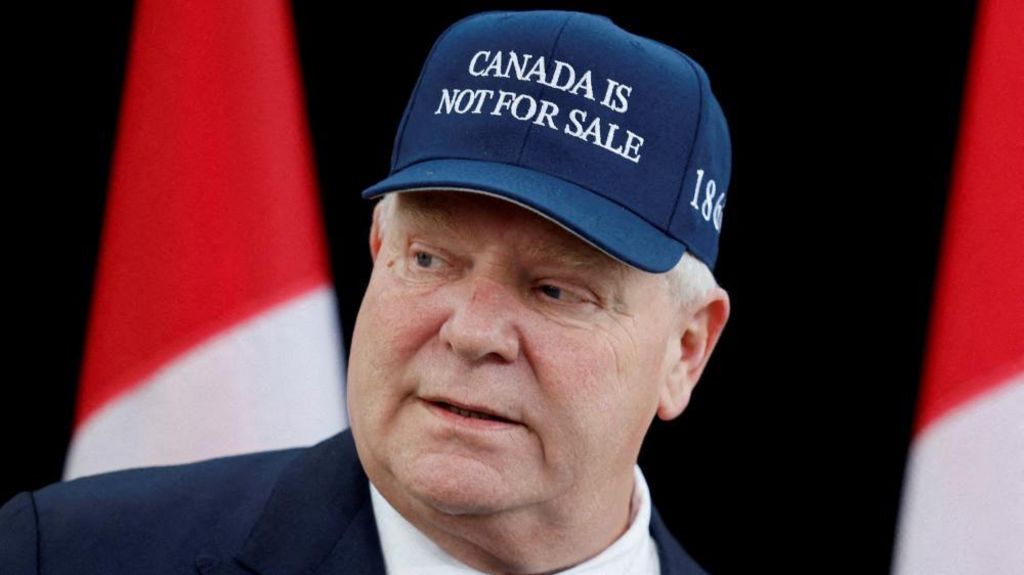
    Canadian Prime Minister Mark Carney’s minority government stands on the brink of securing parliamentary majority following a significant political defection. Lori Idlout, representing Nunavut and previously aligned with the left-leaning New Democratic Party (NDP), has crossed the floor to join the governing Liberal Party. This move marks the fourth parliamentary defection to Carney’s administration in recent months.

    Idlout’s decision follows extensive personal deliberation and consultations with her constituency, family, and political supporters. In an official statement released by the Liberals, she expressed her conviction that joining the governing party would better serve her constituents’ interests. The Liberal leadership enthusiastically welcomed Idlout, characterizing her defection as evidence of growing confidence in Carney’s leadership.

    The NDP’s interim leader Don Davies voiced strong disapproval, asserting that elected officials who switch party allegiance should seek renewed electoral mandates from their constituents. This defection occurs amid broader political realignments, with three former Conservative MPs—Matt Jeneroux, Chris d’Entremont, and Michael Ma—having previously joined the Liberal ranks.

    Conservative opposition figures have accused the government of employing coercive tactics to lure opposition members, though no specific evidence has been presented. The political landscape further intensifies with Carney’s announcement of three critical by-elections scheduled for April 13th. Two contests in Liberal-friendly Toronto districts and one highly competitive race in Montreal—where the previous election was decided by a single vote later invalidated by the Supreme Court—could determine the government’s future.

    Should the Liberals secure all three seats alongside Idlout’s defection, they would achieve 173 parliamentary seats, providing Carney with a stable majority that could extend his government’s tenure for three additional years without elections. This political shift occurs against the backdrop of the NDP’s organizational challenges, having retained only seven seats in last year’s federal election amid significant voter erosion. The party prepares to select new leadership later this month as it reevaluates its political strategy.

  • Chinese scientists propose human-wildlife conflict resolution strategy

    Chinese scientists propose human-wildlife conflict resolution strategy

    Chinese researchers from the Northwest Institute of Plateau Biology (CAS) have pioneered a groundbreaking temporal livestock management approach to address the persistent global challenge of human-wildlife conflicts. Their innovative study, published in Integrative Zoology, offers a scientific framework for balancing biodiversity conservation with sustainable development in agropastoral communities.

    The research team, led by Dr. Lian Xinming, conducted an extensive decade-long field investigation in China’s ecologically critical Sanjiangyuan region—known as the nation’s water tower. Through sophisticated monitoring techniques involving 422 infrared cameras across 2,580 square kilometers, scientists gathered unprecedented data on four large carnivores: snow leopards, wolves, lynxes, and brown bears.

    Employing advanced kernel density estimation methods, the team analyzed diel activity patterns and seasonal variations among these predators. The findings revealed distinct nocturnal behaviors with species-specific peak activity times. Wolves demonstrated particularly notable seasonal variations in their activity patterns compared to other species.

    Crucially, the research identified precise high-risk windows for livestock predation and human encounters. For brown bears, the most dangerous period for home invasions occurs between 20:42 and 02:36, requiring heightened vigilance during these hours. The study recommends strategic interventions including guard dogs and electronic deterrents during identified risk periods.

    Dr. Lian emphasized that integrating spatial utilization zoning with temporally-regulated grazing schedules can significantly reduce human-carnivore encounters. This evidence-based approach represents a paradigm shift from reactive conflict management to proactive, scientifically-informed coexistence strategies that benefit both wildlife conservation and local livelihoods.