作者: admin

  • A small US grocer is calling out the lower prices at big chains

    A small US grocer is calling out the lower prices at big chains

    In the competitive landscape of American retail, independent grocery stores face an existential threat from pricing structures that favor large chain competitors. Alap Vora, proprietor of Concord Market in Brooklyn, New York, exemplifies this struggle as he navigates wholesale pricing disparities that undermine his ability to compete.

    Vora’s experience reveals a stark market imbalance: while he pays approximately $5 wholesale for a box of Honey Bunches of Oats cereal, major chains retail the identical product at his wholesale cost. This pricing dynamic stems from direct manufacturer relationships and preferred pricing agreements accessible only to large-volume retailers, creating what experts identify as systemic price discrimination.

    The scale of this challenge affects over 21,000 independent grocery stores across the United States, which collectively account for one-third of national grocery sales. Vora brought this issue to national attention through testimony before the US Senate Committee on Banking, Housing and Urban Affairs in May 2024, where he detailed ‘fluctuating, opaque pricing structures’ from distributors.

    Industry analyst Katherine Van Dyck of KVD Strategies identifies this pricing inequality as a primary concern for small businesses across multiple sectors, including independent bookstores and locally-owned pharmacies. ‘When a grocer faces these pricing dynamics in an industry with razor-thin margins,’ Van Dyck notes, ‘it becomes incredibly difficult to compete and contributes to business closures.’

    The recent revival of the 1936 Robinson-Patman Act represents a potential legislative solution. This Depression-era legislation, dormant for decades, prohibits sellers from offering preferential prices to certain buyers while excluding others. The Biden administration initiated enforcement through lawsuits against major distributors, though outcomes remain mixed under subsequent administrations.

    Legal scholars like NYU’s Daniel Francis suggest alternative approaches, including reduced tax and regulatory burdens for small retailers. Meanwhile, Vora’s practical response includes sometimes purchasing inventory from Costco for resale—a paradoxical solution that highlights the severity of pricing inequities.

    Beyond immediate financial pressures, Vora emphasizes the broader societal question: ‘Is small business critical? If job creation at this level matters, there needs to be more systemic support.’ His perspective underscores the fundamental choice facing American consumers and policymakers about the future of local retail ecosystems.

  • Most underrated player on the planet? Valverde steps up for Real

    Most underrated player on the planet? Valverde steps up for Real

    In a breathtaking display of individual brilliance, Federico Valverde delivered a career-defining performance that propelled Real Madrid to a commanding 3-0 first-leg victory against Manchester City in their Champions League round of 16 encounter. The Uruguayan midfielder, unexpectedly positioned at right-back due to squad injuries, achieved his first senior hat-trick within 42 extraordinary first-half minutes at Santiago Bernabeu Stadium.

    The spectacle left both teammates and opponents in awe, with injured stars Jude Bellingham and Kylian Mbappe reacting with visible astonishment from the stands. Valverde’s third goal particularly captivated spectators—an audacious lob over defender Marc Guehi followed by a precision volley past goalkeeper Gianluigi Donnarumma that exemplified technical mastery.

    Teammate Trent Alexander-Arnold, himself adapting to Real’s system after transferring from Liverpool, praised Valverde’s unparalleled work ethic: “He is undoubtedly the most underrated footballer on the planet. His commitment to covering every blade of grass and fulfilling tactical responsibilities makes him the ultimate reliable teammate.”

    This remarkable achievement places Valverde in elite company—he becomes only the second player to score a first-half hat-trick against English opposition in Champions League history, joining Lionel Messi who accomplished the feat for Barcelona against Arsenal in April 2010. The statistics further highlight the performance’s rarity: Valverde matched his entire Champions League goal tally from 75 previous appearances in just one half of football.

    Beyond the immediate match impact, Valverde’s journey from humble beginnings in Montevideo adds profound context to his success. He credits his parents’ sacrifices during his childhood, often going without food to support his development, for instilling the relentless work ethic that defines his playing style. These formative experiences on dirt pitches where animals grazed contrast sharply with the world-class stadiums where he now excels.

    Despite being naturally a central midfielder, Valverde has demonstrated exceptional versatility throughout the season, starting 37 of 39 matches across multiple positions. His adaptability has proven invaluable for manager Alvaro Arbeloa, particularly during injury crises that affected key defenders. Currently serving as second captain behind Dani Carvajal, Valverde has earned immense respect within the dressing room through consistent performance and selfless team contribution.

    The victory establishes a formidable advantage for Real Madrid as they approach the second leg at Etihad Stadium, with Valverde’s historic performance potentially determining the tie’s outcome and reinforcing Madrid’s pursuit of a record-extending 16th European title.

  • North Korean leader Kim and his daughter try out new pistols at shooting range

    North Korean leader Kim and his daughter try out new pistols at shooting range

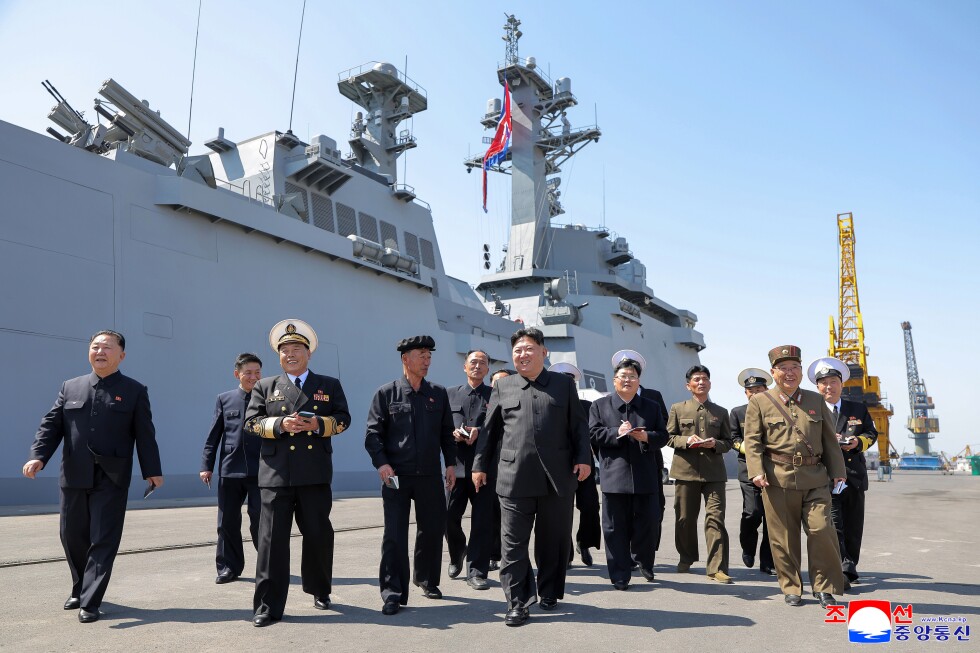
    North Korean leader Kim Jong Un and his teenage daughter were photographed firing pistols during an inspection of a light munitions factory, according to state media imagery released Thursday. The images depict the pair testing weapons alongside senior military officials as Kim intensifies efforts to modernize his nation’s conventional forces following years of nuclear weapons development focus.

    During Wednesday’s factory visit, Kim personally evaluated a newly produced pistol at a shooting range, subsequently rating the weapon as “excellent” according to the Korean Central News Agency (KCNA). While the official text report omitted mention of his daughter’s presence, the accompanying photographs clearly showed the young woman, believed to be approximately 13-year-old Kim Ju Ae, actively participating in the weapons demonstration.

    Kim emphasized the factory’s critical role in supplying pistols and light arms to military and security forces, urging expanded production capacity and more modern manufacturing processes. This inspection follows a pattern of increasingly prominent public appearances by Kim’s daughter since her November 2022 debut at a long-range missile test.

    Her growing visibility at military displays, factory openings, and even during her father’s September summit with Chinese leader Xi Jinping in Beijing has prompted intelligence analysts and experts to speculate that Kim Jong Un may be grooming her as a potential successor. This would extend the family’s dynastic rule into a fourth generation.

    The munitions factory visit occurred just one day after Kim and his daughter observed test launches of nuclear-capable cruise missiles from a naval destroyer, with Kim calling for accelerated nuclear armament of North Korea’s naval forces. Last month, state media also showed the teenager testing a sniper rifle as Kim presented weapons to senior officials following a ruling party congress where he outlined major political and military objectives for the coming five-year period.

  • Strikes hit oil storage facilities in Oman, says maritime security firm

    Strikes hit oil storage facilities in Oman, says maritime security firm

    Oman’s strategic Salalah port became the latest flashpoint in regional tensions after drone strikes targeted its oil storage facilities on Wednesday. According to local officials and British maritime security firm Ambrey, multiple drones were intercepted by defense systems, though one successfully breached security measures and struck fuel tanks at the port.

    The Oman News Agency, citing security sources, confirmed the incident while noting that no casualties resulted from the attack. Ambrey’s assessment indicated no damage occurred to commercial vessels in the area despite the strike on infrastructure.

    The incident prompted immediate operational changes, with shipping conglomerate Maersk announcing a complete suspension of activities at the port ‘until further notice’ following what it described as an ‘ongoing incident’ near the general cargo terminal. Unverified footage circulating online appeared to show significant fires at the port facility.

    These developments occur against a backdrop of escalating regional hostilities. Iran’s military recently vowed to target American and Israeli economic interests in the region, including banking institutions, following overnight attacks that reportedly struck an Iranian bank in Tehran, resulting in unspecified casualties among staff.

    Despite these threats, Iranian authorities have denied targeting oil infrastructure in neighboring Gulf states. Meanwhile, regional analysts have raised questions about the origins of recent attacks, with some suggesting potential false-flag operations intended to draw Gulf Cooperation Council members into broader regional conflicts.

    Saudi journalist Adhwan al-Ahmari articulated growing concerns in regional media, stating: ‘Some believe this war is an American-Israeli trap to implicate the Gulf countries and draw them into a confrontation with Iran.’

    The incident prompted high-level diplomatic exchanges, with Oman’s Sultan Haitham bin Tariq al-Said expressing strong dissatisfaction to Iranian President Masoud Pezeshkian regarding attacks targeting Omani territory.

  • Real Madrid batter Man City as PSG sink Chelsea in Champions League

    Real Madrid batter Man City as PSG sink Chelsea in Champions League

    The UEFA Champions League knockout stage erupted with stunning results on Wednesday, dramatically shifting the landscape of the competition. In a headline-grabbing performance, Real Madrid delivered a masterclass to dismantle Manchester City 3-0 at the Santiago Bernabéu, while Paris Saint-Germain outlasted Chelsea in a five-goal thriller, winning 5-2.

    Uruguayan midfielder Federico Valverde emerged as the undisputed hero for Los Blancos, netting a spectacular first-half hat-trick that left the English champions reeling. Valverde’s opener was a moment of individual brilliance, capitalizing on a long clearance from goalkeeper Thibaut Courtois, dribbling past Gianluigi Donnarumma, and slotting home. He doubled the lead with a precision-driven strike and completed his treble through an exquisite combination with Brahim Díaz. Despite the absence of the injured Kylian Mbappé, Madrid’s commanding performance, which could have been more severe had Vinícius Júnior converted a second-half penalty, positions them as overwhelming favorites for the return leg.

    In Paris, the defending champions PSG engaged in a back-and-forth battle with Chelsea. The French side ultimately leveraged late chaos to secure a commanding advantage. Bradley Barcola initiated the scoring for PSG, only for Malo Gusto to equalize for Chelsea with a deflected effort. Ousmane Dembélé restored PSG’s lead before halftime, but Enzo Fernández, assisted by Pedro Neto, brought Chelsea level once more. The tie turned decisively when a costly error from Chelsea goalkeeper Filip Jorgensen allowed Vitinha to lob in a third. Khvicha Kvaratskhelia then took over, hammering in a superb fourth before applying a final, devastating blow in stoppage time.

    Elsewhere, Premier League leaders Arsenal preserved their unbeaten European record with a gritty 1-1 draw away at Bayer Leverkusen. A late penalty from substitute Kai Havertz against his former club canceled out Robert Andrich’s second-half opener. Meanwhile, the tournament’s Cinderella story continued as Norwegian minnows Bodo/Glimt extended their fairytale run with an emphatic 3-0 victory over Portugal’s Sporting Lisbon, registering their fifth consecutive win in the competition.

  • Trump administration kicks off new process to try to replace tariffs struck down by Supreme Court

    Trump administration kicks off new process to try to replace tariffs struck down by Supreme Court

    The Trump administration has initiated a comprehensive trade investigation targeting multiple foreign manufacturing economies, marking a strategic pivot after the Supreme Court invalidated previous tariff measures. This new probe, launched under Section 301 of the Trade Act of 1974, examines alleged unfair trade practices across sixteen economies including China, European Union nations, and several Asian countries.

    U.S. Trade Representative Jamieson Greer emphasized the administration’s consistent policy objectives while acknowledging altered legal approaches following judicial intervention. “The policy remains the same—the tools may change depending on the vagaries of courts and other things,” Greer stated during a press briefing, underscoring the primary goal of protecting American employment.

    The investigation will scrutinize excess industrial capacity, government subsidies, wage suppression practices, and forced labor allegations that potentially disadvantage U.S. manufacturers. This development occurs against a complex backdrop including potential Middle East conflicts and impending midterm elections where tariff refunds have emerged as a campaign issue.

    Administration officials face temporal constraints, with existing tariffs under Section 122 of the 1974 Trade Act scheduled to expire on July 24. Greer confirmed the new investigation is timed to present alternative options to President Trump before this deadline. Additional Section 301 probes concerning digital service taxes, pharmaceutical pricing, and environmental considerations remain under consideration.

    Despite the investigation’s broad scope, Greer suggested previously established trade frameworks with various nations would maintain independent standing while potentially influencing ongoing negotiations. The administration maintains that partner countries continue expressing interest in bilateral agreements despite the renewed tariff threats.

  • US takes first steps towards new global trade penalties

    US takes first steps towards new global trade penalties

    The United States government has initiated two comprehensive trade investigations targeting dozens of nations, marking a significant escalation in global trade policy under the Trump administration. Announced on Wednesday by US Trade Representative Jamieson Greer, these parallel probes examine alleged unfair trade practices related to industrial overproduction and forced labor manufacturing.

    The first investigation focuses on structural excess capacity in manufacturing sectors across multiple economies. The European Union, China, Japan, India, Singapore, Switzerland, South Korea, Vietnam, Taiwan, and Mexico are all subject to this scrutiny. Greer indicated the probe would assess whether these nations’ industrial policies create market distortions that disadvantage American producers.

    The second investigation, scheduled to launch imminently, will examine approximately 60 trading partners’ enforcement of laws prohibiting imports of goods produced through forced labor. This initiative specifically targets external-facing legislation rather than domestic labor conditions within individual countries.

    These actions come weeks after the Supreme Court struck down the administration’s previous global tariff regime, ruling that President Trump had exceeded his authority by invoking emergency economic powers. In response, the administration imposed temporary 10% duties on imports through July 24 while developing more permanent measures.

    The current investigations operate under Section 301 of the Trade Act of 1974—the same legal framework previously used to implement tariffs on Chinese imports. Greer emphasized that existing trade agreements with targeted nations would remain ‘independent’ of these probes, though the administration would consider them in final determinations.

    While sector-specific tariffs on steel, aluminum, and automobiles remain unaffected by the court ruling, the new investigations could potentially lead to additional penalties. The administration has indicated further country-specific investigations may follow, potentially addressing digital services taxes and pharmaceutical pricing concerns.

  • Iran war and Hormuz shock fuels cost-of-living crisis across South Asia

    Iran war and Hormuz shock fuels cost-of-living crisis across South Asia

    The escalation of US-Israeli military operations against Iran in early March has unleashed economic turmoil across South Asia, demonstrating the profound vulnerability of global energy supply chains to geopolitical instability. As tensions flared around the strategically critical Strait of Hormuz—a passageway for approximately 20 million barrels of daily oil shipments representing nearly one-fifth of global consumption—the immediate shockwaves radiated far beyond the Gulf’s confined shipping channels.

    Across Pakistan, India, Bangladesh, Sri Lanka, and Nepal, households and governments alike are grappling with severe economic consequences. The region’s deep dependence on imported energy—India sources 40% of its gas from Qatar alone—has left national economies exposed to global market volatility. With limited domestic production capabilities and frequently unstable currencies, even moderate oil price increases create immediate fiscal pressure and household budgetary strain.

    In Pakistan, petrol prices surged by approximately 55 rupees (20 cents) per liter, reaching record highs that compelled transport operators to implement 15-20% fare increases. Lahore bus driver Ahmed Khan reported his daily diesel expenses jumping from 6,000 to 7,000 rupees virtually overnight, forcing fare adjustments that directly impact commuters. The inflationary spiral extends to food markets, with Karachi vegetable vendors reporting 10% price hikes within a single week due to increased transport costs—particularly devastating during Ramadan when families carefully budget for traditional foods.

    The Pakistani government has enacted austerity measures including school closures, university transitions to online instruction, and implementation of a four-day workweek for public offices. Cabinet members have voluntarily surrendered two months’ salaries, yet economists warn sustained oil prices above $100 per barrel could add 2-3 percentage points to February’s already troubling 23% inflation rate.

    Bangladesh, which imports approximately 95% of its energy needs, has implemented fuel rationing limiting purchases to 40 liters per transaction. Dhaka resident Fatima Begum reported waiting four hours for generator fuel essential for coping with increasingly frequent power outages now lasting up to six hours daily. The energy crisis has severely impacted the nation’s critical garment industry, with factory shifts shortened due to electricity instability—directly reducing workers’ overtime earnings.

    India, ranking as the world’s third-largest oil importer, has witnessed petrol prices climbing 12% in Delhi alongside rising diesel costs. The government has released five million barrels from strategic reserves, but Mumbai taxi driver Rajesh Singh exemplifies the personal impact, describing how nearly his entire earnings now flow directly into fuel expenses with minimal remaining for savings. Higher transport costs are already inflating food prices, with Kolkata onion wholesale rates increasing 10% alongside climbing cooking gas cylinder prices approaching 950 rupees in rural Uttar Pradesh.

    Smaller economies face even more severe challenges. Sri Lanka, still recovering from its 2022 financial crisis, has seen 18% petrol price increases alongside new restrictions on non-essential imports. Nepal has reduced fuel supplies by 20%, triggering transport strikes that disrupt food deliveries and further inflate staple prices.

    Energy analyst Fatima Rahman from the Institute of Strategic Studies Islamabad notes: ‘South Asia’s energy systems remain deeply tied to Gulf oil. When a geopolitical shock hits the Strait of Hormuz, the economic shock reaches households here within days.’ The crisis disproportionately affects lower-income families who allocate 15-20% of their budgets to food and energy—triple the percentage spent by wealthier households.

    Kolkata-based energy specialist Anirban Mukherjee identifies a crucial lesson: ‘Energy security cannot rely solely on imported oil. Countries in the region need to accelerate investments in renewable energy and regional power cooperation to build resilience against future geopolitical disruptions.’

  • Big Tech backs Anthropic in fight against Trump administration

    Big Tech backs Anthropic in fight against Trump administration

    In an unprecedented show of solidarity, America’s technology behemoths including Google, Amazon, Apple, and Microsoft have thrown their collective weight behind artificial intelligence firm Anthropic in its high-stakes legal battle against the Trump administration. The controversy centers on Defense Secretary Pete Hegseth’s extraordinary designation of Anthropic as a “supply chain risk”—a move tech giants warn could establish dangerous precedents for governmental overreach and retaliation against private enterprises.

    The legal confrontation erupted after Anthropic refused to comply with administration demands to remove contractual provisions prohibiting the use of its AI technology in domestic mass surveillance programs and autonomous weapons systems. This principled stand triggered what Microsoft described in court filings as potentially “broad negative ramifications for the entire technology sector,” with the software giant emphasizing its agreement that AI tools “should not be used to conduct domestic mass surveillance or put the country in a position where autonomous machines could independently start a war.”

    A coalition of influential organizations including the Chamber of Progress—a tech advocacy group representing Google, Apple, Amazon, Nvidia and other major players—filed a joint amicus brief expressing grave concerns about the administration’s punitive actions. The brief characterized the Defense Department’s labeling of Anthropic as “a potentially ruinous sanction” that effectively constitutes little more than a “temper tantrum” by government officials.

    The legal documents reveal startling allegations that the Defense Department actively contacted Anthropic’s customers, urging them to sever business relationships with the AI company. During Tuesday’s court hearing in San Francisco, Department of Justice representatives declined to deny these actions or commit to ceasing further retaliation.

    The conflict reached its boiling point in February when Anthropic CEO Dario Amodei publicly refused to eliminate ethical guardrails from government contracts, prompting President Trump to announce on his Truth Social platform that Anthropic’s Claude AI—in use by government agencies since 2024—would be completely removed from federal operations. Secretary Hegseth subsequently issued the unprecedented “supply chain risk” designation, marking the first time an American company has received such a label.

    Notably absent from the coalition supporting Anthropic is Meta, which departed the Chamber of Progress in 2025 after years of membership. This divergence highlights the complex political landscape where tech executives have largely supported and donated to Trump since his return to office, yet found the administration’s actions against Anthropic sufficiently alarming to warrant unified opposition.

    The case has attracted support from nearly 40 OpenAI and Google employees, along with two dozen former high-ranking military officials who warned the government’s actions “send the message that investing in national security carries the risk of capricious retaliation or disproportionate punishment for voicing disagreement.”

    Legal experts anticipate this landmark case may establish critical precedents regarding corporate free speech rights, ethical boundaries in government contracting, and the appropriate limits of executive power in regulating emerging technologies. As expressed by Foundation for Individual Rights and Expression counsel John Coleman: “A free society requires no less” than companies staying true to their principles against federal pressure.

  • Shadow tankers: the only ships still moving through Hormuz Strait

    Shadow tankers: the only ships still moving through Hormuz Strait

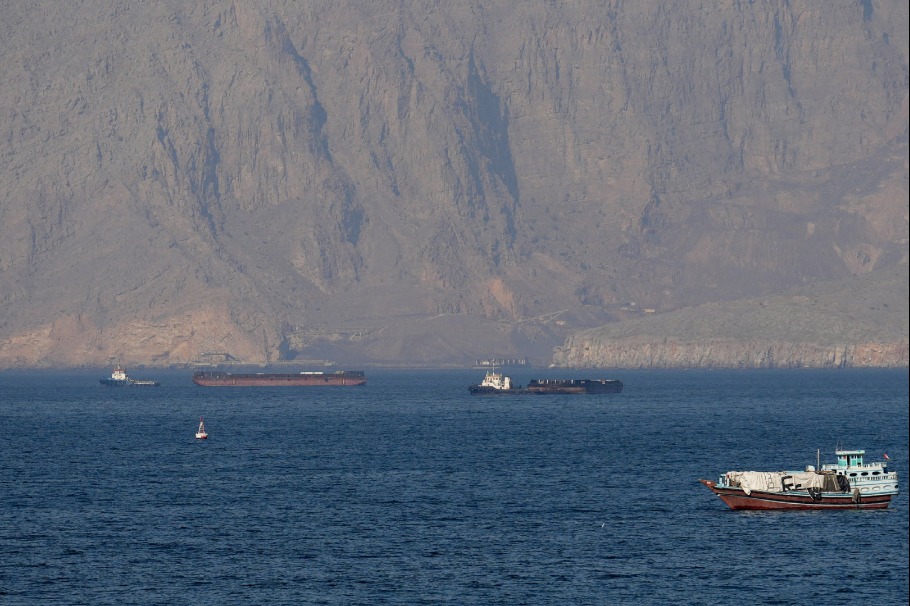
    The strategic Strait of Hormuz has become a maritime ghost town since February 28, 2026, when escalating tensions between the United States, Israel and Iran triggered a catastrophic 90% collapse in oil tanker traffic through the world’s most vital energy corridor. Iran’s explicit threats to destroy any vessels transiting the narrow passage have created an effective blockade, stranding over 400 tankers in the Persian Gulf as insurance providers hesitate to cover warzone risks and crews exercise their right to refuse dangerous passages.

    Amid this standstill, a parallel shipping ecosystem continues operating outside international norms. Dubbed the ‘shadow fleet,’ these vessels specialize in circumventing sanctions, ignoring environmental regulations, and operating with obscured ownership structures. Their continued movement through the crisis zone reveals fundamental weaknesses in global maritime governance, where tracking systems remain voluntary and flag registrations operate as commercial transactions rather than meaningful regulatory frameworks.

    The maritime insurance system, traditionally the enforcement backbone of shipping compliance, has proven inadequate against determined circumvention. While mainstream insurers based in London have frozen coverage for legitimate operators, approximately 1,100 shadow vessels continue moving restricted commodities using opaque insurance arrangements. Maritime intelligence indicates this parallel fleet represents 17-18% of all liquid cargo tankers worldwide.

    This crisis exposes how voluntary participation underpins global shipping. Without physical mechanisms to prevent transponder manipulation or fraudulent registrations, vessels can effectively become stateless entities. The current situation demonstrates how sanctions compliance becomes ‘ruinously expensive’ for some nations, prompting the development of alternative systems that now dominate movement through the critical strait.

    The persistence of shadow operations during this geopolitical crisis sends a stark message about maritime governance: systems built on voluntary participation can be voluntarily abandoned when economic or political incentives outweigh the costs of compliance.