作者: admin

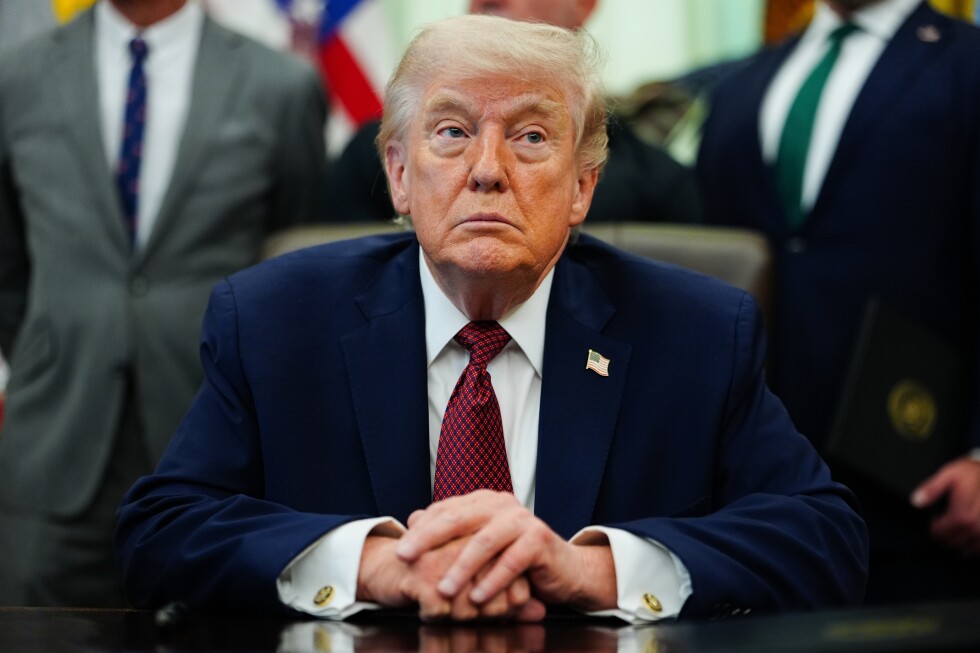
  • Trump says he’s unaware of evidence indicating US bombed girls’ school in Iran

    Trump says he’s unaware of evidence indicating US bombed girls’ school in Iran

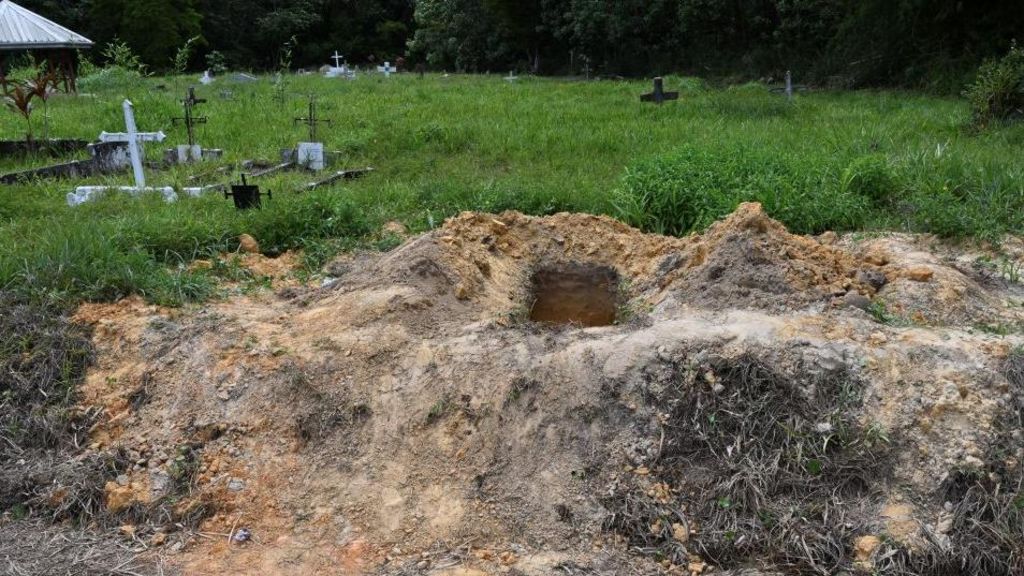
    President Donald Trump claimed ignorance regarding compelling evidence pointing to U.S. responsibility for a devastating airstrike on a girls’ school in Minab, Iran, which resulted in 165 fatalities—predominantly children. This declaration came merely four days after he initially attributed the attack to Tehran.

    When confronted by journalists outside the White House about a military investigation identifying the United States as the perpetrator, the President responded, “I don’t know.” This stance persists despite a New York Times analysis of satellite imagery and weapon remnants, alongside Bellingcat’s video evidence depicting a Tomahawk missile—a munition exclusive to the U.S. arsenal—striking a structure adjacent to the school. In a contradictory statement earlier in the week, Trump dismissed the missile evidence as “very generic.”

    Subsequently, an anonymous administration official conceded to The Associated Press that U.S. forces were indeed the likely culprits, exonerating both Israel and Iran. In response to inquiries about concluding military operations, Trump advocated for “more of the same.”

    The tragedy has ignited significant political backlash. Senate Democrats have dispatched a grave letter to Secretary of War Pete Hegseth, condemning the horrific outcomes and highlighting the administration’s failure to claim responsibility. They sharply criticized Hegseth’s recent comments advocating for the abandonment of “stupid rules of engagement,” interpreting them as a blatant disregard for international war laws.

    Domestic support for the conflict appears tenuous. Polls from various outlets indicate widespread unpopularity among Americans, a sentiment echoed within the Iranian-American community, which is almost evenly split regarding support for the war.

    Notably, even conservative voices are urging de-escalation. Republican Senator Josh Hawley publicly declared victory on Fox News, questioning the necessity of prolonged engagement given the prior destruction of Iran’s nuclear capabilities. This contrasts with the White House’s continued, albeit contradictory, emphasis on the nuclear threat.

    The administration’s strategy remains shrouded in confusion. Senators emerged from a confidential briefing describing the U.S. approach as profoundly incoherent and lacking any definitive endgame. Senators Chris Van Hollen and Elizabeth Warren decried the operation as an illegal war based on false pretenses, launched without a clear objective or exit strategy.

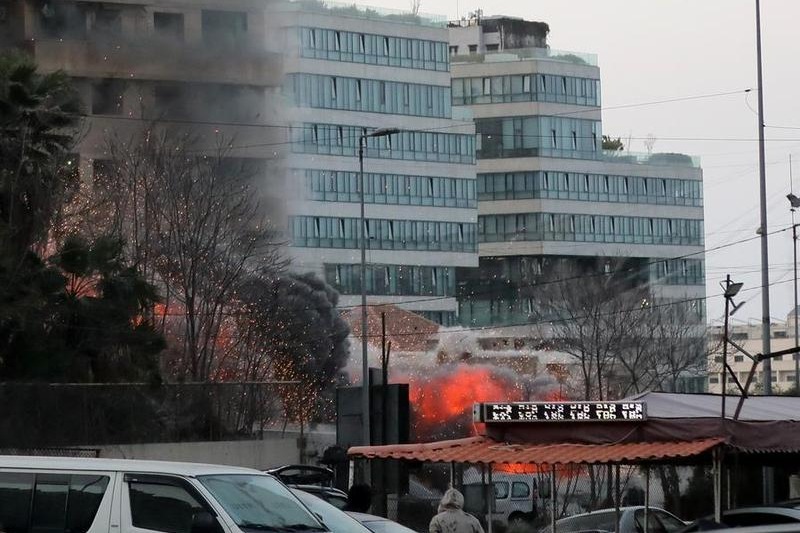
    The human cost continues to rise, with the Iranian UN ambassador reporting over 1,300 Iranian casualties. Meanwhile, the State Department is managing a massive repatriation effort, assisting over 43,000 Americans returning from the Middle East amidst ongoing retaliatory strikes against U.S. interests in the region.

  • Fears over Middle East conflict sends Australian sharemarket plunging again on Thursday

    Fears over Middle East conflict sends Australian sharemarket plunging again on Thursday

    The Australian equities market experienced significant declines on Thursday as surging oil prices defied the largest coordinated emergency reserve release in history, creating heightened volatility across trading sessions.

    Market analysts observed trader skepticism toward mixed messaging emerging from the White House regarding Middle Eastern conflicts, particularly comments from former US President Donald Trump characterizing military operations as largely complete. Despite these assertions, benchmark indices recorded substantial losses, with the ASX 200 dropping 109.90 points (1.26%) to 8633.60 and the All Ordinaries declining 122.50 points (1.34%) to 8854.30.

    The commodity markets witnessed dramatic movements, with Brent Crude soaring 7.75% to $99.10 per barrel and West Texas Intermediate rallying 7.5% to $93.80 per barrel. This price surge occurred despite the International Energy Agency’s unprecedented announcement that 32 member nations would release 400 million barrels from strategic petroleum reserves—the largest coordinated drawdown since the agency’s establishment following the 1970s oil crisis.

    Commonwealth Bank’s head of commodities and sustainability research, Vivek Dhar, provided critical context regarding supply disruptions. His analysis indicates that while 19% of global oil shipments typically transit the Strait of Hormuz, currently only 3-5% of global supply successfully navigates this crucial passage. Dhar projects that oil prices could potentially reach $120-150 per barrel, noting that current market conditions reflect unprecedented supply disruption levels that nearly double previous historical events.

    The market volatility throughout the week included a temporary spike to $120 per barrel followed by fluctuations, demonstrating trader uncertainty about both supply stability and geopolitical developments. Experts emphasize that energy markets have yet to fully price in the prolonged disruption potential stemming from ongoing Middle Eastern tensions, creating continued uncertainty for global markets.

  • One surprise after another? Oscars night set to be unpredictable

    One surprise after another? Oscars night set to be unpredictable

    The 98th Academy Awards ceremony, hosted for the second consecutive year by Conan O’Brien, is poised to become one of the most suspenseful Oscar nights in recent memory. With two cinematic powerhouses locked in an exceptionally tight race for Best Picture, this year’s gala promises unprecedented drama until the final envelope is opened.

    Ryan Coogler’s vampire period horror ‘Sinners’ has shattered records with 16 nominations, positioning itself to challenge the all-time Oscar wins record jointly held by ‘Ben-Hur,’ ‘Titanic,’ and ‘The Lord of The Rings: The Return of The King.’ The film’s blues-inflected racial allegory could make Coogler the first Black director to win the Best Director honor in Oscar history. ‘He’s only the seventh Black director ever nominated,’ noted Variety’s awards expert Clayton Davis. ‘The love for Coogler among voters is undeniable.’

    However, Paul Thomas Anderson’s revolutionary thriller ‘One Battle After Another’ remains the season’s persistent frontrunner with 13 nominations. The film about a retired revolutionary searching for his teenage daughter represents Anderson’s chance to finally claim Oscar gold after 11 previous nominations without a win for acclaimed works including ‘There Will Be Blood.’

    The acting categories present even greater uncertainty. Timothee Chalamet, initially considered a lock for Best Actor for ‘Marty Supreme,’ has seen his chances diminish following controversial comments about ballet and opera. This has opened the field to Michael B. Jordan’s dual performance in ‘Sinners,’ Leonardo DiCaprio’s work in ‘One Battle,’ or even Ethan Hawke in ‘Blue Moon.’

    Supporting categories feature equally compelling contests. Sean Penn seeks his third acting Oscar for ‘One Battle,’ competing against international favorite Stellan Skarsgard (‘Sentimental Value’) and veteran Delroy Lindo, earning his first nomination at 73 for ‘Sinners.’ The supporting actress race could reward horror villain Amy Madigan (‘Weapons’), revolutionary portrayer Teyana Taylor (‘One Battle’), or Wunmi Mosaku’s Hoodoo healer in ‘Sinners.’ Only Jessie Buckley as Shakespeare’s wife in ‘Hamnet’ appears assured in her category.

    The ceremony will feature musical performances including a tribute to the late Robert Redford by rumored performer Barbra Streisand and a live rendition of ‘Golden’ by the voices behind ‘KPop Demon Hunters’ fictional girl group HUNTR/X. The Oscairs will air live on ABC and Hulu from Hollywood’s Dolby Theatre at 4:00 PM PST.

  • US launches probe into trading partners including the EU, China and India

    US launches probe into trading partners including the EU, China and India

    The United States has initiated a comprehensive Section 301 investigation into numerous trading partners following a Supreme Court decision that invalidated a significant portion of former President Donald Trump’s tariff policies. US Trade Representative Jamieson Greer announced the probe on Wednesday, indicating it could result in new import taxes against multiple nations by summer.

    The investigation targets an extensive list of economies including China, the European Union, India, Japan, South Korea, Mexico, Vietnam, Thailand, Malaysia, Cambodia, Singapore, Indonesia, Bangladesh, Switzerland, and Norway. Notably absent from the target list is Canada, America’s second-largest trading partner.

    This development emerges weeks after the Supreme Court declared Trump’s previous global tariffs, implemented in April last year, legally invalid. The court’s decision prompted immediate criticism from Trump, who denounced the ruling as “terrible” and disparaged the justices as “fools.” In response, the administration swiftly announced a new 10% global tariff, though conflicting statements emerged regarding whether this would increase to 15%.

    Greer emphasized the administration’s renewed trade stance, stating, “The United States will no longer sacrifice its industrial base to other countries that may be exporting their problems with excess capacity and production to us.” The investigation aims to conclude before temporary tariffs imposed in late February expire in July, providing the administration with a legally sound foundation for future trade measures.

    The timing coincides with planned high-level talks between US and Chinese officials in Paris this weekend, which are expected to set the stage for a potential meeting between Trump and Chinese President Xi Jinping in Beijing at March’s end.

  • ‘Threaten outlook’: Major banks make huge rate hike call ahead of Tuesday’s RBA meeting

    ‘Threaten outlook’: Major banks make huge rate hike call ahead of Tuesday’s RBA meeting

    Australia’s financial landscape faces significant turbulence as the nation’s four major banking institutions—Commonwealth Bank, National Australia Bank, Westpac, and ANZ—have unanimously projected consecutive interest rate increases from the Reserve Bank of Australia. This coordinated forecasting marks a substantial shift in monetary policy expectations driven by escalating global oil prices and stronger-than-anticipated domestic economic performance.

    The banking consensus indicates the RBA will implement rate hikes during both its March and May meetings, effectively reversing all three rate cuts implemented throughout 2025. This monetary tightening would restore the official cash rate to 4.35 percent, creating substantial financial pressure on mortgage holders across the nation.

    ANZ economists, led by Head of Australian Economics Adam Boyton, have revised their forecasts to anticipate this dual-intervention approach. “We then expect a pause while the RBA assesses whether the increase in the cash rate is sufficient to contain the inflation risks and give the RBA time to assess geopolitical developments and the global economic outlook,” Boyton stated.

    The catalyst for this monetary policy reassessment stems primarily from Middle East tensions between the US and Iran, which have triggered dramatic fluctuations in global oil markets. Crude prices have demonstrated extreme volatility, climbing from $79AUD per barrel in late February to a peak of $167AUD in early March before moderating to approximately $132AUD at current reporting.

    Commonwealth Bank Head of Economics Belinda Allen highlighted the complex economic dynamics: “After hiking the cash rate in February driven by a fundamental reassessment of the economy, conflict in the Middle East has further threatened the inflation outlook while simultaneously proposing downside risks to global and Australian growth.”

    Domestic economic indicators present a contradictory picture that complicates policy decisions. Australia’s GDP growth reached 2.6 percent through December 2025, exceeding expectations and potentially exacerbating inflationary pressures. Concurrently, unemployment remains at a multi-decade low of 4.1 percent, indicating sustained economic strength.

    Financial analysis from Canstar reveals the practical implications for Australian households: borrowers with $600,000 mortgages face approximately $272 in additional monthly repayments, while those with $800,000 and $1,000,000 loans would experience increases of $363 and $453 monthly respectively if all three projected rate hikes materialize.

    NAB Chief Economist Sally Auld pointed to increasingly “hawkish” commentary from RBA leadership, including Governor Michele Bullock and Deputy Governor Andrew Hauser, as evidence of the central bank’s determination to address inflation concerns despite global uncertainties.

    Westpac economists noted the RBA’s apparent concern about inflation expectations becoming entrenched, even if oil price shocks prove temporary. The bank’s assessment suggests policymakers feel compelled to demonstrate resolve in maintaining price stability, particularly given relatively stable financial market conditions despite geopolitical tensions.

  • War disrupts fertiliser supplies, puts food security at risk

    War disrupts fertiliser supplies, puts food security at risk

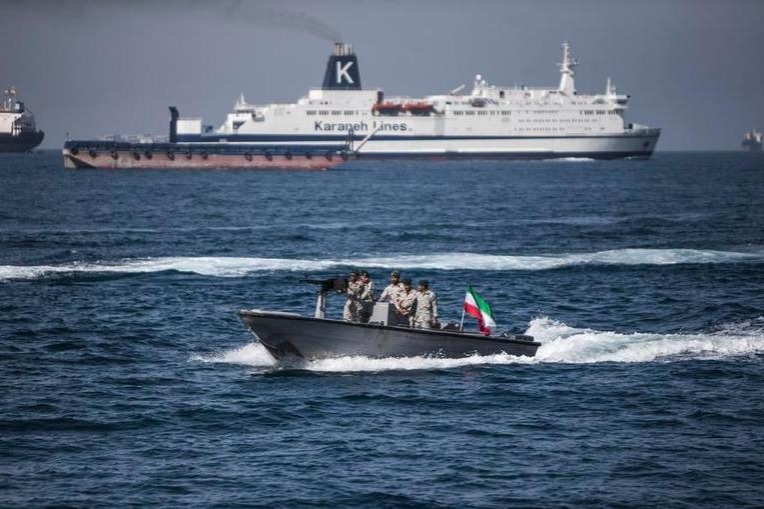
    The ongoing military conflict in the Middle East has triggered a severe disruption in global fertilizer supplies, creating substantial risks to worldwide food security. The strategic Strait of Hormuz, a critical maritime passage effectively closed by Iran, has blocked approximately one-third of seaborne fertilizer shipments from reaching international markets.

    The Gulf region serves as a pivotal manufacturing hub for synthetic fertilizers, leveraging its abundant natural gas reserves—the primary feedstock for production. According to industry data, the area generates nearly half of global sulphur supplies, one-quarter of internationally traded ammonia, and one-third of urea, which Sarah Marlow, Global Editor for Fertilizers at Argus Media, describes as “the most widely traded fertilizer of all.”

    Major agricultural nations are feeling the strain. The United States, Australia, Brazil, and India rely heavily on Gulf-derived urea, phosphate, and sulphur. Asia imports 64% of its ammonia and over 50% of its sulphur and phosphates from the region, as per 2024 figures from Kpler.

    Since hostilities escalated, production facilities—particularly in Qatar—have been shuttered. With around 20 vessels stranded near the Strait and only one Chinese sulphur carrier managing to depart on March 7, supply chains are in gridlock.

    Even regions with less direct exposure, such as Europe, face indirect impacts. Morocco, a key supplier of phosphorus-based fertilizers to the EU, depends on Gulf sulphur. Egypt, which provides 26% of Europe’s urea, has seen prices surge from $500 to over $650 per tonne due to halted Israeli gas deliveries via pipeline.

    Developing nations are especially vulnerable. India has begun rationing gas to fertilizer plants, while Bangladesh has idled five of its six production facilities. The United Nations has raised alarms regarding fertilizer accessibility in low-income countries.

    Synthetic fertilizers deliver essential nitrogen, phosphorus, and potassium that support crop growth. Research from INREA, a French agricultural institute, suggests that without these inputs, global crop yields could decline by one-third. Nitrogen-based variants require significant natural gas and energy for synthesis, while sulphur is a co-product of oil and gas processing.

    The duration of the conflict and the extent of damage to production infrastructure remain uncertain. Reconstruction and repair may significantly delay recovery even after hostilities cease. With the Southern Hemisphere’s planting season approaching in June, concerns are mounting among farmers and policymakers alike.

    In response, the European Commission is developing a fertilizer action plan, building on lessons from the price surge following Russia’s invasion of Ukraine. European farmers have already begun reducing consumption and diversifying suppliers—a strategy that may now see accelerated adoption.

  • Kanye West ordered to pay $140K in Malibu mansion renovation lawsuit

    Kanye West ordered to pay $140K in Malibu mansion renovation lawsuit

    A Los Angeles jury has mandated that renowned rapper Kanye West pay $140,000 to former handyman Tony Saxon, concluding a contentious civil trial centered on allegations of unpaid labor and extraordinary working conditions at West’s Malibu estate. The verdict, delivered after a ten-day proceeding at Los Angeles Superior Court, represents significantly less than the $1.7 million initially sought by Saxon.

    The legal battle unveiled startling testimony about the rapper’s conduct during property renovations. Saxon testified that West agreed to a $20,000 weekly compensation but provided only one such payment along with an additional $100,000 for construction expenses. The handyman further described being awakened at 3:00 AM to justify his inactivity and sleeping on a modest mattress placed directly on concrete flooring.

    Most remarkably, Saxon alleged that West requested the installation of a system to convert human waste into purified drinking and bathing water. The rapper reportedly acknowledged Saxon’s poor hygiene due to absent shower facilities by escorting him to Malibu’s luxury Nobu Hotel, where he personally drew the handyman’s bath while declaring it ‘a moment you’ll never forget.’

    West’s legal team countered these accounts by presenting financial records indicating $240,000 in payments over Saxon’s six-week employment. Defense attorney Andrew Cherkasky characterized Saxon as ‘a professional victim’ whose testimony contained ‘deep and wicked lies,’ while simultaneously disputing the validity of his reported injuries with video evidence of musical performances.

    The controversial property itself—a $57 million architectural masterpiece designed by Pritzker Prize-winning architect Tadao Ando—became a central element of the dispute. Saxon testified that West intended to radically transform the beachfront residence into an off-grid facility by eliminating electricity, plumbing, and replacing staircases with slides.

    This case marks the first among numerous lawsuits filed by former West employees to reach trial, occurring alongside the artist’s well-documented professional decline following antisemitic remarks and Nazi glorification in his public statements.

  • ‘I’ll try’: Barnaby Joyce to remain in lower house ‘if asked’

    ‘I’ll try’: Barnaby Joyce to remain in lower house ‘if asked’

    In a surprising political development, former Nationals leader Barnaby Joyce has indicated he may reverse his decision to abandon his New England seat for a Senate position, stating he would reconsider “if the party determines we need to have a crack.” The One Nation convert, who left the Nationals for the right-wing populist party late last year, made these remarks during a spirited Sky News interview where he vigorously defended his new party’s governing potential.

    Joyce’s original plan to transition to the Senate is facing increased scrutiny as One Nation experiences rising poll numbers. Currently lacking representation in the lower house—where government is formed—One Nation’s parliamentary strategy remains uncertain. During the interview, Joyce articulated his flexibility: “I’ve made a statement that I’m going to run for the Senate. If circumstances change as we get closer, where the party determines that what we need is for me to have a crack at a lower house seat, that’s what I’ll try.”

    The exchange grew heated when host Laura Jayes repeated One Nation leader Pauline Hanson’s assertion that the party would never form government. Joyce challenged this perspective as “conceited,” emphasizing that “the Australian people should make that decision” regarding electoral outcomes.

    In a notable admission, Joyce revealed that One Nation frequently aligns philosophically with new Nationals leader Matt Canavan, particularly on energy policy including support for new coal-fired power stations. This ideological proximity became subject to humorous speculation when Joyce addressed reports of an errant “love letter” to Canavan, joking about their shared accommodation and referencing the film Brokeback Mountain with the remark: “I hope it was a mistake because I was sleeping in the same room as him. But, you know, it’s legal these days.”

    Responding to Joyce’s comments, Nationals Senate leader Bridget McKenzie suggested Joyce was “obviously feeling the threat” from Canavan’s leadership. She highlighted Canavan’s “huge intellectual capacity” and ability to engage on complex issues like energy and resources. McKenzie further questioned One Nation’s strategy of targeting Coalition seats rather than Labor positions, noting that such an approach would ultimately maintain Anthony Albanese’s premiership.

  • The 24 hours that damaged the Premier League’s best-in-the-world reputation

    The 24 hours that damaged the Premier League’s best-in-the-world reputation

    The UEFA Champions League has delivered a sobering reality check to the Premier League’s perceived dominance, with English clubs suffering a collective setback in their first-leg round of 16 matches. Real Madrid’s commanding 3-0 victory over Manchester City at Santiago Bernabeu Stadium highlighted a troubling pattern for England’s top-flight teams, with Federico Valverde’s first-half hat-trick putting the Spanish giants firmly in control of the tie.

    The Spanish capital witnessed back-to-back demonstrations of tactical superiority as Atlético Madrid dismantled Tottenham Hotspur 5-2 just 24 hours before Real’s triumph. Chelsea joined the casualty list with a 3-0 defeat against Paris Saint-Germain, while Liverpool fell 1-0 to Galatasaray. Arsenal and Newcastle United managed draws against Bayer Leverkusen and Barcelona respectively, but these results offered little consolation amid the widespread English struggles.

    Football analysts point to the concerning margins that now separate Premier League clubs from advancement. ‘While the game is still on for all English sides, the margin of error is tiny for some of them now,’ noted Match of the Day pundit Nedum Onuoha. Manchester City, Chelsea, and Tottenham all face three-goal deficits heading into their second legs, creating what many consider insurmountable challenges.

    The unexpected downturn has sparked examination of whether the Premier League’s intense domestic schedule has compromised teams’ European competitiveness. Despite six English clubs advancing from the group stage—a testament to the league’s depth—their performances against continental opposition have raised questions about the true balance of power in European football.

    Real Madrid’s victory exemplified strategic mastery against favored opposition. Despite fielding a squad diminished by injuries that Pep Guardiola described as ‘looking like an under-23 side,’ the Spanish club executed a devastating counterattacking strategy. Their opening goal emerged from a routine long clearance from goalkeeper Thibaut Courtois that bypassed City’s defense, allowing Valverde to finish clinically.

    As English clubs prepare for decisive second legs, they face not only tactical challenges but psychological ones. The coming matches will test whether Premier League teams can mount historic comebacks or whether this week’s results signal a genuine shift in European football’s hierarchy.

  • Justified or not? US military families on fears of Iran war

    Justified or not? US military families on fears of Iran war

    Amid escalating geopolitical friction, American military families are confronting profound anxieties regarding the prospect of armed engagement with Iran. The BBC’s North America editor, Sarah Smith, has captured these deeply personal apprehensions through poignant dialogues with those most directly affected by the human cost of war. A central voice in this narrative is Lynn, a Gold Star mother who carries the enduring grief of losing her son during the Iraq War. Her perspective is compounded by the insights of Jeremy, a military veteran whose service provides a ground-level view of the ramifications of international conflict. Their collective testimony transcends political debate, offering a raw examination of the potential consequences of further military action in the Middle East. This reporting underscores a critical dichotomy between strategic justifications at the governmental level and the palpable fears within the armed forces community. The analysis delves into whether a new confrontation is a necessary measure for national security or a path toward repeating past tragedies, exploring the complex emotional and psychological landscape for those who serve and the families who support them.