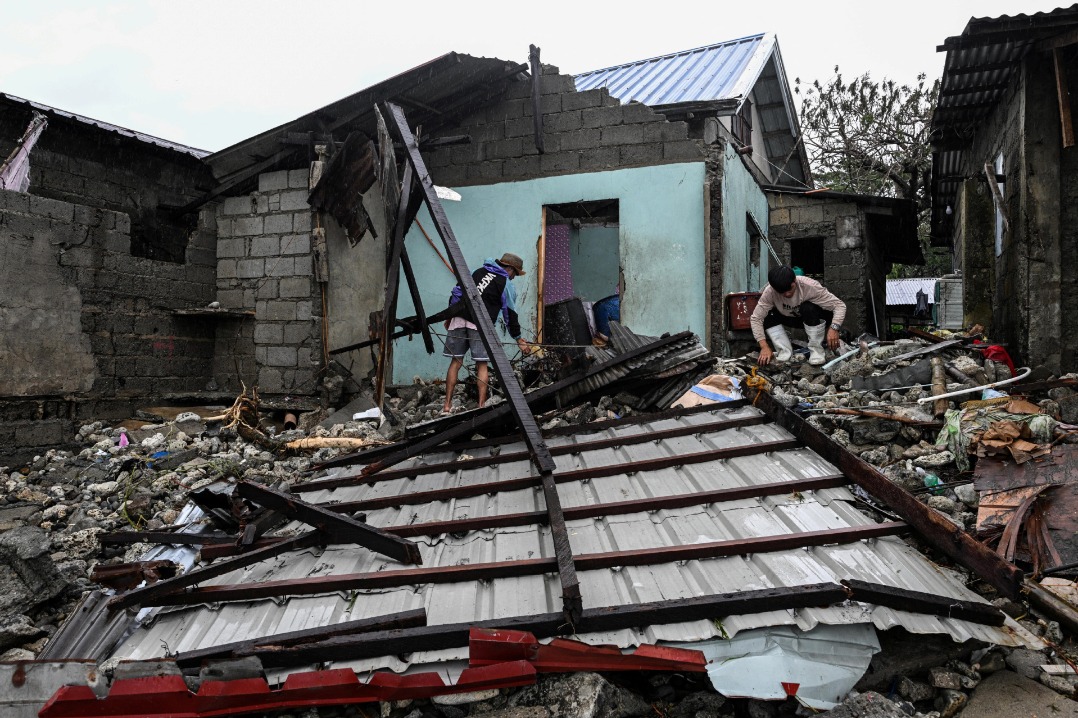
The Philippines is facing a humanitarian crisis as the death toll from two consecutive powerful storms has surged to 250, with millions displaced and widespread destruction reported. Authorities confirmed the grim statistics on Tuesday, highlighting the severe impact of Typhoon Kalmaegi and Super Typhoon Fung-wong. Typhoon Kalmaegi, which struck on November 4, unleashed catastrophic flooding and mudslides in the central Philippines, resulting in 232 fatalities and leaving 112 individuals unaccounted for. The hardest-hit region was Cebu province, which is still recovering from a devastating magnitude 6.9 earthquake that occurred on September 30. Meanwhile, Super Typhoon Fung-wong, which made landfall on Luzon Island on Sunday, claimed at least 18 lives. The dual storms have caused unprecedented damage, destroying homes, agricultural lands, and critical infrastructure such as roads and bridges. Fung-wong marks the 21st tropical cyclone to hit the Philippines this year, exceeding the nation’s annual average of 20 storms. The scale of the disaster has overwhelmed local authorities, who are now focused on rescue and relief operations to assist the millions affected by these calamities.
作者: admin
-

Delhi blast: Red fort to be closed for 3 days; security officials arrive for meeting
In the wake of a recent explosion in Delhi, authorities have announced the temporary closure of the iconic Red Fort for three days. The decision comes as a precautionary measure to ensure public safety and facilitate thorough security assessments. High-ranking security officials have convened an emergency meeting to discuss the incident and strategize on enhancing protective measures across the city. The blast, which occurred in a densely populated area, has raised concerns about potential threats to national security. While details of the explosion remain under investigation, the government has urged citizens to remain vigilant and report any suspicious activities. The Red Fort, a UNESCO World Heritage Site and a symbol of India’s rich history, attracts thousands of visitors daily, making its security a top priority. The closure is expected to impact tourism and local businesses, but officials emphasize that public safety takes precedence. This incident underscores the ongoing challenges in maintaining security in urban centers and highlights the need for robust counter-terrorism strategies.
-

Saudi King calls for rain prayer across Kingdom on November 13
In a significant spiritual initiative, Saudi King Salman bin Abdul Aziz has urged citizens across the Kingdom to participate in a special rain-seeking prayer, known as Salat Al-Istisqa, on Thursday, November 13. This call comes as part of a broader regional effort to address prolonged drought conditions and seek divine intervention for much-needed rainfall. The prayer, deeply rooted in Islamic tradition, involves two rak‘ahs (units of prayer) where worshippers repent and beseech God for mercy and relief. It is traditionally followed by a khutbah (sermon) in which the imam emphasizes repentance, charity, and acts of kindness, encouraging the community to seek forgiveness and ease the hardships of others. The Saudi Royal Court issued a statement highlighting the importance of increasing voluntary acts of worship, such as giving charity and performing extra prayers, in the hope of divine relief. This spiritual appeal is not isolated to Saudi Arabia. Neighbouring Kuwait witnessed a similar initiative on November 8, with dozens participating in rain prayers across 125 mosques nationwide. The United Arab Emirates also held a rain prayer on October 17, following a call from President Sheikh Mohamed bin Zayed. These collective efforts underscore the region’s reliance on spiritual practices to address environmental challenges and foster communal solidarity.
-
COP30: The Amazon calls for climate action
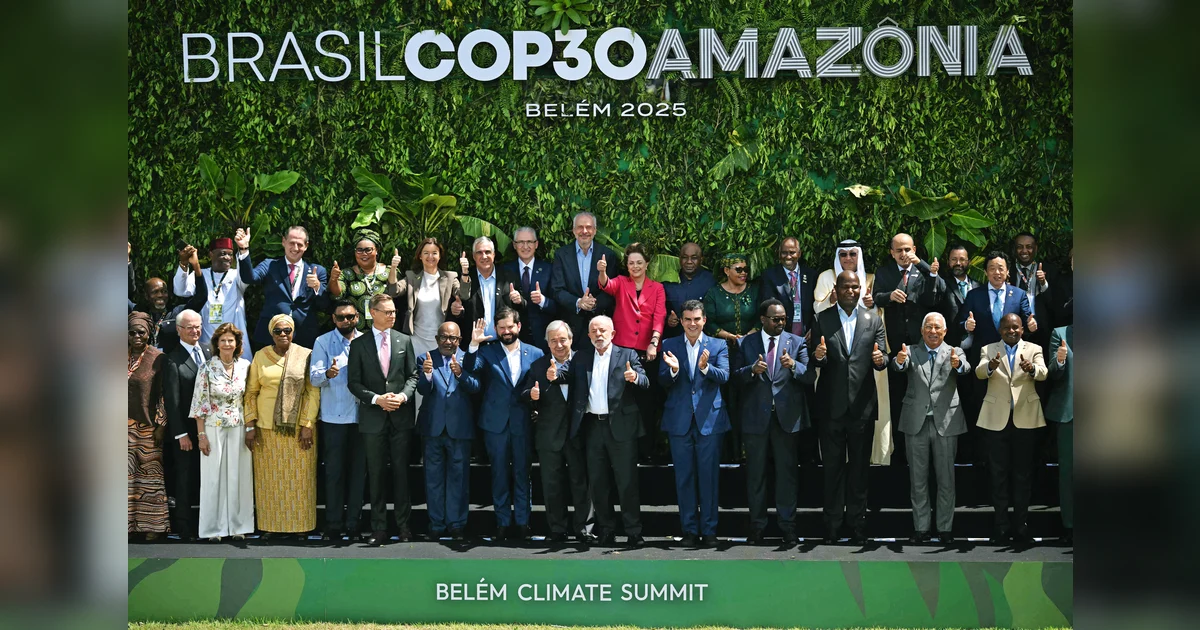
The 30th UN Climate Change Conference (COP30) commenced on November 10, 2025, in Belém, Brazil, marking a pivotal moment in the global fight against climate change. Hosted at the gateway to the Amazon rainforest, the summit brings together leaders from nearly 200 countries to accelerate efforts on emissions reduction, renewable energy, and climate justice. This year’s conference holds particular significance as it returns to Brazil, the birthplace of the UN Framework Convention on Climate Change (UNFCCC) signed at the 1992 Rio Earth Summit. COP30 is not just another diplomatic gathering but a reckoning with unmet promises and a call for concrete action. Brazil’s presidency has emphasized the need to deliver on past commitments, including phasing out fossil fuels, scaling up renewable energy, and mobilizing climate finance for developing economies. The summit is expected to acknowledge the world’s failure to stay below the 1.5°C threshold, a critical tipping point for catastrophic climate impacts. COP30 also highlights the importance of protecting natural ecosystems, with a focus on inclusion, equity, and environmental justice. The event’s agenda is structured around six key themes: emissions reduction, adaptation, climate finance, renewable energy, biodiversity preservation, and climate justice. Thematic days will delve into topics such as cities, infrastructure, health, energy transition, and food systems, with a closing emphasis on the role of science and technology in driving climate solutions. Participants include representatives from governments, NGOs, academia, and civil society, with a strong presence from the Global South, including the BASIC group (Brazil, South Africa, India, and China). As the first COP held in the Amazon, COP30 symbolizes the urgent need to protect the planet’s vital ecosystems and ensure a sustainable future for all.
-
Serbian protesters vow to prevent real estate project linked to Trump son-in-law Kushner
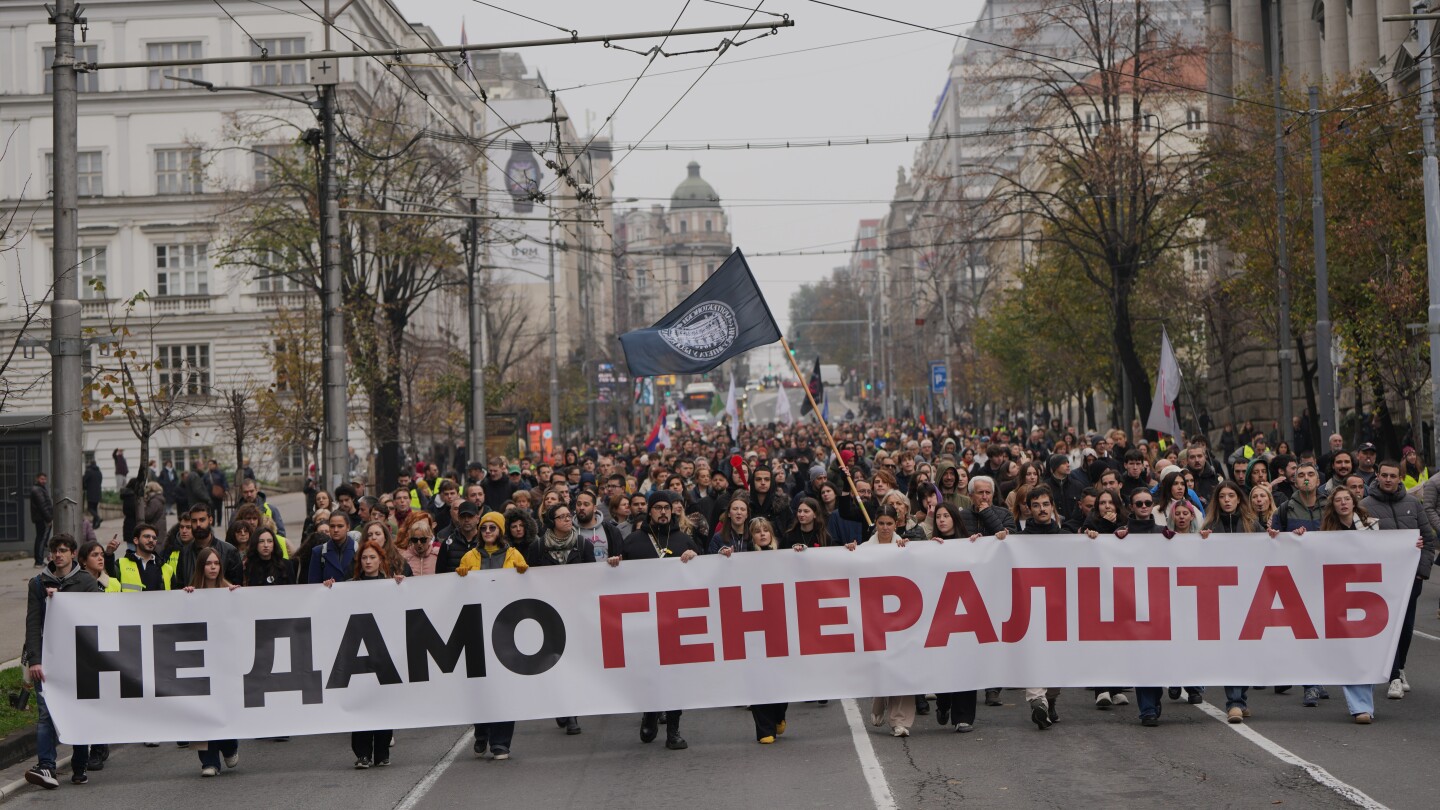
In a dramatic display of resistance, thousands of Serbian protesters formed a human shield around a bombed-out military complex in Belgrade on Tuesday, vowing to protect it from a controversial $500-million redevelopment project linked to Jared Kushner, son-in-law of former U.S. President Donald Trump. The site, partially destroyed during the 1999 NATO bombing campaign, is slated for demolition to make way for a luxury compound featuring a high-rise hotel, offices, and shops. The project, backed by Serbian President Aleksandar Vucic’s populist government, has faced fierce opposition from architectural experts, the public, and international critics. Despite legal challenges, Serbian lawmakers recently passed a special law to expedite the construction. Protesters, led by youth groups, encircled the complex, drawing a symbolic red line to emphasize their determination to preserve the site, which they view as a monument of resistance and a prime example of mid-20th century Yugoslav architecture. Critics argue that the redevelopment disregards the site’s historical significance and cultural heritage, while Vucic’s administration claims it will boost economic ties with the U.S. and stimulate the local economy. The controversy has intensified amid allegations of document forgery in the removal of the complex’s protected status and broader public discontent over government corruption. The protests mark the latest chapter in a yearlong wave of demonstrations challenging Vucic’s leadership, fueled by anger over state mismanagement and a recent tragedy in Novi Sad that claimed 16 lives. The issue remains highly sensitive in Serbia, where anti-NATO sentiment persists, and the U.S. involvement in the project has sparked further outrage.
-

Gold prices in Dubai: Dh13.5 jump pushes 24K closer to Dh500 per gram
Gold prices in Dubai experienced a significant uptick on Tuesday, with 24K gold inching closer to the Dh500 per gram mark. According to data from the Dubai Jewellery Group, 24K gold was trading at Dh499.25 per gram at market opening, reflecting a Dh13.5 increase over the past 24 hours. Similarly, 22K, 21K, and 18K gold were priced at Dh462.75, Dh443.25, and Dh379.75 per gram, respectively. This surge follows a period of easing after a strong rally in global precious metals, driven by softer economic data that has reinforced expectations of interest rate cuts by the US Federal Reserve. Spot gold also saw a rise, trading at $4,138.23 per ounce, up 0.59%, with a notable 3% jump late on Monday. Dilin Wu, a research strategist at Pepperstone, highlighted that central bank purchases, particularly by the People’s Bank of China (PBoC), have provided steady support for gold. However, shifting market expectations around a potential December Fed rate cut are limiting further gains. Wu noted that gold has been trading in a range-bound pattern, with bulls maintaining a modest edge. He added that a sustained push above $4,100 could open the door to further gains, while a drop below $4,000 might see support at $3,880–$3,900. Safe haven buying has been a key driver of recent gold support, as concerns over valuations have led to significant pullbacks in global tech stocks and AI-related equities. This has prompted a shift into defensive assets like gold. Additionally, central bank purchases, including those by the PBoC, Poland, Turkey, and other emerging markets, have provided structural support, complementing safe-haven flows and bolstering gold’s position.
-
China’s clean energy dominance is COP30’s real story
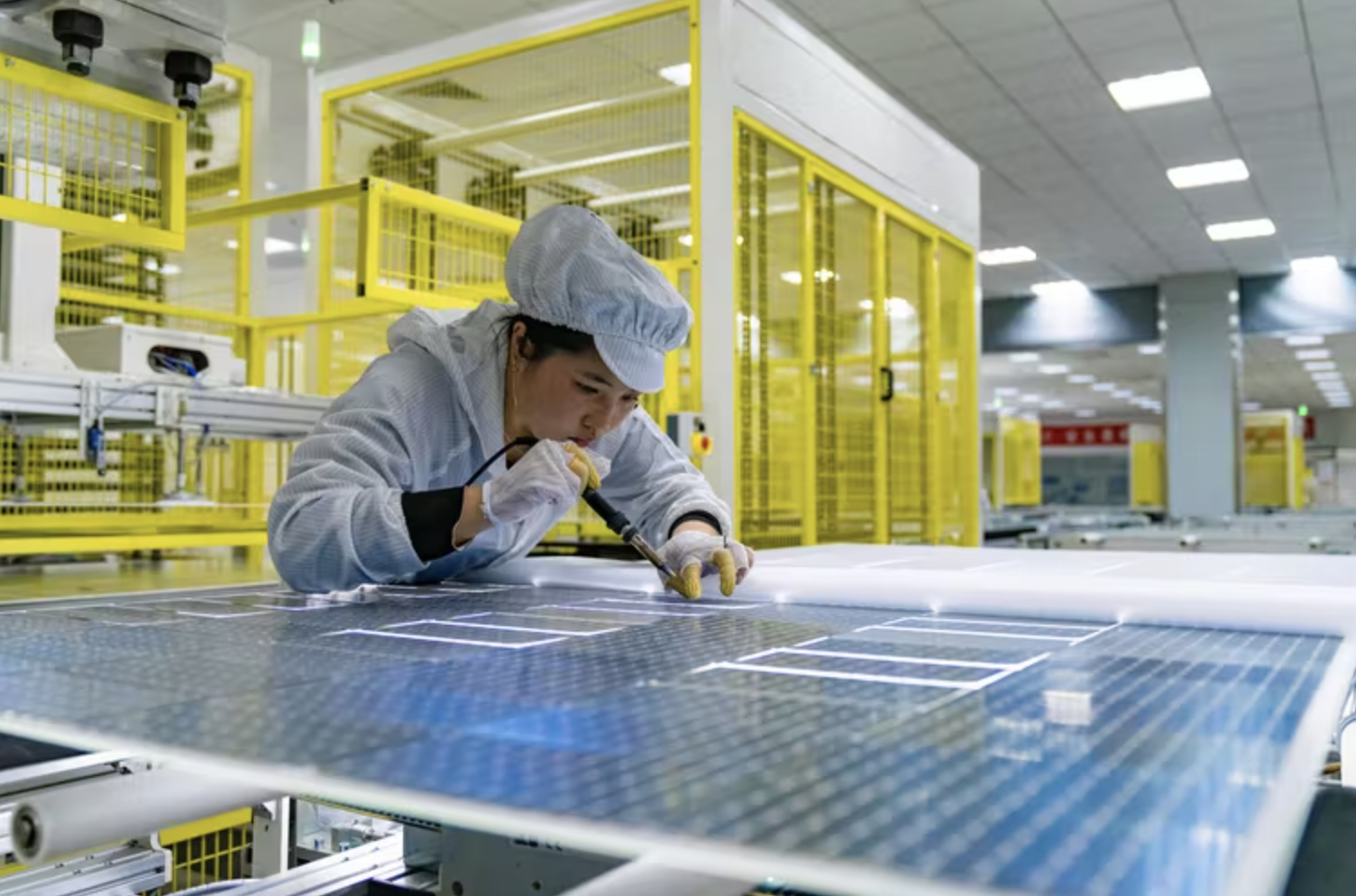
As COP30 commences in Belem, Brazil, the global climate discourse remains centered on pledges and targets. However, the tangible shift in the clean energy transition is already evident in global markets, with China emerging as the epicenter of this transformation. China has seamlessly integrated its climate ambitions into a robust industrial strategy, leading the charge in solar, wind, battery, electric vehicle, and grid technology sectors. Its influence now extends to global cost structures, supply chains, and market expectations. By the end of 2024, China had exceeded its 2030 target for installed wind and solar capacity, reaching approximately 1,400 gigawatts, according to the National Energy Administration. This year marked a historic milestone as renewable capacity surpassed fossil fuel power for the first time. The International Energy Agency projects that China will account for nearly 60% of all new global renewable power capacity installed through 2030. This expansion has fundamentally altered energy economics, with industrial scale driving down the costs of solar modules, wind turbines, and batteries to levels that make clean power competitive without subsidies in most regions. China now controls over 80% of the global solar manufacturing supply chain and dominates electric vehicle and storage battery production. These developments are reshaping the global cost base, influencing corporate margins, trade balances, and valuations across continents. Equity markets are adjusting to this new energy reality, with overcapacity in solar manufacturing leading to fierce price competition within China. The ripple effect outside China is supporting suppliers of critical materials like copper, lithium, nickel, and rare earths, as well as grid operators and logistics companies serving new energy infrastructure. Credit markets are evolving in parallel, with green and transition bonds linked to Chinese exports multiplying. Emerging market issuers are financing renewable projects built with Chinese technology, creating a new layer of investable debt and strengthening balance sheets tied to the energy transition. Private equity and infrastructure funds are positioning accordingly, with Belt and Road energy projects shifting focus from coal to solar and wind. Regional developers are securing Chinese components to meet domestic decarbonization targets, transforming clean power from a cost to a growth engine across multiple regions. Despite these advancements, challenges remain. China’s grid struggles to absorb the rapid expansion in renewable generation, some provinces face curtailment, and local debt constraints slow new approvals. Coal remains an important stabilizer of power sources, yet the percentage of clean power generation continues to rise, with policy direction remaining consistent and focused. The investment implications are clear: China’s dominance has made clean energy the world’s most powerful source of cost deflation in real assets, driving new cycles of industrial demand, commodity use, and infrastructure spending. Exposure to this transformation can take many forms, including listed renewables, metals critical to electrification, utilities integrating advanced storage, and the financing structures that link these sectors. While many governments view China’s rise through a political lens, markets perceive it through a structural one. Industrial ecosystems of this scale cannot be duplicated quickly, representing decades of accumulated capital and experience. Energy security, competitiveness, and productivity will increasingly depend on access to China’s clean energy ecosystem. Economies that hesitate to match this approach risk losing growth and influence in the decades ahead. The clean energy transition is no longer an aspiration but a functioning global market with China at its core. The combination of technology, capital, and industrial discipline emerging from Beijing, Shanghai, and Shenzhen is setting the direction of economic opportunity across Asia, the Middle East, and Africa. Ignoring this shift won’t shield capital from its consequences but would mean missing one of the defining sources of sustainable return in the contemporary global economy.
-
From host to influencer: How the UAE is steering the next chapter of global climate action
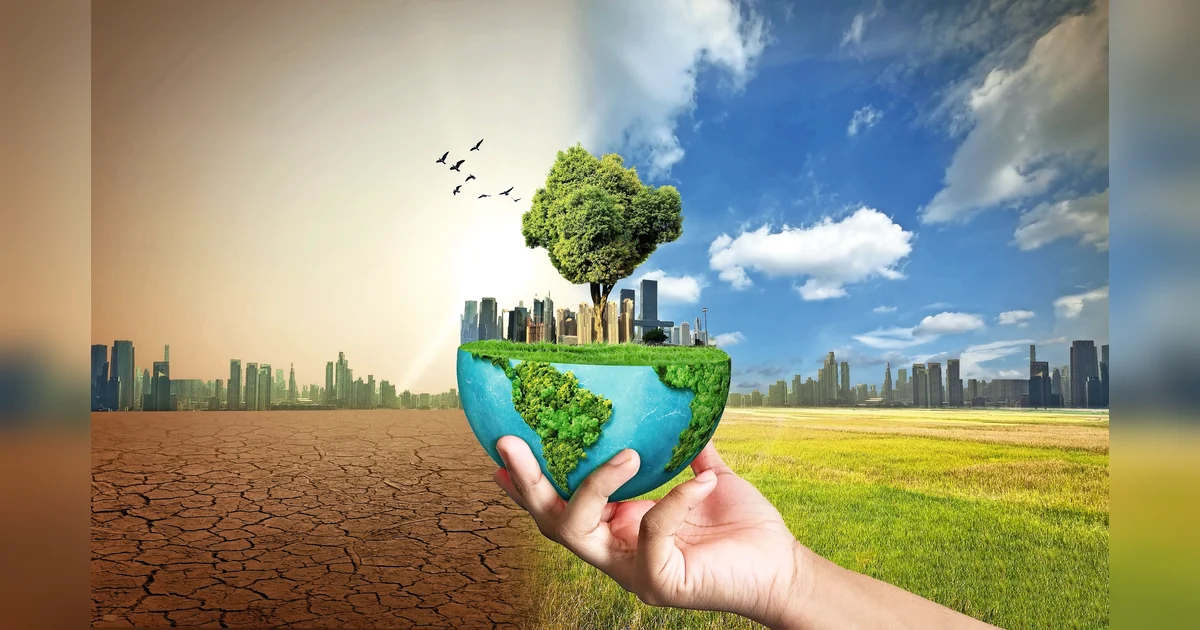
The United Arab Emirates (UAE) has transitioned from hosting COP28 in Dubai to becoming a pivotal influencer in global climate diplomacy. Building on the legacy of COP28, which marked the first global stocktake under the Paris Agreement and introduced the UAE Consensus on transitioning away from fossil fuels, the UAE is now steering international dialogue on climate finance, innovation, and sustainable development. As part of the COP Troika alongside Brazil and Azerbaijan, the UAE is ensuring policy continuity and pushing for tangible progress ahead of COP30 in Belém, Brazil. The UAE’s $30 billion climate investment fund, aimed at mobilizing $250 billion in global climate solutions by 2030, underscores its commitment to action. Domestically, the UAE is advancing renewable energy projects, such as the Mohammed bin Rashid Al Maktoum Solar Park, and leading initiatives like the Global Cooling Pledge. Its inclusive approach bridges developed and developing economies, emphasizing equitable climate progress. The UAE’s efforts in mangrove restoration, water efficiency, and urban sustainability further solidify its role as a model for adaptation and resilience. As the world prepares for COP30, the UAE’s diplomatic consistency and pragmatic vision position it as a trusted partner in shaping the future of global climate action.
-

Former CPC chief of Pudong New Area in Shanghai prosecuted for bribery
Zhu Zhisong, the former secretary of the Communist Party of China (CPC) Pudong New Area District Committee in Shanghai, has been formally prosecuted on charges of bribery. The case, filed by the Nanchang Municipal People’s Procuratorate in Jiangxi province, has been transferred to the Intermediate People’s Court of Nanchang for further proceedings. The Supreme People’s Procuratorate (SPP) disclosed that Zhu allegedly exploited his influential positions in Shanghai to benefit others in exchange for substantial sums of money and valuable assets. This legal action follows a comprehensive investigation conducted by the National Commission of Supervision, underscoring China’s ongoing efforts to combat corruption within its political ranks. The case highlights the stringent anti-corruption measures being enforced by the CPC, aiming to maintain integrity and public trust in governance.
-
‘This animal spared my life’: Biologist bitten in head by shark hopes to meet it again
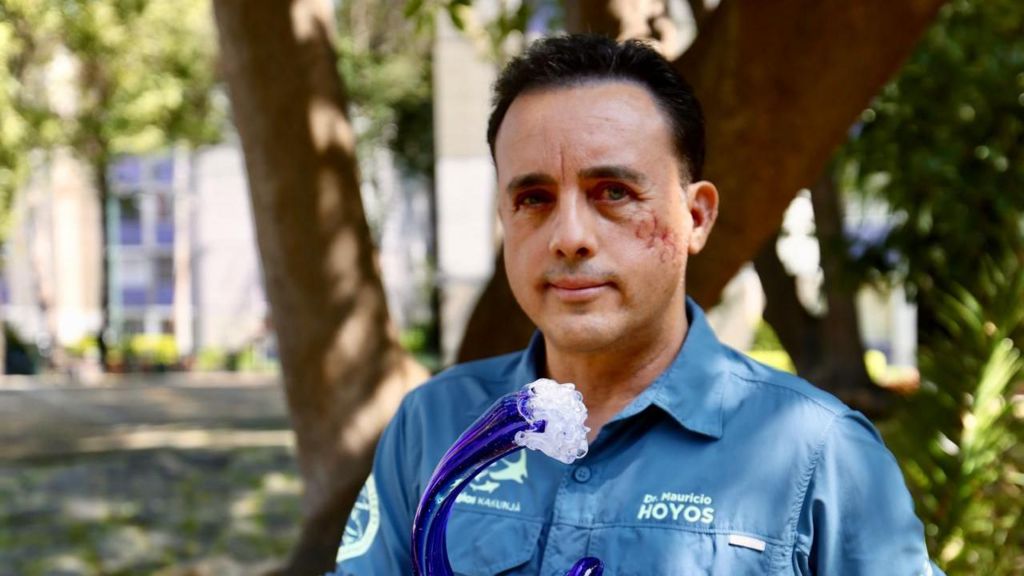
Marine biologist Mauricio Hoyos, a seasoned shark researcher with over three decades of experience, recently survived a harrowing encounter with a 3-meter-long female Galapagos shark off the coast of Cocos Island, Costa Rica. The incident occurred during a research trip in September, where Hoyos was tagging sharks to study their mating and spawning behaviors. Despite the attack, Hoyos describes his recovery as ‘incredible’ and remains undeterred in his mission to advocate for shark conservation.