作者: admin

  • Trump sends mixed messages on when strikes on Iran will end

    Trump sends mixed messages on when strikes on Iran will end

    WASHINGTON – President Donald Trump has offered conflicting characterizations of the ongoing U.S.-Israeli military campaign against Iran, creating ambiguity about the operation’s timeline and objectives. During an exchange with reporters while traveling in Ohio on Wednesday, Trump described the campaign as both a “war” and a short-term “excursion” simultaneously.

    When pressed by journalists to clarify whether the operation constituted a limited engagement or full-scale conflict, Trump responded: “Well, it’s both. It’s an excursion that will keep us out of a war, and the war is going to be, I mean for them it’s a war.”

    This contradictory messaging follows earlier statements made to House Republicans on Monday, where the President characterized the military action as a “short-term excursion” while simultaneously vowing to pursue “ultimate victory” and demanding Iran’s “unconditional surrender.”

    Despite Trump’s assertion that the conflict would conclude “soon” because there was “practically nothing left to target,” intelligence reports from Axios indicate that U.S. and Israeli officials are preparing for at least two additional weeks of strikes. According to the report, no internal directive has been issued regarding when military operations might cease.

    The human cost of the campaign continues to mount dramatically. Iran’s Ambassador and Permanent Representative to the United Nations, Amir Saeid Iravani, reported on Tuesday that more than 1,300 civilians have been killed and 9,669 civilian sites destroyed since the strikes began on February 28.

  • War in Ukraine spills into Hungarian election

    War in Ukraine spills into Hungarian election

    With Hungary’s parliamentary election merely 30 days away, the nation finds itself engulfed in an unprecedented disinformation war involving Prime Minister Viktor Orbán’s government, Ukraine, and Kremlin-linked actors. The political atmosphere has reached a fever pitch, characterized by extraordinary allegations and counter-allegations that threaten to destabilize regional diplomacy.

    The Hungarian government has launched a series of severe accusations against Ukraine, claiming the war-torn nation is preparing physical violence against Prime Minister Orbán and his family while allegedly planning attacks on critical energy infrastructure. Ministers assert that Ukraine ‘will stop at nothing’ to prevent Orbán’s Fidesz party from securing victory in the upcoming April 12 election.

    Ukraine has responded with equally serious charges, accusing the Hungarian government of orchestrating a deliberate hate campaign to frighten Hungarian voters into supporting Fidesz. This diplomatic crisis has created a perfect environment for Russian interference, with The Financial Times reporting that the Kremlin-linked Social Design Agency is preparing a mass disinformation campaign in Hungary to bolster Orbán and discredit the opposition Tisza Party led by Péter Magyar.

    At the heart of this geopolitical standoff lies the disrupted Druzhba (Friendship) pipeline, a critical energy artery for Hungarian and Slovak refineries. Oil deliveries ceased on January 27 following a Russian drone strike that damaged the Brody oil hub in western Ukraine. Prime Minister Orbán has presented satellite images claiming the pipeline remains intact, accusing Ukraine of deliberately delaying repairs to create fuel shortages that would harm his re-election prospects.

    However, security analyst András Rácz of the German Council on Foreign Relations challenges this narrative, revealing that the January attack damaged an oil tank containing 75 million liters of crude oil. To prevent environmental disaster, this oil was pumped into the pipeline for storage—creating technical complications that Ukraine says may require six weeks to repair.

    The election campaign has manifested through disturbing propaganda techniques, including AI-generated Fidesz videos depicting execution squads and suggesting similar fates await Hungarians who vote for the opposition. Giant billboards across Hungary show Ukrainian President Volodymyr Zelenskyy alongside Péter Magyar, falsely accusing Tisza of planning to involve Hungary directly in the Ukraine war.

    In a highly unusual peacetime measure, the Hungarian army has been deployed to patrol key energy installations—presented as reassurance to the public by Fidesz but characterized as intimidation by opposition voices. The situation escalated further when Zelenskyy remarked that those blocking EU aid might find themselves visited by Ukrainian armed forces ‘speaking in their own language’—a comment Orbán interpreted as a direct threat.

    The confrontation reached new heights when Hungarian anti-terror troops seized two vehicles belonging to Ukraine’s state savings bank crossing into Hungary, while a supposed Hungarian ‘fact-finding mission’ to inspect the pipeline was dismissed by Ukraine as mere tourists without official status.

    With Fidesz trailing Tisza 39% to 50% in recent polls, analysts are divided whether Orbán’s anti-Ukraine rhetoric represents panic in the face of probable defeat or a calculated strategy to mobilize his base by creating a sense of national emergency.

  • ASX plunges as traders price in interest rate hikes amid surging oil costs

    ASX plunges as traders price in interest rate hikes amid surging oil costs

    Australia’s financial markets experienced significant turbulence on Thursday as escalating oil prices and mounting expectations of interest rate increases triggered a massive selloff. The benchmark ASX 200 index plummeted 114.50 points, representing a 1.31% decline to close at 8629 points, while the broader All Ordinaries index dropped 125.40 points (1.40%) to settle at 8851.40. This dramatic downturn erased approximately $40 billion from the local market valuation.

    The market’s negative sentiment was predominantly driven by Brent crude oil prices surpassing $100 per barrel during Asian trading hours. The energy sector emerged as the sole beneficiary of this development, with Woodside Energy gaining 2.07% to $31.05, Santos advancing 1.49% to $7.49, and Ampol climbing 2.89% to $30.27.

    Conversely, major mining corporations faced substantial pressure, with BHP declining 1.89% to $50.90, Rio Tinto falling 1.42% to $153.09, and Fortescue dropping 1.50% to $19.68. The banking sector similarly suffered losses, with Commonwealth Bank decreasing 0.62% to $171.60, National Australia Bank sliding 1.96% to $46.40, Westpac retreating 1.19% to $40.54, and ANZ slumping 2.53% to $37.02.

    Market analysts attribute this volatility to growing concerns that rising energy costs will exacerbate inflationary pressures, potentially forcing the Reserve Bank of Australia to implement multiple interest rate increases. IG market analyst Tony Sycamore noted that markets are now pricing in 68 basis points of rate hikes by year-end, citing heightened consumer inflation expectations and hawkish commentary from RBA officials.

    Money markets currently indicate a 76% probability of an interest rate hike following next Tuesday’s RBA meeting. The Australian dollar strengthened marginally against the US dollar, trading at 71.33 US cents amid expectations of domestic monetary tightening.

    In corporate developments, Collins Foods surged 5.2% to $9.92 after announcing expansion into the German market through the acquisition of eight new restaurants in Bavaria. Conversely, IperionX shares collapsed 14.29% to $6.12 following the release of half-year results showing net losses doubling to US$34.8 million (A$49 million).

  • Understanding who profits will be key to resolving the Iran war

    Understanding who profits will be key to resolving the Iran war

    The recent escalation of military operations between US-Israeli forces and Iran has created unexpected economic beneficiaries amidst widespread geopolitical turmoil. While the immediate human and economic costs continue to mount, a paradoxical financial ecosystem thrives on the perpetuation of conflict.

    Defense contractors have emerged as primary beneficiaries, with Lockheed Martin, Northrop Grumman, and RTX collectively gaining $25-30 billion in shareholder value within a single trading session. Israeli defense firm Elbit Systems witnessed a remarkable 45% surge in its stock value since January, briefly becoming the nation’s most valuable publicly traded company. European defense equities similarly outperformed declining broader markets.

    The conflict has produced significant political dividends for incumbent administrations. The initiation of military action effectively diverted public attention from ongoing controversies, including the Epstein files scandal that had previously dominated media cycles and web searches.

    Paradoxically, Iran’s Islamic Revolutionary Guard Corps (IRGC) has strengthened its economic position despite international sanctions. Controlling approximately half of Iran’s oil exports through its engineering subsidiary Khatam al-Anbiya, the IRGC has expanded its dominance across construction, telecommunications, agriculture, and energy sectors. Meanwhile, World Bank data indicates nearly 10 million ordinary Iranians descended into poverty between 2011-2020 due to economic restrictions.

    Energy markets have experienced immediate disruption, with Hormuz Strait tanker traffic declining by approximately 90% and Qatar suspending liquefied natural gas production indefinitely. This has created unexpected windfalls for US energy exporters and Gulf states with bypass pipeline infrastructure. Russia benefits from diverted energy purchases by price-sensitive markets like India and China.

    The conflict presents a complex challenge for green energy transition, as elevated fossil fuel prices simultaneously bolster renewable energy arguments while making traditional extraction more profitable. This economic tension potentially slows the pace of sustainable energy adoption.

    Potential solutions include implementing windfall taxes on corporations benefiting disproportionately from warfare, following the UK’s energy profits levy model. Coordinated releases of strategic petroleum reserves could mitigate price spikes, while strengthened democratic institutions could reduce political exploitation of conflict situations.

    The United Kingdom faces particular economic vulnerability, with pre-conflict GDP growth projections already downgraded to 1.1% for 2026. Household energy bills may increase by over £500 annually despite limited direct gas imports from the region, while fiscal headroom of £23.6 billion faces rapid erosion.

    This analysis reveals the fundamental paradox of modern conflict: those with greatest capacity to resolve hostilities often possess significant financial incentives for their continuation.

  • Iran targets fuel facilities, sending oil soaring again

    Iran targets fuel facilities, sending oil soaring again

    The Middle East conflict escalated dramatically on Thursday as Iran launched a new wave of drone and missile attacks against energy infrastructure throughout the Gulf region, triggering a sharp surge in global oil prices despite unprecedented strategic reserve releases.

    The offensive targeted critical energy facilities across multiple nations, with Bahrain issuing public safety alerts following attacks on fuel storage tanks, while Saudi Arabia reported successfully intercepting drones headed toward both the Shaybah oil field and diplomatic districts. Simultaneously, operations at Oman’s Salalah port were suspended after drone strikes damaged fuel infrastructure.

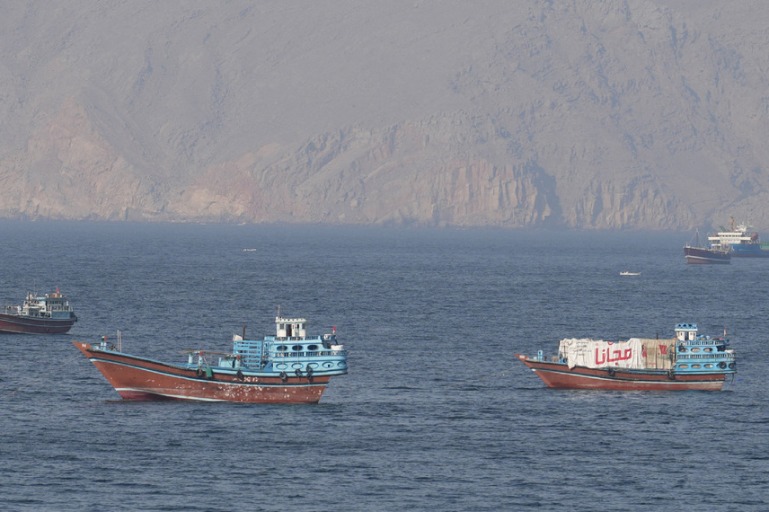
    Maritime security faced severe challenges as shipping routes through the strategically vital Strait of Hormuz came under sustained attack. A container vessel near the United Arab Emirates was struck by an unidentified projectile, causing a minor fire, while two oil tankers near Iraq suffered sabotage attacks resulting in at least one crew member fatality and numerous rescues underway.

    The economic ramifications intensified as oil prices breached $100 per barrel, overwhelming the International Energy Agency’s authorization of a record 400 million barrel strategic reserve release. Market analysts now suggest $90-100 per barrel may represent a new pricing baseline amid fears of prolonged regional instability.

    Iran’s Revolutionary Guards issued stark warnings through state media, threatening strikes against “economic centres and banks” linked to U.S. and Israeli interests, while advisor Ali Fadavi cautioned that continued conflict could “destroy the entire American economy and the world economy” through protracted attrition warfare.

    The humanitarian toll mounted significantly, with Lebanese authorities reporting over 630 fatalities from Israeli strikes targeting Hezbollah positions. The conflict has displaced approximately 800,000 people in Lebanon alone, with many forced to shelter in inadequate conditions along Beirut’s seafront following fresh strikes that killed at least seven civilians.

    Despite U.S. President Donald Trump’s assertion that Iran faced “imminent defeat,” the conflict shows no signs of abatement, with the Pentagon estimating operational costs exceeding $11.3 billion while regional instability continues to intensify.

  • Three crew ‘believed trapped’ aboard Thai ship attacked in Gulf: firm

    Three crew ‘believed trapped’ aboard Thai ship attacked in Gulf: firm

    Three Thai sailors remain trapped and unaccounted for after Iran’s Revolutionary Guards launched a projectile attack on their commercial vessel transiting through the strategically vital Strait of Hormuz. The incident occurred Wednesday when the Thai-registered bulk carrier Mayuree Naree sustained two direct hits while navigating the Gulf waterway after departing Khalifa port in the United Arab Emirates.

    According to Precious Shipping, the vessel’s operating company, the projectiles penetrated the ship’s engine room, triggering a significant fire and rendering critical systems inoperable. While 20 crew members were successfully evacuated by Omani naval forces following the attack, three engineers remain missing and are presumed trapped in the damaged compartment.

    Managing Director Khalid Hashim confirmed Thursday that rescue teams had been unable to board the disabled vessel despite the fire being extinguished. ‘We still have not been able to get anyone to board our ship,’ Hashim stated in an email to AFP. ‘We are trying different avenues to get onboard.’

    The Iranian military acknowledged striking both the Mayuree Naree and a separate Liberia-flagged vessel, claiming the ships had ignored prior warnings. Thailand’s Foreign Ministry has formally protested what it termed ‘violence against commercial ships’ and confirmed all 23 crew members were Thai nationals.

    This attack marks the latest escalation in regional tensions following U.S. and Israeli strikes against Iran in late February. The strategic Strait of Hormuz, through which approximately 20% of global oil supplies transit, has become increasingly volatile, threatening international shipping lanes and creating instability in global energy markets.

  • Report reveals staggering cost of algal bloom crisis

    Report reveals staggering cost of algal bloom crisis

    A groundbreaking economic analysis has quantified the devastating financial impact of South Australia’s ongoing algal bloom catastrophe, revealing a staggering $250 million economic loss over the past year. Commissioned by the Conservation Council of South Australia and conducted by Springmount Advisory, the comprehensive assessment details how this environmental disaster has crippled key industries and devastated marine ecosystems since first emerging in March 2025.

    The marine crisis has particularly devastated the state’s fishing sector, with estimated losses reaching $100 million due to catastrophic reductions in monthly catches. Fisheries data reveals that in some periods, monthly harvests of whiting, garfish, calamari, crab, and king prawn plummeted by over 80% in critical fishing grounds including Gulf St Vincent and Kangaroo Island waters.

    Simultaneously, the tourism industry has absorbed a massive $46.8 million financial hit, with approximately 30 coastal communities experiencing average losses of $52,000 per tourism business. The algal bloom’s visible presence and associated health risks have dramatically reduced visitor numbers to popular coastal destinations along the Fleurieu Peninsula and surrounding regions.

    Beyond economic consequences, the ecological damage has been severe, with massive marine wildlife fatalities and recurring health advisories warning swimmers against water contact due to toxin risks. Adelaide Scuba’s marine operations manager Rob Blackburn reported significant business challenges, noting: ‘The algal bloom has impacted the dive industry heavily. We’ve invested enormous effort to reassure clients about safety and enjoyment despite compromised conditions.’

    Conservation Council South Australia CEO Kirsty Bevan has called for accountability, urging the state’s fossil fuel industry to contribute to crisis mitigation efforts. ‘Given the scale of the gas industry’s emissions, it should be footing the bill for climate damage like this algal bloom,’ Bevan stated, highlighting the connection between warming waters and increased frequency of such environmental emergencies.

    The report underscores the broader climate change implications, with scientists warning that warming ocean temperatures create ideal conditions for more frequent and severe algal bloom events, suggesting this economic and environmental crisis may represent a new normal for coastal communities.

  • Fear, boredom for Philippine sailors stuck in Hormuz strait

    Fear, boredom for Philippine sailors stuck in Hormuz strait

    Thousands of Filipino maritime workers remain trapped in a dangerous holding pattern within the Strait of Hormuz as escalating Middle Eastern hostilities transform this critical shipping artery into a high-risk zone. The Philippine government confirms over 6,000 of its nationals—representing approximately a quarter of the world’s seafaring workforce—continue operating within conflict-affected territories and adjacent waters.

    The strategic waterway, typically responsible for transporting 20% of global oil and gas supplies, has effectively shut down following recent Iranian missile strikes. This closure has triggered significant disruptions within international energy markets while stranding numerous vessels and their crews.

    Among those affected is George Miranda, a 46-year-old Filipino tugboat operator currently listed as missing after his vessel sustained missile damage. His case highlights the extreme dangers facing maritime personnel in the region.

    For sailors like John Winston Isidro aboard a Very Large Crude Carrier, daily existence has become characterized by heightened security protocols and psychological strain. Crew members have suspended above-deck operations while implementing doubled bridge watches. Off-duty hours are filled with digital distractions—social media browsing, video gaming, and film viewing—as engines remain perpetually primed for emergency departure.

    Welbin Maghanoy, another seafarer transporting crude oil to Japan, reported nine consecutive days of immobilization approximately 100 nautical miles off the United Arab Emirates coast. ‘The combination of boredom and fear creates tremendous pressure,’ he observed, noting that tankers specifically appear targeted in recent attacks.

    The United Filipino Seafarers union, representing 50,000 maritime professionals, reports receiving hundreds of distress calls from stranded members. Union president Judy Domingo confirms urgent concerns regarding provisions and evacuation logistics, emphasizing that immediate extraction remains complicated by security considerations and limited safe port options.

    In one documented case, crewmembers aboard a Philippine-flagged vessel conducted an informal referendum regarding whether to attempt traversing the near-deserted strait. Twenty-seven sailors unanimously elected to remain stationary despite contractual obligations, with one seafarer identified as ‘Choi’ stating: ‘We chose to go home alive.’

    Isidro expressed gratitude that his captain unilaterally decided to maintain their position rather than risk the dangerous passage. The collective sentiment among stranded mariners now centers on hopeful prayers for rapid de-escalation between US and Iranian forces to enable safe departure from the conflict zone.

  • Noma head chef resigns from restaurant amid abuse allegations

    Noma head chef resigns from restaurant amid abuse allegations

    René Redzepi, the world-renowned chef behind Copenhagen’s acclaimed Noma restaurant, has stepped down from his leadership position following multiple allegations of workplace misconduct. The resignation marks a dramatic fall from grace for the culinary innovator whose establishment has consistently ranked among the world’s best dining destinations.

    Redzepi announced his departure via social media, stating he would relinquish control after more than two decades at the helm. ‘After more than two decades of building and leading this restaurant, I’ve decided to step away,’ Redzepi wrote, adding that he was passing leadership to ‘our extraordinary team.’

    The decision comes amid mounting pressure from former employees who described a toxic work environment characterized by verbal threats and physical mistreatment. A New York Times investigation detailed numerous accounts of abuse within Noma’s kitchen culture, prompting widespread condemnation across the culinary world.

    Redzepi acknowledged his shortcomings in a public statement: ‘An apology is not enough; I take responsibility for my own actions.’ He revealed he had sought professional therapy to address anger management issues, admitting he had ‘shouted and pushed people, acting in ways that are unacceptable.’

    The controversy has significantly impacted Noma’s operations, particularly its planned 16-week residency in Los Angeles. Corporate sponsors including American Express withdrew support following the allegations, despite the $1,500 per person dining experience selling out within minutes of availability.

    Protests organized by wage-rights groups emerged outside the Silver Lake pop-up location, with activists questioning the ethics of supporting establishments with alleged labor violations. ‘Who wants to eat food that comes from the tears and sweat of people who are suffering?’ questioned Saru Jayaraman of One Fair Wage during an interview with CBS News.

    Redzepi has also resigned from the board of MAD, the non-profit organization he founded in 2011 to support newcomers to the restaurant industry. The Noma team will continue the Los Angeles residency without his involvement, according to his statement.

  • Anthony Albanese gifted Donald Trump’s wife Melania a $3000 pearl pendant

    Anthony Albanese gifted Donald Trump’s wife Melania a $3000 pearl pendant

    Newly disclosed documents obtained through Freedom of Information requests have revealed the details of diplomatic gift exchanges between Australian Prime Minister Anthony Albanese and the Trump administration during his October 2025 visit to Washington DC.

    The records show Prime Minister Albanese presented former First Lady Melania Trump with an elegant Bianca Pearl Pendant valued at $2,980. The necklace, supplied by luxury retailer Intandem, features a refined gold chain with a single pearl suspension, though documentation didn’t specify whether the piece contained a 13mm or 14mm pearl.

    In a notable contrast of diplomatic presentations, the Australian government also gifted former President Donald Trump a meticulously crafted 24-inch Virginia Class Submarine Model. Provided through the Department of Foreign Affairs and Trade, the model featured gold stand-off mounts yet was officially valued at $0 in the disclosure documents.

    The reciprocal gift from the Trump administration to Prime Minister Albanese was recorded as a “desk set with stationery” with a declared value of $923, though procurement records indicated an actual purchase price of $190.30. This item has been surrendered by the Department of Prime Minister and Cabinet for official display within Commonwealth or parliamentary offices, or alternatively may be allocated to national collections or charitable donation.

    These revelations come amid Australia’s strict parliamentary requirements mandating disclosure of gifts exceeding $750 in value. The documents provide insight into the often-overlooked protocol of diplomatic gift exchanges, which serve as both ceremonial gestures and instruments of international relations.